NEW: Get Updates by Email

Top Stories

At $24,950, Bezos-Backed Slate May Have Found the Roadmap to Beat China By Paul A. Eisenstein For: TCC Filed: 6/24/26  EV start-up Slate’s little pickup will debut at a starting price of $24,950 later this year, well below any other all-electric truck now on the market. And, in its bid to change the EV price equation, the Bezos-backed automaker just might be showing the rest of the industry how to take on the “existential threat” posed by Chinese brands like BYD and Geely. But are buyers ready for what it’s offering at a time when EV sales have taken a big hit? When the first battery-electric pickups roll out of the new Slate assembly plant in Warsaw, Indiana later this year they’ll carry a starting price of just $24,950, the start-up backed by Jeff Bezos announced on Wednesday. That’s barely half of what the typical new vehicle available in the U.S. goes for these days. It’s an even more impressive figure when you compare it to the average $55,000 price tag for an EV. What a buyer will get for that figure is a single-row truck a full two feet shorter than the already compact Ford Maverick. It will feature injection-molded plastic body panels and the sort of stripped-down feature list more in line with the basic pickups of the 1970s than the well-equipped trucks of today. There’ll be only one color – slate-gray, appropriately – steel wheels, hand-cranked windows and no radio.  From the business side, Slate claims to have radically simplified the manufacturing process. Product chief Chris Barman told me in an interview earlier this week that the pickup will require just 800 parts, only about 40% of what’s required by more traditional products. So, even at that rock-bottom starting price, the suburban Detroit start-up is confident it can turn a solid profit on relatively modest volumes. If the Slate strategy proves out it could provide a roadmap for dealing with the Chinese competition that Ford CEO Jim Farley has dubbed an “existential threat.” What’s New? Founded just four years ago, Slate is one of an assortment of EV start-ups that have promised to revolutionize the auto industry. A quick look back shows a field strewn with the wreckage of brands like Fisker, Lordstown and Canoo. While Tesla defies the naysayers, it still is far from certain Lucid and Rivian will make it long-term.  Unlike the latter two brands which started out of the box with luxury offerings pushing into six-figure territory, Slate has, from the beginning Slate has focused on the entry side of the market. Until Congress phased out federal tax credits last September, the company hoped to offer an effective starting price below $20,000 after factoring in those $7,500 incentives. Even now, the $24,950 starting price is clearly going to draw attention. It’s about $2,000 cheaper than a stripped-down Chevrolet Equinox EV, for example, even after more than $8,000 in Chevy factory incentives. There’ve been a few modest changes since Slate first revealed its pickup concept more than a year ago. The design tweaks are minimal, as is the list of features. Critically, the automaker has decided to drop plans for two optional battery packs. All of its vehicles will now feature a 65-kWh pack delivering an estimated 205 miles range. That’s 37% more than the original “standard” pack’s 150-mile rating, though 16% less than the “long-range” option, at 240 miles per charge, was to offer. Do-it-Yourself When Slate showed off that prototype in April 2025 it emphasized the many accessories it planned to offer, everything from a stereo, roof racks and zip-off seat covers to more than 100 different colored body wraps. All told, there will be 175 accessories available on the Slate Marketplace at launch, 80 of them for under $500.  That’s a strategy not much different from what automakers relied on back in the 1970s and ‘80s, when Baby Boomers with their newly minted driver’s licenses bought bare-bones pickups like the Chevy S-10 and Toyota HiLux. Barman, a former Fiat Chrysler executive, said Slate sees a potentially similar audience of budget buyers who will be happy to do their own upgrades “customizing” their vehicles so “they become an extension of their personality.” There will be 175 accessories available on the Slate Marketplace at launch, 80 of them for under $500. Among the more complicated accessories? A kit that will let a buyer convert their pickup into an SUV. In one of the few big shifts from the original plan, Slate will offer not only the basic pickup package but two already assembled SUV versions, dubbed Squareback and Fastback, starting at $29,950. By the Numbers Whatever model one choses, all will share a single electric motor driving the rear axle. It will pump out 135 kilowatts, or 180 horsepower, and make 264 Nm, or 195 pound-feet of torque. That will be enough to launch from 0 to 60 in 8.0 seconds, the factory claims, with a top speed of 90 mph.  Since the original prototype was shown last year the tow rating has been increased to 2,000 pounds, while payload has jumped from 1,400 to 1,500 pounds.  As for charging, once plugged into a Level 2 240-volt charger, Slate estimates the 65-kWh lithium-iron-phosphate battery pack will require around 4 hours to go from a 20 to 100% state-of-charge. A DC quick charger, it claims, should get the pack from 20 to 80% in a half hour. The numbers aren’t benchmark but are reasonably competitive. KISS It’s the industry’s conventional wisdom that you can’t make money on entry-level products. Slate officials insist they’ve found the formula to land solidly in the black and it’s a strategy often defined as KISS: Keep it Simple, Stupid. Opting for injection-molded body panels in a single color eliminates the need for a massively expensive paint shop at the Warsaw plant. Want something more visually exciting? Customers can pay for a wrap. Equally important, explained Barman, was slashing what factory folks call the BOM, or “Build of Materials,” from 2,000 separate parts and components to just 800. In some instances, that means eliminating features, like a standard radio, or switching to simpler hand-crank windows. Other solutions were creative: left and right head and taillights are identical, for one thing, as are passenger armrests. All those accessories could be the gravy on the dish Slate has whipped up. Unlike the traditional check boxes most manufacturers rely on to boost transaction prices, the Slate Marketplace is designed to let customers come back later to keep customizing their vehicles. If that works out, it could generate an ongoing stream of post-sales revenue. The Target Buyer Slate’s strategy takes an interesting twist when it comes to the target buyer. One must first look at what’s happening in the broader new vehicle market, where average transaction prices are running around $50,000, according to Kelley Blue Book, and EVs average about $5,000 higher. That – and broader inflation woes – helps explain why the new vehicle market has barely rebounded after the COVID pandemic. Demand peaked at 17.5 million in 2016 but just clawed back to 16.2 million in 2025. And the market has been struggling since the beginning of this year. The other fact to note, said Barman, is that “previously owned” vehicles outsell new models by more than two-to-one, reaching about 38 million in 2025. “Our price point is below the cost of the average used vehicle,” and that opens up a potentially large market for Slate among those who would really prefer something new. Not everyone is convinced. There is, of course, the question about whether there’s enough of a market for EVs, though Slate is betting the younger buyers that should make up much of its audience are more open to zero-emission technology. For his part, analyst Sam Abuelsamid isn’t convinced the low price for the Slate pickup is enough of a draw, considering what you get for the money. “You could also buy a Nissan Sentra for $25,000 and get a lot more features than a 2-door pickup getting that sort of range,” said Abuelsamid, lead auto analyst with Telemetry Research. The Competition Despite his concerns, Abuelsamid believes Slate has come up with some impressive ideas to help hold down costs, pioneering an approach that could be adopted by other manufacturers searching for ways to beat back Chinese brands, like BYD and Geely, who are rapidly gaining traction in auto markets around the world. The Chinese post an “existential threat,” said Ford CEO Farley. Indeed, he admitted he hated letting go of a Xiaomi SU7, an all-electric pickup Ford brought over for comparison testing back in 2024. The Detroit automaker was forced to take a multi-billion-dollar write-down when it abandoned its original EV strategy last year. But, like Slate, it has launched its own effort to break today’s automotive paradigm. I had a chance to take a peek inside the “Universal EV” project recently and there are a number of ways it is rethinking the process of designing, engineering and manufacturing vehicles – EVs, in particular.  Significantly, the Universal program’s first product also will be a battery-electric pickup. But it will feature two rows and far more features than Slate. It’s also expected to start in the low $30,000 range, a price gap that could yield a chunk of potential buyers to Slate. Or so it might seem. But Abuelsamid said you can’t judge by looking at base MSRPs. The real question is how much money buyers will invest to customize their vehicles – and how much of a gap there then will be between the Slate and Ford pickups. Pre-Orders The real test is likely to begin now, Slate this week began taking pre-orders for its new EVs. Potentially buyers can put down a non-refundable $300. Those who had already paid a refundable $50 advance reservation can have that applied to their order. “More than 180,000 reservation holders have told us they’re ready for a vehicle that’s affordable, reliable, and built around their lives,” Slate CEO Peter Faricy said in a statement, referencing the number of advance reservations Slate has logged.  The company is so confident of demand that it plans to rapidly ramp up production over the next year. It will launch with a single shift at its new assembly plant in Warsaw, Indiana, increasing that to two shifts by the second quarter of 2027. A few months later that will jump to three shifts capable of rolling out 150,000 pickups and SUVs annually. If You Build it Will They Come? But Slate clearly needs to be careful about building too much of a business plan around its own hype. In the months after it first showed off a prototype Cybertruck in 2019 Tesla boasted it had taken over 1 million reservations for the Cybertruck. Sales have never come close to backing up what has proved to be little more than a fantasy. Tesla sold just 20,237 Cybertrucks last year, a 48% year-over-year decline.  For its part, Ford bought into its own early reservation numbers for the F-150 Lightning, ordering a 600% capacity increase at its plant in Dearborn, Michigan. After an initial surge, however, it could barely meet the original sales target of around 25,000 of the electric pickups annually. This is not to say Slate is simply living in a fantasy world. There appear to be a number of reasons why its pickup really could find an audience. And it certainly could help that the big jump in gas prices triggered by the Iran War has led to a surge in demand for all forms of electrified vehicles, including EVs, as well as hybrids.  Jeff Bezos Bets Big There’s no question that starting up an EV brand from scratch is a difficult challenge. It helps to have some solid backing, starting with ex-Amazon Consumer CEO Jeff Wilke. The retail giant’s founder Jeff Bezos subsequently came onboard, though the precise amount of money he’s pumped in has not been revealed.  Federal filings show additional investors include Mark Walter, the controlling owner of the LA Dodgers and CEO of Guggenheim Partners, and Thomas Tull, a billionaire film producer and businessman. Melinda Lewison, who runs Bezos’ family office, is listed as a Slate Auto director. Considering Slate’s ambitious ramp-up plans, we should have a better sense of whether their collective investment will pay off by this time next year.

At $24,950, Bezos-Backed Slate May Have Found the Roadmap to Beat China By Paul A. Eisenstein For: TCC Filed: 6/24/26 EV start-up Slate’s little pickup will debut at a starting price of $24,950 later this year, well below any other all-electric truck now on the market. And, in its bid to change the EV price equation, the Bezos-backed automaker just might be showing the rest of the industry how to take on the “existential threat” posed by Chinese brands like BYD and Geely. But are buyers ready for what it’s offering at a time when EV sales have taken a big hit? When the first battery-electric pickups roll out of the new Slate assembly plant in Warsaw, Indiana later this year they’ll carry a starting price of just $24,950, the start-up backed by Jeff Bezos announced on Wednesday. That’s barely half of what the typical new vehicle available in the U.S. goes for these days. It’s an even more impressive figure when you compare it to the average $55,000 price tag for an EV. What a buyer will get for that figure is a single-row truck a full two feet shorter than the already compact Ford Maverick. It will feature injection-molded plastic body panels and the sort of stripped-down feature list more in line with the basic pickups of the 1970s than the well-equipped trucks of today. There’ll be only one color – slate-gray, appropriately – steel wheels, hand-cranked windows and no radio. From the business side, Slate claims to have radically simplified the manufacturing process. Product chief Chris Barman told me in an interview earlier this week that the pickup will require just 800 parts, only about 40% of what’s required by more traditional products. So, even at that rock-bottom starting price, the suburban Detroit start-up is confident it can turn a solid profit on relatively modest volumes. If the Slate strategy proves out it could provide a roadmap for dealing with the Chinese competition that Ford CEO Jim Farley has dubbed an “existential threat.” What’s New? Founded just four years ago, Slate is one of an assortment of EV start-ups that have promised to revolutionize the auto industry. A quick look back shows a field strewn with the wreckage of brands like Fisker, Lordstown and Canoo. While Tesla defies the naysayers, it still is far from certain Lucid and Rivian will make it long-term. Unlike the latter two brands which started out of the box with luxury offerings pushing into six-figure territory, Slate has, from the beginning Slate has focused on the entry side of the market. Until Congress phased out federal tax credits last September, the company hoped to offer an effective starting price below $20,000 after factoring in those $7,500 incentives. Even now, the $24,950 starting price is clearly going to draw attention. It’s about $2,000 cheaper than a stripped-down Chevrolet Equinox EV, for example, even after more than $8,000 in Chevy factory incentives. There’ve been a few modest changes since Slate first revealed its pickup concept more than a year ago. The design tweaks are minimal, as is the list of features. Critically, the automaker has decided to drop plans for two optional battery packs. All of its vehicles will now feature a 65-kWh pack delivering an estimated 205 miles range. That’s 37% more than the original “standard” pack’s 150-mile rating, though 16% less than the “long-range” option, at 240 miles per charge, was to offer. Do-it-Yourself When Slate showed off that prototype in April 2025 it emphasized the many accessories it planned to offer, everything from a stereo, roof racks and zip-off seat covers to more than 100 different colored body wraps. All told, there will be 175 accessories available on the Slate Marketplace at launch, 80 of them for under $500. That’s a strategy not much different from what automakers relied on back in the 1970s and ‘80s, when Baby Boomers with their newly minted driver’s licenses bought bare-bones pickups like the Chevy S-10 and Toyota HiLux. Barman, a former Fiat Chrysler executive, said Slate sees a potentially similar audience of budget buyers who will be happy to do their own upgrades “customizing” their vehicles so “they become an extension of their personality.” There will be 175 accessories available on the Slate Marketplace at launch, 80 of them for under $500. Among the more complicated accessories? A kit that will let a buyer convert their pickup into an SUV. In one of the few big shifts from the original plan, Slate will offer not only the basic pickup package but two already assembled SUV versions, dubbed Squareback and Fastback, starting at $29,950. By the Numbers Whatever model one choses, all will share a single electric motor driving the rear axle. It will pump out 135 kilowatts, or 180 horsepower, and make 264 Nm, or 195 pound-feet of torque. That will be enough to launch from 0 to 60 in 8.0 seconds, the factory claims, with a top speed of 90 mph. Since the original prototype was shown last year the tow rating has been increased to 2,000 pounds, while payload has jumped from 1,400 to 1,500 pounds. As for charging, once plugged into a Level 2 240-volt charger, Slate estimates the 65-kWh lithium-iron-phosphate battery pack will require around 4 hours to go from a 20 to 100% state-of-charge. A DC quick charger, it claims, should get the pack from 20 to 80% in a half hour. The numbers aren’t benchmark but are reasonably competitive. KISS It’s the industry’s conventional wisdom that you can’t make money on entry-level products. Slate officials insist they’ve found the formula to land solidly in the black and it’s a strategy often defined as KISS: Keep it Simple, Stupid. Opting for injection-molded body panels in a single color eliminates the need for a massively expensive paint shop at the Warsaw plant. Want something more visually exciting? Customers can pay for a wrap. Equally important, explained Barman, was slashing what factory folks call the BOM, or “Build of Materials,” from 2,000 separate parts and components to just 800. In some instances, that means eliminating features, like a standard radio, or switching to simpler hand-crank windows. Other solutions were creative: left and right head and taillights are identical, for one thing, as are passenger armrests. All those accessories could be the gravy on the dish Slate has whipped up. Unlike the traditional check boxes most manufacturers rely on to boost transaction prices, the Slate Marketplace is designed to let customers come back later to keep customizing their vehicles. If that works out, it could generate an ongoing stream of post-sales revenue. The Target Buyer Slate’s strategy takes an interesting twist when it comes to the target buyer. One must first look at what’s happening in the broader new vehicle market, where average transaction prices are running around $50,000, according to Kelley Blue Book, and EVs average about $5,000 higher. That – and broader inflation woes – helps explain why the new vehicle market has barely rebounded after the COVID pandemic. Demand peaked at 17.5 million in 2016 but just clawed back to 16.2 million in 2025. And the market has been struggling since the beginning of this year. The other fact to note, said Barman, is that “previously owned” vehicles outsell new models by more than two-to-one, reaching about 38 million in 2025. “Our price point is below the cost of the average used vehicle,” and that opens up a potentially large market for Slate among those who would really prefer something new. Not everyone is convinced. There is, of course, the question about whether there’s enough of a market for EVs, though Slate is betting the younger buyers that should make up much of its audience are more open to zero-emission technology. For his part, analyst Sam Abuelsamid isn’t convinced the low price for the Slate pickup is enough of a draw, considering what you get for the money. “You could also buy a Nissan Sentra for $25,000 and get a lot more features than a 2-door pickup getting that sort of range,” said Abuelsamid, lead auto analyst with Telemetry Research. The Competition Despite his concerns, Abuelsamid believes Slate has come up with some impressive ideas to help hold down costs, pioneering an approach that could be adopted by other manufacturers searching for ways to beat back Chinese brands, like BYD and Geely, who are rapidly gaining traction in auto markets around the world. The Chinese post an “existential threat,” said Ford CEO Farley. Indeed, he admitted he hated letting go of a Xiaomi SU7, an all-electric pickup Ford brought over for comparison testing back in 2024. The Detroit automaker was forced to take a multi-billion-dollar write-down when it abandoned its original EV strategy last year. But, like Slate, it has launched its own effort to break today’s automotive paradigm. I had a chance to take a peek inside the “Universal EV” project recently and there are a number of ways it is rethinking the process of designing, engineering and manufacturing vehicles – EVs, in particular. Significantly, the Universal program’s first product also will be a battery-electric pickup. But it will feature two rows and far more features than Slate. It’s also expected to start in the low $30,000 range, a price gap that could yield a chunk of potential buyers to Slate. Or so it might seem. But Abuelsamid said you can’t judge by looking at base MSRPs. The real question is how much money buyers will invest to customize their vehicles – and how much of a gap there then will be between the Slate and Ford pickups. Pre-Orders The real test is likely to begin now, Slate this week began taking pre-orders for its new EVs. Potentially buyers can put down a non-refundable $300. Those who had already paid a refundable $50 advance reservation can have that applied to their order. “More than 180,000 reservation holders have told us they’re ready for a vehicle that’s affordable, reliable, and built around their lives,” Slate CEO Peter Faricy said in a statement, referencing the number of advance reservations Slate has logged. The company is so confident of demand that it plans to rapidly ramp up production over the next year. It will launch with a single shift at its new assembly plant in Warsaw, Indiana, increasing that to two shifts by the second quarter of 2027. A few months later that will jump to three shifts capable of rolling out 150,000 pickups and SUVs annually. If You Build it Will They Come? But Slate clearly needs to be careful about building too much of a business plan around its own hype. In the months after it first showed off a prototype Cybertruck in 2019 Tesla boasted it had taken over 1 million reservations for the Cybertruck. Sales have never come close to backing up what has proved to be little more than a fantasy. Tesla sold just 20,237 Cybertrucks last year, a 48% year-over-year decline. For its part, Ford bought into its own early reservation numbers for the F-150 Lightning, ordering a 600% capacity increase at its plant in Dearborn, Michigan. After an initial surge, however, it could barely meet the original sales target of around 25,000 of the electric pickups annually. This is not to say Slate is simply living in a fantasy world. There appear to be a number of reasons why its pickup really could find an audience. And it certainly could help that the big jump in gas prices triggered by the Iran War has led to a surge in demand for all forms of electrified vehicles, including EVs, as well as hybrids. Jeff Bezos Bets Big There’s no question that starting up an EV brand from scratch is a difficult challenge. It helps to have some solid backing, starting with ex-Amazon Consumer CEO Jeff Wilke. The retail giant’s founder Jeff Bezos subsequently came onboard, though the precise amount of money he’s pumped in has not been revealed. Federal filings show additional investors include Mark Walter, the controlling owner of the LA Dodgers and CEO of Guggenheim Partners, and Thomas Tull, a billionaire film producer and businessman. Melinda Lewison, who runs Bezos’ family office, is listed as a Slate Auto director. Considering Slate’s ambitious ramp-up plans, we should have a better sense of whether their collective investment will pay off by this time next year.

EV start-up Slate’s little pickup will debut at a starting price of $24,950 later this year, well below any other all-electric truck now on the market. And, in its bid to change the EV price equation, the Bezos-backed automaker just might be showing the rest of the industry how to take on the “existential threat” posed by Chinese brands like BYD and Geely. But are buyers ready for what it’s offering at a time when EV sales have taken a big hit?

read more
Which Cars Are the Most American-Made?

Which Cars Are the Most American-Made?

Automakers are coming under increasing pressure to move production to the U.S. – with hefty tariffs penalizing not only products imported from abroad but those built in the States using foreign parts. Which products are the most “American-made”? A new study finds Tesla and Jeep at the top of the list, though Japanese brands make up six of the top 10 spots, reports Headlight.News.

Jaguar’s Make-it-or-Break it EV to Debut in October

Jaguar’s Make-it-or-Break it EV to Debut in October

Jaguar confirmed plans to reveal its new Type 01 grand touring vehicle during a launch event in New York in October. The $150,000 all-electric model is more than just the most important Jaguar in decades. It could determine whether the brand has any future, reports...

A Week With: 2026 Mazda CX-50 Turbo Meridian Edition

A Week With: 2026 Mazda CX-50 Turbo Meridian Edition

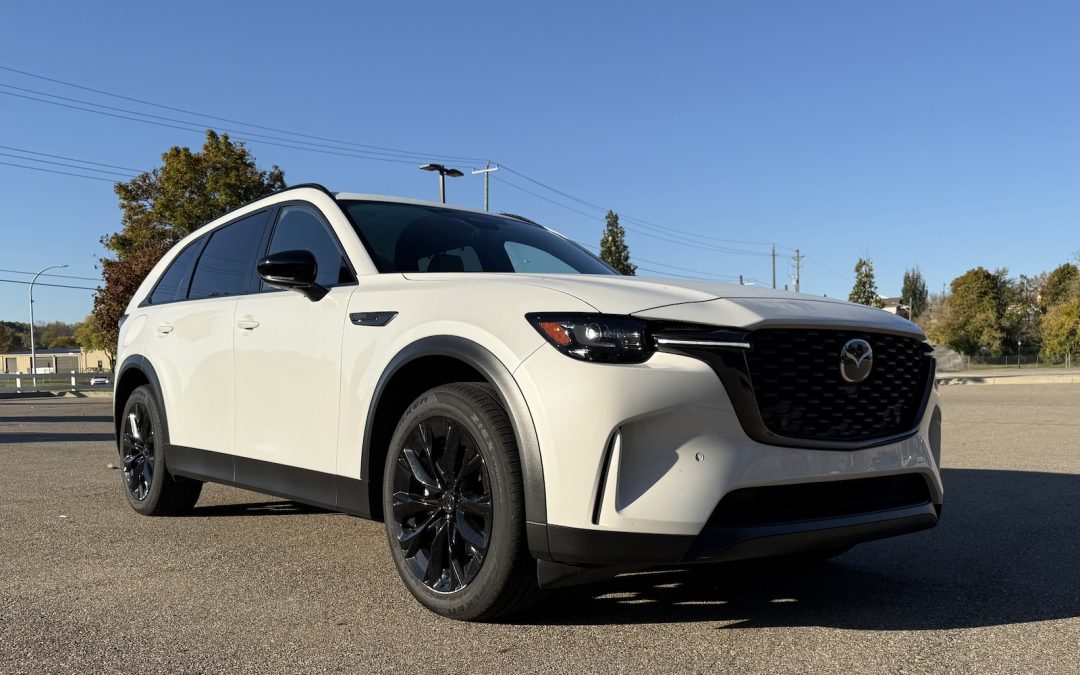
Mazda knows a good thing when it makes it. When the brand introduced the CX-50 in late 2021, it created a massive buzz. It supercharged Mazda’s transition to a crossover-dominated lineup. Four years later, nothing’s changed and it’s nearly the brand’s top-selling vehicle. More important, Mazda keeps making it better, as evidenced by the all-new 2026 Mazda CX-50 Turbo Meridian Edition. Find out why in our review at Headlight.News.

Podcasts

Get the Latest Auto News on the HEADLIGHT.NEWS Podcast

Headlight News Podcast for the Week of 5-26-26

This week on the podcast, we cover news from Stellantis, Volkswagen’s revival of the ID. Buzz, Ferrari finally building an EV, the Luce, and we review the 2026 Toyota Camry SE Nightshade. Check it out.

Headlight News Podcast for the Week of 5-18-26

On the Headlight News podcast this week, we look the rise of hybrid sales and the moves by Honda and Mazda to meet demand. We also cover the looming shortage of base oils due to the conflict with Iran. Finally we review the 2026 Hyundai Santa Cruz SRT. Check out the podcast, give us some feedback.

Headlight News Podcast for the Week of 5-4-26

On the Headlight News podcast this week, we look at tough April new vehicle sales numbers. We also examine the latest threat of raising tariffs on EU vehicles, plus we reviewed the 2026 Mazda CX-5 and more. Check it out at Headlight.News.

Headlight News Podcast for the Week of 4-27-26

On this week’s podcast, Headlight News examines April auto sales. We also talk about whether or not a recession is looming and take a look at the compensation plans of Detroit Three CEOs. Finally, we review the 2026 Ford F-150 Lobo and take a look at This Week in Auto History. Check out the podcast!

Latest Reviews

Jaguar’s Make-it-or-Break it EV to Debut in October

Jaguar’s Make-it-or-Break it EV to Debut in October

Jaguar confirmed plans to reveal its new Type 01 grand touring vehicle during a launch event in New York in October. The $150,000 all-electric model is more than just the most important Jaguar in decades. It could determine whether the brand has any future, reports...

A Week With: 2026 Mazda CX-50 Turbo Meridian Edition

A Week With: 2026 Mazda CX-50 Turbo Meridian Edition

Mazda knows a good thing when it makes it. When the brand introduced the CX-50 in late 2021, it created a massive buzz. It supercharged Mazda’s transition to a crossover-dominated lineup. Four years later, nothing’s changed and it’s nearly the brand’s top-selling vehicle. More important, Mazda keeps making it better, as evidenced by the all-new 2026 Mazda CX-50 Turbo Meridian Edition. Find out why in our review at Headlight.News.

A Week With: 2026 Toyota Tacoma Limited Hybrid

A Week With: 2026 Toyota Tacoma Limited Hybrid

For two decades, the Toyota Tacoma has been the best-selling midsize pickup in America. After a week in the Tacoma Limited, I’m not sure what could happen to change that. Toyota builds a Tacoma for everybody. That said, Headlight.News did find a small flaw in the Limited model … most people would call that “a needle in a haystack.” Check out our review of the country’s top midsize pickup.

A Week With: 2026 Subaru Solterra Premium

A Week With: 2026 Subaru Solterra Premium

In the case of the 2026 Subaru Solterra, a thin line can be said to exist between refreshed and all-new. Subaru’s marketing team touts the marque’s EV using the all-new honorific, while we here at Headlight.News see it more as being significantly updated. Check out the review and find out why.

A Week With: 2026 Ram 1500 Express Crew Cab 4×2

A Week With: 2026 Ram 1500 Express Crew Cab 4×2

With the introduction of their ‘Big Rig” styling back in 1993, Dodge Ram pickup trucks suddenly began finding favor with consumers, having languished in the marketplace for quite some time. Check out our review of the 2026 Ram 1500 Express Crew Cab to see how now-its-own-brand Ram is looking to change that at Headlight.News.

Our Mailing List is Live!
Get Updates by Email

Get on our list to receive the latest automotive news in your inbox!

Invalid email address
I would like to receive:
Give it a try. You can unsubscribe at any time.