
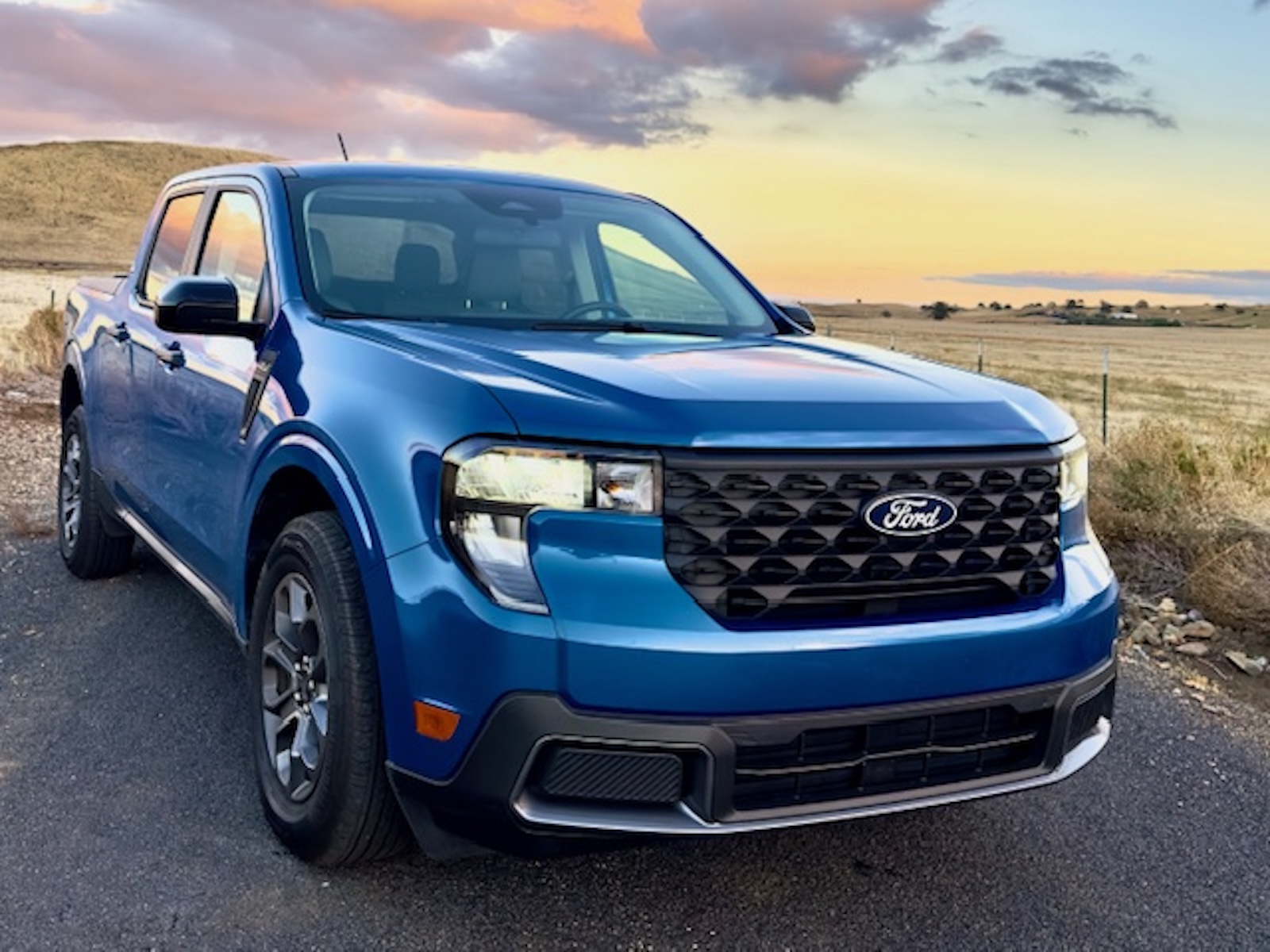
Back in 2018, Ford announced the axing of all its passenger cars — save one — to go all-in on trucks and SUVs. Along with that proclamation came the statement the company was also going big on electrification, which brings us to the 2025 Ford Maverick XLT AWD, its hybrid powertrain. So, is it all that, or does Ford’s smallest offering reflect the commission of an unforced error?
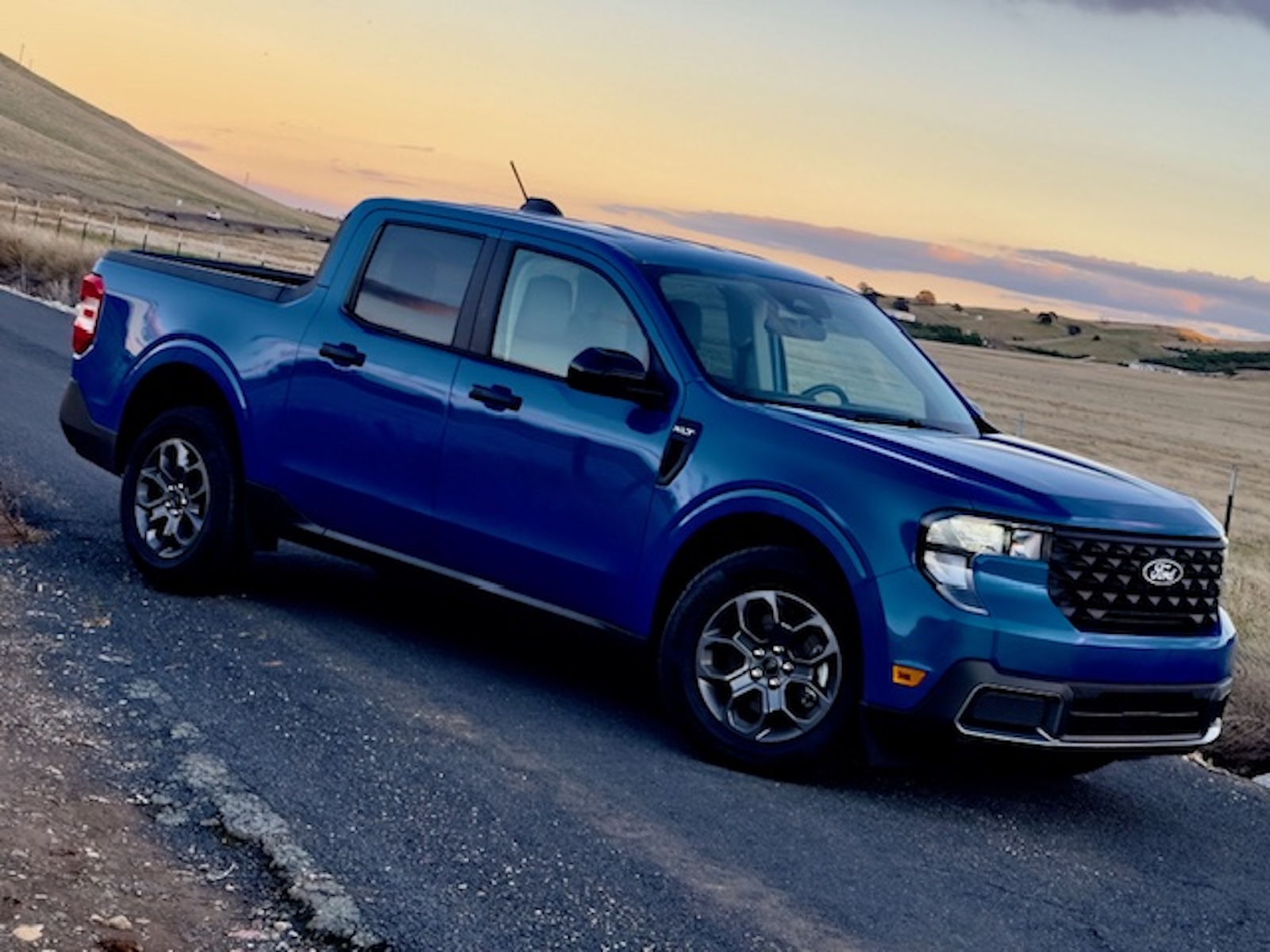
For 2025, Ford gave the masses what they asked for: an all-wheel drive hybrid Maverick pickup.
Introduced three years after that big announcement, the Maverick debuted to considerable praise from critics and consumers alike. As of last month, a total of 454,701 examples of the Maverick have been purchased in the U.S. since the compact pickup was launched in 2021. That’s not bad at all for a compact hybrid pickup truck.
Moreover, the Maverick is remarkably useful as a truck, while simultaneously providing the comfort and easy handling of a compact sedan. While Ford placed an all-or-nothing bet on trucks and SUVs, there was enough car baked into the Maverick to hedge that bet. Base price for the XLT AWD version I drove was $28,895. The price as tested came to $38,860.
Powertrains and Fuel Economy
The 2025 Ford Maverick XLT AWD, which I spent an early November week with, ran a 2.5-liter 4-cylinder engine, fortified by a pair of electric motors. Quoted total system output was 191 horsepower @ 5,600 rpm and 236 lb-ft of torque @ 4,000 rpm. Power was routed to all four wheels through a continuously variable transmission.
The all-wheel-drive hybrid powertrain is new for the 2025 model year. Previous hybrid Mavericks were front-wheel drive only. The little Ford pickup’s quoted payload capacity is 1,500 pounds, while its stated towing capacity is 2,000. Order the optional 4K Tow Package and the Maverick is said to be capable of dragging up to 4,000 pounds in its wake.
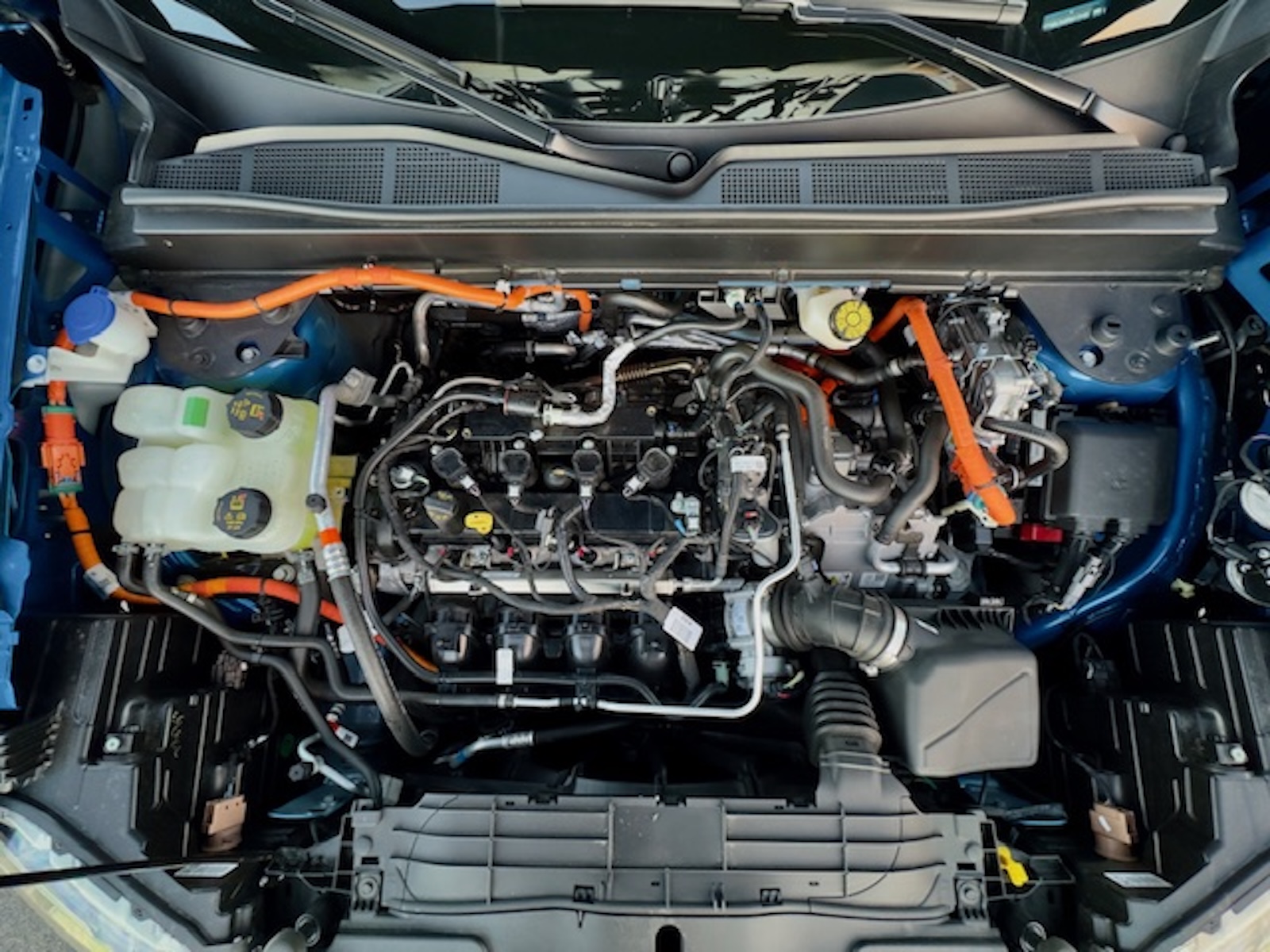
Our tester was powered by a 2.5-liter 4-cylinder hybrid putting out 191 horsepower.
According to the EPA, the 2025 Ford Maverick XLT AWD’s fuel economy numbers come in at 40 mpg in the city, 34 on the highway and 37 overall. I saw 35 mpg overall.
Interior Accommodations
Maverick can only be had in a four-door crew cab configuration, which makes back-seat ingress and egress easier. However, there wasn’t what I would term an abundance of legroom back there. While it was adequate for short trips, long hauls would likely find you with a pair of unhappy 6-foot-tall campers.
On the other hand, the front seats were quite comfortable, with nicely supportive seats and plenty of head, leg and shoulder room.
As for the interior design, while the architecture itself was interesting, the materials employed were not exactly premium. Plastic ruled that domain. Handsomely sculpted plastic to be sure, but it was also so obviously plastic. If ever an interior said, “I was built to a price,” this one did so — in no uncertain terms.
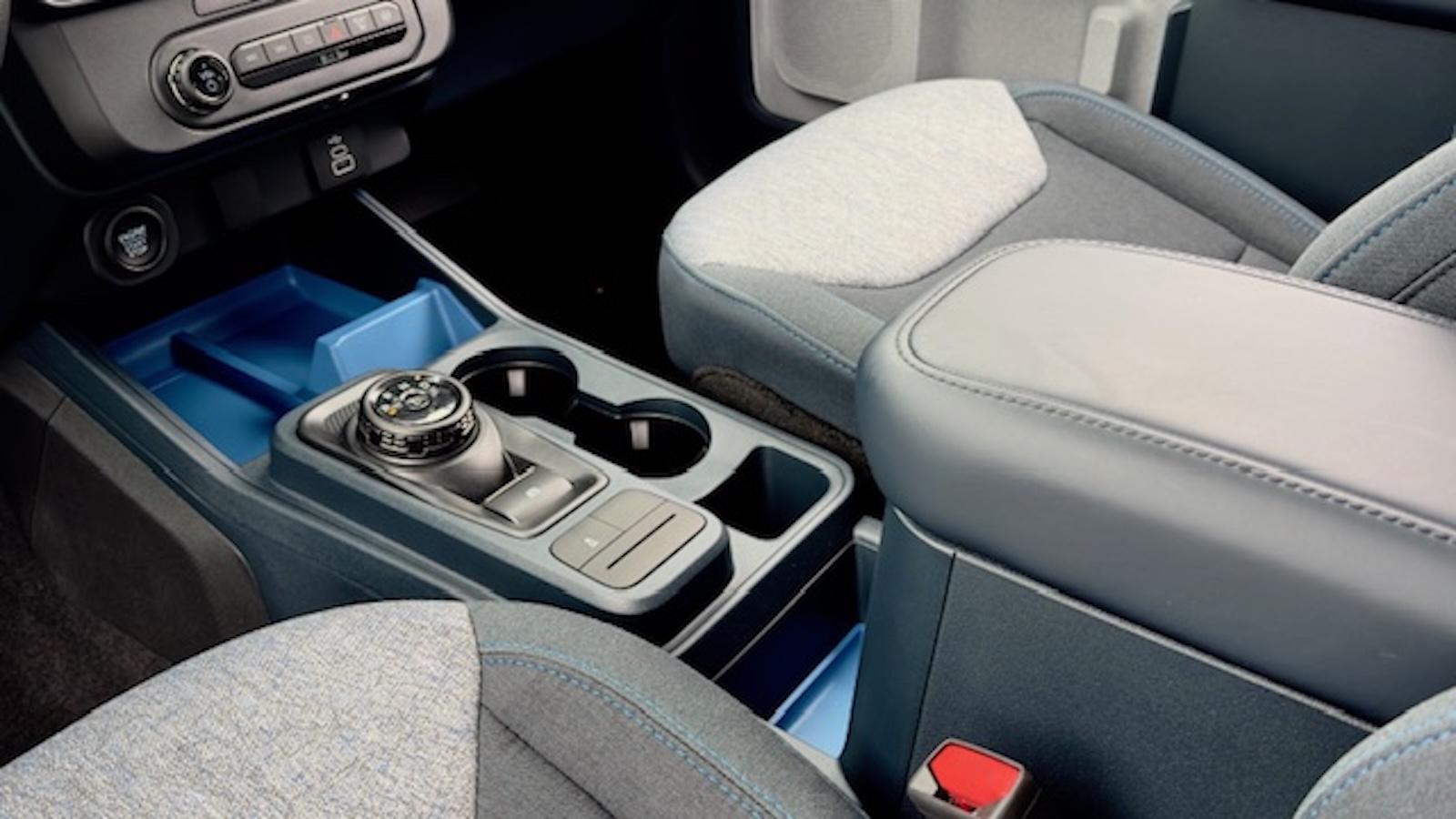
If ever an interior said, “I was built to a price,” this one did so — in no uncertain terms.
Comfort, Convenience & Safety Tech
On the other hand, while the product planning team scrimped on the materials, it went whole-hog on equipment. The Maverick XLT AWD’s standard feature set included 17-inch aluminum wheels, cruise control, a power lock for the tailgate and power exterior mirrors. There was also an 8-inch infotainment touchscreen and a 5G Wi-Fi Hotspot.
On the cargo front, the Maverick had a trailer tow hitch, tie-down hooks in the cargo box and a power tailgate lock. Keep in mind that the XLT version I drove wasn’t the top-of-the-line model for the Maverick. That would be the new-for-2025 higher-performing “Lobo High” trim package.
Optional cargo-handling equipment with which the hybrid Maverick XLT AWD was fitted included tie down locking rails in the bed, a spray-in bedliner and the 4K Tow Package. The Maverick was also fitted with the XLT Luxury Package which included an 8-way power driver seat, heated exterior mirrors, heated front seats, remote start and LED lighting in the cargo box.

Optional cargo-handling equipment with which the hybrid Maverick XLT AWD was fitted included tie down locking rails in the bed, a spray-in bedliner and the 4K Tow Package.
Standard driver’s aids included automated emergency braking, lane-departure warning with lane-keeping assist and adaptive cruise control.
Driving Impressions
The Maverick drove more like a car than a truck. One can daily drive a Maverick as their primary transportation or employ it as a light-duty work truck with ease.
The Ford pickup’s suspension system was just a touch on the firm side, but not uncomfortably so. Ride quality was smooth over all but the harshest surfaces. Handling was competent, if not exactly sporty, and parking was easy.
Acceleration was well within what I consider the acceptable range for a vehicle of this nature. I clocked repeatable zero-to-60 runs in just under seven seconds. Granted, that ain’t nothing to scream about, but it is more than enough to serve the day-to-day needs of pretty much anyone.

The Ford Maverick XLT AWD can tow up to 4,000 pounds when properly equipped.
Steering was accurate — with no wandering. Braking was confident and the Maverick provided a reasonably quiet cabin experience at speed on the highway.
In Summary
Here, I must admit I was skeptical when Ford’s spokespeople announced the company was going to focus on trucks and SUVs for the foreseeable future. My rational mind understood the decision. However, the side of my brain devoted to pleasure lamented the cancellation of products like the feisty little Focus ST and SHO versions of the Taurus.
Sometimes, car companies, like people, must do what they have to do in order to continue doing what they want to do. With the 2025 Maverick XLT AWD, Ford has a useful, maneuverable, fuel-efficient offering that hopefully will allow it to build something new like the Ford GT in the near future. My fingers are crossed with hope for the future.
0 Comments