

The battle for the privacy rights for vehicle owners has been steadily heating up as today’s cars, trucks and SUVs become ever-more connected. A new study isn’t likely to assuage privacy wonks’ concerns, as researchers found drivers can be tracked through the sensors in tire pressure monitoring systems.
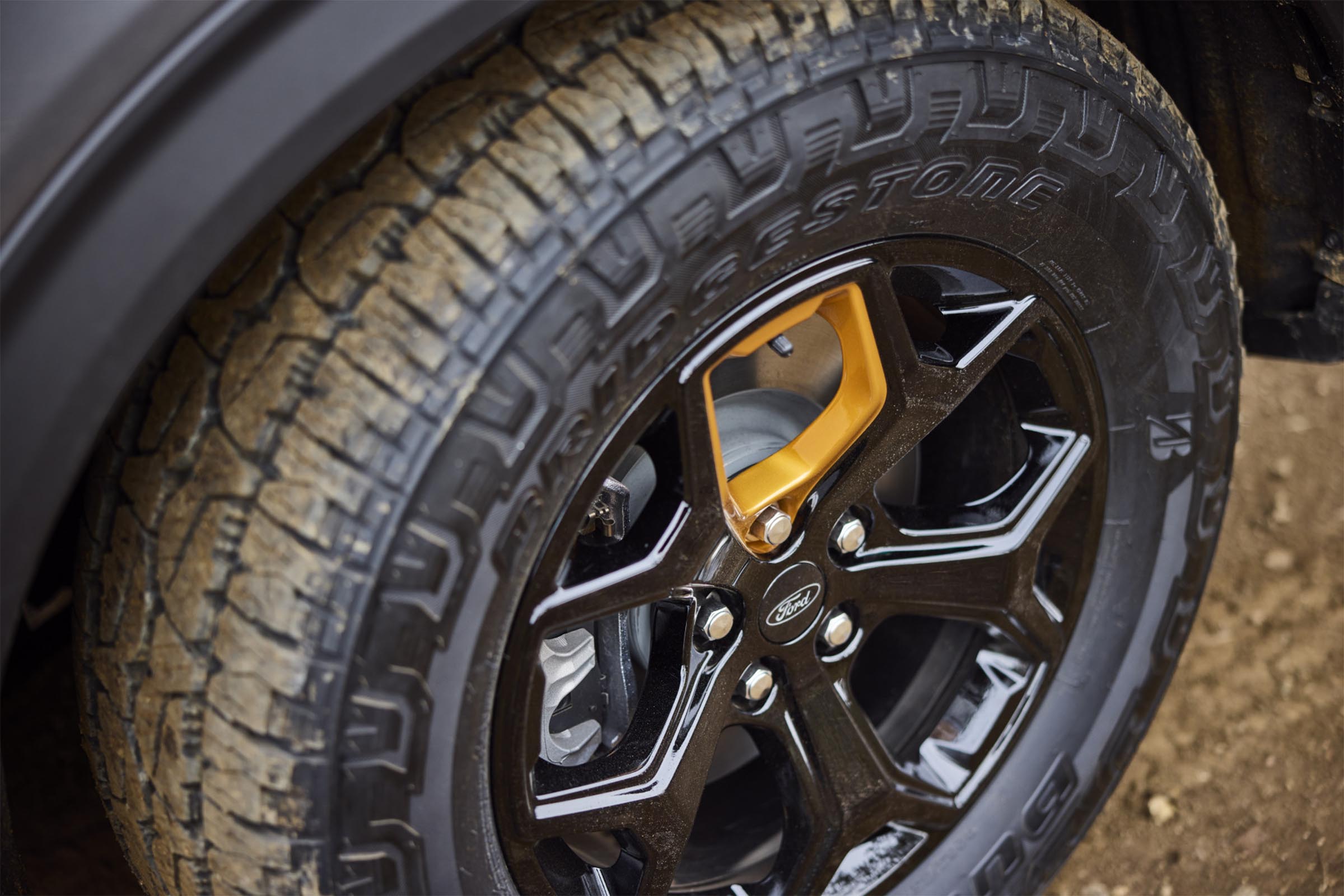
Researchers found TPMS sensors can be used to track vehicles.
Researchers at IMDEA Networks Institute found that tire pressure sensors can be used to track vehicles. The systems are basically standard equipment on new vehicles these days. Because correct tire pressure impacts the ride and handling of a vehicle, using them to get tire inflation correct has been credited with saving thousands of lives and millions of gallons of gasoline.
How it works
However, the sensor that takes the tire pressure reading and sends the PSI number to the driver also emits an individual identification number using an unencrypted wireless signal. So anyone who wanted to track someone could use a radio receiver to capture the signal and begin tracking.
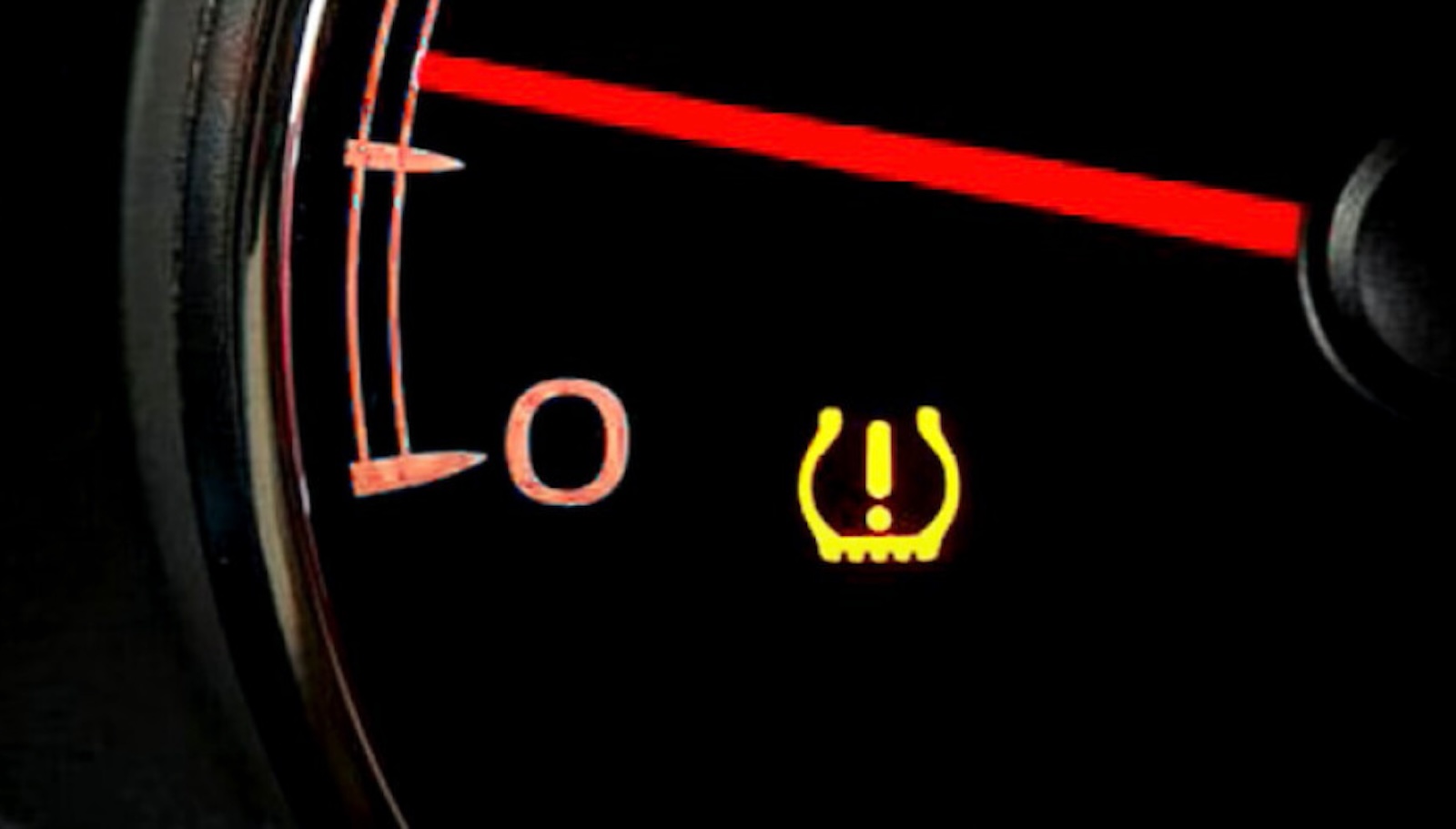
The sensor that lights up this warning also emits an individual identification number using an unencrypted wireless signal.
“Our results show that these tire sensor signals can be used to follow vehicles and learn their movement patterns,” said Domenico Giustiniano, research professor at IMDEA Networks Institute, an organization researching and developing future network technologies, and based in Madrid, Spain.
“This means a network of inexpensive wireless receivers could quietly monitor the patterns of cars in real-world environments. Such information could reveal daily routines, such as work arrival times or travel habits.”
A team of researchers collected signals from more than 20,000 vehicles to prove their theory and, in the process, discovered that not only could they follow a vehicle without having to actually be able to see it, but also the signal indicated the type of vehicle and the relative weight of the load. So if it were a truck carrying cargo, trackers could discern that. This only raises more red flags in an era where security issues are top of mind for many.
MORE AUTO NEWS
- Iranian War Could Create a New Energy Crisis
- Honda to Follow Toyota, Exporting U.S.-Made Vehicles to Japan
- Ford’s Recall of 4M Trucks Underscores Growing Issue with Onboard Software
What to do about it
As vehicles become increasingly connected, even safety-oriented sensors like TPMS should be designed with security in mind, since data that appears passive and harmless can become a powerful identifier when collected at scale,” said Alessio Scalingi, a former PhD student at IMDEA Networks and now Assistant Professor at UC3M, Madrid.

A team of researchers collected signals from more than 20,000 vehicles to prove their theory.
Despite these risks, current vehicle cybersecurity regulations do not yet specifically address TPMS security. The researchers warn that without encryption, modern tire sensors remain an easy target for passive surveillance.
“TPMS was designed for safety, not security,” noted Yago Lizarribar, former PhD student at IMDEA Networks during the research study, and now Researcher at Armasuisse, Switzerland. “Our findings show the need for manufacturers and regulators to improve protection in future vehicle sensor systems.”
Therefore, the research team urges the manufacturers and policymakers to strengthen cybersecurity in future cars, so that safety systems do not become tools for tracking the population.

0 Comments