
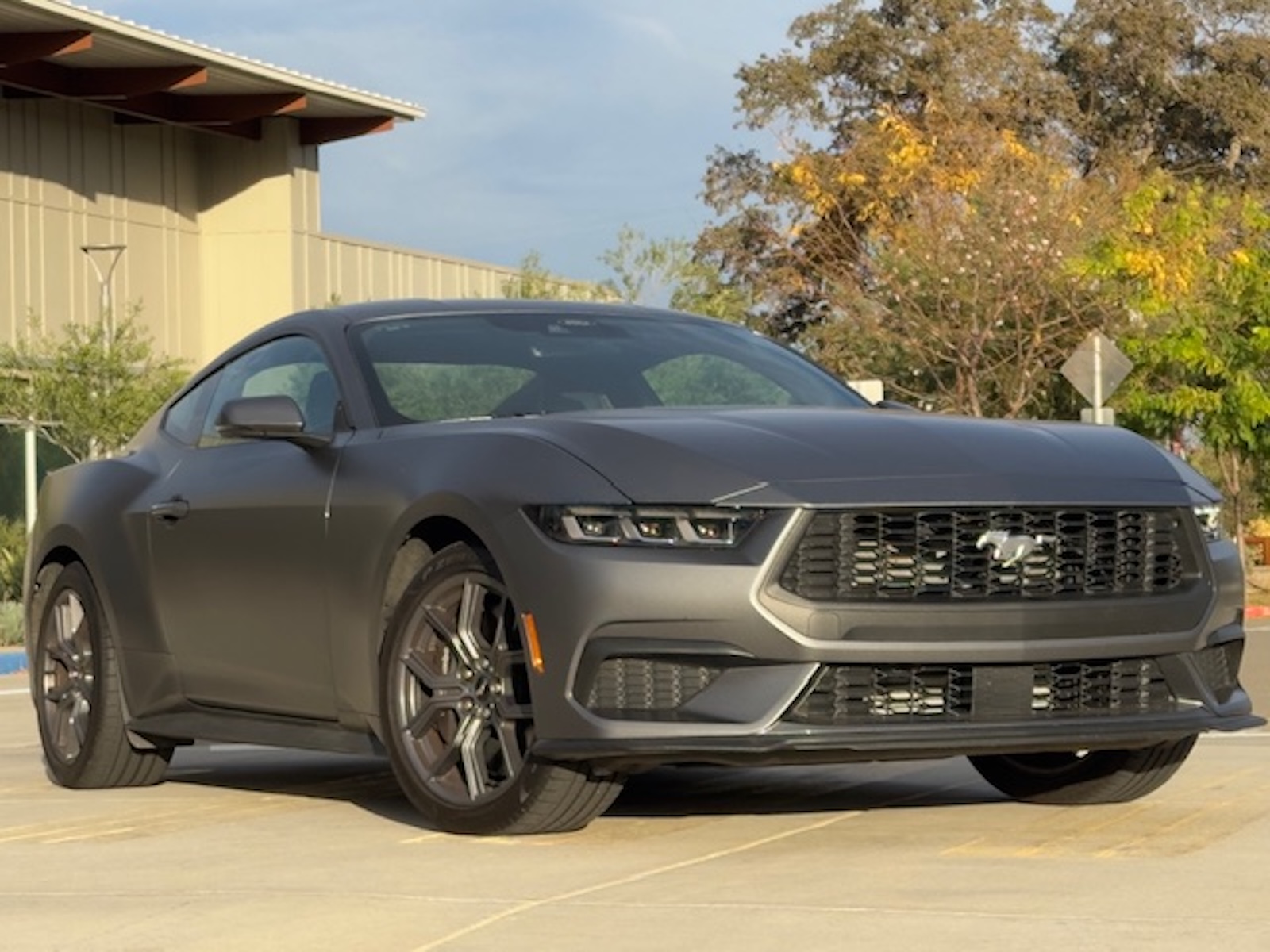
Pony cars have come and pony cars have gone, and through it all, Ford’s Mustang is the only one to have enjoyed continuous production since its introduction back in 1964. But does the sporty Ford’s original youthful spirit still shine through?
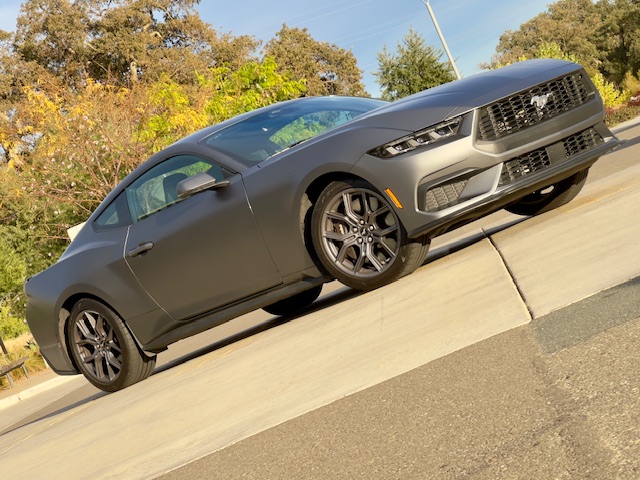
Does the 2025 Ford Mustang EcoBoost Coupe embody the spirit of the original pony car? Kinda.
Of course, today’s Mustang is considerably larger, heavier and more sumptuously equipped than the original. Something you can say about most 60-year-olds really.
Currently in its seventh generation, the Ford Mustang is the model for which an entire genre of performance cars was named. However, today’s Mustang is more of a GT car than a traditional pony car. In fact, some people have even likened its appearance to the grand touring coupes offered by Aston Martin. (Squint and look at the Gen 7 Mustang’s profile, you’ll see it.)
Having undergone a complete redesign for 2024, the 2025 Mustangs have a lot in common with the ’24s. In fact, there’s nothing really new about the Mustang EcoBoost for the ’25 model year. However, there is a new 2025 Ford Mustang 60th Anniversary Edition, which Headlight.News covers separately.
Powertrains and Fuel Economy
Ford seems to have a thing for 2.3-liter fours, so much so that whenever I hear that displacement designation, my brain automatically goes “Ford.” For this application, the DOHC 16-valve engine’s factory quoted output is 315 horsepower and 350 lb-ft of torque. The powerplant feeds the rear wheels through a 10-speed automatic transmission.
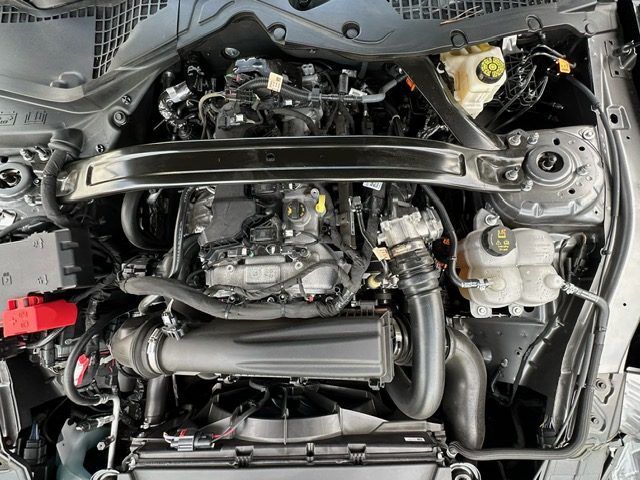
For this application, the DOHC 16-valve engine’s factory quoted output is 315 horsepower and 350 lb-ft of torque.
The EPA estimates the High-Performance Package with which the Mustang I sampled was equipped gives it fuel economy ratings of 21 mpg in the city, 29 on the highway and 24 combined. That proved somewhat accurate, as I saw 23 mpg overall.
Interior Accommodations
As do many other contemporary autos, the Mustang now features a widescreen monitor housing that features an instrumentation screen behind the steering wheel and a touchscreen infotainment readout to the far right of the wheel, both of which are reconfigurable.
The setup gives the venerable pony car a wholly contemporary look. However, Mustang purists may lament the demise of the old-school analog look. This is why Ford is offering an over-the-air update to make the monitor behind the steering wheel imitate that style.
As has always been the case, the Mustang is a 2+2 proposition. While there is more than adequate room in the front seats, the rear seats are not as accommodating. My EcoBoost Coupe was fitted with the Premium Package, which meant the seats were finished in what I believe to be leather, as were the e-brake handle and heated steering wheel.
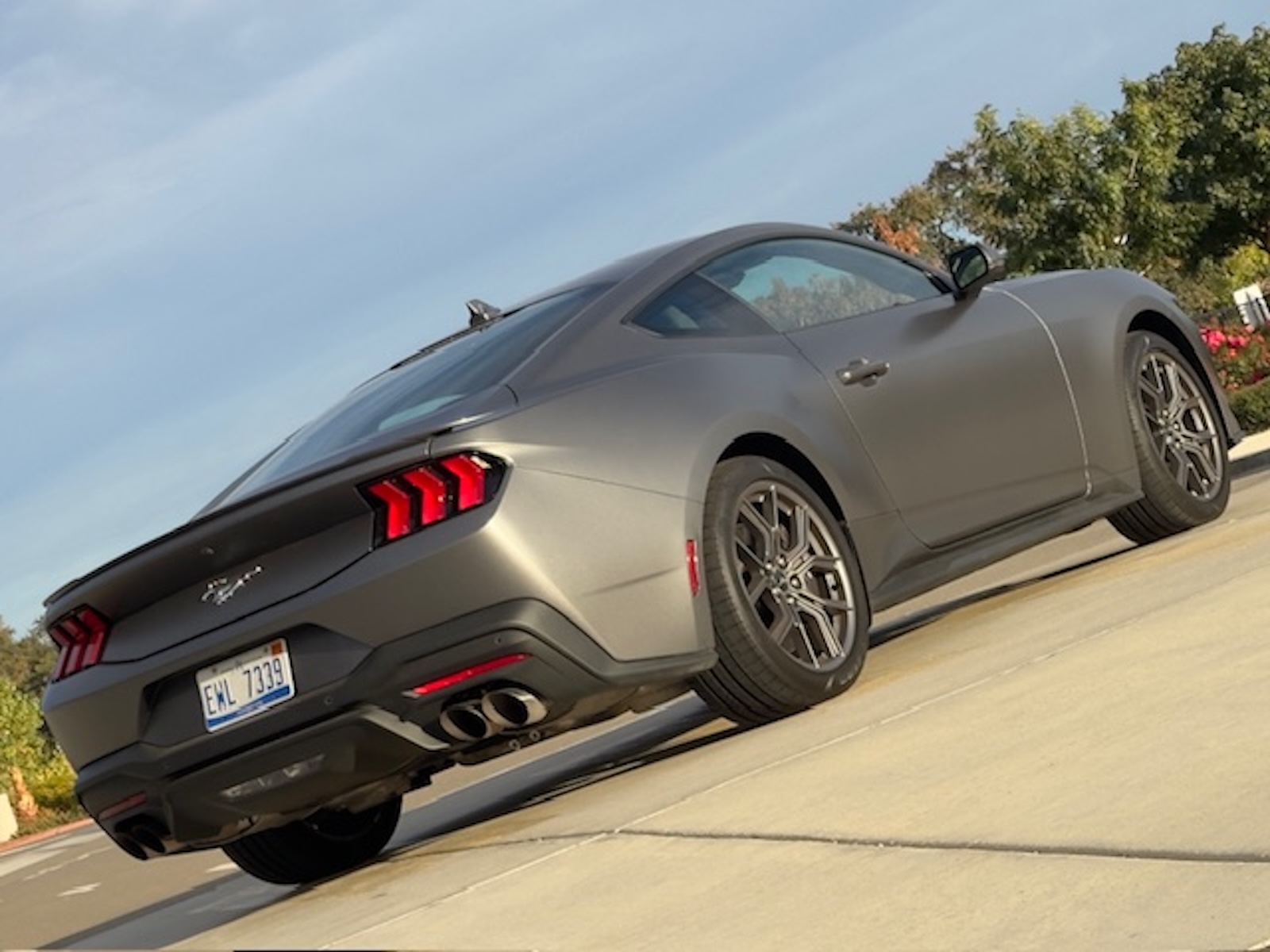
Currently in its seventh generation, the Ford Mustang is the model for which an entire genre of performance cars was named.
Comfort, Convenience & Safety Tech
Ford’s Sync4 infotainment operating system remains one of the easiest to use on the market. Apple CarPlay and Android Auto are standard, and the optional wireless smartphone charger with which my test car was equipped made keeping my phone charged as simple as laying it on the pad.
The Mustang’s infotainment functions also responded to voice commands, while Ford’s Power-Up software gave the Mustang’s digital features the ability to accept over-the-air updates.
Ford’s Co-Pilot360 driver’s aids included smart cruise control, lane departure warning and lane keeping assist, as well as active pothole mitigation — the latter of which came courtesy of the Performance Package.
Driving Impressions
Full disclosure, the Mustang showed up in my rotation after I had spent a week each with the Lucid Air, Range Rover Sport and Kia Niro EV. In between, I had done a 250-mile drive in my 2013 Porsche Boxster. As a result, the coarseness of the Mustang’s powertrain was laid painfully bare.
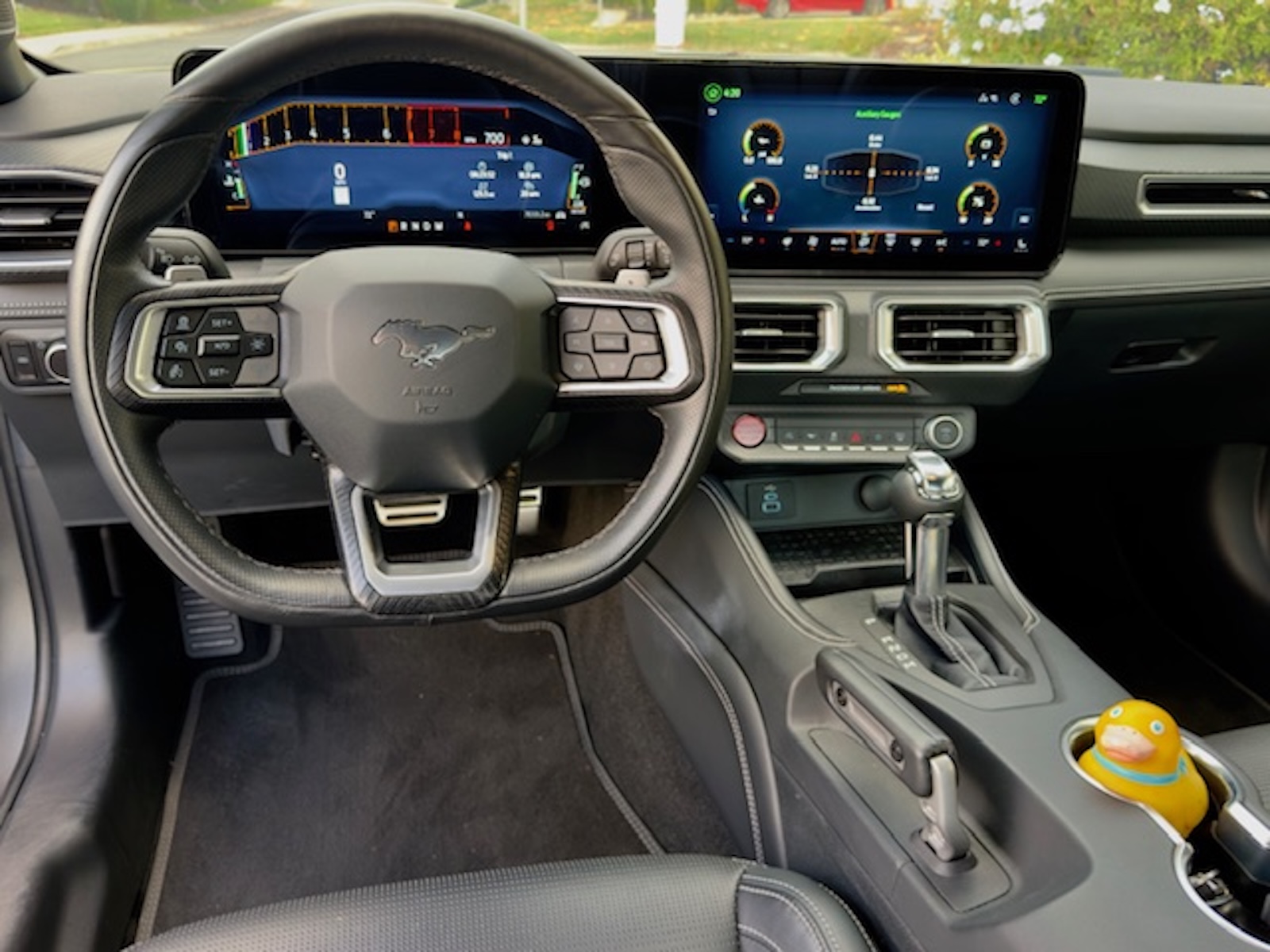
The Mustang now features a widescreen monitor housing that features an instrumentation screen behind the steering wheel and a touchscreen infotainment center.
Exacerbating the situation, the 10-speed automatic transmission shifted abruptly and often got caught in the wrong gear. What’s more, the engine note could only charitably be characterized as a droning grumble (a drumble, if you will). Long story short, I was considerably less than impressed with the refinement of the powertrain.
Now, with all of that said, the engine does produce a solid 315 hp and 350 lb-ft of torque. This, in conjunction with the Mustang’s curb weight of 3,579 pounds made for zero to 60 times in the mid 4-second range with the Performance Package. What’s more the turbo 4 Mustang has considerably less weight in its nose than the GT with the V8. Thus, the EcoBoost Mustang turns in more willingly and just generally feels more agile than its V8-powered stablemate.
However, the sound of the 2.3-liter 4 will never approach the aural magnificence of its 5.0-liter Coyote V8 counterpart. Still though, the Mustang EcoBoost is reasonably quick, handles well, and is genuinely fun to drive — as long as you’re willing to overlook the lack of sophistication the powertrain exhibits.
In Summary
Now right about here, I’m guessing some of you out there are tuning up your keyboards to tell me about myself for having the audacity to pan America’s beloved pony car. Here’s the thing though, if the Mustang EcoBoost came in at around 30 grand nicely equipped, I’d be a lot more forgiving. But my tester commanded an as-driven price tag of $51,935.
Given there are all sorts of far more refined powertrain options available when you ‘re considering laying out $50k, I can’t see my way clear to giving the 2025 Ford Mustang EcoBoost Coupe Premium a pass. It is fun to drive; I’ll give it that. But it really ought to be a more polished offering with that price tag.


Good review. Maybe Ford will improve the NVH and price (but don’t hold your breath.}