
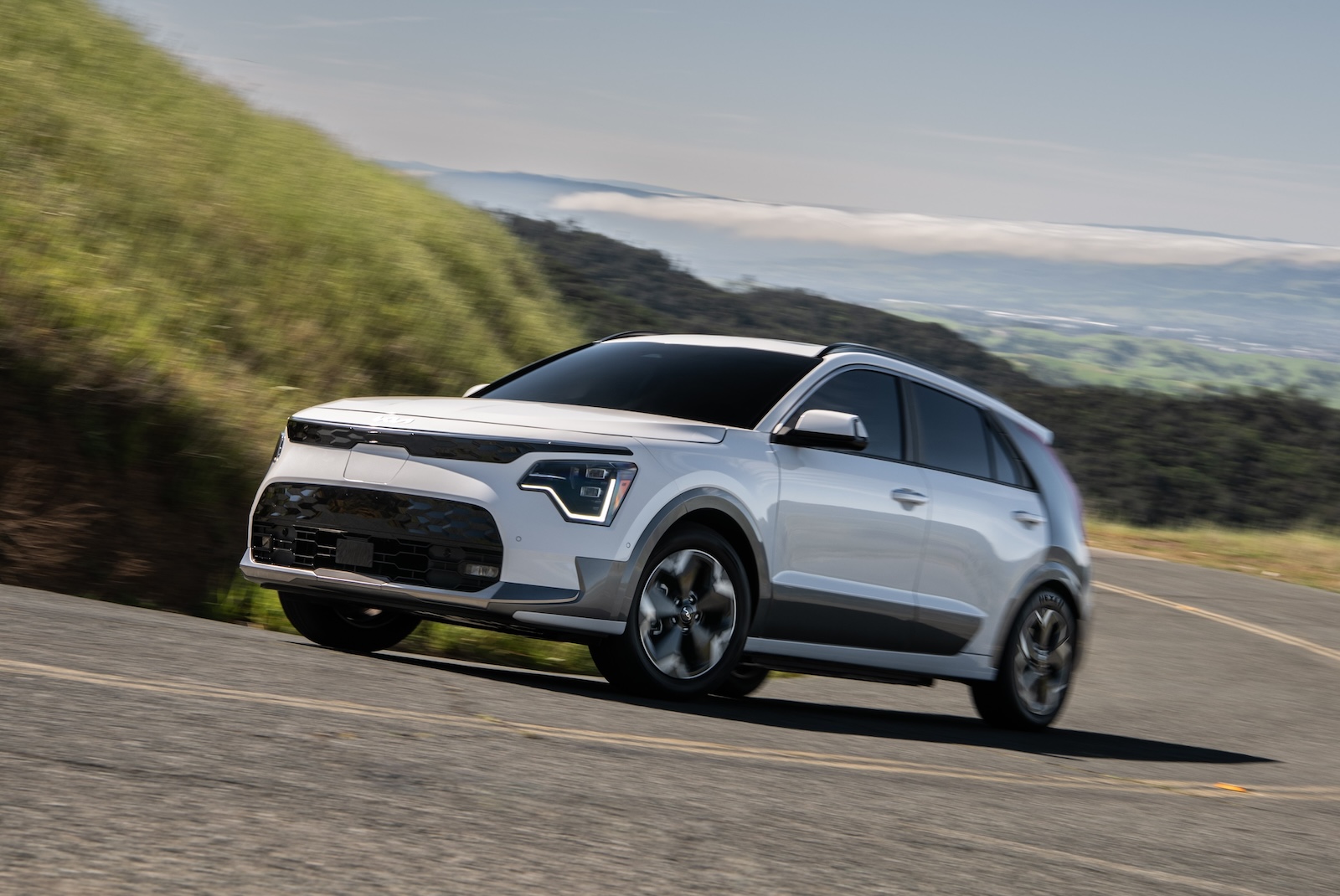
The electric vehicle segment took a blow at the end of September, when the federal EV tax incentives disappeared. Not only did it chill new vehicle sales overall, it may also have slowed the ongoing development of the vehicles. There may be no better example than the 2025 Kia Niro EV Wave.
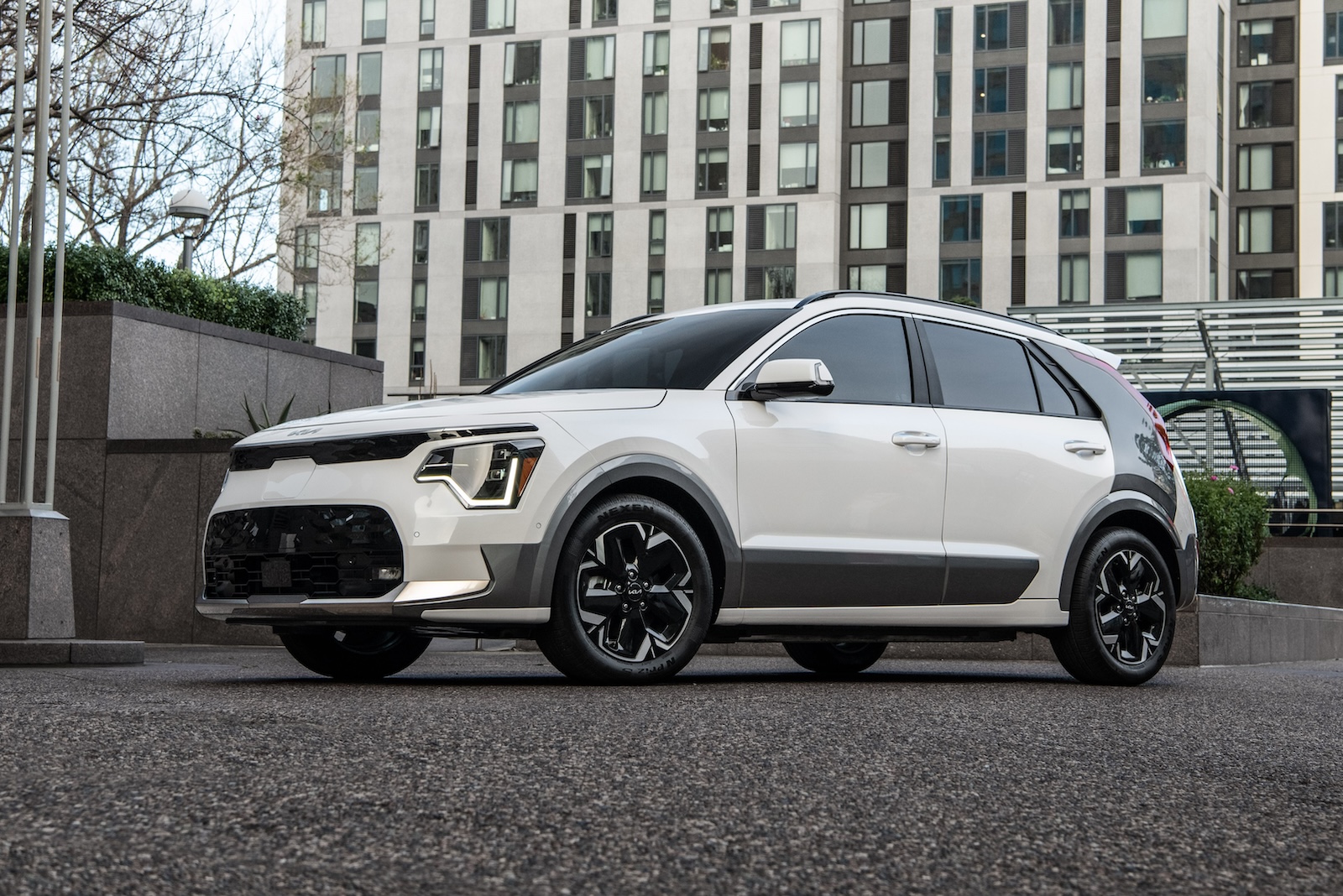
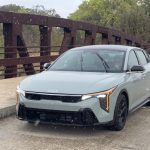
One needs a pretty sharp eye to tell the 2025 Kia Niro is an electric vehicle at first glance.
With the current administration seemingly intent on strangling EVs in their proverbial cribs, one has to wonder what the future holds for this technology. As good as models like the 2025 Kia Niro EV are, continued governmental support would still go a long way toward ensuing their fortunes in this country. For now, EVs are being forced to make it on their own merits, which raises the question — is Kia’s entry level EV offering up to the task?
Because Kia offers three different powertrains on the same platform for its subcompact SUV, one needs a pretty sharp eye to tell the 2025 Kia Niro is an electric vehicle at first glance. And, given the Niro’s handsome styling, this is not altogether a bad thing.
Sporting a tasteful array of rakish lines — somewhat reminiscent of much pricier models from Audi — the Niro has a classy presence. Of course, those in the know will spot the Niro EV’s lack of a front grille and absence of a tailpipe.
Either way, the Kia doesn’t look like you cheaped out when you copped your new ride. This, when combined with the value proposition for which Korean cars in general have staked out as their unique selling positions, makes the Niro EV a compelling offering.
Granted, its range is bested by some of its key competitors, but it the Kia is youthful, chic and backed by one of the best warranties out there. In addition to five years or 60,000 miles of basic warranty — which includes free roadside assistance — Kia affords Niro EV buyers 10 years or 100,000 miles on the powertrain. And yes, this includes the battery pack.
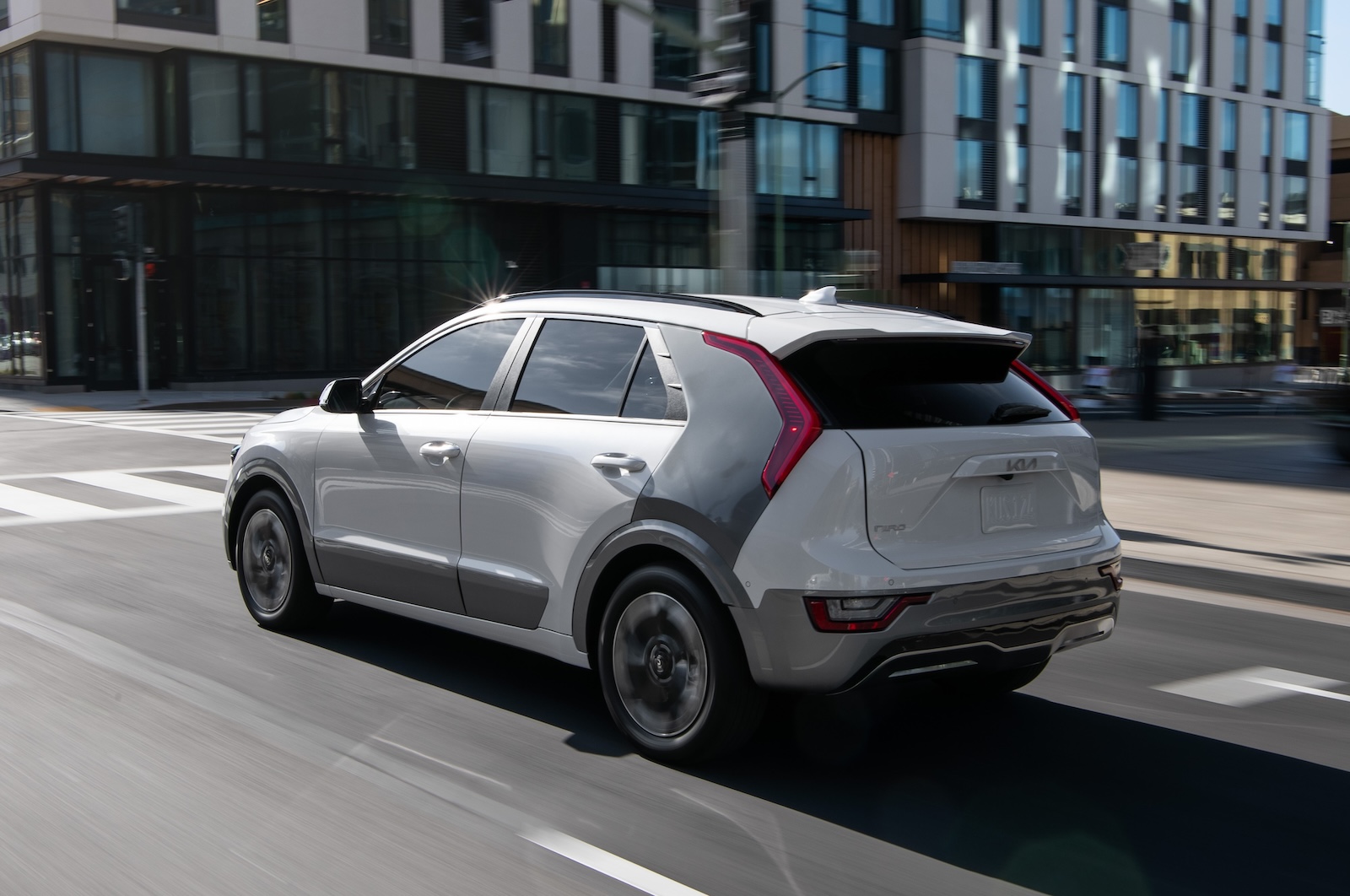
Sporting a tasteful array of rakish lines, the Niro has a classy presence.
Powertrains and Fuel Economy
While we’re on the subject of the powertrain, the Niro EV uses a single electric motor to drive the front wheels. Quoted output is 201 horsepower at 9,000 rpm and 188 lb-ft of torque, which is available in full at throttle tip in. The electric motor drives the front wheels directly, so there is no need for a transmission.
The permanent-magnet synchronous AC device is fed by a 64.8 kWh liquid-cooled lithium-ion polymer battery pack. This is serviced by an 11-kW onboard charger, which is capable of a peak DC fast-charge rate of 85kW. According to EPA estimates, the 2025 Kia Niro EV Wave is capable of traveling up to 253 miles on a full charge, which the agency says pencils out to approximately 30 kWh per 100 miles.
The EPA’s MPGe estimates are 126 in the city, 101 on the highway and 113 combined. The Niro EV is said to need 7.5 hours to accomplish a full state of charge from complete battery depletion, using a 240v source.
I saw a charge time of 40 minutes from 80% depleted to 100% charged using an EVgo DC fast charging station rated at 350kW DC. The maximum range I observed was 225 miles, with temperatures in the upper 70s to low 80s.
Interior Accommodations
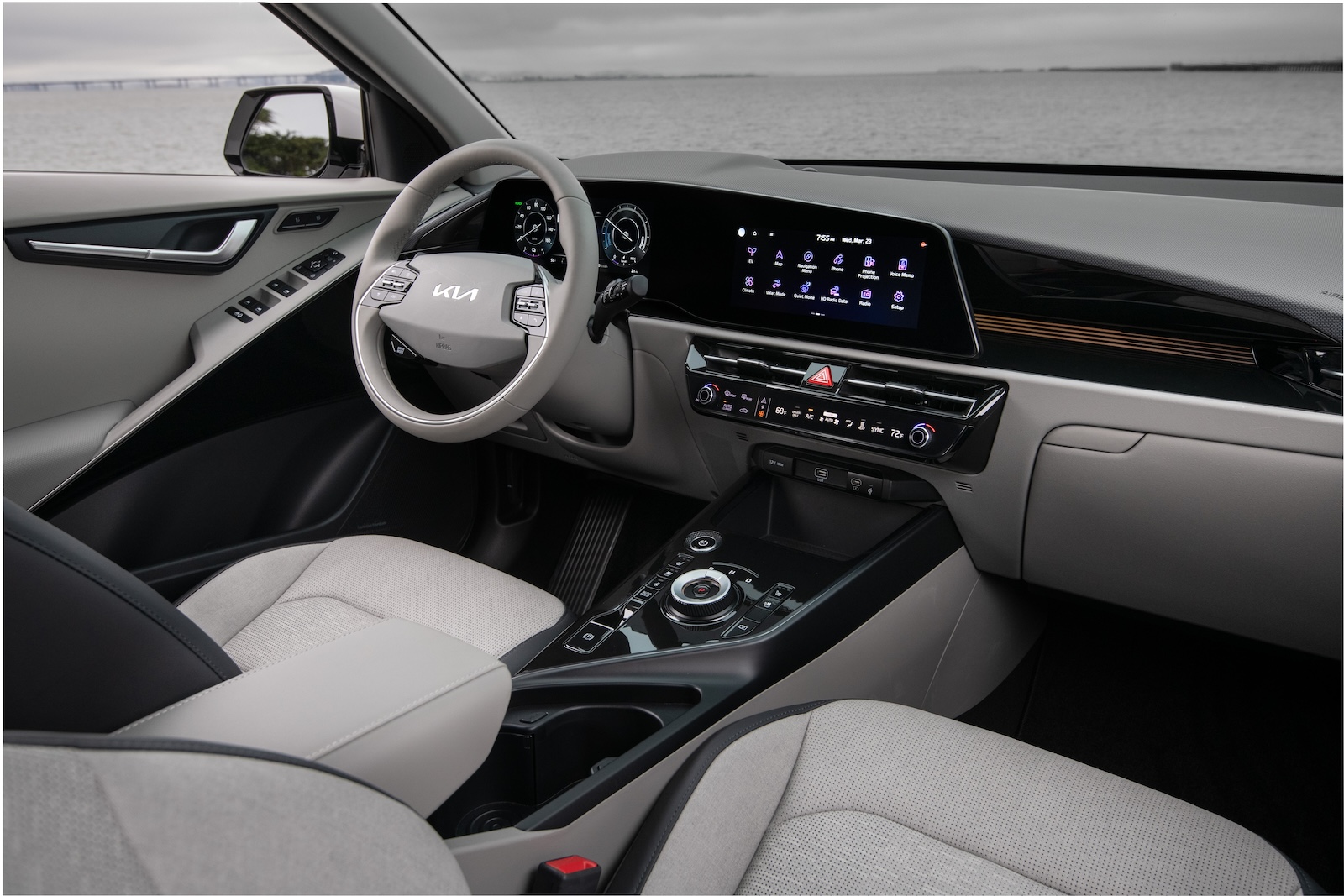
The little EV’s interior architecture was sophisticated in ways that gave the Niro the appearance of being far more costly than it actually was.
I’ve come to expect a lot from Kia in terms of interior design, and the Niro EV did not disappoint me. The little EV’s interior architecture was sophisticated in ways that gave the Niro the appearance of being far more costly than it actually was. The quality of the center console’s switchgear, the unique design of the steering wheel, as well as the sweeping lines of the door panels and dash contributed generously to this impression.
What’s more, Kia’s reps say the interior is largely comprised of recycled materials as well as organic substances such as eucalyptus leaves. In-cabin storage was plentiful, there’s a trunk in the front, and all four of the seating positions provided respectable comfort.
All in all, the Kia Niro EV Wave’s passenger compartment struck me as a pleasant place from which to watch the world go by.
Comfort, Convenience & Safety Tech
As I mentioned at the top of this report, Kia’s products provide good value for the money, which is just as true for its smallest car as it is for the marque’s flagship offering. Standard features on every Niro EV includes navigation in addition to wireless CarPlay and Android compatibility.
Wireless smartphone charging is also a standard feature. Heated front seats, remote start, dual-zone automatic climate control with rear vents and a power-operated liftgate for the cargo compartment are included in the base price too.
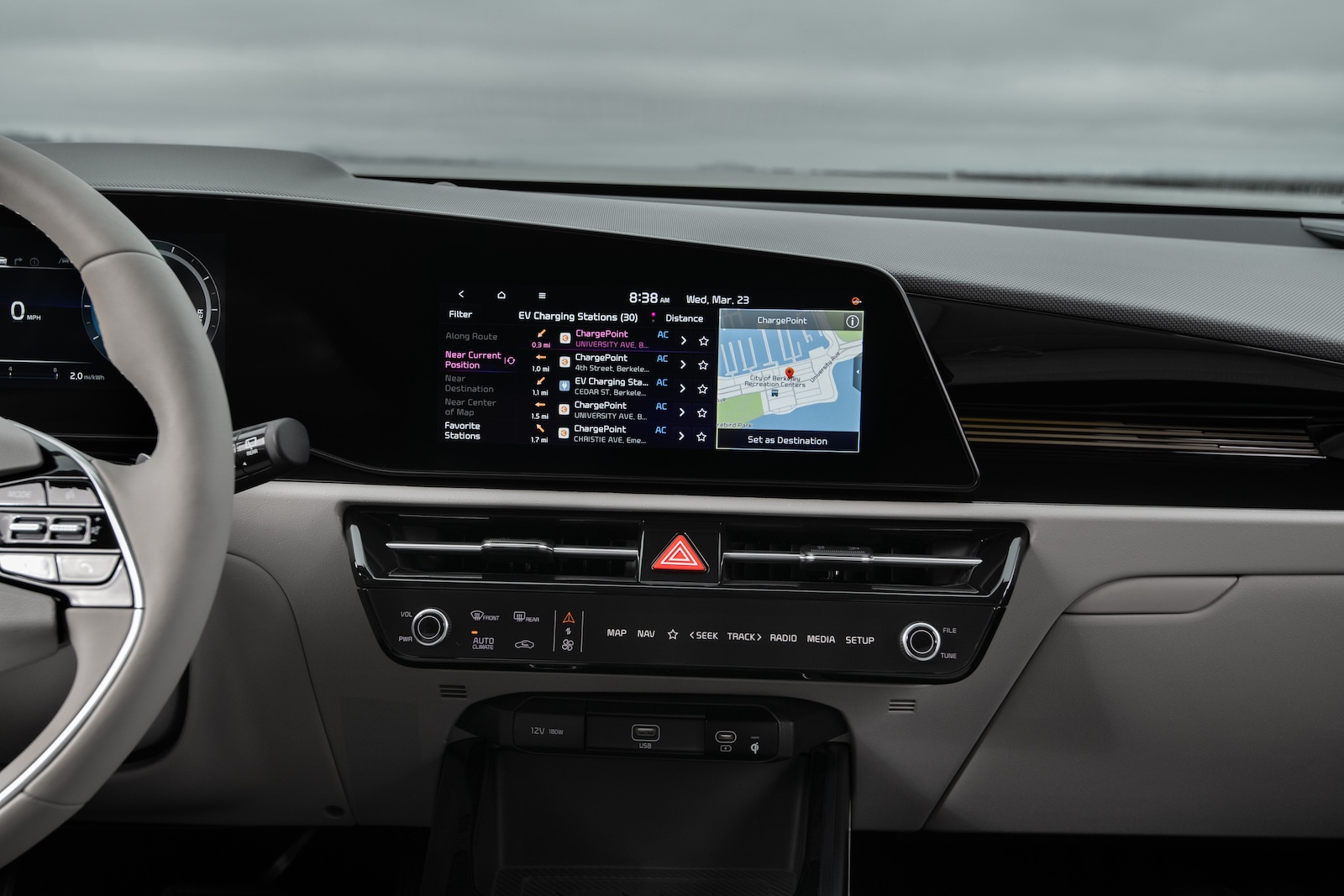
The quality of the center console’s switchgear, the unique design of the steering wheel, and more all punch above its financial weight.
The Wave trim package, with which my evaluation car was equipped, also featured a power-operated sunroof, power adjustments for both front seats, a heated steering wheel and ventilation for both front seats.
The Kia’s digital key feature gave me the capability of accessing the Niro from my telephone, while Harman/Kardon delivered my favorite tunes with clarity and precision.
Standard driver’s assistance tech included forward-collision warning, automated emergency braking, lane-departure warning and lane-keeping assist, as well as smart cruise control with a lane-centering feature.
The Wave package added a head-up display, blind spot monitoring, parking distance warning, parking collision avoidance, highway driving assistance and remote parking assist.
Driving Impressions
Quietness, smoothness and crisp acceleration have been among the hallmarks of every EV I have ever driven. Here again, the Niro EV lived up to my expectations. Now, with that said, the Kia’s smallest EV also gave me little reason to drive it with the same verve as I would its EV6 GT sibling. Instead of pavement smoking performance, the Niro EV is about comfortable and competent transportation.
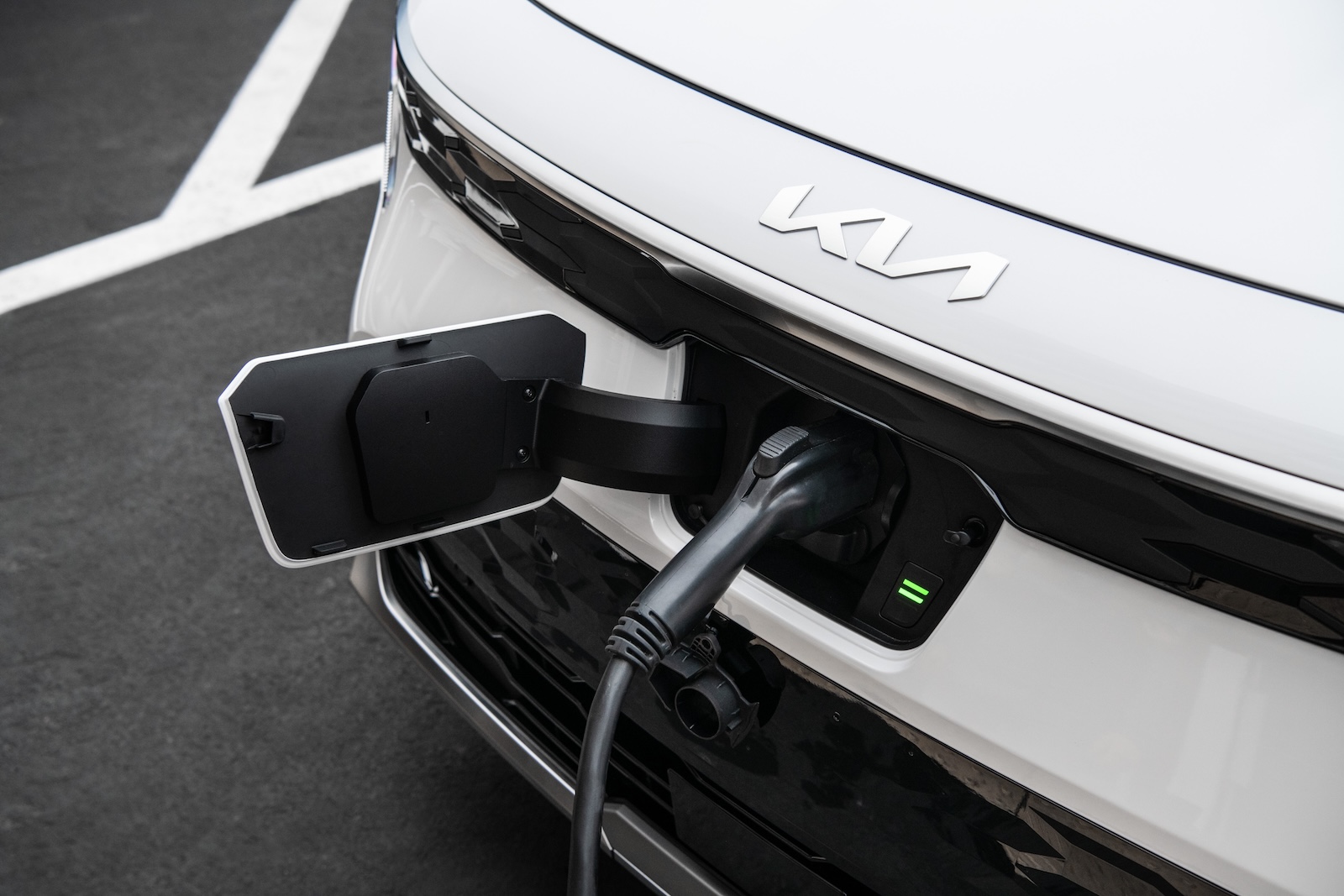
The Niro EV is said to need 7.5 hours to accomplish a full state of charge from complete battery depletion, using a 240v source.
I saw a zero to 60 time of just under seven seconds, which isn’t stellar. Again though, this wasn’t disappointing, given the electric Niro’s intended purpose. The Kia’s steering was confidence inspiring and the paddles behind the steering wheel could be used to set the Niro up for one-pedal driving. This, for all intents and purposes, relegated the brake pedal to “use only in case of emergency” status.
Driving and stopping the Niro EV using only the throttle was fun and served to extend the Kia’s range by regenerating electricity as the EV slowed to a stop. Yes, the brakes will do that too. However, you get a longer recharge lifting off the throttle to bring the Kia to a gradual stop. What’s more, it’s a rewarding way to drive because it demands planning and driver engagement.
Stability was good at highway speeds and noise levels were commendably low, if not exceptionally. Getting up to speed when entering freeways presented no concerns. Nor did keeping pace with fast moving traffic once in the Niro was in the mix.
In Summary
The first EV I ever drove was Nissan’s Leaf, back in 2010. Driving the Niro EV, I was struck by how far the technology has progressed over the past 15 years. The 2010 Leaf was said to have a range of 100 miles — though the best I ever saw was around 75. I saw 225 in the Kia. What’s more, the Niro accomplished this while coddling its occupants with what can be honestly characterized as a near premium experience.
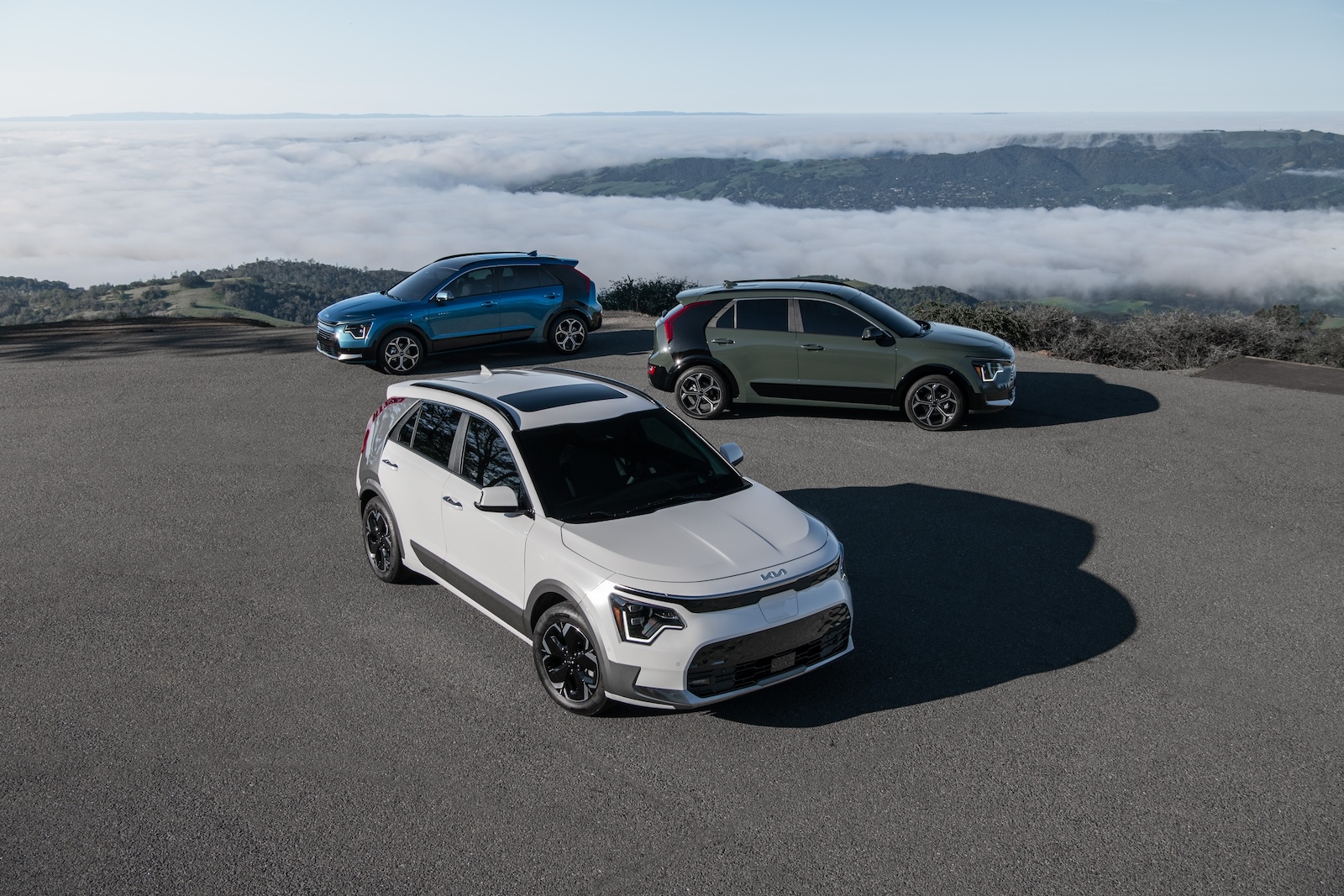
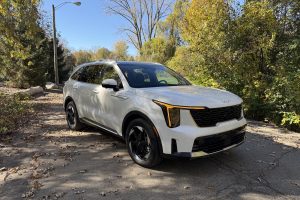
The 2025 Kia Niro comes in three different forms, meeting the needs of a variety of buyers.
Further, when adjusted for inflation, the Kia costs considerably less than the Nissan did when it was new. The price as tested for the 2025 Kia Niro Wave I drove (the top trim level) was $46,425. The 2010 Nissan Leaf’s $32,780 base price — adjusted for inflation — would be $49,135.13 today.
In other words, the 2025 Niro EV is both better equipped and has greater range than the 2010 Leaf, for what works out to be over $3,000 less money.
This is why I am not enthusiastic about the stance the current administration is taking toward EVs. In nearly every case they are far more efficient than their direct combustion engined counterparts. They are also smoother, require less maintenance and are less expensive to fuel.
Keep in mind, this is with just over two decades of development, compared to nearly a century and a half of development for ICE-powered automobiles. What’s more, given the pace at which EVs have been advancing — all things being equal — the time is rapidly approaching when they will be just as quick to refuel and have more range than ICE-powered automobiles. This is why I find the myopic perspective the nation’s current chief executive has on this technology to be mind-boggling.
But hey, that’s politics — right?

0 Comments