
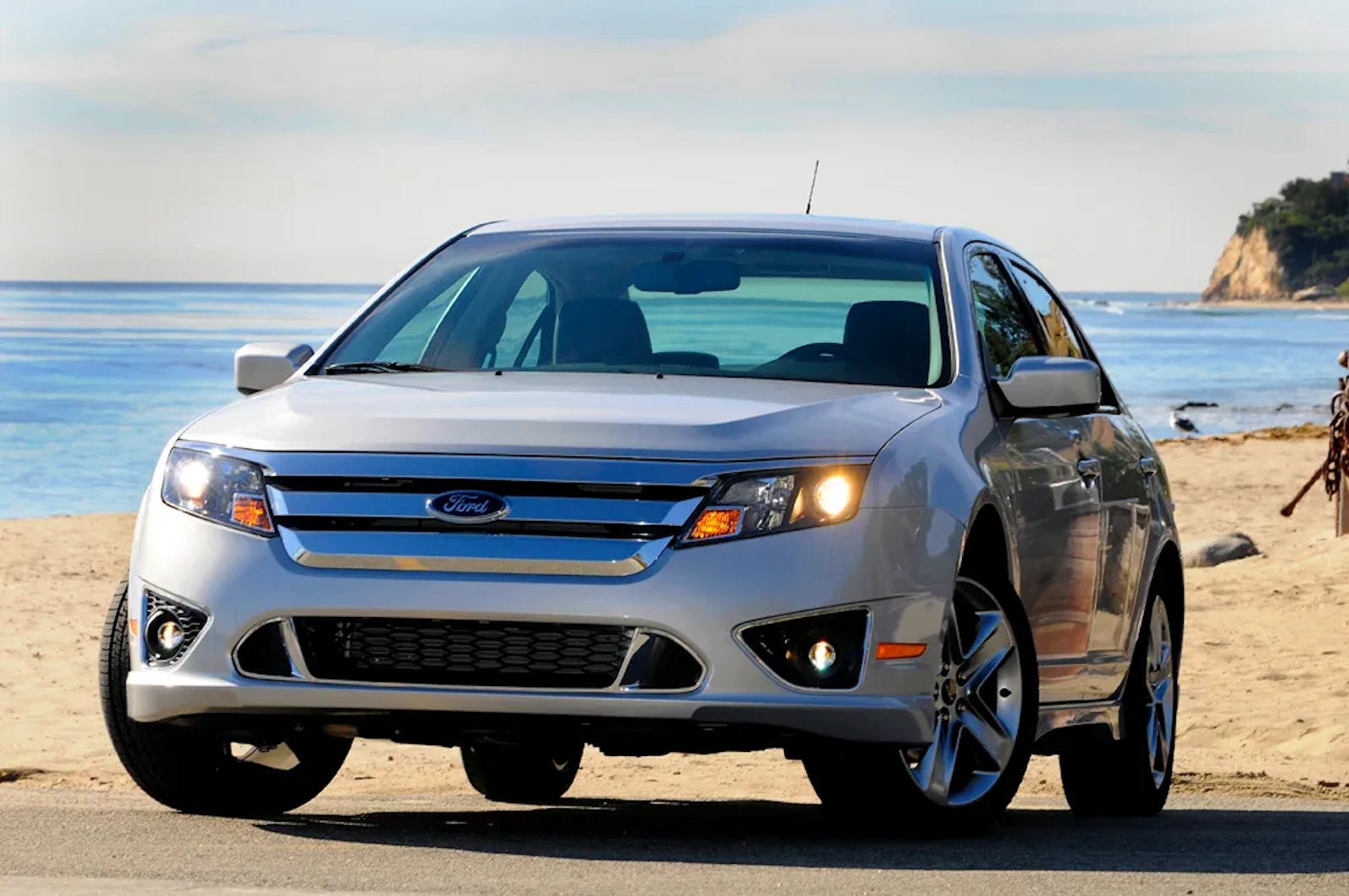
On the eve of the Detroit Auto Show, Ford CEO Jim Farley told reporters that the company is focused on improving vehicle affordability, and suggested bringing sedans back could be part of that effort.
Ford began phasing out production of its traditional sedans in 2018. By the end of 2020, it no longer produced the Ford Fusion, Focus, Fiesta, C-Max or Taurus or the Lincoln Continental in the U.S. The move was made because cars were not profitable for the company. Only the Ford Mustang remains.
After introducing a new partnership with clothing maker Carhartt and debuting the Ford Bronco RTR performance off-roader, Farley said the company was focused on international trade issues, such as the USMCA trade agreement, delivering on the company’s latest Model T moment, which is the electric vehicle the company is prepping for at its Louisville (Ky) plant, and vehicle affordability.
Bring on the four doors
Ford still build sedans for Europe, China and other markets, just not in the U.S. However, most of its competitors do.
“Never say never,” he said. “All I can say is, you know, when we got out of the sedan business in the U.S., I think the philosophy we had is if we lose big money on a sedan, we’re not going to do one until we figure out how to make money on a sedan.”
Farly then echoed the sentiment other automotive executives has offered in the years since Ford — and later General Motors and Stellantis — left the segment: sedans draw buyers. They remanin an important segment of the market.
“The sedan market is very vibrant,” Farley said. “It’s not that there isn’t a market there. It’s just we couldn’t find a way to compete and be profitable. Well, we may, we may find a way to do that.”
More Auto news
- Despite Slowdown, GM’s Barra Still Sees a “Path to an All-Electric Future”
- Tesla Faces California Sales Ban
- Lucid Launching Uber Robotaxi
Affordability goal
Finding a way to get back into the four-door car market would help Ford and Farley meet one of the other stated goals: improve vehicle affordability. Mass market sedans are typically less expensive that their crossover and SUV counterparts.
He said Trump’s suggestion of Kei cars won’t help the automaker.
“Affordability is a priority for us,” he said. “But frankly, you know, a small minivan for six people in the U.S. … I’m not sure that’s going to be a high take rate (vehicle) for us.”
The average transaction price for a new vehicle briefly eclipsed the $50,000 mark in the U.S. last fall before treating back into the $49,000 range. Farley noted that the average monthly payment for a new vehicle is currently well above $700.
Sedans with similar content levels as comparable crossovers and SUVs come in at less than 75% of the price.








0 Comments