
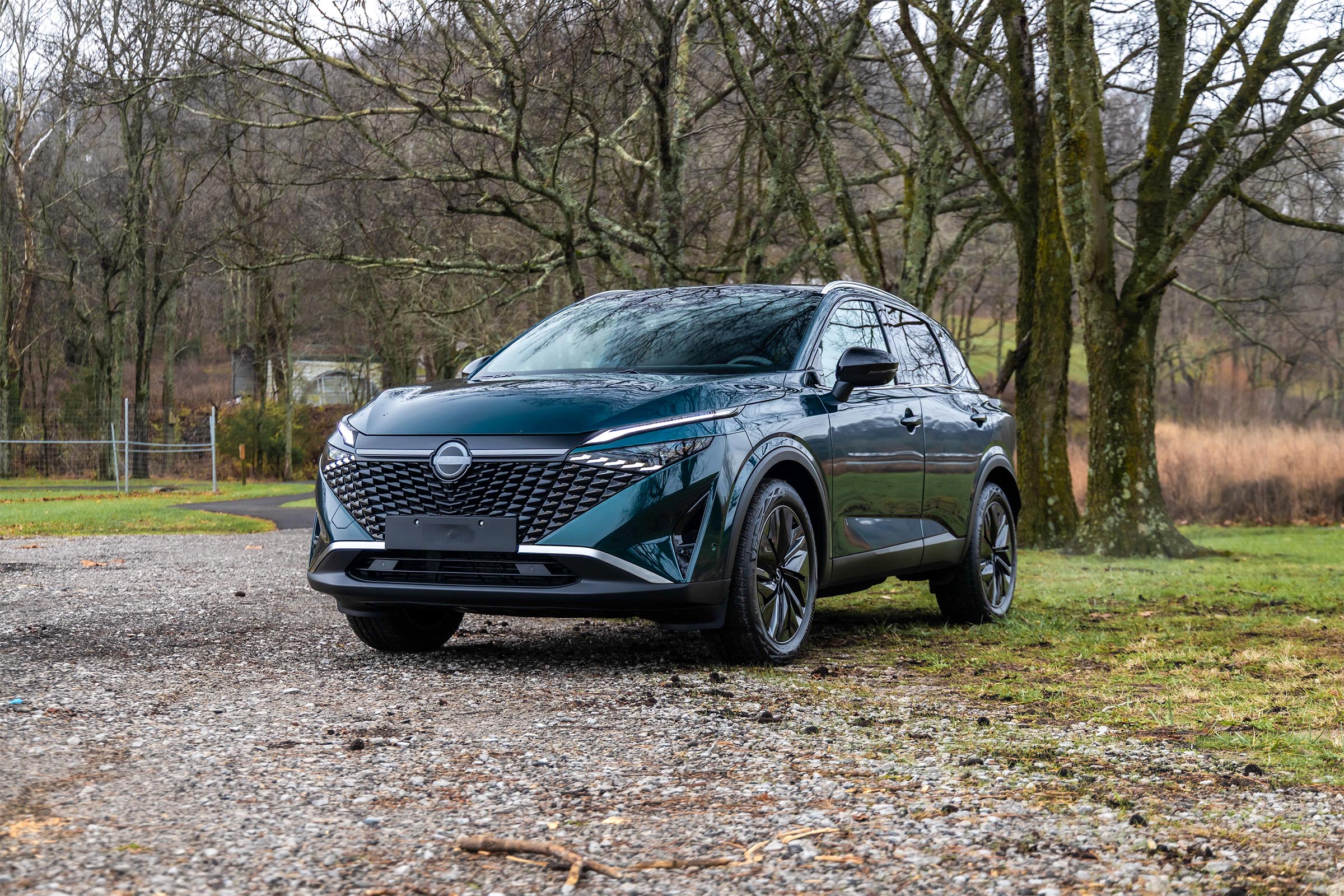
Imagine getting the benefits of a battery-electric vehicle without many of the drawbacks: a quick quiet, smooth ride and high energy efficiency – but with essentially unlimited range and no need to plug in. Those are some of the claims Nissan is making for the new e-Power system it will introduce on the Rogue crossover next year. Headlight.News checked out the new technology and here’s what we discovered.
Nissan’s e-Power system finally comes to the U.S. next year.
As the latest sales numbers suggest, Americans are thinking twice about whether to go all-electric. Sure, the end of federal tax credits on September 30 didn’t help. But there are other reasons why many motorists are reluctant to plug in. Limited range and the lack of places to plug in while on the road are two of the most significant reasons. So is the price premium, EVs, typically costing thousands of dollars more than comparable models using internal combustion engines.
But what if you could get the benefits of an EV – the quick, smooth ride and the lower energy costs, while not having to worry about the range, nor the need to find places to charger? And imagine getting that for a much lower price than today’s battery-electric vehicles.
That, at least, is what Nissan you can expect when it launches the next-generation Rogue crossover next year using its new e-Power system. Headlight.News had a chance to check out that technology during a drive near the automaker’s U.S. headquarters outside Nashville. Here’s what we learned.
What’s e-Power?
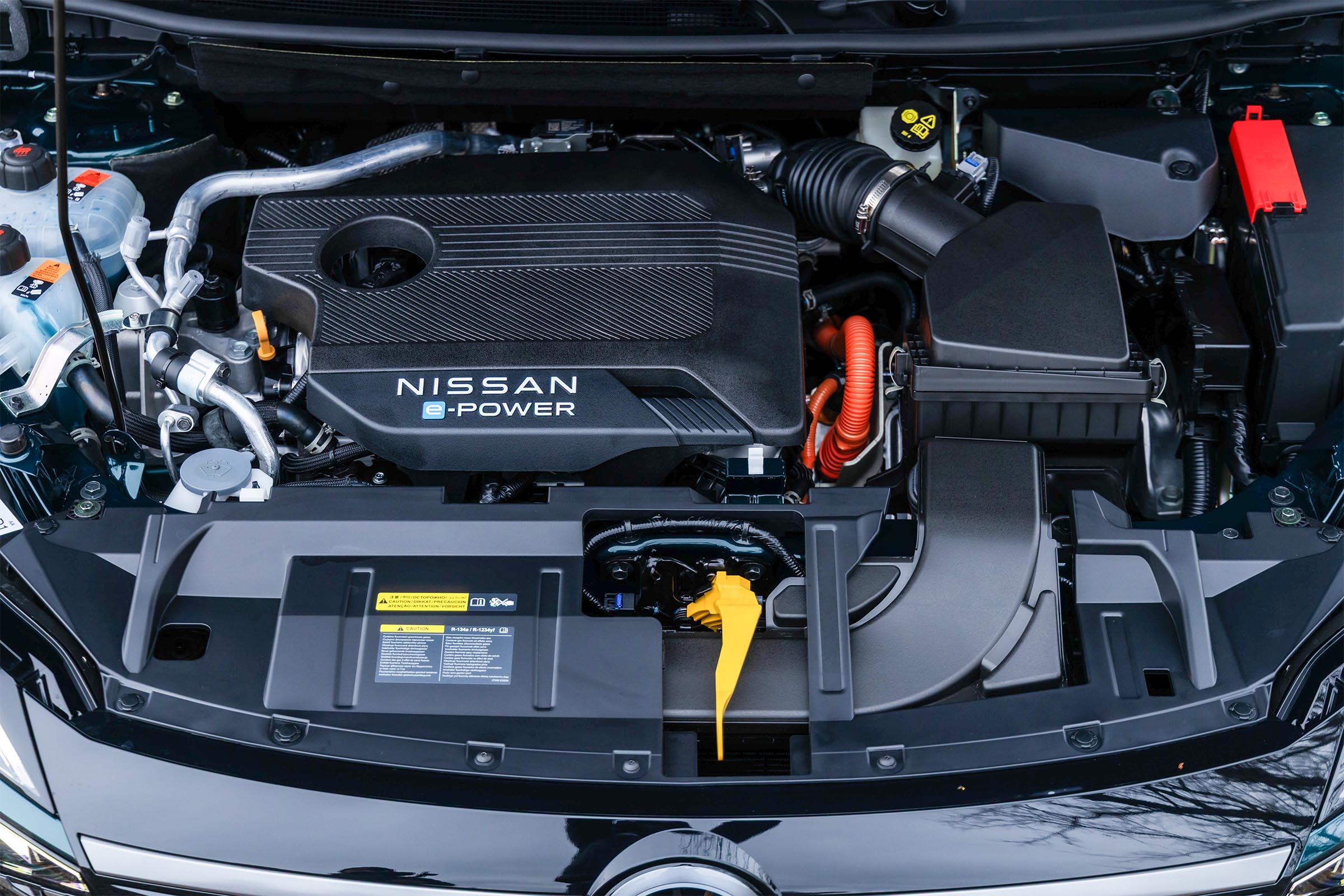
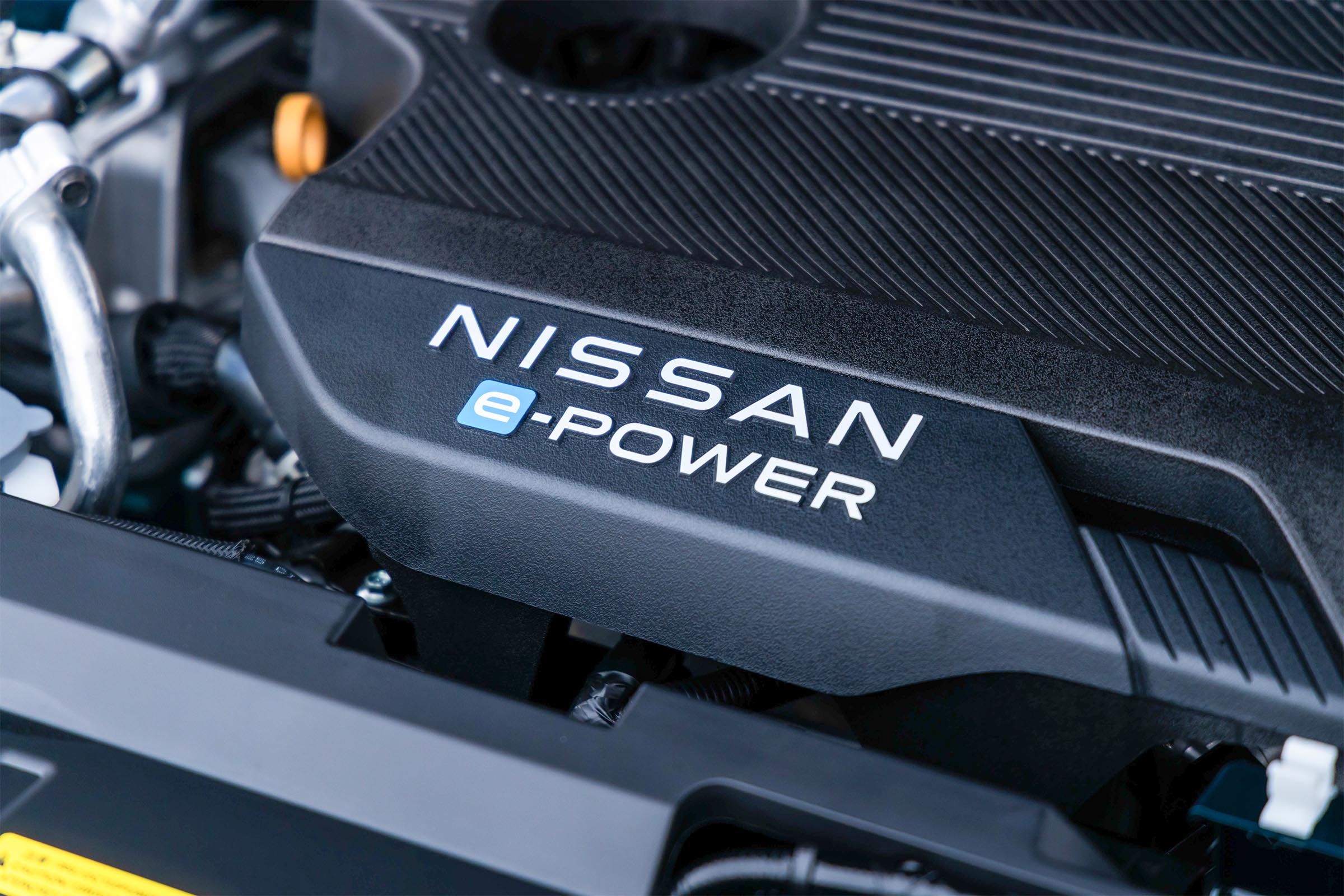
While the e-Power system is similar to a plug-in hybrid, the internal combustion engine only operates as a generator, never sending torque to the wheels.
While many experts still believe battery-electric vehicles will eventually take ever, there’s been plenty of pushback and even the most optimistic proponents concede the switch will take years longer than they’d hoped. That said, there’s an inexorable march towards electrification in a variety of forms. Conventional hybrids, such as Toyota Prius, are setting new sales records seemingly every month. And a variety of new battery-based powertrain technologies – such as plug-in hybrids and range-extenders – are coming to market providing at least some of the benefits of EVs without all the drawbacks.
Next year, Nissan will introduce yet another option for American motorists – though the technology is already available in markets including Japan and Europe. It’s called e-Power and will debut in the next-generation Rogue.
At first glance, it might sound a lot like the new Rogue Plug-In Hybrid Nissan just recently introduced. And, indeed, the e-Power system combines electric motors with an internal combustion engine. But unlike the PHEV, the gas side of that equation serves only as a generator. With the upcoming Rogue, the wheels will, like a pure EV, draw power exclusively from a pair of electric motors, one on each axle.
The pluses and minuses
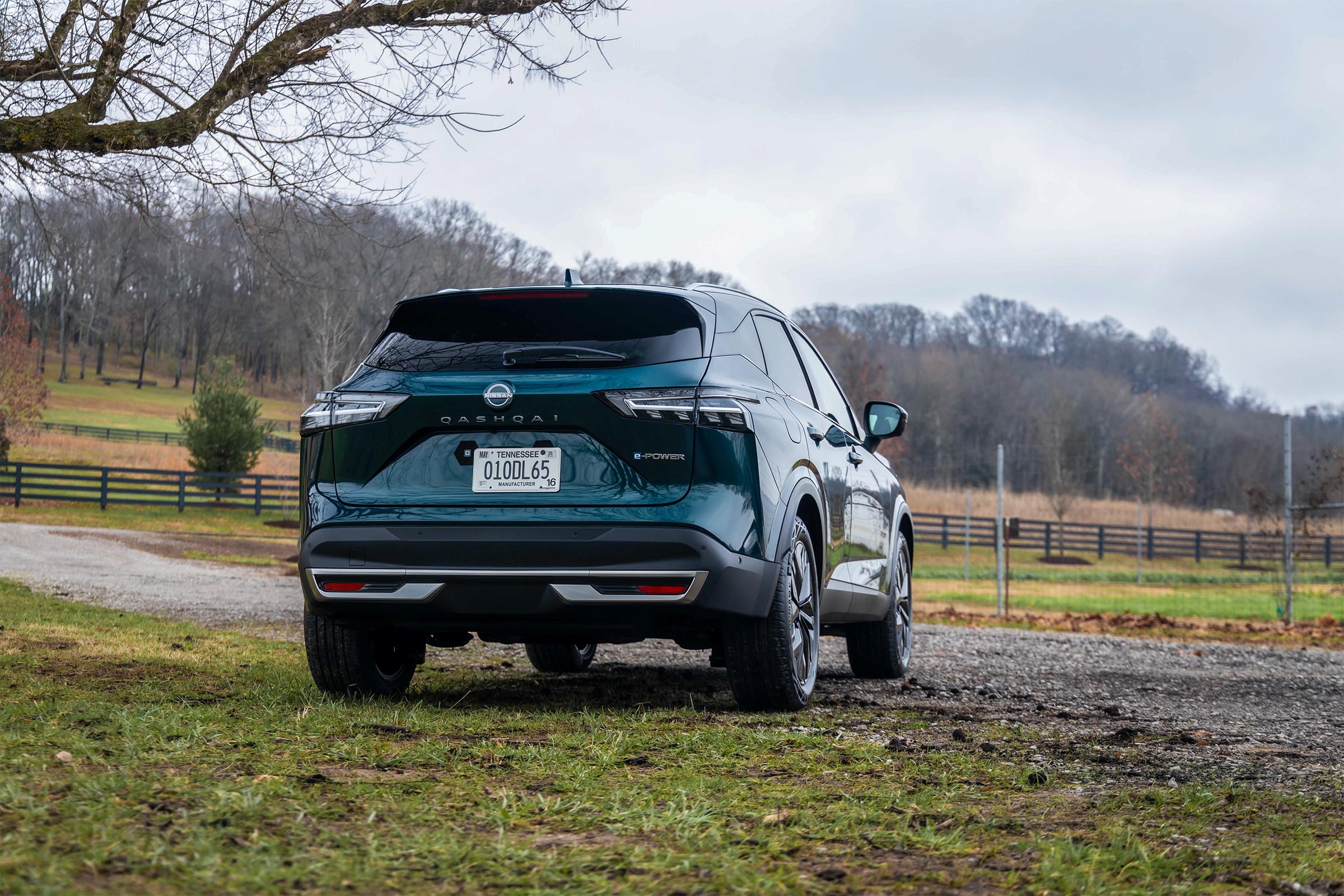
The European Nissan Qashqai e-Power system uses only one electric motor. The U.S. Rogue will get two.
That layout is simpler, with a much less complex transmission system than either conventional or plug-in hybrids. And because the gas engine only servs as a generator, it runs in a fairly narrow RPM range. That means some of the technologies normally required to clean up and improve the efficiency of a free-revving internal combustion engine can be left off.
Th system is “super-compact and light,” said Ponz Pandikuthira, the chief product and planning officer for Nissan Americas. And, he hinted – without providing hard numbers – the e-Power version of the Rogue should come in with a lower price tag than for today’s hybrids, as well as EVs.
In operation, the Rogue e-Power will offer many of the pluses of an EV. And it won’t limit your range because the onboard generator will keep running as long as you keep filling up the gas tank. Yet, unlike a plug-in hybrid, you won’t have to find a place to charge up. Indeed, the e-Power system can’t be plugged in. But that’s also the downside. The gas engine/charger remains all but constantly running as the 2.1-kWh battery that the Rogue package will come with can only run a few miles at a time in all-electric mode.
More Nissan News
- Check out the new Nissan Rogue Plug-In Hybrid
- First Drive; 2026 Nissan Leaf is a Major Upgrade
- First Look: 2026 Nissan Pathfinder
Driving impressions
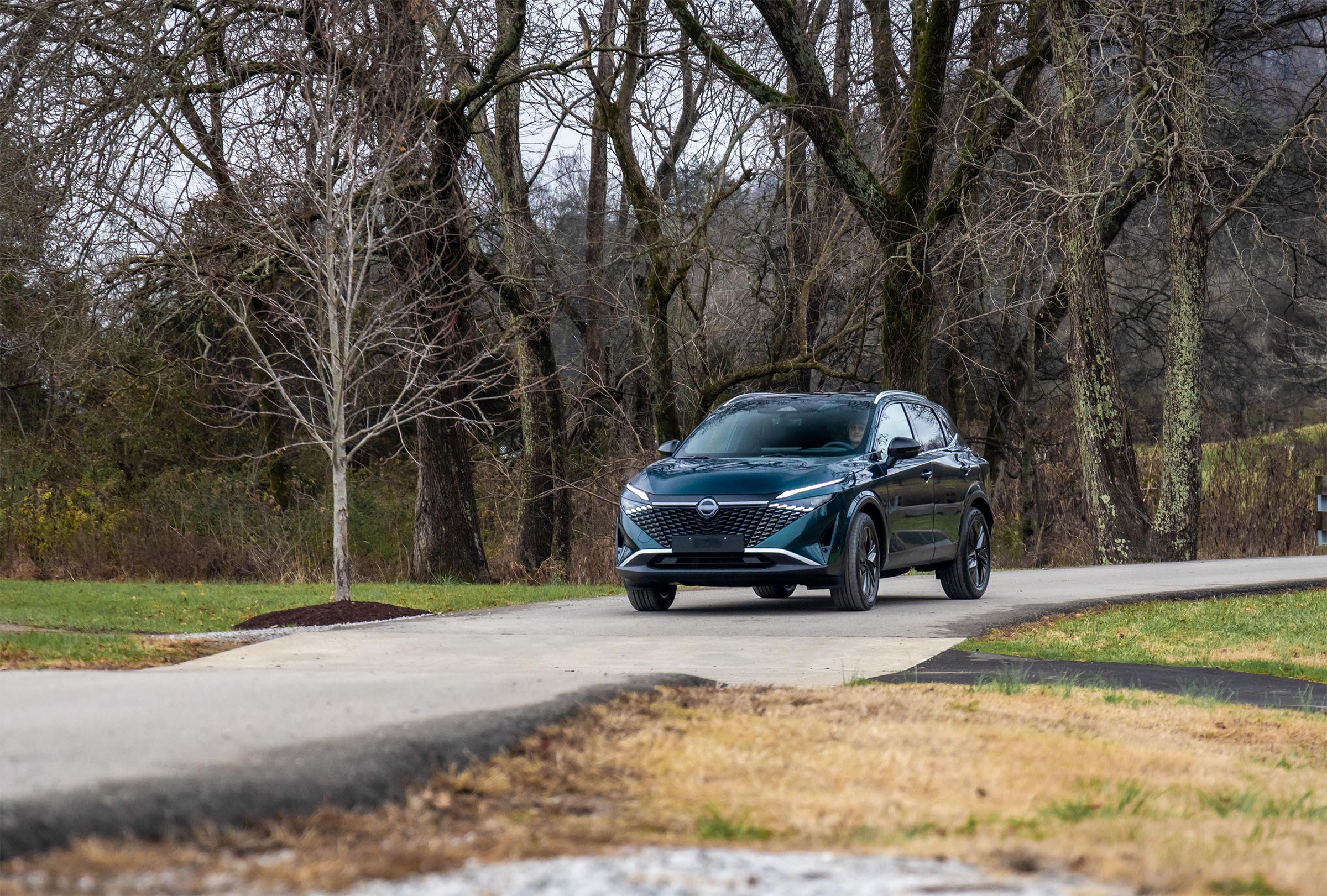
Nissan e-Power vehicles will get many of the benefits of an EV in terms of driving feel, but they will require the gas engine to run pretty much all the time.
While we’d like to get our hands on a production version of the next-generation Rogue with the new e-Power system – indeed, even an early prototype – Nissan simply didn’t have a drivable version available. Instead, it offered the closest option at hand: an e-Powered version of the European Qashqai crossover. It’s not a bad alternative as that model is based off the underlying Rogue platform and was even sold in the U.S. for a while as the Rogue Sport.
The big difference? A single electric motor, where the Nissan Rogue e-Power package will offer two, one on each axle. That said, Qashqai’s electrified drivetrain proved surprisingly sprite, more responsive and torquey than today’s gas-powered Rogue. The system felt entirely intuitive, with none of the lag and motorboating one often experiences with conventional and plug-in hybrids. It also was exceedingly quiet. Though the internal combustion engine ran almost all the time, I rarely noticed any noise from under the hood. The Qashqai was nearly as quiet as I would have imagined were it all-electric.
Nissan isn’t ready to reveal specs for the Rogue e-Power. The Qashqai I drove made 188 horsepower from its single electric motor, enough to launch from 0-100 kph (0-62 mph) in about 7.9 seconds. We’ll have to wait to find out if the twin-motor Rogue matches the 248 hp and 332 lb-ft from the new Rogue Plug-in Hybrid. But Pandikuthira said the Rogue package has been specifically tuned for the U.S. market. Where Qashqai “is set up for dense traffic conditions,” the Rogue package will be better tuned for the sort of highway driving Americans are used to.
Is it worth buying?
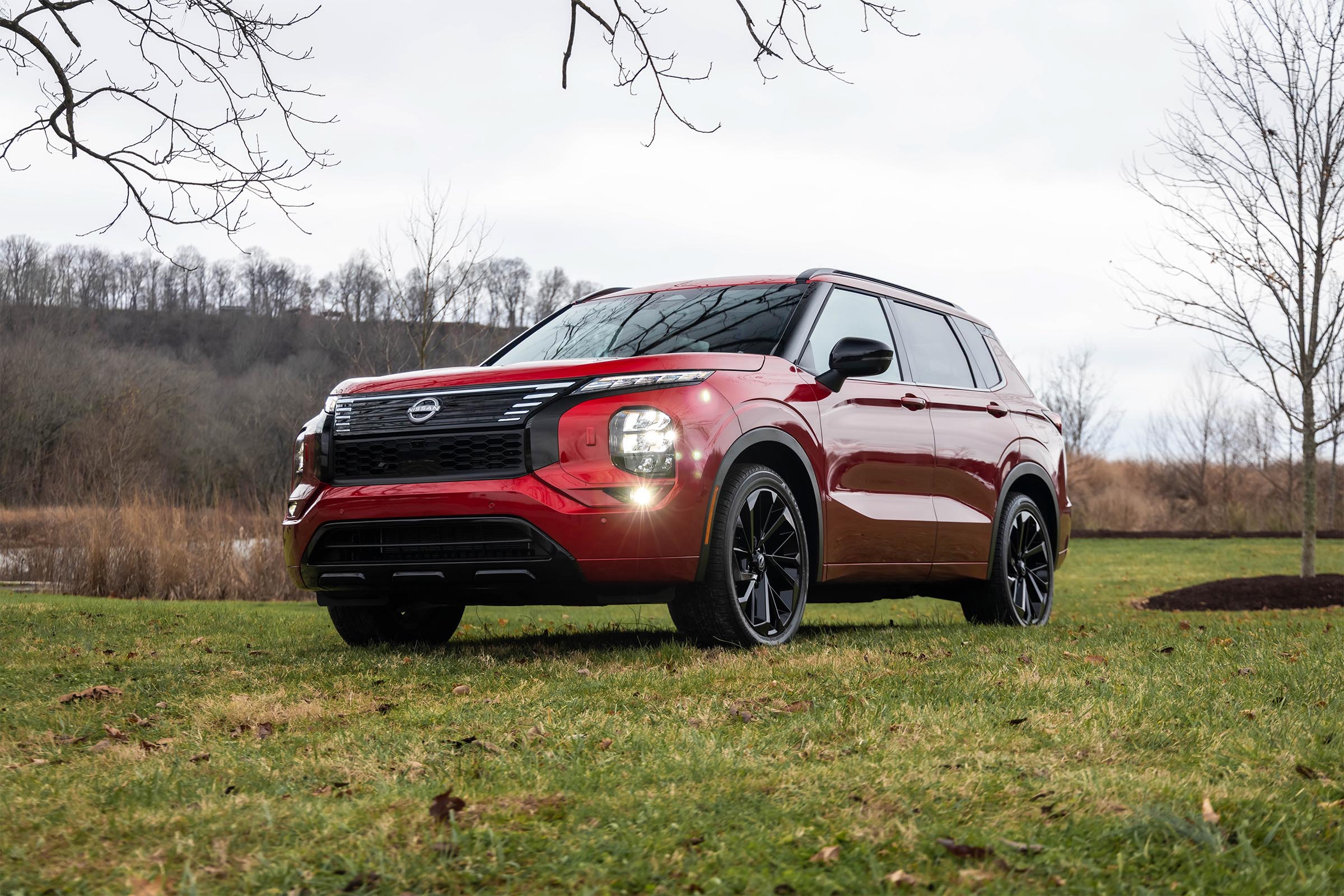
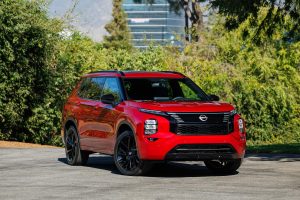
The new Nissan Rogue Plug-in Hybrid offers another electrified powertrain option.
As many motorists have discovered, there’s a lot to like about an EV, starting with its power, as well as its quiet ride. Being able to enjoy those advantages, while not having to worry about plugging in or running down the battery, are real pluses. Of course, there is the fact that you’ll need to keep tanking up on gasoline. But the Rogue e-Power package should offer some impressive fuel economy. In Europe, the Qashqai e-Power model is rated at 53 mpg.
We still have a number of questions Nissan isn’t ready to answer. For one thing: what sort of power will it make? And what will it cost? The newly launched Rogue Plug-in Hybrid starts at $32,600 before delivery fees. It would be a real plus to make similar performance numbers but at a lower price.
For its part, Nissan seems confident enough about the Rogue E-Power package that, “We think this will eventually evolve to be 100% of (the Rogues) we sell” in the U.S., said the product planning chief.
0 Comments