
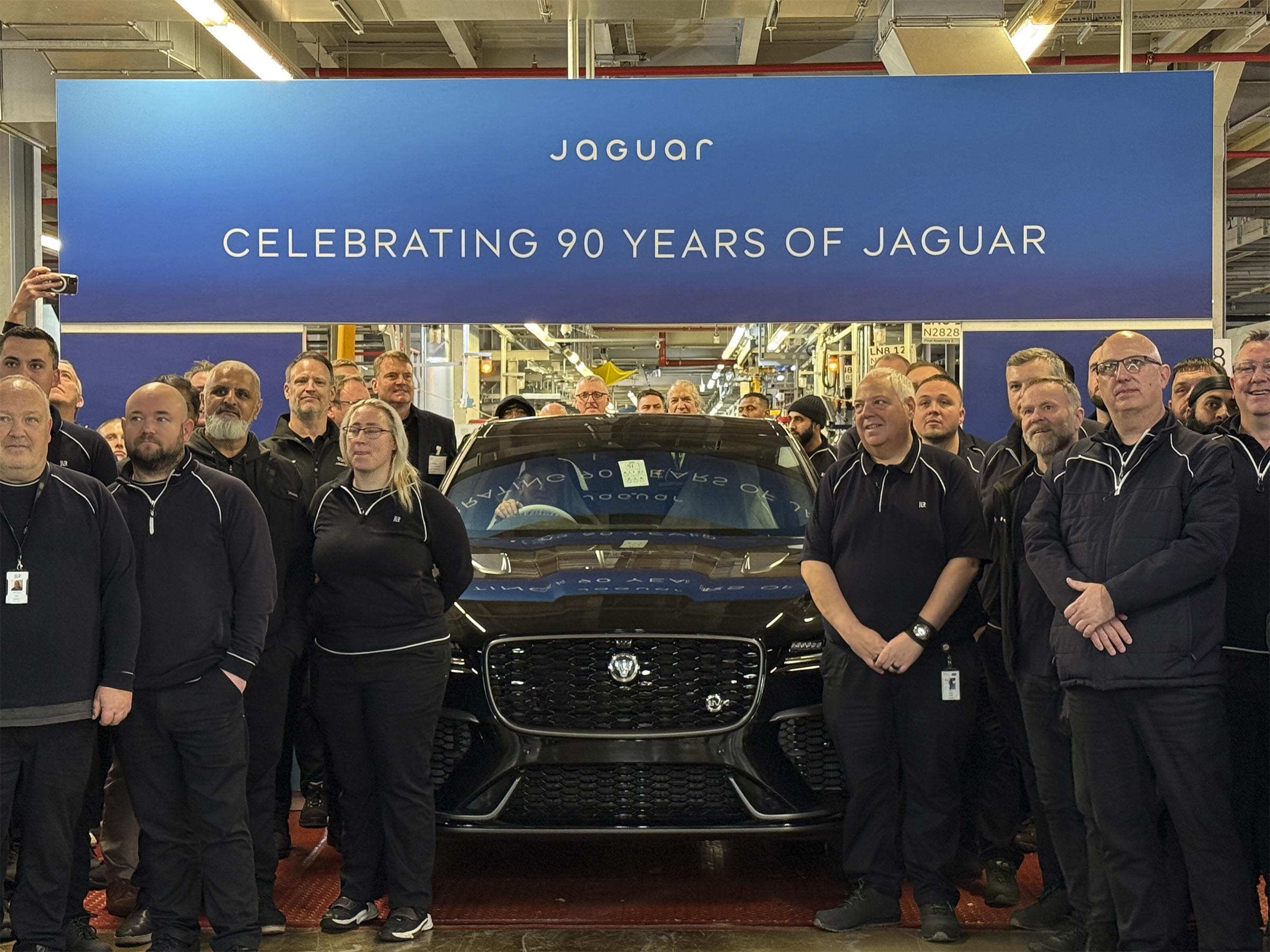
The last Jaguar F-Pace rolled off the line at the automaker’s Solihull assembly plant, marking the end of an era and the start of what could be the riskiest moves the British automaker has undertaken in the better part of a century. When Solihull resumes operations it will mark the start of Jaguar’s transition to an all-electric automotive brand. More from Headlight.News.
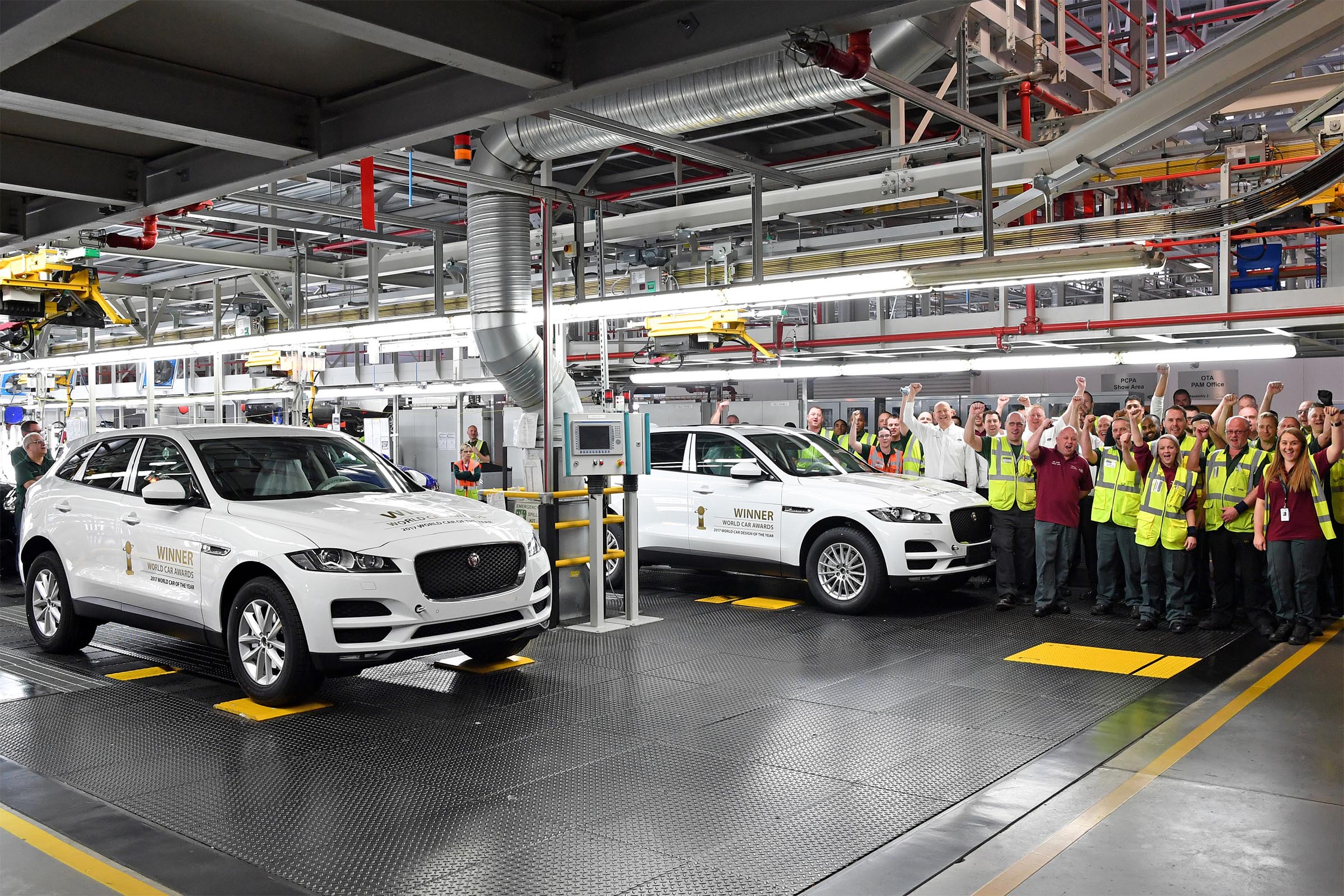
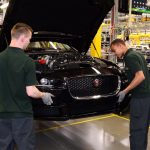
F-Pace production at Solihull.
It’s the end of the road for the Jaguar F-Pace and, in fact, the British automaker’s entire line-up of gas models. With the last of the SUVs rolling off the line at the Jaguar Plant In Solihull, UK it marks the biggest gamble the marque has taken in more than six decades.
It now will be a full year before Jaguar resumes production on a retail level, around December 2026 the automaker scheduled to launch a new model marking its transition to all-electric propulsion. And, at a price tag expected to push into six figures, it also will see the automaker attempt to move significantly more upmarket than it has been in recent years.
Surprisingly, Jaguar has remained unusually mum, leaving it up to the Jaguar Enthusiasts’ Club to reveal the demise of the F-Pace – which, the group said, “marked the end of another great Jaguar era.”
Fading fortunes

Jaguar has had plenty of ups-and-downs since the era of the iconic E-Type.
How great an era the last decade or so actually has been for Jaguar is certainly a matter of debate. The Jaguar brand – apart from partner marque Land Rover — sold a grand total of just 33,320 vehicles worldwide in 2024, down from 64,421 the year before. In 2019, sales were over 150,000.
Part of that was due to Jaguar’s decision to start phasing out some familiar product lines. The automaker also was hurt by the ongoing shift from sedans, coupes and sports cars to SUVs and CUVs. Its most recent utility vehicle models failed to keep up with broader market trends, unlike Land Rover.
That prompted Jaguar management to make what is arguably the riskiest move faced by the company since it launched the iconic E-Type back in 1961.
Farewell to ICE
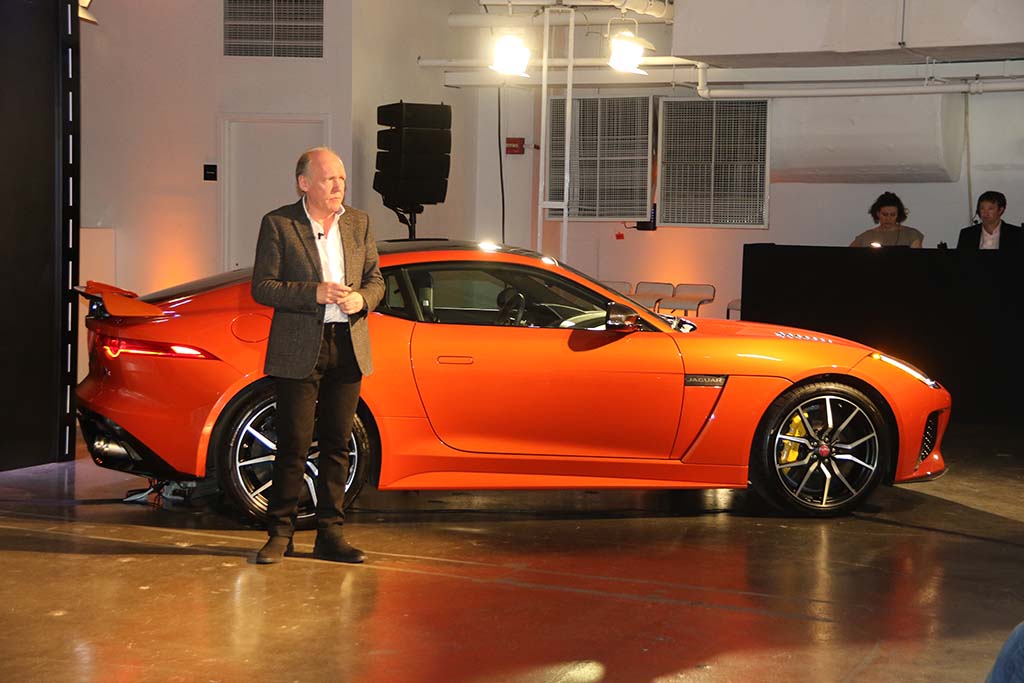
Jaguar had already ended production of its other models, such as the F-Type, shown here with former design chief Ian Callum.
The last vehicle to roll out of Solihull was, according to the Enthusiasts’ Club, an F-Pace SVR, the most powerful – and expensive – version of the SUV. It was equipped with a 5.0-liter supercharged V-8 making 542 horsepower and 516 pound-feet of torque. Fittingly, it will be handed over to the Jaguar Daimler Heritage Trust in Gaydon which houses a number of other historically significant models, such as the first Jaguar SS.
The end of F-Pace production follows the phase-out of the rest of the Jaguar line-up. Looking forward, Jaguar will effectively be out of production until next December, noted Sam Fiorani, lead analyst with AutoForecast Solutions. When operations at Solihull and its other plants resume they will produce an entirely new generation of products that, notably, will be all-electric.
That decision was made several years ago, when there was a strong conviction within the industry that battery power was the way of the future. Over the last 18 months, however, EV sales growth has slowed sharply, especially in the critical U.S. market.
More JLR News
- No Going Back as Jaguar Preps for EV Transformation
- JLR Fires Design Chief McGovern
- New JLR CEO Has His Hands Full
A big gap
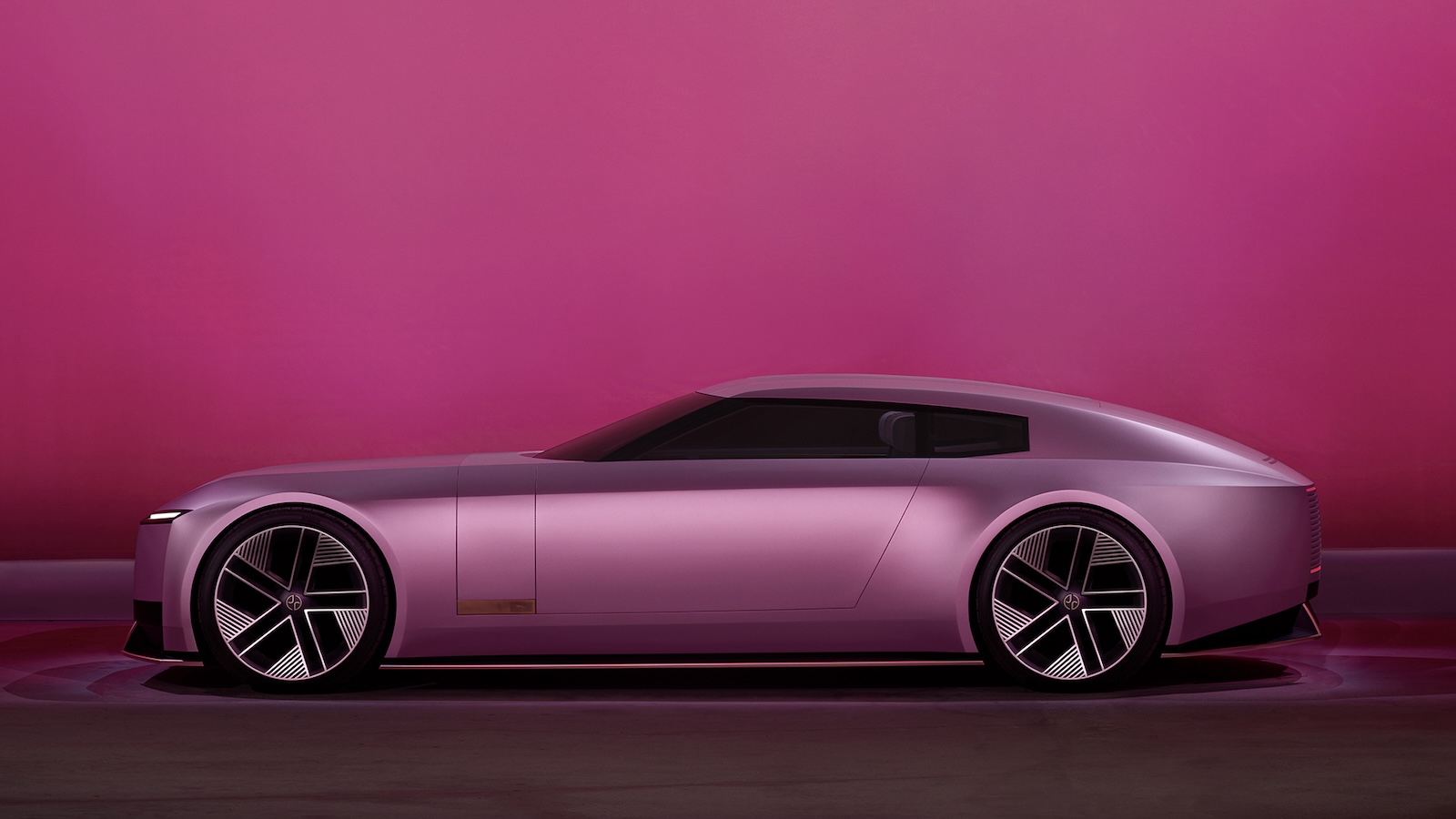
Jaguar’s concept, the Type 00, sports a bold look with its long hood and low, sweeping roof gives it an almost art deco feel, which really suits much of Miami’s architecture.
Before wrapping up production of the F-Pace and other product lines, the British automaker reportedly built up enough of an inventory to help stock Jaguar Land Rover dealers for a number of months. But potential buyers might find it increasingly difficult to pick the exact model they want as we roll further into 2026.
“Fortunately, the dealers will have Land Rovers” to provide an alternative for potential Jaguar customers,” said Fiorani. But even if those retailers run out of Jaguar product next year, he said, that’s not necessarily a bad thing. Another problem facing the brand has been a lack of a clear and distinct identity.
“They need the time to reinvigorate the brand and develop a new image,” Fiorani told Headlight.News. That process began with the debut of the controversial Type 00 concept in 2024.
What’s coming
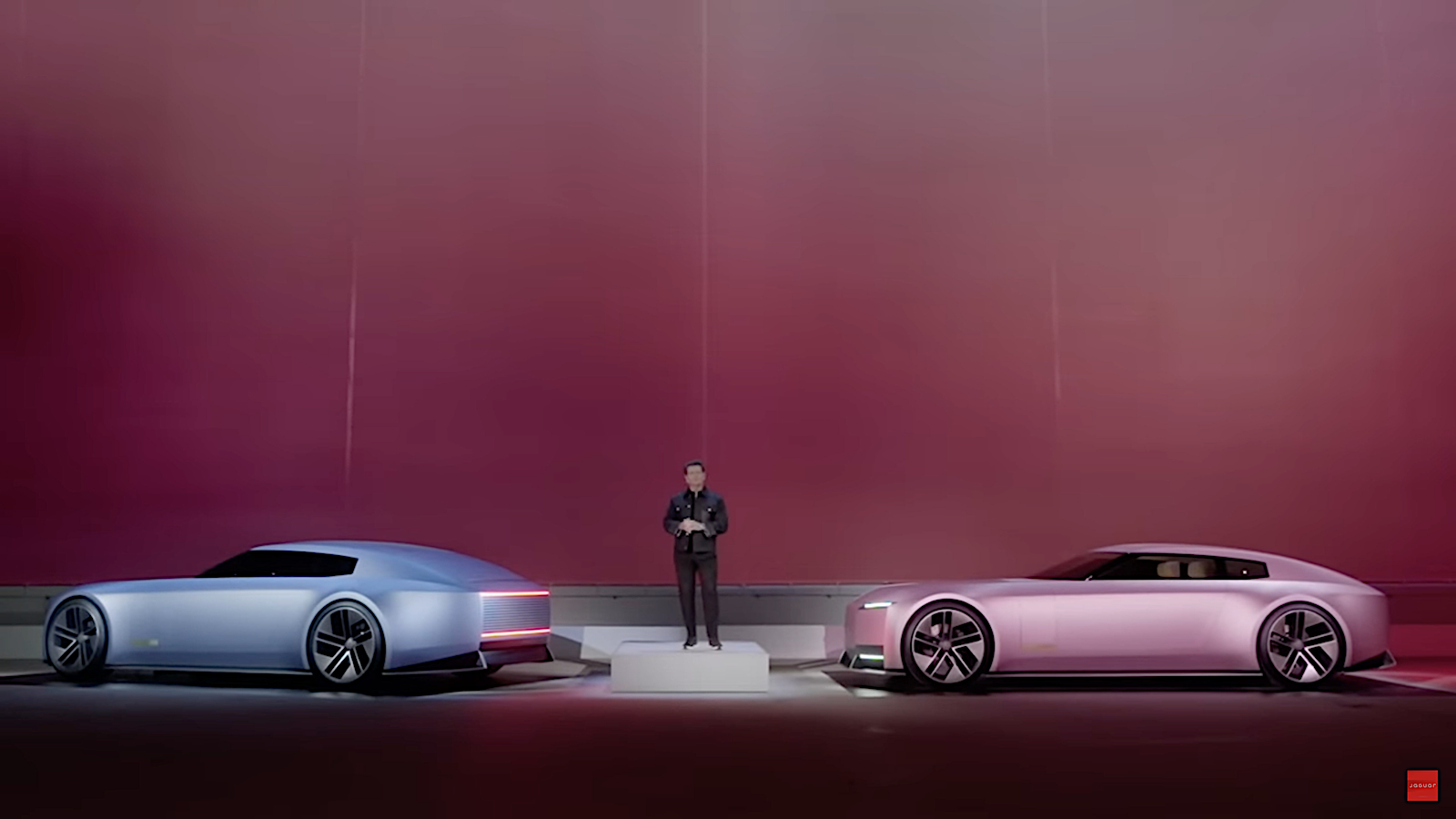
Former JLR Design boss Gerry McGovern helped debut the Type 00 concept in Miami in December 2024.
Jaguar has been vague about details, but has signaled its new strategy will not only go all-electric but will see it push into a more rarified market niche.
The first new EV family is expected to come in at over $100,000. Currently, the F-Pace line-up ranges from around $57,000 to $93,000 in the U.S.
Whether Jaguar might be forced to reconsider its new EV strategy likely will depend upon the reception the initial model generates. The response to the Type 00 concept was decidedly mixed – though some of the pushback was aimed at its controversial themes used to support the debut.
Several key competitors have backed away from their own EV plans. Even Land Rover has revised its electrification strategy. But at least for now, Jaguar officials have insisted they’re not backing down.


0 Comments