
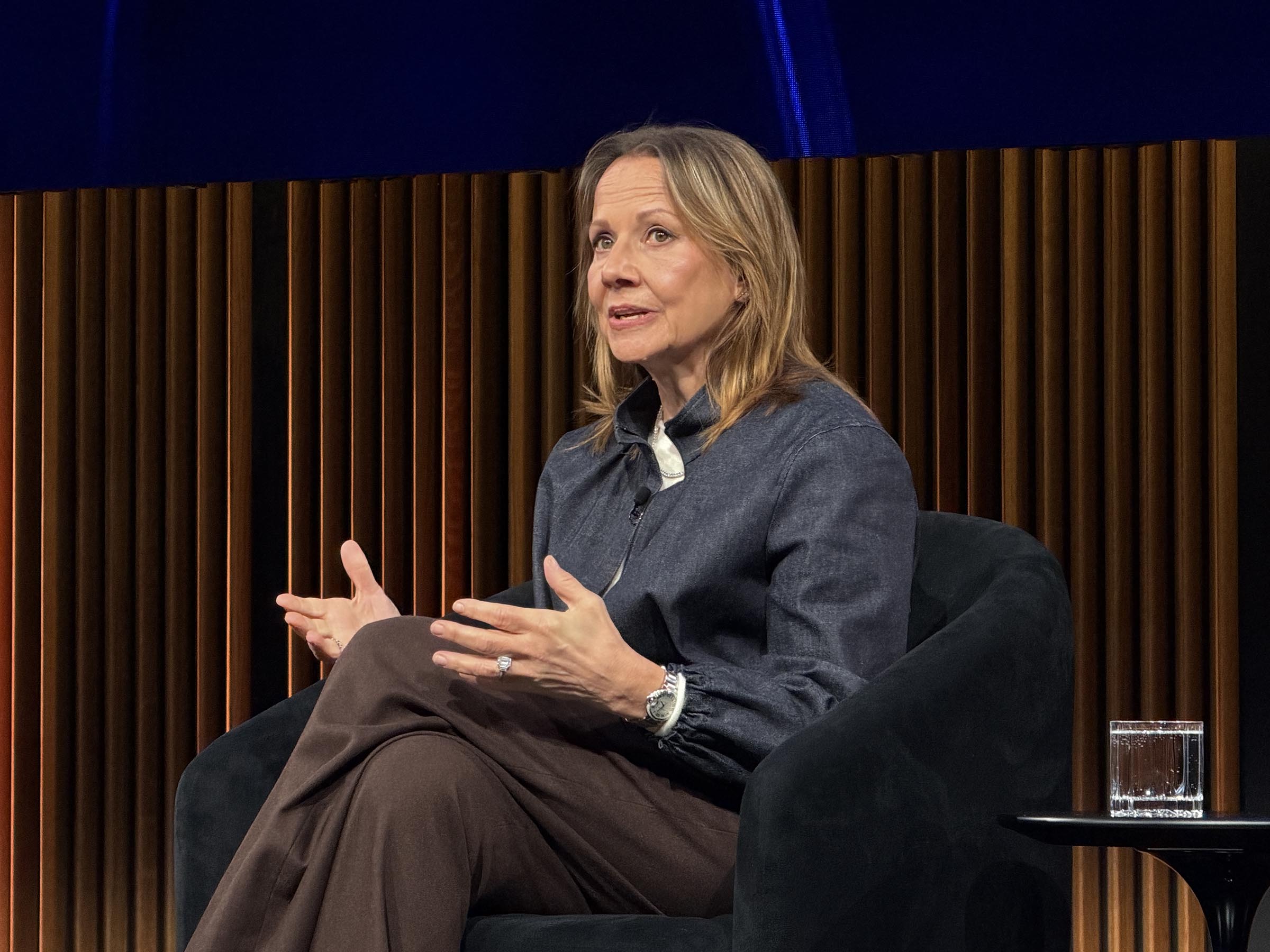
Don’t write off EVs, not according to Mary Barra. The General Motors Chairman and CEO says her “path to an all-electric future” may take longer than expected but still believes motorists will come to recognize they’re better vehicles than those using internal combustion engines. Meanwhile, the 64-year-old executive told reporters she’s still enjoying her job, a subtle way of saying she’s not in a rush to retire, even though only one other executive in GM history was on the job as long. Headlight.News has more.
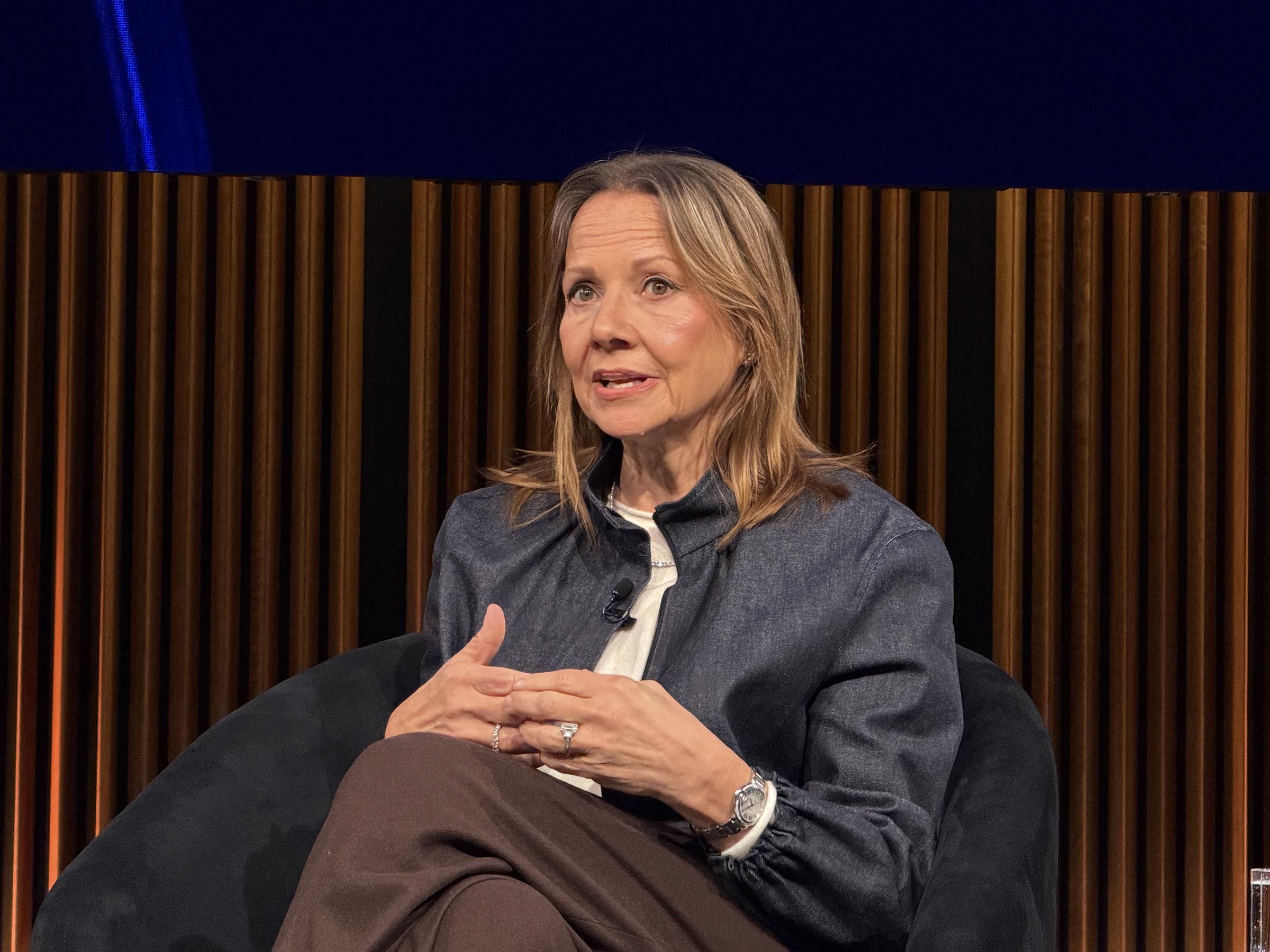
GM CEO Mary Barra meets with reporters on January 12, 2026 at the automaker’s new Detroit headquarters.
Don’t count the battery-electric vehicle out, not as far as General Motors Chairman and CEO Mary Barra is concerned. Despite the sharp slowdown in sales following the Trump administration’s phase-out of EV tax credits last September, Barra told reporters on Monday that GM remains on the “path to an all-electric future” that has become her oft-spoken mantra.
It will take longer than she might have expected a few years ago, Barra said during a gathering at GM’s new headquarters in downtown Detroit. But, eventually, “people will choose (EVs) because they’re better vehicles,” she said.
In a wide-ranging discussion, the second-longest tenured CEO in the automaker’s history covered a wide range of topics, from autonomous driving to GM’s struggle to regain momentum in the huge Chinese automotive market. She also sidestepped questions about her possible retirement, a subject that has been generating plenty of interest as she will turn 65 next December.
Charged up on EVs
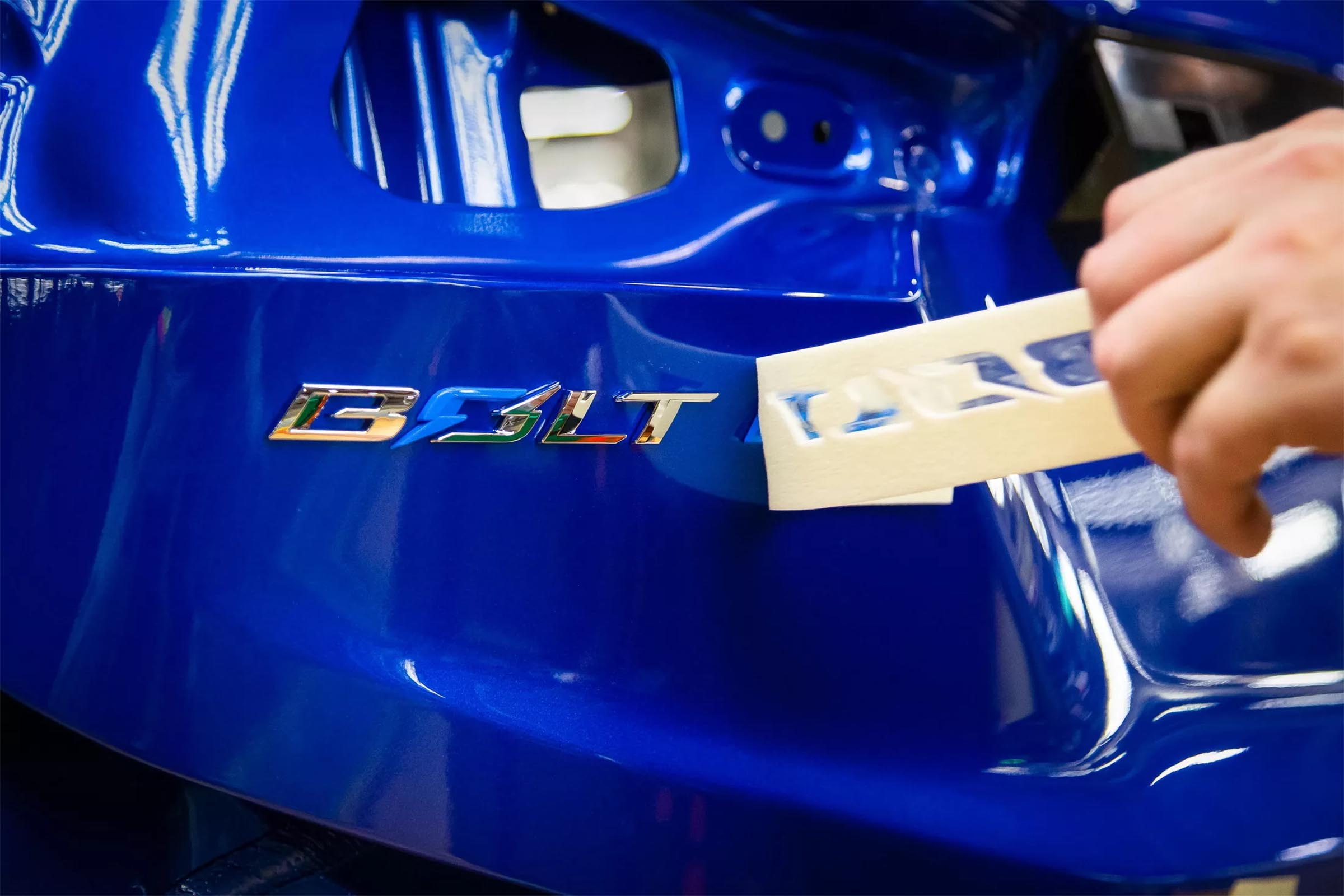
The Chevy Bolt is back – and one of the few EVs starting under $30,000.
Among major automakers, GM has been one of the most aggressive when it comes to adopting battery-electric technology. The automaker is about to relaunch the Chevrolet Bolt, the brand already offering three other all-electric models. The Cadillac brand now has five EVs in its portfolio, while GMC offers battery-powered versions of its Sierra pickup and Hummer SUV – Barra revealing that she personally drives the latter model which, she said, makes her feel like a “badass soccer mom.”\
The strategy appeared to make a lot of sense during the Biden administration, the former president taking a number of steps to boost demand for EVs – which saw sales grow roughly eightfold between 2019 and 2023. But during his second term, Pres. Donald Trump has taken a number of steps meant to slow adoption, among other things restricting the use of federal funds meant to expand the nationwide EV charging network. He also convinced Congress to end federal tax credits for EV buyers last September, triggering a sharp slowdown in demand during the fourth quarter of 2025.
Even so, said Barra, “I’m a little surprised at some OEMs (automakers) that are really pulling away very quickly” from their EV plans. Ford, for example, killed off several models, including its F-150 Lightning, the market’s best-selling all-electric pickup. The Trump administration’s anti-EV policy could very well be reversed once a new president comes into office in 2029, Barra cautioned.
“Better vehicles”
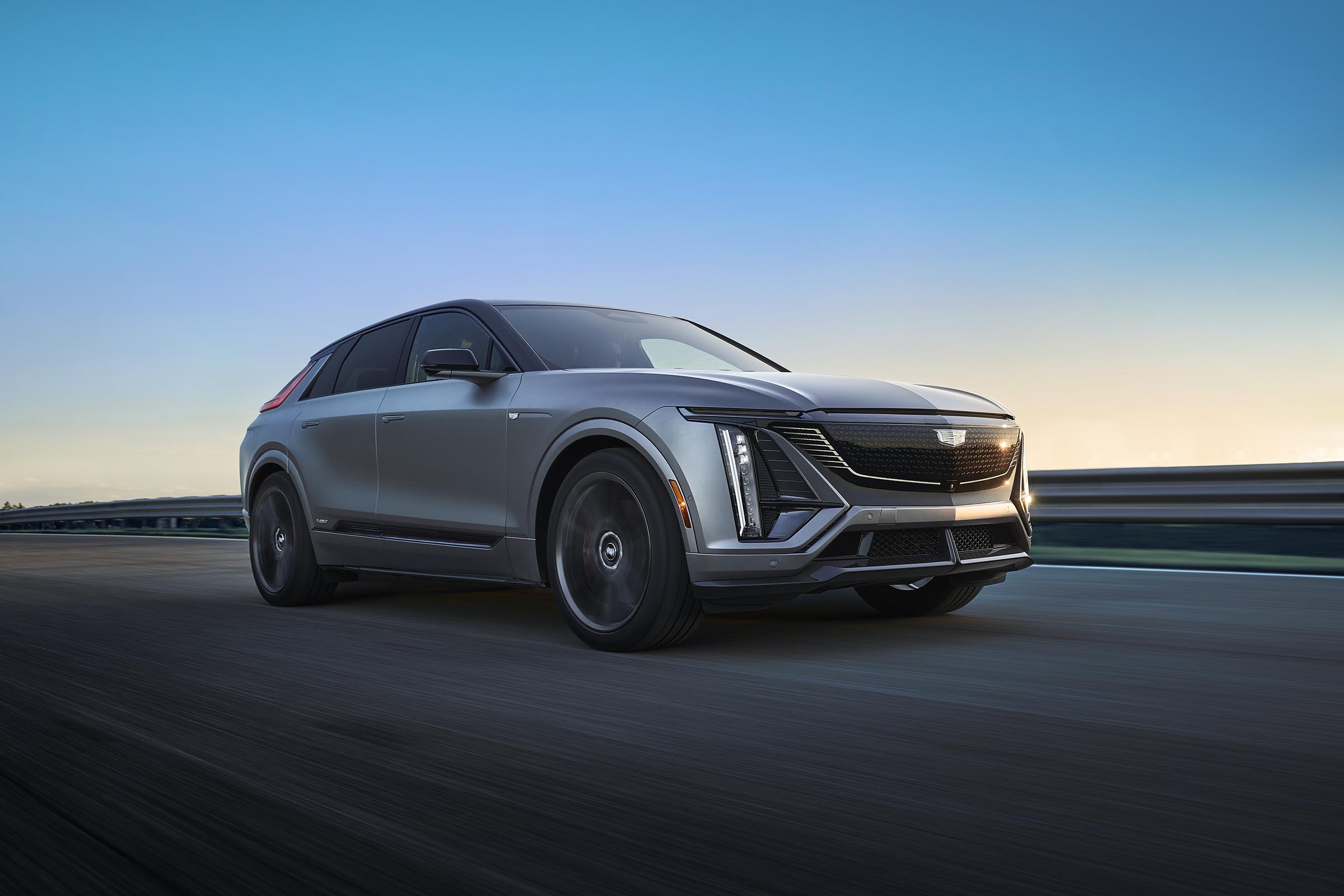
Cadillac now has five EVs in its fleet, including the Lyriq, which recently added a high-performance “V” package.
That’s not to say Barra wants the next president to resume pressing for a shift to EVs as part of federal rules. “I don’t want the regulatory environment to drive EV adoption,” she explained. “I want it to be because people choose them because they felt they were better vehicles and they fit their lives.”
EVs, she added are “fundamentally…our destination.” But it will take solving some key issues, including setting up a reliable and readily accessible nationwide charging network, while also driving down battery costs.
GM already offers one vehicle, the Chevrolet Equinox EV, starting around $30,000. And, even without those federal incentives, it has just relaunched the Chevy Bolt, the base version of the 2027 EV starting at $28,995, plus $1,395 in delivery fees. That’s well below the $50,000 average transaction price of the typical vehicle – whatever the drivetrain – currently on sale in the U.S.
More Auto News
- Tk
- Tk
- Tk
Skeptical about plug-in hybrids
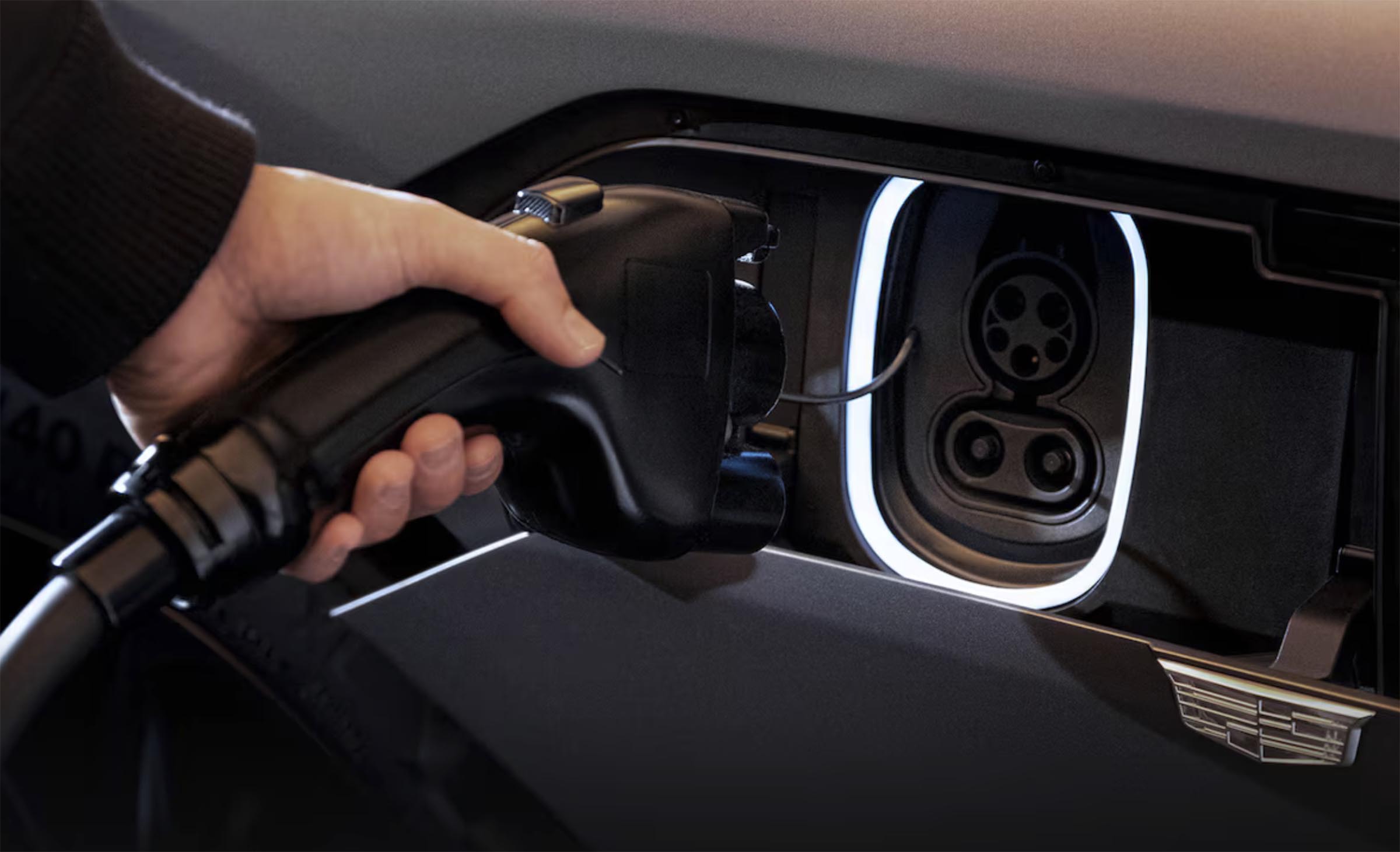
GM is “evaluating” the market for plug-in hybrids, said Barra.
Among those industry leaders skeptical about the future of EVs, there’s been growing support for plug-in hybrids. PHEVs are similar to conventional hybrids but drive longer distances in all-electric mode before their gas engines kick in when their batteries are drained. For her part, however, Barra expressed strong skepticism.
A year ago, the CEO indicated GM would introduce PHEV versions of some of its larger products, a list expected to include full-size SUVs and pickups. But exactly where the company now stands is unclear, considering Barra’s cautious comment that, “We’re evaluating plug-in hybrids.”
For one thing, she noted, consumer research finds most owners rarely actually charge up their batteries, normally just relying on the internal combustion engines in their vehicles.
With EV growth slowing down, Barra emphasized that GM is investing heavily in conventional ICE technology – though improving fuel economy is a critical requirement, she said, adding that, “We’re not going to cede our leadership there.”
Forget the robotaxis
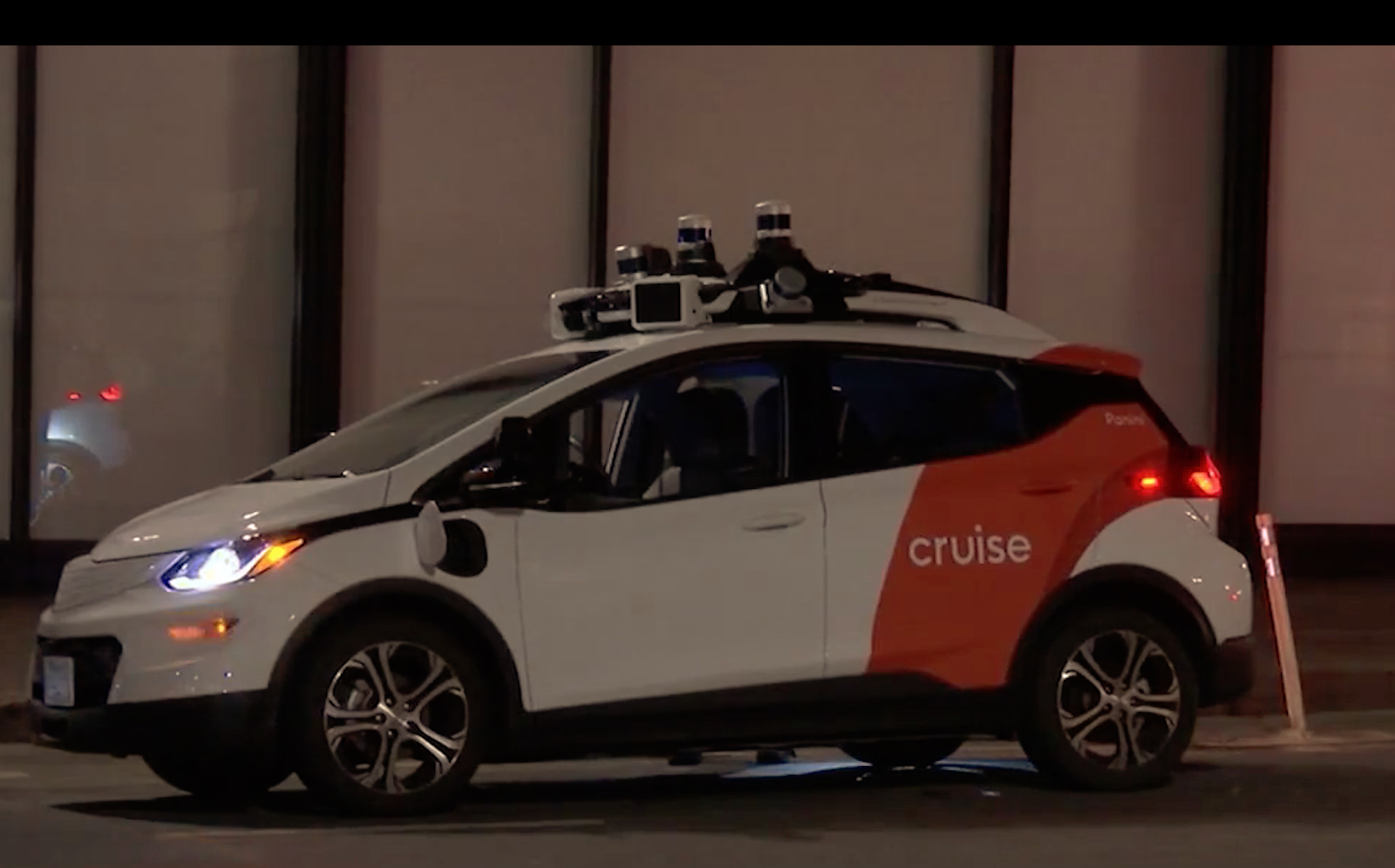
GM shuttered the Cruise subsidiary shortly after a near-fatal crash in San Francisco.
In December 2024, GM stopped funding its San Francisco-based Cruise subsidiary following a near fatal accident. The automaker hasn’t given up on autonomous driving, Barra stressed on Monday, but “We don’t want a (robo)taxi business. We don’t want a (robo)bus business.” Instead, “We want to focus on personal autonomy, not on ride-sharing.”
The company has continued upgrading its now-familiar Super Cruise system which now can operate in hands-free mode on about 750,000 miles of U.S. and Canadian roadways. The technology is known in technical terms as Level 2+, meaning a driver can take hands off the steering wheel, though they must remain vigilant and ready to retake control when needed.
An updated version is expected to allow Level 3 driving, often described as “hands-free/eyes-off,” allowing a motorist to do things like text or watch videos – though they must still be ready to retake control, if necessary. Longer-term, said Barra, GM is aiming for truly driverless capabilities, or Level 4. But she declined to lay out a timeline, admitting she – like so many other industry leaders – was too optimistic in the past.
Having too much “fun” to retire
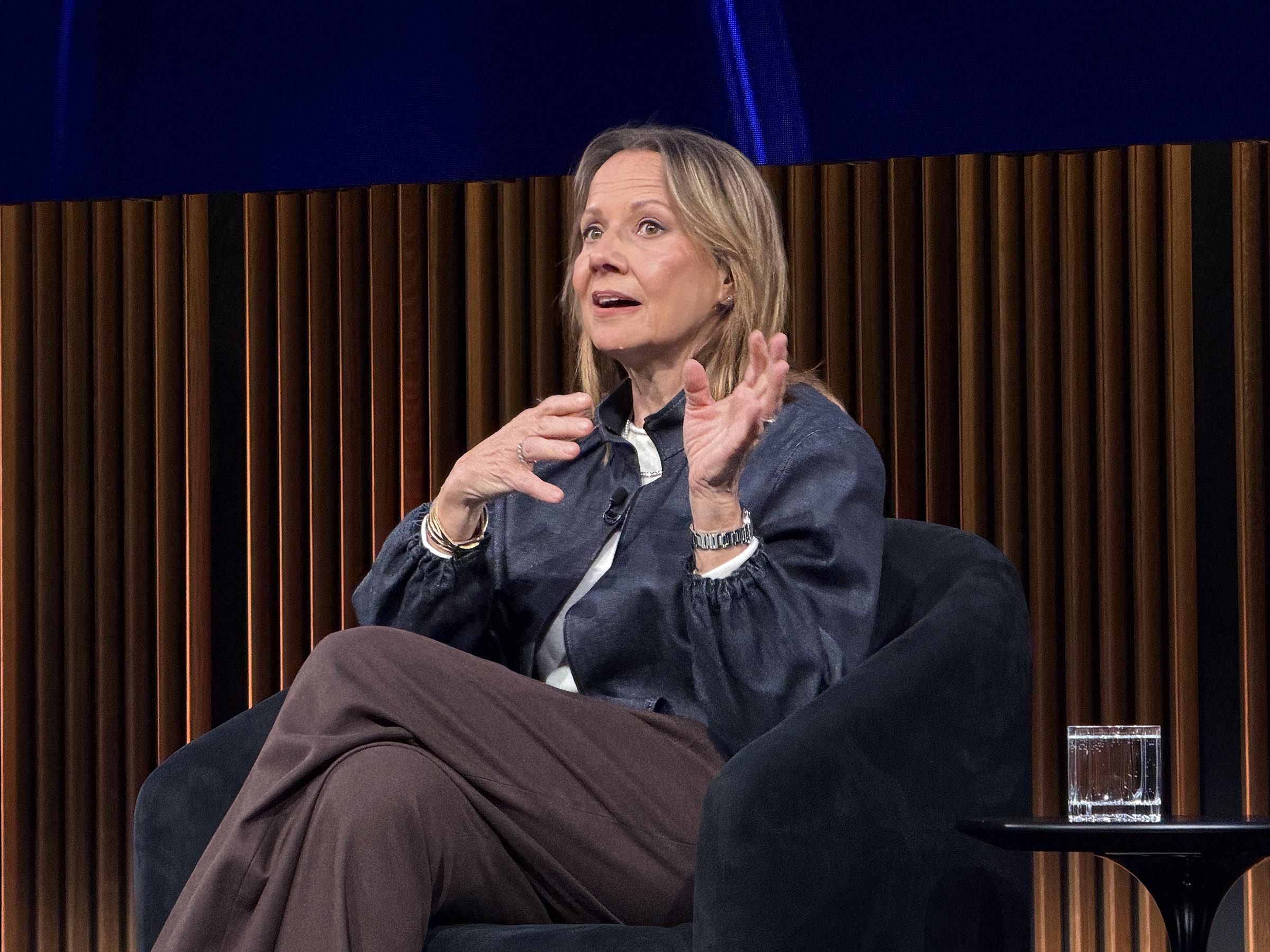
Barra has been downplaying the idea she may be getting ready to retire.
Named CEO in 2014, Barra is second only to Alfred P. Sloan in terms of her tenure – Sloan holding that office from 1923 to 1946.
Having just turned 64 on December 1, 2025, plenty of questions about being asked these days about how long Barra might want to remain at her post. A number of “experts” have begun speculating about who could step in should she step down. Top of many lists is Sterling Anderson, the co-founder of autonomous tech firm Aurora, who joined GM last June as its global chief product officer.
During her Monday session with the Automotive Press Association, Barra said, “We’re very fortunate he joined the company,” but quickly stressed, “We have several people who are very, very talented,” and who could be chosen by the board to succeed her. Ultimately, she noted, it will be up to the GM Board of Directors to make the choice – though, as chairman, she clearly will have a strong say.
That said, Barra downplayed talk of any imminent departure. “I’m having a lot of fun,” she said, adding that she has plenty more she’d like to take on at GM. “I think we’re just getting started.”



0 Comments