

Canada reached a new trade deal with the Beijing government that will slash tariffs on Chinese EV imports, though their numbers initially will be capped below 50,000. Not all Canadians are pleased by the agreement. Meanwhile Pres. Donald Trump offered praise, raising questions about whether he might also be ready to open up the U.S. to Chinese vehicles. More from Headlight.News.

Canadian Prime Minister Mark Carney
Canadian Prime Minister Mark Carney on Friday announced his government had struck a bilateral trade deal with China that will help create an alternative market to the United States for goods like canola seeds, a major Canadian export.
In turn, Canada will now slash tariffs on Chinese-made EVs – though their import numbers initially will be capped at just under 50,000 a year. That will be allowed to grow to continue growing over the next five year, Carney told reporters.
“Our relationship has progressed in recent months with China. It is more predictable and you see results coming from that,” Carney said during a media briefing.
Sidelining the U.S.
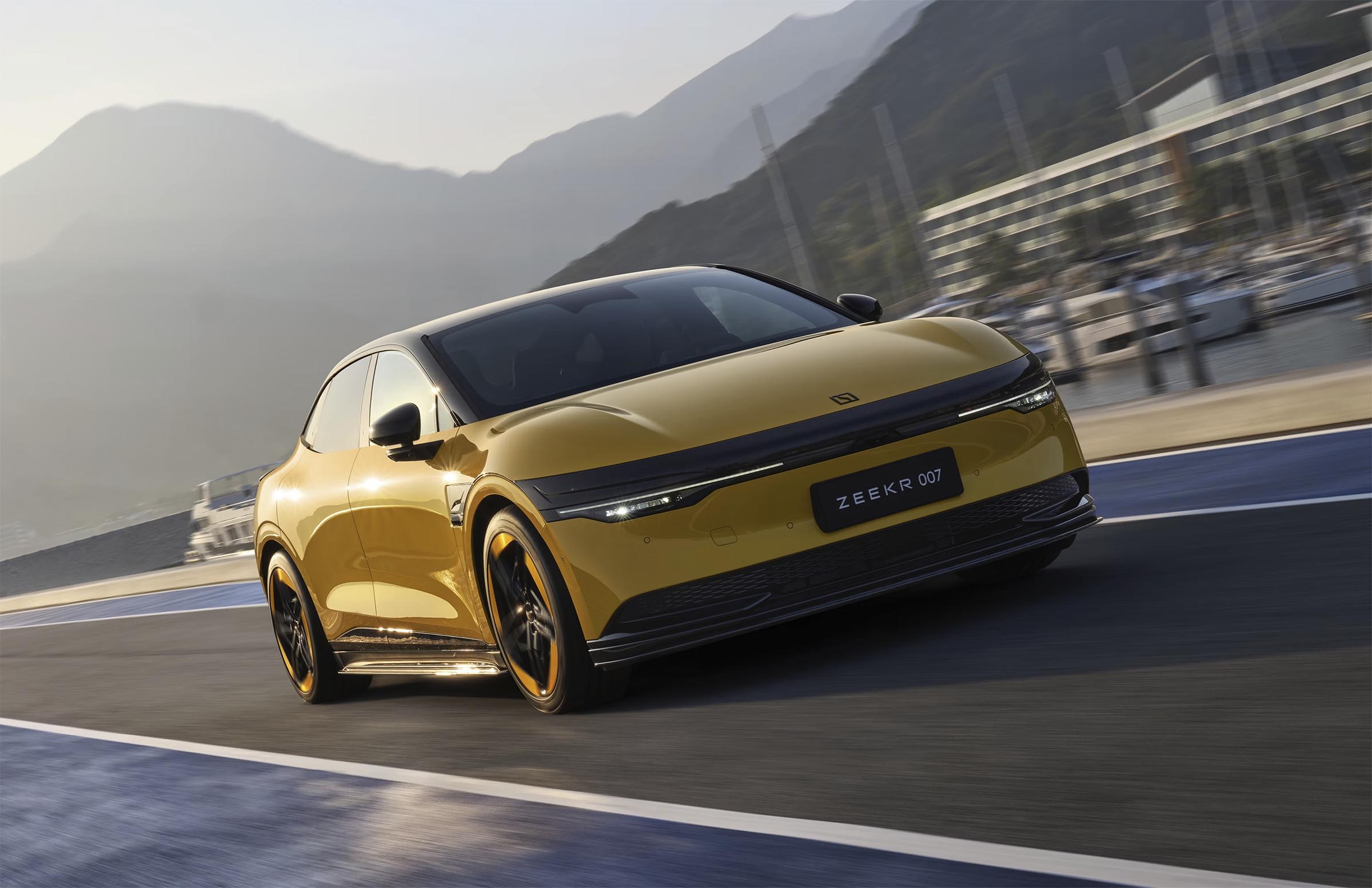
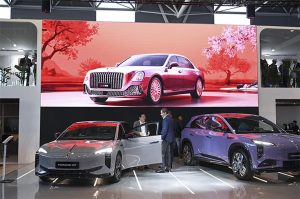
Global demand for Chinese-made vehicles, like the Zeekr 007, has grown rapidly.
The agreement is significant for both countries, helping create outlets for products that have been finding difficult to export to the United States due to the tariffs enacted by Pres. Donald Trump – and, in the case of Chinese EVs, earlier tariffs put in place by former Pres. Joe Biden.
Under the new deal, China will slash current tariffs on Canadian farm products, such as canola seeds, from 84% to 15%. They make up a major Canadian export and due to the current trade war with the U.S. that country’s farmers were struggling to find new outlets.
In turn, Canada agreed to reduce tariffs on Chinese battery-electric vehicles from 100% to just 6.1%. But it puts in place an initial cap of 49,000 vehicles, slowly lifting that to 70,000 over the following five years. Canadian motorists purchased just over 1.8 million vehicles in 2025. That means the Chinese would initially be allowed to capture as much as 2.6% of the country’s market where overall sales to hold steady this year.
An opening wedge
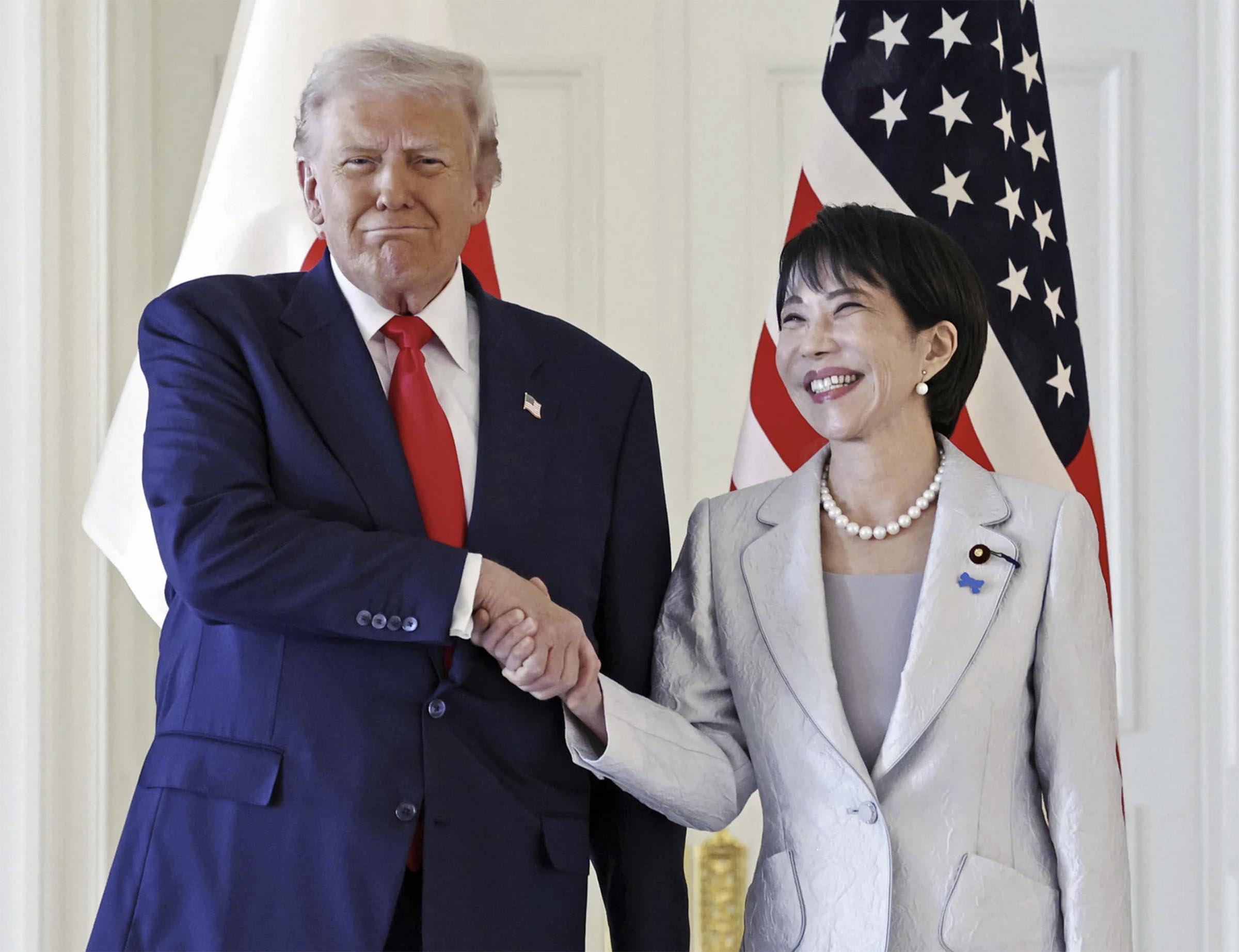
Trump, shown here with Japanese Prime Minister Sanae Takaichi, has struggled to line up trade deals with a number of partners, including both Canada and China.
Chinese auto exports surged by over 21% in 2025, reaching over 7 million vehicles. They were up around 19% in 2024. Exports have now jumped sevenfold since the beginning of the decade and reflect several factors, including their generally low prices, the need by manufacturers to focus on export markets as domestic Chinese growth slows, and a major improvement in quality and features, said Sam Abuelsamid, lead auto analyst with Telemetry Research.
This will give Chinese manufacturers like Geeley and BYD – the latter becoming the world’s largest producer of EVs in 2025 – access to both neighboring markets to the U.S. Currently, only a handful of Chinese autos are available in the United States, all sold through traditional brands, such as Buick and Lincoln, though Swedish-based Volvo and Polestar are both owned by Geeley.
The question is whether a deal like the one announced Friday might serve as a prelude to an opening for Chinese auto exports to the U.S. Ford Chairman Bill Ford this week said he would be open to that possibility – though he, like a number of other industry executives, has first called for a leveling of the playing field. Critics contend the low prices for Chinese vehicles reflect government subsidies and other benefits not available to foreign manufacturers.
More Auto News
- Dodge, Ford, Hyundai Win North American Car, Truck, Utility Vehicle Awards
- Ford CEO Farley Suggests Sedans Could Improve Affordability
- Recalls Soared in 2025 – and Ford Topped the List
“Problematic”
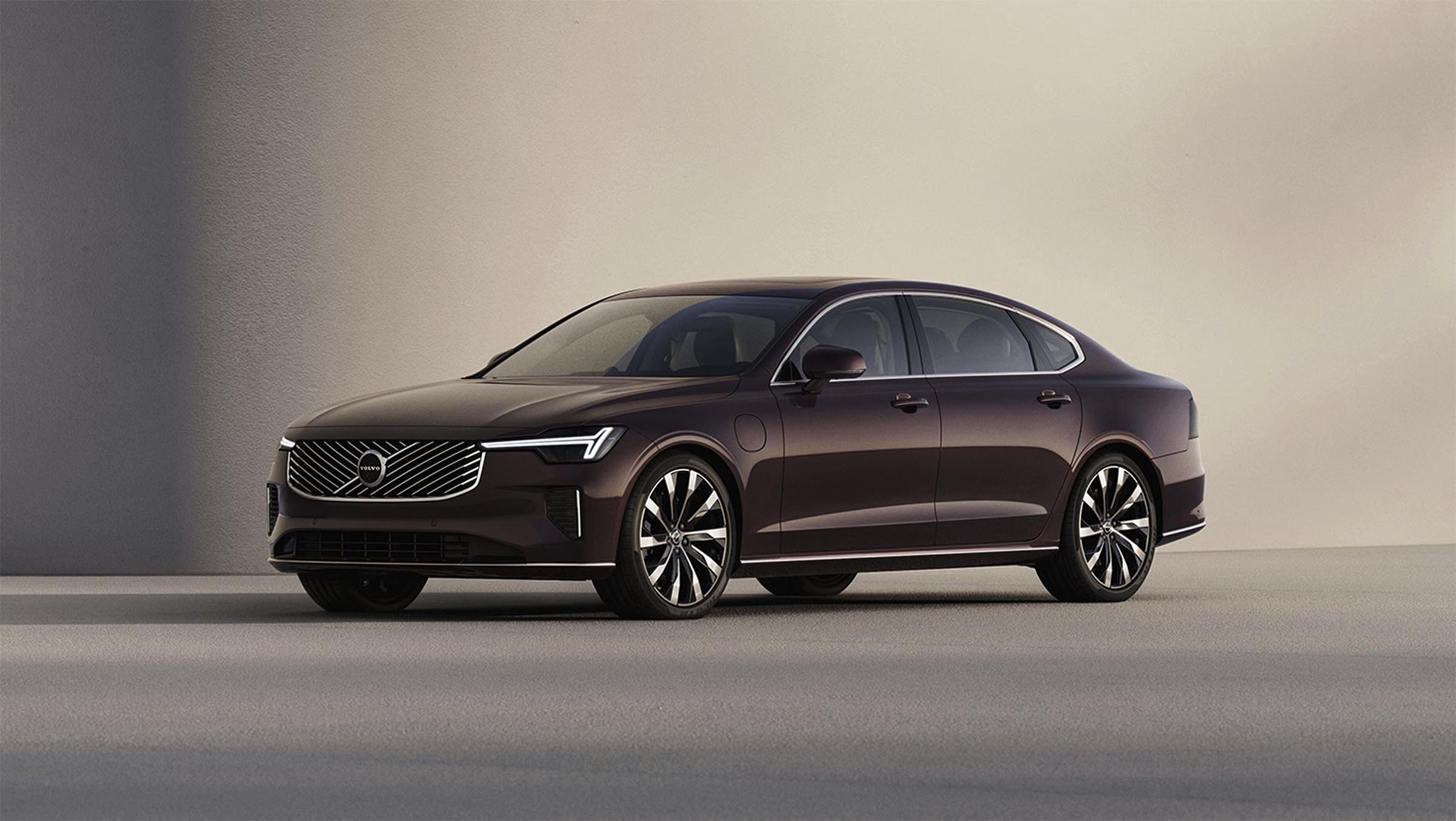
Heavy tariffs on products like the Volvo S90 have limited imports of Chinese-made vehicles.
For his part, Pres. Trump praised Carney’s deal with China as “what he should be doing and it’s a good thing for him to sign a trade deal. If you can get a deal with China, you should do that.” But Jamieson Green, the U.S. Trade Representative, told CNBC the agreement could be “problematic” and something Canada eventually might come to regret.
Unifor, a major labor group that represents Canadian autoworkers, warned that the Carney government was giving subsidized Chinese auto companies a foothold they could later exploit. That was echoed by Doug Ford who, as Ontario Premier, represents the bulk of Canada’s auto industry. Describing the agreement as “a terrible, terrible miscalculated decision, Ford warned during a media scrum that it will particularly impact the country’s “auto manufacturers, the supply chain.”
Carney’s government is expecting that China’s automakers won’t just rely on imports to grow their presence in Canada, saying “considerable” investments in localized manufacturing would come within three years. But critics faulted the lack of hard commitments in the deal.



Canadians seem to like small, cheap cars, so I’m guessing these will be very popular.
Paul, not all the Chinese cars are small and basic, though they almost universally cost less than key competitors’ products. Critically, the latest Chinese models are substantially improved in terms of features, fit and finish. I had the chance to check out some Geely and Zeekr models earlier this month. Were they to land here I think they’d do quite well.
Paul E.