
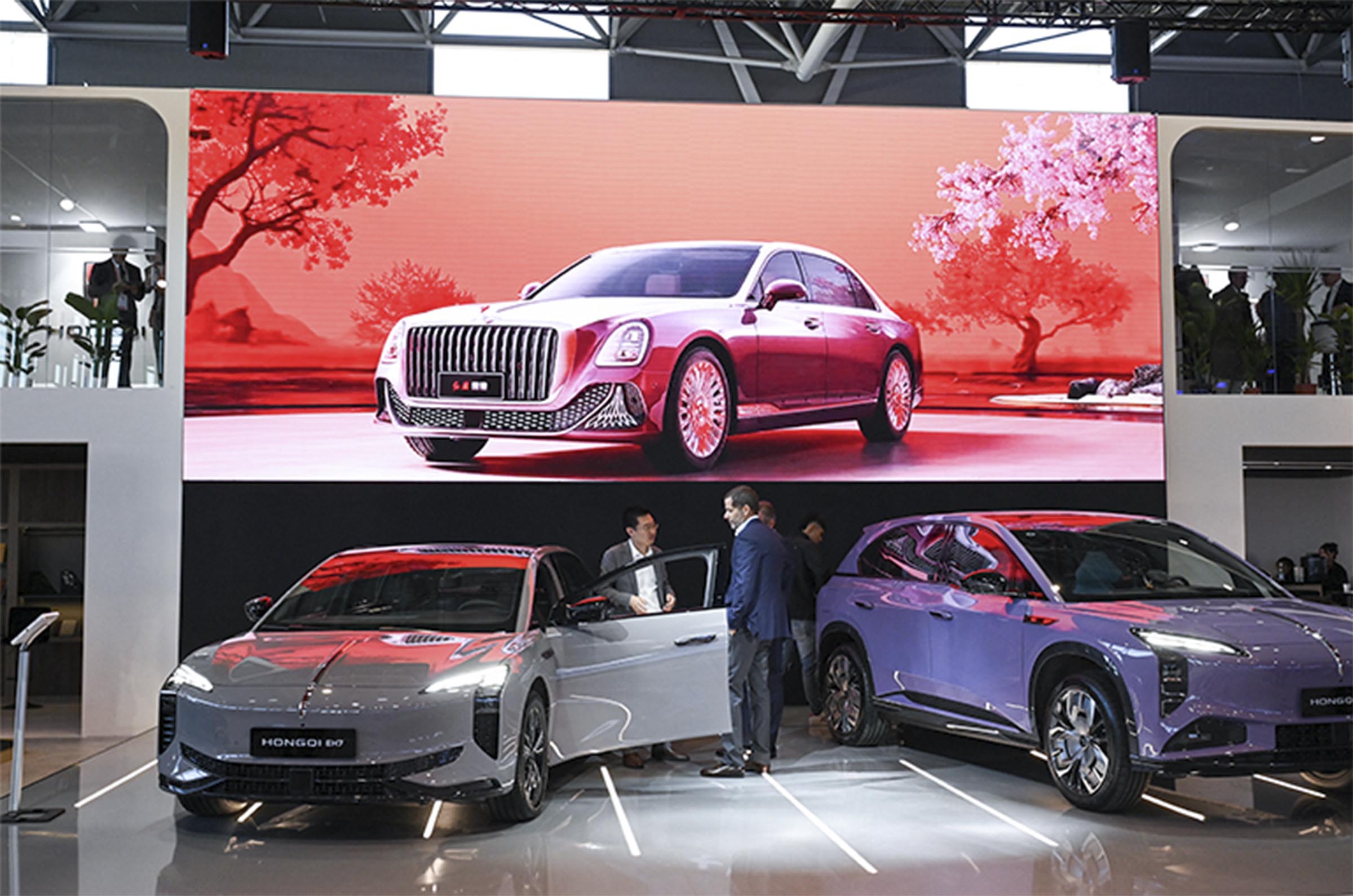
Canada is about to open the door to Chinese auto imports and brands like BYD, Geely and Great Wall are already well-established in Mexico. With the U.S. sandwiched in-between, Americans are growing increasingly aware of Chinese vehicles. But are they ready to buy? The answer seems to be a very solid “yes.” Headlight.News has more.

Canadian Prime Minister Mark Carney last week signed a trade deal opening up his market to Chinese-made vehicles.
As part of a new trade deal, Canada is ready to open its borders to Chinese EVs, initially allowing up to 49,000 a year to come into the country, with the figure set to climb to 70,000 over the next five years. Brands like BYD, Geely and Great Wall already have a significant presence in Mexico, meanwhile, making up about 20% of that country’s new vehicle market.
For the moment, Chinese vehicles have an almost invisible presence in the U.S., making up less than 0.5% of total sales last year. But things may be ready to change, especially with the country “sandwiched” in-between Canada and Mexico and American motorists becoming increasingly intrigued by what the Chinese have to offer.
-“All signs point to Chinese manufacturers selling EVs in the U.S., if not by the end of the decade then soon afterwards,” said Robbie DeGraff, manager of product and consumer insights for AutoPacific, Inc.
Locked out

Volvo was forced to shift production of EX30 EVs coming to the U.S. from China to Belgium to avoid 102.5% tariffs.
American motorists already have access to a handful of Chinese-made vehicles, though they’re sold under Western brand names like the Buick Envision and Lincoln Nautilus – which has become the luxury brand’s best-selling product. Chinese-owned Volvo and Polestar also import some models from their home assembly plants.
The most immediate problem for Chinese manufacturers: hefty tariffs enacted initially by former Pres. Joe Biden and then raised by his successor, Donald Trump. Gas-powered models like Nautilus face 27.5% duties, pure EVs like the Polestar 2 and Volvo EX30 face 102.5% tariffs. That has forced manufacturers to drop some models or, in the case of Volvo, move production of the EX30 from China to Ghent, Belgium.
So, while several Chinese automakers, notably BYD and Geely, have repeatedly promised to set up U.S. distribution networks they have effectively been locked out. For now, anyway.
Growing awareness
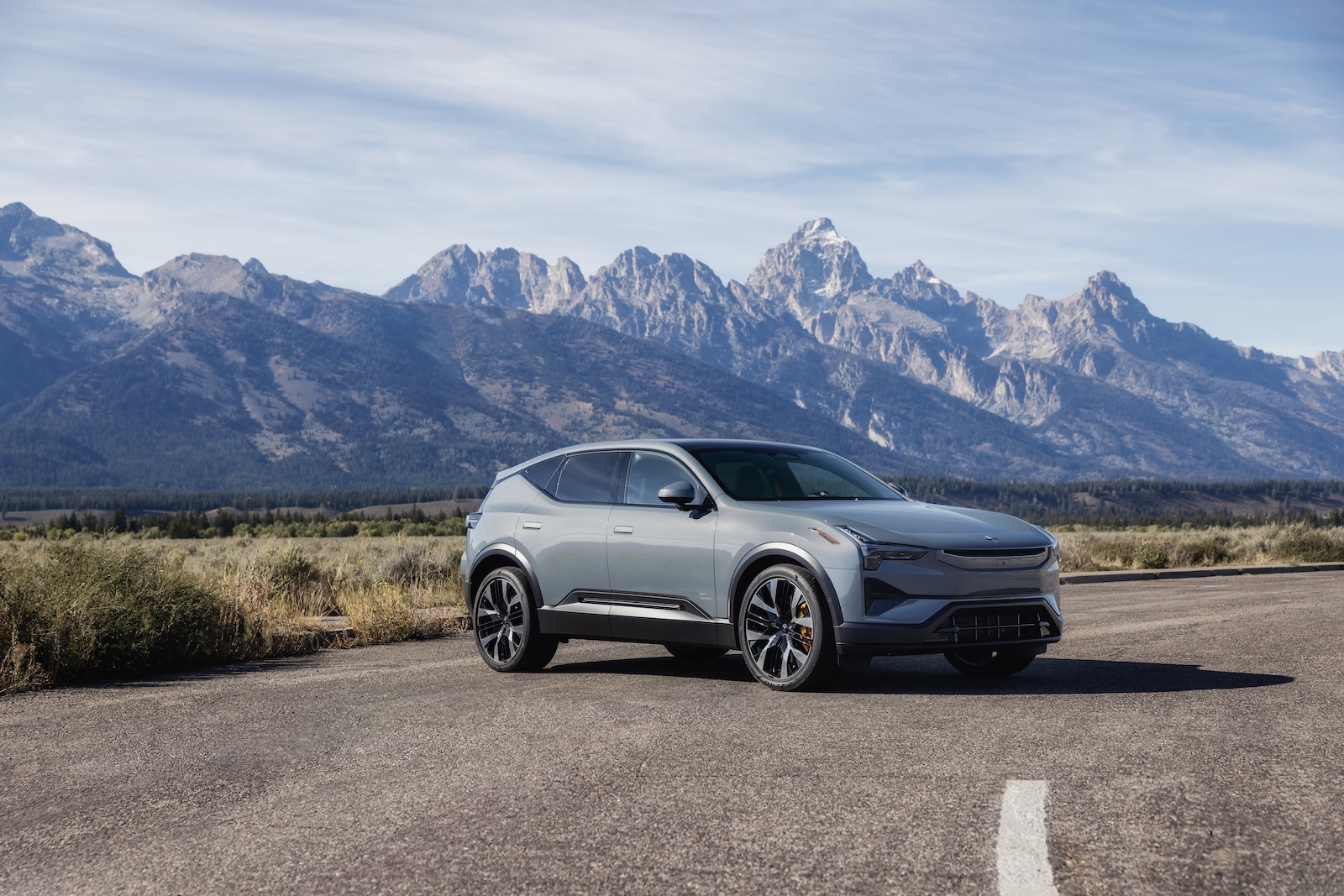
Only a handful of Chinese vehicles currently are offered in the U.S. through Western brands, such as this Polestar.
Even without a formal presence in the States, American motorists are becoming increasingly familiar with Chinese auto brands and their products, said DeGraff, thanks for social and conventional media, as well as subtle marketing moves by some of those manufacturers. During this month’s Consumer Electronics Show Geely brought a fleet of its products – variously badged as Geely, Zeeker and Lynk & Co. – out for dozens of journalists to check out and drive.
Whatever the reason, a growing number of potential U.S. buyers intrigued by what they’re seeing, according to AutoPacific research. Findings from most recent Future Attribute Demand Study – which queried 19,000 motorists expecting to buy a new vehicle within the next three years – found:
- 43% said they were “somewhat familiar” with Chinese vehicles, while 22% said they were “very familiar.” That total of 65% was up 12 points from the prior year;
- The number of those surveyed who said they’d consider buying a Chinese vehicle surged from 41% in 2024 to 51% in 2025;
- Of those motorists willing to buy Chinese, Huawei was the brand they listed most often, at 27%; 19% listed BYD, 16% Great Wall, and Geely and Nio were each listed by 13%.
More Auto News
- New Trade Deal Cracks Canada Open for Chinese Autos
- Dodge, Ford, Hyundai Win North American Car, Truck, Utility Vehicle Awards
- Ford CEO Farley Suggests Sedans Could Improve Affordability
Low prices v privacy concerns
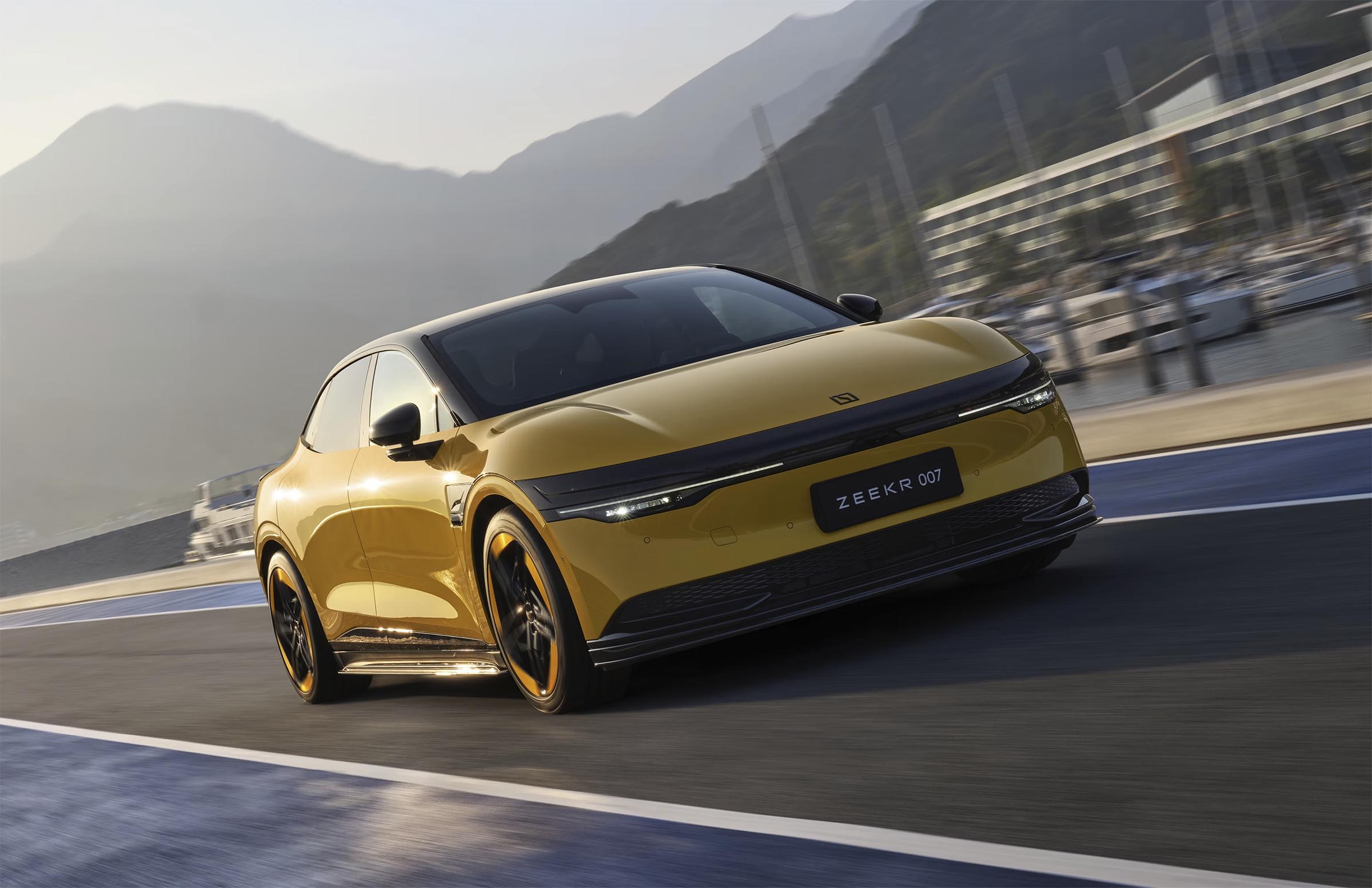
The Chinese-made Zeekr 007.
Since the beginning of the decade, Chinese auto exports have surged more than sevenfold, topping 7 million in 2025, a 21% year-over-year increase, according to the China Association of Automobile Manufacturers.
Extremely low prices help, some entry-level Chinese products coming in below $10,000 in select markets. More expensive models, like the high-performance Zeekr 001, have been getting rave reviews in Western media. Even Ford CEO Jim Farley lent his endorsement to the Xiaomi SU7. “I’ve been driving it for six months now, and I don’t want to give it up,” he said in October 24 during an interview on the “Everything Electric” podcast.
Still, there are some challenges – and concerns about privacy and national security were voiced by potential buyers, whether Democrat or Republican, young or old, wealthy or struggling by on a tight budget, said DeGraff.
Fully 77% of those surveyed raised the specter of privacy issues, 79% citing national security concerns in the latest Future Attributes Study. But the analyst noted both those numbers dipped about 3 points from the 2024 study – and he expects such concerns will continue to decline.
What next
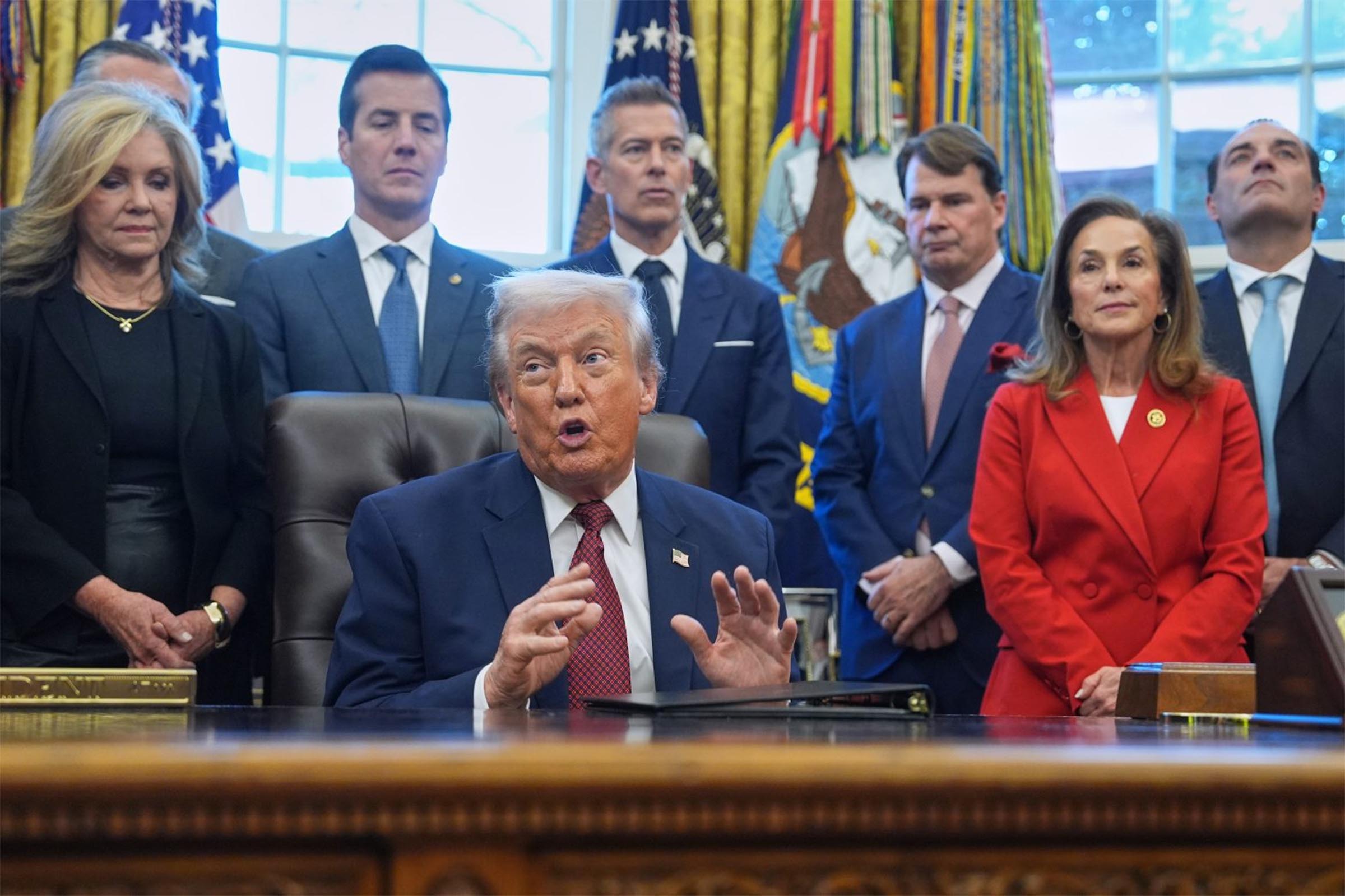
Pres. Trump meeting with senior leaders of the U.S. auto industry last month.
There’s no question that the Chinese want into the U.S., the world’s second-largest auto market. They’re particularly interested in the EV sector, various company officials have indicated, hoping their technology and lower costs good help kick-start a market segment hurt by the phase-out of federal tax credits last September.
That causes panic among some industry officials, one U.S. auto trade group describing the potential arrival of Chinese brands as a “existential threat.”
But despite ongoing trade frictions, Pres. Trump appears to be leaning towards opening up the border to Chinese vehicles. Michigan U.S. Senator Gary Peters quoted Trump saying, “Let China come in,” during a visit to Detroit last week. For his part, Ford CEO Farley said that the White House would “need to work through” the potential impact before giving China the green light.
Build where you sell
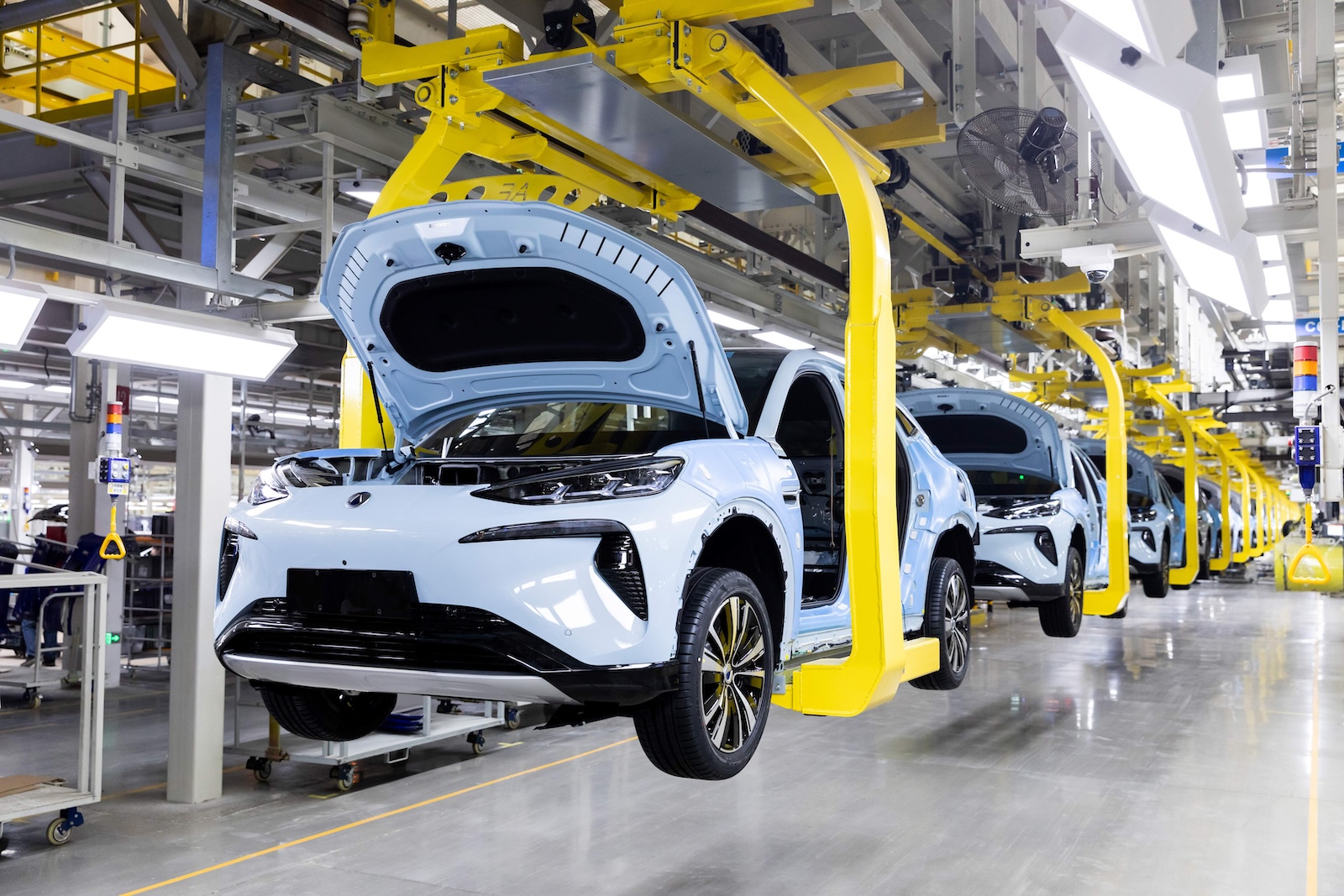
A BYD assembly line.
Trump previously indicated he’d be more open to the Chinese were they to build where they sell, in line with what has happened with Japanese, Korean and some European manufacturers.
Several Chinese manufacturers have been hinting of U.S. production plans, most recently Geely. “The big question for us is when and where will we go to the USA? I think we will have an announcement on that in the next 24-36 months,” Ash Sutcliffe, Head of Global Communications for Geely Holding Group, told reporters during the automaker’s CES drive event.
Geely actually already has a production base in the U.S., the assembly plant rolling out Volvo and Polestar products just outside Charleston, South Carolina. That operation could be leveraged for less familiar brands, likely starting with Zeekr, said DeGraff.
“I think they’ll be the first one here in the U.S. market,” he said. “They’re set up to be a strong Tesla competitor.” If Geely can differentiate Zeekr products from Volvo and Polestar, he added, the brand “has the potential to be the hot, hip tech-oriented brand for younger buyers.”
0 Comments