
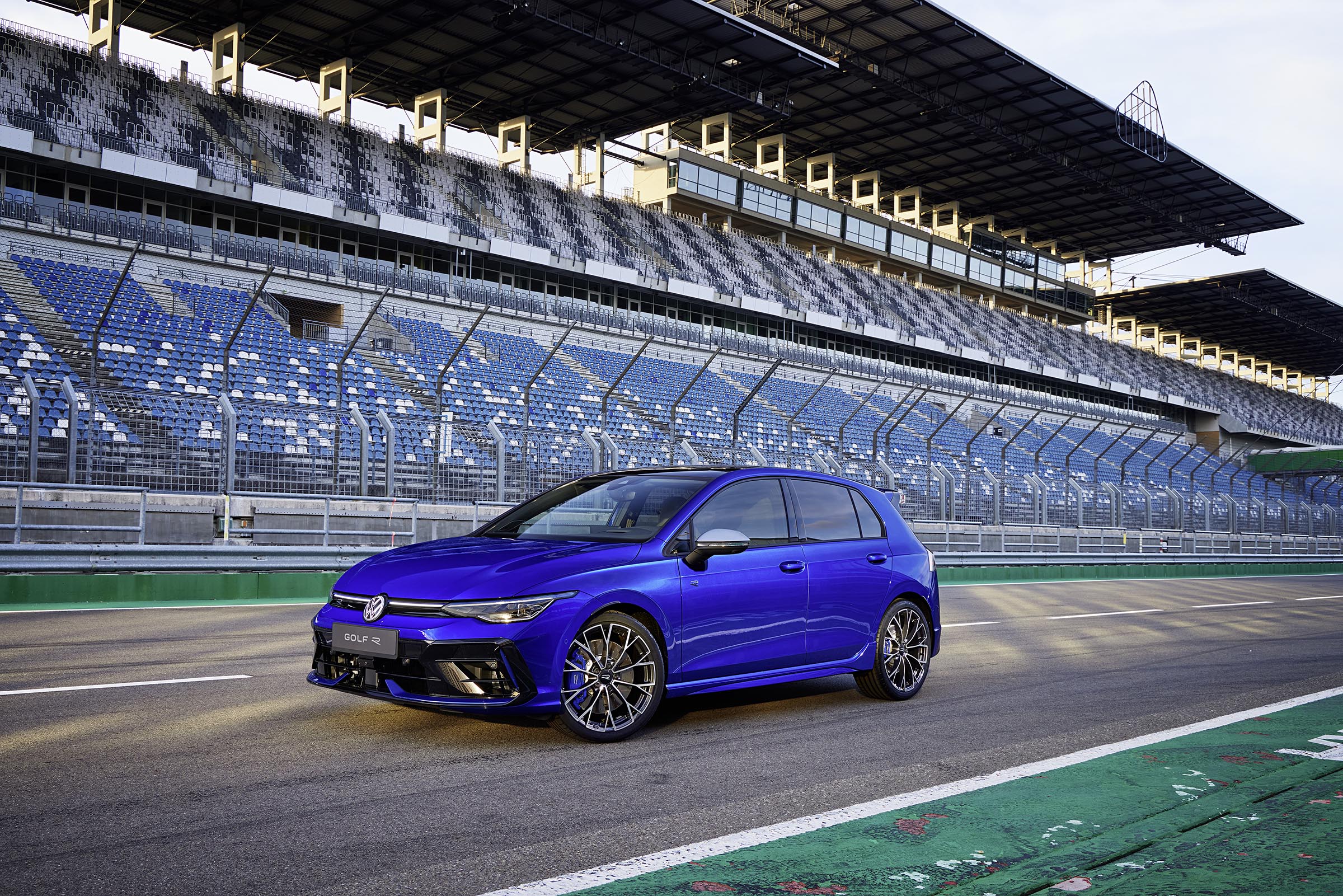
Volkswagen’s CEO and CFO presented senior management a “massive” plan to cut costs by 20% by the end of 2028, a move that could save as much as $71 billion at current exchange rates. The move could bring plant closures and cuts to employment, reports Headlight.News.

VW Group CEO Oliver Blume is expected to publicly reveal cost-cutting plans on March 10.
Volkswagen shook things up in December when it closed its “Transparent Factory” in Dresden, the first time it shuttered a German plant in 88 years. But with pressure mounting, the automaker is facing mounting pressure to further cut costs, even if that means job cuts and additional plant closings.
Those were among the possibilities raised by Volkswagen Group CEO Oliver Blume and CFO Arno Antlitz during a presentation to senior company officials last month, reported German business publication Manager Magazin.
During a meeting in Berlin, an hour’s drive from the company’s headquarters in Wolfsburg, the two executives laid out plans to cut costs by a total of €60 billion, about $71 billion at current exchange rates, by 2028.
Mounting costs, sinking sales
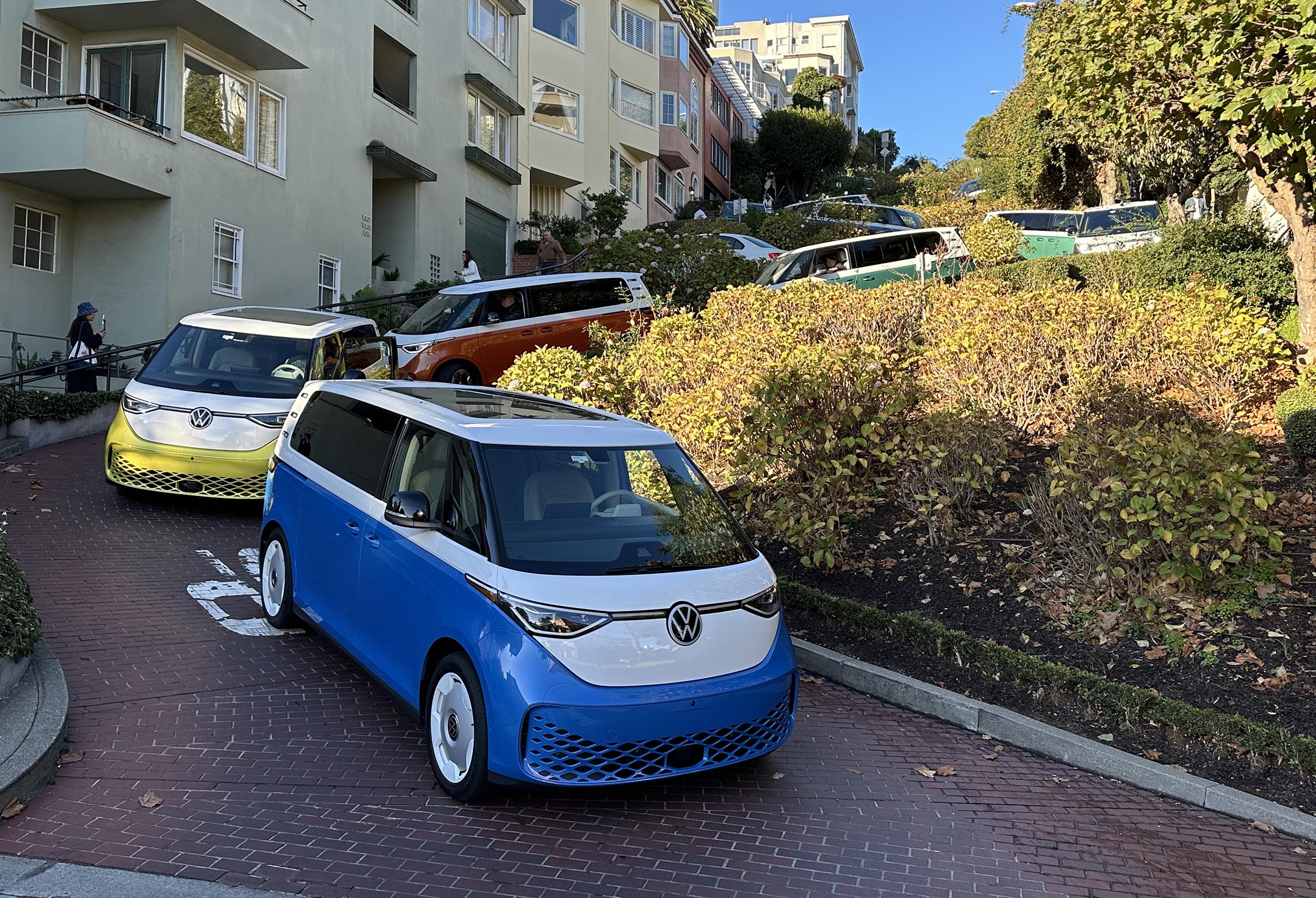
As a result of sinking sales, VW won’t sell the ID.Buzz in the U.S. in 2026.
VW has been struggling in the face of declining sales, the numbers tumbling 0.5% to 8.984 million in 2025. The automaker did see a brief surge in 2023, global sales surging 12% to 9.240 million. But it has otherwise watched demand slip five of the last six years.
After briefly taking the title of best-selling automaker it, has been knocked down by Toyota which in 2025 captured the global sales ground for the sixth consecutive years.
A major part of the problem for VW is China where it has faced a perfect storm in the automotive market. That starts with increasing competition from traditional rivals like General Motors and Toyota, while emerging domestic competitors such as BYD and Geely are fast gaining traction. VW’s Chinese operations saw sales dip 8% last year, to 2.69 million. At its 2019 peak, the group – which includes brands such as Lamborghini and Audi, as well as Volkswagen – sold 4.23 million vehicles in the populous Asian nation, meaning a 36% decline in just six years.
Add to the problems: a long-running series of price cuts that have hammered earnings for all players in China.
Transparent Factory closes down
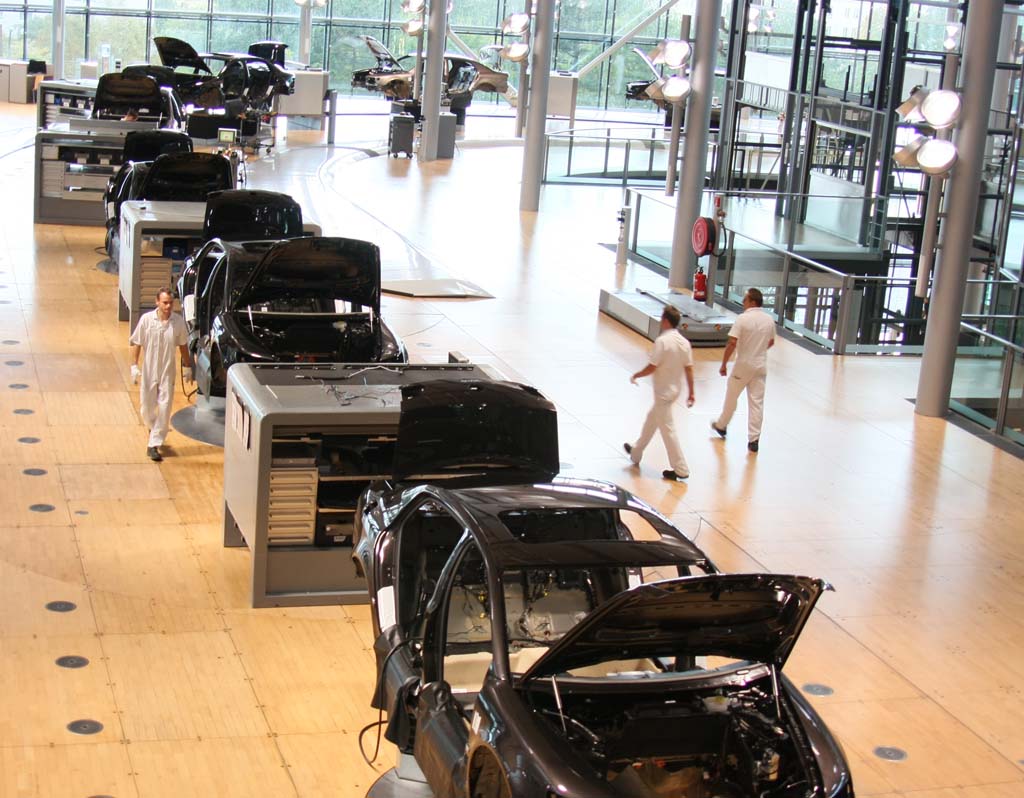
The Transparent Factory opened in 2001 to build the VW Phaeton.
The situation in China has caused Volkswagen management to rethink a wide range of operations, including production capacity. Last December, it closed the Transparent Factory in Dresden, marking the first time it permanently idled a German plant in 88 years.
The factory — with its glass walls and the unique hardwood platforms used to move partially assembled vehicles from one workstation to the next – opened in 2001 to produce the Phaeton, a short-lived luxury sedan. It was later converted to produce the ID.3, a subcompact battery-electric vehicle.
VW decided to shut the plant down when production of the ID.3 was scrapped, converting the facility to a research lab. “We did not take the decision to end vehicle production at the Transparent Factory after more than 20 years lightly,” Thomas Schäfer, chief executive of the Volkswagen brand, said in a statement last December. “From an eonomic perspective, however, it was absolutely necessary.”
More Auto News
- VW Reveals Redesigned 2027 Atlas SUV
- VW Won’t Offer ID.Buzz in the U.S. in 2026
- Uber Set to Launch Fleet of Autonomous VW EVs
More cuts to come
VW’s new contract for workers in Chattanooga, Tennessee offers protection in the even the factory closes or is sold off.
While VW is aiming to cut a fifth of its overall costs, the German magazine didn’t have specific details on how the company expects to accomplish that. Blume and Antlitz are expected to provide broader details during the automaker’s annual earnings presentation on December 10. All told, however, the target is a $71 billion reduction in costs.
That’s on top of the €15 billion, or $18 billion, cost-cutting program that led to the closure of the Transparent Factory.
While there’s so far been no known plan to further reduce its factory count that was a possibility that VW’s various workers unions have not ignored. When the United Autoworkers Union announced a new contract covering hourly employees at the Volkswagen plant in Chattanooga, Tennessee the union emphasized it had won extensive job protection provisions that would help minimize the impact on employees, whether VW might close or sell the facility.
While closing a plant in Germany can be enormously difficult – and expensive – business publication Handelsblatt noted that three major plants in that country failed to meet their own agreed-to cost-cutting targets. That has some speculating VW might issues ultimatums to one or all to get their operations in line with corporate cost-cutting goals.



0 Comments