
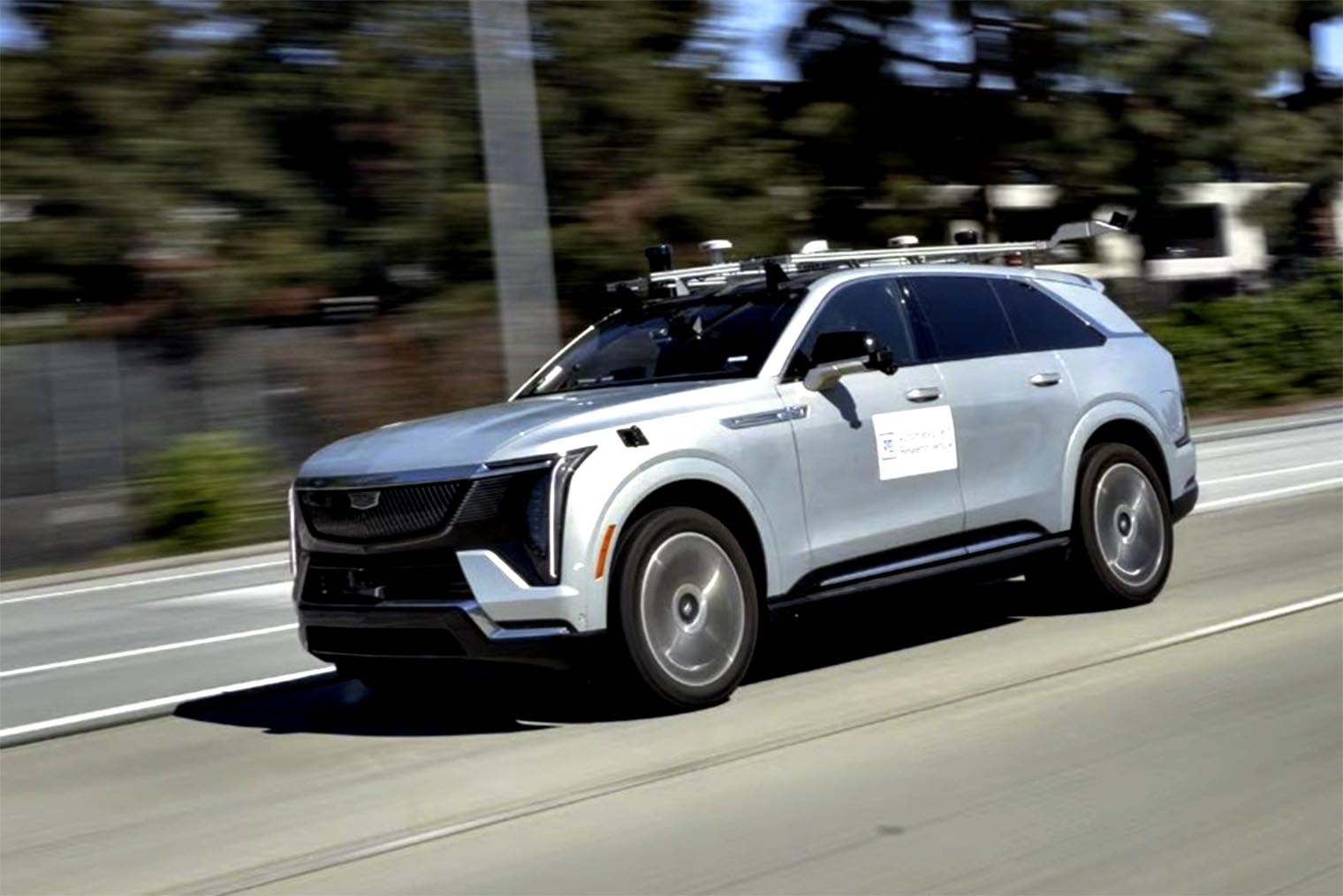
Hundreds of General Motors vehicles have begun roaming roads in Michigan and California, gathering data and testing next-level autonomous driving software the automaker plans to put into production by 2028. Headlight.News has more.
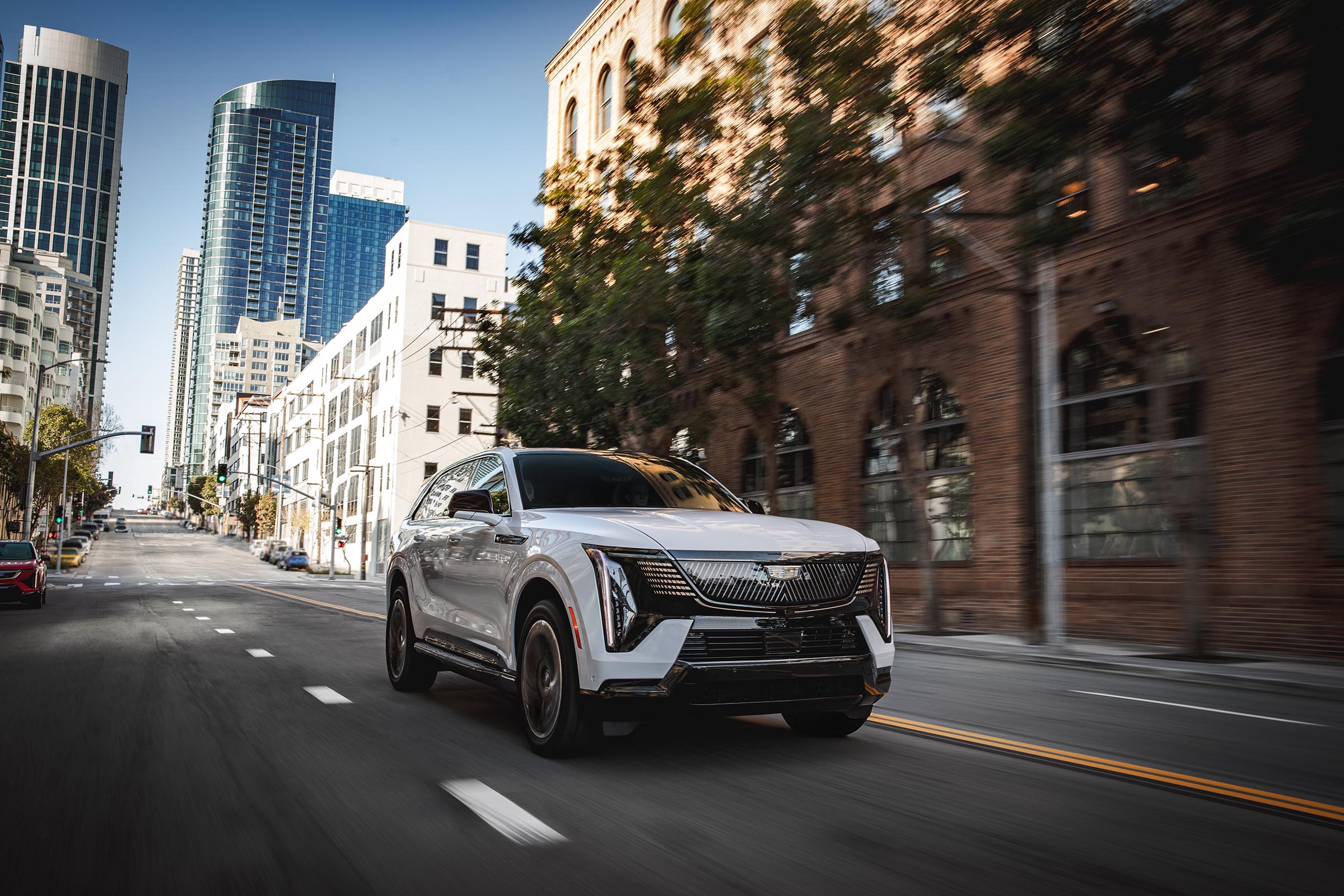
The stock Cadillac Escalade IQ, sans sensors. GM plans to debut Ultra Cruise in the Caddy EV in 2028.
Standing more than six feet in height and stretching nearly 20 feet in length, the Cadillac Escalade IQ isn’t the sort of vehicle that gets lost in a crowd. But the luxury EV driving around the western suburbs of Detroit earlier this month was particularly ostentatious, festooned with a variety of LiDAR and other digital sensors.
It’s part of a fleet of 200 test vehicles parent General Motors has begun rolling out in Michigan and California aimed at testing the company’s next-generation autonomous driving technology.
The automaker already has more than 500,000 vehicles on the road actively using its Super Cruise technology, allowing motorists to take their hands off the wheel – though they must remain actively aware of driving conditions, ready to retake control in an emergency. Starting in 2028, GM plans to take things to the next level with its Ultra Cruise system capable of “hands-free/eyes-off” motoring.
What’s new
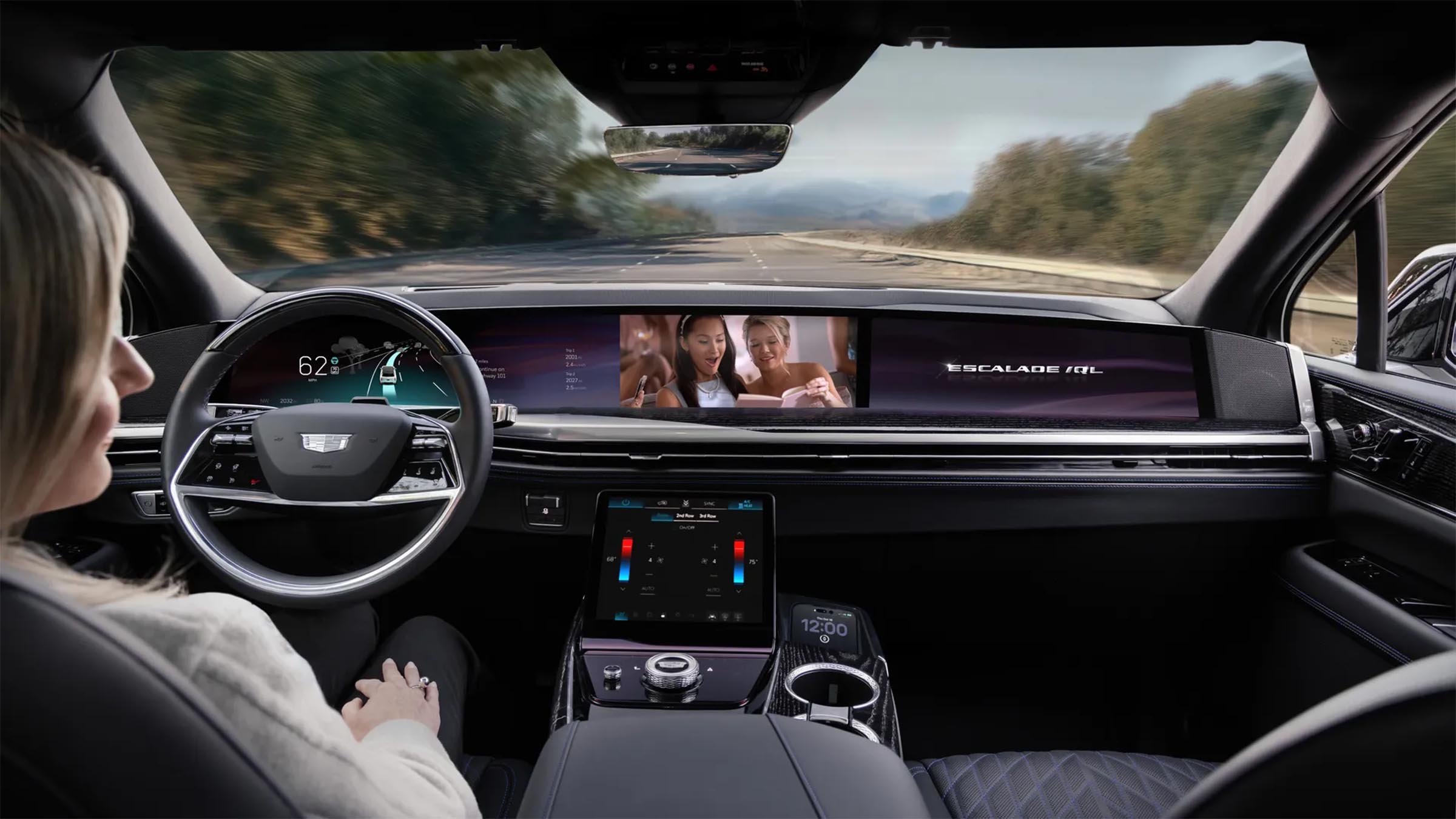
With the new system, motorists would be able to watch videos or even text while driving.
GM has quietly collected data from its current fleet of Super Cruise vehicles — which it says have clocked more than 800 million miles of driving – as well as early prototypes using more advanced software, the company said, noting “This real-world testing generates valuable data that informs our ongoing simulation and closed-course testing, while building confidence in the signals from these important validation tools.”
The new fleet of test vehicles will go a step beyond. They’re equipped with more advanced sensors than today’s retail models with Super Cruise, notably laser-based LiDAR which provides a detailed 3D image of the world surrounding each vehicle. At the same time, the prototypes will continue to have “backup operators” onboard.
“Leveraging extensive data from manually driven vehicles running routes across select states and learnings from simulation and closed course testing, GM is now advancing its automated technology into the next phase: supervised testing operations on public roads,” the company said this week.
The move is critical if the company hopes to meet its goal of launching the technology in the Cadillac Escalade IQ in 2028.
Ultra Cruise
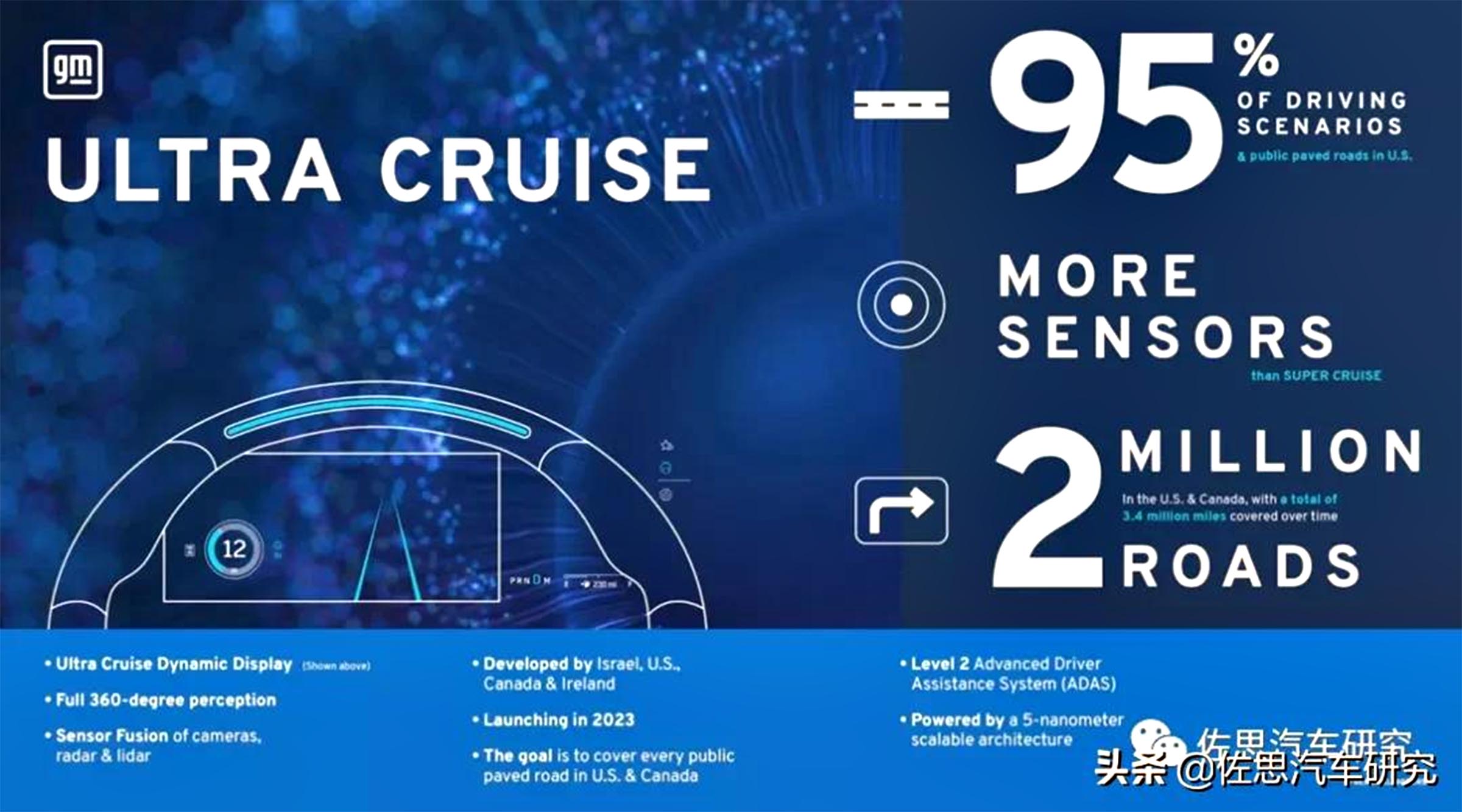 GM launched its Super Cruise technology in 2017. It’s now in use in more than 500,000 vehicles, a figure second only to the 2 million Teslas running the Full Self-Driving (Supervised) system – and millions more operating in the U.S. with the earlier Autopilot technology.
The Detroit automaker announced plans to go the next step with its Ultra Cruise system in November 2021. “Ultra Cruise is not just a game changer in terms of what it enables − a door-to-door hands-free driving experience − but a technological one as well,” said Doug Parks who, at the time, served as GM’s executive vice president of Global Product Development.
Ultra Cruise is expected to go a step beyond the original GM system. Known in industry parlance as a Level 3 system, it’s often described as “hands-free/eyes-off” technology. That means drivers won’t have to remain constantly vigilant, at any moment preparing to retake control of their vehicle. With Ultra Cruise, GM expects, a driver can settle back, text or watch videos. That said, they may still need to retake control. Allowing motorists to fully disconnect from the driving process will require another big step forward, to Level 4 technology – like that being used in Waymo and Tesla robotaxis.
More Auto Tech News
- Tesla Abandons Autopilot Name Under Fire
- Tesla Rolls Out First Cybercab Without a Steering Wheel
- Rivian Readying its Own Hands-Free Tech
Cruising
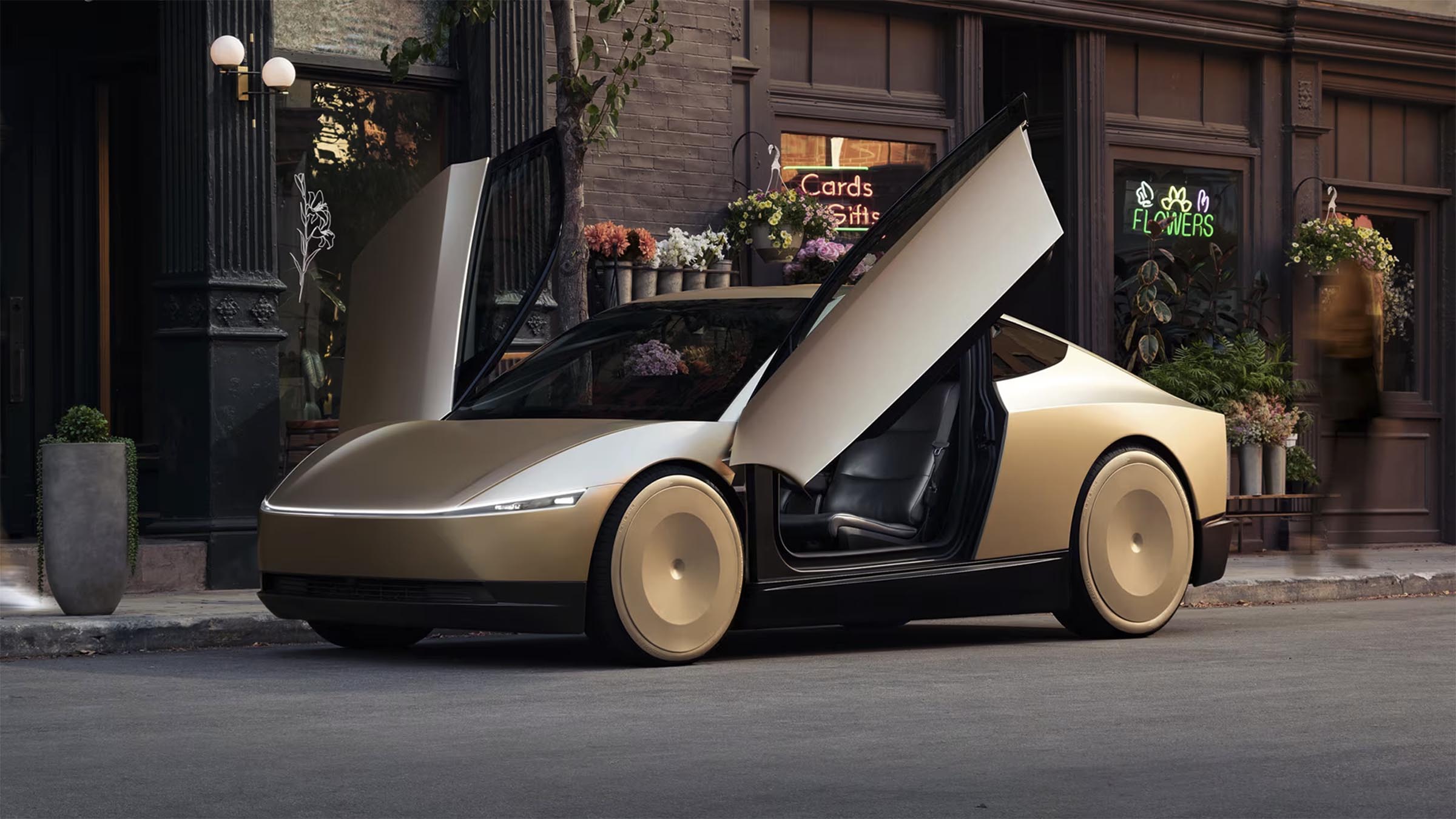
A version of the Tesla Cybercab minus a steering wheel and other driver controls.
Reaching Level 4 is something GM has been working on for some time – though it shut down its San Francisco-based Cruise robocab subsidiary in December 2024, 14 months after a highly publicized, near-fatal crash. It didn’t abandon the program entirely but brought its knowledge base in-house.
To achieve next-phase autonomy requires more than simply bolting on more sensors, however. GM is using its latest EVs, including the Escalade IQ, for this test program for several reasons. That starts with the fact that they’ve adopted entirely electrical architectures. Where most of today’s vehicles have dozens of microprocessors scattered all over, the Caddy EV has a centralized processing system. It’s easier to maintain control of various functions – and also allows easier upgrading of software. That approach to onboard computing is expected to roll out across the GM line-up in the years ahead.
Burned by the October 2023 crash in San Francisco, GM said it will put together an ongoing “safety report” which will track what happens with its new autonomous test fleet. The goal is to allow both the public and regulators to see “how our Supervised Testing Operation Safety Case supports the safe operation of our supervised test fleet on public roads.”
Ostensibly, other companies developing autonomous driving technology, such as Waymo, Tesla and Zoox, are supposed to report on incidents involving their own vehicles – including not only crashes, but situations where backup drivers had to intervene. They’ve each come under fire at times over the depth and accuracy of their data tracking. It remains to be seen if GM will better meet expectations.
GM isn’t the only automaker working up Level 3 driving technology for retail motorists. Mercedes-Benz was first to introduce the technology into the U.S. two years ago. But the high cost and the limited speeds at which it could operate resulted in marginal demand. It is no longer available.
0 Comments