
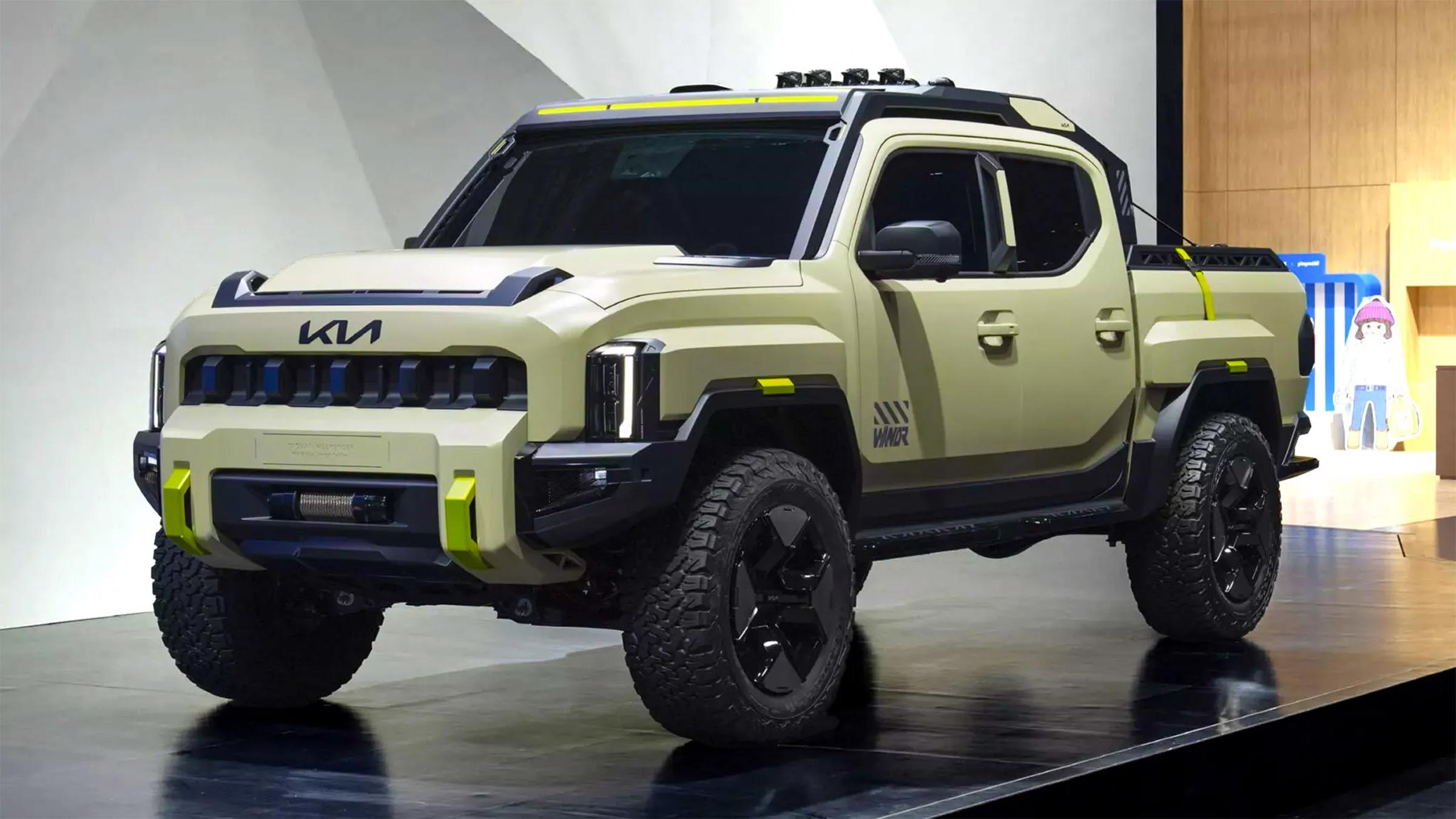
Kia will follow sibling Korean brand Hyundai in launching a midsize pickup, one in what’s expected to be a family of body-on-frame trucks bound for the U.S. market by 2030. The Kia model will be offered with various powertrain options, including a hybrid and an extended-range EV package, reports Headlight.News.
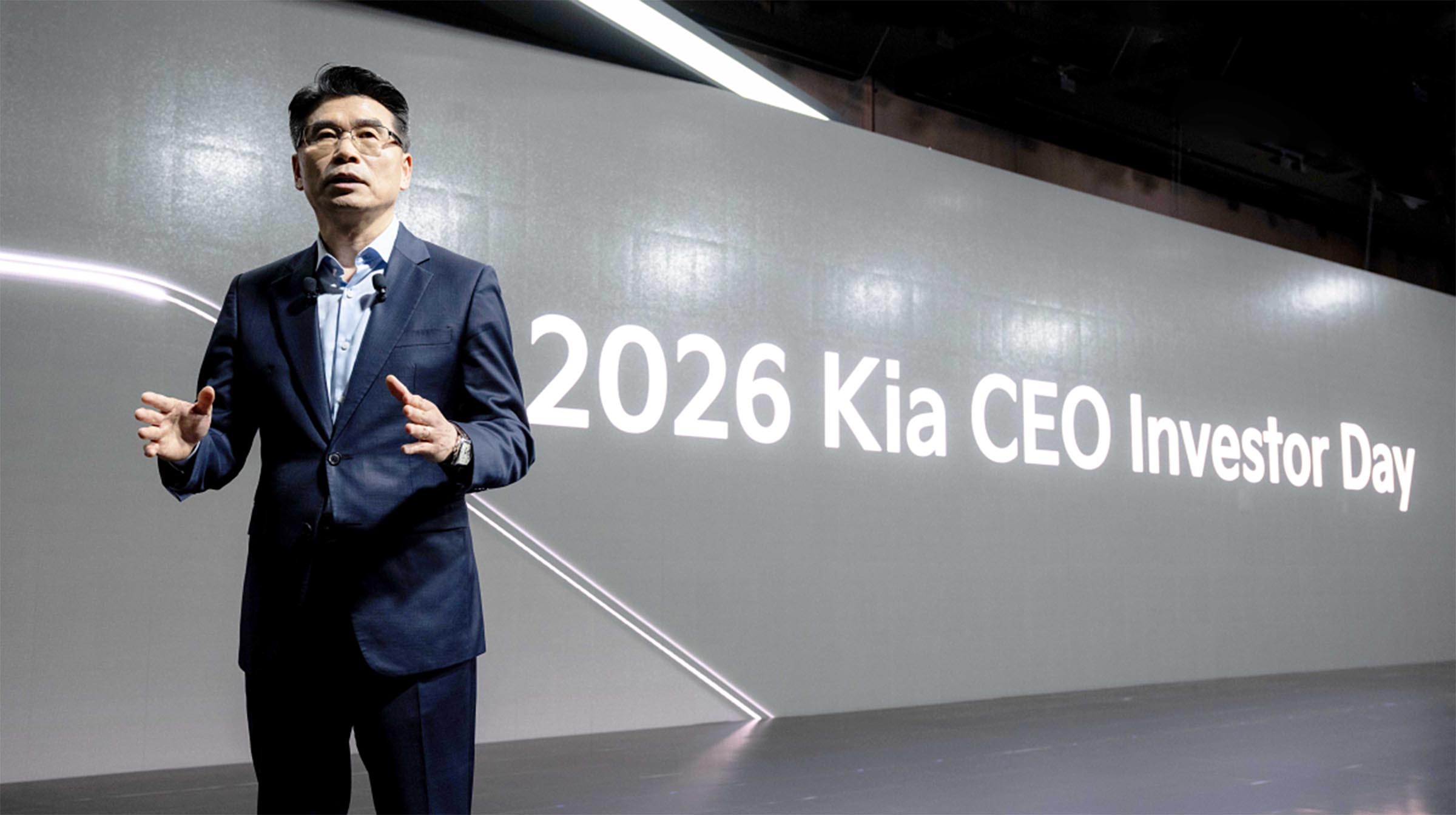
Kia CEO Ho Sung Song announced the pickup during the company’s Investors Day event on April 9.
Taking aim at what he described as an “untapped” market, Kia’s global CEO Ho Sung Song announced plans to launch a new midsize body-on-frame pickup targeting the U.S. market.
It will be one of an assortment of new light trucks from Kia and sibling brands Hyundai and Genesis set to go on sale by 2030.
Speaking at the Kia Investors Day even in Seoul on Wednesday, Song said the new pickup will have solid off-road and towing capabilities and be offered with a mix of electrified powertrains.
What’s new
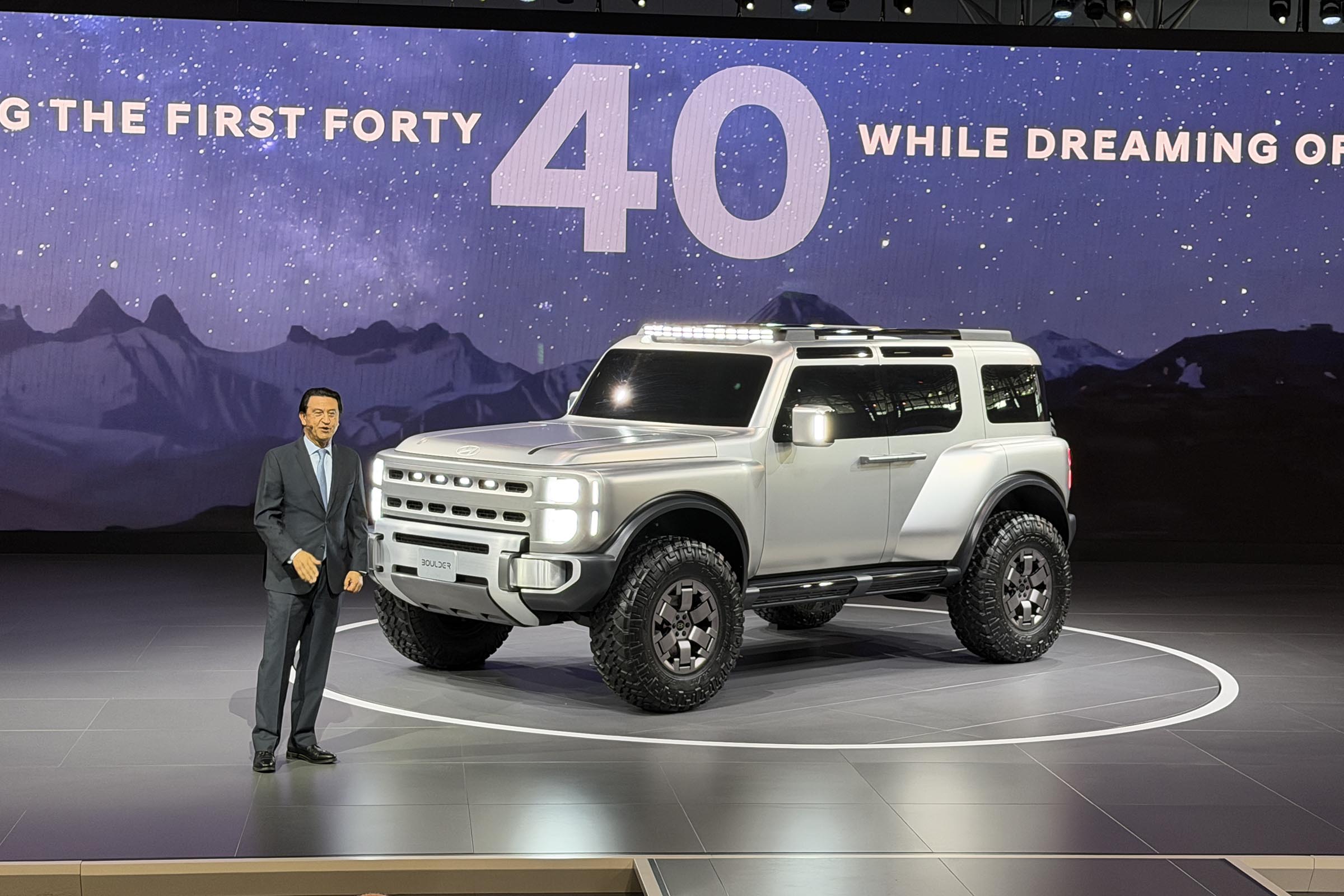
When he revealed the new Boulder SUV last week, Hyundai Motor America CEO Jose Munoz said the automaker also will launch a new midsize pickup in the U.S.
The Kia announcement came exactly one week to the day after Hyundai Motor America President and CEO Jose Munoz unveiled the new Boulder SUV concept at the New York International Auto Show. He also revealed that the bigger of the Korean brands was working up its own pickup for the American market.
Boulder and the Hyundai and Kia pickups will rely on a new body-on-frame platform now under development. The two brands will launch several other models using that architecture, as well the upscale Genesis division.
Like the Boulder show car, a concept version of the Kia pickup shown in Seoul featured an aggressively rugged design, with a bold, upright front end, reinforced underbody and high ground clearance. The body-on-frame architecture should allow it to handle much more extreme trail conditions than Kia’s current Tasman pickup can cope with – one reason that truck isn’t on sale in the U.S.
Powertrains
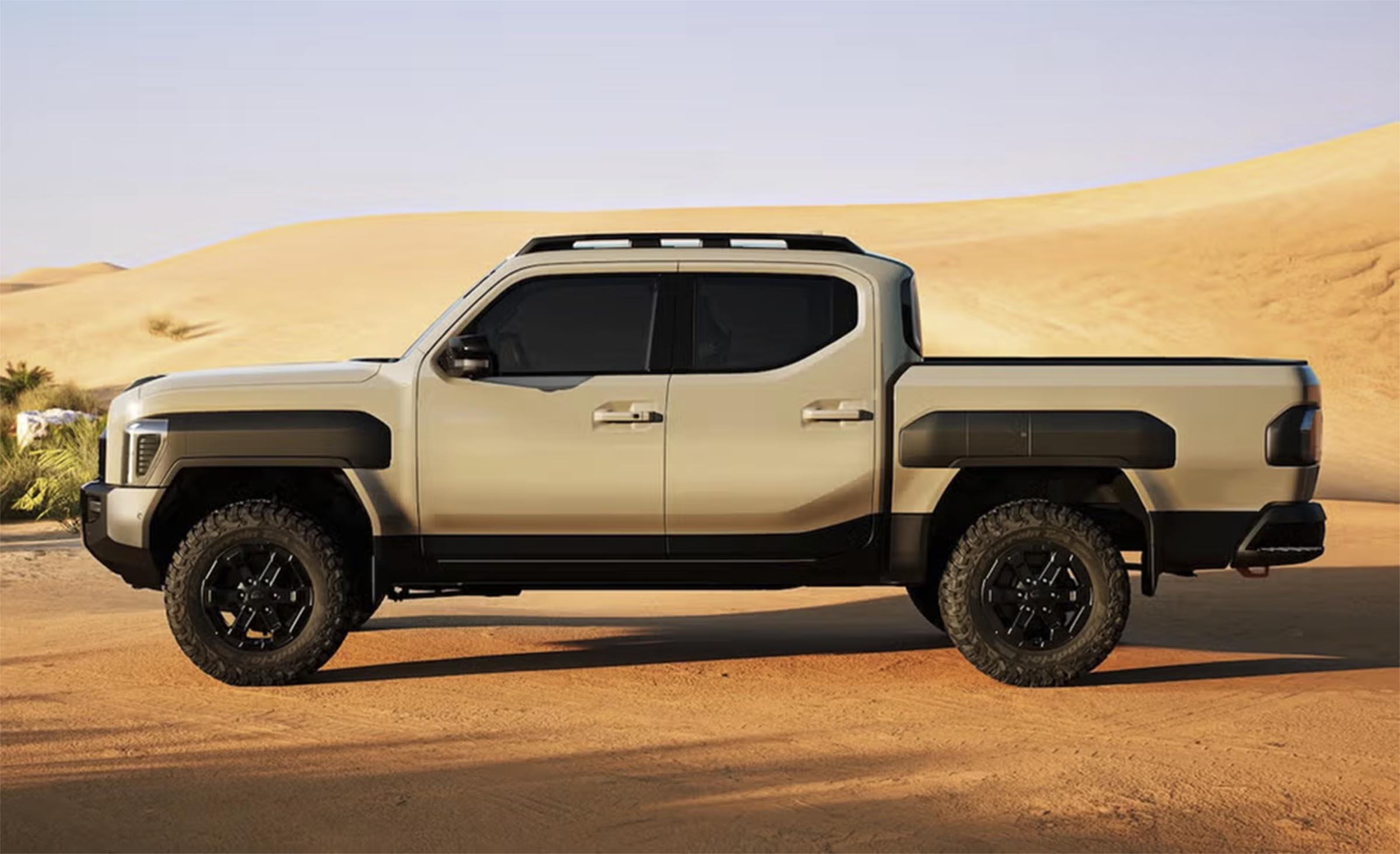
The brand’s current pickup, the Kia Tasman, isn’t available in the U.S.
During a conversation with Headlight.News in New York last week, Munoz said final features on Boulder – and other models using the truck’s platform — have yet to be locked down. That appears to be true for Kia’s models, as well. The executive said the Hyundai Motor Group collectively is considering a variety of powertrain options, but Kia CEO Song noted that the brand’s new pickup will offer at least electrified options: a conventional hybrid and a range-extender package.
It’s unclear if any gas-only models will be available. Meanwhile, there were some reports from Korea suggesting the Kia pickup might also be offered in all-electric form. That may have been a translation error as Song spoke in Korean. The company website specifically mentions HEV and EREV packages, however.
Four-wheel-drive could be an option, though Kia hasn’t offered that level of detail yet. Based on what the brand has done with other product lines, however, it’s a safe bet that the truck will be available with a terrain management system allowing drivers to quickly adapt vehicle settings depending upon weather and road conditions.
More Auto News
- Tariffs Leave Buick Reeling
- Rugged Hyundai Boulder Takes Aim at Bronco, Wrangler
- First Look: 2027 Kia Seltos
The U.S. in the crosshairs.
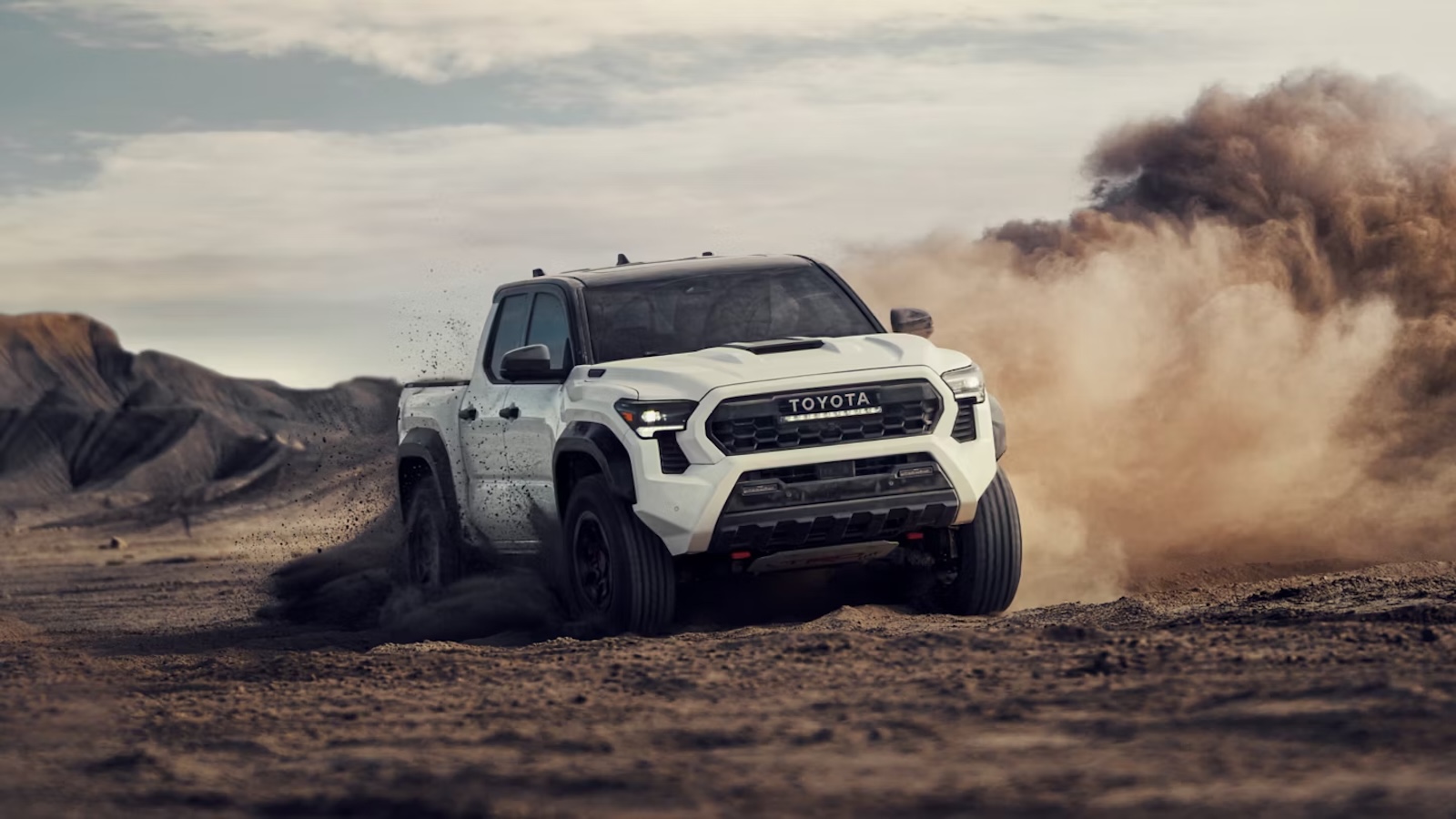
The Toyota Tacoma TRD currently dominates the midsize pickup market in the U.S.
Kia has big plans for the upcoming pickup. While the truck may be sold in other markets, Kia has the Tasman for Europe and Asia, so North America will be its primary target.
Song said the automaker intends to sell about 90,000 of them annually in North America. That’s barely a third of what the segment leader delivers each year. Toyota delivered 274,638 Tacoma pickupss in North America last year. But Kia’s target isn’t that far off from what the rest of the segment musters. Chevrolet sold 116,740 midsized Colorado pickups in the U.S. and Canada last year. Ford moved 70,960 Ranger trucks.
For his part, Song would only commit to putting the new pickup on sale by 2030 – the same timeframe Munoz laid out last week for the production version of Boulder. With three brands all looking to gain access to the body-on-frame platform, a senior Hyundai Motor Group official last week said there’s an internal battle to see which brand will get to market first. It’s not uncommon for one to take lead when an all-new class of product is introduced. One big issue is the fact that Hyundai and Kia are already struggling to meet demand in the U.S. market. That means they’ll have to expand capacity at existing plants and very likely will need yet another U.S. factory to make room for the new body-on-frame models, Munoz told Headlight.News last week.
Fierce competition
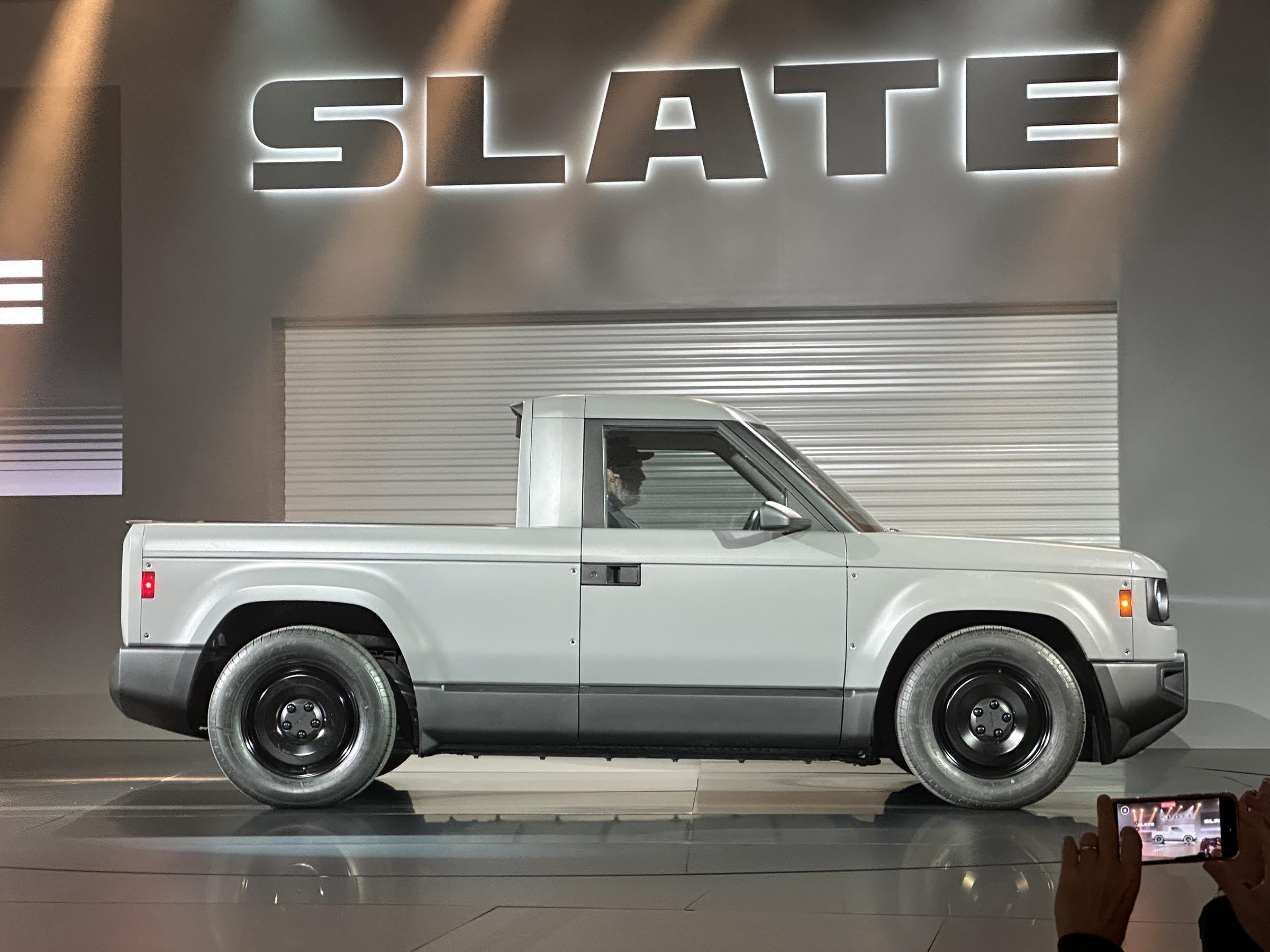
Start-up Slate will target the compact pickup segment.
After years of declining sales, the midsize pickup segment started to rebound a decade ago. At one point, the market was limited to the Tacoma and Nissan’s bargain-priced Frontier. But several key players entered the fray, including the Honda Ridgeline. Meanwhile, the Chevrolet Colorado, GMC Sierra and Ford Ranger all came back from the dead.
If anything, competition has grown even more fierce. Rivian has joined battle with the all-electric R1T, and the reborn, Volkswagen-owned Scout brand will offer all-electric and range-extended versions of the planned Terra pickup. There are also some compact options, notably the Ford Maverick and Hyundai Santa Cruz, with start-up Slate set to launch its own compact EV pickup next year.
And Hyundai and Kia will also face off against one another, much as they do with the Palisade and Telluride models, respectively.
All told, 481,588 midsize pickups were sold in 2025, but that was down about 9% compared to the year before. How the segment will fare this year is uncertain. The overall U.S. market is expected to lose momentum, according to forecasts from Cox Automotive, S&P Global Mobility and others. But the current surge in fuel prices could actually work to the advantage of midsize trucks, several experts told Headlight.News, should buyers decide to downsize from gas-guzzling full-size models.
0 Comments