
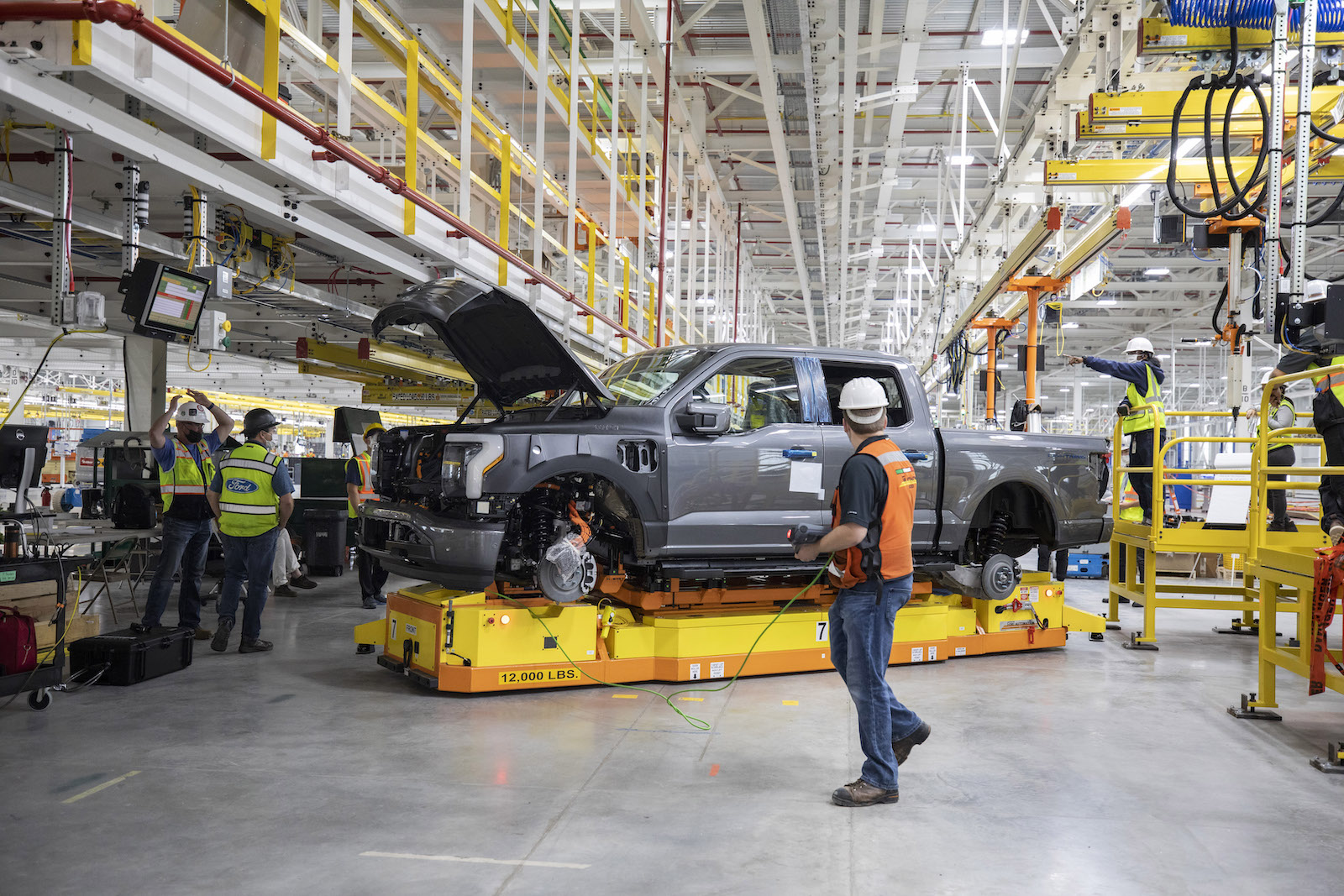
Ford Motor Co. is tearing up its EV plans, killing off its all-electric F-150 Lightning, while shifting focus to bring more hybrids, E-REVs and low-cost EVs to market. Among other things, it will shift production at its massive BlueOval City complex in Tennessee from electric trucks to gas models. Ford will also take full control of a Kentucky joint venture battery plant in Kentucky, refocusing it on producing LFP batteries for energy storage, rather than vehicles. All told, the automaker will take a $19.5 billion charge as a result of the new strategy. Headlight.News has more.
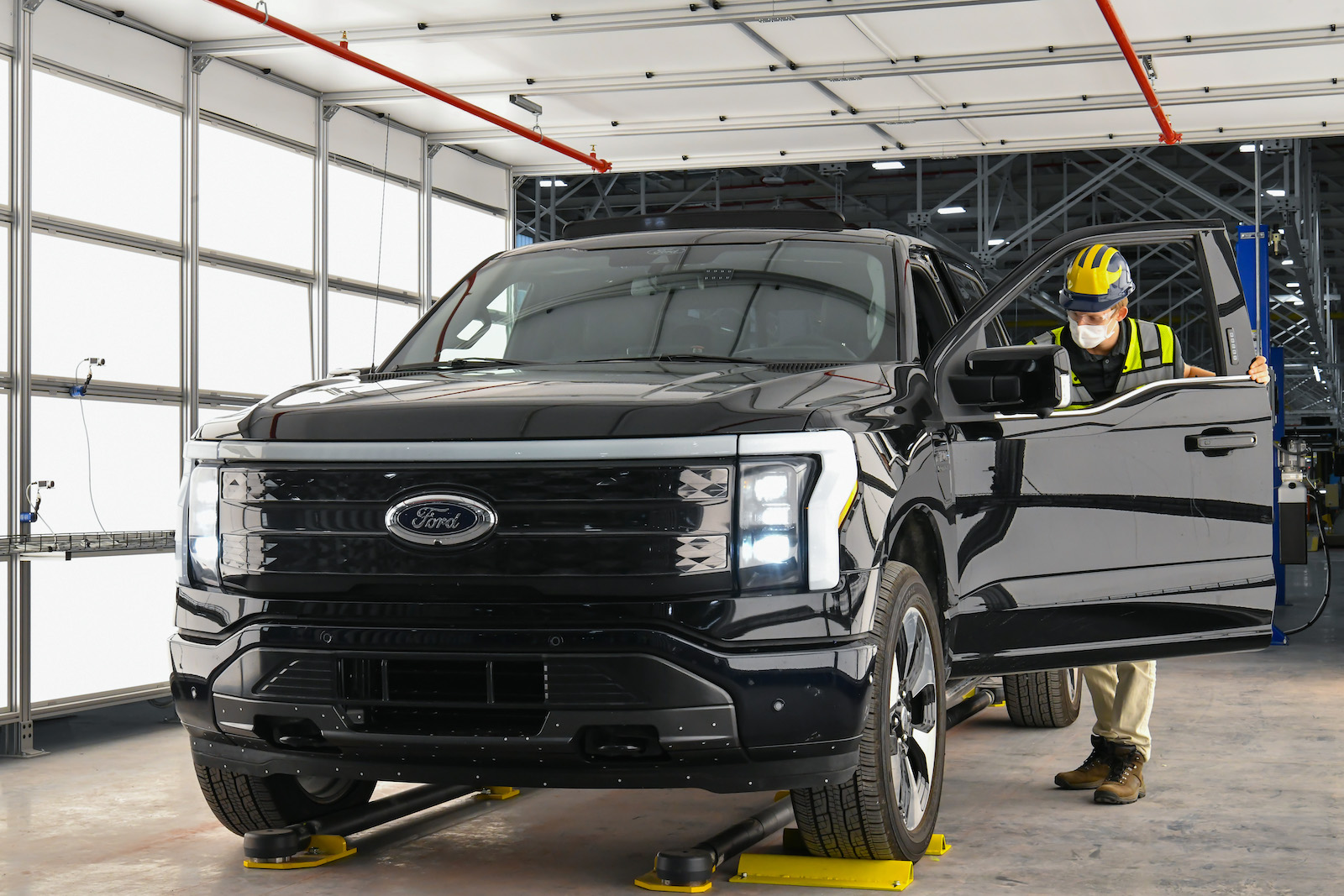
Ford lost $37,000 on each F-150 Lightning it sold in 2023, officials said previously, making today’s announcement unsurprising.
With the U.S. market for battery-electric vehicles now expected to come in significantly below earlier forecasts, Ford Motor Co. announced Monday a massive shift in its battery-electric strategy, which will result in charges of $19.5 billion.
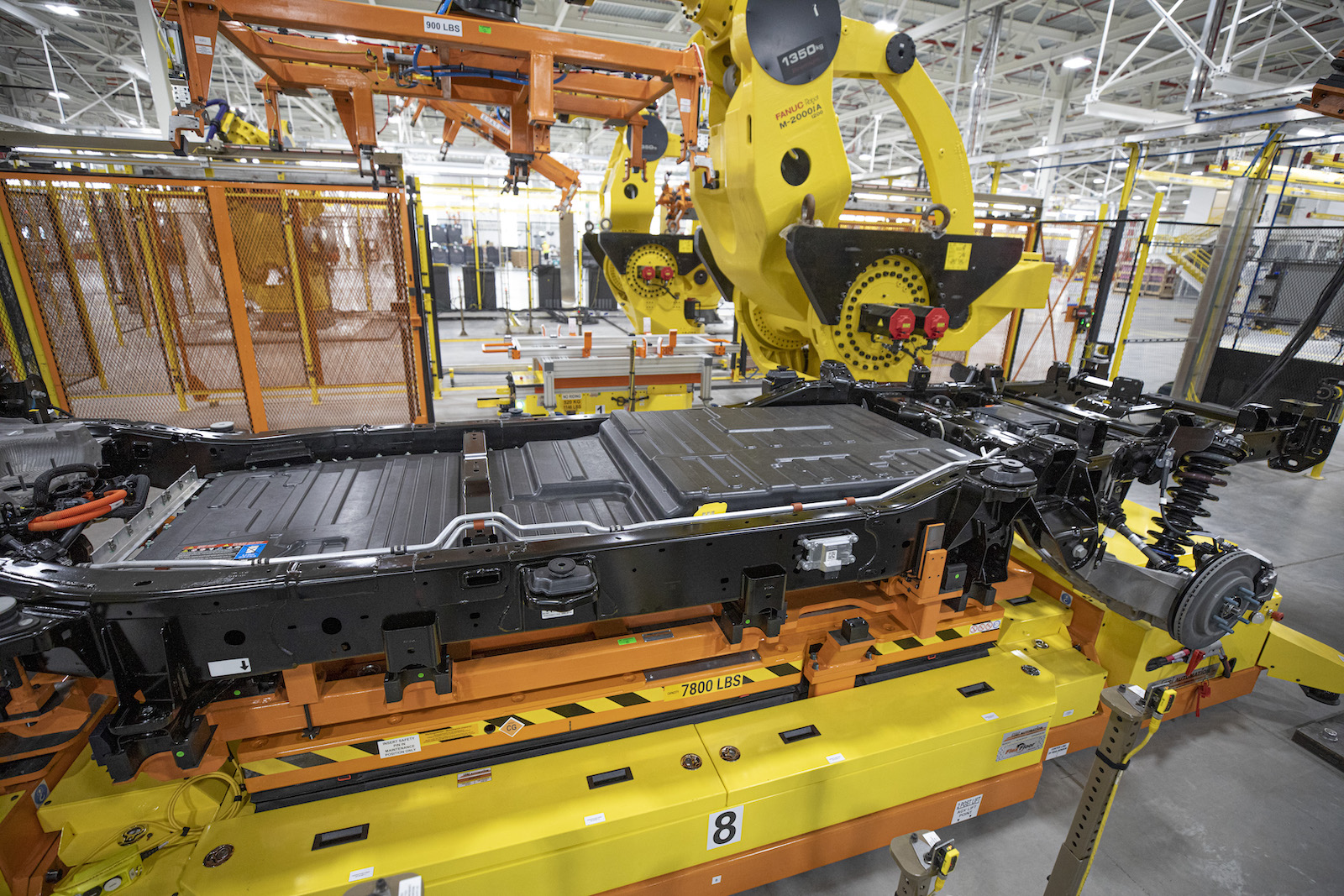
The most significant development sees Ford walk away from its existing EV plans, notably starting with the end of production of its F-150 Lightning pickup. In turn, the Tennessee BlueOval City manufacturing complex that was supposed to produce the next-generation Lightning will now switch to gas-powered trucks. Ford will move forward with plans to roll out a new generation of all-electric vehicles, the Universal EV program, set to launch in 2027.
Meanwhile, the company will now focus on a mix of electrified products, including conventional hybrids, extended-range electric vehicles, or E-REVs, and EVs. These collectively are expected to make up “nearly 50% of the company’s total vehicle sales by 2030,” according to Andrew Frick, president of Ford Blue and Ford Model e.
Ford to enter energy storage business
The changes are expected to leave Ford with significant excess battery capacity at the battery manufacturing facility in Kentucky, which was formerly part of a joint venture with Korean battery maker SK On, as well as at a new factory in Marshall, Michigan.
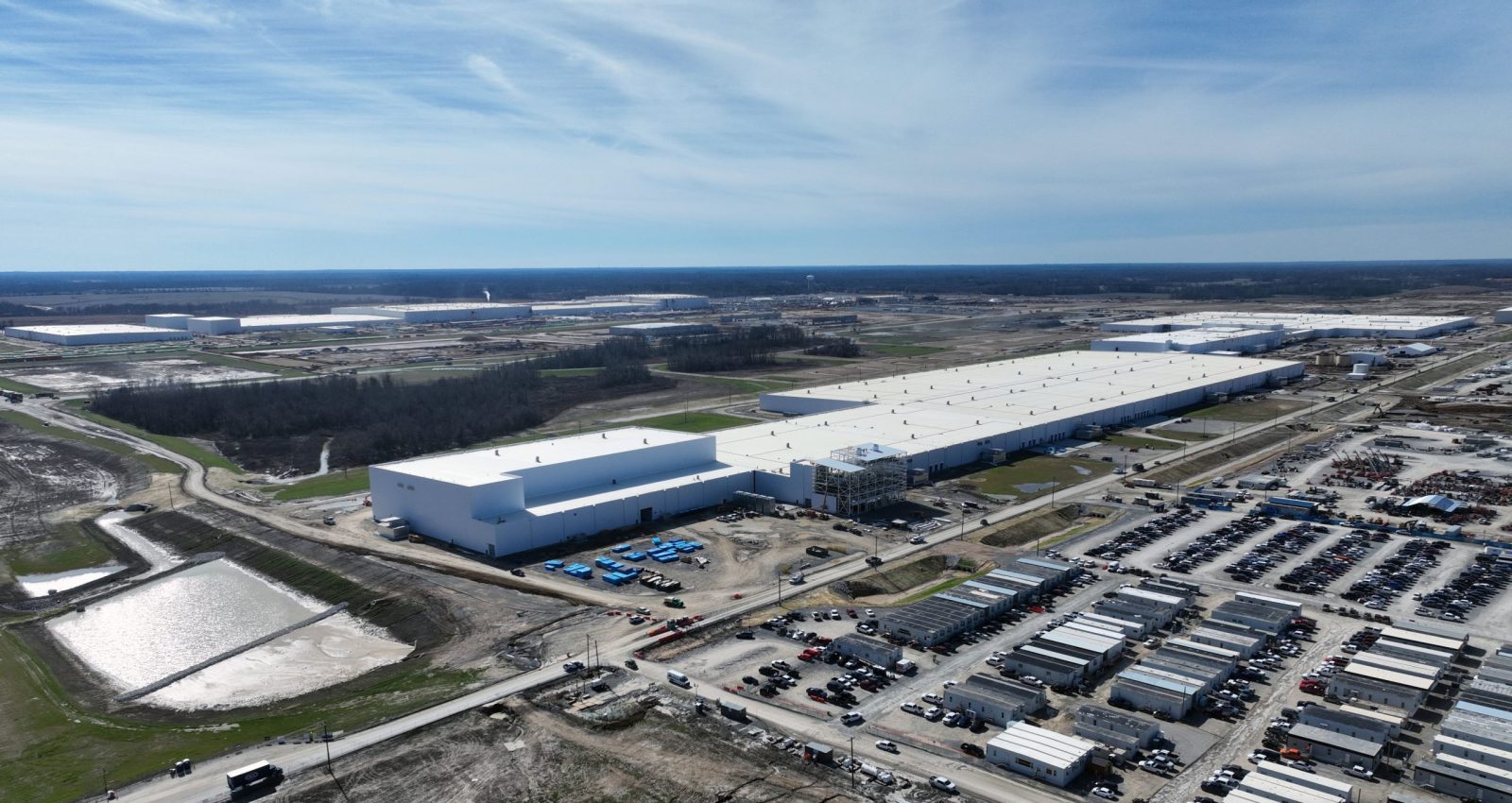
Ford announced a major shift in its plans, which will mean huge changes for the huge BlueOval City complex going in near Memphis.
Ford will now take full control of the Kentucky plant. To absorb the excess capacity from the output of the Kentucky and Michigan plants, the company intends to divert some production to the growing market for energy storage, said Lisa Drake, vice president of Technology Platform Programs.
About 20 gWh of lithium-ion phosphate, or LFP cells, are now earmarked for sale to the rapidly expanding network of data centers popping up across the U.S. Ford also is contacting utility providers to develop a storage market there. Some of the batteries produced in Michigan may also be used for retail energy storage applications, as well.
EV rollback
The EV market, in general, is undergoing a major shift. Sales have lagged expectations, especially in the U.S., where the segment now is expected to account for around 8% of total new vehicle sales this year. A study released by AutoPacific Inc. expects the segment to reach no more than about 12% this decade, barely half of its prior forecast. The slowdown is the result of a variety of factors, including the phaseout of federal EV tax credits at the end of September.
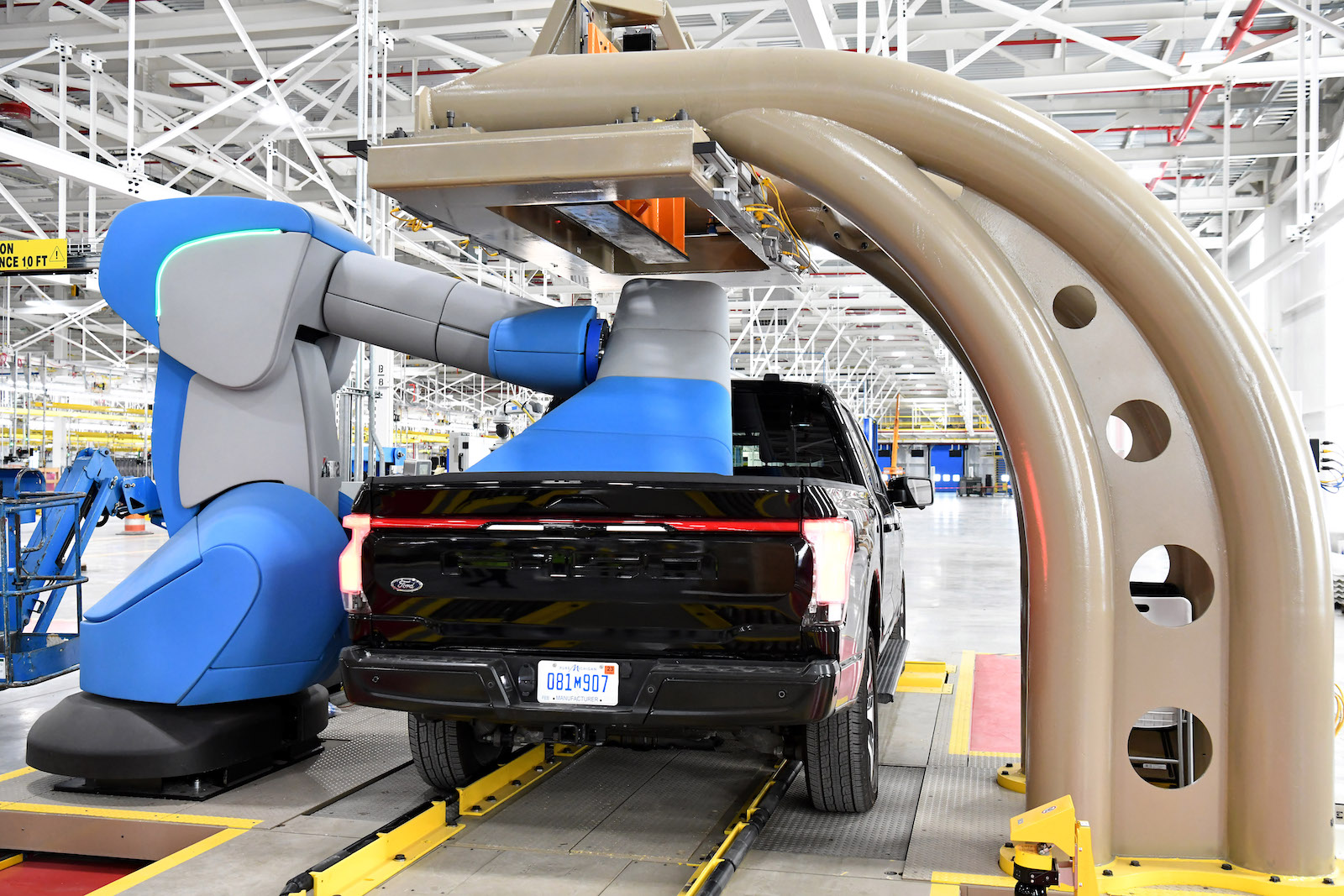
Production of the F-150 Lightning available started in 2021, and will end immediately, officials noted.
Until recently, Ford was positioning itself to become one of the most aggressive players in the EV market. It has been the number one provider of all-electric pickups, for one thing, though Frick said the automaker “learned a lesson” from customers and potential buyers that all-electric trucks don’t meet their needs. “Towing heavy loads over long loads is non-negotiable,” the executive said.
The all-electric Lightning has now ended production, while Ford had previously scrapped plans to produce large, all-electric SUVs. Part of the $19.5 billion charge Ford is taking will cover development of a next-gen version of the EV pickup, but some of that work will be able to be repurposed.
Ford now plans to shift to an E-REV package that will yield an estimated 700 miles of range. An E-REV is a blend of conventional hybrid and pure EV. While it has an internal combustion engine onboard, it is used solely to generate current to keep the vehicle’s battery pack charged. That allows continuous operation as long as there’s gas in the tank.
More Ford News
- Ford’s “Universal EV” Could Change Everything About Automaking — and Deliver a $30,000 EV Pickup
- Ford Pushes Back Replacements for F-150 Lightning, E-Transit
- Ford Has a “Model T Moment” Coming, Says CEO Farley
Turning a profit
The reality, said Frick, is that the old plan wouldn’t work. Ford had to shift course, “rather than spending billions on more EVs that have no path to profitability.”

Ford CEO Jim Farley has the company pursuing low-cost EVs, beginning with a new pickup due to begin production in Louisville in 2027.
The company does believe there is a way to earn money on all-electric products, but those are largely smaller-sized models, such as the pickup due to go into production at a plant in Louisville in 2027.
The Universal EV system Ford is developing promises to significantly lower both parts and manufacturing costs. It is flexible enough to allow a wide range of body styles and sizes. Separately, Ford is looking at other ways to lower EV costs – including a recently announced joint venture with France’s Renault.
But E-REVs and conventional hybrids will become a significantly more important part of Ford’s product strategy going forward. Collectively, electrified vehicles will add up to almost half of the company’s total volume. Ford officials declined to break out how much of the total will be accounted for by each of these different types of vehicles.
Job impact
Frick and the other officials participating in the Monday media briefing promised this new approach will be profitable in short order, by around 2030. Frick also insisted it will be a “positive for jobs” in the U.S.
Ford’s making adjustments to its plans for battery production at plants in Kentucky and Michigan going forward.
On the downside, about 1,600 workers at the Kentucky battery plant will shortly receive notice they’re being terminated as the joint venture winds down. But with expectations of growth for new storage batteries, Ford will then create about 2,100 new jobs there, with expectations current employees will be rehired.
It will hire about 2,300 workers at the Blue Oval City plant. Meanwhile, it will also retain the 1,700 employees at an Ohio plant that will shift production to gas and hybrid-powered commercial vans. As for the workers at the facility in Dearborn, Michigan that has been producing the Lightning, they will be shifted to the adjoining factory now assembling conventional versions of the F-150 pickup.
Not alone
Ford isn’t alone in its move to change course due to the changes in the EV market. General Motors Chair and CEO Mary Barra said earlier this year the company is revamping its EV plans, focusing on developing more hybrids. It’s shut down production at Factory Zero in Detroit, which produced the GMC Hummer EV truck and SUV as well as the Chevrolet Silvervado EV.
Several other automakers are also scaling back their EV plans, Volkswagen making big revisions and its Scout spinoff focusing on build E-REV models after the first round of product orders saw more than 70% of those plunking down deposits, checking the E-REV box rather than the pure battery electric model.



0 Comments