
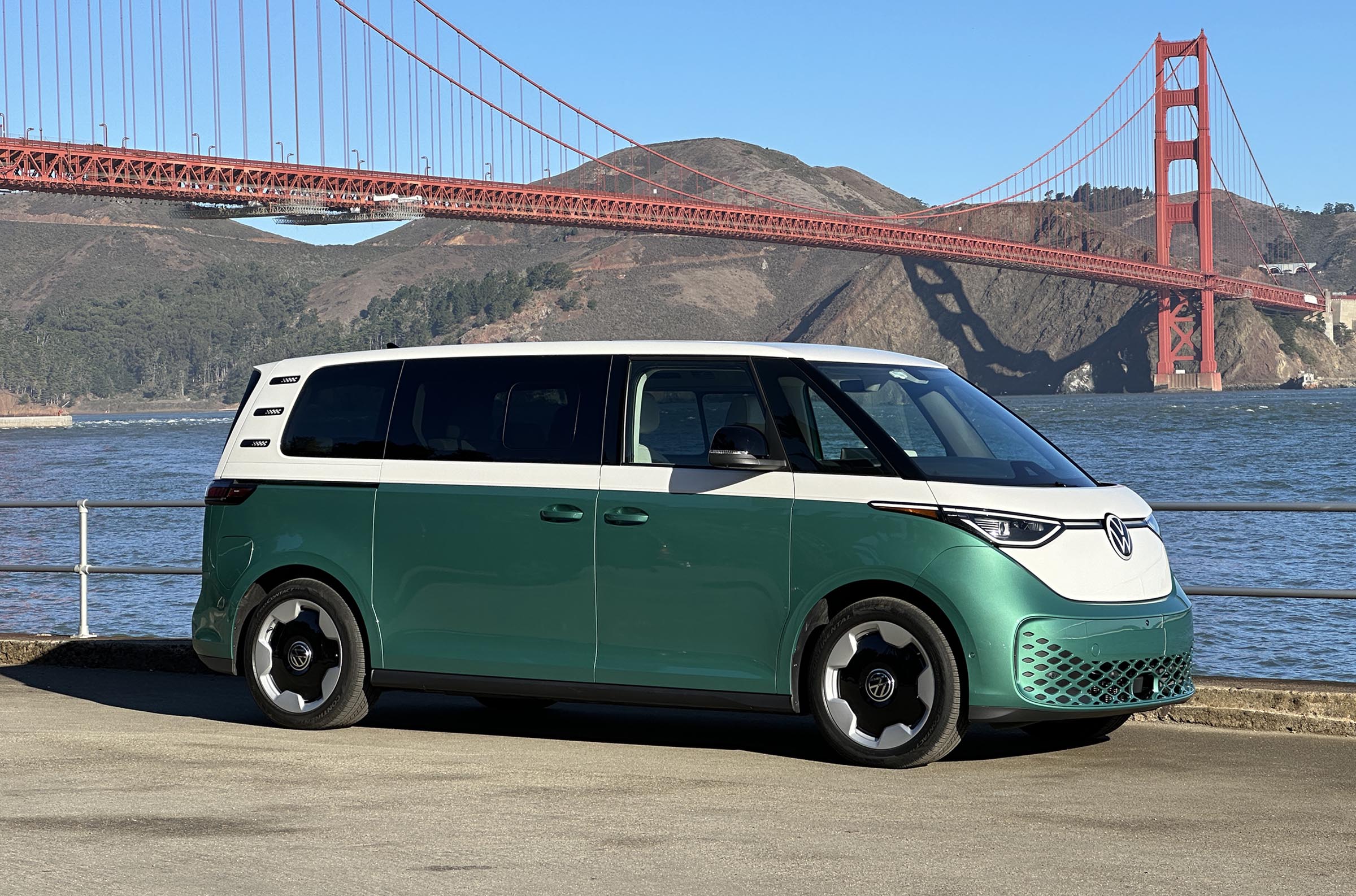
Volkswagen has decided not to offer the 2026 ID.Buzz microbus in the U.S., citing weak “market conditions” for the unexpected move. But it says it is “excited” about bringing back the all-electric van in 2027. Headlight.News has more.
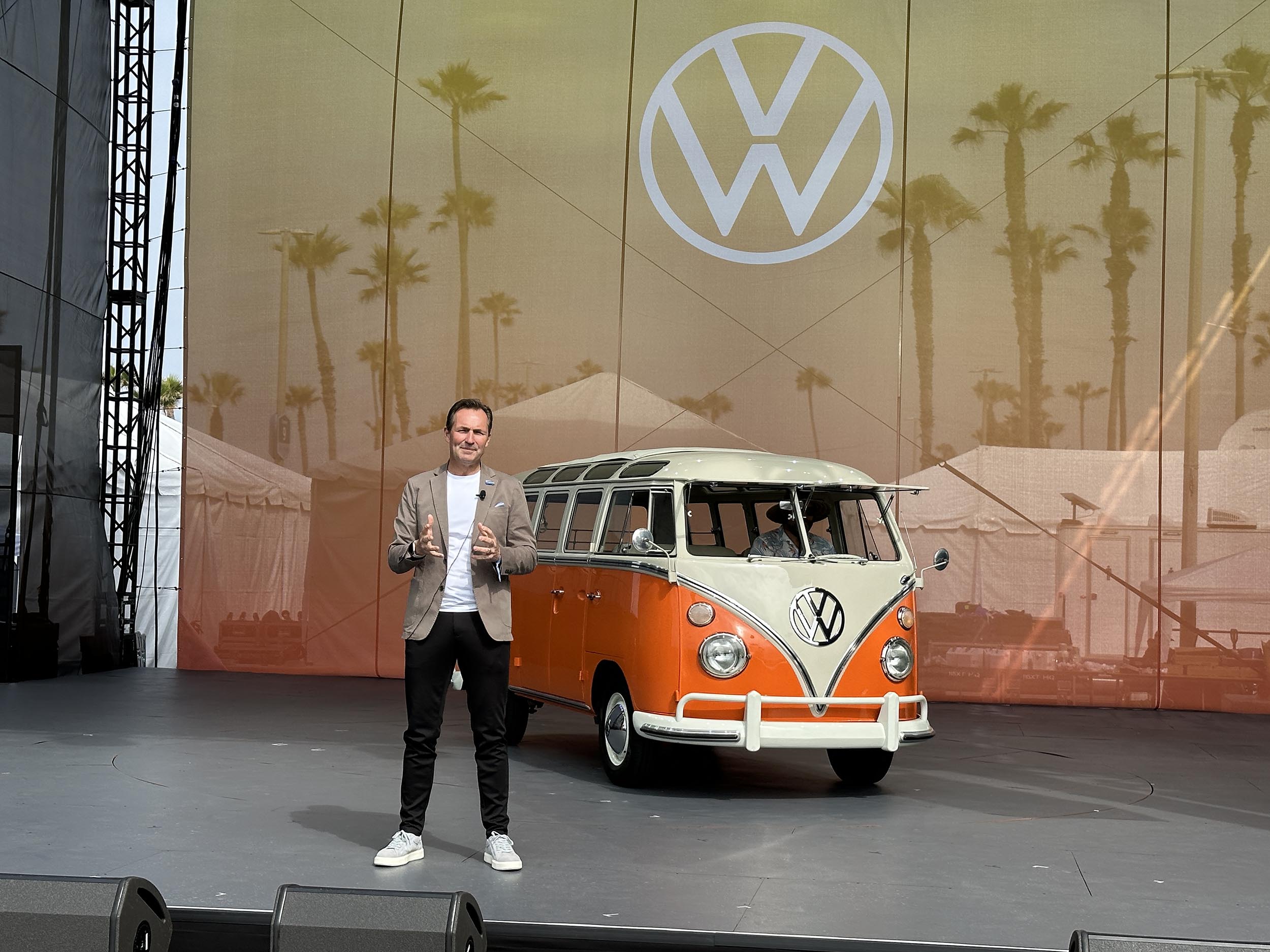
VW brand boss Thomas Schafer had big expectations for the modern incarnation of the iconic Microbus.
It was meant to serve as the brand’s halo model during a transition to battery-electric vehicles. And, in a sense, Volkswagen’s ID.Buzz actually does represent what’s happening to the automaker. With EV sales falling well short of expectations, VW has decided not to offer a 2026-model microbus, relying instead on the pile-up of inventory at its U.S. showrooms.
That said, it’s not time to write the obituary for the all-electric reincarnation of the legendary Volkswagen Microbus – which may yet return to production.
“The ID. Buzz remains an important part of the Volkswagen portfolio, and I want to be clear: we are not canceling this product in the U.S. market,” Kjell Gruner, President and CEO, Volkswagen Group of America, said in a statement. “To optimize inventory, we’re leveraging 2025 models to support our dealers through mid-year, and we’re excited to welcome Model Year 2027 in 2026.”
Buzz Kill
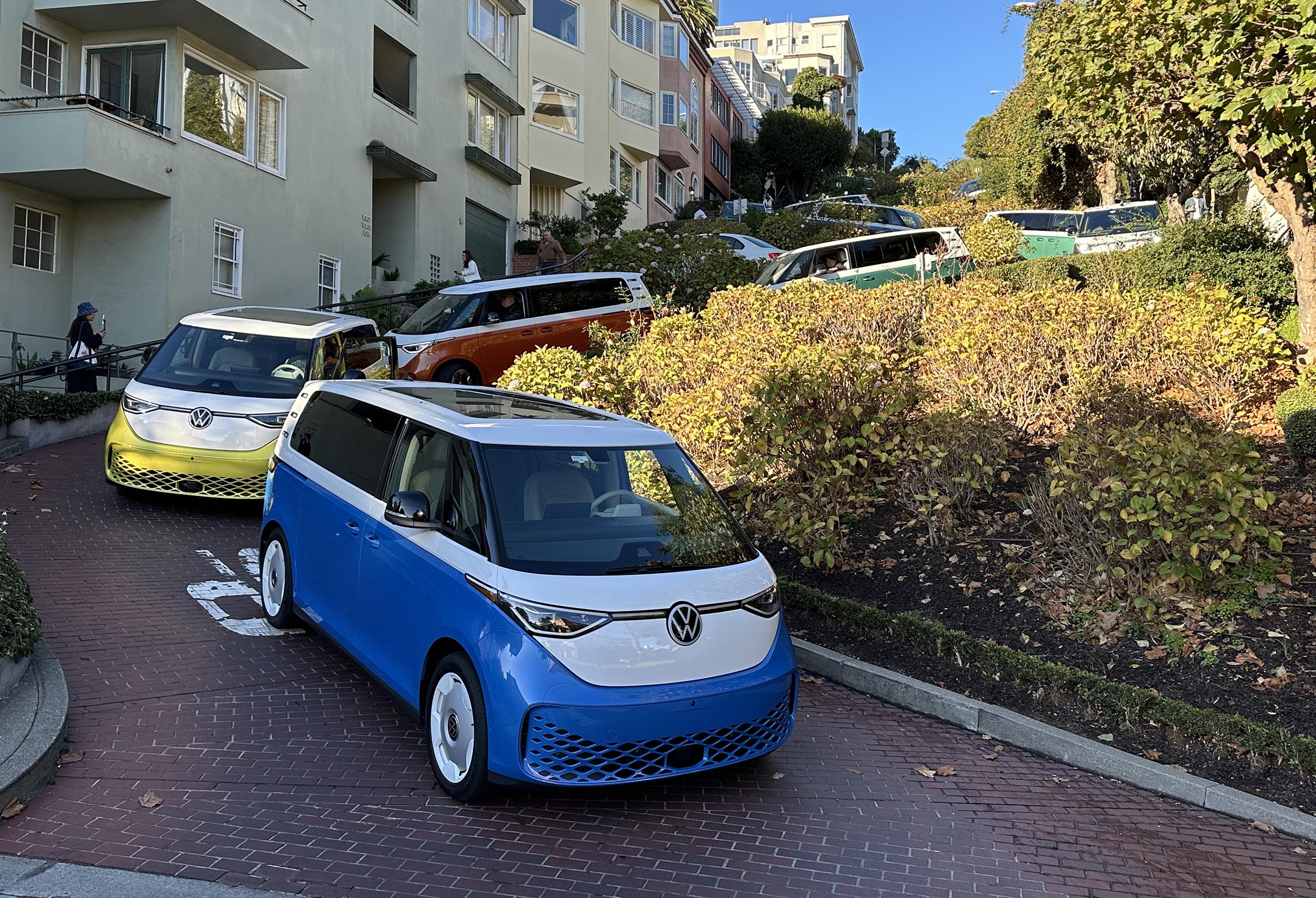
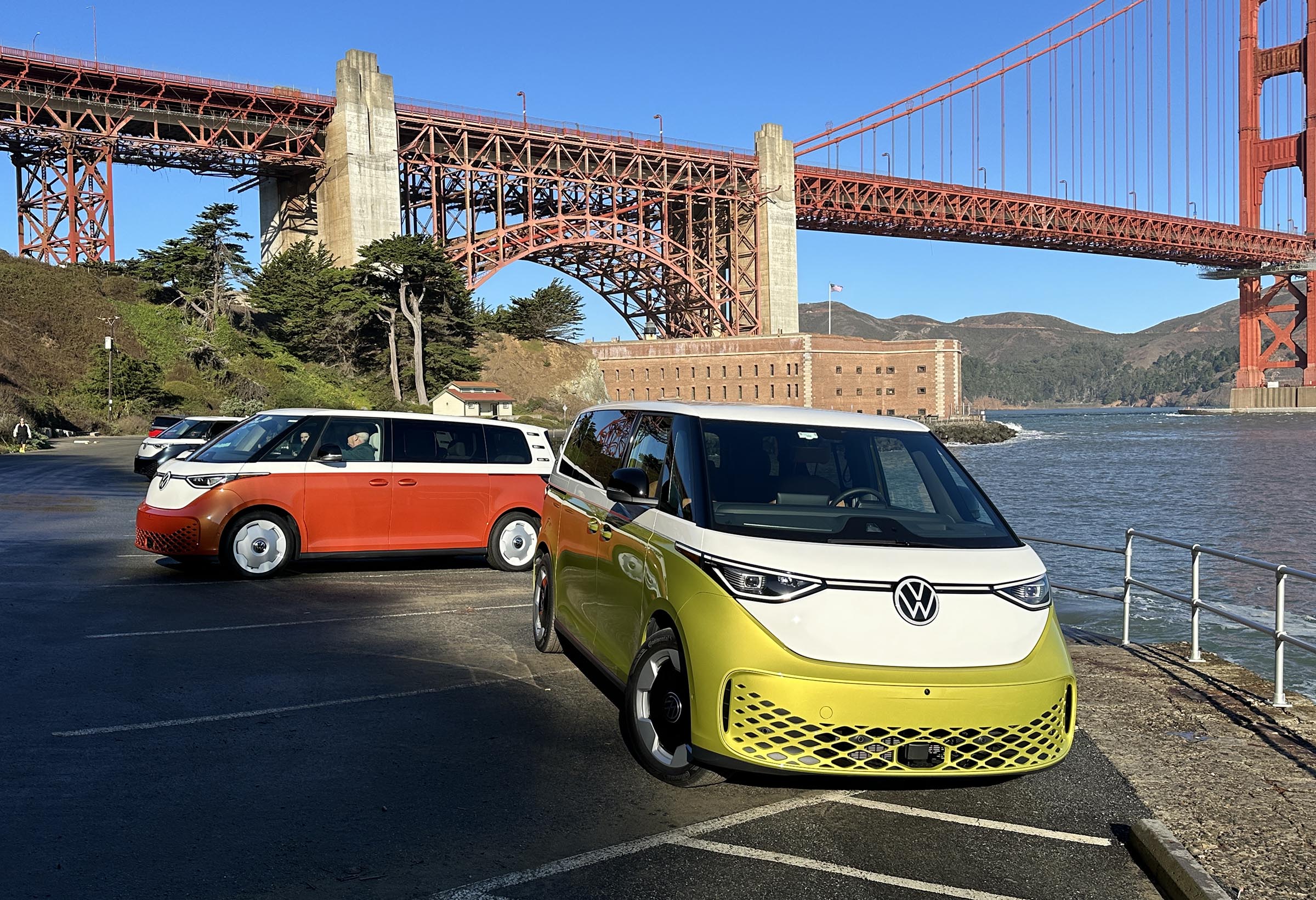
A posse of Buzz microbuses wound through San Francisco during their first U.S. media drive.
Few automakers made as big a commitment to going electric as the Volkswagen Group – which has committed more than $100 billion to develop, produce and market EVs through its various brands. The flagship VW marque has already rolled out an assortment of battery-electric product lines, starting with the ID.4 that rolled into U.S. showrooms in 2021.
But sales have fallen well short of expectations, leading the German automaker to rethink its strategy for the States. It scrubbed plans to add the ID.7 sedan to the line-up earlier this year and now has scaled back plans for the Buzz.
That actually comes as little surprise considering the weak reception it’s received. While Buzz was never intended to generate the sort of volumes the iconic Microbus generated a half-century ago, American motorists purchased just 1,132 after it debuted in late 2024, with 4,934 of the electric vans sold during the first three-quarters of 2025.
What went wrong
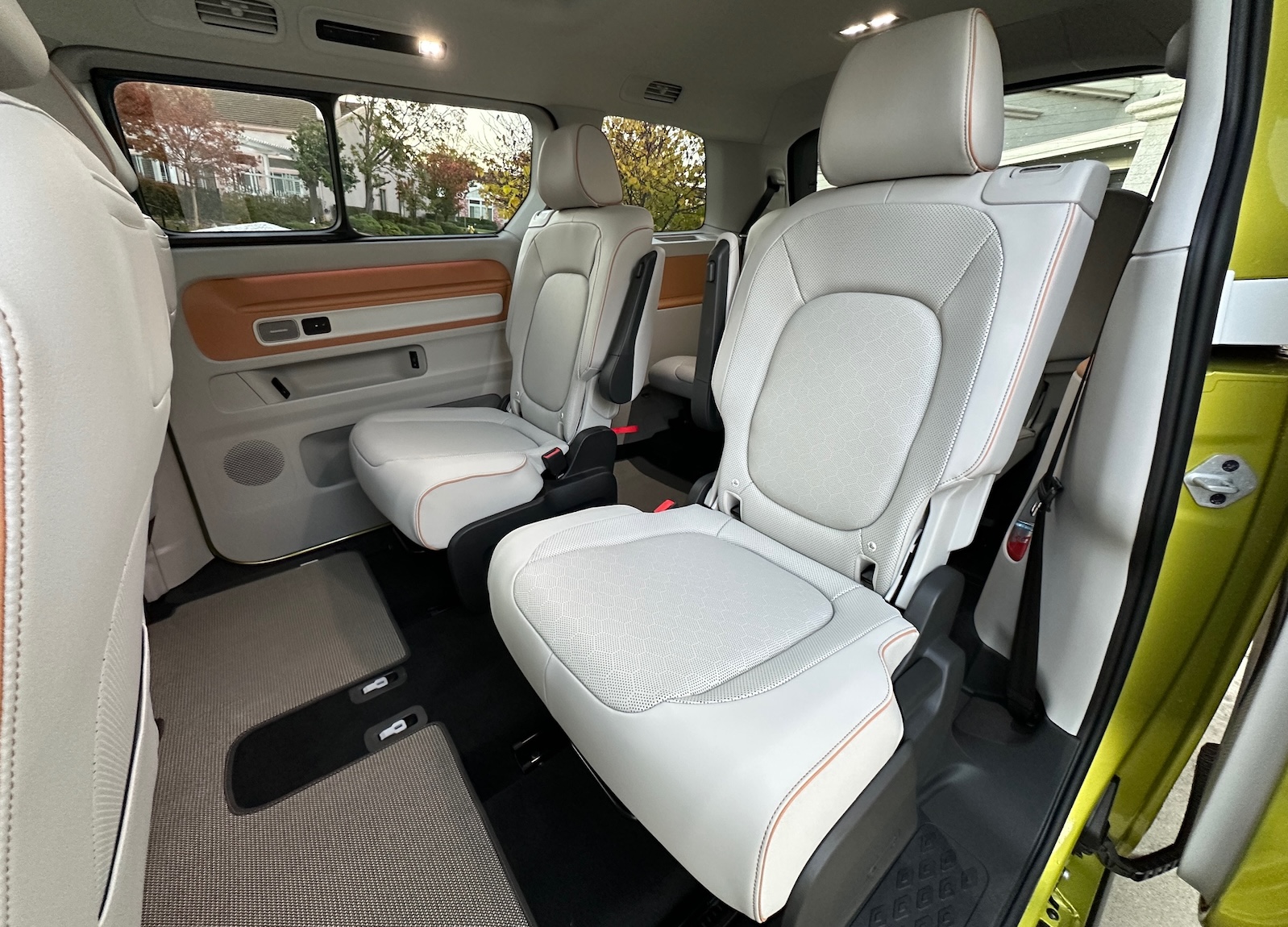
U.S. buyers only had access to 3-row versions of the Buzz, one reason it started at just over $61,000.
The decision to halt production of a 2026-model Buzz for the U.S. market comes barely a year after the van went on sale in the States – and about two years after it rolled into European showrooms.
While Buzz did win kudos from many reviewers – the van being named North American Utility Vehicle of the Year, among other awards – it also came under attack from some reviewers, as well as potential buyers. Among the complaints: relatively low range compared to other EVs, just 234 miles per charge for the front-wheel-drive package, 231 miles for the all-wheel-drive option.
It didn’t help that VW decided to offer only a three-row version of the van in the U.S., unlike its strategy in Europe and other markets where two-row and commercial versions were available. With a fairly high content level, pricing started at a hefty $61,545 when delivery fees were rolled in.
That was “A little scary,” and “a hard pill to swallow,” for many potential buyers, Gali Balter, a sales manager at Volkswagen of New Port Richey, Florida, told Headlight.News earlier this year.
More VW News
- The VW ID.Buzz is Fizzling Out
- A Week With the 2025 VW ID.Buzz Pro S 4Motion
- Feds Order Buzz Recalled to Limit the Number of 3rd Row Seats
A return is likely
Another problem for VW: a range maxxing out at just 234 miles for the AWD Buzz.
The decision to rely on leftover 2025 models for now “ allows us to focus our resources more effectively on current inventory and supporting retail performance throughout the remainder of MY25, ensuring a strong foundation as we prepare for the MY27 transition next year,” a spokesperson told TheDrive, referencing the 2025 and 2027 model years.
It appears the 2027 edition will arrive well before the traditional model year start at the beginning of autumn. Exactly what the revived microbus will look like isn’t clear, but the comments made by company officials – as well as the buzz within automotive circles – offer some hints.
A lower-priced base model seems all but certain, and that could mean the U.S. will wind up getting a short-wheelbase, two-row package. Considering the limited range of the current ID.Buzz, there seems little likelihood VW would offer anything lower. But it could opt for lower-cost lithium-iron phosphate batteries for a new entry package and upgrade the range of more expensive packages retaining lihium-ion batteries, several industry analysts suggested.
For now, VW said it has “sufficient inventory” of 2025 models to meet current levels of demand until the 2027 update is launched sometime next year.


$61,545 No more to say.