
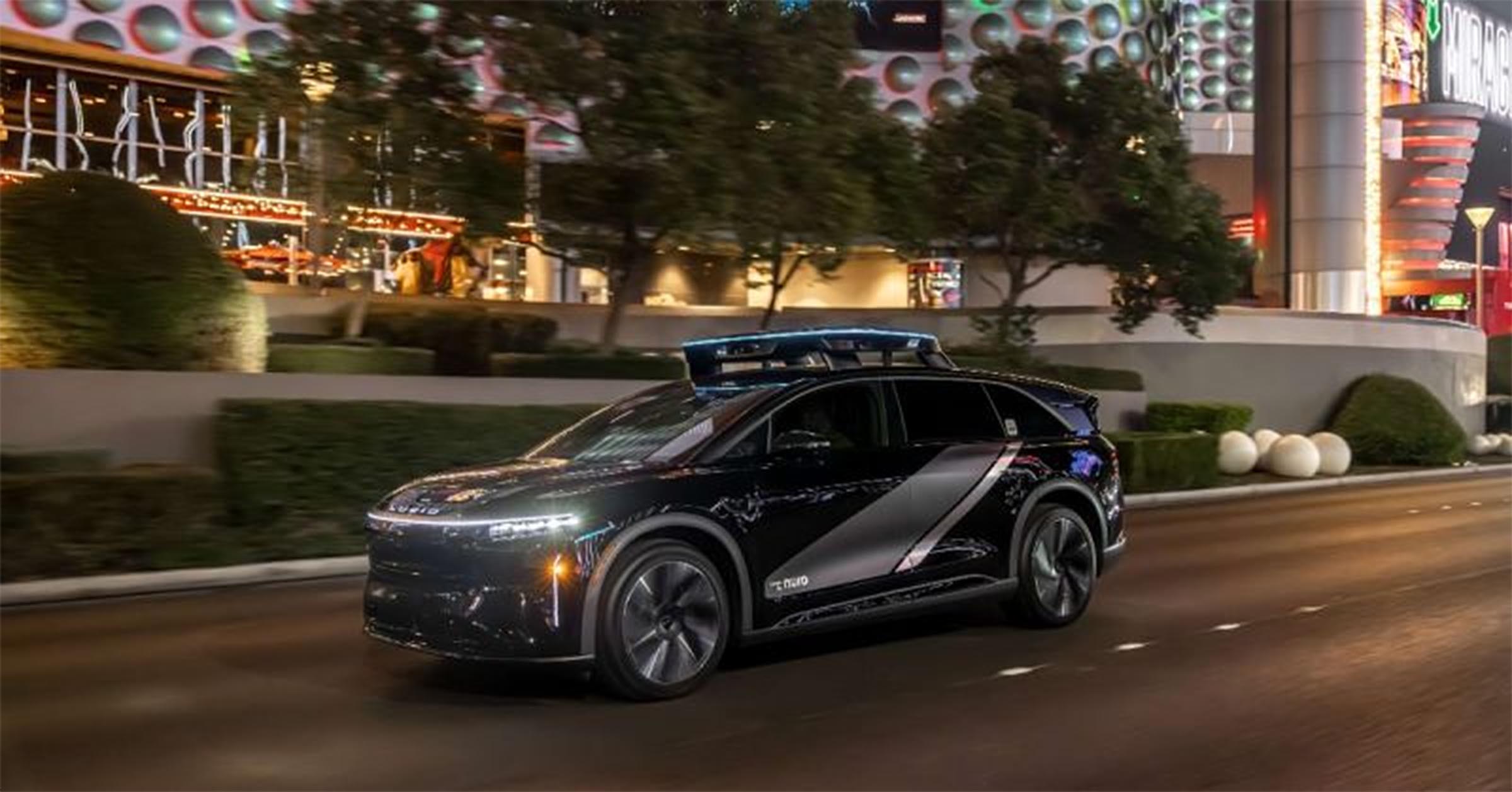
Lucid has teamed up with ride-share leader Uber and tech supplier Nuro to get into the fast-emerging robotaxi market. But the automaker plans to take several steps beyond, launching a series of increasingly sophisticated autonomous technologies that will allow its next-gen EVs to operate in fully driverless mode by 2029. Headlight.News has more.
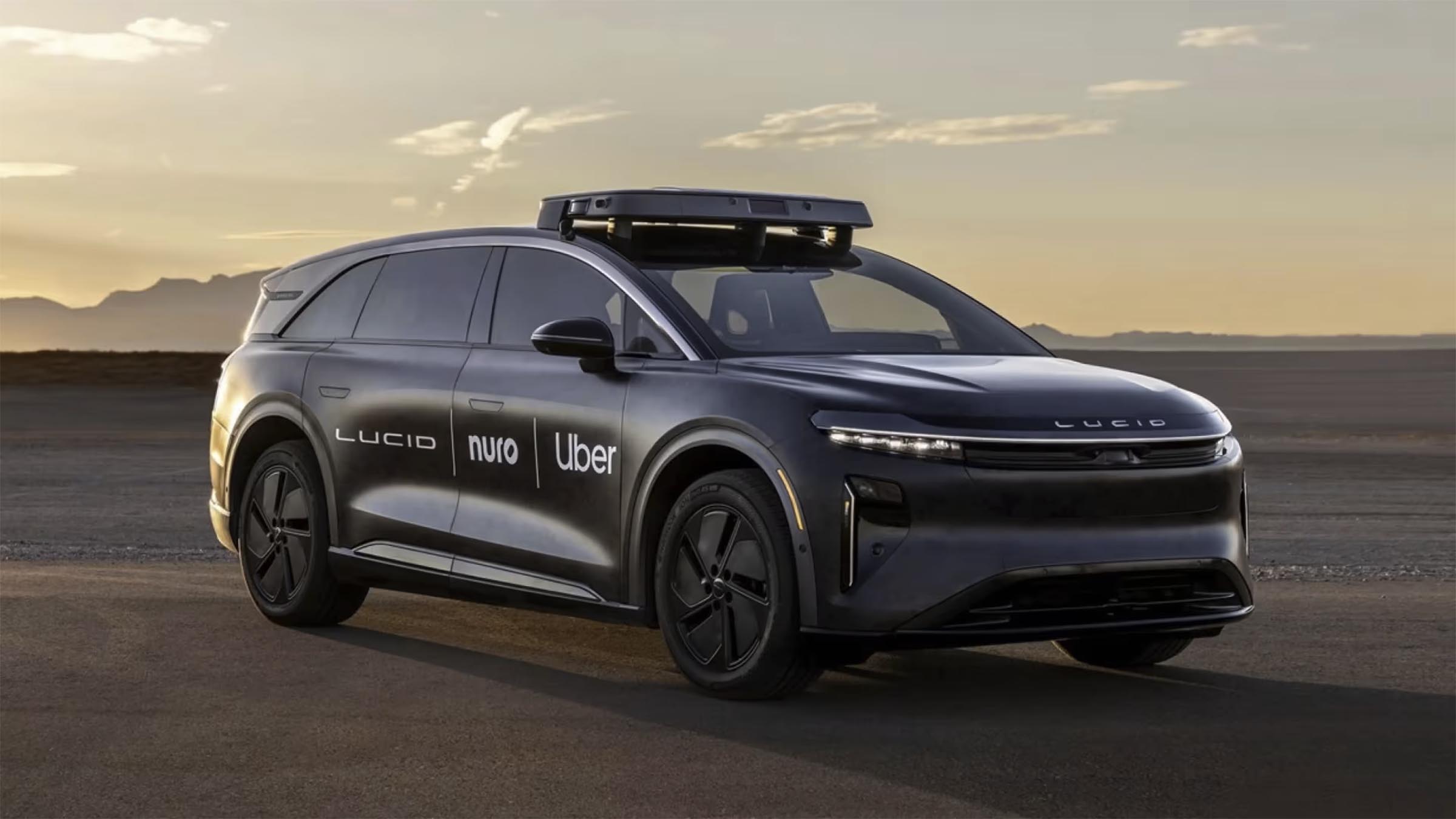
The Uber Lucid Gravity robotaxi will begin rolling out late this year in the San Francisco Bay Area.
After killing off its own autonomous vehicle program following a fatal 2018 crash in Arizona, ride-share giant Uber is ready to get back into the game with the help of driverless tech start-up Nuro and EV maker Lucid.
The three companies announced a partnership that will see a fully autonomous version of the Lucid Gravity SUV roll into action later this year, allowing Uber to take in competitors like Google’s Waymo, Tesla’s Robotaxi and Amazon’s Zoox.
But where much of the attention has lately been focused on robotaxis, Lucid plans to use its partnership with Nuro to let it roll out increasingly advanced self-driving technologies for its retail product lines, as well. The goal is to have fully driverless Level 4 capabilities available for the automaker’s next generation of mid-size EVs by 2029, Lucid’s interim CEO Marc Winterhoff told a small group of reporters at this week’s Consumer Electronics Show.
“An experience unlike any other”
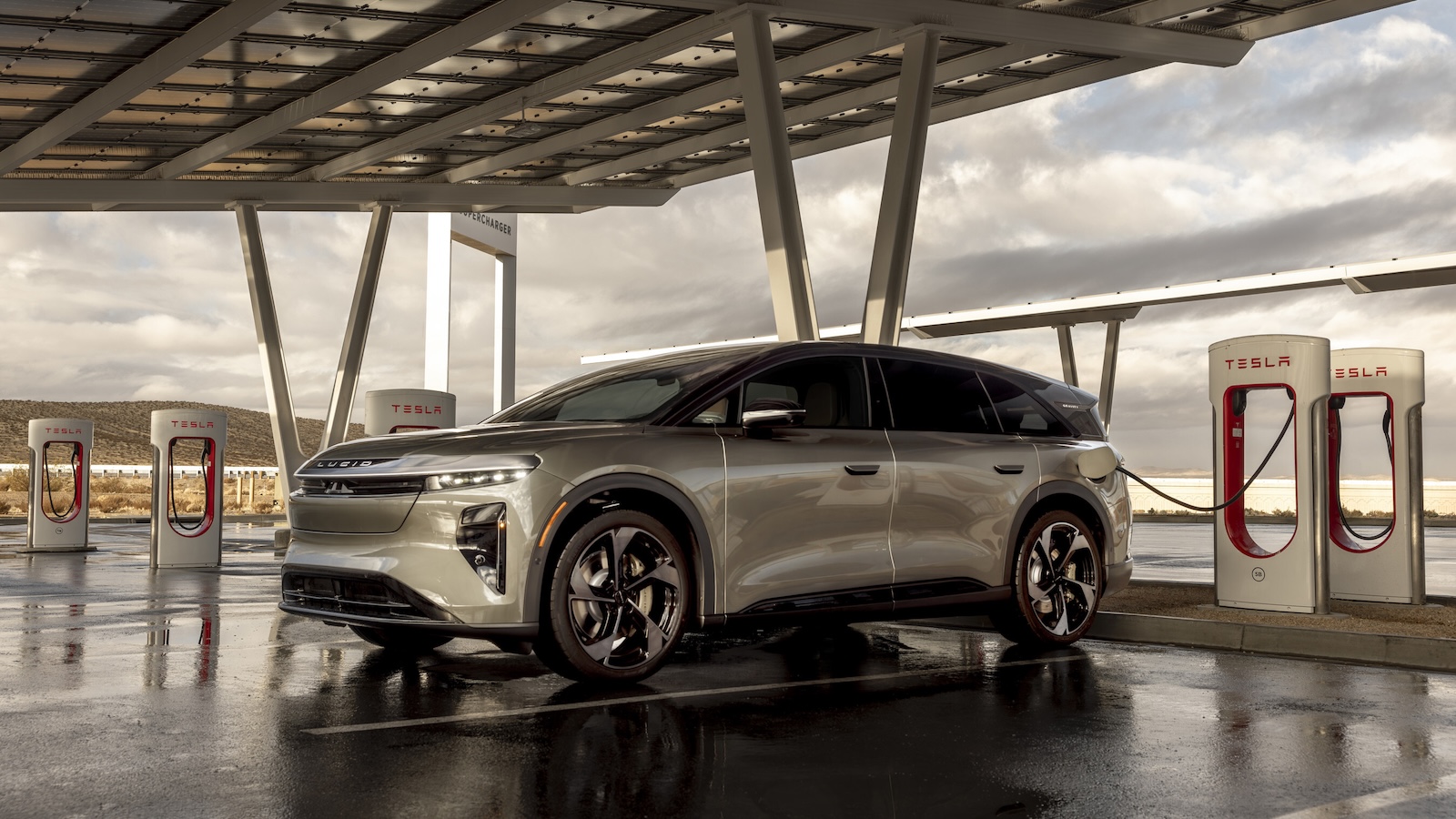
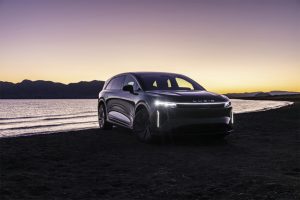
The conventional version of the Lucid Gravity has fewer sensors – but the list still includes Lidar.
“Featuring an intuitive rider experience designed by Uber, Nuro’s proven autonomy technology, and the unmatched comfort of a Lucid Gravity, we are building an experience unlike any other,” Lucid said earlier this week as it rolled out a prototype of its Gravity robotaxi.
The driverless version doesn’t stray far from the design of the conventional electric SUV now on the road, Lucid design chief Derek Jenkins later told Headlight.News. His team found ways to squeeze in new Lidar, camera and radar sensors in three locations: in the lower portion of the front grille, in the “tiara” that rides like a rooftop storage unit, and in the rear spoiler. The latter cuts slightly into visibility out of the rear glass but, noted Jenkins, “that doesn’t matter since there won’t be a driver onboard.”
“Halo displays” in that rooftop unit will welcome riders, bidding them halo and recognizing them with their initials. Additional screens will be added inside the driverless Gravity SUVs, communicating with passengers – the 3-row EV providing space for up to six – and allowing them to adjust the climate control and play their choice of music.
Dozens of sensors
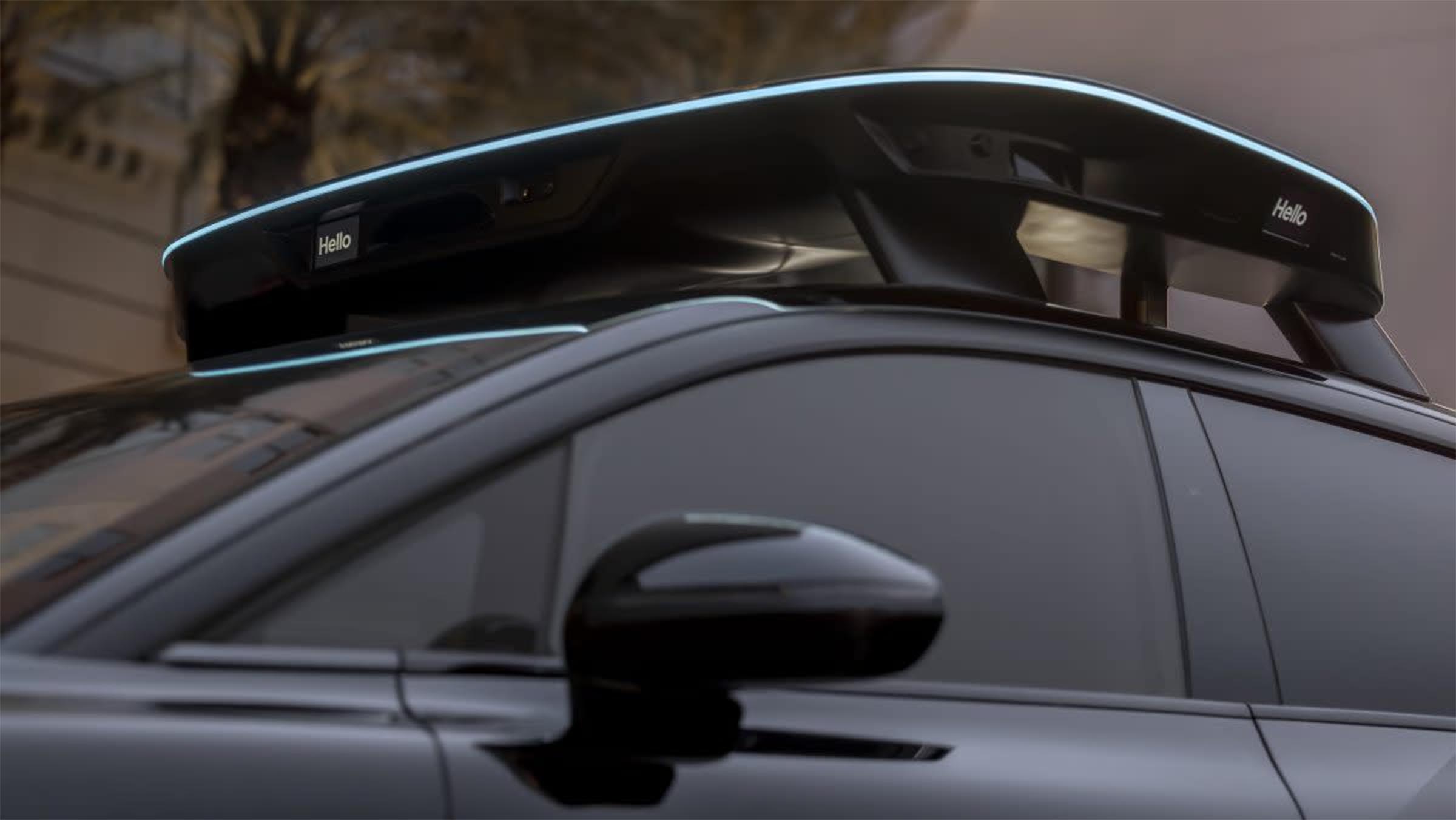
A number of new sensors are hidden in the Lucid Gravity’s roof rack, along with screens welcoming customers.
While Tesla is determined to use only cameras in its robocabs, competitors are relying on a “sensor fusion.” In the case of the Uber Lucid packages that includes eight solid-state Lidar units – one long-range, the other short-range and focused on the area immediately around the SUV. There will also be 16 individual cameras and an assortment of radar units, as well.
A small number of modified Gravity prototypes are already undergoing testing, with service expected to begin late this year in the San Francisco Bay Area, Ground Zero for many autonomous vehicle programs. Uber and Lucid provided only some details about the roll-out of their robotaxi service – but it’s expected to carry a “premium” price for users. Even so, it’s meant to provide “a unique new option for affordable and scalable autonomous rides.” Sarfraz Maredia, Uber’s global head of autonomous mobility and delivery said this week.
A study by consulting firm McKinsey cautioned that it costs autonomous ride operators about $8 per mile to run their vehicles, well more than what they can charge consumers. The research suggested that will have to drop to $1.50 a mile to become profitable – and affordable for users.
More CES News
- A Week With Lucid Air Grand Touring
- Lucid’s Midsize Entry is a Year Away
- Lucid Switches to Tesla NACS Port, Gains Supercharger Access
Bringing autonomy home
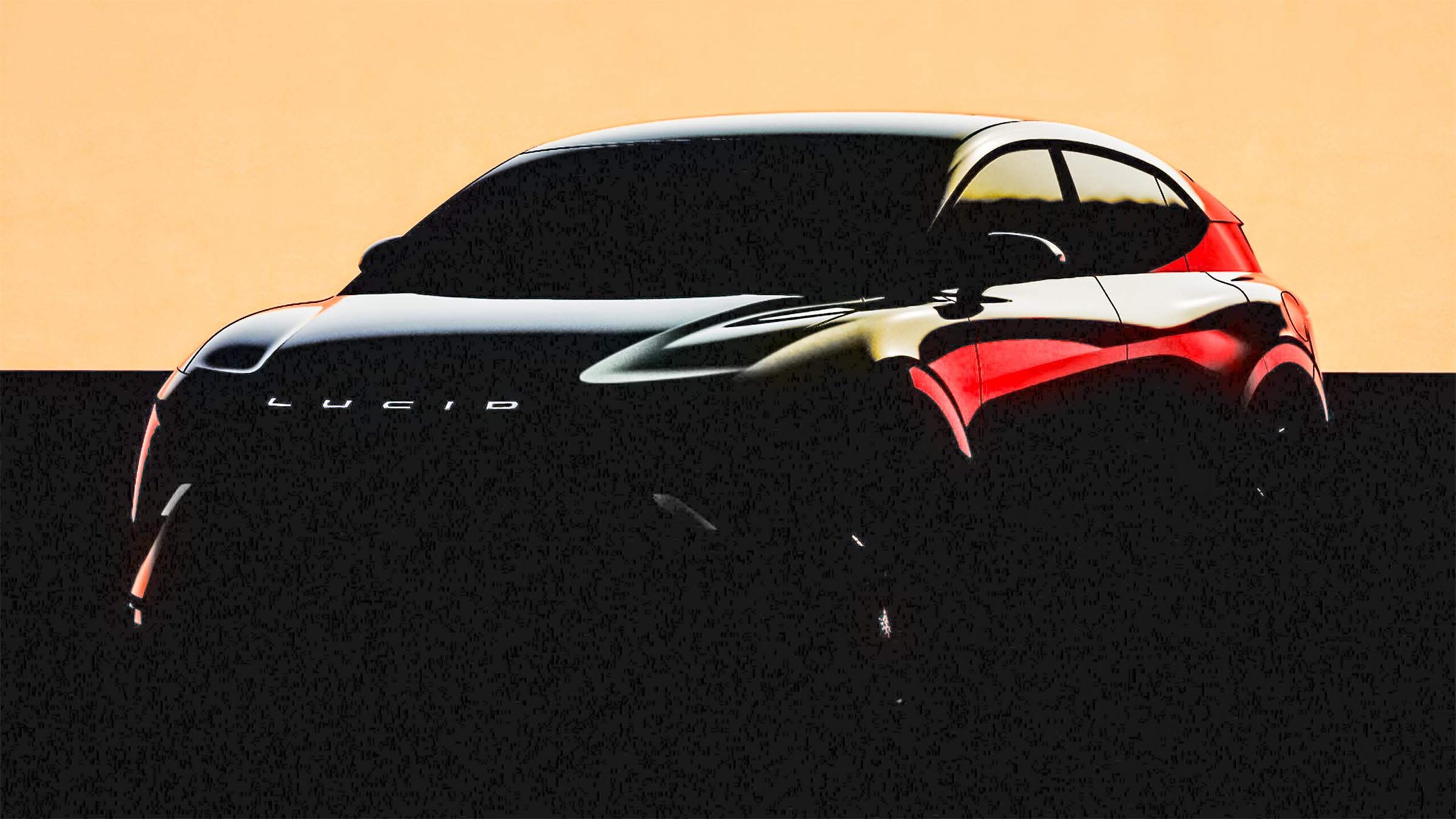
Lucid will introduce Levels 3 and 4 technologies on the retail versions of the midsize Earth family, a concept version teased here.
The rollout of autonomous vehicle technologies has accelerated rapidly over the last several years. Most automakers now offer some degree of advanced driver assistance systems that, at the very least, can automatically maintain the traffic flow and help drivers remain centered in their lane. A growing number of brands have added hands-free driving capabilities – such as General Motors’ Super Cruise and Ford’s Blue Cruise. These “Level 2+” technologies are typically limited in terms of the roads they can operate on and require motorists to remain vigilant, ready to retake control at a moment’s notice in an emergency.
Within the year, Winterhoff said Lucid will upgrade to “Level 2++,” meaning retail versions of Gravity will be able to operate hands-free on both limited-access and urban roadways. But that’s just the start, he added. “The plan is to go Level 3 by 2028 and Level 4 by 2029.”
Level 3 systems will allow “hands-free, eyes-off” operation – meaning drivers safely could do things like texting or watching videos, though they’d still need to be ready to quickly retake control. Level 4 would yield the same driverless capabilities as the Uber/Lucid version of Gravity.
New midsize models will be first to get full autonomy
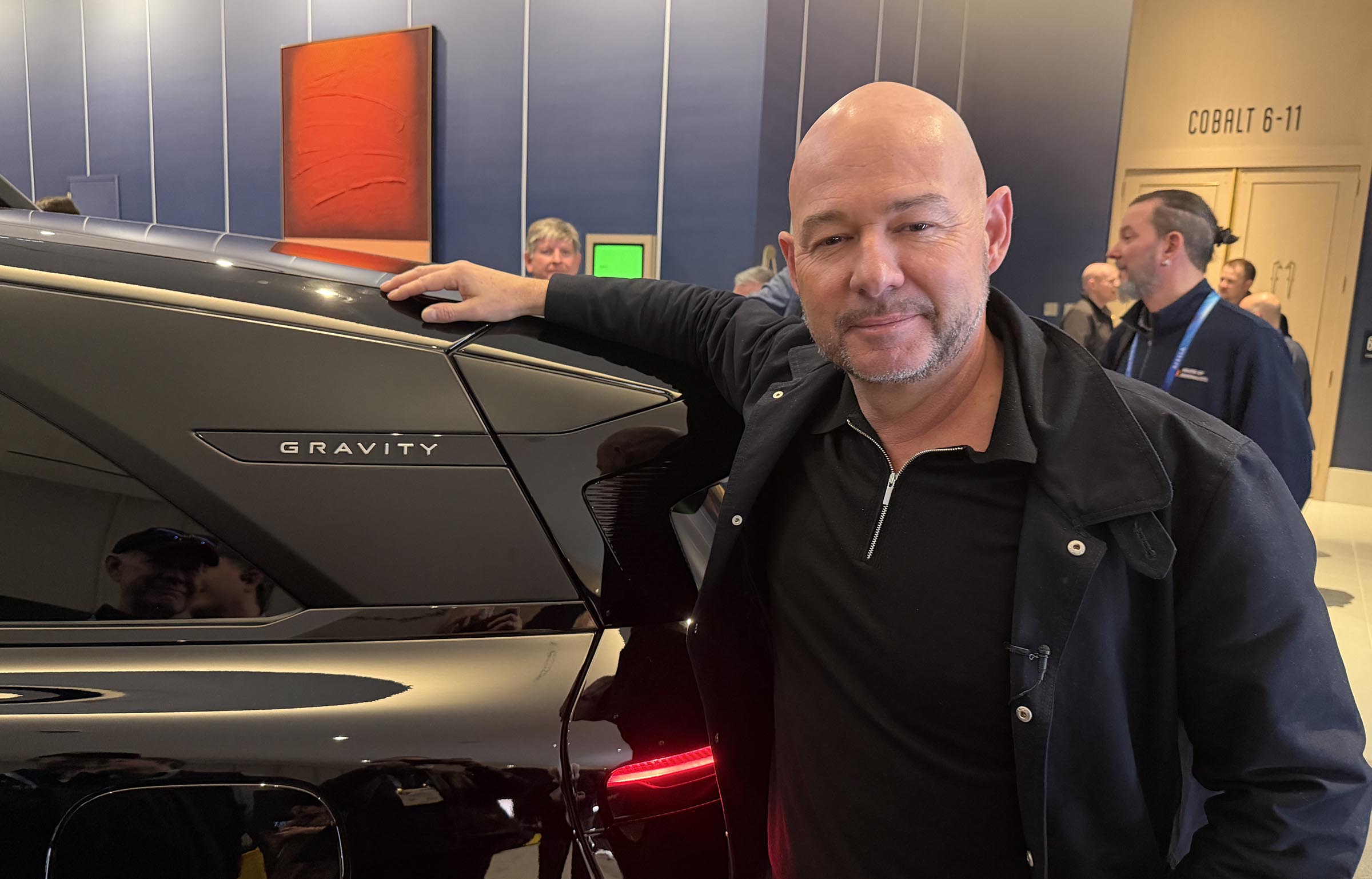
Chief designer Derek Jenkins with the Uber Lucid Gravity prototype.
But Winterhoff noted that these more advanced features actually won’t roll out on the big SUV. Instead, they’ll debut on the more affordable midsize products now in final development. Meeting with reporters, the interim CEO confirmed there will be three different versions of that midsize family. The first expected to be a utility vehicle aimed at the likes of the Tesla Model Y. The first will go into production “this year,” he said.
A second model will follow a year later, the third coming after a longer, 18-month wait. Winterhoff declined to discuss what sort of body styles they will adopt, saying only, “I don’t want to be in the sedan segment. That’s not our focus.”
The German industry veteran was named interim CEO last February, following the sudden retirement of Lucid founder Peter Rawlinson. He had come under increasing pressure due to Lucid’s slower-than-promised growth. The automaker has since been able to build some much-needed momentum. It produced 8,412 vehicles – most of them the Gravity – during the final three months of 2025, doubling the previous quarter’s output. Deliveries, meanwhile, were up 55% during the same period.
“That was quite an achievement,” Winterhoff boasted, noting that in a period that’s been called the “EV Winter,” Lucid was “the only EV manufacturer that increased deliveries during the fourth quarter.”
From a cash standpoint, the executive noted Lucid currently has $5.5 billion in cash and accessible assets. But it’s burning cash fast as its development programs accelerate, so it either will need to boost sales or get another cash infusion after mid-2027, he acknowledged.

0 Comments