
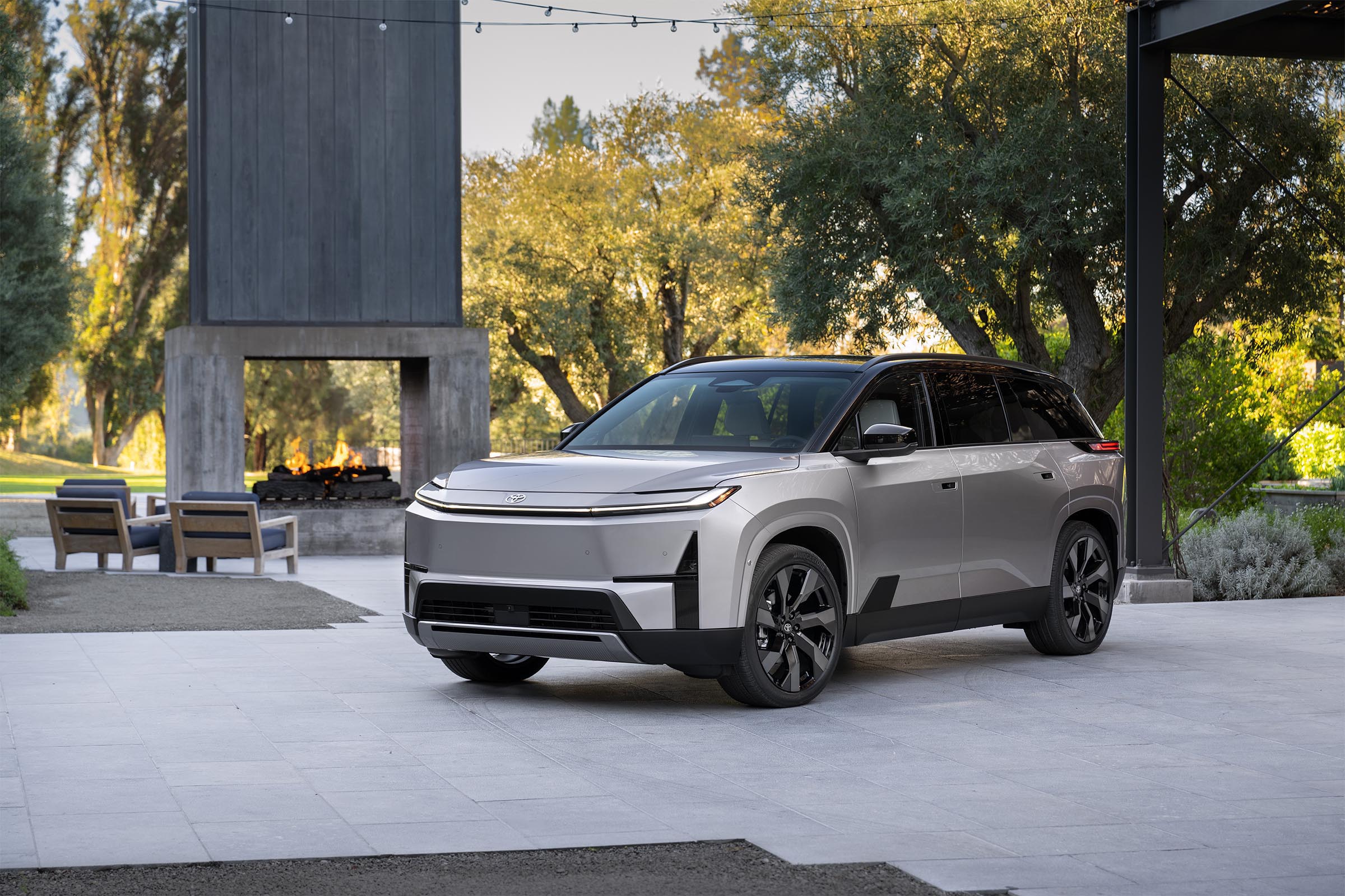
While much of the industry may be paring back their EV plans, Toyota is moving in a very different direction, on Tuesday evening pulling the wraps off the latest entry into its line-up an all-electric 3-row SUV. Headlight.News checks out the 2027 Toyota Highlander EV.
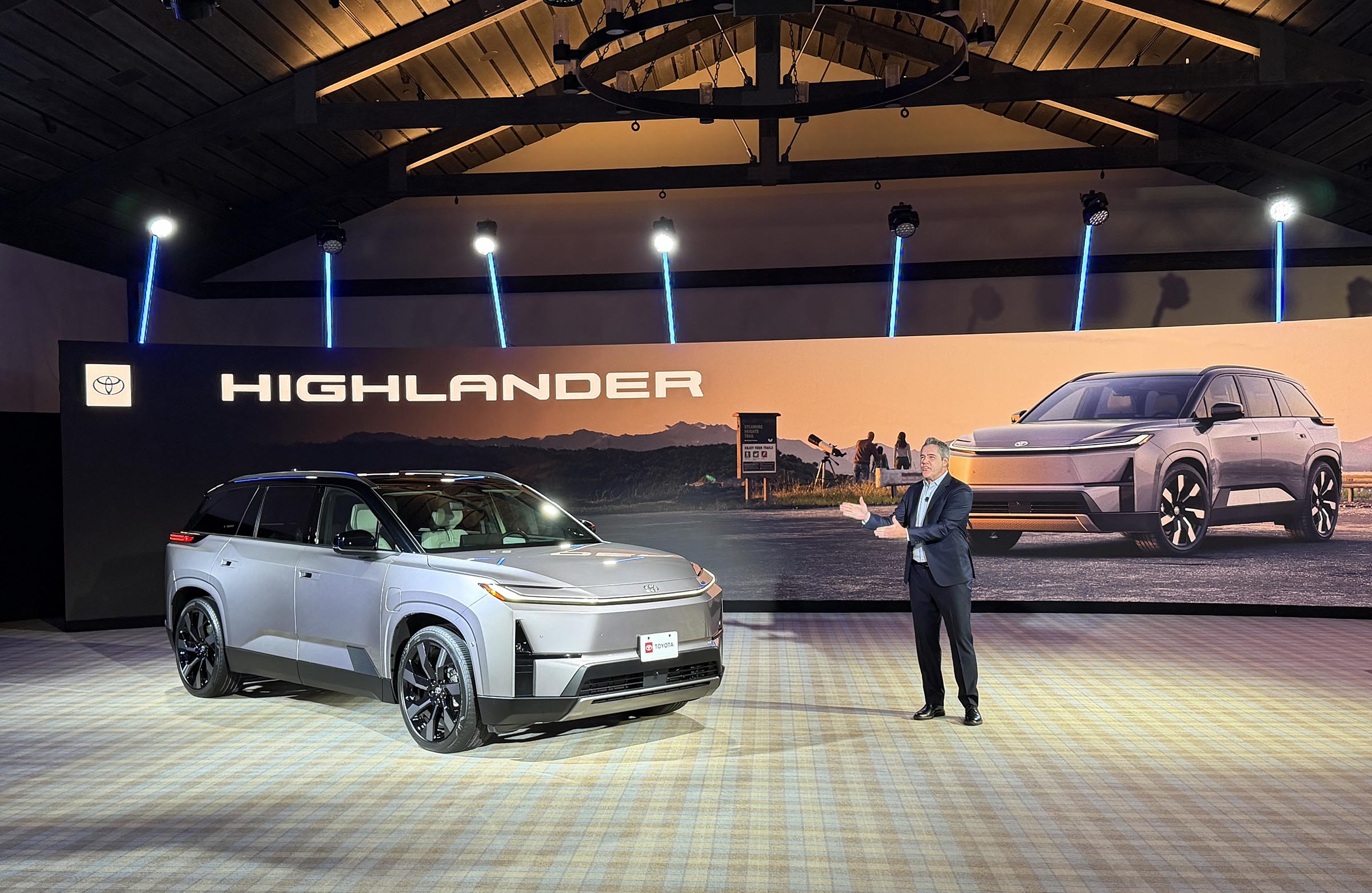
Toyota brand boss David Christ reveals the 2027 Highlander EV.
Toyota may not be ready to go all-electric, but it’s going to offer buyers a lot more options in the months ahead. The Japanese automaker on Tuesday night pulled the wraps off a new 3-row EV set to join three other models in U.S. showrooms for the 2027 model year.
The new Highlander EV borrow the name of one of Toyota’s most popular SUVs and gives buyers a range of alternatives including the original bZ, as well as the new C-HR and bZ Woodland packages.
“We see it as a market opportunity,” David Christ, head of the Toyota brand, told Headlight.News. “We feel we need multiple products in the EV space…to get more share as the EV market grows.” While sales may have tumbled a bit since federal tax credits were phased out last September, Christ said Toyota believes EVs will regain momentum as more products come to market and the charging infrastructure is fleshed out.
What’s a Highlander EV
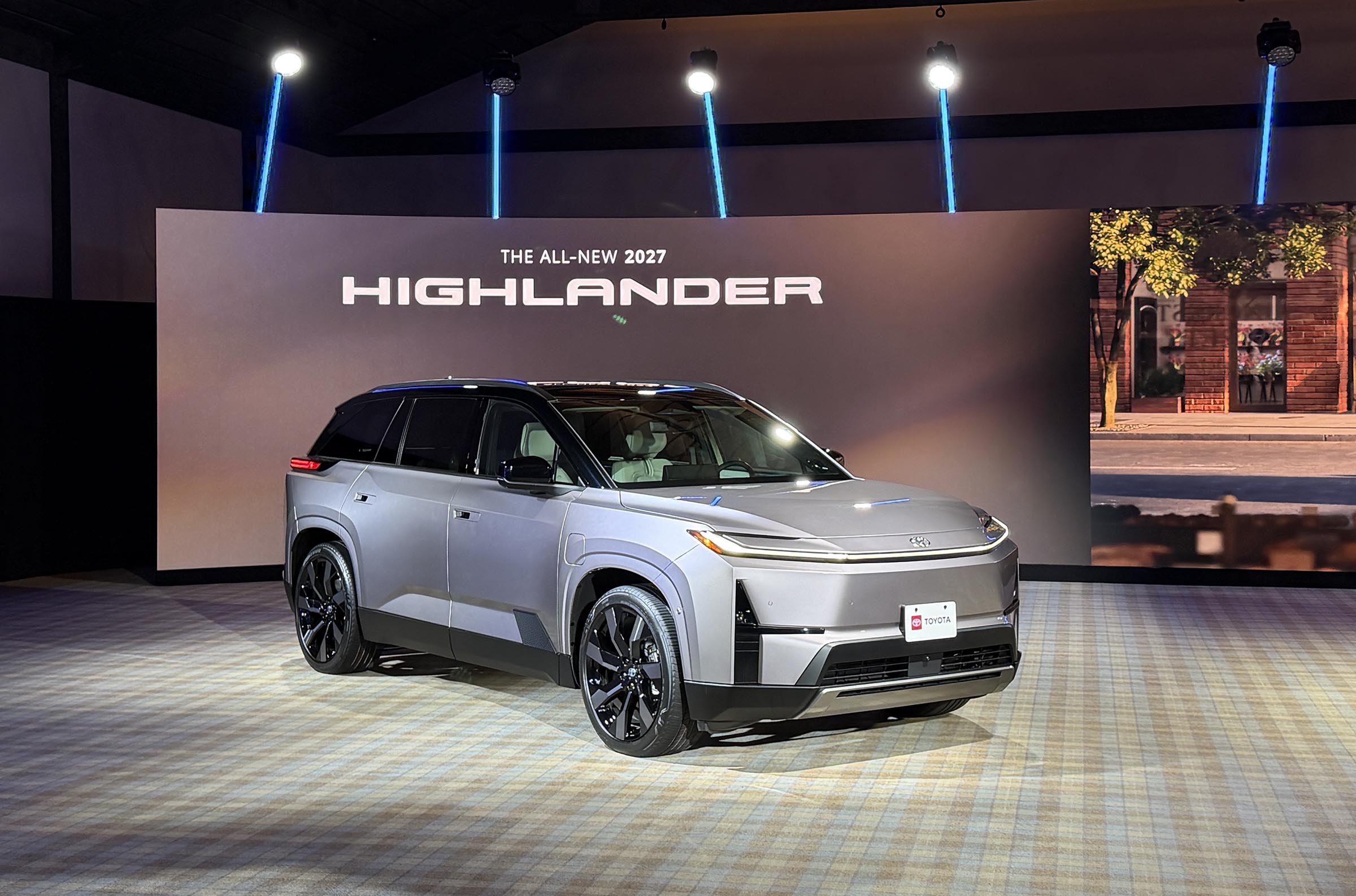
The 2027 Toyota Highlander will be offered with a choice of 2 battery packs and AWD or FWD.
Now in its fourth generation, the conventional Highlander has been a solid hit for Toyota, Americans purchasing nearly 4 million of them over the last quarter century. Toyota is betting that familiarity with that nameplate will make it easier to gain traction for the all-electric model.
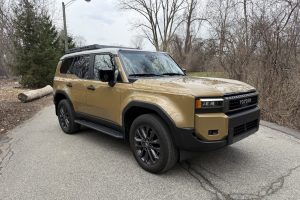
In person, the Highlander EV has a familiar feel to it, picking up on the basic shape of the current model, with a gently sloping roof and solid stance. The all-electric package adopts more aerodynamic details – such as a sealed upper grille and flush door handles – to help improve range and performance. A small lower grille does direct cooling airflow to the battery pack and motors. A full-width lightbar is separate from Highlander EV’s LED headlamps.
The V measures 198.8 inches in total length, has a width of 78.3 inches and stands 67.3 inches tall. It makes good use of the 120.1-inch wheelbase, about 8 inches longer than the conventional Highlander, to provide substantial interior space for passengers and cargo – the cabin enhanced by the fact that batteries and key drivetrain components are located underneath the load floor. With the rear bench folded down Highlander EV offers up to 45 cubic feet of cargo space.
Powertrain
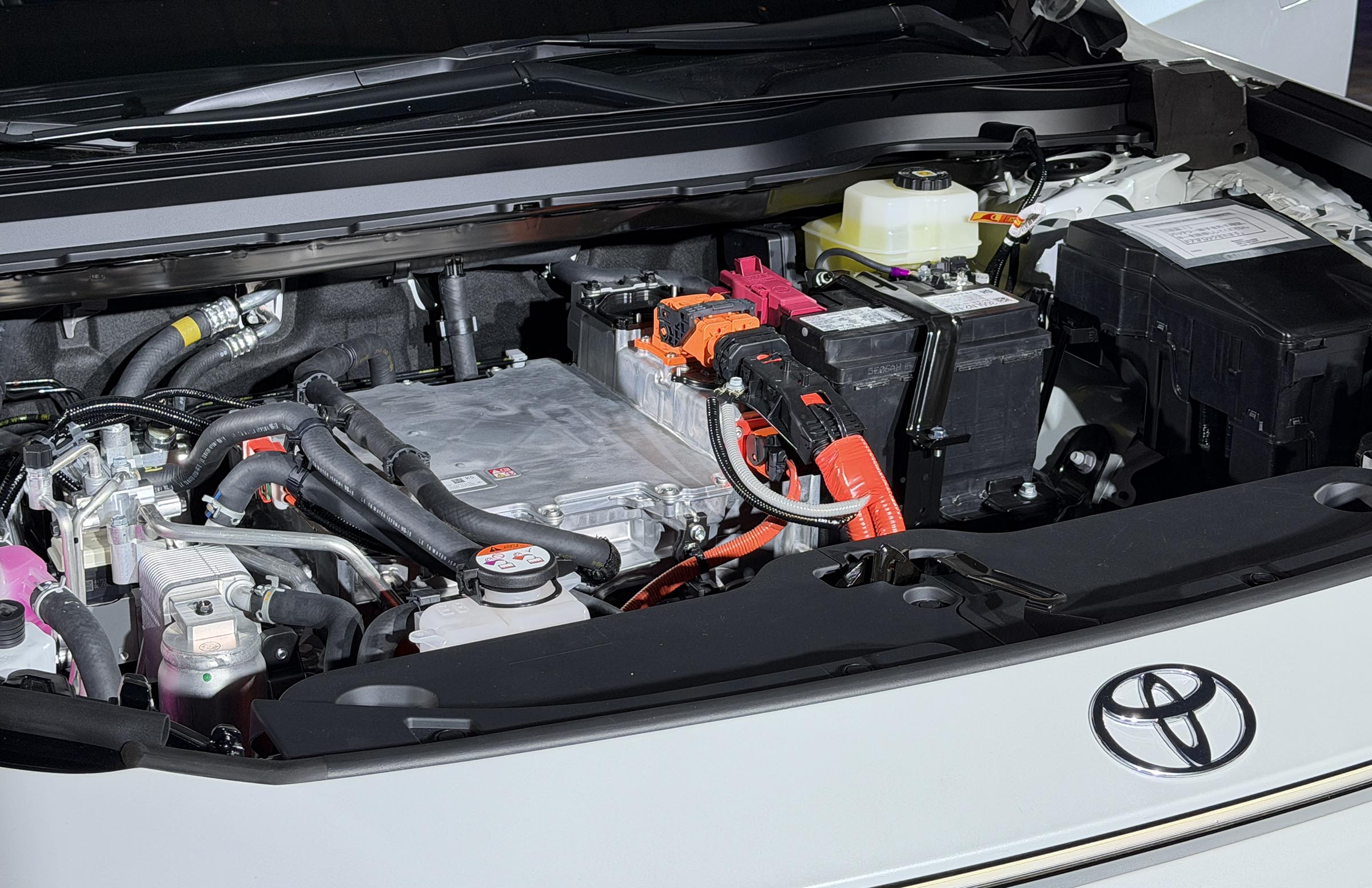
Despite using a unique, skateboard-like platform, Toyota couldn’t find room for a frunk.
The 2026 Highlander is offered with a choice of two powertrains: a turbocharged gas engine and a high-mileage hybrid. The new EV may share the Highlander name but it rides on a unique, skateboard-style platform that can offer a variety of different powertrain configurations. That includes a choice of two battery packs and front or all-wheel-drive. XLE FWD with 77.0-kWh battery with a manufacturer-estimated 287-mile total driving range rating;
- XLE AWD with 77.0-kWh battery with a manufacturer-estimated 270-mile total driving range rating;
- XLE AWD with 95.8 -kWh battery with a manufacturer-estimated 320-mile total driving range rating;
- Limited AWD with 95.8 -kWh battery with a manufacturer-estimated 320-mile total driving range rating.
The XLE FWD single motor package delivers 221 hp and 198 lb-ft of torque. The AWD models all bump that to 338 hp and 323 lb-ft. If the numbers look familiar, the drivetrain choices are shared with the 2026 Toyota bZ. According to Christ, the new Highlander EV will be able to hit 60 in “under 6 seconds,” about a second slower than the updated 2026 bZ – reflecting the 3-row model’s greater mass.
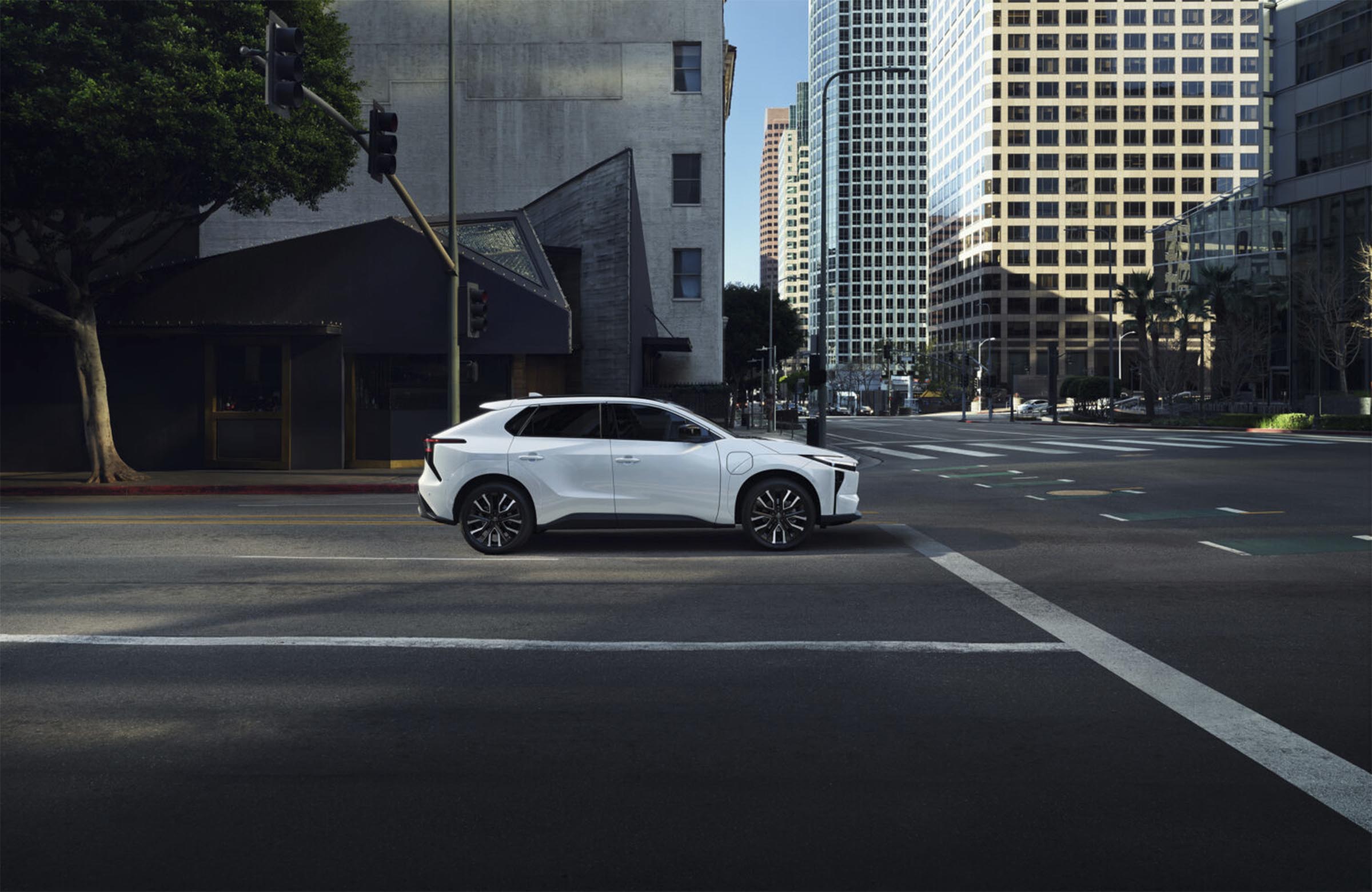
The Highlander EV uses the same powertrain system as the smaller bZ.
Charging times using a DC public quick charger will take as little as 30 minutes to go from 10 to 80%, the Toyota executive added. Toyota has yet to release full details on charging but, based on what we already known about the 2026 bZ, the Highlander EV should require about 8 hours to go from 10 to 100% with a home-style Level 2 charger.
More EV & Hybrid News
- A Week With Toyota Corolla Hybrid AWD
- EV Sales Are Down, But Charger Installations Surge
- Preparing to Go All-Electric, Jaguar Will Be Out of Production for a Year
Interior
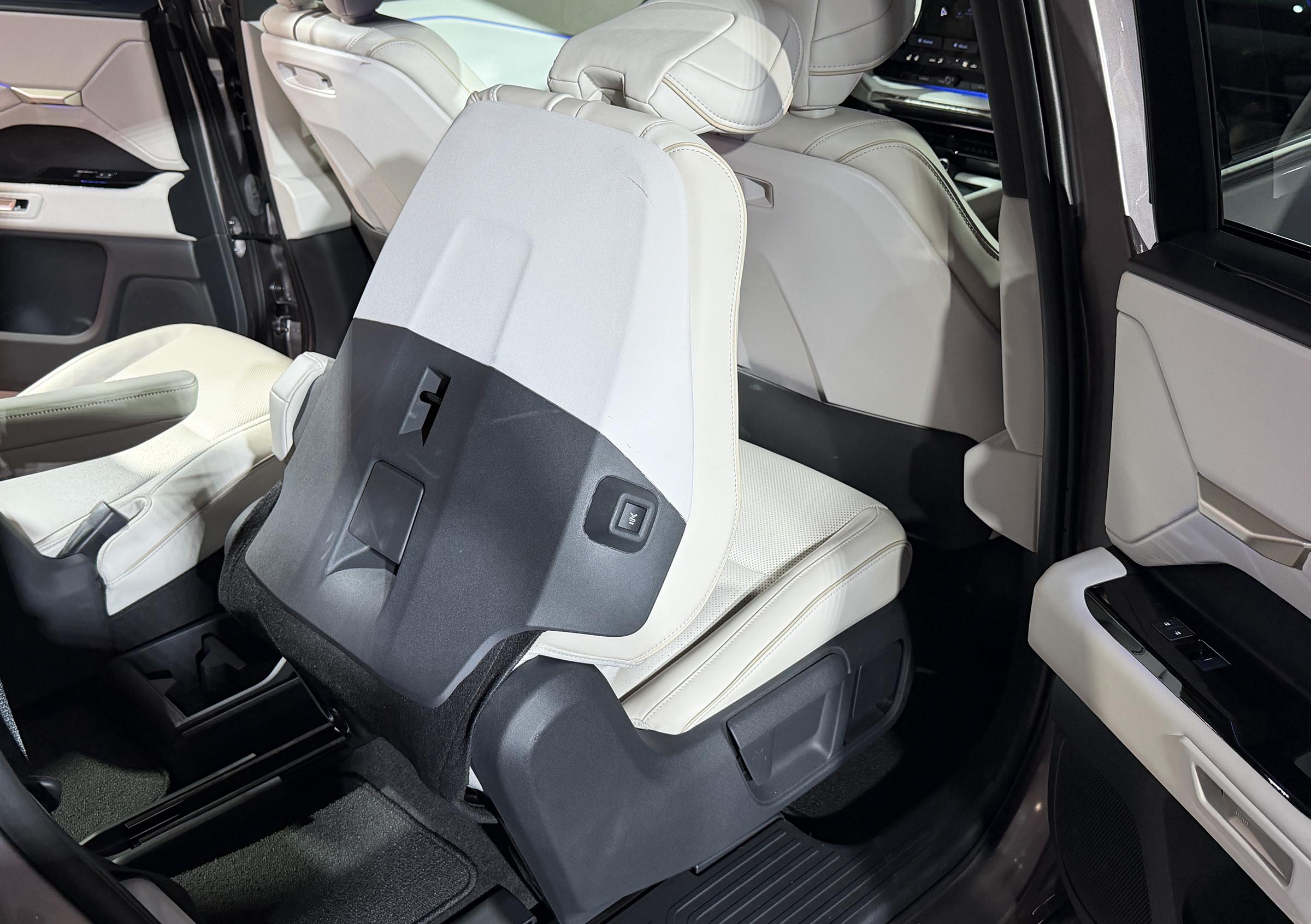
A 1-touch sliding seat makes for easier access to the 3rd-row bench.
This is a family vehicle and functionality is at the heart of Highlander EV’s design. That means there’s plenty of storage space, starting with a center console featuring an under-tray bin. The kids will appreciate the slots to stow phones and tablets on the back of the front seats. All told, there are 18 separate cupholders. The third-row can be folded over with the pull of a single lever.
The interior features a driver-centric layout, with the 14-inch touchscreen serving as the visual centerpiece of the instrument panel. The 12.3-inch LED gauge cluster is reprogrammable. Unlike so many new EVs, Toyota retains hard buttons for key climate controls. The electric SUV will offer buyers an optional Head-Up Display package.
Toyota boasts of easy third-row access using an electrically assisted, one-touch folding mechanism for the second row. And it claims there’s ample room for two adults in the back, taking advantage of the EV’s layout. All versions of Highlander EV feature SofTex trim.
Technology
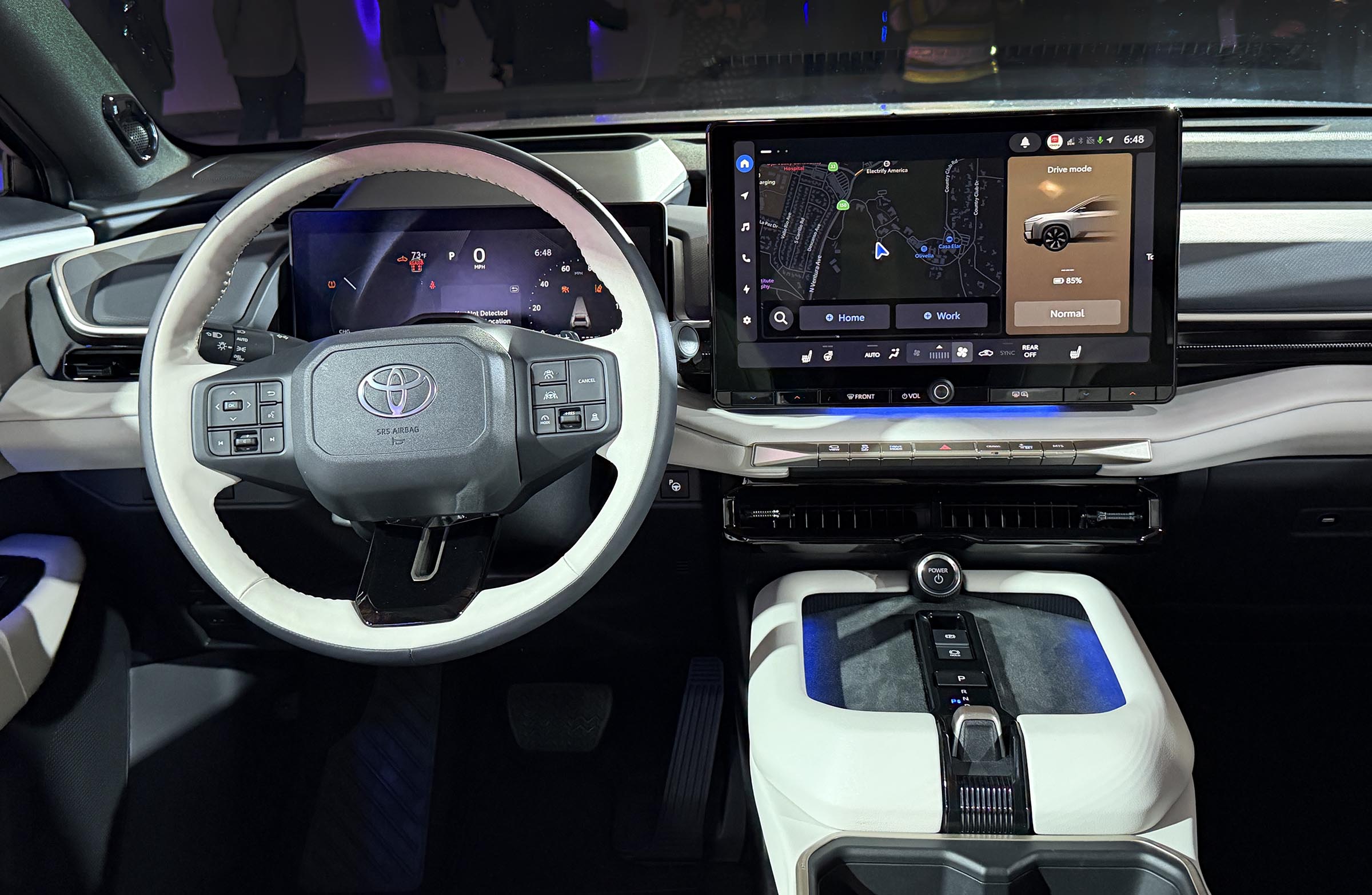
A 14-inch touchscreen, 12.3-inch digital gauge cluster and hard buttons for climate control.
In keeping with the family theme, the Highlander EV has plenty of safety and creature comfort tech onboard, depending upon trim and options. That starts with dual wireless smartphone chargers and plenty of USB-C ports throughout the cabin. There’s Toyota’s smart voice assistant, the Toyota Audio Multimedia system, as well as Apple CarPlay and Android Auto. There’s the latest version of SiriusXM radio and streaming Spotify. Drivers also get the security offered by a built-in dashcam system.
From a safety standpoint, the Toyota Safety Sense 4.0 package includes technologies such as pre-collision warning with pedestrian detection, full-range active cruise control, lane departure and steering alert, road sign assist and proactive driving assist.
Significantly, the new package becomes Toyota’s first EV with vehicle-to-load, or V2L, capabilities. That means an owner can use it to power a work or campsite, for example, and even keep a home powered up in a blackout. Toyota officials weren’t ready to discuss details though that may mean the automaker will offer hardware to let the EV function much like a home generator – or it could work with an outside technology partner, as Ford has done.
Pricing and Availability
Highlander EV delivers another first: it will become Toyota’s first American-made battery-electric vehicle. Production is set to begin during the second half of 2026 at the Georgetown, Kentucky plant currently producing the familiar Camry sedan. Batteries will be sourced from the new $13.9 billion plant Toyota opened late last year in Liberty, North Carolina.
Look for the new EV to begin rolling into U.S. showrooms “by early 2027 (but) might be a little sooner,” said Christ. He didn’t disclose the pricing, saying that it’s “way too early” at this point, but expects “to sell a good volume.”
As for pricing, Toyota hasn’t come close to finalizing that yet, and likely won’t release that until just ahead of the Highlander EV’s official on-sale date. But we might get a sense of where it could wind up by checking out the limited number of 3-row competitors now on the U.S. market. The 2026 Kia EV9 ranges in price from $56,495 to around $80,000 for a fully loaded top-trim package.

Not very well written, is it an EV or hybrid. No matter, it’ll be too damn expensive either way.
It very clearly states it’s an EV in multiple places.