
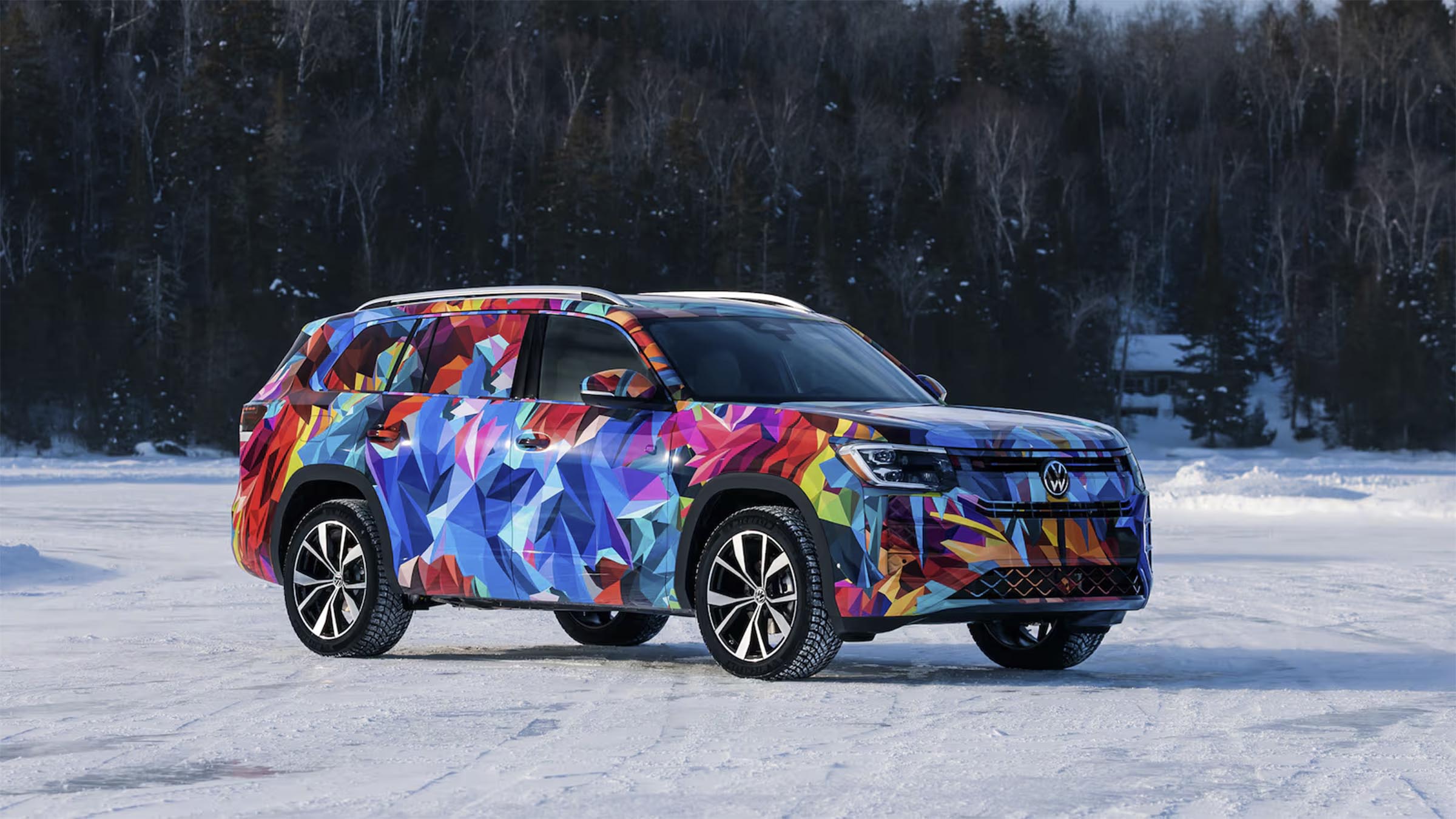
Volkswagen scored big with the launch of the 2017 Atlas, but the SUV is getting long-in-tooth as newer competitors come to market. So, VW is ready to roll out a new package, the automaker showing off a camouflaged take on what’s coming for 2027. Headlight.News has more.
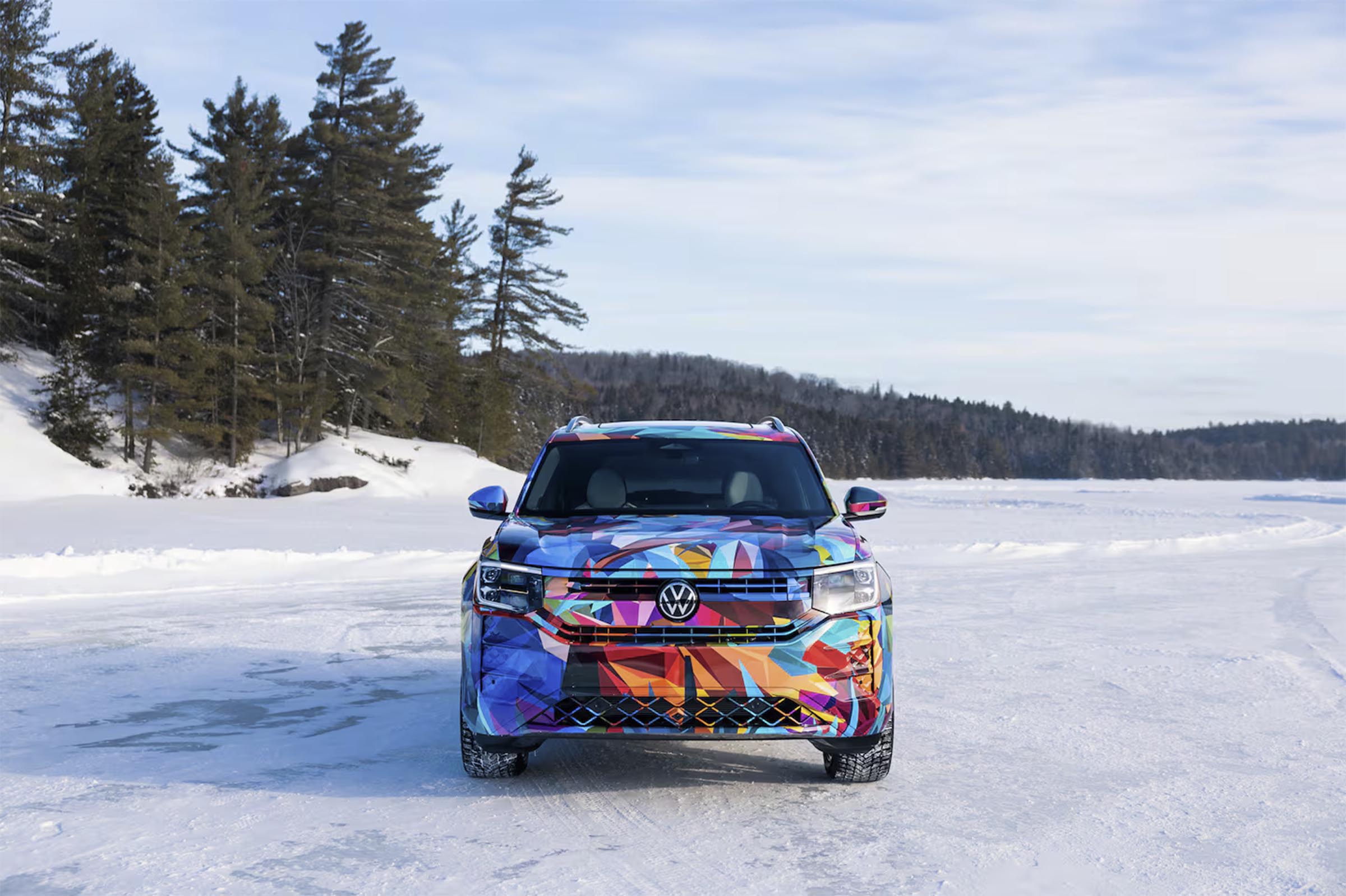
Volkswagen’s looking to make a little magic once again with its Atlas large SUV.
Measuring nearly 17 feet, bumper-to-bumper, the Volkswagen Atlas is by far the biggest non-commercial vehicle the automaker has ever offered in the U.S., and it’s no surprise it was named after the mythological figure that carried the weight of the world on its shoulders.
When it launched in the 2017 model year, VW was struggling to rebuild a reputation not only damaged by its diesel emissions scandal but also limited by its lack of a 3-row SUV. Atlas helped on both counts, quickly becoming one of its strongest-selling product lines — further helped with the addition of a performance R-Line package and the 3-row Atlas Sport.
But a lot has changed over the past decade, and the big SUV faces tough new competition, notably including the latest versions of the Kia Telluride and Hyundai Palisade — which took back-to-back wins as North American Utility Vehicle of the Year in 2025 and 2026. So it’s no surprise Volkswagen is rolling out a major makeover for Atlas and is giving us a first look at a camouflaged version of the SUV.
Updated design
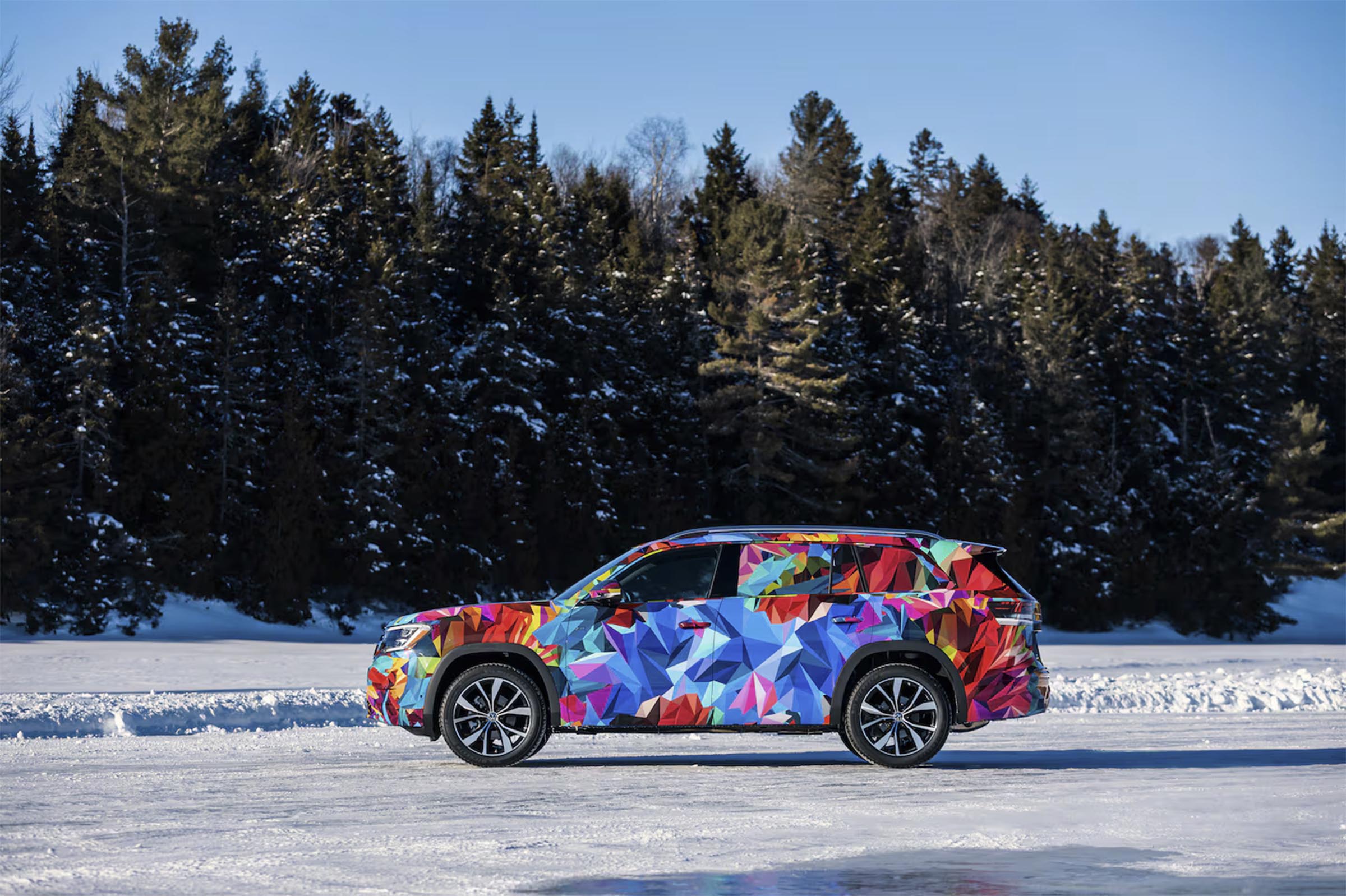
Ten years after its debut, Volkswagen’s given the Atlas a makeover.
With the colorful wrap, it’s a bit difficult to fully take in all the new design details. But VW confirmed that all exterior sheet metal has been replaced, except the roof. Expect dimensions, including wheelbase, to be within millimeters of the outgoing package, a source confirmed.
The automaker is expected to pick up some details from other recent product lines, like the smaller Tiguan, which was redesigned last year. And we can get a sense of some details by checking out the big VW Teramont Pro SUV sold in other markets. It’s effectively the global take on Atlas.
There will be new bumpers and new lighting, both front and back.
Interior update
As with the existing Atlas, the SUV will be offered in a 3-row configuration. An updated 2-row Atlas Sport is set to follow, likely debuting sometime in calendar year 2027, an insider said.
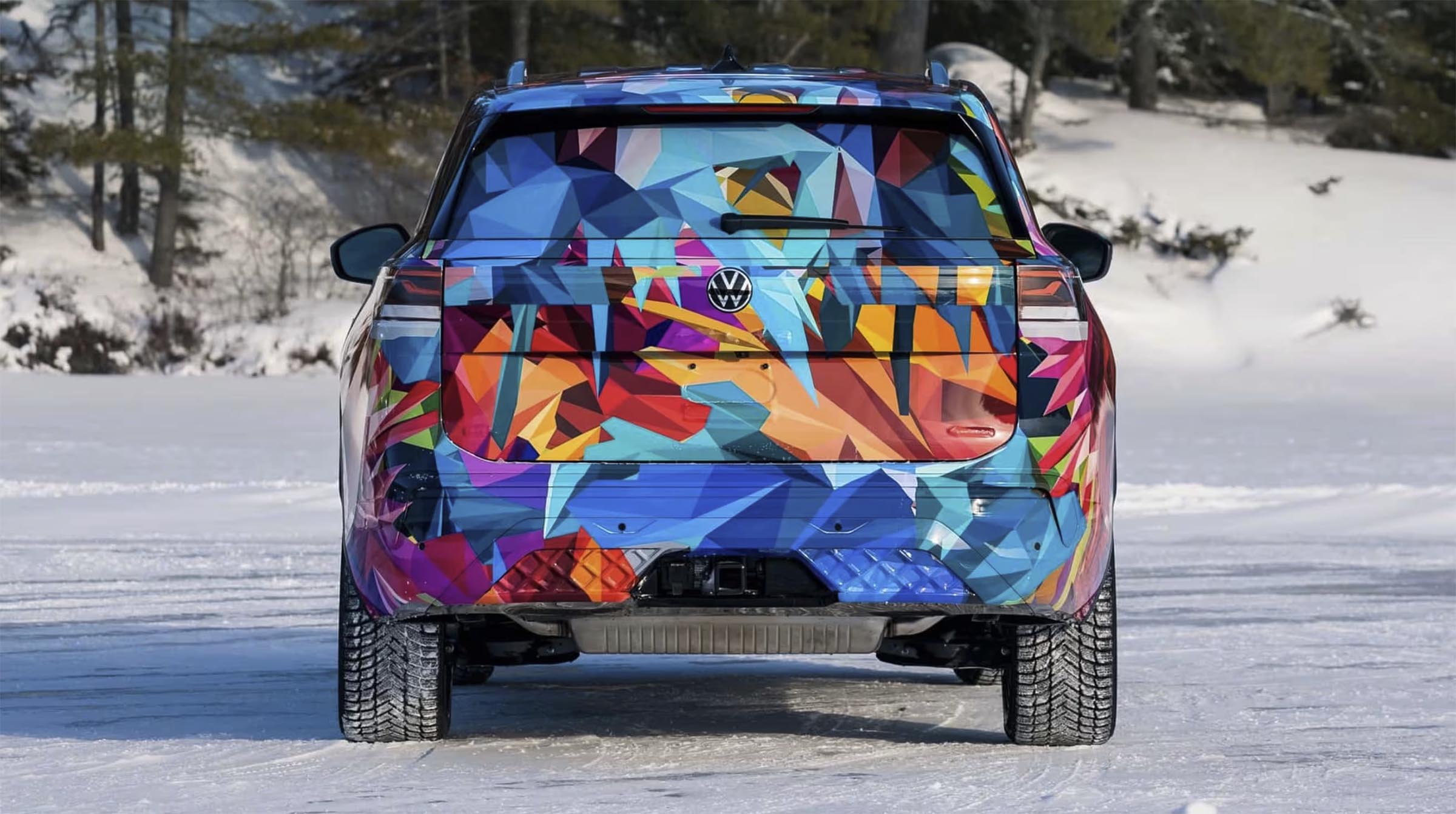
As with the existing Atlas, the SUV will be offered in a 3-row configuration.
Look for a more updated cabin, with larger digital displays backed by an upgraded infotainment system. Volkswagen has some catching up to do there. Wireless versions of Apple CarPlay and Android Auto should be standard across the range. Wireless smartphone charging will be available, if not standard.
Updated safety technology is also a certainty as VW can’t be seen slipping behind import competitors such as Hyundai, Kia, Toyota or Honda.
More Auto News
- Toyota Bucks the EV Pullback with All-Electric Highlander
- EV Sales Are Down, But Charger Installations Surge
- January Vehicle Sales Held Strong Despite Winter Weather’s Worst
Powertrain
The 2027 take on the Volkswagen Atlas will continue to be based on the automaker’s EQB EVO platform.
That offers the opportunity to use several different powertrain packages, but word is that VW won’t have a hybrid available, at least not anytime soon, something that could cost it sales. The Hyundai, Kia and Toyota competition all come with high-mileage gas-electric options, the Telluride Hybrid delivering an EPA-rated 35 mpg combined.
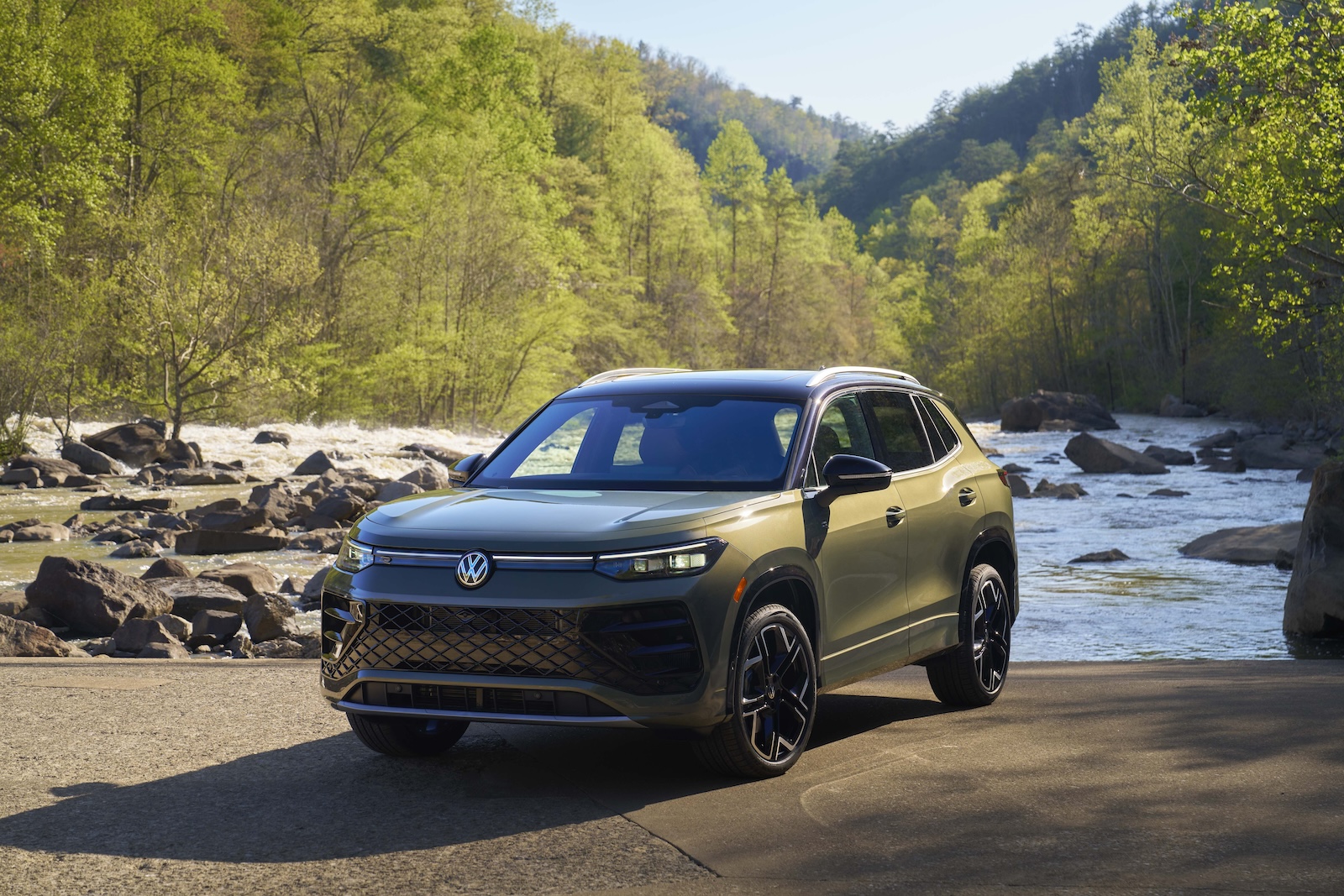
The new Atlas borrows a few styling cues from the newly remade Tiguan.
According to a spokesperson quoted by Automotive News, the new Atlas will get VW’s EA888 EVO5 gas engine. Specs weren’t available. In the Tiguan, however, it delivers 268 horsepower and 258 pound-feet of torque — which is a bit less than the outgoing Atlas makes. We may see Volkswagen retune the package to deliver more grunt.
Critical timing
Volkswagen clearly needs to update Atlas, which has gone without a major overhaul longer than is the norm these days.
Sales of the 3-row SUV peaked at 81,508 in 2019, according to company data. That dipped to 75,516 in 2024, falling another 5.9%, to 71,044 last year. It, nonetheless, remained the automaker’s second best-selling model in the U.S., just behind Tiguan’s sales of 78,621 in 2025.
Atlas Cross Sport, meanwhile, has seen an even sharper decline, U.S. volume down 18.8% last year to 31,564 units.


0 Comments