
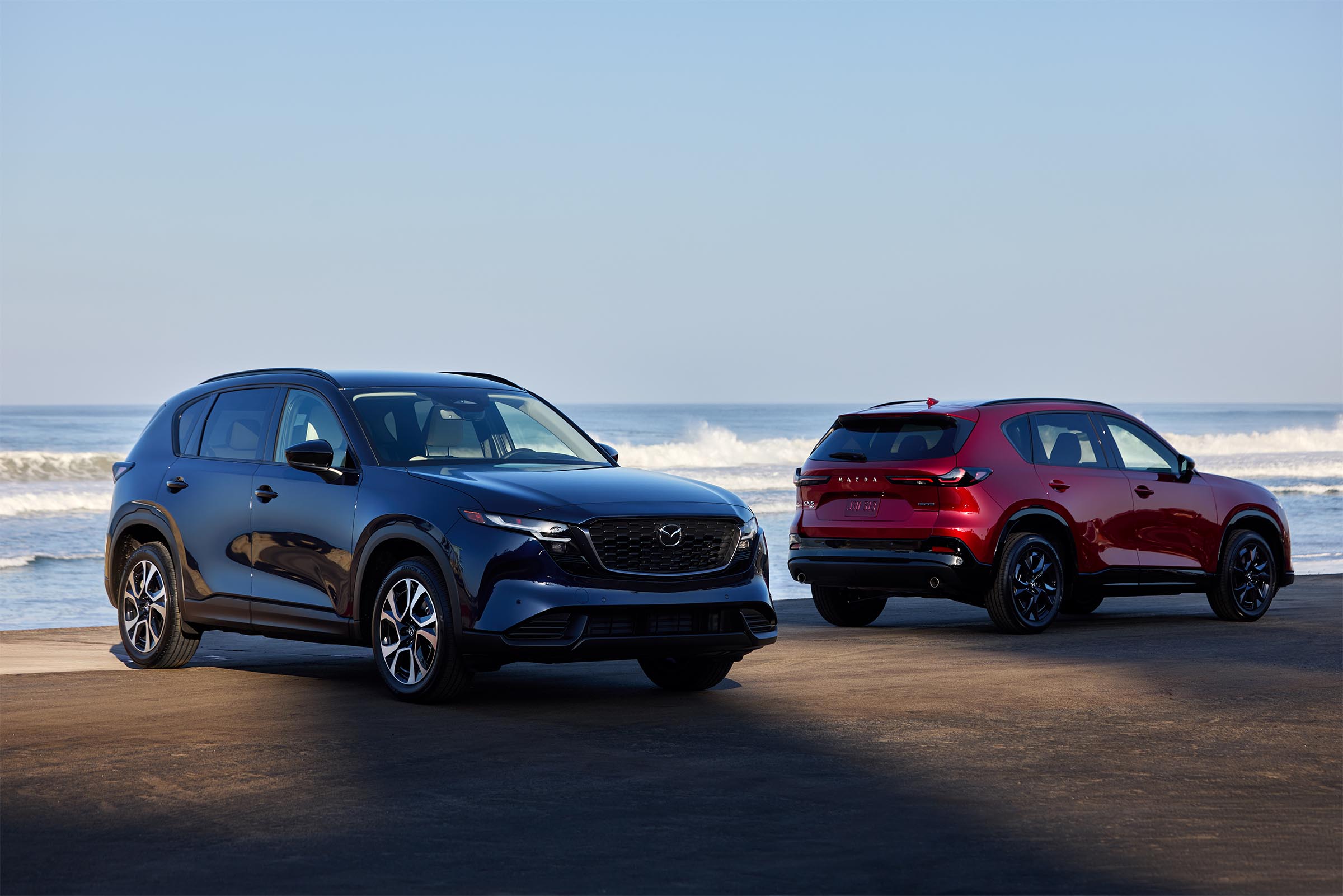
Is there a rotary engine in Mazda’s future? The iconic Wankel engine just might stage a comeback … someday … says the automaker’s U.S. CEO. But expect to see a lot more hybrids in the near future, according to Jim Donnelly, starting with the home-grown powertrain in the next-gen CX-5 now reaching showrooms. More from Headlight.News.

Mazda Motor America CEO Tom Donnelly.
“The rotary is such a part of our heritage” that it’s not time to count it out for the future, according to Tom Donnelly, President and CEO of Mazda Motor America.
Mazda has long taken pride in its unique approach to design and engineering. And after years of struggle, its beginning to pay off, the automaker expecting to top 400,000 in the U.S. this year for just the third time in its history.
But this time, it’s not straying off into uncharted territory. Like a growing number of manufacturers, the Hiroshima-based automaker is counting on electrification to power up demand, with a mix of plug-ins and conventional hybrid drivetrains, including the first gas-electric package it’s developed in-house.
Follow the leader
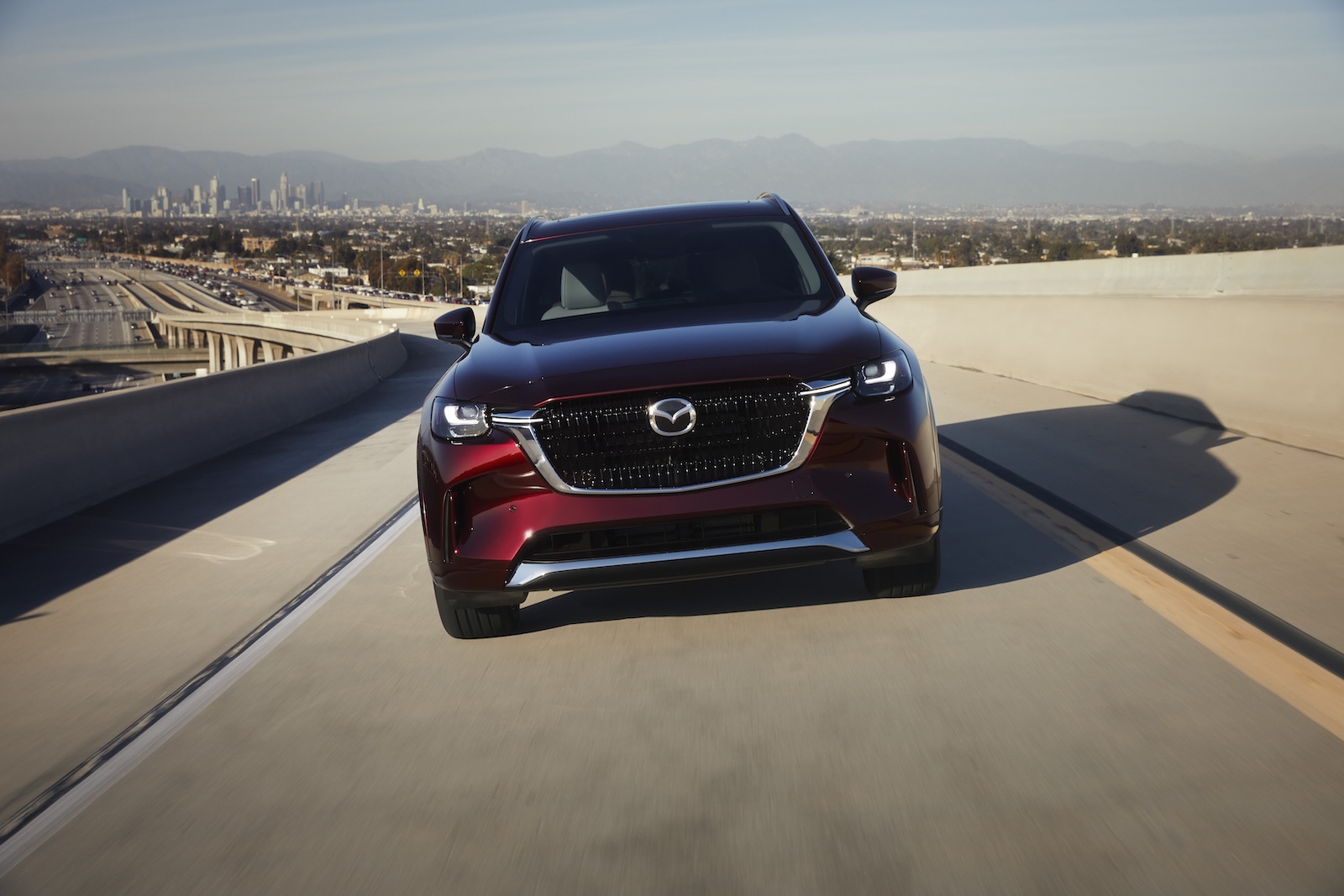
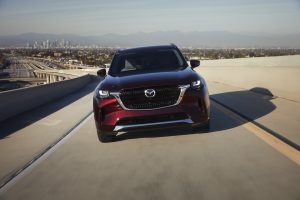
The CX-90 (shown here) and CX-70 both are offered with optional plug-in hybrid drivetrains.
“We’ve had an intentional follower mindset when it comes to electrification,” Donnelly said during a break from a media drive of the new CX-5.
There’s good reason to get in line when it comes to hybrids. While pure battery-electric technology has fallen into a deep slump since Congress phased out federal tax credits last September, conventional gas-electric technology has been steadily gaining momentum over the last several years, reaching a record of nearly 13% of overall U.S. new vehicle sales in February. That’s roughly double what the segment achieved as recently as 2023.
Currently, Mazda has three different hybrid technologies available in U.S. showrooms: starting with the plug-in system offered on its flagship CX-70 and CX-90 models, as well as the conventional, two-motor hybrid in the CX-50 borrowed from Toyota. Now, with the third-generation CX-50 it’s adding a second two-motor system, this one developed in-house.
While both of the electrified packages deliver significant improvements in fuel economy over Mazda’s current gas-only SkyActiv drivetrains, the home-brew SkyActiv-Z system, explained Donnelly, is meant to be “a driver’s hybrid, where you get the benefits of the efficiency improvements, but it’s very much the Mazda DNA in terms of the performance.”
EVs delayed again

The Mazda MX 30 didn’t last long in the U.S. due to range of barely 100 miles.
When it comes to pure battery-electric propulsion, Mazda briefly flirted with the technology back in 2019, but the limited range offered by the MX-30 failed to click with American motorists and it was quickly pulled from the market, (though it remained available in Europe and Japan).
A longer-range package was due to reach the States in 2027 but has now been pushed back until at least 2029, according to a report by Japan’s Nikkei news service.
Mazda headquarters hasn’t formally confirmed that report, nor did Donnelly, he didn’t deny there’s been a delay. “Clearly, we’re moving on a pathway towards that, but we feel the powertrains we have are fit for the U.S. market conditions right now.”
More Mazda News
- Rotary Redux?
- Mazda Claims This Engine Can Clean the Air as You Drive
- Mazda Pushes Back its Next EV by 2 Years
How does the Wankel fit in
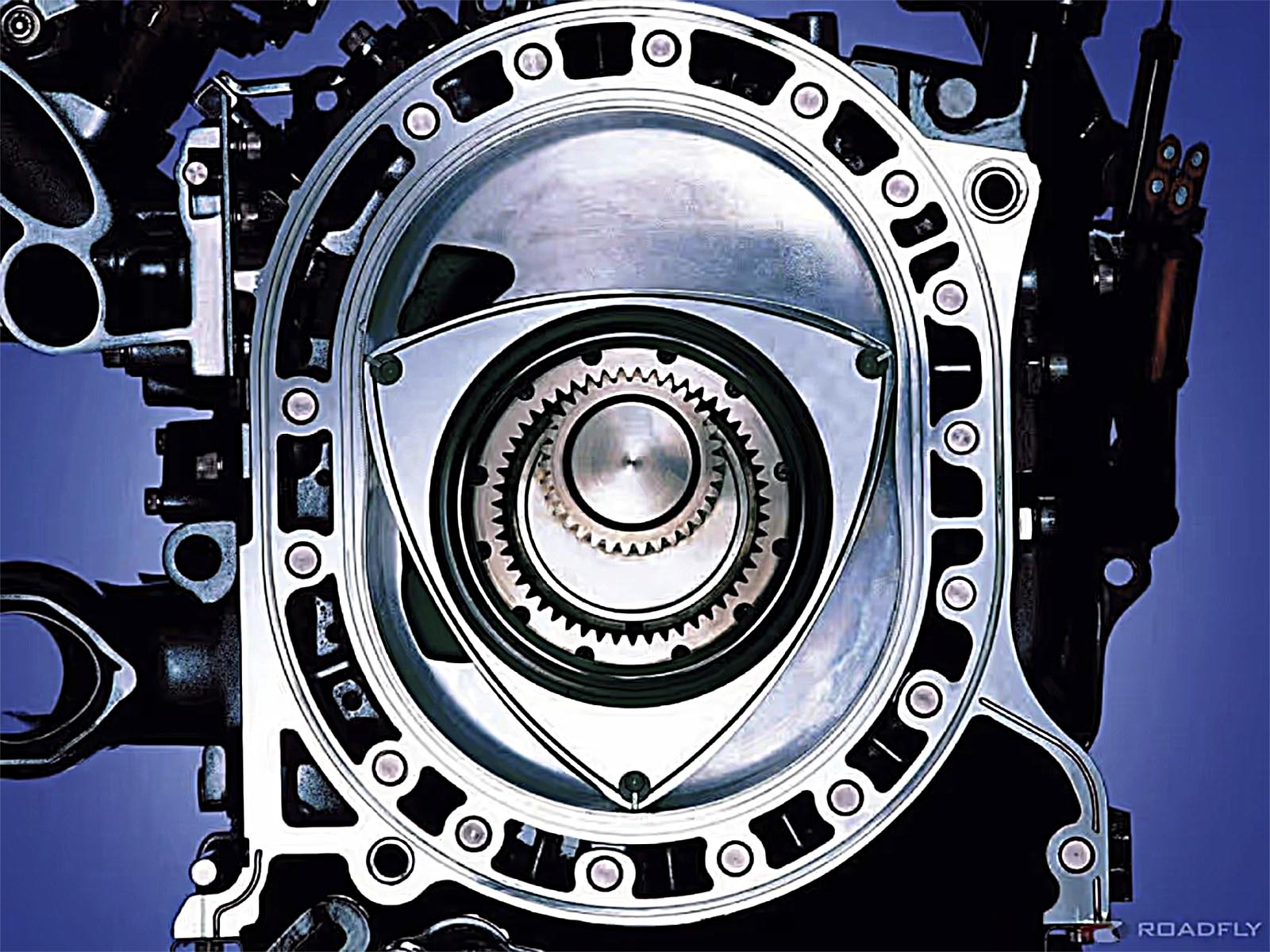
A cutaway of a rotary engine. Mazda used a 2-rotor
One possibility is that Mazda might go with an alternate approach to electrification. A number of manufacturers are now looking at extended-range electric vehicles. Like today’s plug-in hybrids they pair an internal combustion engine with battery-powered electric motors. But where the wheels of a PHEV can be driven by either the ICE side of the drivetrain or those motors, EREVs use their gas engines solely as generators, helping recharge a battery that’s been drained. The wheels only get power from the electric motors.
Mazda was actually one of the pioneers of this approach. But what was unique about the MX-30 range-extender was the use of a Wankel rotary, rather than a piston engine. Unfortunately for the automaker, that also failed to generate enough demand and was pulled from the European market. It remains available only in Japan for now.
But don’t write off the rotary for dead – again. It may still be part of Mazda’s long-term “multi-solution” powertrain strategy, stressed Donnelly. “There is work being done on the rotary, overall, and (it’s use as a) range-extender,” he offered. “Rotary is such a part of our heritage…it will be part of our future. But I don’t have anything to announce today.”
More hybrids coming
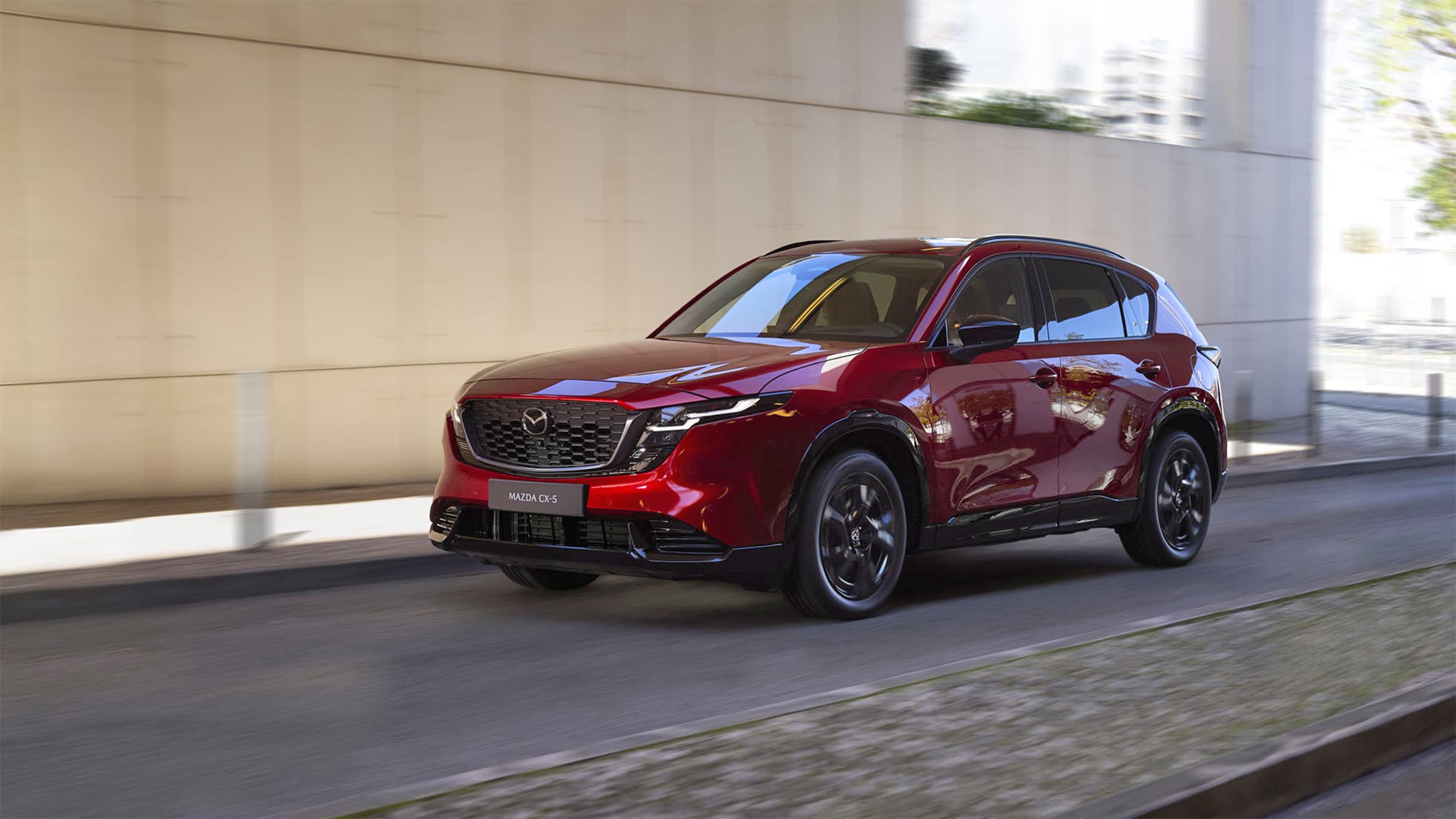
The 2026 Mazda CX-5 is Mazda’s first model offering a homebrew hybrid option.
Expect to see the new homebrew hybrid show up in still other product lines over the next “24 to 36-month timeframe,” Donnelly said. It will be a critical part of the automaker’s ongoing strategy, key to building on the momentum it had emerging from the COVID pandemic.
Mazda has had a roller-coaster history when it comes to both sales and profits. It nearly collapsed when early versions of the Wankel proved to have major technical flaws. It survived for years as a vassal of Ford Motor Co. It today has made good use of its close ties to Toyota. Not only does the bigger automaker provide technology and powertrain assistance but the two manufacturers launched the Toyota-Mazda Joint Assembly Plant in Alabama in 2021. It currently rolls out the CX-50, and strong demand has allowed Mazda to keep boosting production. The target is 130,000 this year, said Donnelly, with a goal of eventually boosting that to 150,000, the capacity on the Mazda side of the plant.
The automaker is in the midst of a 10-year plan first put in place by global CEO Masahiro Moro when he was running U.S. operations. It’s been paying off State-side. For years, the company struggled to grow much beyond 200,000 annual sales. It fell just short of 280,000 in 2019 and 2020, as COVID hit. But with new offerings, like the CX-50, launched in 2022, followed by the CX-90 and CX-70, demand came out of the pandemic with strong momentum. It surged to a record 424,382, a 16.8% increase, in 2024. Last year saw sales dip 3.3%, to 410,346. A variety of factors led to that slowdown, including the Trump tariffs which led it to adjust production plans for models like the Mexican-made CX-30 crossover and Mazda3.
Addressing the affordability crisis
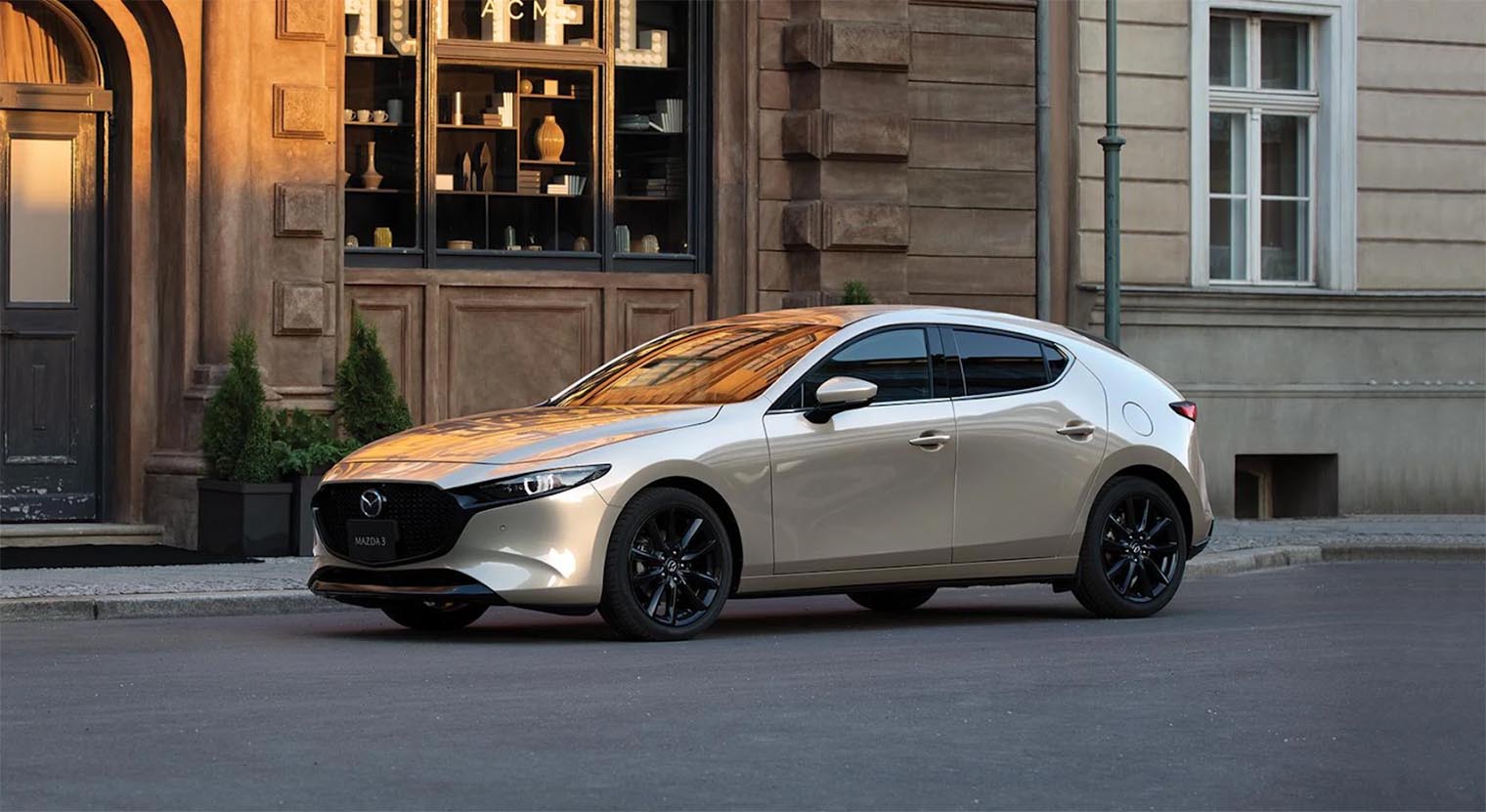
The Mazda3.
With the addition of the CX-90, Mazda pushed into completely new territory, a fully loaded 3.3 Turbo S Premium Plus package pushing upwards of $68,000 – nearly $30,000 more than the base 3.3 Turbo Select trim. While Mazda has found a solid audience for the three-row crossover and the two-row CX-70, Donnelly acknowledged the automaker needs to remain a player in more affordable segments of the market at a time when new vehicle prices have hit a record $50,000.
“No question this is an issue. Affordability concerns are very real and providing a limiter on the industry,” said Donnelly.
But it’s a particular challenge for a manufacturer that still depends heavily upon imports. Ironically, because of the quirks of the Trump tariff program, that forced Mazda to last year shift production of the Mazda3 line from Mexico to Japan – reducing its duties from 25% to 15%. We’re focusing more on Mazda3 to really address the affordability issue.” In its sedan form it carries a base price of $24,550. The Mazda3 hatchback starts at $25,550.
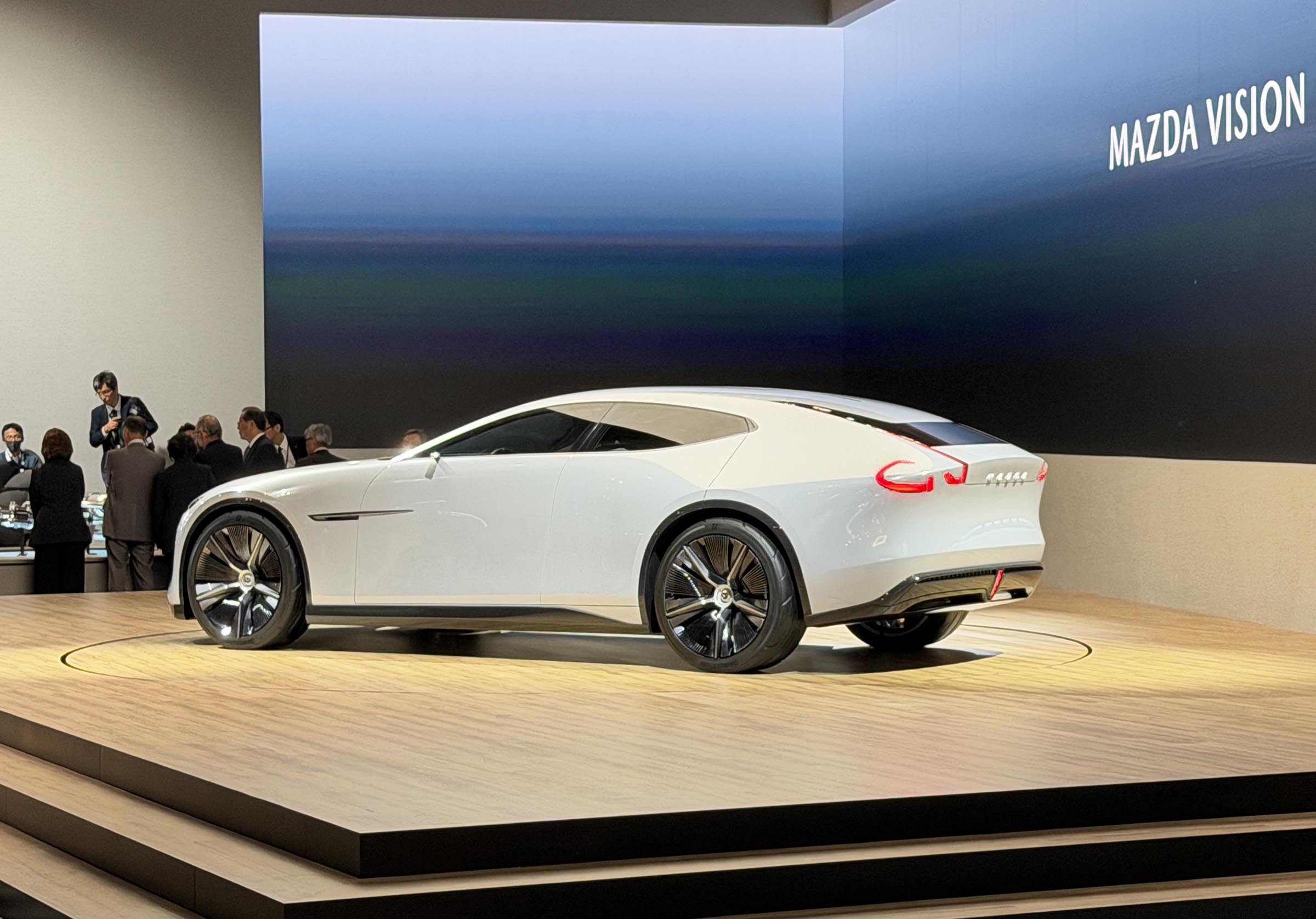
The Mazda Vision X-Coupe concept is about 10 inches longer than the Mazda6 sedan.
Return of the Mazda sedan?
These days, Mazda is part of a shrinking list of manufacturers offering sedans and hatchbacks. And there’s no question, the Japanese brand’s growth has been largely dependent upon shifting focus to crossovers. But as the affordability crisis worsens, there’s a growing sense among industry leaders that maybe they were too quick to abandon the passenger car segment.
For his part, Ford CEO Jim Farley recently said he would “never say never” to the idea of returning sedans to the line-up. For his part, Donnelly said, “There’s an opportunity there. Definitely a market there.”
Are there more in the works? “Not in the near-term,” he confided. But longer-term? “There’s clearly a portion of the marketplace that sedans are still the right solution for.”
0 Comments