
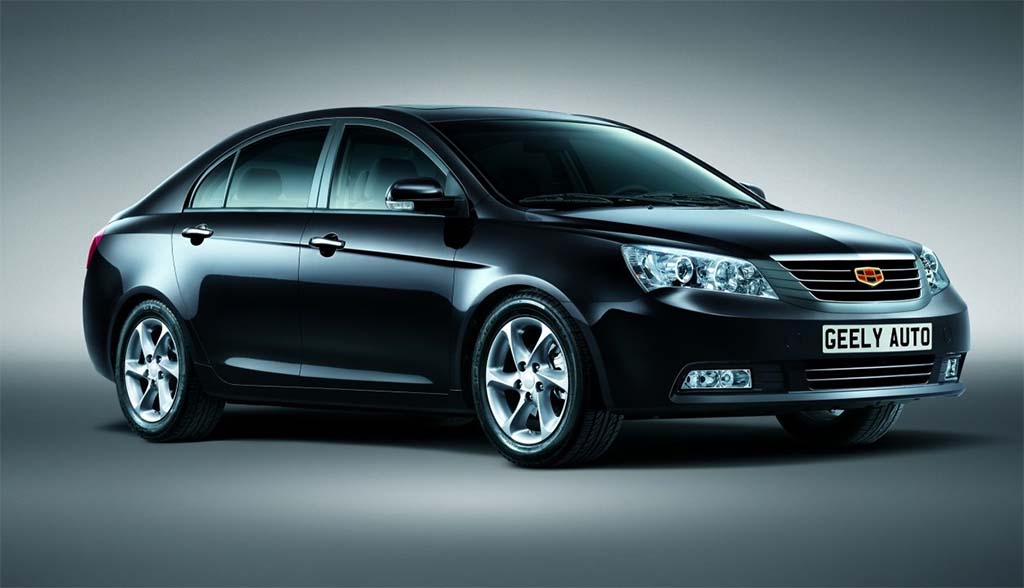
U.S. EV sales have stumbled badly since federal tax credits were phased out last September. But global demand remains strong – and continues to grow aggressively in the world’s largest automotive market. That positions China’s domestic automakers to take the lead in the battery-electric model, even in North America. Headlight.News has more.
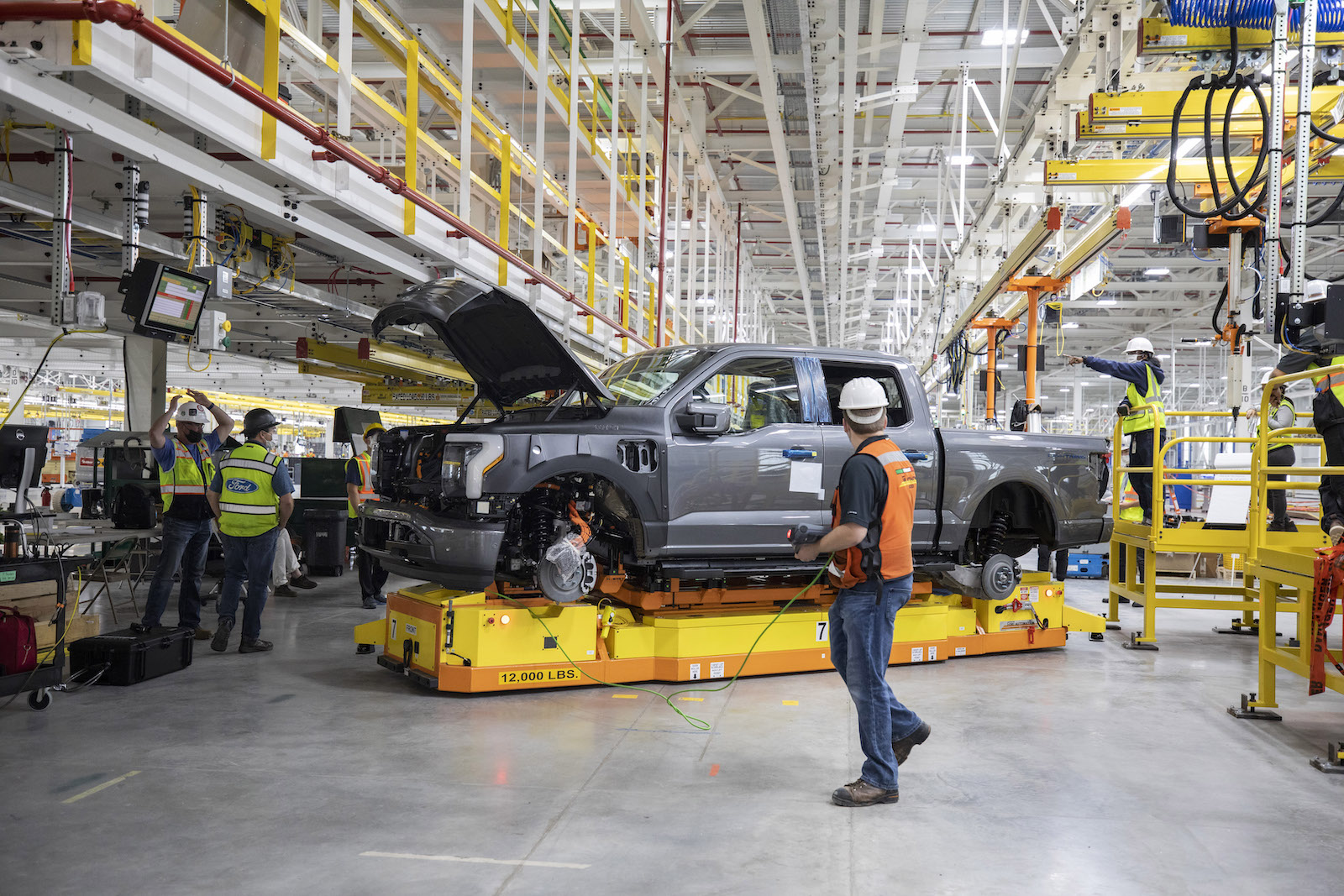
Demand for the F-150 Lightning tumbled, leading Ford to end production last December.
The U.S. EV market has come unplugged, demand crashing down after federal tax credits were phased out at the end of September 2025.
That’s led a long list of automakers, including General Motors, Ford, Honda and Volkswagen, to slash spending on EV development and production – often while writing down billions of dollars in losses on battery-electric programs.
Yet EV sales actually set an all-time record in 2025, reaching nearly 22% of the global automotive market, according to industry data, Nowhere was that more apparent than in China where all-electric models generated nearly 13 million sales. And that, some observers warn, puts Chinese domestic brands like BYD, Geely and Chery in a strong position to dominate the industry in the not-too-distant future.
By the numbers
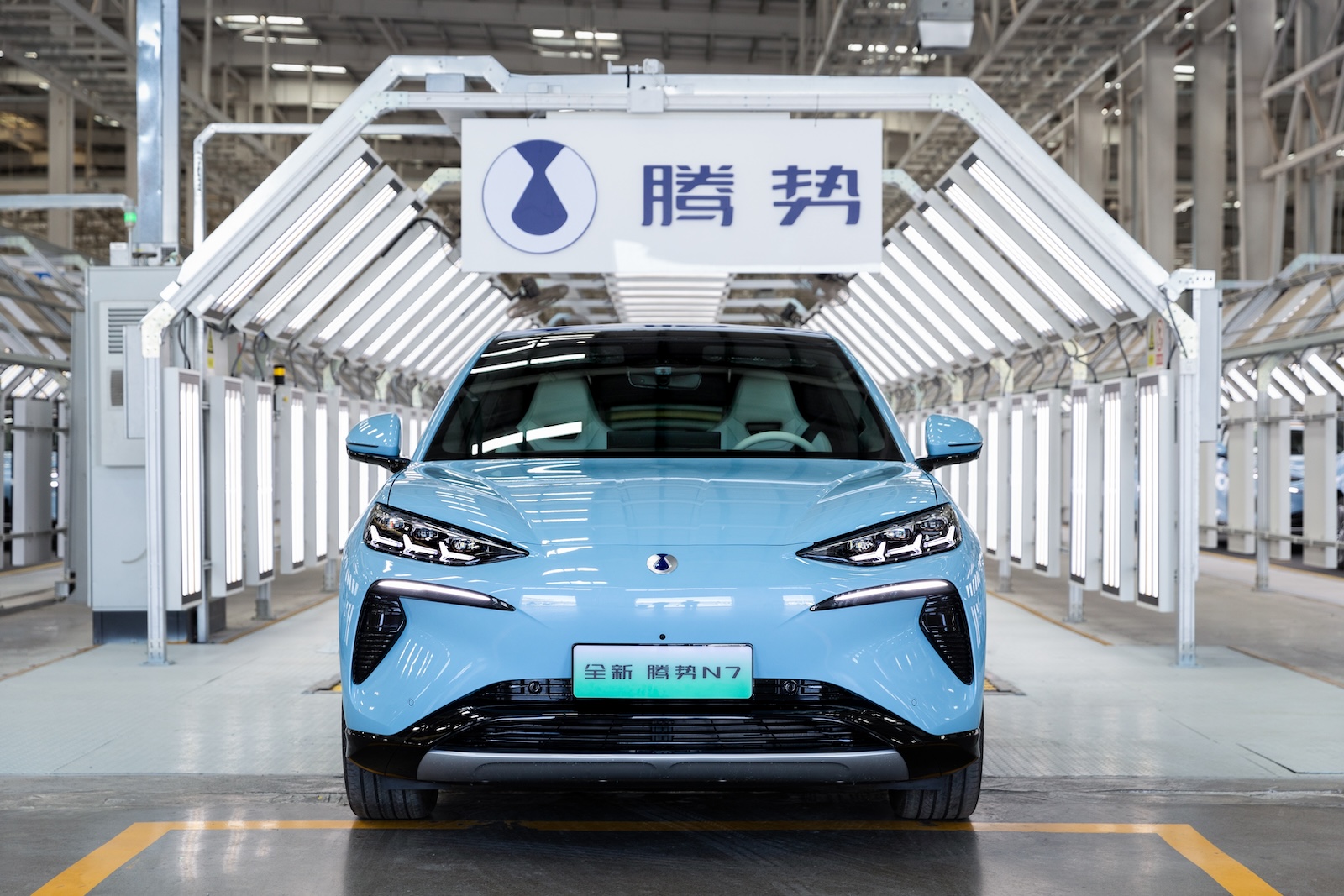
A BYD Denza N7, coming off the assembly line.
“EVs are not dead,” said Sam Abuelsamid, senior data analyst with Telemetry Research. “They may be taking a break in the U.S. and taking a weekend off in Europe, but China is still cranking them out.”
All told, motorists around the world purchased 91.7 million vehicles in 2025 – the first year reaching pre-pandemic levels. EVs alone accounted for 20.7 million of those sales, a 20% year-over-year jump that was driven by growth in the key Chinese, U.S. and European markets.
Total Chinese auto sales came in at just under 33 million for the year, according to Telemetry Research. Meanwhile, the country’s automotive industry consortium estimated EV sales totaling 12.7 million. Add in plug-in hybrids and China’s so-called New Energy Vehicle segment was nearly as large as the entire U.S. automotive market last year, at about 15.5 million versus 16.2 million, respectively.
Europe, by comparison, saw motorists purchase 2.74 million all-electric vehicles in 2025, up from 2.07 million, reported Telemetry. Add in another 1.3 million plug-in hybrids last year, up from about 0.9 million in 2024.
The U.S. EV market short-circuits
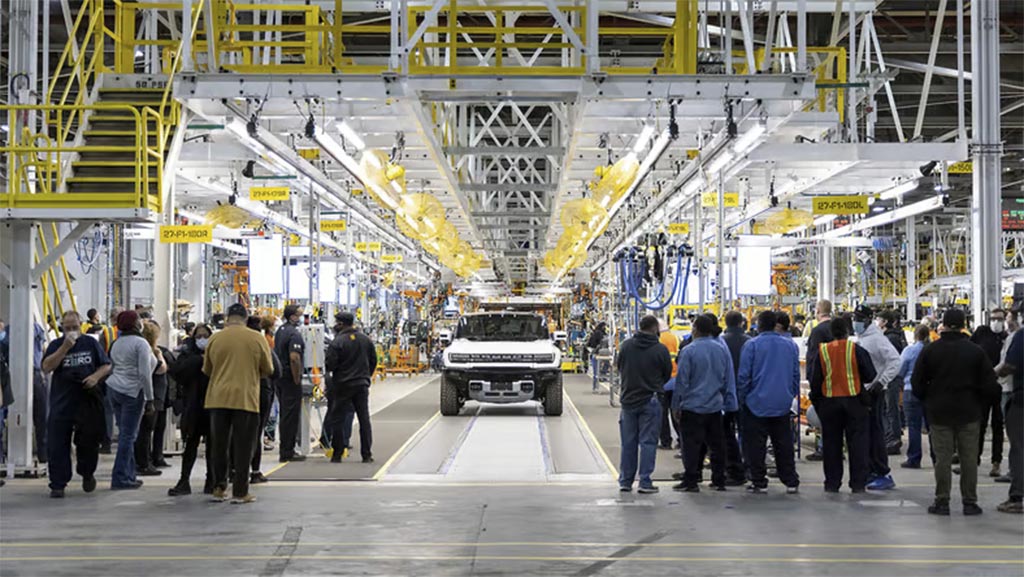
GM’s Factory Zero may close or just end EV production.
Going into 2025, things looked good for the U.S. EV market which had grown more than eightfold since the beginning of the decade. But after hitting another annual record, demand tumbled more than 2% for the full year, according to Cox Automotive, to about 1.30 million. The full-year market share dropped from 8.1% to 7.8%, the first decline in a decade.
More worrisome for the industry was what happened after the phase-out of federal tax credits on September 30, 2025. During the final quarter, EV sales fell to 234,000 units, a 46% decline compared to the third quarter and a 36% year-over-year decrease.
The downward momentum has carried over into 2026, first quarter U.S. EV sales reaching just 216,399, reported Cox, a 27% year-over-year shortfall. Industry giant Tesla took the sharpest hit, with only a handful of brands, notably Cadillac, Rivian and Toyota, showing any positive momentum.
More Auto News
- U.S Hybrid Sales Defy Gravity
- Hybrid Jeep Cherokee Gets it Right
- Under Weight of War, Auto Sales Could Crash
China bucks the trend
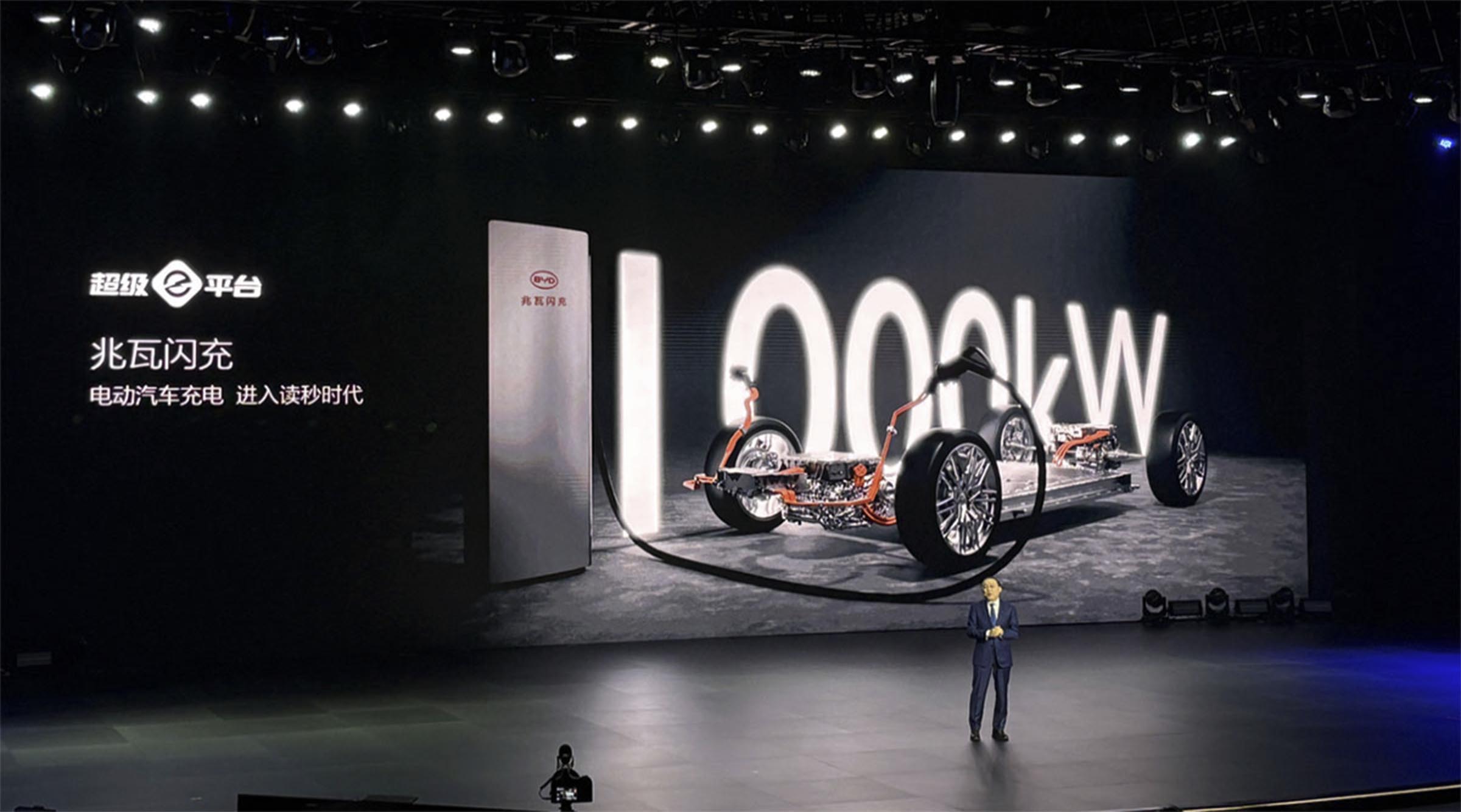
BYD officials reveal the new Megawatt charging system rolling out in China.
U.S. manufacturers, in particular, have gone into a major retreat, slashing EV R&D spending, while sharply reducing production. Ford last December scrapped its F-150 Lightning and has repurposed the Blue Oval City complex near Memphis that was to produce its replacement. The factory will now assemble conventional light trucks. Foreign-owned brands, including Volkswagen and Honda, have also gone into retreat, the Japanese automaker scrapping plans to produce its new Series 0 models at what was to be an “EV Hub” in Ohio.
Meanwhile, U.S., European and Japanese brands reported losses of around $55 billion last year on their EV programs, nearly half of that — $26.2 billion – recorded by Stellantis.
In China, however, it’s all but full speed ahead, and not just for the domestic market. China’s auto industry long focused inward, taking advantage of the home country’s rapid growth. As competition intensifies, while overall growth slows, manufacturers have put increasing emphasis on exports which topped 7 million in 2025 — and are expected to reach at least 8 million this year. Significantly, EVs accounted for 37% of last year’s exports, according to Automotive News China, more than double the share in 2024.
Gaining an edge
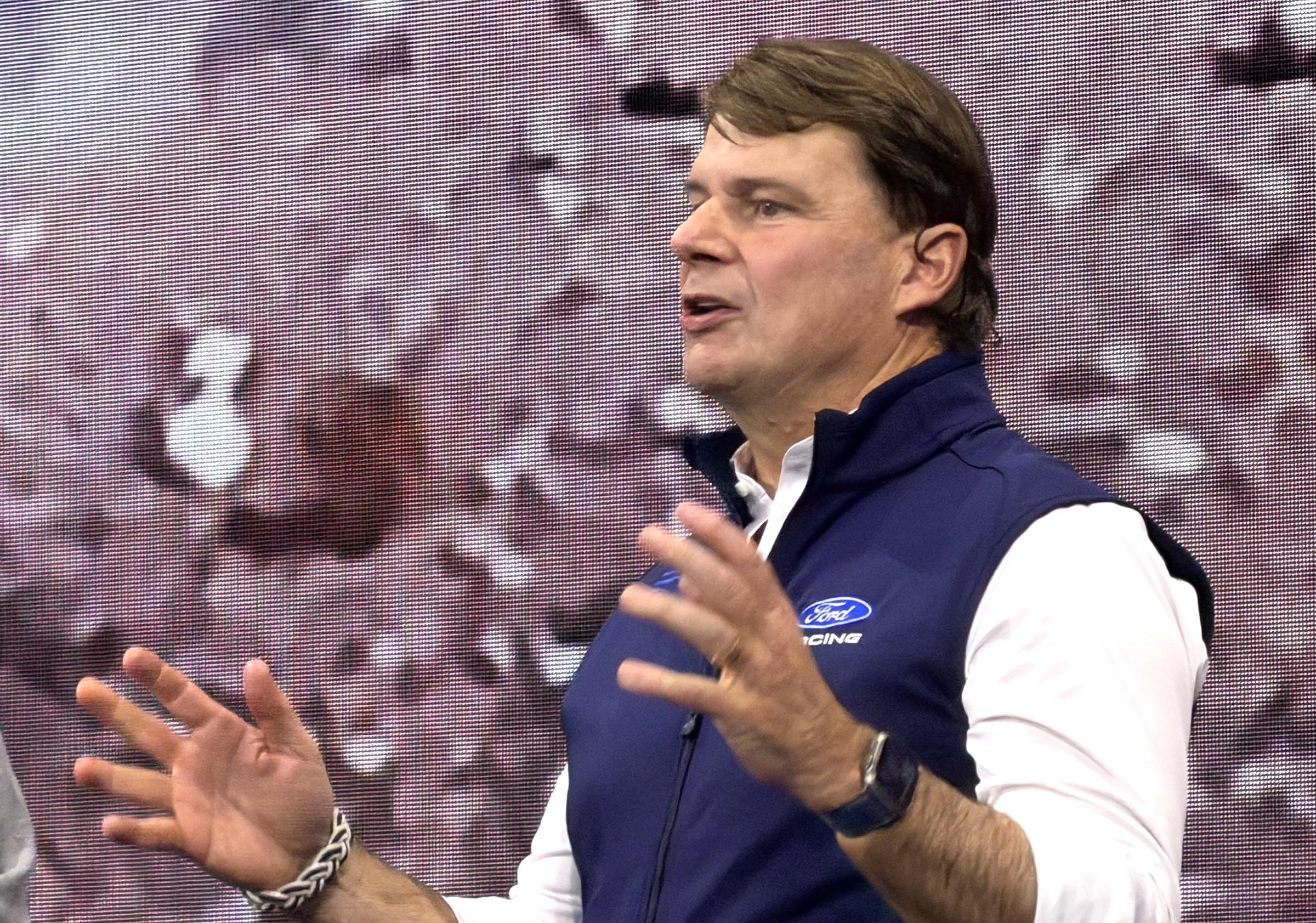
Ford CEO Jim Farley lauded part of the company performed well in 2025, despite the $8.2 billion loss.
That’s helped boost China’s share of the global EV market to roughly 60%, according to industry data. And with the widespread expectation that EVs will continue to gain share – even in the U.S. – China’s domestic EV brands are increasingly well-positioned to dominate, Abuelsamid and other analysts contend.
He’s particularly concerned about the future for Detroit brands. “By pulling back on EV investment here we’re going to be even further behind the rest of the world,” Abuelsamid warns.
That’s not to say the Chinese face a smooth road ahead. BYD is a particularly troubling example. It stood out when, last year, it beat out Tesla as the world’s largest seller of EVs for the first time. But the company – whose name stands for “Build Your Dreams” – in March posted its sixth consecutive month of declining sales, demand off 30% for the first quarter of this year. BYD recently reported its first quarterly decline in earnings since 2001.
A crowded market
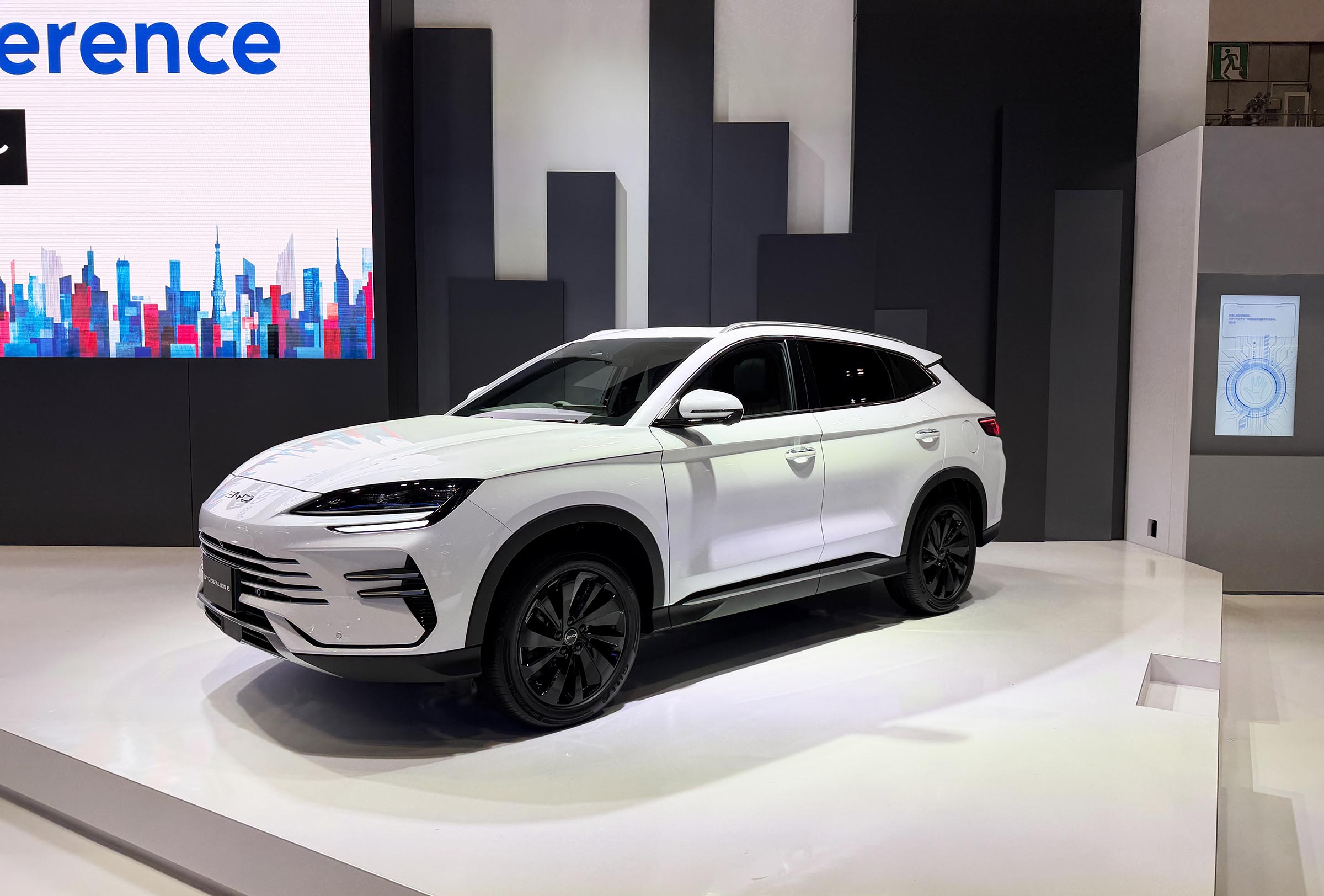
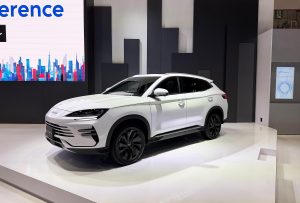
The BYD Sea Lion 6. The brand has suffered six consecutive monthly sales declines.
It hasn’t helped that more and more EV start-ups continue to enter the Chinese market. By various estimates, there are as many as 300 different brands competing in the People’s Republic. And there has led to a profit-eviscerating price war that the Beijing government is now trying to rein in.
A number of the start-ups are investing “too much in production capacity,” said Abuelsamid, “far more than the Chinese market can absorb.” That’s forcing the Chinese industry to put even more emphasis on exports. A new trade agreement with Canada slashes tariffs from 106.1% to just 6.1% on up to 49,000 Chinese battery-electric vehicles annually, about 3% of annual Canadian auto sales. That will eventually climb to 70,000 EVs.
But the Canadians are leaning hard on Chinese manufacturers to set up localized production plants. And there’s growing pushback in other markets, including Mexico and the European Union. In the U.S., meanwhile, domestic automakers – as well as foreign-owned brands like Toyota – contend that the arrival of the Chinese would pose an “existential threat.” So far, the Trump administration has shown no interest in opening the market up to the Chinese.
But, on a global basis, warns Abuelsamid, they are becoming a force ever more difficult to battle back. And that’s especially true for Detroit manufacturers. With them backing off on EVs due to weak demand in the home U.S. market, he argues, “We’re going to fall even further behind the rest of the world,” especially the Chinese.




0 Comments