
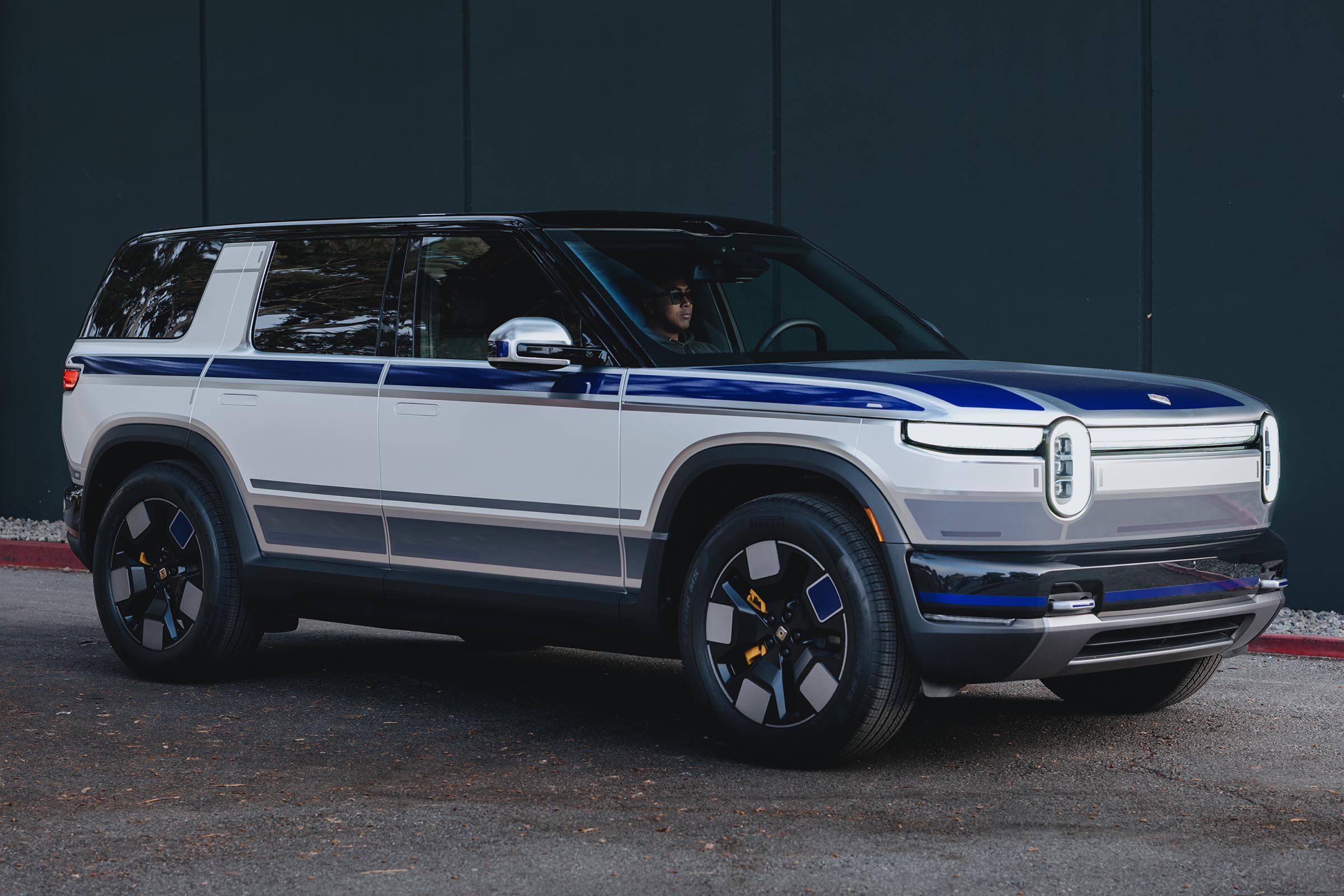
Rivian owners who like to drive hands-free will discover they can travel a lot further than they expected later this month. The EV start-up plans to increase from 150,000 to 3.5 million the number of miles its autonomous driving system can operate on. And, starting late next year, it plans to go even further with the release of the new R2 model which will be Rivian’s first to permit hands-free/eyes-off driving. According to CEO RJ Scaringe, there’s yet more to follow.
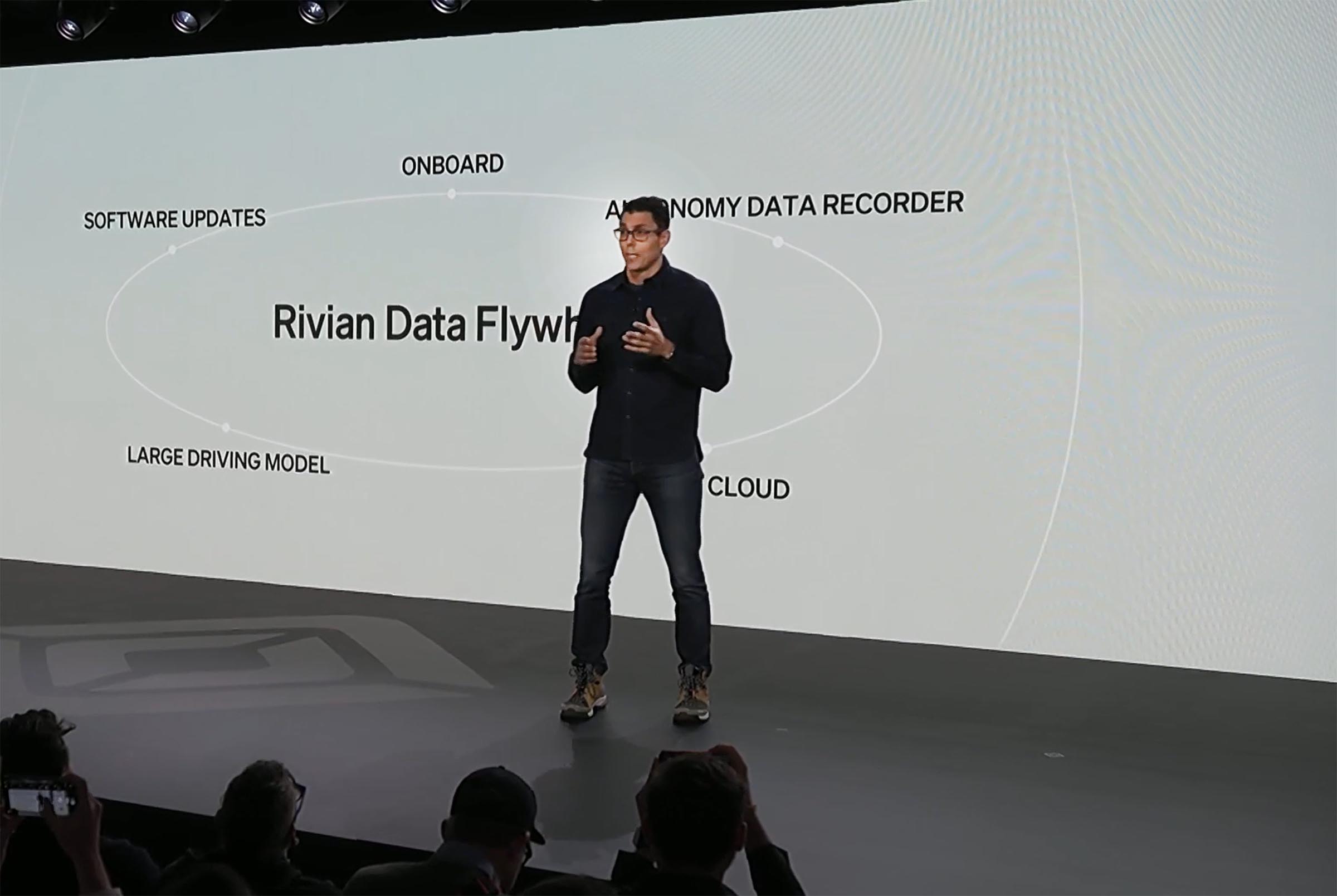
Rivian CEO RJ Scaringe has big plans for autonomous technology.
These days, it seems, almost all manufacturers offer some form of hands-free driving – though most can operate only on relatively modest stretches of limited-access highways. Rivian, however, plans to take a big leap later this month, increasing more than 20-fold its autonomous system’s capabilities, from 150,000 to 3.5 million miles.
“If there’s a painted line and it’s clearly marked, you can drive hands-free” once the update is released using an over-the-air update, James Philbin, the automaker’s vice president of autonomy and AI, said during a presentation on Thursday.
The increase capabilities will be offered to all current Rivian R1S and R1T models through an over-the-air update. But Rivian plans to take things even further, starting late next year, with the introduction of its new R2 battery-electric vehicle. The compact SUV will be equipped with a next-generation computer system and an expanded suite of sensors, including laser-based LiDAR. That will permit Rivian to launch what’s often referred to as “hands-free/eyes-off” driving and, further down the road, fully driverless operation
What’s new
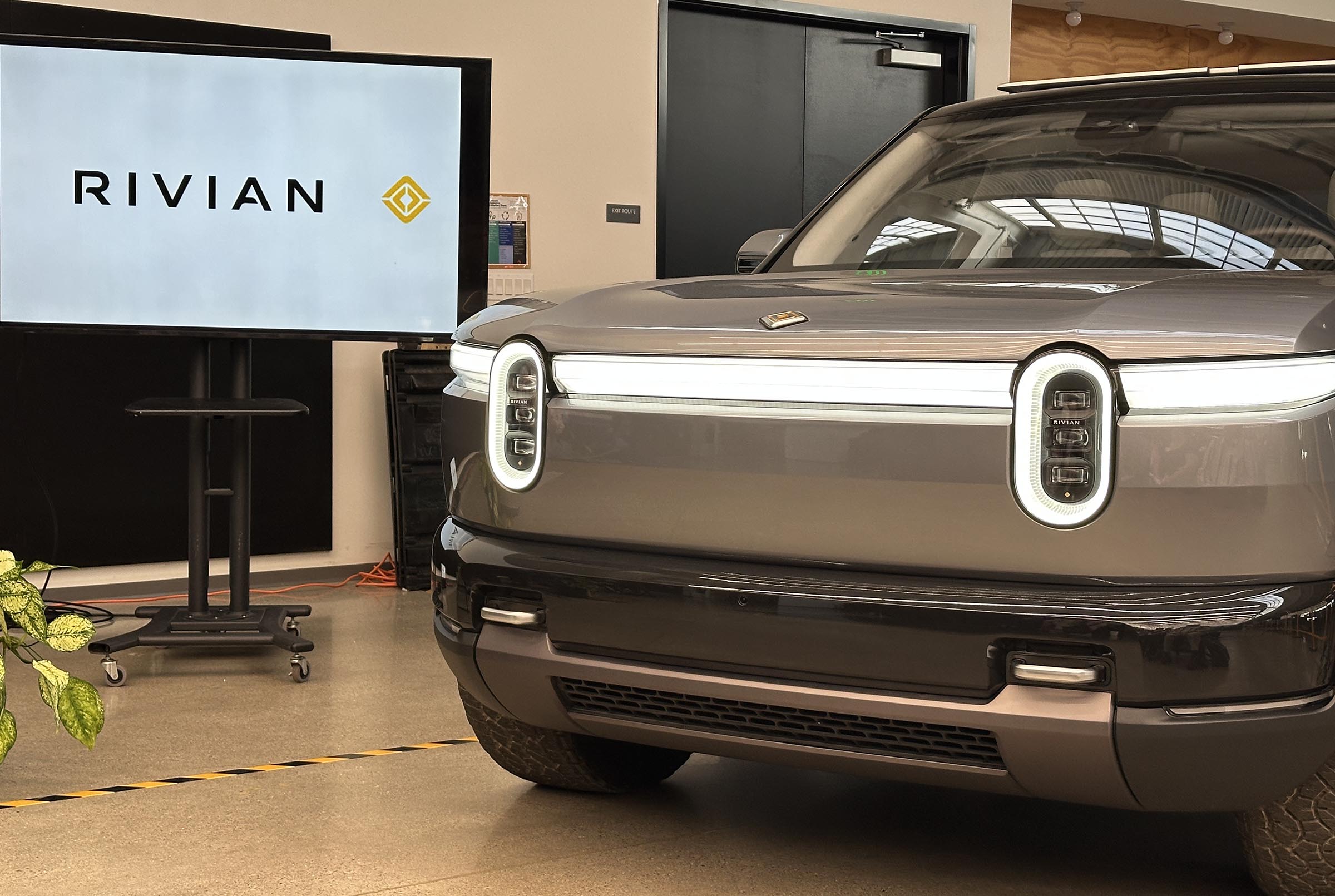
The big changes begin late next year with the launch of the Rivian R2.
By increasing to 3.5 million miles the range in which its EVs can operate hands-free, Rivian puts itself at or near the industry pinnacle. By comparison, General Motors’ Super Cruise system was scheduled to end the year capable of operating on 1.2 million miles of U.S. and Canadian roads; Ford’s BlueCruise can only muster 130,000 miles.
Virtually every automaker is now developing some sort of autonomous driving system – with those remaining set to license it. Rivian has decided to keep everything in-house, even developing its own, microprocessor – with about 10 times the power of the current chip — along with the software that will power its next-generation hands-free technology.
But another piece of technology will allow Rivian to make a big leap. The R2 will be the automaker’s first model equipped with LiDAR – indeed, one of only a few anywhere in the industry. That laser-based technology will supplement the EV’s 11 cameras and five radar sensors, allowing it to follow traffic, spot bicyclists, pedestrians and even large animals, along with other obstacles, no matter the time of day or road conditions, explained Vidya Rajagopolan, Rivian’s Senior Vice President of Electrical Hardware Engineering,
Taking on Tesla
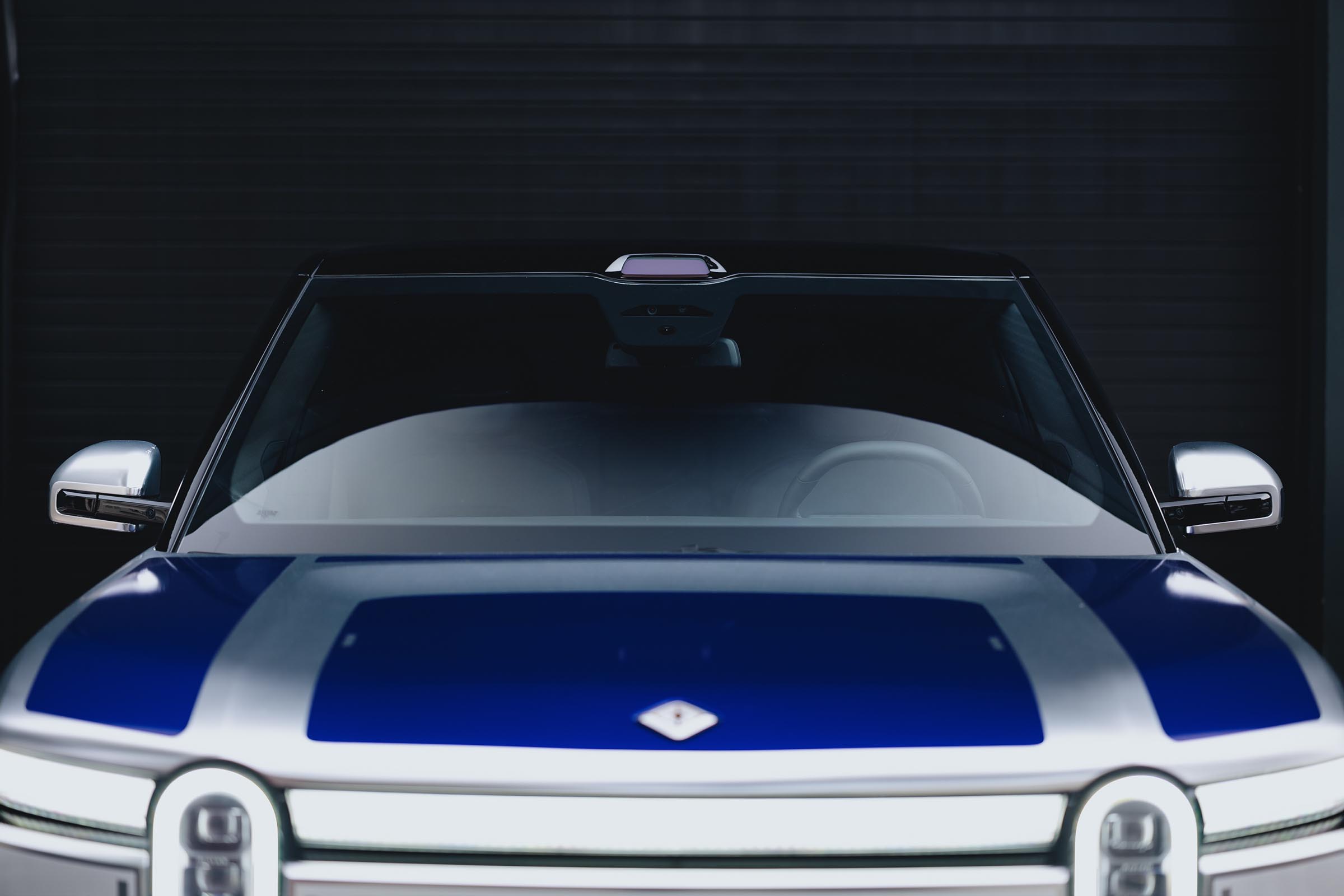
Rivian’s LiDAR sensor is barely visible at the top of the windshield.
The need for LiDAR is a matter of intense debate, at least when you’re talking to Tesla, the automaker generally considered today’s leader in retail autonomous driving, with its Autopilot and Full Self-Driving systems. The Texas-based automaker relies only on cameras and has repeatedly downplayed the need for more sophisticated sensor systems.
Rajagopolan is unconvinced – as are many of Tesla’s critics. “Cameras alone have some shortcomings. They do not perform well under non-ideal lighting conditions.”
The good news for Rivian is that LiDAR technology has improved substantially over the last several years. Costs have come down from tens of thousands of dollars to “several 100,” she noted. And the latest sensors are largely solid state, small enough that Rivian’s will be inconspicuously mounted above the R2’s main camera at the top of its windshield.
More Auto Tech News
- Lucid Teams Up with NVIDIA, Targets Level 4 Autonomy
- Autonomous Driving Tech Plans Helping Some, Cursing Others in Auto Industry
- Toyota Teaming Up With Waymo on Autonomous Vehicles
What next
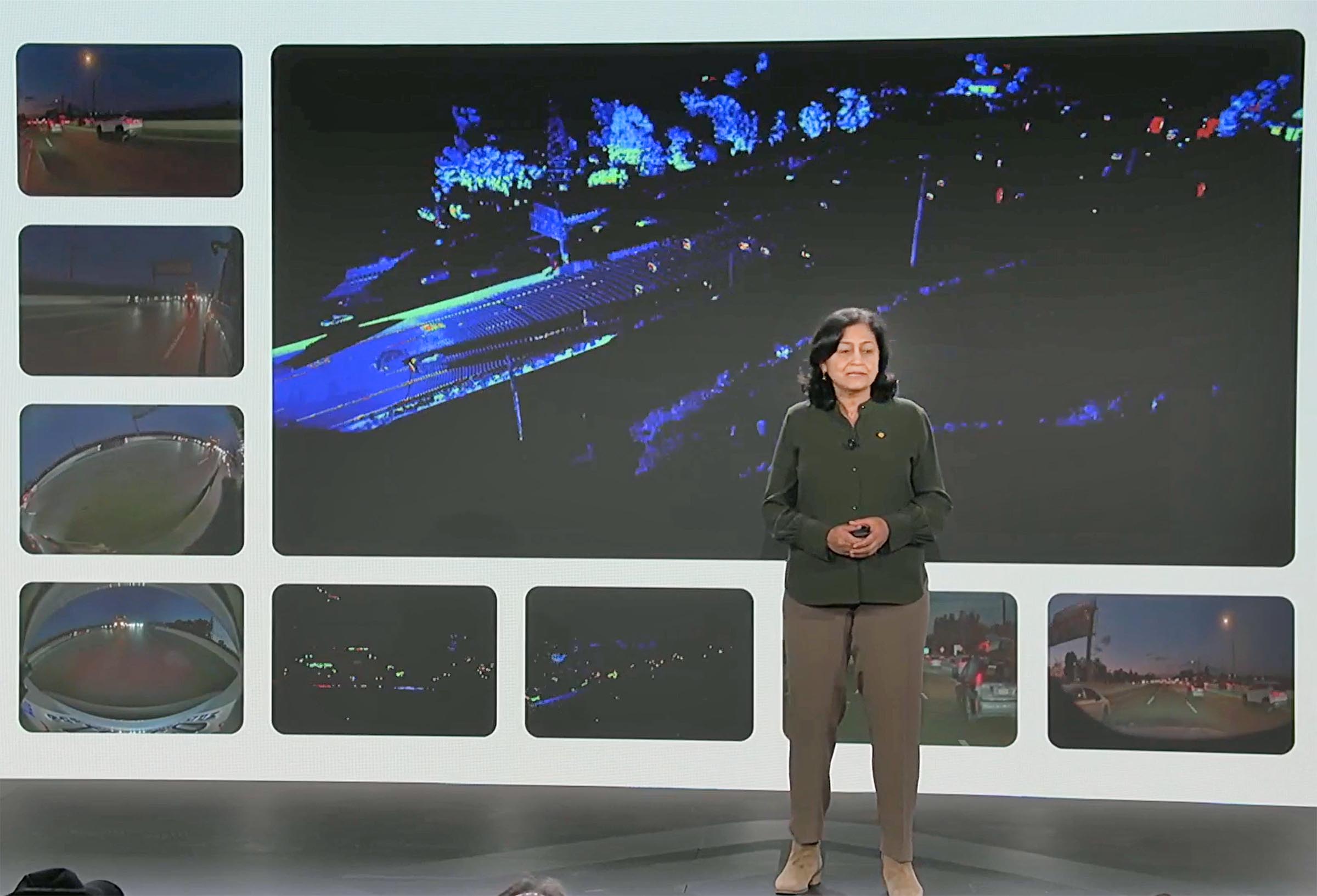
Vidya Rajagopolan, Rivian’s Senior Vice President of Electrical Hardware Engineering,
With more advanced sensors and significantly more processing power, CEO RJ Scaringe outlined a series of additional functions Rivian’s autonomous technology will be capable of:
- Point-to-point driving. You’ll be able to simply plug in your destination and let the vehicle get you there, hands-free;
- Level 3 autonomy. The R2 will allow motorists to not only take their hands off the wheel but their eyes off the road. They’ll be able to text or watch videos, for example – though they’ll not be allowed to nap as they will still need to be ready to retake control in an emergency.
The latter system, announced Philbin, will carry a one-time price of $2,500, though motorists will be able to opt for a $49.99-a-month plan.
The Level 3 system should be available at the launch of the R2 in late 2026, Rivian announced. And possibly as early as 2027, Rivian officials hinted, we could see the automaker take things over the next hurdle, with Level 4 technology. This would permit fully driverless operation on most roads and under virtually all weather conditions.
That, said Scaringe, would allow “the vehicle to operate entirely on its own. That means the vehicle can drop the kids off at school and pick you up at the airport” all on its own.
Voice assistant
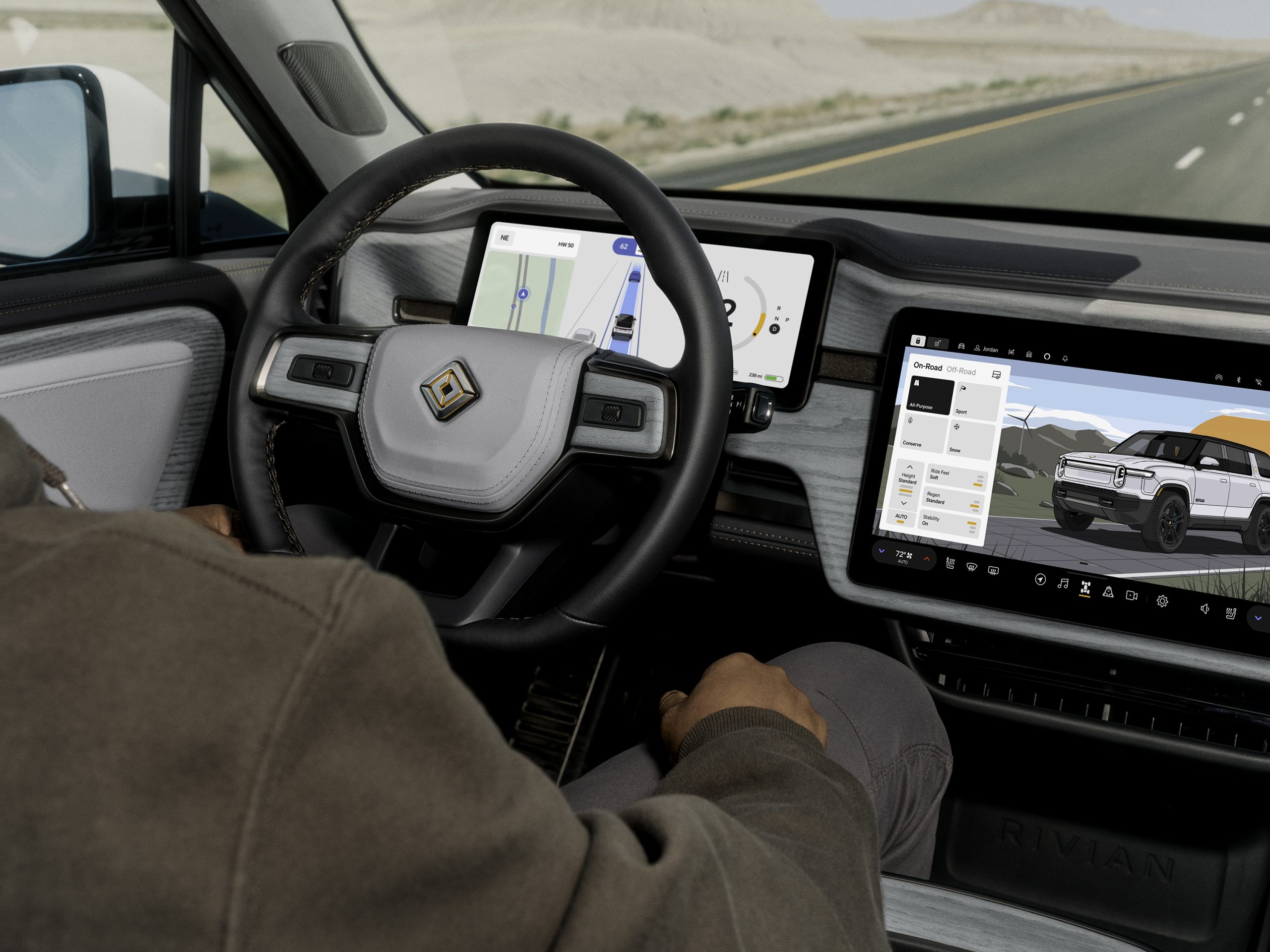
Rivian is adding a new voice assistant to its vehicles.
While much of Rivian’s research work is currently focused on autonomy, it’s also developing an AI system that will allow it to start integrating an AI-powered voice assistant into its vehicles in the coming months.
Rivian is on of only a handful of automakers who have decided against offering either Apple CarPlay or Android Auto in their vehicles – the list also including General Motors which is now phasing out those systems on its EVs.
The Rivian Unified Intelligence System, the automaker claims, goes beyond the capabilities of CarPlay and Android Auto by being directly integrated into the vehicle. At first glance, it might sound a lot like Amazon’s Alexa, but it can integrate a variety of vehicle functions, the company demonstrated Thursday. For one thing, it can respond to a text by setting up a reservation at a restaurant, plotting out a navigation route and even adjusting vehicle settings to ensure it has enough of a charge to safely reach that destination.

Watch out for the trick, you have to buy the car!