
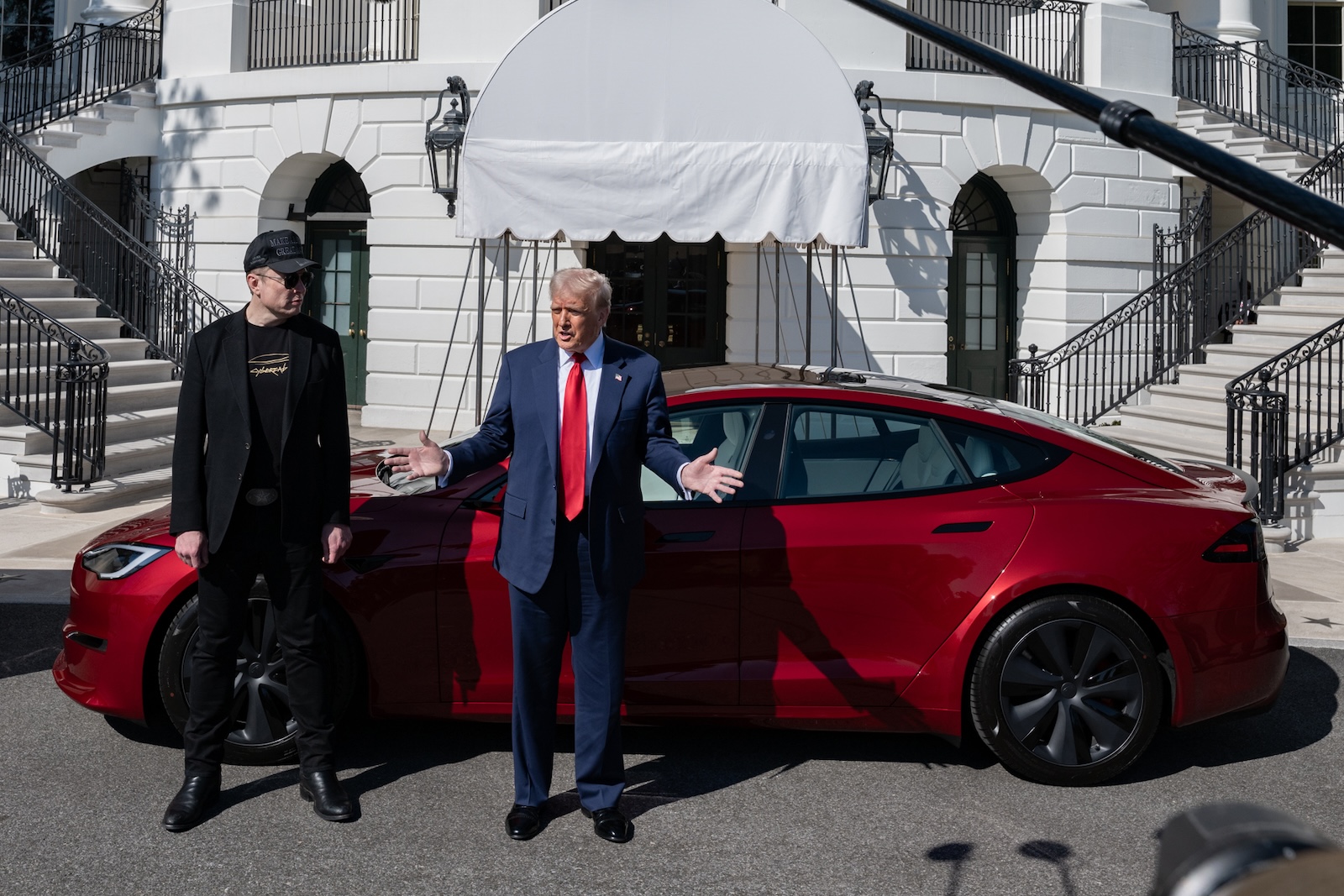
Seemingly stuck in the 19th century, President Donald Trump is actively accelerating the effects of climate change, while simultaneously hampering the technological development of future mobility solutions.

Despite once pitching Teslas on the White House lawn, Pres. Donald Trump has taken numerous steps aimed at reducing demand for all-electric vehicles.
Human induced climate change is real — period — full stop.
Scientific studies show human activities have warmed Earth’s surface and its ocean basins, which in turn has impacted the atmosphere. Here, It’s important to remember scientists focus on evidence, not on opinions and an overwhelming trove of scientific evidence supports that conclusion. Simply put, burning coal, oil and gas have been proven to trap atmospheric heat, which overrides the natural cycles that would otherwise stabilize the climate.
Ice cores, tree rings, and ocean sediments confirm the planet is warming is 10 times faster than post-ice age recoveries, with CO2 levels increasing 250 times quicker than natural sources.
Heatwaves, droughts and intense storms have intensified. We are also experiencing longer wildfire seasons and faster fire spread due to drier conditions. Rising sea levels are threatening coastal areas, further demonstrating the planet’s ecosystems are facing shifts that are too fast for them to adapt. The 10 warmest years on record since 1880 have all occurred since 2014.
The Irrational Undoing
Acknowledging these realities, previous administrations poured billions of dollars into the development of alternative energy technologies in an effort to minimize the damage done to the atmosphere so far. Additionally, government policies have promoted a strong push toward transitioning automobiles away from internal combustion.
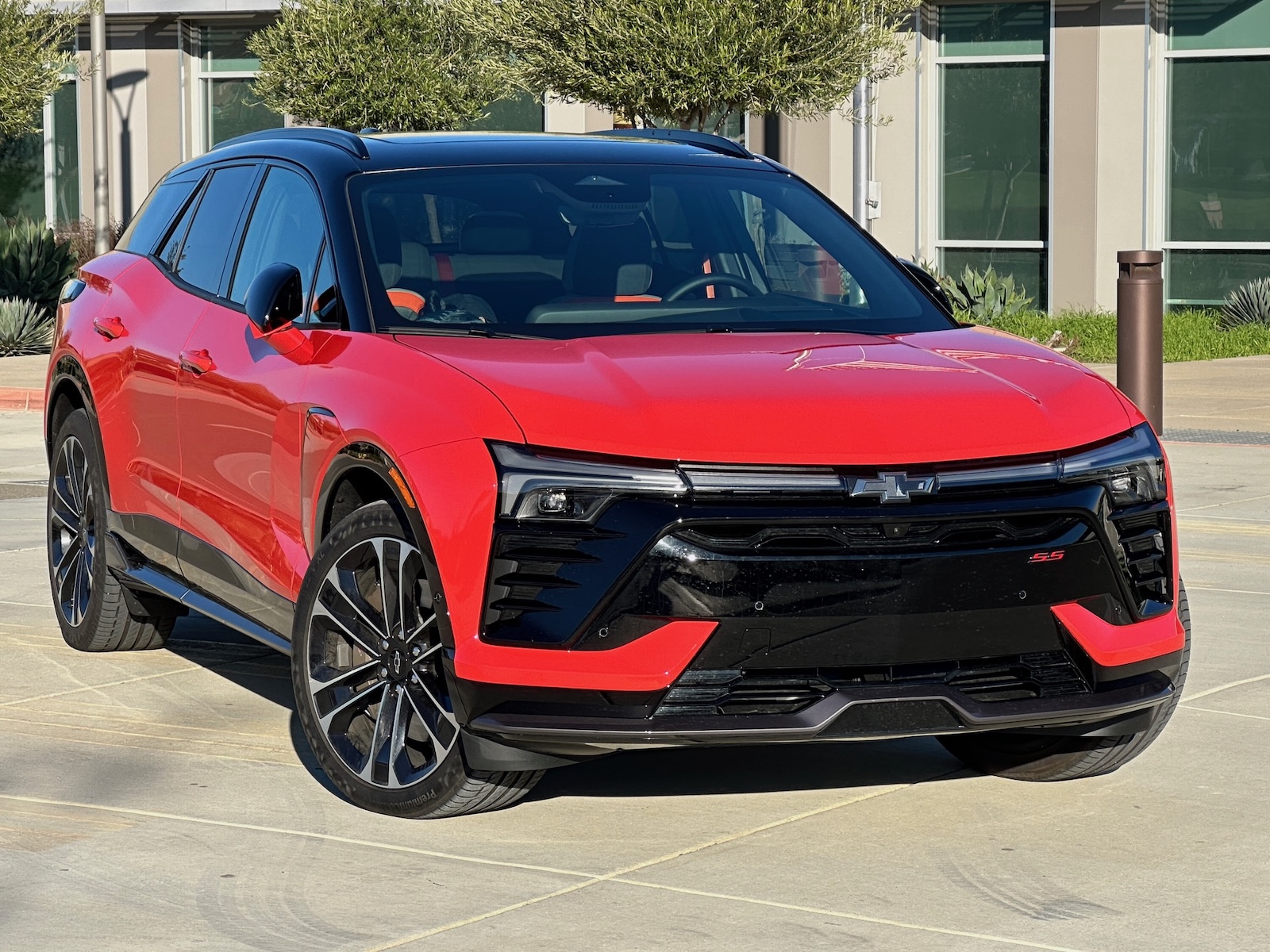
Despite significant progress — and commitment — by U.S. automakers, the Trump administration worked to hamper future EV production and development.
And yet, in the face of all of this empirical evidence, the current occupant of the Oval Office is doing everything in his power to discombobulate these efforts. His reasoning — centered upon job preservation and lower energy prices, along with maintaining energy dominance and security — disregards tomorrow’s consequences in favor of looking good to his constituency today.
Automakers Blindsided
Meanwhile, companies like General Motors find themselves in a situation in which they have invested heavily to minimize future damage to the planet — seemingly to no avail. GM, in particular, has devoted roughly $35 billion since 2021, to develop technology the White House now myopically portrays as unnecessary, even though the returns on that investment are palpable.
The company’s development and deployment of new battery factories, as well as a network of charging stations and the Ultium EV platform have occurred at a remarkable pace. Among the models currently employing the Ultium platform are the Chevy Blazer EV and the GMC Hummer EV3x. Having spent time with both automobiles, I can speak firsthand to just how noteworthy they are.
MORE EV NEWS
- Cybertruck Sales Have All But Dried Up
- Americans Seem Ready to Buy Chinese EVs
- Mazda Pushes Back Launch of Next EV Until 2029
2026 Chevrolet Blazer SS EV
A high performance all-electric SUV, the 2026 Chevrolet Blazer SS EV emphasizes speed, range, and advanced tech. Key attributes include rapid acceleration, substantial power output and premium safety features geared toward dynamic driving. The all-wheel drive Blazer SS is good for 615 horsepower and 650 lb.-ft. of torque, when operated in what GM terms the “Wide Open Watts” mode. What’s more, the Blazer SS EV is astonishingly quick. I saw consistent zero-to-60 times of approximately 3.5 seconds.
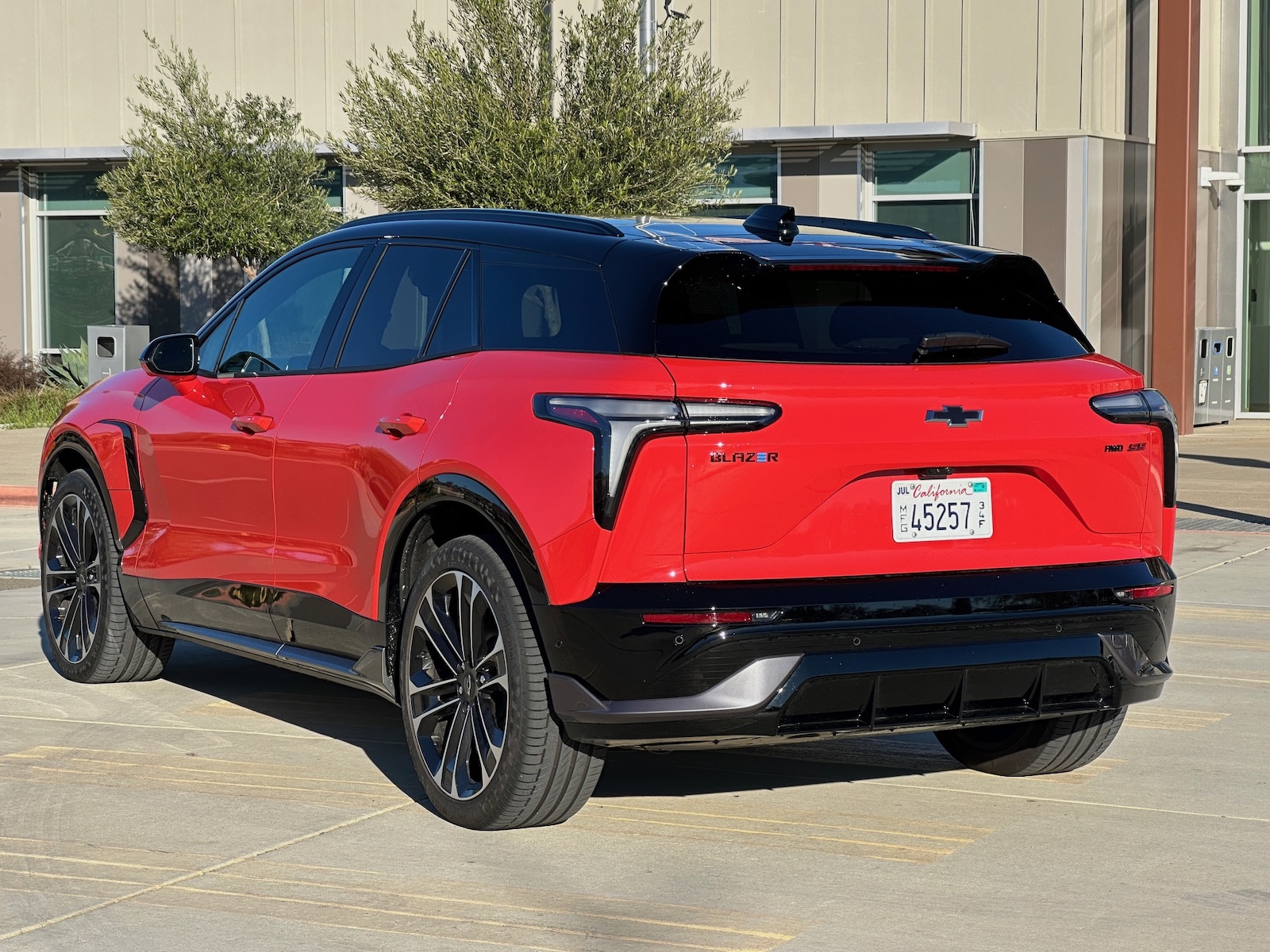
GM devoted roughly $35 billion since 2021, to develop technology the White House now myopically portrays as unnecessary.
Granted, the Blazer SS could do better on range. The highest figure I saw was 273 miles on a 100% charge, but it wasn’t like I was driving it for economy either. The EPA estimates one can achieve just over 300 miles of range operating the Blazer with economy in mind. However, because it goes so fast so competently, one must make a conscious effort to accomplish this.
What’s more, the electric Chevrolet SUV is good looking. In addition to its sleek lines, the Habanero Orange Blazer I drove featured a set of 22-inch light alloy wheels fitted with a set of summer performance tires. The two-tone Blazer also had a black roof. An illuminated front light bar and walk-up lighting set the exterior design off even more.
Inside, the Blazer included sport seats, a flat-bottom steering wheel and tasteful ambient lighting. For 2026, Chevrolet Blazer SS EV pricing starts at $60,600. Price as tested for the example I drove was $64,485.
2026 GMC Hummer EV3x Pickup
The Hummer’s “Watts to Freedom” mode unlocks full power for zero-to-60 mph runs of about 3.5 seconds. Range is said to reach up to 314 miles, according to the EPA. The best I saw was 285 miles on a 100% charge. However, when you think about it, achieving those numbers with a vehicle weighing north of 9,000 pounds is quite a feat.
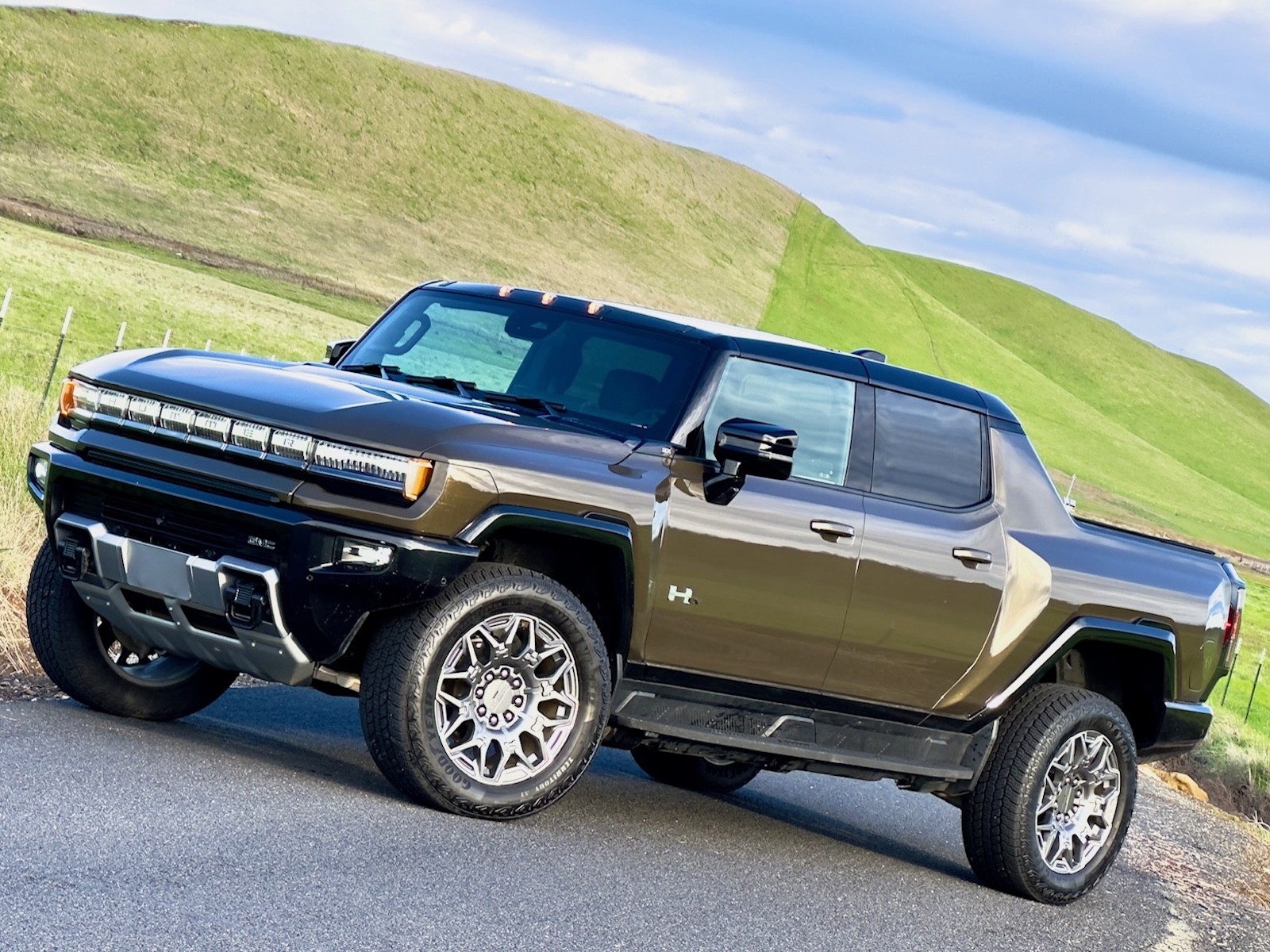
The Hummer’s “Watts to Freedom” mode unlocks full power for zero-to-60 mph runs of about 3.5 seconds.
A 14-speaker Bose audio system, a translucent roof with removable panels and Super Cruise hands-free driving endowed the uber-capable Hummer with remarkable civility. Automatic emergency braking, lane keep assist and 18 cameras — providing all around, as well as underbody views — added to its capabilities. Heated and ventilated seats, tri-zone climate control and a rear camera mirror further enhanced the Hummer’s luxurious nature.
Granted, some might consider a Hummer EV to be so way over the top. And frankly, I was one of them until I realized what the vehicle is really all about. It’s a vivid demonstration of the exceptional potential of the Ultium platform. GMC Hummer EV3x Pickup pricing starts at $104,700.
We’ve Come a Long Way In a Short Time
That GM has fielded such remarkable products since it announced it was going all-in on EVs in 2021 bodes well for the future of electric vehicles — if given the support they deserve. After all, internal combustion automobiles have enjoyed steady development since 1886 to achieve today’s state of the art.
Meanwhile, the Nissan Leaf, the first contemporary mainstream series production EV, went on sale in 2010 with an EPA-estimated range of 73 miles. Some 16 years later, versions of the Lucid Air are good for up to 500 miles.
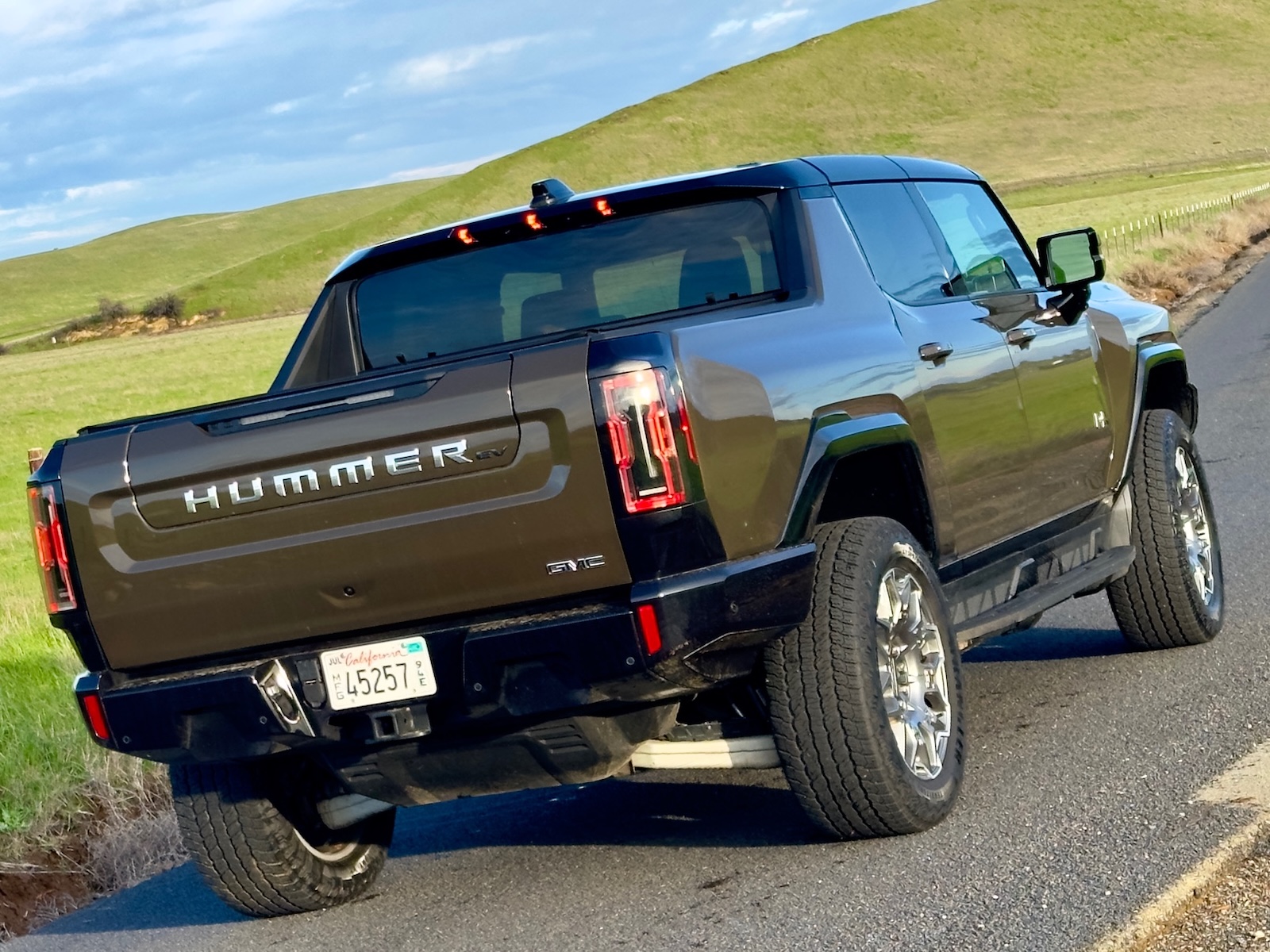
Achieving those numbers with a vehicle weighing north of 9,000 pounds is quite a feat.
Given that degree of progress, imagine how far along EVs would be had they been lavished with the same attention internal combustion products have had over the past 140 years. The good news is despite the fact that GM CEO Mary Barra has spent an estimated $7 billion scaling back the company’s EV capacity in response to this paradigm shift, she says the corporation isn’t backing away from EVs altogether.
Of course, she has a $75 billion market cap with which to work, so it stings, but it doesn’t debilitate. However, a fledgling concern like Lucid, with but a $3.2 billion market cap, feels that sting a whole lot more — it could even prove to be a death blow. Which is too bad, because the Lucid Air EV is universally acknowledged to be among the best on the market right now.
2026 Lucid Air Touring
In addition to its remarkable range potential, the Lucid Air is at once elegant, sporty and powerful. The midtrim version of Lucid’s luxury sedan, the Air Touring uses a dual-motor all-wheel-drive propulsion system. Running a permanent-magnet motor on each axle, the setup produces 620 hp and 855 lb-ft of torque. According to my trusty Omega Speedmaster, the curvaceous sedan ran sub four-second zero-to-60 sprints.
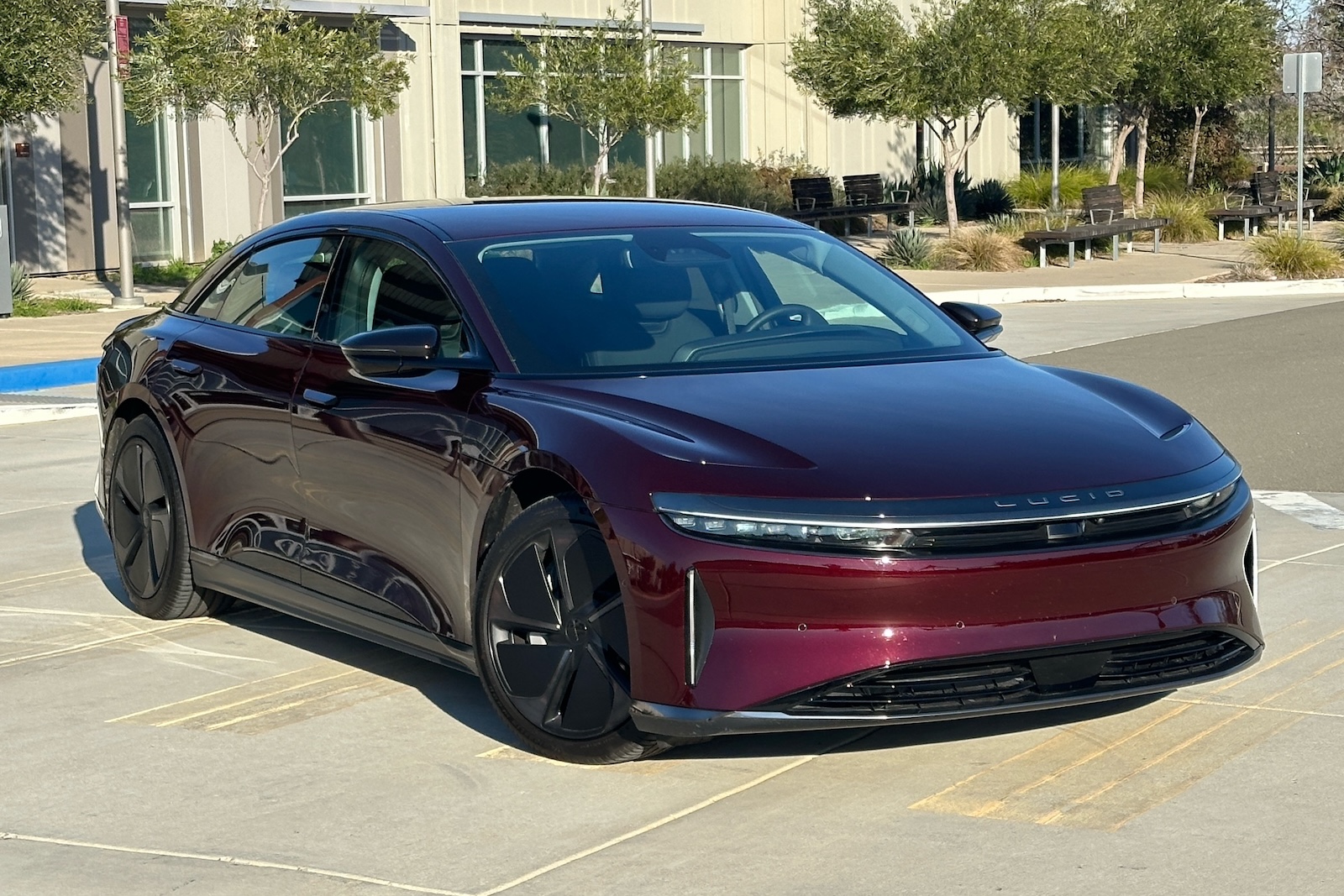
In addition to its remarkable range potential, the Lucid Air is at once elegant, sporty and powerful.
According to the EPA, the Lucid Air Touring is good for 406 miles on a charge with 19-inch wheels. I saw 373 miles running on 20s. I also saw a 45-minute 20% to 100% recharge of the 92-kWh battery pack’s 18 compact modules, using a 350 kWh EVGo fast charging station. Equipped with multiple drive modes, the Air Touring can be driven like a stately luxury sedan, or a hair-on-fire pavement-shredding sport sedan, all while exhibiting stability rivaling that of the best German sport sedans, even at elevated speeds.
The interior treatment is perhaps best described as minimalist; however premium materials are employed throughout. Most functions are activated using a central touchscreen, the dimensions of which are roughly equivalent to a full-sized iPad. The Air Touring is also equipped with an advanced driver-assistance suite, modern infotainment features and over the air software update capability. Lucid Air pricing starts at $70,900, for the base Pure model. The midtier Touring model I experienced starts at 79,900.
China Advancing by Leaps and Bounds
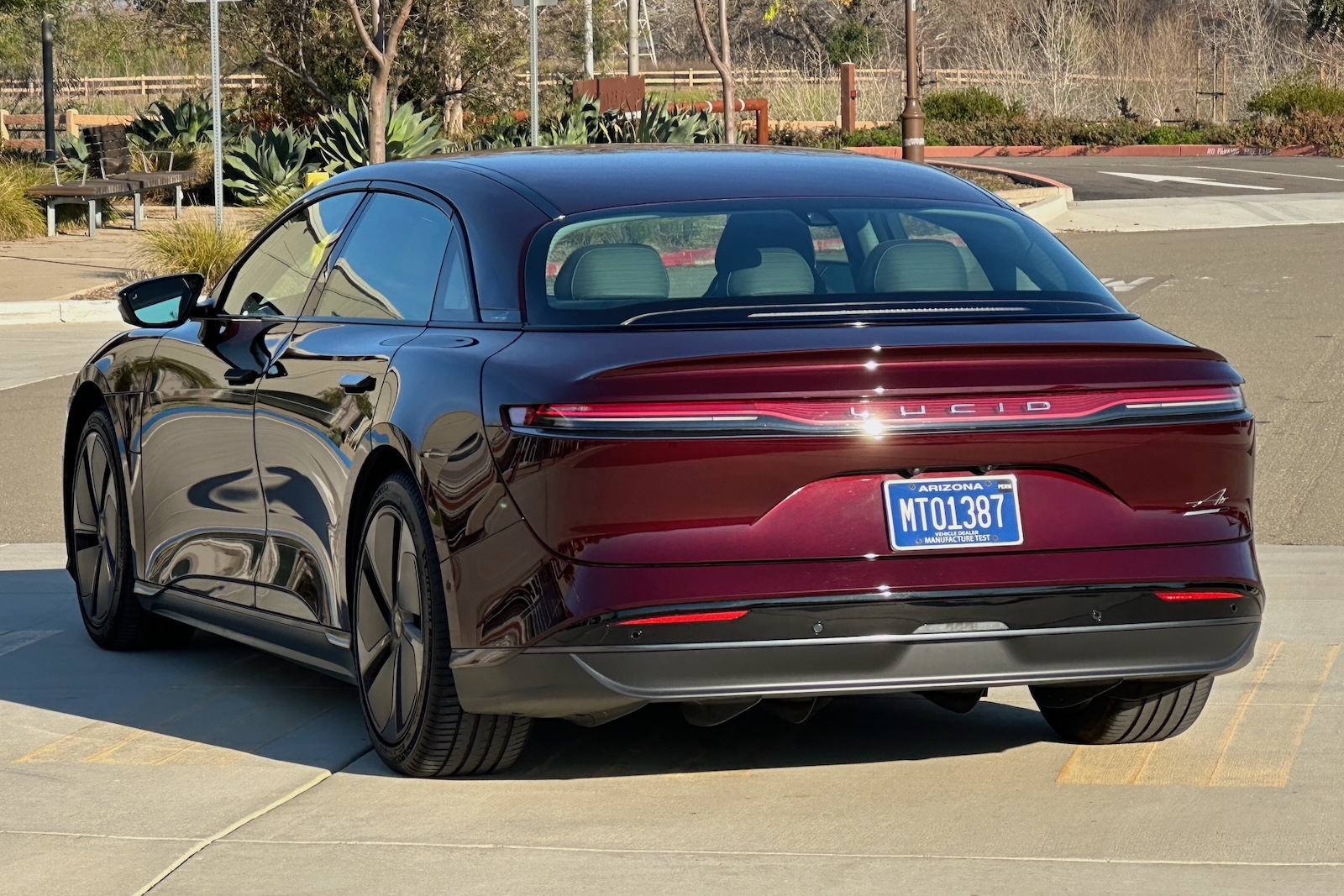
American products like these illustrate just how shortsighted the policies coming out of 1600 Pennsylvania Ave. actually are.
American products like these illustrate just how shortsighted the policies coming out of 1600 Pennsylvania Ave. actually are. Meanwhile, Chinese manufacturers, with enthusiastic backing from their government are doubling and tripling down on EV development, which has given firms like BYD and CATL an expansive lead in EV technology.
As a result, EV manufacturer BYD can achieve quick integration of innovations such as solid-state batteries (targeted for 2027-2028) and Level 3+ autonomy. Wireless non-contact charging and vehicle-to-grid capabilities are also emerging in BYD’s premium models. Meanwhile, EV battery manufacturer CATL has announced the second generation of its Shenxing fast-charging battery technology is capable of achieving 320+ miles of range on a five-minute charge.
What’s more, the tech is capable of going from 95% depleted to 80% charged in 15 minutes — in cold weather. Implementation of these developments holds the potential to eliminate the phrase “range anxiety” from the global lexicon. Any way you look at it, the Chinese government’s policies have positioned its industry for global EV leadership.
The Real Threat is From Within
Meanwhile, the US president, seemingly stuck in the 19th century, is pushing coal, oil and gas — while simultaneously hampering the nation’s efforts to attain technological competitiveness in this area. Given the developments out of China — along with the brilliance of vehicles like the Chevy, Hummer and Lucid — one would think it would be readily evident these policies are the real threat to the nation’s long term job preservation and technological dominance, as well as national security and the health of the planet.
In other words, to borrow a phrase from the movies; America, the call is coming from inside the house.


I guess any idiot is allowed to write on Headlight-news. One of the dumbest articles regarding ‘global warming’ now called ‘climate change’ because this is one of the coldest/snowiest winters in a loooong time.
1) Trump doesn’t care what you have under the hood.
2) The US taxpayers should not finance anyone’s cars or EV chargers.
3) You think the 9000 pound EV Hummer is ‘brilliant’, look at my 4th word! WOW!
Jim, time to wake up. Last year: warmest on record, one of a series of warmest-ever years.
Snowiest? Yep, and if you actually stopped politicizing and did your homework you would learn tyhat what a warming environment results in. I’ll be glad to go into more detail but the basics are this: more energy into the atmosphere and water, in particular, cause increasingly dramatic shifts in air currents, in water currents, etc. That changes weather patterns creating things like the repeated “atmospheric rivers” that have caused flooding along the West Coast and increasingly aggressive cyclones (the generic name for Hurricanes, typhoons, etc.). The models are all being validated by this…and it includes more radical COLD weather patterns, as well.
Again, politicizing weather is a fool’s mistake. We can debate EVs but the weather models are proving ever more valid.
Paul E.
Shortsighted is their brand.
Without accepting the premise of your attempted insult Jim, getting a 9,000+ pound automobile to run three-second zero to 60s absolutely qualifies as brilliant.
Even more so when one considers the implications of applying the engineering underlying that accomplishment to less “portly” automobiles.
As for the government financing the development of EVs and encouraging their adoption — I would encourage you to read the article all the way through.
Do so and you will see what the Chinese government has achieved by doing so, which has put the US at a severe technological disadvantage.
Meanwhile, the Canadian government has just announced it will be doing deals with China for its EVs, which will give the Chinese products added legitimacy and contribute to their proliferation across world markets.
https://www.investors.com/news/byd-chinese-evs-electric-vehicle-tesla-mark-carney-canada-china-xpeng/
Now, we’re going to have to buy Chinese tech, just to keep up.
Any way you look at it, that’s a loss for the U.S.A.
What’s more, it’s a loss that could have been avoided with a more forward-thinking, less myopic administration.