
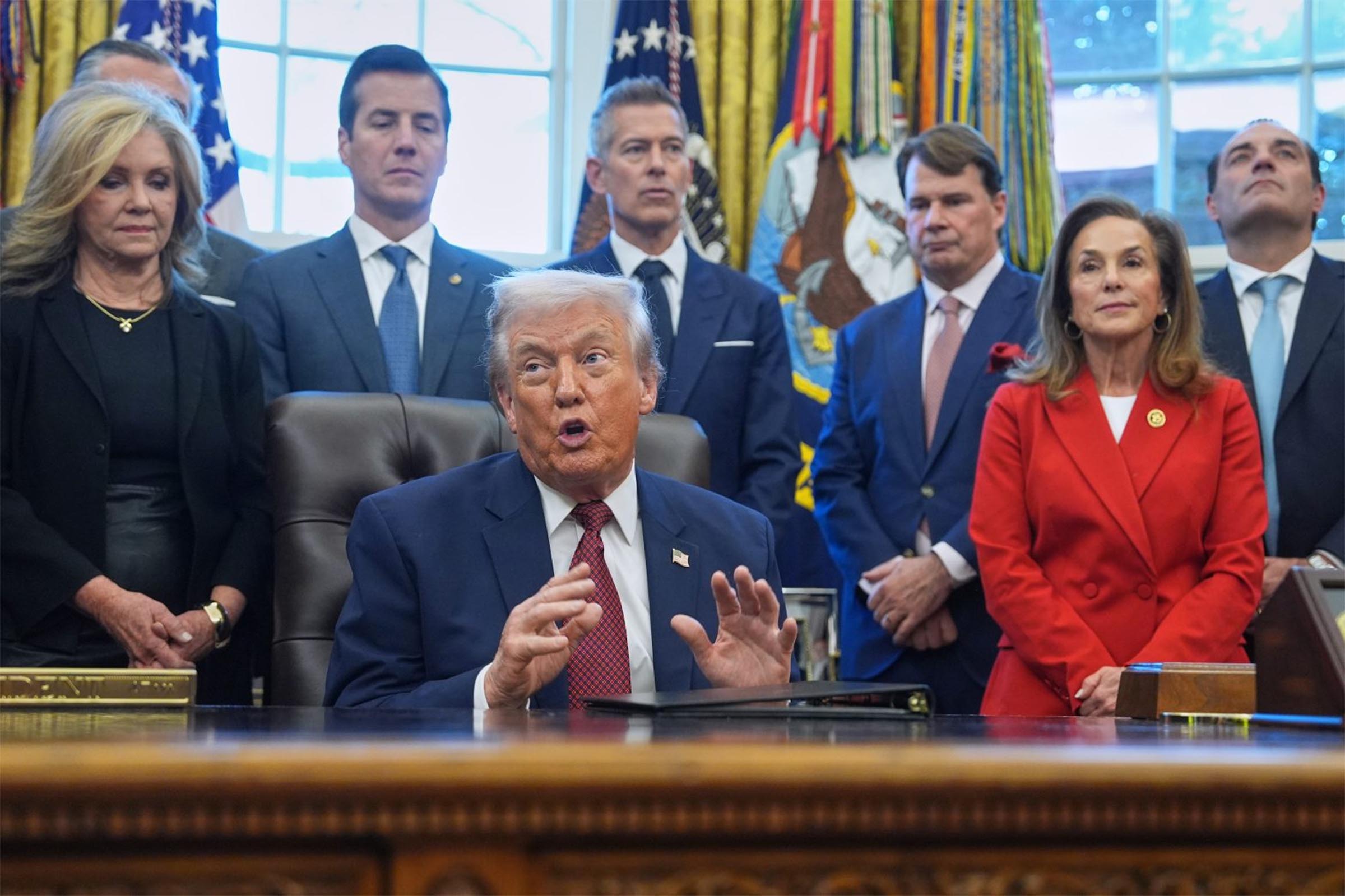
The auto industry may be getting a bit of a reprieve from the latest round of tariffs enacted by Pres. Donald Trump following the U.S. Supreme Court’s decision announced last Friday finding most of his early import duties were illegal. But automakers and auto suppliers still face earlier tariffs on imported vehicles, parts and metals not covered by the court’s ruling. And that means auto buyers will continue to pay substantially inflated prices at a time when many potential customers have been driving out of the market. More from Headlight.News.

The nine Supreme Court justices.
It was an old baseball axiom that “you can’t tell the players without a scorecard.” These days, you need a scorecard to keep up with what’s happening when it comes to Pres. Donald Trump’s tariffs and, in particular, the impact they’re having on automakers, auto suppliers and automotive buyers.
The tariff situation was radically altered last week when the U.S. Supreme Court ruled that many – though not all – of the tariffs Trump put in place last spring were unconstitutional, violating authority reserved for Congress. That triggered an angry response from the president who, among other things, accused the six justices who ruled against him of being under “foreign influences.” In turn, Trump immediately used separate powers to enact a new 10% global import tariffs – only to wake up a day later and boost that figure to 15%.
The good news, at least as far as the auto industry is concerned, is that Trump appears to have decided auto imports, as well as foreign-made steel and aluminum, will not be subject to the new tariffs. But they’re already subject to separate duties that were not covered by the Supreme Court ruling. And that is bad news for consumers who might have hoped to catch a break on record vehicle prices if all Trump tariffs had been overturned.
What’s new
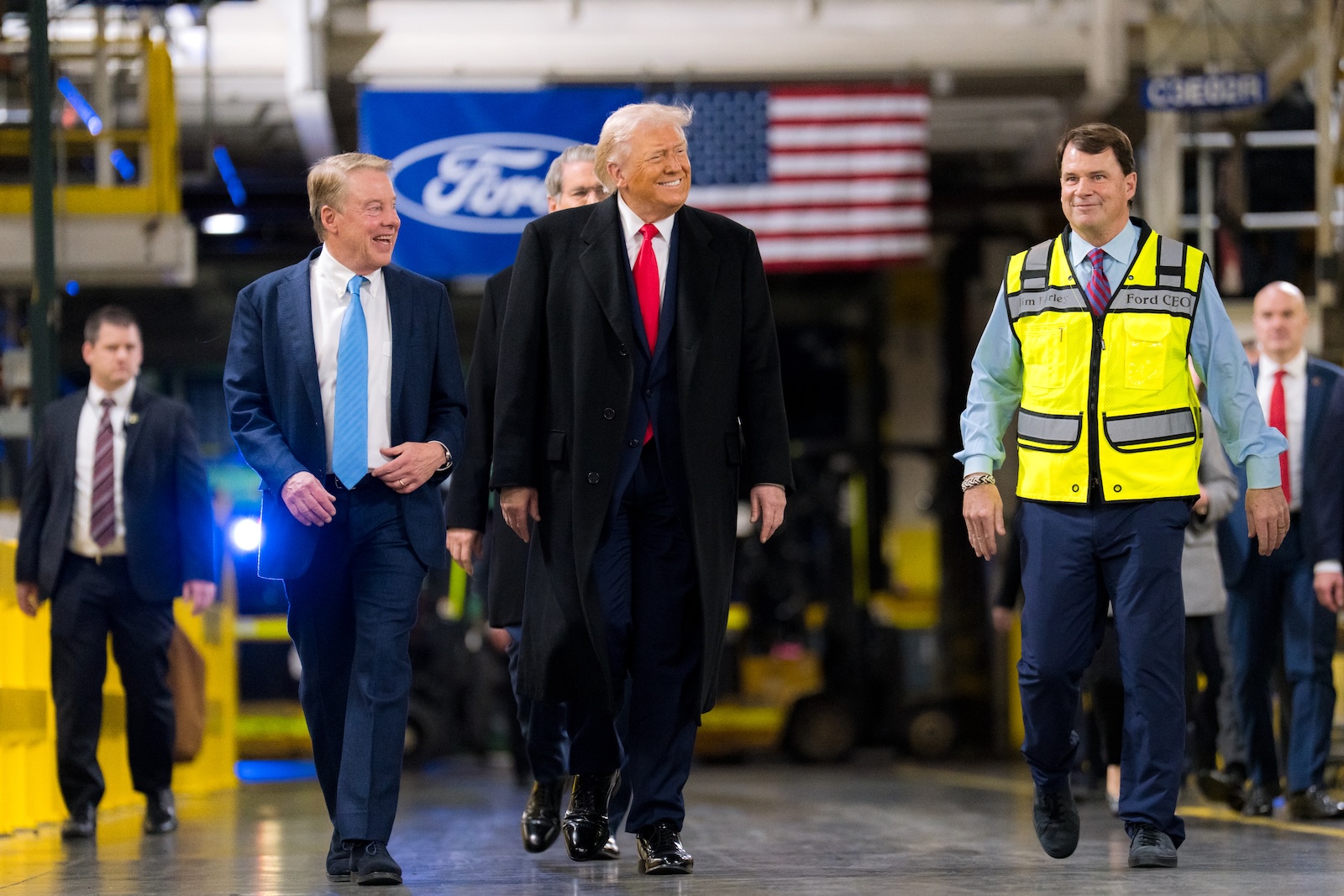
President Donald Trump toured Ford Motor Co.’s Rouge complex last month, home of the automaker’s big F-150 pickup.
In its decision, six of the nine SCOTUS justices determined that most of the tariffs Trump had enacted were simply taxes by another name. And, under the U.S. Constitution, Congress is the only body that has the power to enact – or lift – taxes, unless power is directly assigned to the president. That means several hundred billion dollars of duties were illegally collected and may yet need be refunded. What happens now is likely to be determined by further court review, experts are cautioning.
Trump was advised of the court’s decision during a meeting with U.S. governors in Washington and became visibly outraged, subsequently attacking the 6-person majority which included two jurors he himself had appointed. He said he was “absolutely ashamed” of those who participated in the majority decision which, he said, was “deeply disappointing.” Trump even accused the justices of being under “foreign influences.”
Soon afterward, he announced that a new round of broad, 10% tariffs would go into effect on Tuesday, February 24. “I, as President of the United States of America, will be, effective immediately, raising the 10% Worldwide Tariff on Countries, many of which have been ‘ripping’ the U.S. off for decades, without retribution (until I came along!), to the fully allowed, and legally tested, 15% level,” Trump said in a post on his Truth Social site. The next day, Trump decided to raise that to 15%.
Now what?
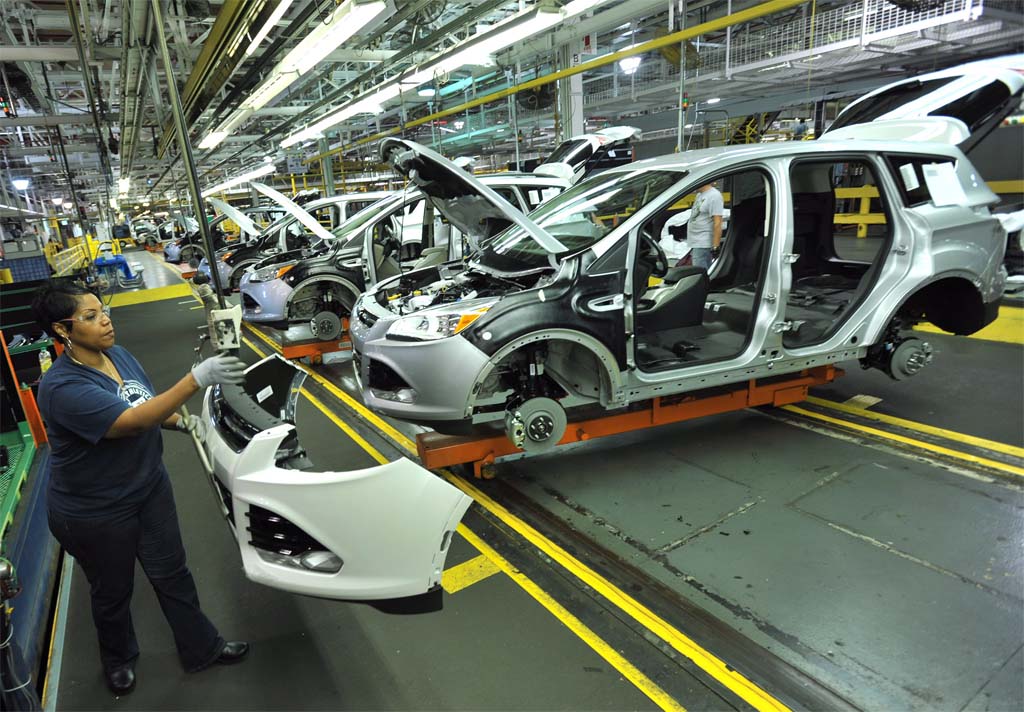
So far, the tariffs haven’t had their desired effect of bringing back large-scale automotive manufacturing.
Unlike the prior tariffs rejected by SCOTUS, the new duties will be enacted under authority handed to Trump by Congress – though they can only be in place for a maximum 150 days. It may be possible, however, for the president to then enact them for another 150 days, rinse and repeat endlessly.
On the positive side, it does not appear the new tariffs will cover auto imports, whether vehicles, parts or metals, according to Automotive News. Though other reports indicate only goods coming in from Canada and Mexico which are covered by the USMCA trade agreement may be exempt.
“I’m trying to unravel all the pieces,” said Tyson Jominy, lead data analyst for JD Power. About the only thing that so far seems clear, he added, is that, “I don’t think (the SCOTUS ruling) had any impact on the auto industry.”
Erin Keating, Cox Automotive’s lead analyst said the previously existing auto tariffs, under what’s known as Section 232, “remain largely unchanged.” But Trump’s latest move “underscores how fluid the trade environment has become.”
And that, several industry insiders told Headlight.News, is perhaps the biggest headache for an industry that hates uncertainty, especially when it comes to costs and trade factors that can influence tens of billions of dollars in long-term spending plans.
More Consumer Auto News
- Auto Insurance Costs Rising Faster than Inflation Rate
- First Drive: 2026 Jeep Cherokee Gets it Right
- Power Study Finds 96% of EV Owners Will Go All-Electric Again
What about consumers?

Millions of buyers are finding themselves priced out of the new vehicle market.
The president has long argued that tariffs are needed to press the auto industry to bring more manufacturing to the U.S. The results, at least so far, have been mixed to negative. The Detroit Three automakers, General Motors, Ford and Stellantis eliminated about 10,000 jobs in 2025, with thousands more cuts at suppliers. On the other hand, various companies have laid out plans to invest, sometimes heavily, in American operations. Hyundai alone expects to spend $26 billion to boost U.S. auto production, build robots and set up a steel mill in Louisiana.
In 2025, automakers collectively took a $25 billion hit from tariffs, according to Cox Automotive. What’s still being debated is how much of that has been passed on to consumers. Power puts the figure at about 2.5% of the price of a typical vehicle. Considering the average transaction price is currently around a record $50,000, that would work out to around $1,250.
A study by CatalystIQ puts the figure somewhat higher – though it says the figure varies substantially, depending upon what country is the source. Vehicles coming in from Canada, its data show, rose an average $4,000 since October 2025. Those from Mexico by $1,500. Even American-made vehicles were hit due to the use of foreign-made parts and metal. If there’s a silver lining, said the research firm, price hikes have risen less than many early on forecast.
For good reason, “You can’t pass on all tariff expenses to consumers,” cautioned Jominy, especially at a time when “affordability” has reached crisis level, analysts estimating millions of consumers are being driven out of the new vehicle market.
For now, at least, it appears Trump’s angry response to the Supreme Court ruling won’t add to the woes of automakers and auto suppliers. And, for the moment, that may be cause for celebration.







Tariffs are not the reason cars are too expensive. The wasted billions chasing the EV market are one cause. The other is the quest to add every damn option the engineers could dream of that most people didn’t want, need, or even knew how to use.
I was driving a Ford Mustang EV recently and had to pull over just to turn on the radio and get the station I wanted. I’d much rather have a radio with the usual (former) pushbuttons/knobs and a heater/AC with the selection levers and fan speed. The damn thing had a mind of its own when I tried to warm the windshield! I know how to stay in my own lane and don’t need the steering wheel nudge me around when it ‘thinks’ I’m ‘drifting.’ I suspect if I drove a Tesla I would really hate it, but who knows.
KISS (and you’ll be able to drop the price).