

It might seem easier than ever to do your homework before buying a new vehicle. Yet all too many motorists find that the prices they see in dealer ads aren’t necessarily what they’re told they’ll have to pay at the showroom. Now, the FTC is stepping in to keep retailers honest. More from Headlight.News.
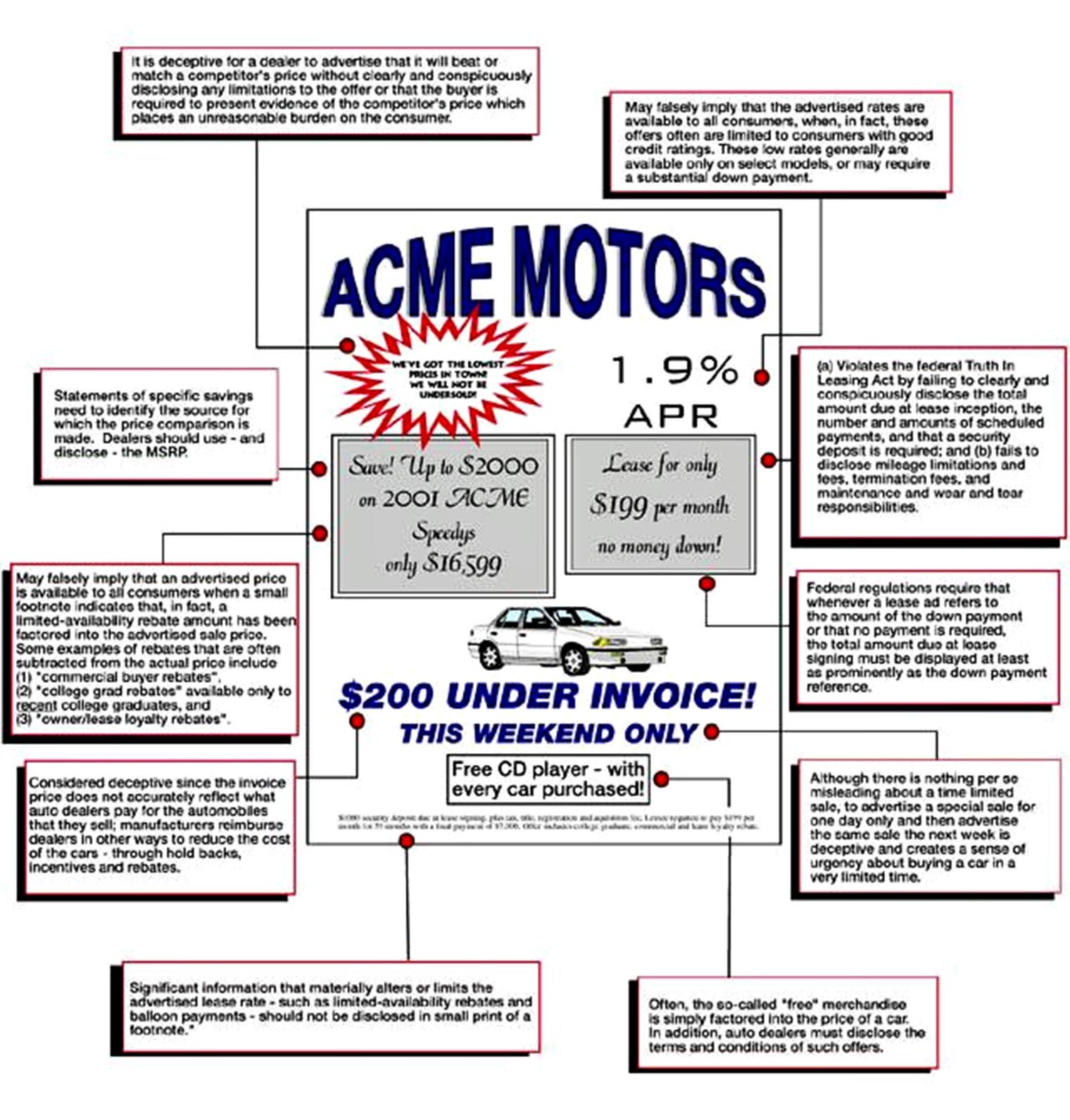
The NY Attorney-General issued an example of a deceptive car dealer ad.
It looked like just the deal Steve Smith was looking for, the Sunday ad showed a brand new pickup with plenty of features, “and the price was right.” When Smith, a Florida writer, went to the showroom the salesman wrote it up, and “I sat there feeling pretty good about it. Then he brought me the contract to sign. The truck’s price had gone up by about 25 percent.”
When Smith asked why, he was told the deal was for one day only: Sunday, “the day the ad ran.” The only problem? That was the day the dealership was closed.
Ask any American motorist and they’re likely to come up with a similar story about how the deal they saw advertised didn’t quite match what they were expected to pay once they got to the showroom. And that’s why the Federal Trade Commission is stepping in, sending letters to 97 auto dealer groups. It’s advising retailers that the price they advertise must be the same as what a customer actually can buy the vehicle for. No hidden fees, no limited offers available only to select customers, no advertising vehicles dealers don’t actually have available to sell.
Bait-and-switch
It’s called “bait-and-switch,” an all-too-common move meant to lure buyers into showrooms where they’re then hit with hidden fees or pushed to buy a more expensive vehicle.
“When Americans set out to buy a car, they’re routinely hit with unexpected and unnecessary fees that dealers extract just because they can,” noted Lina Kahn, the former FTC chair under the Biden administration.
Before leaving office, Kahn’s FTC introduced the CARS Rule, shorthand for Combating Auto Retailing Scams, announced in December 2023, and “expected to save consumers nationwide more than $3.4 billion and an estimated 72 million hours each year shopping for vehicles,” an FTC release said at the time.
The next step
Most dealers are honest, said trade group NADA.
Now, the FTC is going a big step further, specifically outlining six scams that violate consumer protection laws. The commission’s goal is “preventing auto dealers from misleading consumers with low advertised prices and then adding on mandatory fees at the end of the purchasing process,” Christopher Mufarrige, director of the FTC Bureau of Consumer Protection, wrote in his letter to the various dealer groups.
The specific practices Mufarrige focused on are:
- “Advertising a price that does not reflect all required fees,
- Advertising a price that reflects rebates or discounts not available to all consumers,
- Advertising a price that fails to take into account the amount of an additional required down payment,
- Conditioning the advertised price on consumers using dealer financing,
- Requiring consumers to buy additional items not reflected in the advertised price,
- Advertising unavailable or nonexistent vehicles.”
More Auto News
- Soaring Delivery Fees Are Becoming Budget-Breakers
- Iranian War Could Create a New Energy Crisis
- Honda to Follow Toyota, Exporting U.S.-Made Vehicles to Japan
A warning shot

Bait-and-switch moves can add hundreds, even thousands of dollars to the price of a vehicle.
While the FTC official wrote that the letter isn’t “intended to represent any conclusions on whether your dealership or dealership group is engaging in these practices,” he made it clear the 97 dealer groups are now under the microscope.
“I am concerned that your company may be engaging in one or more” of the practices the agency has banned, Mufarrige, said in a statement. “The FTC will remain focused on monitoring auto dealerships to ensure that the market functions efficiently and competitors are transparently competing on price.”
While the National Automobile Dealers Association has frequently pushed back on federal rules it sees as restricting dealer operations, it took a more cautious tone when responding to the FTC’s latest move. NADA, which represents over 17,000 U.S. retailers, responded with a statement saying that, “While the overwhelming majority of America’s 17,000+ dealers service their customers in a consumer friendly and compliant manner, NADA takes any potential advertising violations in the marketplace very seriously.”
Those unexpected fees
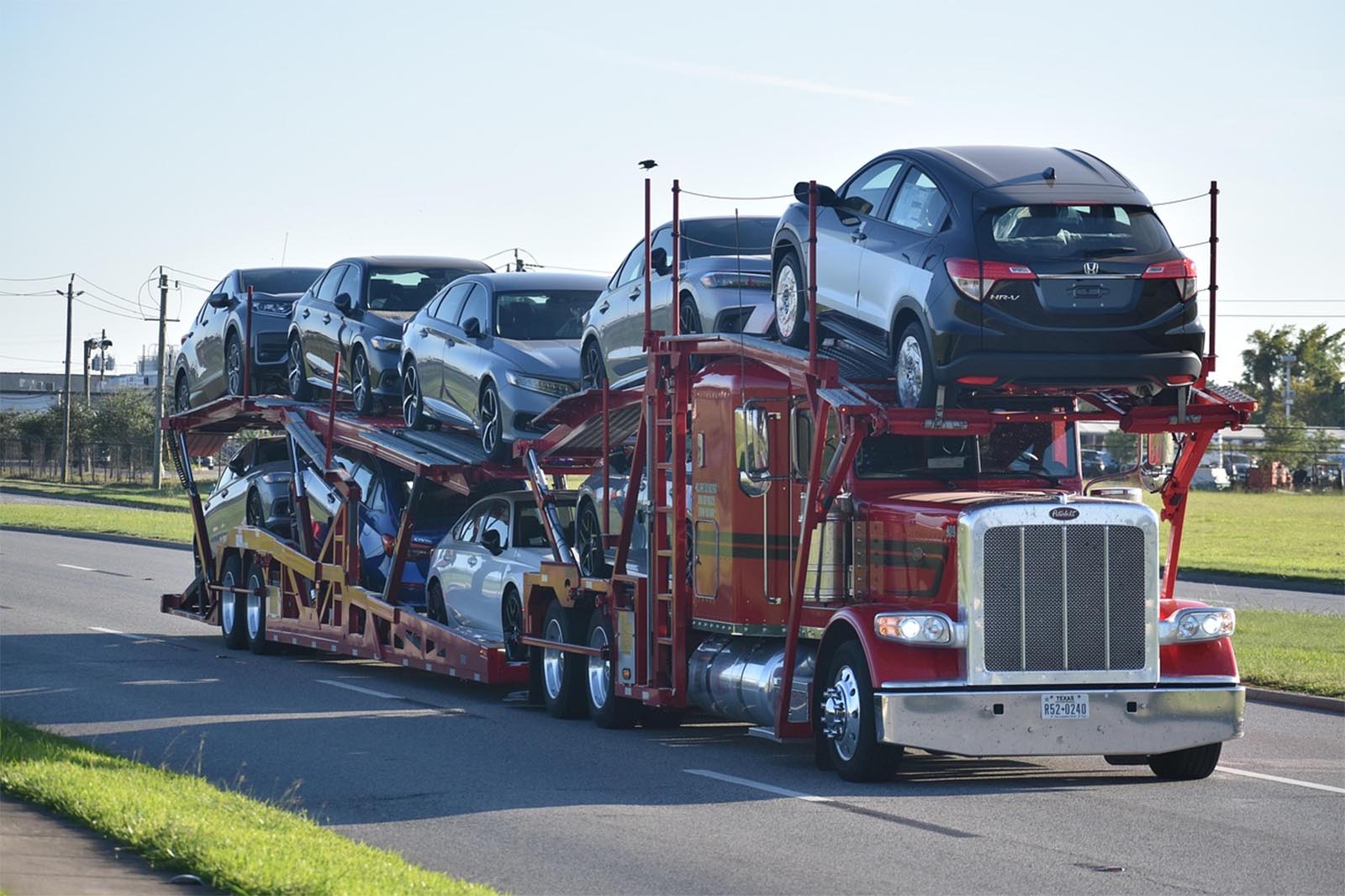
Critics contend destination fees are far higher than the actual cost of delivering vehicles.
Over the years, unscrupulous dealers have found any number of ways to boost their profits at the expense of unsuspecting motorists. That can include bait-and-switch deals where low-priced models aren’t unavailable, requiring buyers to pay for options, such as expensive floor mats or rust-proofing, or where a discount is only offered when a customer chooses the dealer’s high-cost financing program.
But dealers aren’t the only ones who have discovered ways to boost revenues. Automakers have discovered that they can add thousands of dollars to the sticker price in the form of destination fees. Two years ago, these ranged across the auto industry from $995 to $2,095, depending upon product and manufacturer. Now, Consumer Reports reported, destination fees start at $1,150 and climbs to $3,250.
While not illegal – when disclosed up front — those delivery charges have become a matter of growing concern. “Over the past decade, (destination fees have gone) from a minor line item to a significant budget breaker,” noted Consumer Reports in a new study. Take a 2026 Toyota Corolla LE with a sticker price of $23,520. The $1,195 destination fee is equal to a more than 5% price hike.


0 Comments