
This once-great auto show has little to offer automakers, auto buyers – or auto journalists this year. Indeed, auto shows, in general are struggling to avoid oblivion.
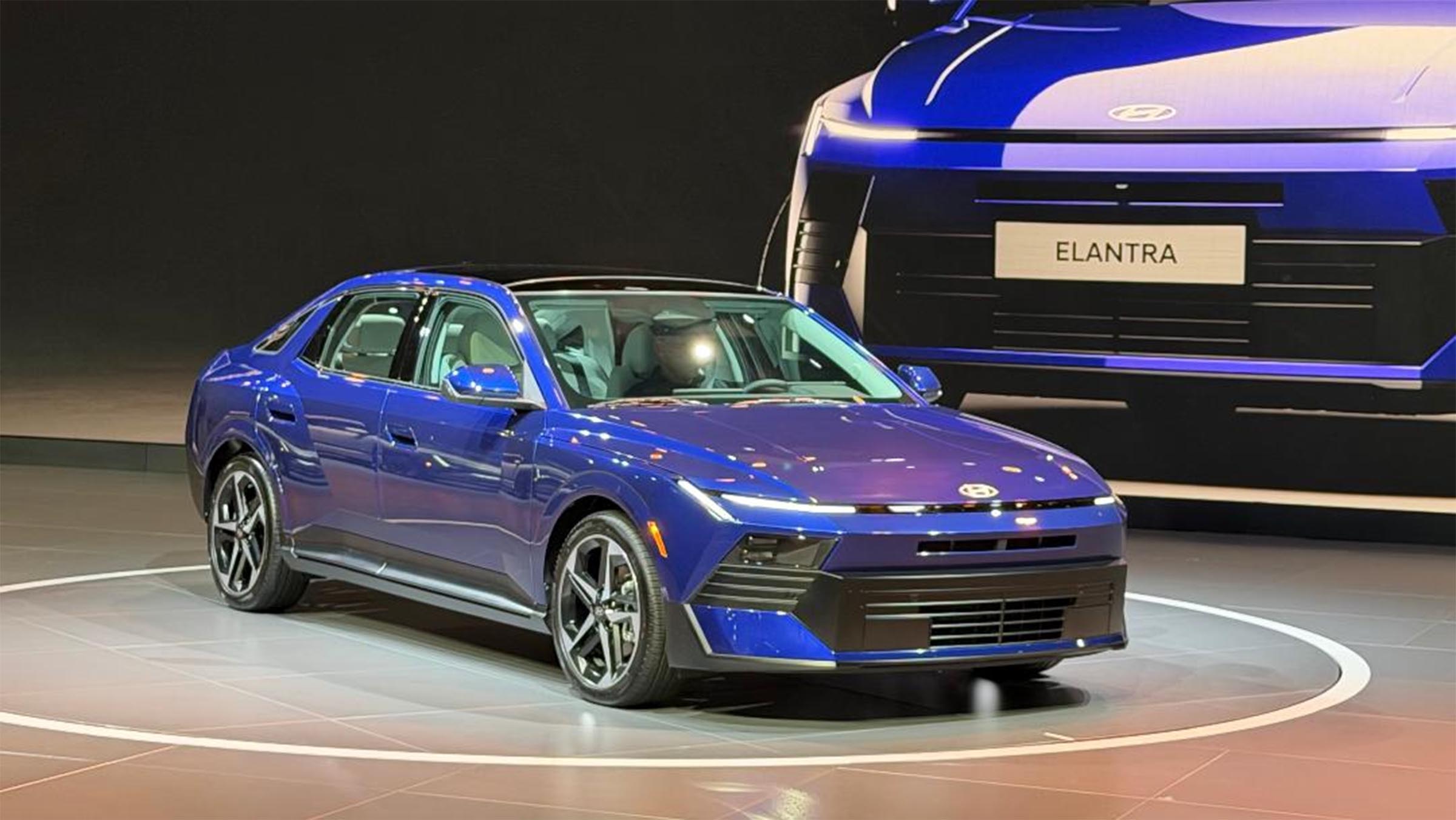
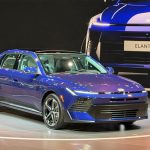
The Hyundai Elantra was the only new model to debut at the LA Auto Show this year.
What if they gave an auto show and nobody came? That’s the question I’m left asking myself after wandering the halls of the Los Angeles Convention Center the past couple days.
No, calling it a ghost town would be unfair. But barely two dozen automakers have set up stands for what’s officially called 2026 Automobility LA – less than half as many as showgoers would have expected in decades past. There were a modest number of journalists on hand, though, again, nowhere near as many as would fly in for the show’s golden days. And for good reason considering there was just a single new vehicle debut during a scaled-down, one-day media preview.
Now, the question is how many potential buyers will bother to make the trip to downtown Los Angeles – DTLA in local slang – during the public days running from November 20 through 29? If the auto shows we’ve seen elsewhere around the country this year offer any hint, the answer is not many.
A slow fade-out

Better days: a Chevrolet Cruze was one of over a dozen models introduced at the 2010 LA Auto Show.
Entering the convention center through the South Hall, the first thing a visitor sees this year is a display for the new Lucas Museum of Narrative Arts which celebrates the city’s cinematic legacy. If you were to write a script about what’s happened to the LA Auto Show in recent years, a filmmaker would likely use the term, “fade to black.”
When I first came here more than four decades ago, there wasn’t a major brand that would dare skip the Tinseltown event and even niche and exotic players, such as Ferrari and Lamborghini, were mainstays.
Let me not overstate the dreary reality this year. LA show organizers still can point to some major brands, including Ford, Toyota, Chevrolet, Hyundai, Subaru and Kia. But there’s no Mazda, no Volvo, no Volkswagen, no BMW, Mercedes-Benz nor Audi, among others. And there’s a far less lavish feel to the displays that remain, with few of the extravagant two-level stands that were once a signal of success.
Where’s the beef…er news?
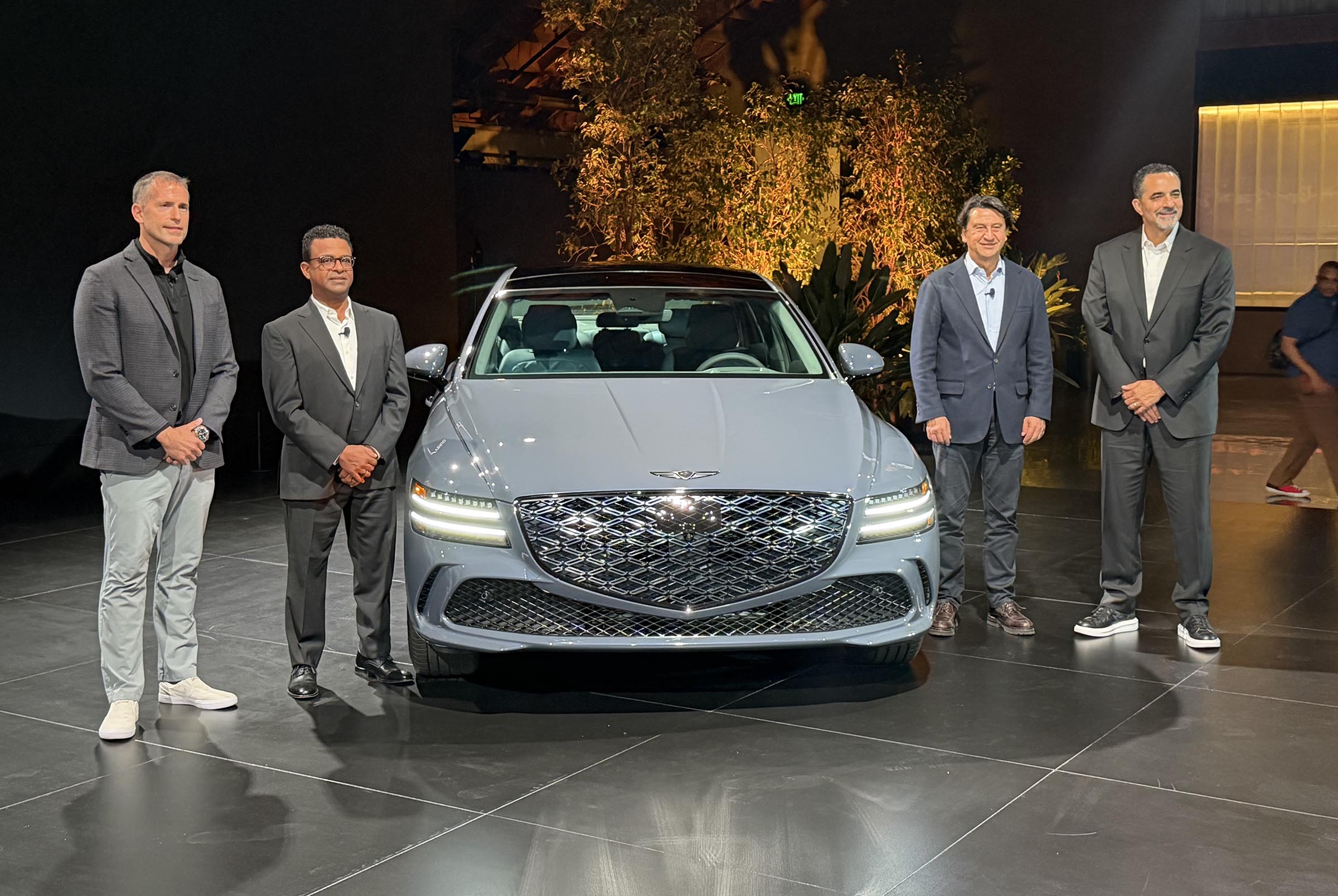
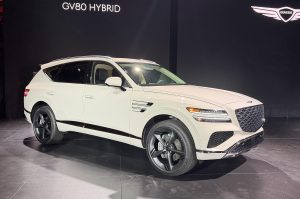
Genesis executives celebrated the debut of their first new hybrids during an off-site event ahead of this year’s LA Auto Show.
Auto shows have been around since almost the first horseless carriage took to the streets, New York generally credited with kicking things off in 1900. The Los Angeles affair dates back to 1907, though it had a number of different homes before setting up shop at the LA Convention Center for the first time in 1977.
As both a global media center and the country’s largest automotive market – a place where people will get in their cars just to drive to their mailboxes – automakers were keen to use the show as a place to make news. And, through the decades of the 1980s, 1990s and 2000s, that meant staging lavish product debuts during what extended to as many as three consecutive media days ahead of the show’s official public opening. Some years saw 20 or more brands stage introductions, often with the help of Hollywood talent. Mercedes was particularly fond of bringing onto the stage acrobats, singers and celebrities to help roll out new models.
This year? While several brands took slots on the media schedule to talk about existing products, only one all-new new model was unveiled, the 2027 Hyundai Elantra. The Korean marque’s upscale sibling, Genesis, debuted two hybrids this past week, but staged that event off-site, the night before the media preview.
Auto shows used to be “forward-looking events (but) that wasn’t the case here today” said Jim Motavalli, a veteran journalist who I interviewed for The Car Collective podcast after the LA media event.
More Auto News
- These 29 Models Are Going Away in 2027
- These Are the Hottest New Models for 2027
- 2027 Hyundai Elantra Debuts at LA Auto Show
What went wrong?

Launching a vehicle like the BMW iX3 at an auto show can be a multi-million-dollar project.
It’s hard to say exactly when things began to go wrong in LA. One long-time showgoer I spoke with this week pointed to the Great Recession, starting around 2008, when financial woes forced many manufacturers to scale back their auto show stands and, in some cases, pull out entirely. We saw a similar pullback during the COVID pandemic. But, by then, other forces were already at work.
“The rise of the Internet has enabled automakers to get news of their new models out really effectively and without having to be at an auto show,” added Motavalli. “I think they get (the publicity without) the price of having a car in an auto show.”
That cost can be significant. Even a small stand at the major auto shows – traditionally including LA, NYC, Detroit and Chicago in the U.S., and Frankfurt, Geneva and Paris in Europe – typically starts above $1 million. And that figure quickly multiplies at large stands hosting lavish news events. Former Ford CEO Jacques Nasser once confided spending $25 million at the Swiss show and a long-time European PR exec I spoke to this week revealed that BMW invested an eye-popping $100 million for an over-the-top set-up at the German show including an indoor race track.
Alternative outlets
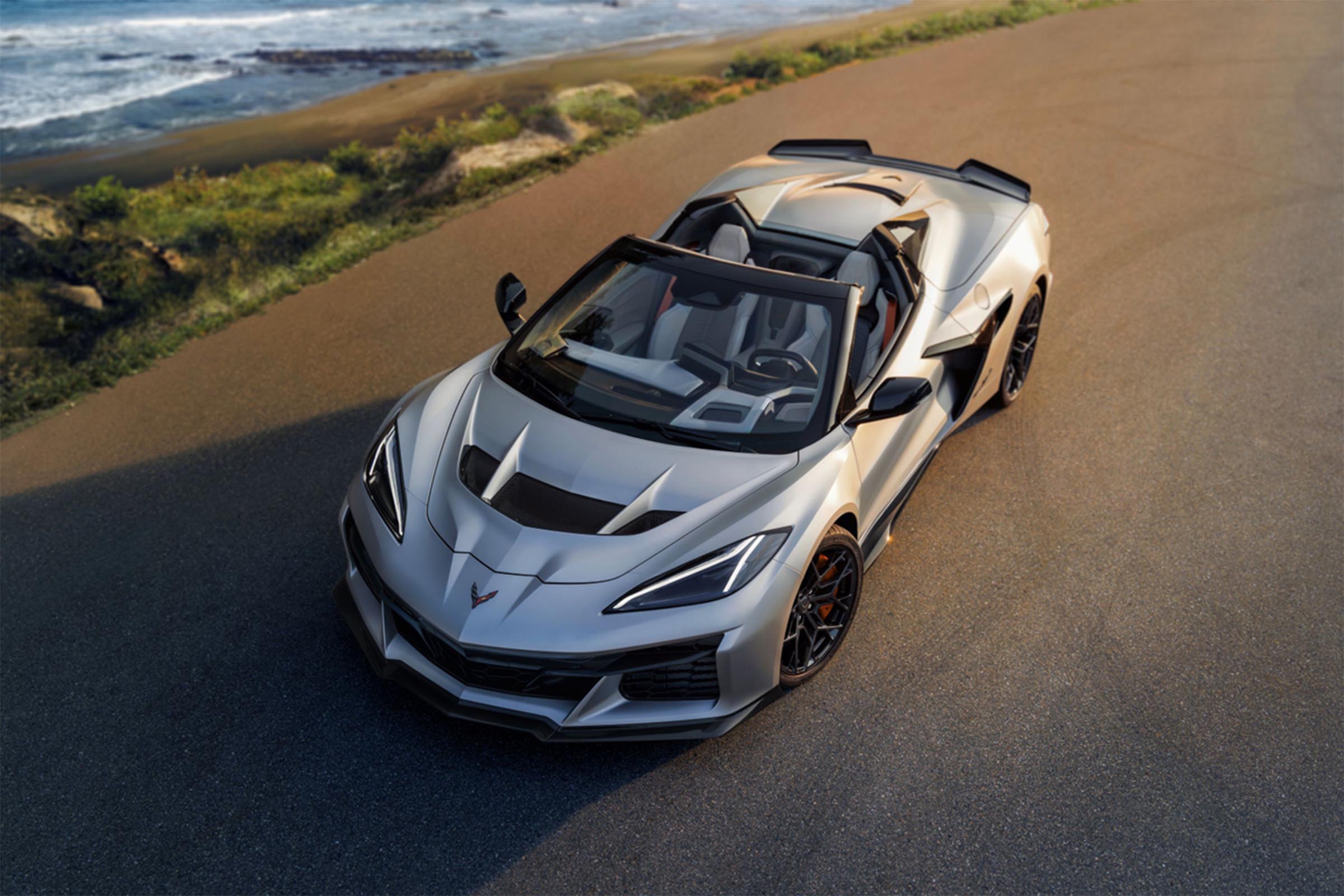
Chevrolet launched its 2026 Chevrolet Corvette ZR1X at the Quail.
During COVID, automakers began to realize they could reach millions of eyeballs – and without necessarily going through media gatekeepers – staging debuts online; streaming first and then keeping traffic building on Youtube.
They’ve also been turning to alternative venues. Some have set up their own traveling roadshows, one-brand events targeting brand loyalists and likely buyers.
Meanwhile, manufacturers have coopted other automotive gatherings. The most notable example: the annual Monterey Car Week, a series of events traditionally targeting classic and exotic car collectors. There were a good dozen new models introduced during one of the week’s highlights, “The Quail, a Motorsports Gathering.” That ranged from the Acura RSX Prototype to the Aston Martin Valen.
LA’s not alone

The Geneva Motor Show didn’t survive COVID.
While I’ve spotlighted Los Angeles, having flown across the country to attend this year’s show, I could readily have focused on a number of other auto shows, notably the one that started the year off. In 1989, the long-running Motor City event was transformed into the annual North American International Auto Show. At its peak, around the turn of the millennium, NAIAS hosted as many as 70 vehicle debuts.
“It used to be an incredible event,” John McElroy, an auto consultant and host of Autoline TV, told me. But this year, the event signaled a major downsizing by changing its name back to the Detroit Auto Show. And not a single product was unveiled during a half-day media schedule.
The Chicago Auto Show, once the nation’s biggest, similarly made no product news this year and had so few exhibitors it could fill only a fraction of the space it once needed at the McCormick Place convention center. “We had to get smaller” to cope with the realities of post-pandemic life, Dave Sloan, the former general manager of the Chicago Auto Show told me in an interview.
This isn’t limited to the U.S. The Geneva Motor Show was forced to cancel weeks before its scheduled March 2020 opening because of COVID and has since pulled the plug permanently. Also gone: the once-massive Frankfurt Motor Show, though a new and downsized German event has popped up in Frankfurt.
Reports of my demise…
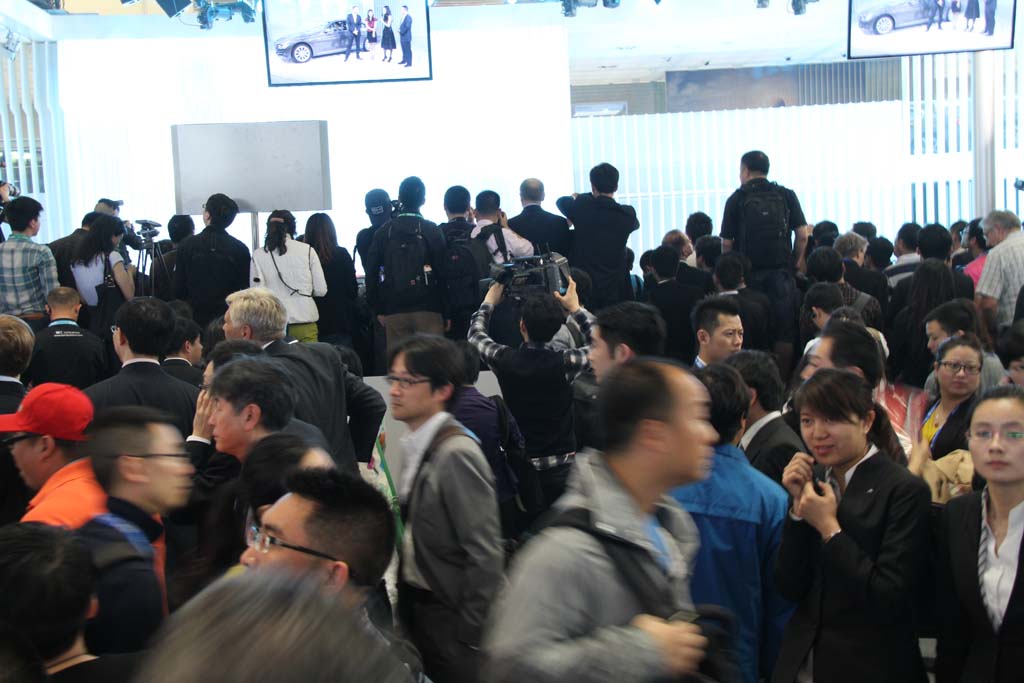
A crowd of journalists at the Beijing Motor Show.
I don’t want this to turn this into an auto show obituary. What comes to mind is the quote often attributed to Mark Twain: “The reports of my death are greatly exaggerated.”
For one thing, the shows in LA and other major cities still draw hundreds of thousands of visitors – even if the numbers have fallen sharply in recent years. Auto shows remain a way for motorists to kick tires and compare products without running to dealerships all over town.
And there are a few shows that continue to hew closer to the old model. The New York event last spring saw roughly a dozen debuts and Mark Schienberg, president of the dealer group running the Big Apple show yesterday told me he expects a similar turnout in 2027. The Paris Motor Show hosted an even bigger media schedule this October, heavily influenced by the explosive growth of Chinese brands in Europe. And the various events in China continue to echo the enthusiasm of the best U.S. shows a quarter century ago.
But the reality is that American auto shows have largely peaked. As LA underscored this year, they simply won’t see the sort of participation – whether by automakers, auto writers or auto buyers – they could count on in decades past. The automotive world has simply moved on.
0 Comments