
The city of Savannah is known for history — and, perhaps, ghosts — but low-slung, sleek industrial buildings that lay alongside a highway outside nearby Ellabell tell a more modern story. Those buildings make up Hyundai’s new Metaplant. The plant seems to represent the future of manufacturing — a future that’s even more automated than what we see now.
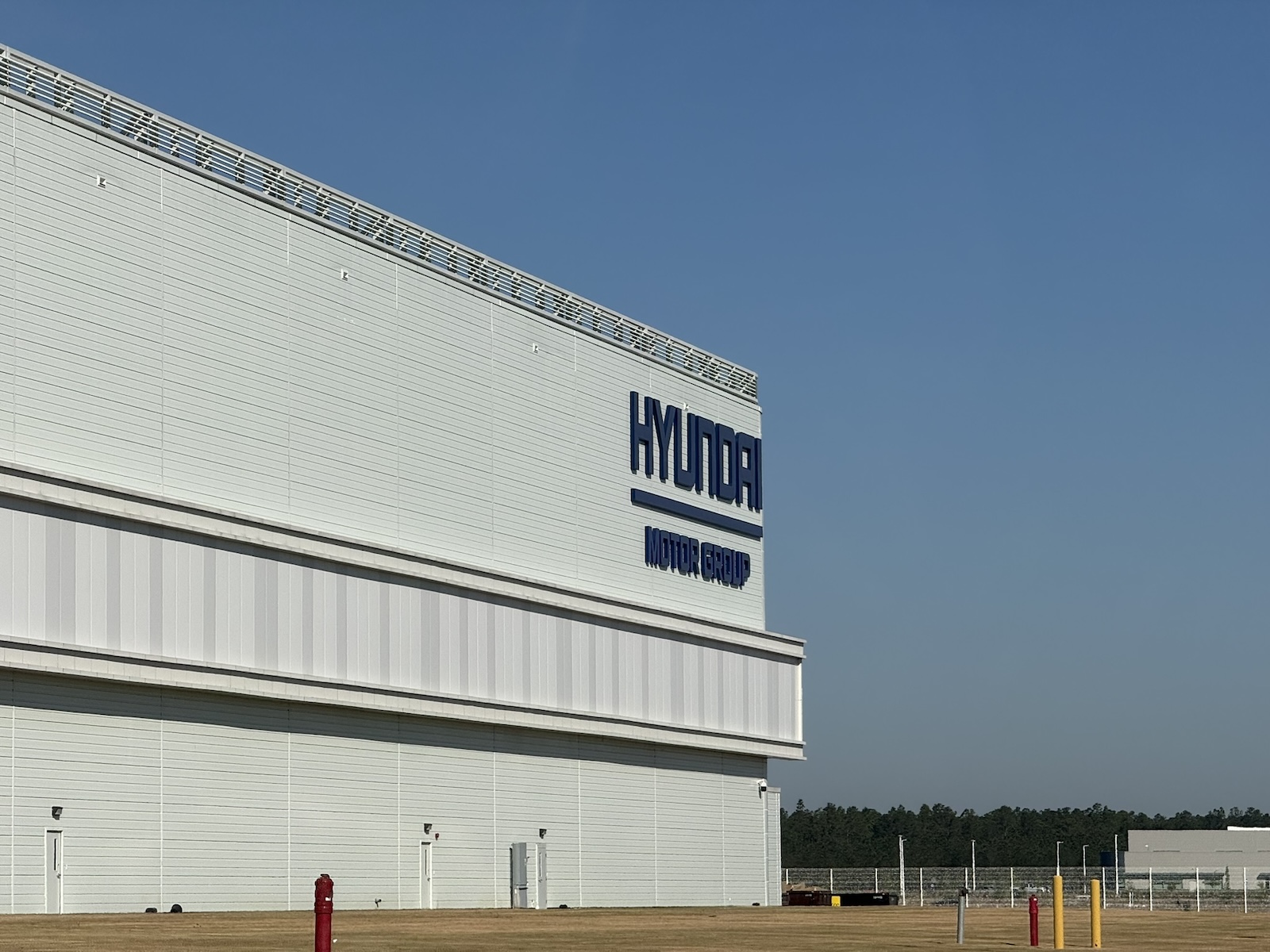
Savannah is best-known for its historic district, but in nearby Ellabell, Georgia is Hyundai’s most-modern Metaplant. (Photo credit: Tim Healey)
I’ve done a handful of plant tours during my nearly two decades in automotive journalism, and every plant I’ve set foot in has leaned heavily on robots to do a lot of the work. That’s old hat, of course — robots have been a staple of manufacturing for decades.
But it’s one thing to see a robot make a weld or swing a heavy part around. The Metaplant goes further. Almost uncomfortably so, in this day and age of worries about artificial intelligence taking all sorts of jobs, regardless of whether those occupations involve manual labor or typing on a laptop.
Danger, Will Robinson …
Hyundai says the plant will add jobs, but it’s also a tad eerie watching the robots work and seeing them perform some tasks that might be assigned to humans at other, older car-making plants.
When pressed on this, Hyundai says that the jobs that will be automated away from humans will be the kind of repetitive tasks that stress the human body over time. Maybe so, but companies aren’t shy about cutting costs and increasing efficiency — just hop on LinkedIn and read the flood of testimonials from workers displaced by automation.
Another thing to consider — robots don’t need food or bathroom breaks.
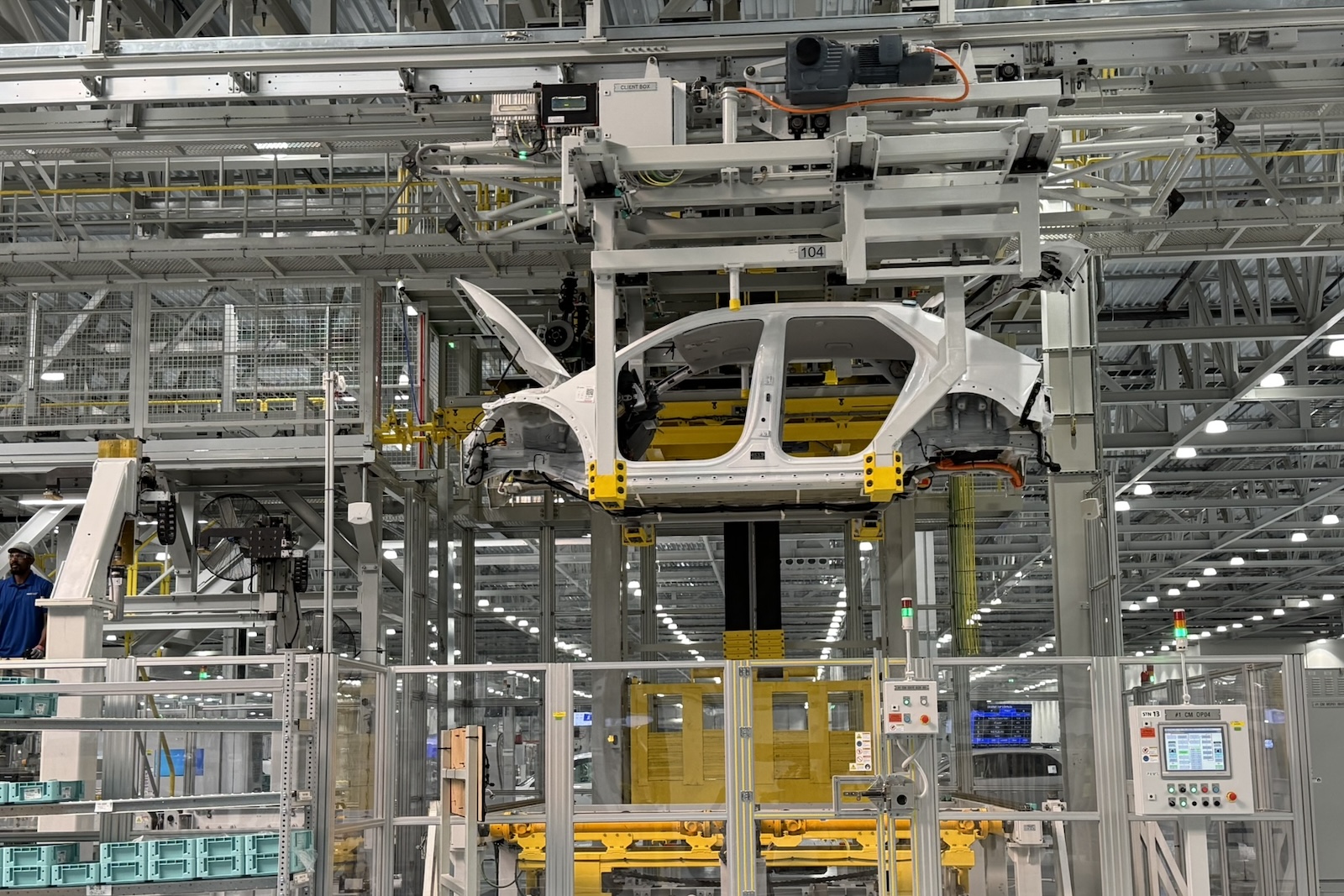
Hyundai’s Metaplant is highly automated, and getting ready to add another vehicle to its production schedule. (Photo credit: Tim Healey)
On the other hand, automation might be able to do things humans can’t – Hyundai uses dog-sized, four-legged robots called “Spot”, built by Boston Dynamics, to do quality-control inspections on cars that roll off the line.
These bots hold a light in their “mouth” and it’s likely that these Spots can, uh, spotlight a defect that a human might not be able to see. A defect under a seat or on the undercarriage, perhaps.
That said, Hyundai has humans doing the final inspection test drive. More on that later.
Silence may not be golden
The Metaplant is one of the quietest plants I’ve been to. Some of that is because the facility is new and still ramping up, some has to do with the facility’s design, and some involves the heavy use of automation.
Another neat trick involving the robots — Hyundai uses self-driving mobile platforms that can move in various directions to transport parts across the grounds.
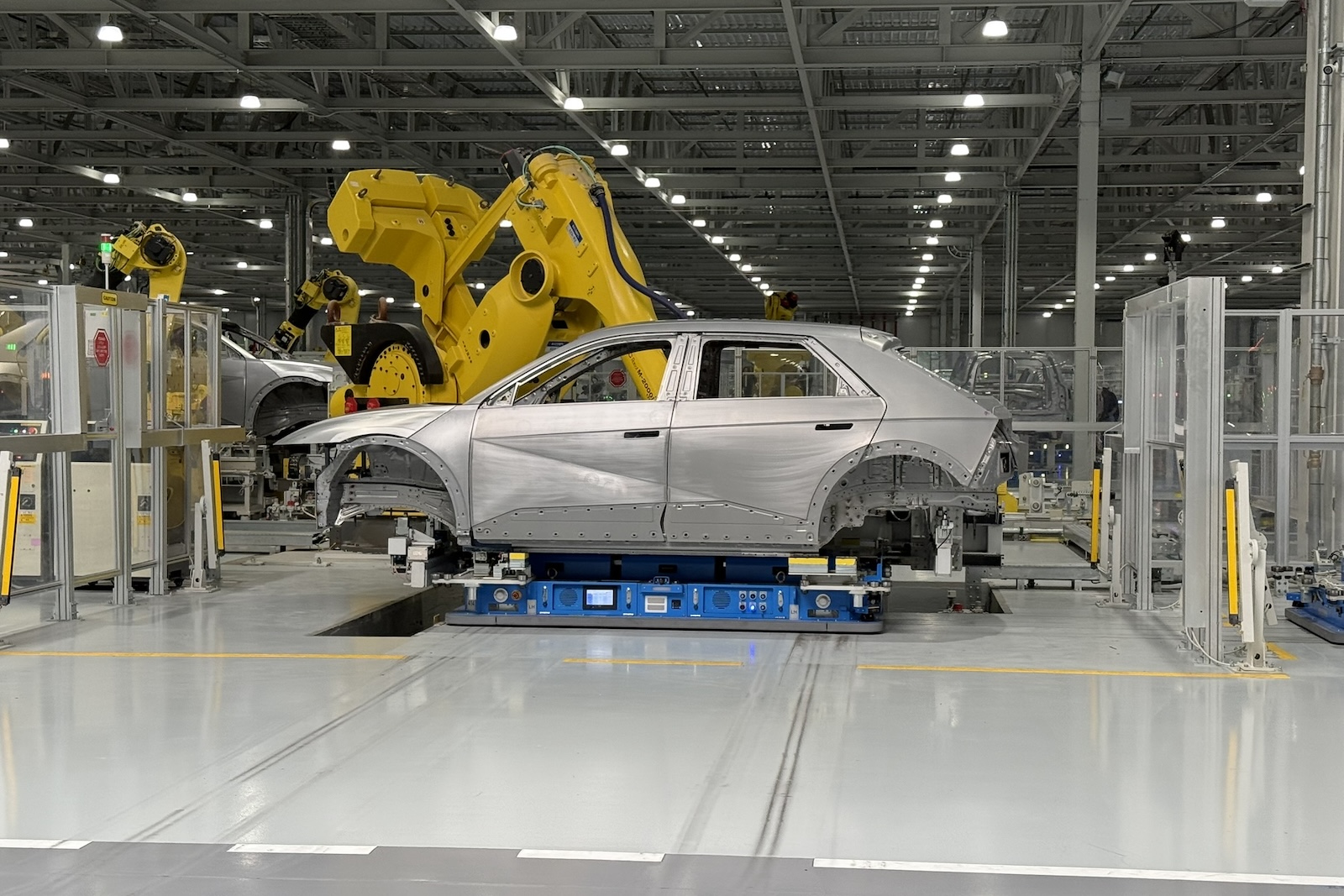
Hyundai uses self-driving mobile platforms that can move in various directions to transport parts across the grounds. (Photo credit: Tim Healey)
I’d be remiss if I didn’t mention Atlas. If Spot is meant to be inspired by canines, Atlas is more humanoid, and Hyundai will have more than a few in place at the Metaplant by 2028, with it starting on things like parts sequencing before it moves towards assembly-line tasks in 2030.
Even with all this automation, Hyundai is promising that once the plant is fully operational, it will employ 8,500 people directly and 6,900 workers will be employed by off-site suppliers. Right now, the plant is building the Hyundai Ioniq 9 three-row crossover SUV — a Kia model will join the line this year.
Full operation will mean 500,000 vehicles per year, with plans to expand beyond that. There were $2.1 billion in incentives, and the economic development agreement, which is the largest in Georgia state history and totals over $7.5 billion.
MORE AUTO NEWS
- Kia Reveals Affordable EV3 at NY Auto Show
- First Look: Rugged Hyundai Boulder Concept
- Hyundai Begins Production at New $7.6 Billion EV Plant in Georgia
Passing the cross-checks
While the plant uses plenty of automation, there’s one human-driven (pun intended) process that stood out to me. Most plants test a random sampling of fully assembled vehicles for defects, but Hyundai tests every single unit that rolls off the line in Ellabell. Human test drivers check for squeaks, rattles, steering issues, and more using an on-site test track.
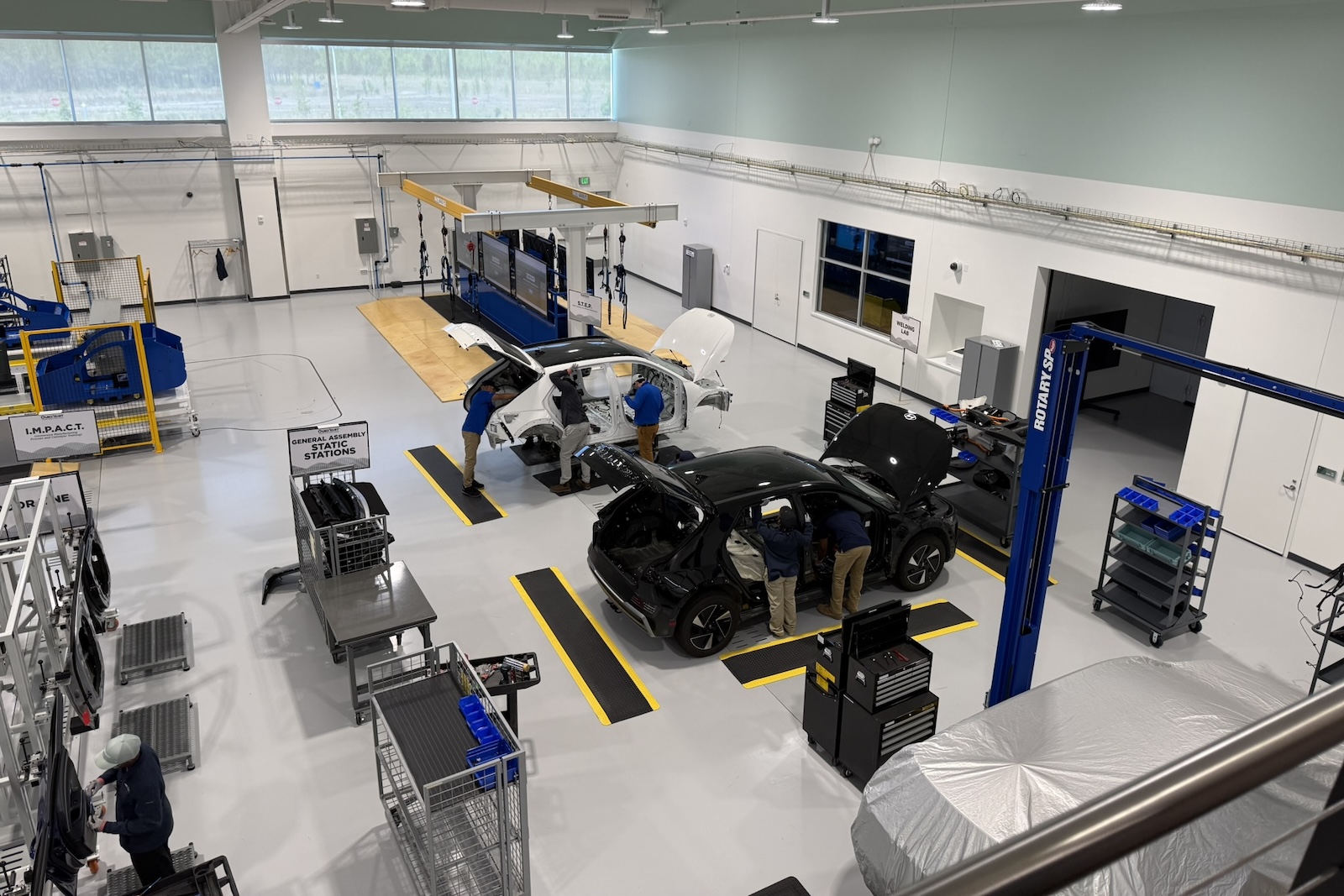
While the Metaplant uses many robots, it also employs thousands of workers. (Photo credit: Tim Healey)
Hyundai even let us try our hand. It’s trickier than one would think — the test driving is at slow speeds, except for the acceleration portion, but the driving must be precise. Too fast, too slow, not enough steering angle — I made those rookie mistakes. The professional test driver was much more exact.
Our driver told us that about 95% or so of the test vehicles pass. Those that fail get sent back and technicians — or, perhaps, Spot — take a peek to see what the cause of the squeak or rattle is.
Workers at the Metaplant get such perks as an on-site bank and a cafeteria that looked like it offered a variety of food types. We had a catered lunch but at glance, the food available to staffers looked and smelled good. There’s also an on-site fire department and medical unit.
Oh the humanity!
Even with all the automation, human workers are still needed, and they still need to be trained. Part of the plant is given over to classroom and hands-on training. We saw little mini “cars” being used as training chassis – trainees could wrench on these to master the use of tools and the placement of parts.
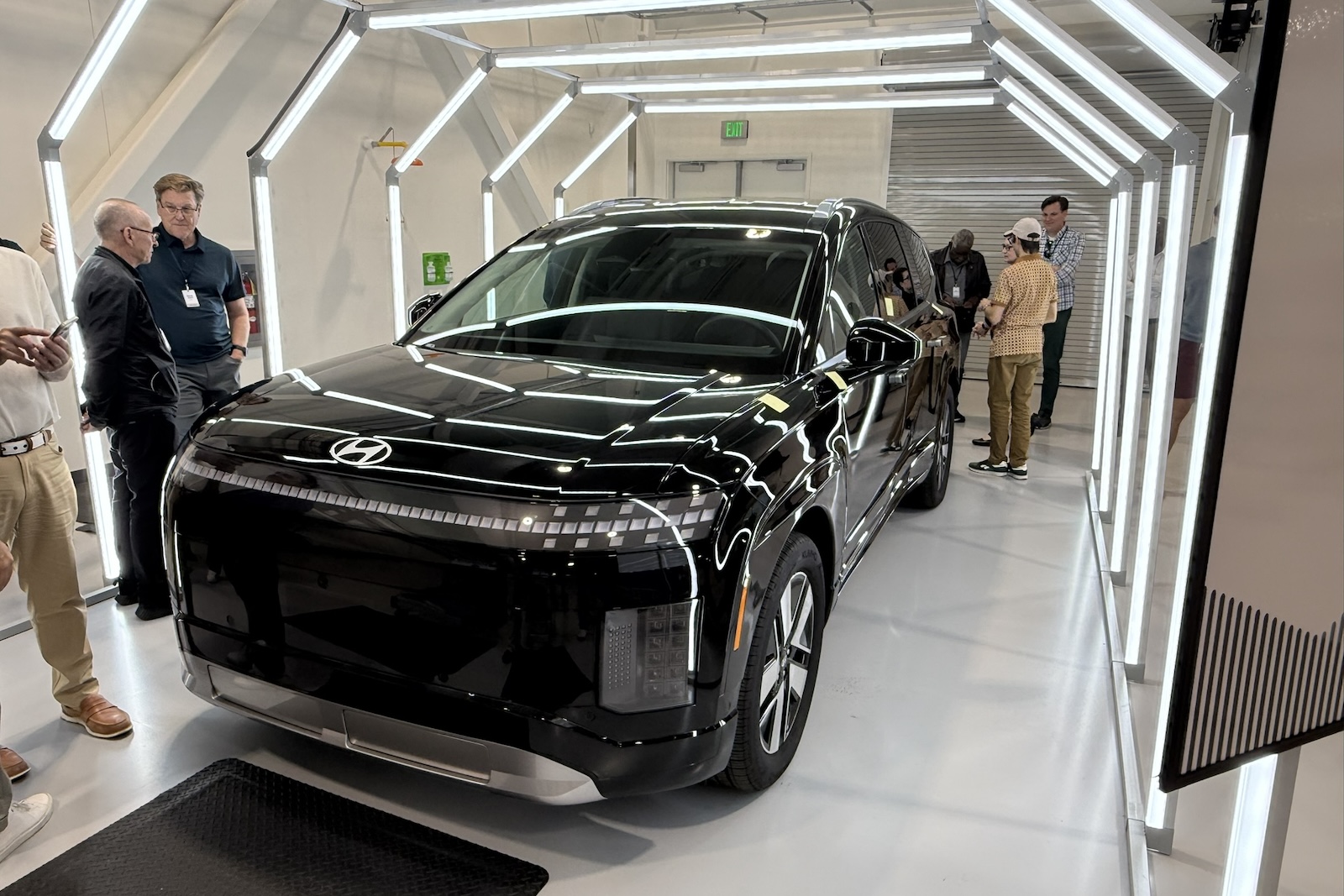
Workers, played by reporters in this photo, are responsible for ensuring each vehicle meets quality standards. (Photo credit: Tim Healey)
There was also a large display that required trainees to match parts to their names while a treadmill moved sideways. The point of this exercise was to get people used to using their brain to figure what goes where while they stand on a moving assembly line.
Hyundai spokespeople told us that training could take anywhere from one to six weeks, depending on the job.
Riding through the Metaplant on golf carts, I was impressed by the automation but also felt a bit of unease, mostly due to the context of AI displacing jobs. That’s probably not fair to Hyundai, but plants don’t exist in a vacuum. That said, the automation was truly impressive, and if Hyundai manages a balance between automation and human labor, that could be a good thing for the local economy near Savannah. On the other hand, the existence of Atlas and the constant improvement of technology could mean Hyundai uses fewer humans than they’ve promised.
The plant’s quiet and cleanliness were also remarkable, though some of that is simply from the place being new. I can’t wait to visit this place again in five or 10 years to see how it looks — and how the balance is between automation and human labor.
When it comes to manufacturing plants, Hyundai has a very unique place on its hands. We’ll see if innovations in automation spread across Hyundai and its sibling brands, as well as the industry as a whole. In the meantime, Hyundai has something unique — almost as unique as Savannah itself.

” but also felt a bit of unease”. Your job will for sure be replaced by AI, look for something productive. That’s what the future is all about, not many blacksmiths around anymore.