
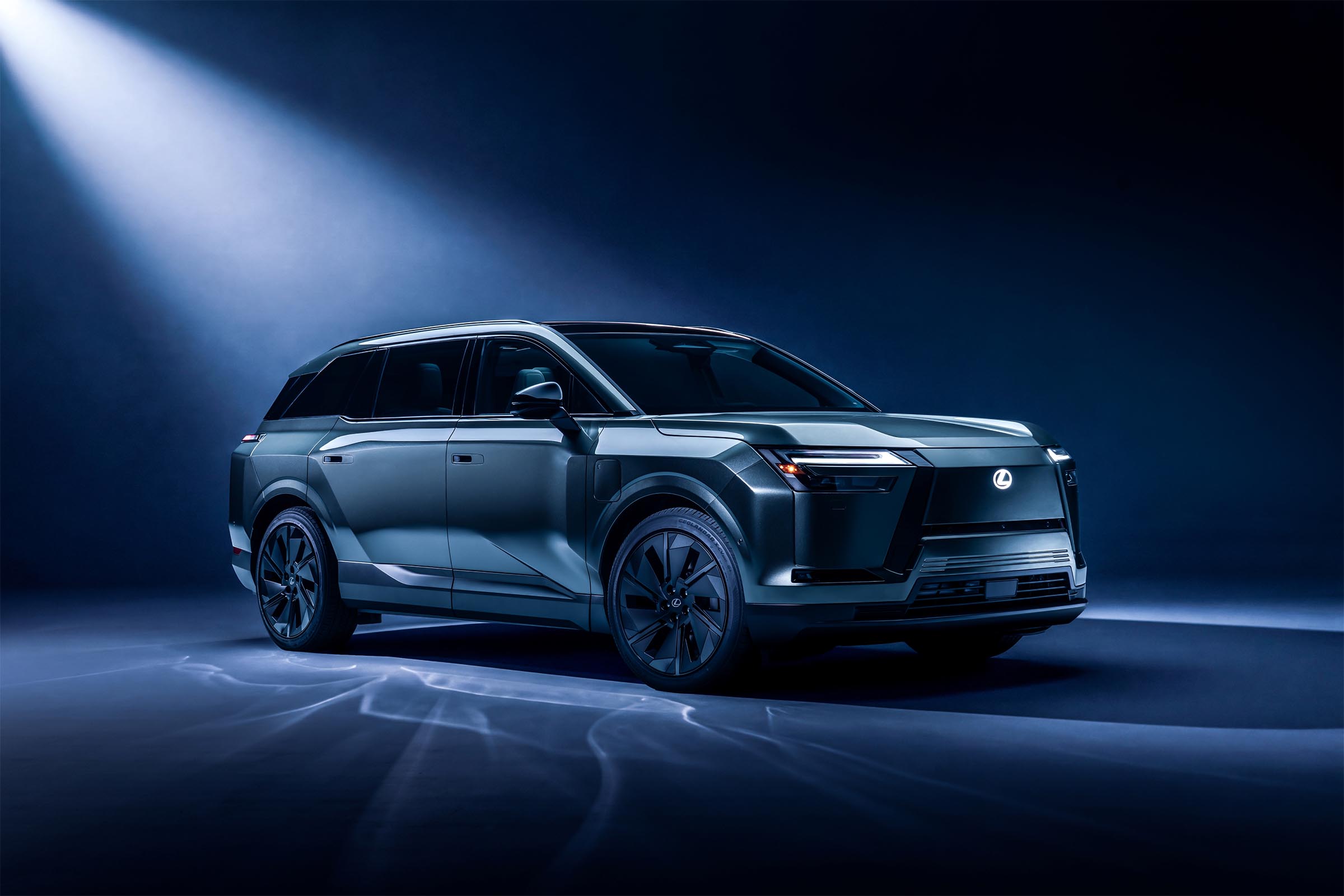
The new Lexus TZ draws power from a pair of electric motors and a 96 kWh battery pack. But slip behind the wheel and you might think there’s a V-10 under the hood. The new crossover is the latest EV to let motorists fire up the sounds of a high-performance internal combustion engine. More from Headlight.News.
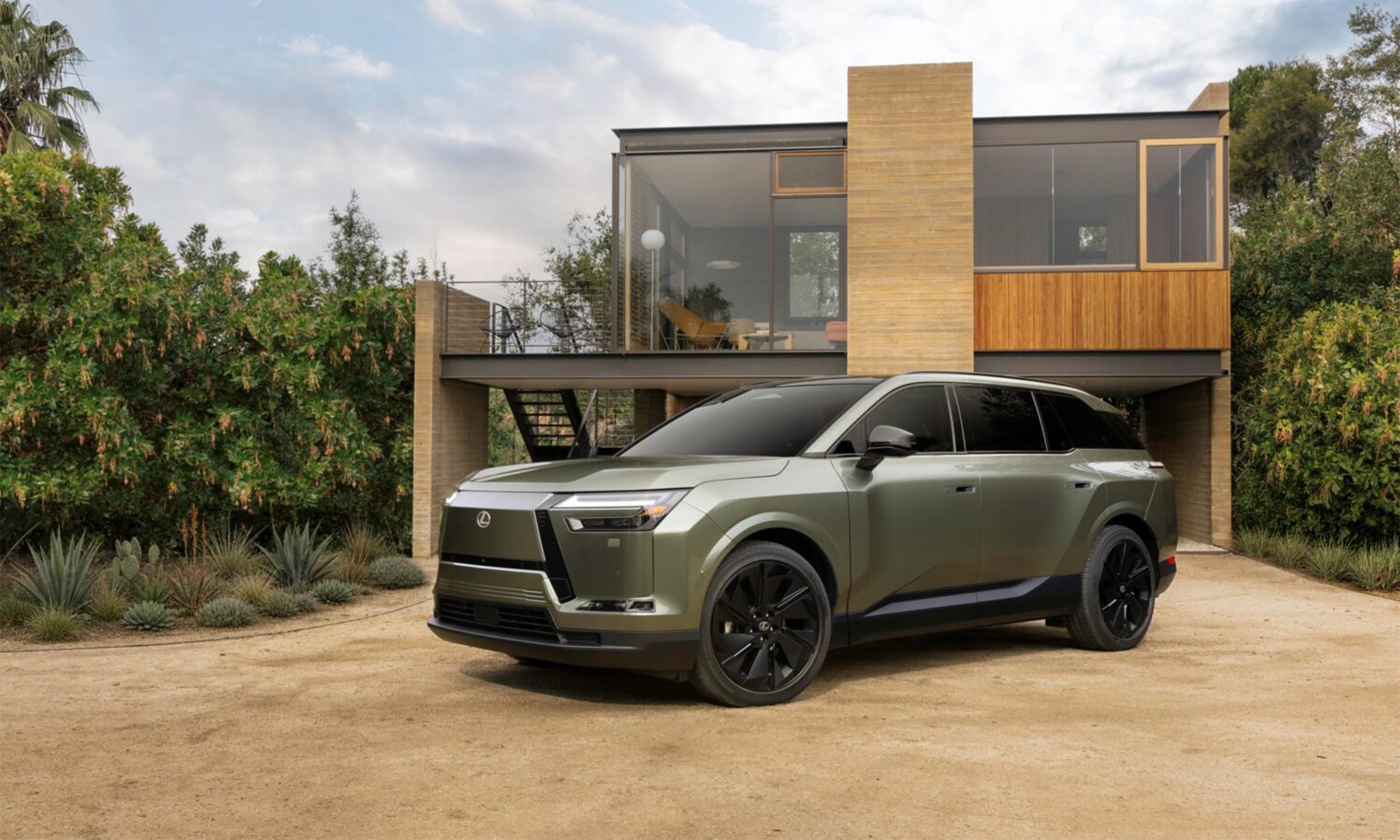
The new Lexus TZ will reveal a meaner side if a driver activates its simulated audio system.
Battery-electric vehicles can be incredibly quiet. So quiet manufacturers often have to mask the annoying sounds of fans, relays and pumps you normally don’t hear in gas-powered models. The new Lexus TZ is a great example, the automaker billing it as the most silent offering in its line-up.
That doesn’t always play well with motorists used to the “visceral feel” that they get from an internal combustion engine’s intake and exhaust notes, however. That’s why most modern EVs allow drivers to activate artificial audio notes that can give them a sense of how their vehicles are operating.
Often, these seem like they’ve been lifted from a sci-fi soundtrack, but the new Lexus crossover takes a different approach. With a simple tap, drivers will be able to replicate the guttural growl of the big V-10 found in the Lexus LFA sports car. It’s an approach a growing number of manufacturers are taking with their latest battery-electric vehicles.
That visceral feel
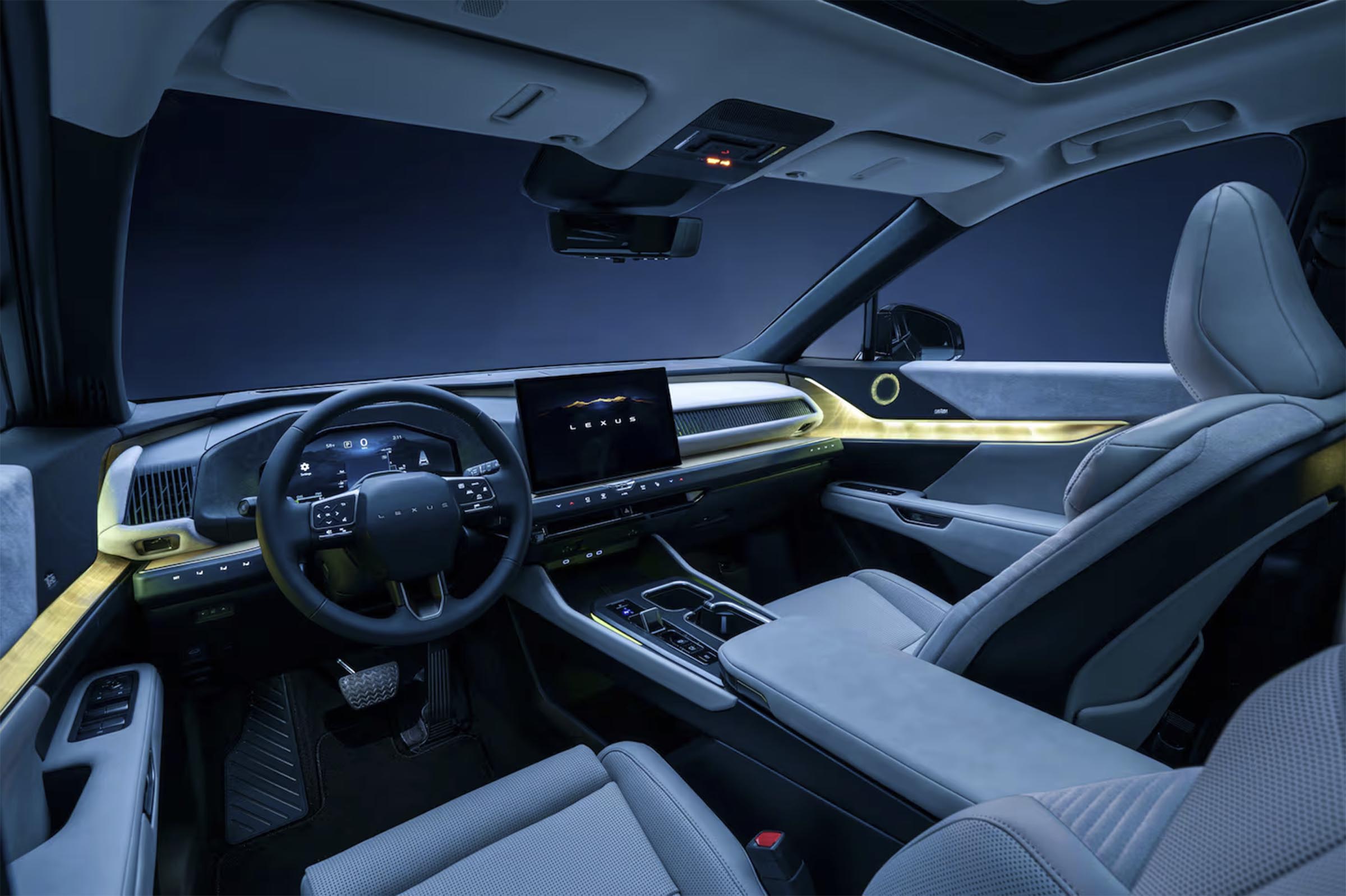
With the TZ and most other EVs, the simulated audio is piped into the cabin through the sound system.
There’s no question many of the latest EVs are capable of delivering some incredible performance numbers. The Lexus TZ, for example, punches out more than 400 horsepower from its two motors, the sort of figure that, not all that long ago, would have impressed sports car fans.
But performance buyers “like the sound, the visceral feel,” they get with an internal combustion engine, said Sam Abuelsamid, lead analyst with Telemetry Research.
And that’s what Lexus and other manufacturers are trying to replicate. Some products – like those from BMW – have gone with unique, sci-fi sounds. But a growing number of manufacturers are opting to give you the more familiar feel of a big V-8 – or with the Lexus TZ, a V-10.
Who’s doing it?
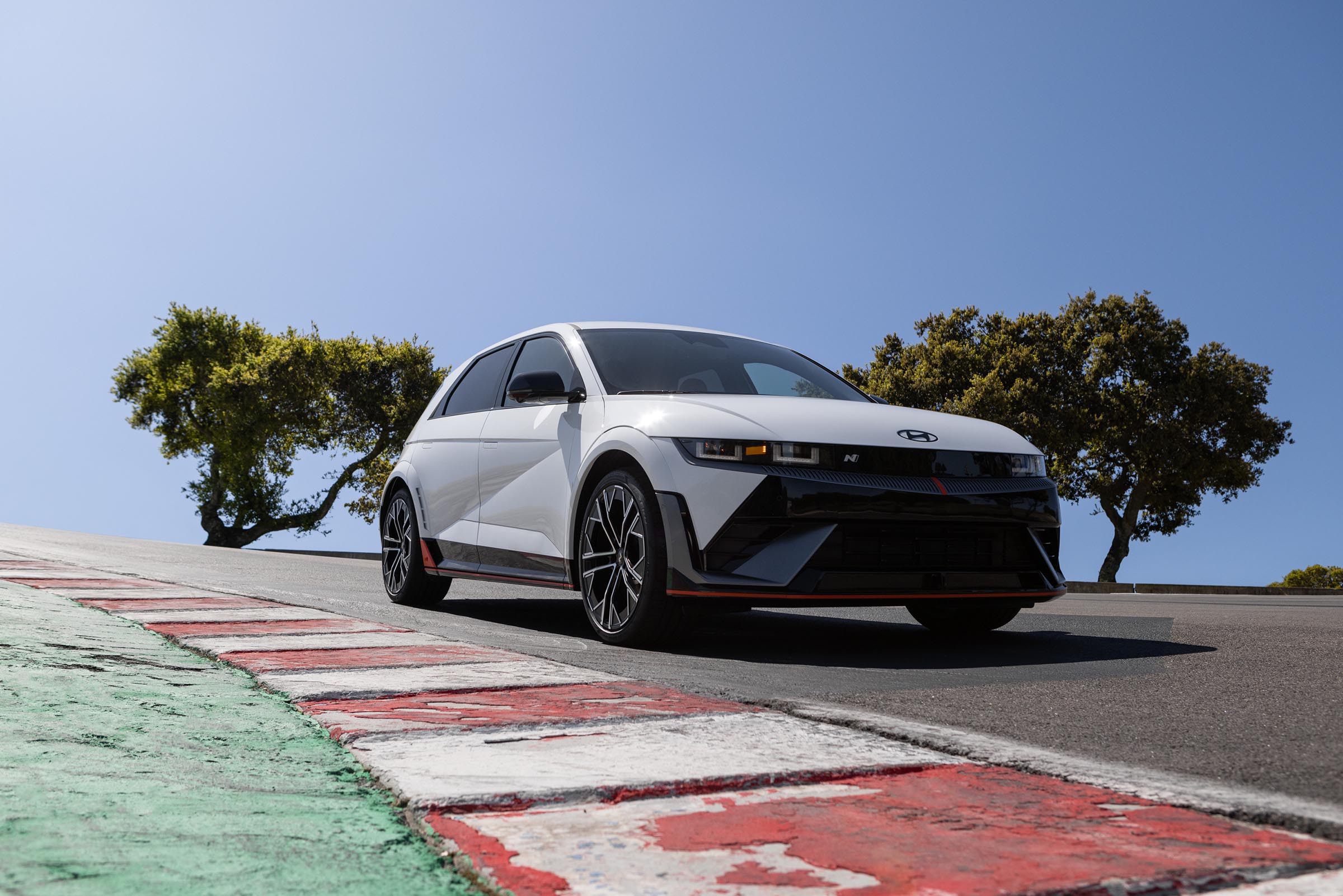
The Hyundai Ioniq 5N.
The list of EVs simulating ICE power includes:
- The Mustang Mach-E;
- The Dodge Charger Daytona
- The Hyundai Ioniq 5N and 6N
- The Kia EV6 GT;
The Hyundai Motor Group is expected to do the same thing with the Genesis GV60 Magma, the all-electric model that will become the first offering in its new high-performance line-up later this year. And Ferrari has signaled it will add driver-selectable audio when it launches its Luce EV later this year.
More Auto News
- First Look: 2027 Lexus TZ
- BMW Pulls the Plug on the iX but Moves Forward with Newer EVs
- We Get an Inside Look at Ford’s Universal EV Project
And how?
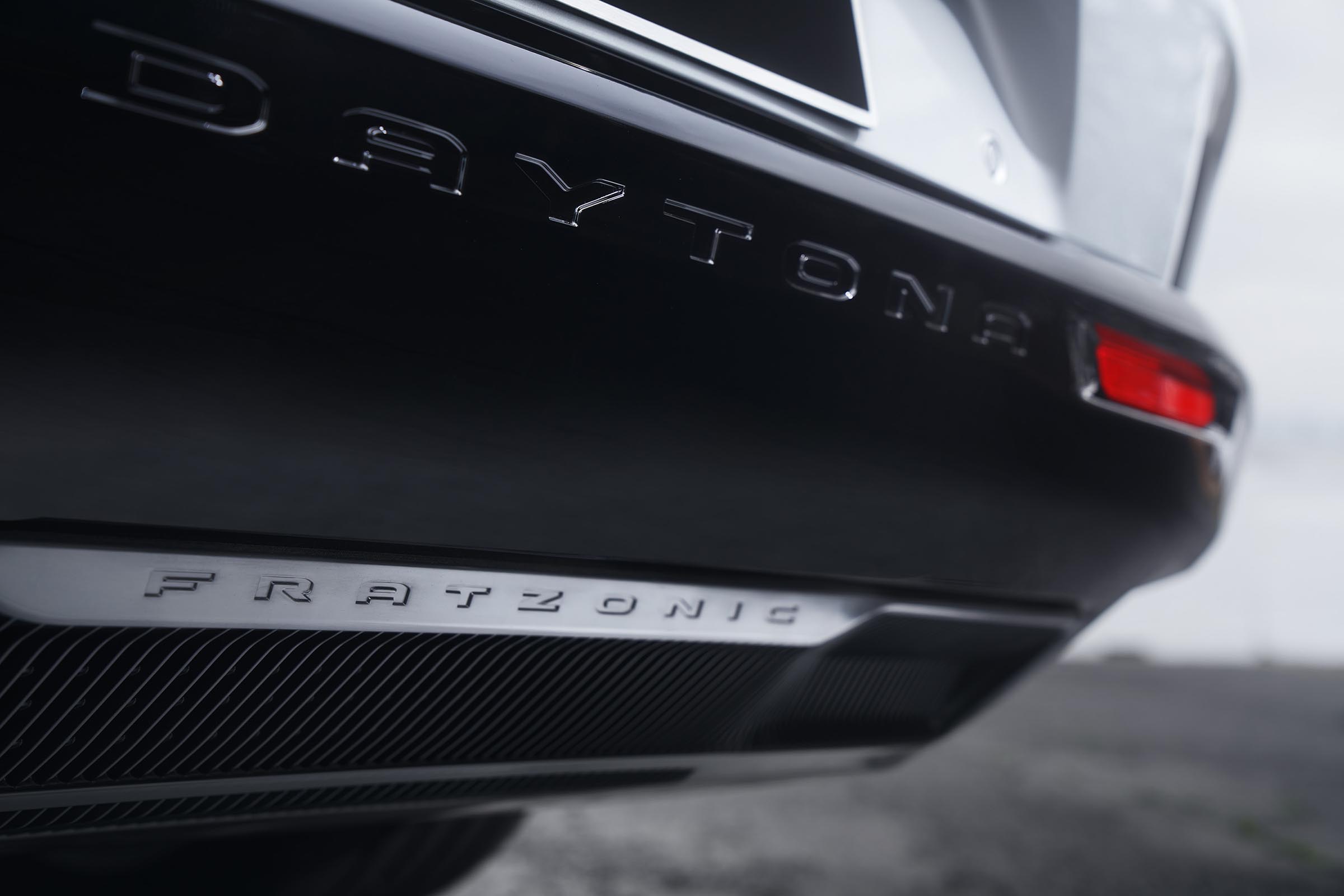
No tombstone quiet EV. The Dodge Charger Daytona uses a system it calls the Fratzonic Chambered Exhaust to recreate the sound of a Hemi V-8.
Adding a simulated V-10 sound “adds a familiar note and a little mischief,” said Simon Humphries, the chief branding officer for Lexus parent Toyota Motor Corp.
The simulated audio is “available on demand,” said Humphries, and designed to match the way a driver uses the TZ’s throttle – and it also can deliver the sound of shifts thanks to the simulated gear changes that can be triggered by the EV’s paddles.
“There’s really no cost” to the manufacturer to add such a feature, said Abuelsamid, noting it’s little more than a synchronized audio file fed through the vehicle’s audio system. On most of the products adopting this approach, anyway.
Dodge went a step further with the Daytona, the all-electric version of its new Charger muscle car, with a system it calls a “Fratzonic Chambered Exhaust.” It’s really not an exhaust in the classic sense, of course, but an externally mounted transducer, a sort of ruggedized speaker meant to replicate the sound of a classic Hemi V-8. And where most simulated performance soundtracks are targeted at interior occupants, Daytona’s system is designed to also rattle the teeth of anyone walking or driving nearby.
Sounding off
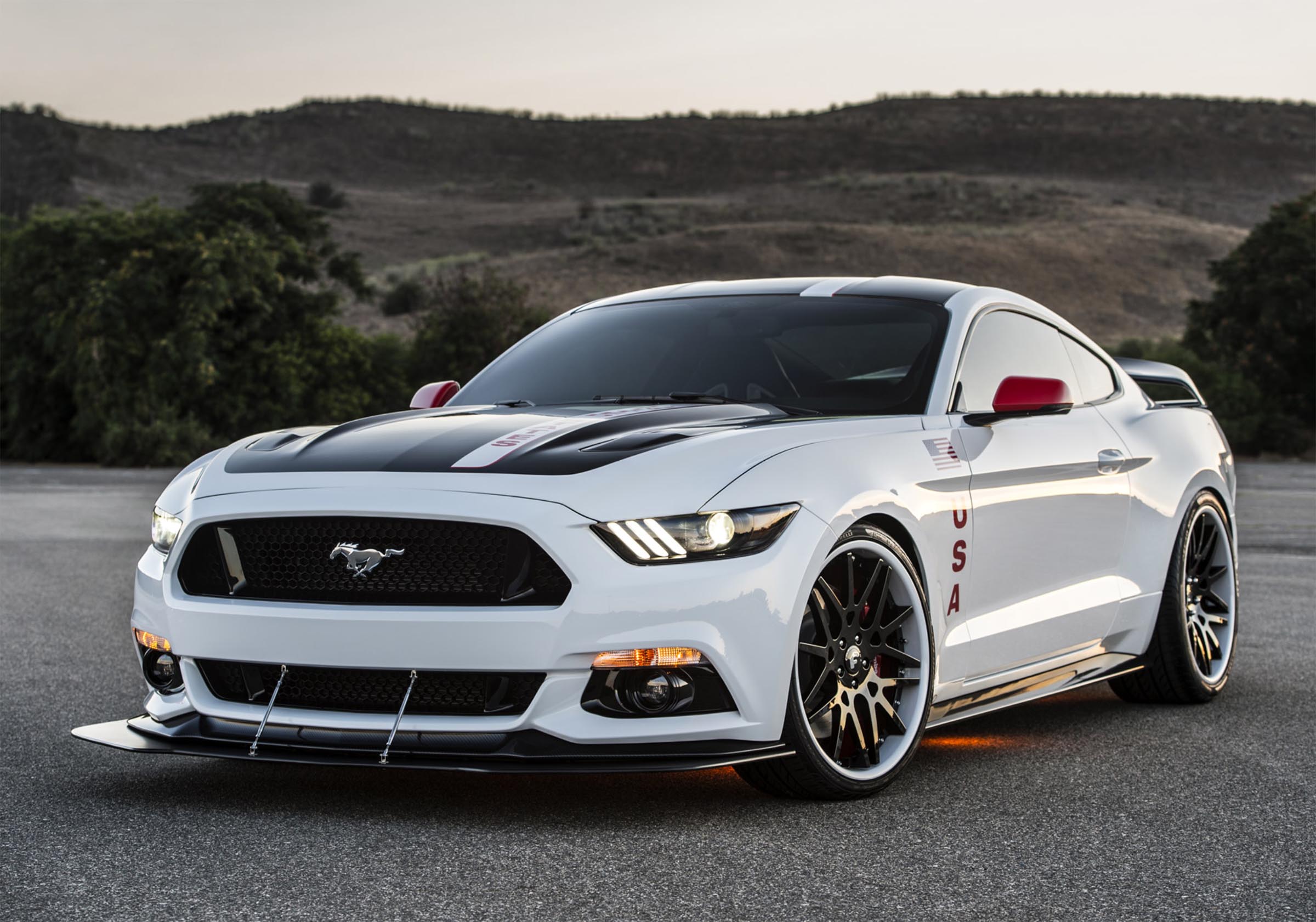
Even familiar gas models have adopted enhanced audio systems to add to the visceral experience.
The good news is that these sound systems can be turned on or off at a driver’s whim and, in many cases, a motorist also can adjust their intensity.
Do motorists care? That might depend upon which vehicle you’re talking about. Dodge claims the Fratzonic Chambered Exhaust is one of the more popular features with its Charger Daytona. And both Hyundai and Kia are considering whether to expand the use of their simulated performance soundtracks on more EV models.
But with a three-row crossover? Even if it can hit 60 in just 5 seconds? “I don’t think it’ll sell more” TZs for Lexus, contends Abuelsamid, “but it’ll put a smile on people’s faces” when they think to turn it on.
EVs, incidentally, aren’t the only vehicles using enhanced audio. Even some familiar, gas-powered performance models from brands like BMW, Volkswagen, Ford and Porsche have adopted Active Sound Design (ASD) and Active Sound Enhancement (ESE) technologies to pump simulated sounds into the cabin to enhance that visceral experience.







0 Comments