
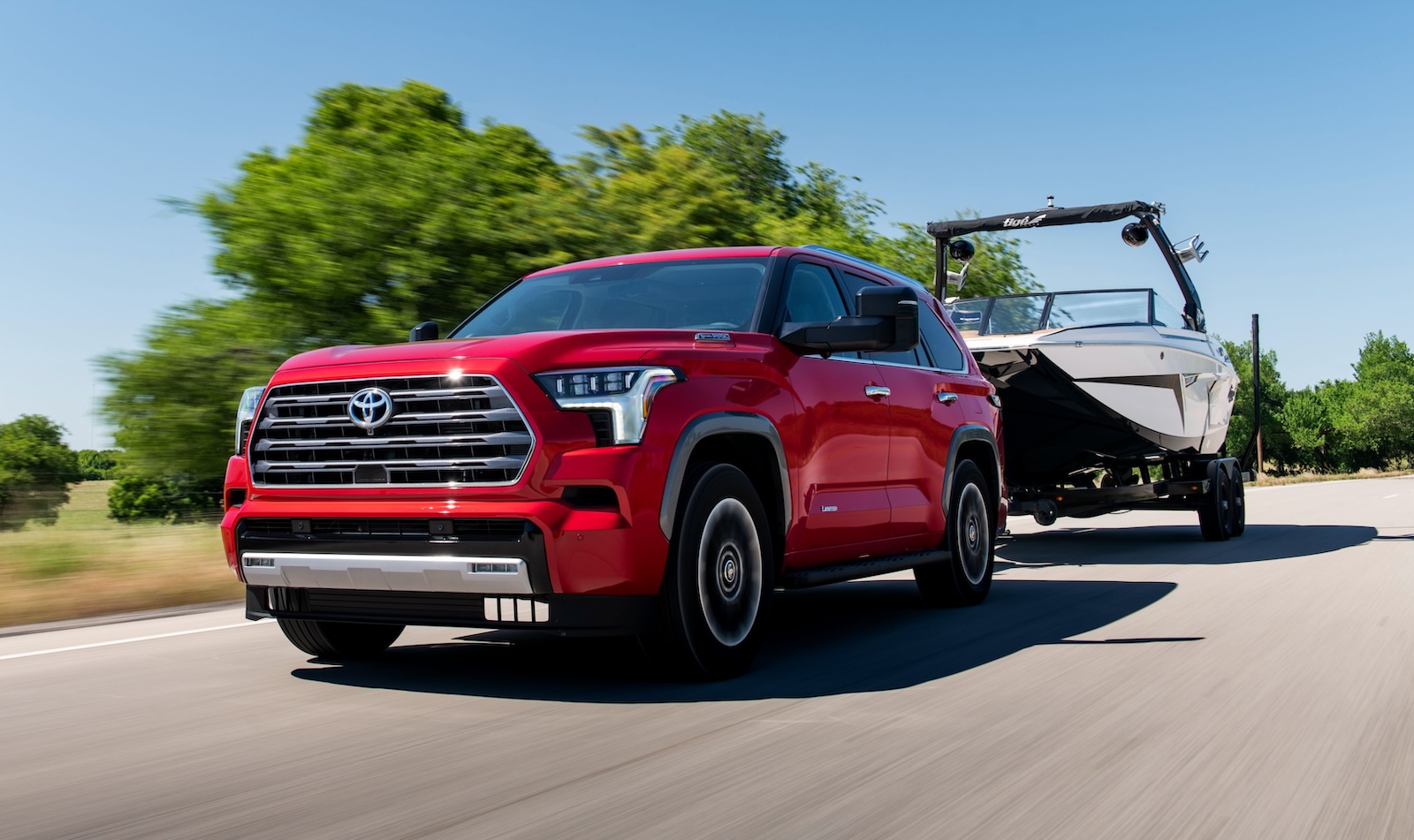
Three months after the U.S. and Israel launched air strikes on Iran, fuel prices are hovering in the mid-$4.00-a-gallon range. And that’s hitting the average American motorist hard in the pocketbook. Tthose driving gas-powered vehicles can expect to pay an extra $706 a year for fuel should the war drag on and gas prices hold at current levels. Headlight.News has more.
 Anyone spending time behind the wheel has already felt the impact now that the Iran War is set to enter its fourth month. Whatever type of vehicle you drive, energy costs are up, but a new study shows that those who fill up vehicles solely using internal combustion engines are being hit hardest.
The typical model will cost an extra $706 to keep the tank filled should the war drag on for a full year and oil prices hold at current levels. But there’s growing concern that if a settlement isn’t reached soon and the Strait of Hormuz remain closed we could see another big surge in fuel prices, perhaps exceeding the $5.034 record reached back in June 2022.
“Playing havoc”
 “Fuel price spikes can play havoc with a consumer’s monthly budget,” said Karl Brauer, executive analyst for iSeeCars, which just released the latest study on rising fuel prices.
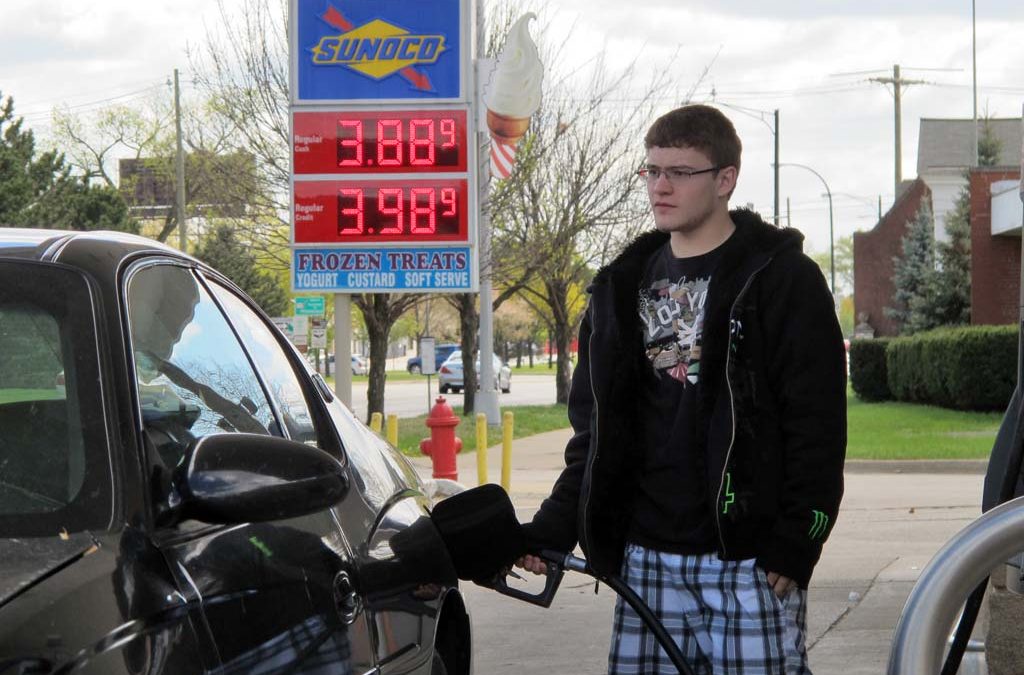
Gas prices are up about 50% from where they stood just before the attacks on Iran began three months ago today. The precise figure varies day-to-day and stood at $4.436 as of noon on Wednesday, 13 cents below a week ago. But analysts warn that could just as easily shoot back above $4.50, depending upon the latest news from Washington and the Middle East. The real concern is that an expansion of the war could push prices for self-serve regular above the record $5.034 reached on June 16,2022.
But, even after the past week’s modest decline, motorists across the U.S. are collectively shelling out billions in higher energy costs which are, in turn, fueling broader inflation.
How much more are you paying?
 Exactly how much more you spend depends on a variety of factors, including your vehicle and powertrain, where you live and both how you drive and how far you drive.
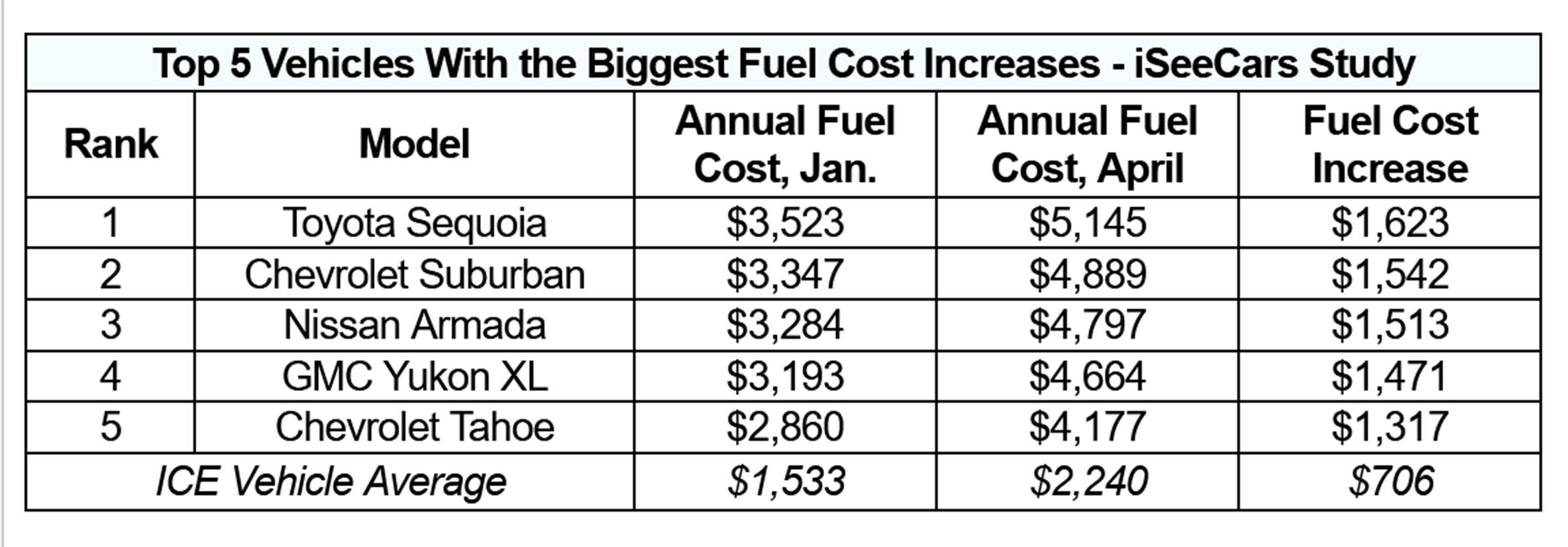
The vehicles hit hardest by rising fuel costs are, not surprisingly, those using only internal combustion engines. The Toyota Sequoia had the biggest increase of any vehicle included in the study, with an annualized penalty of $1,623. The Chevy Suburban was close behind, at $1,542 more than what a motorist would have paid based on pre-war fuel prices. And the Nissan Armada rounded out the top three with an increase of $1,512.
SUVs and pickups, as one might expect, face significant increases, depending upon the size of the vehicle. Minivans, however, “had the highest annual fuel cost increase among major gas-powered vehicle segments, rising $1,139,” according to a summary from iSeeCars.
More auto news
- Headlight News Podcast for the Week of 5/25/26
- Honda Idling Ridgeline Production Until 2028
- The Winners and Losers in the Stellantis Fastlane 2030 Shake-Up
Ways to save
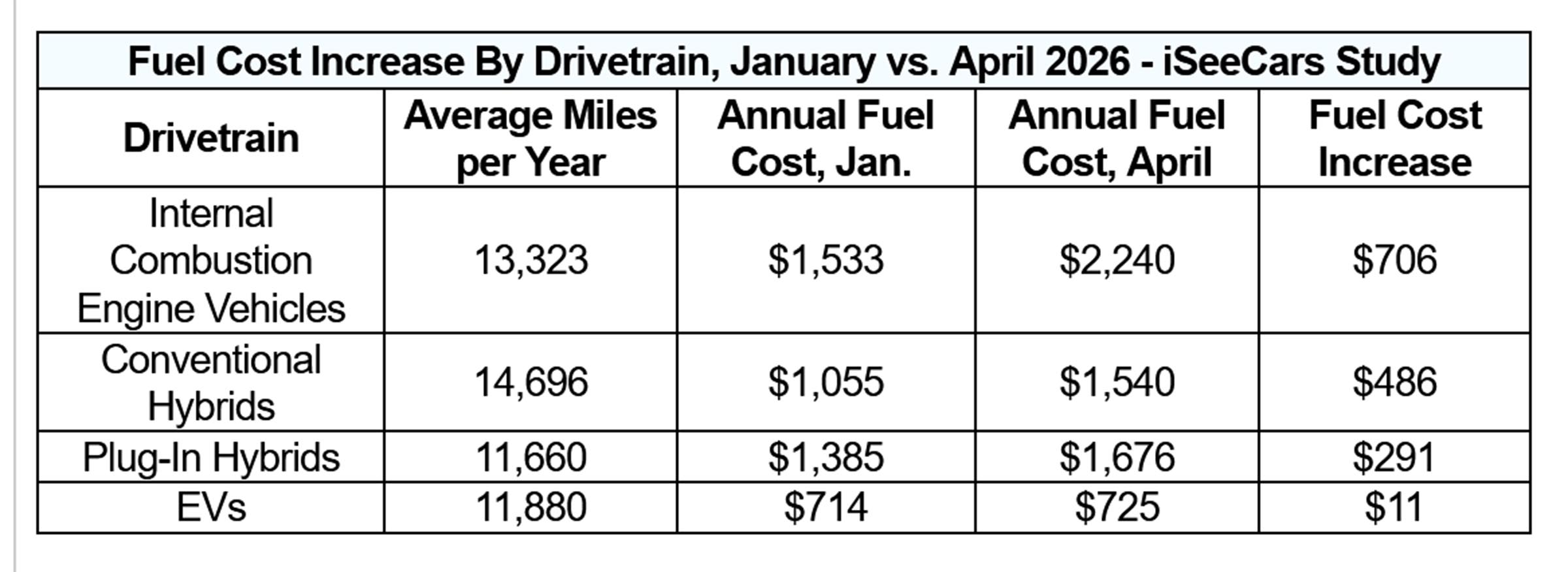
ICE vehicles, overall, face a $706 increase over the course of a year, noted analyst Brauer,
“But consumers can reduce this risk by buying a hybrid or plug-in hybrid.” Indeed, “if a driver’s lifestyle and transportation needs can be fulfilled by an electric vehicle, EVs can help insulate consumers from recurring and substantial swings in fuel prices.”
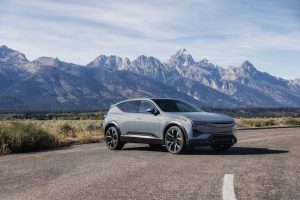
Conventional hybrids, such as a Toyota Prius, face a $486 increase in fuel prices, while plug-in hybrids are forecast to go up $291.
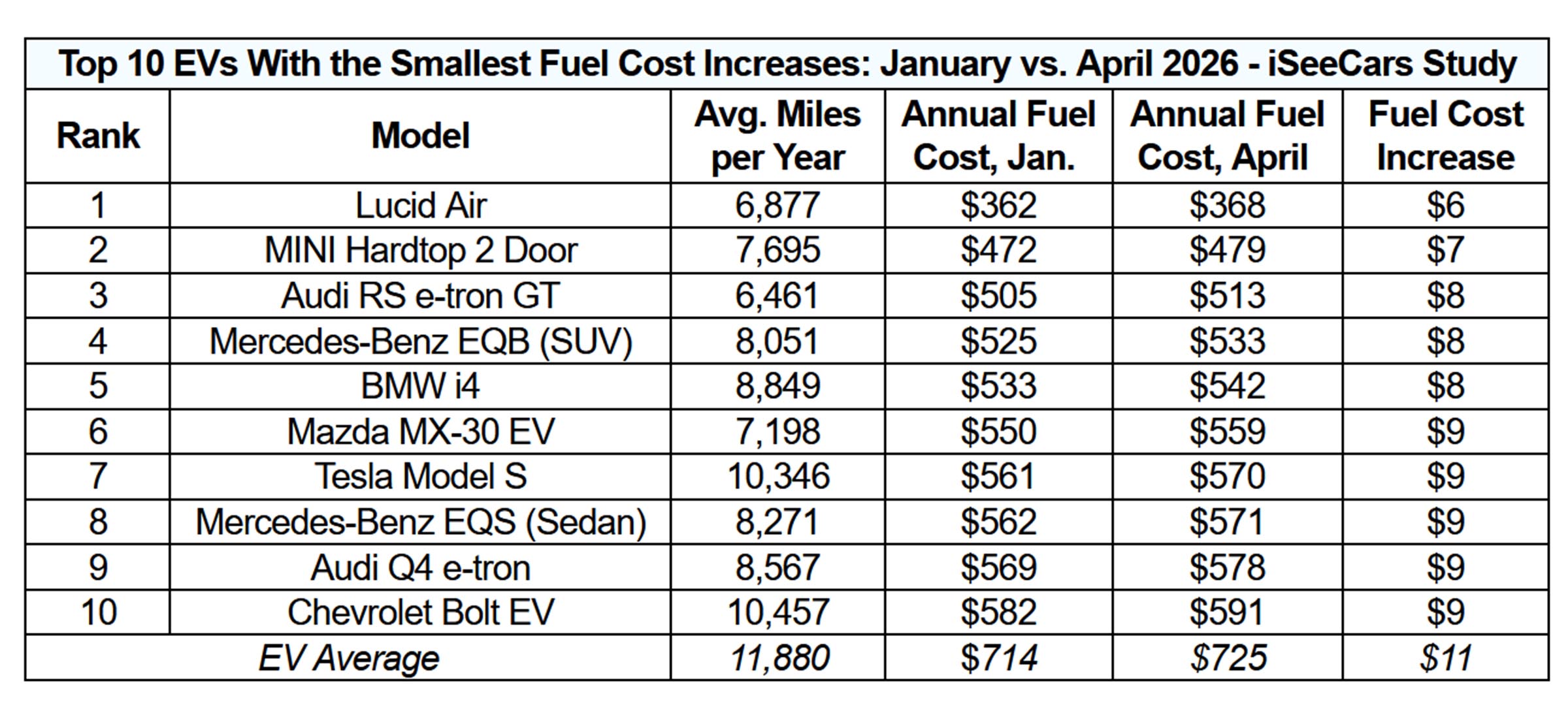
The real savings come with battery-electric vehicles. While they don’t burn gasoline they are dependent upon local utility rates – which have been going up lately. Even so, the increase is likely to come in at just $11 for the full year, according to iSeeCars.
While the Trump administration has repeatedly claimed it’s close to working out a settlement with Iran there’s been no breakthrough so far. And even if one does develop in the coming days or weeks, it’s unclear just how quickly that might bring energy costs down. We could see it push into 2027 before prices get back to pre-war levels, analyst Michael Robinet warned Wednesday during a briefing at the Automotive Press Association.
0 Comments