

(This story initially appeared as part of the new The Car Collective substack. You can subscribe to it at TheCarCollective.substack.com.)
As Ford gets ready to launch an all-new line-up of low-cost EVs, “We have to ask ourselves is this the way we do things because it’s always been done that way, or is there a better way to do that?”
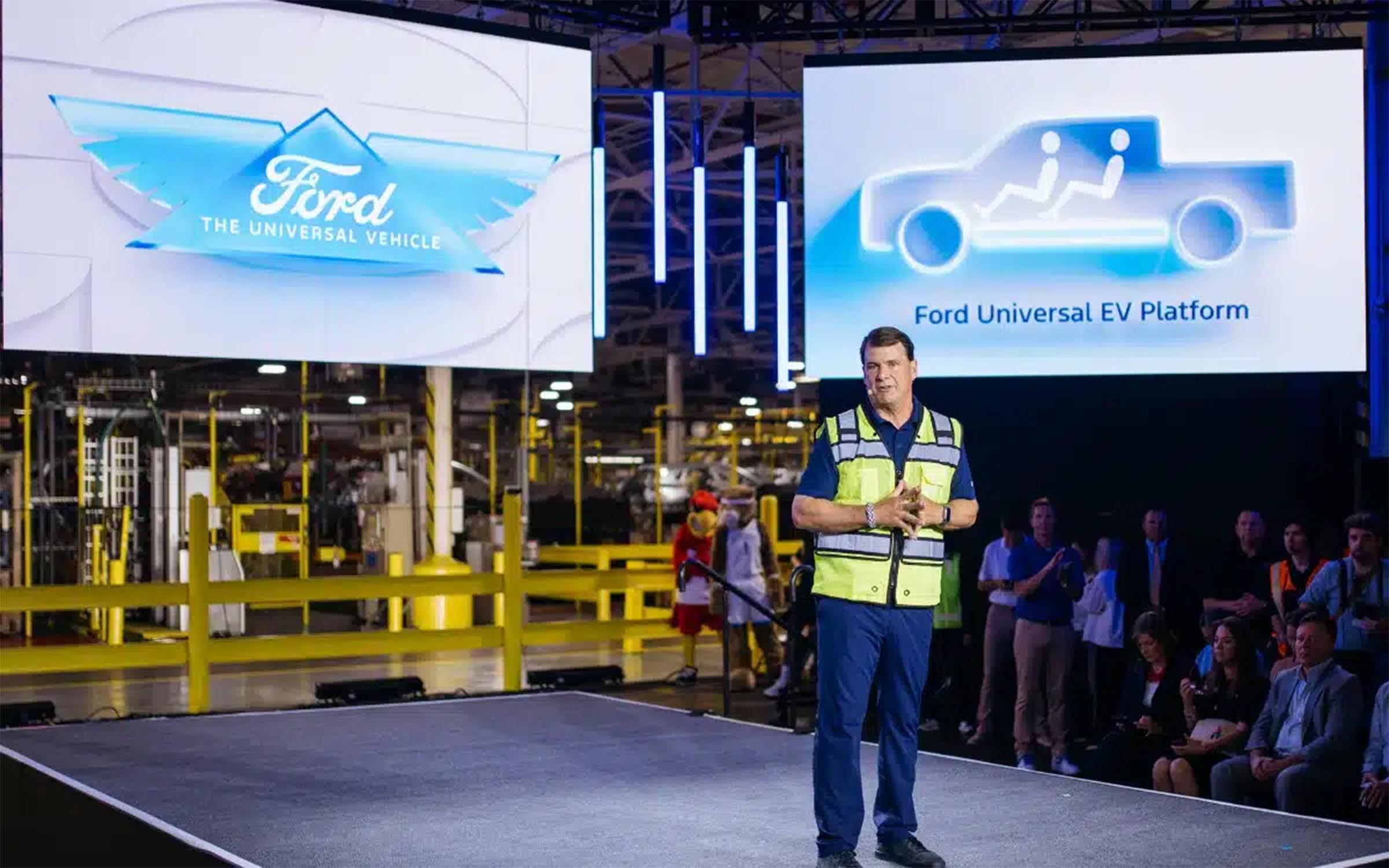
Ford CEO Jim Farley announced the Universal Vehicle project last August.
We’ve been hearing a lot of whinging and whining around the auto industry this past year, automakers as diverse as General Motors, Toyota and Hyundai warning that opening the door to Chinese automakers would be, as Ford CEO Jim Farley put it, “an existential threat.” It doesn’t help that brands like BYD, Geely and Chery are able to deliver impressive products for thousands of dollars less than traditional manufacturers. That’s all the more impressive when you realize that includes the so-called “New Energy Vehicles” — including both plug-in hybrids and EVs – that made up 40% of the 8 million automobiles China exported last year.
The Chinese already own a quarter of the Mexican market and have just gained a foothold in Canada, thanks to a new trade deal. It’s just a matter of time, many experts believe, until they also crack open the U.S. market. Yet, despite the hand-wringing and gnashing of teeth, Farley isn’t ready to wave the white flag.
Last summer, the Ford CEO began teasing what he called a “Model T moment,” a reference to the revolutionary changes ushered in by company founder Henry Ford more than a century ago. As Farley subsequently revealed, Ford had quietly launched a small skunkworks team charged with working up an entirely new approach to designing, engineering and manufacturing vehicles. On paper, at least, it promises to be as revolutionary as the original moving assembly line which quickly positioned Ford as the industry’s dominant manufacturer.
Creating a new culture

Former Tesla engineer Alan Clarke wants to create an entirely new culture unique to the Universal Vehicle program.
But will it live up to such lofty expectations? That’s what I hoped to find out by spending a day meeting with the team behind what Ford has dubbed the “Universal Vehicle” project.
Over the nearly half century I’ve spent covering the auto industry I’ve heard plenty of similar promises from Detroit. There was General Motors’ Saturn project, and Chrysler’s K and LH cars. Ford seemed to have everything going for it with the launch of the original Taurus sedan and the GT supercar was designed by another skunkworks program meant to show how a small team could transform a massive multinational into a nimble enterprise. Yet, Ford today still moves like a lumbering battleship in an era when fleet little drones are becoming the weapon of choice.
That helps explain why the Ford project has been operating out of a pair of nondescript buildings in Long Beach, California, nearly 2,000 miles away from company headquarters in Dearborn, Michigan, said Alan Clarke, Ford’s executive director of Advanced EV Development. “Culture is local,” and the former Tesla engineer is determined to create an entirely new one from scratch. “Isolation has been incredibly important. Separate the culture and you separate the mindset.”
While there are a number of Ford veterans on the UEV team, those transfers have been carefully screened to make sure they’re not expecting a business-as-usual environment, Clarke confided, as we grabbed a quick lunch following my tour of the UEV campus. A sizable share of the growing staff has come from other rebel companies, like Tesla, or are entirely new to the auto industry.
A work in progress
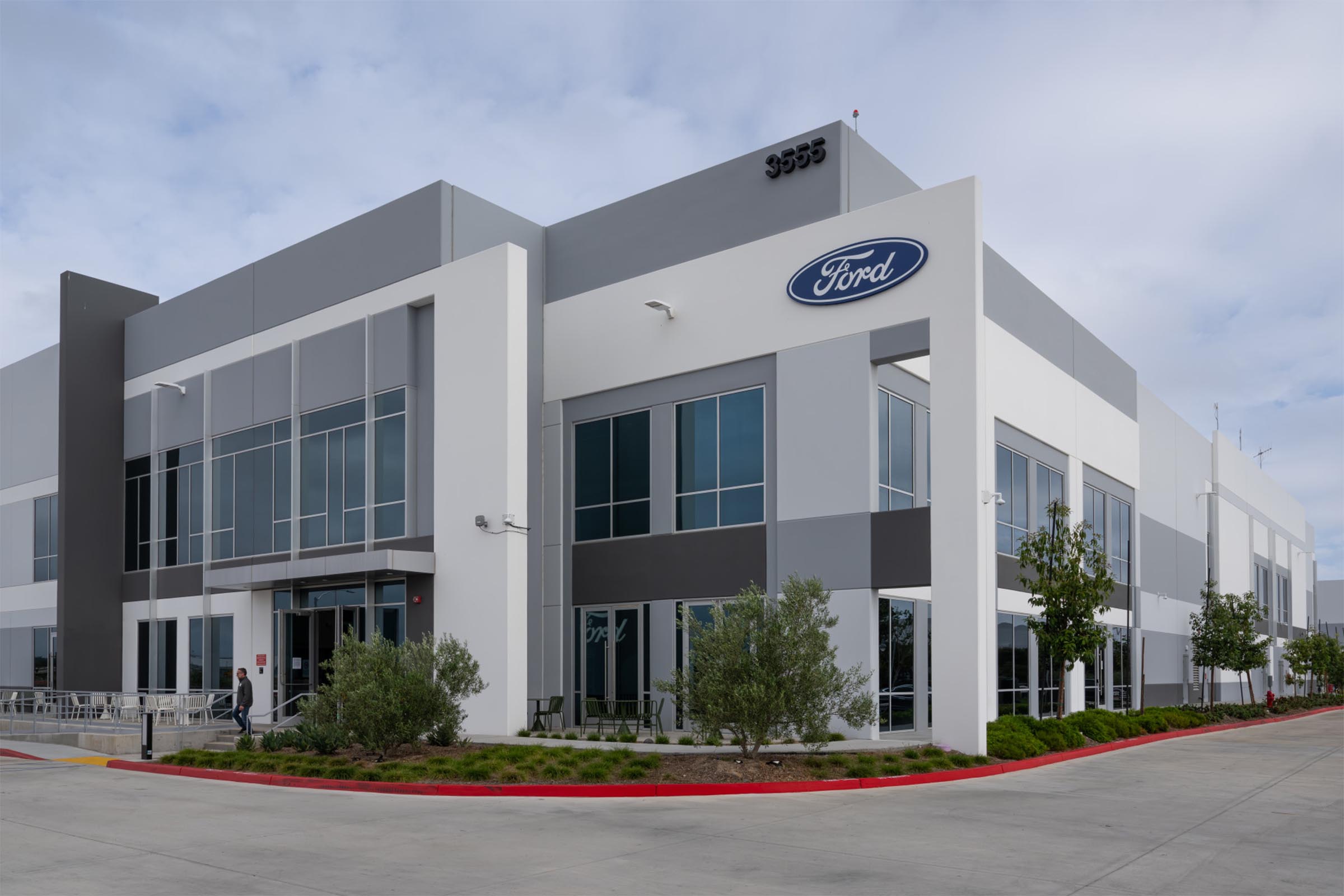
The Universal Vehicle program is based auto of Long Beach, California.
The UEV project currently has a bit more than 500 team members and is preparing to add another 100. It was impossible to entirely isolate the team. There are about 180 based at Ford operations in Dearborn, for example, and at its high-tech center in Silicon Valley. But the vast majority are – and will be – centered in Long Beach.
Work is now well underway on a second building equipped with some of the most sophisticated technology anywhere in the Ford universe. That includes one of just two closed dynamometers capable of recreating virtual any condition a future EV would be able to experience anywhere in the world, everything from the cold of an Arctic winter to the heat of a Saudi Arabian summer, complete with the light of a blazing Mideast sun.
Much of the development work on future UEV models is being done in the virtual world, using the latest AI and virtual reality software. But the team also has the tools necessary to bend metal, create parts with 3D printer and mill full-size clay models. “Everything is in close proximity,” noted designer Simona Merker, making it easy for team members to reach out to one another.
In a number of instances, Ford has reversed its traditional approach which often relies on outside suppliers to do things like developing the look and feel of seats, noted Scott Anderson, the UEV seating chief. His team can cut its own prototype foam cushions and seat covers, for example, in some cases saving weeks of development time.
Rethinking the EV
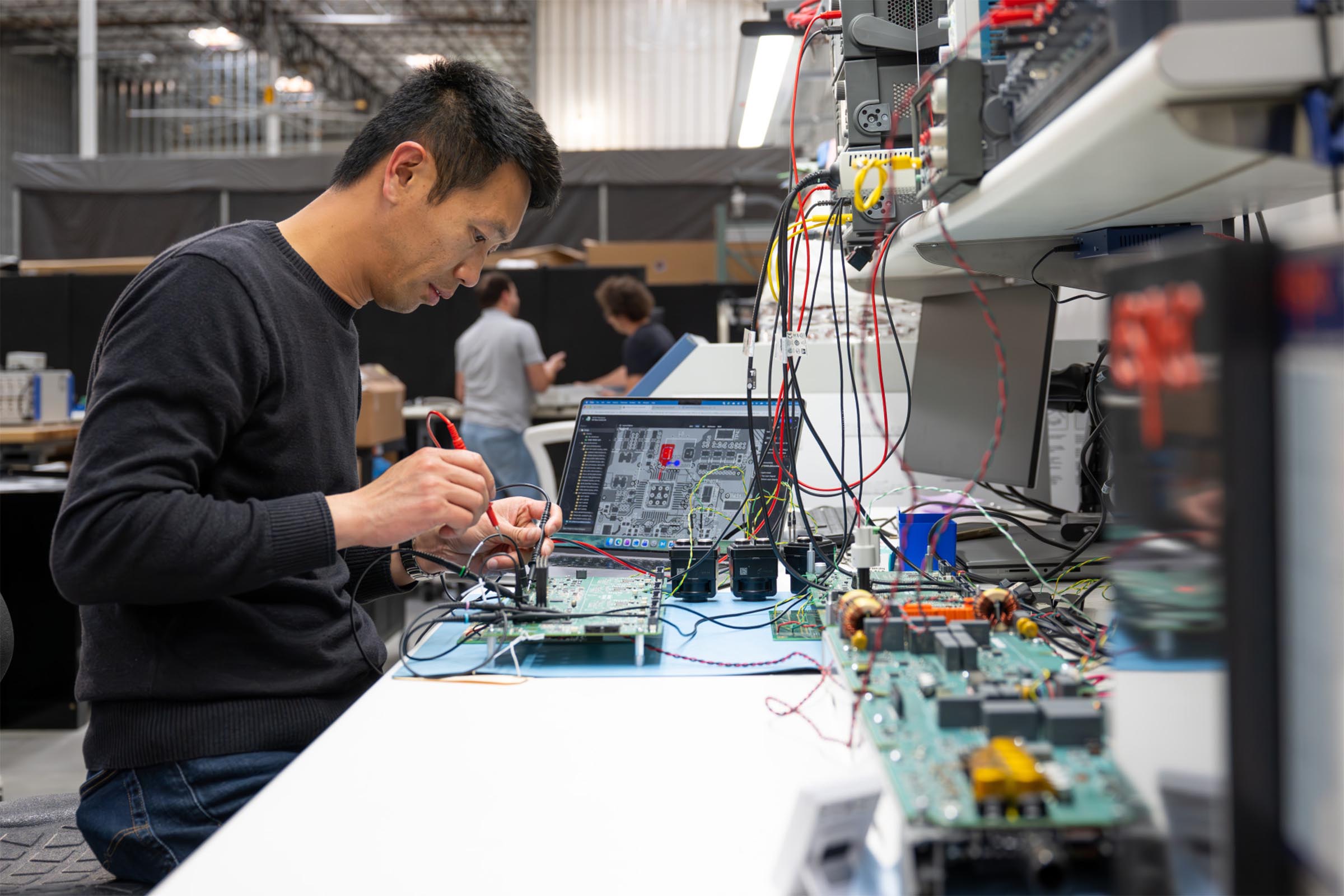
Team members are encouraged to come up with entirely new ways to design, engineer and manufacture an EV, and “fast” failures are seen as a step in the right direction.
Ford ultimately expects to offer an assortment of different Universal EVs, including SUVs, and the compact pickup that will be first to go into production sometime in 2027. Pricing has yet to be finalized, though the automaker has broadly hinted that should start around $30,000, only slightly more than today’s compact Maverick Hybrid. To get there, Ford is borrowing some ideas from the Chinese while coming up with new ideas it hopes will beat brands like Geely and BYD at their own game. Among key details:
- Universal EVs will use lithium-iron phosphate batteries, instead of more costly, trouble-prone lithium-ion technology found in most of today’s EVs. LFP chemistry has helped slash costs for Chinese EVs and, Ford claims, is quicker to charge and less prone to fires and other failures;
- Meanwhile, the packs will be more tightly packaged and serve as part of the actual structure of the vehicles they’re used in, simplifying construction;
- Using a centralized computer network eliminates scores of microprocessors scattered around the vehicle while also cutting nearly a mile of copper out of the wiring harness, saving over 20 pounds and over $100 in material alone
- Ford also plans to adopt mega-castings – something already used by Tesla, as well as the Chinese, replacing dozens, even hundreds of stamped steel parts with a single cast piece of aluminum.
Megacastings may simplify the assembly process but they can complicate matters following a crash as they can be extremely difficult to repair. As an example of the UEV’s approach to creative thinking, said body structures chief Vladimir Bogachuk, each megacasting will be marked with “cut lines,” showing where they can be cut, glued and welded back together, rather than leaving the service shop tech to try to figure things out on the fly.
Assembly line redux
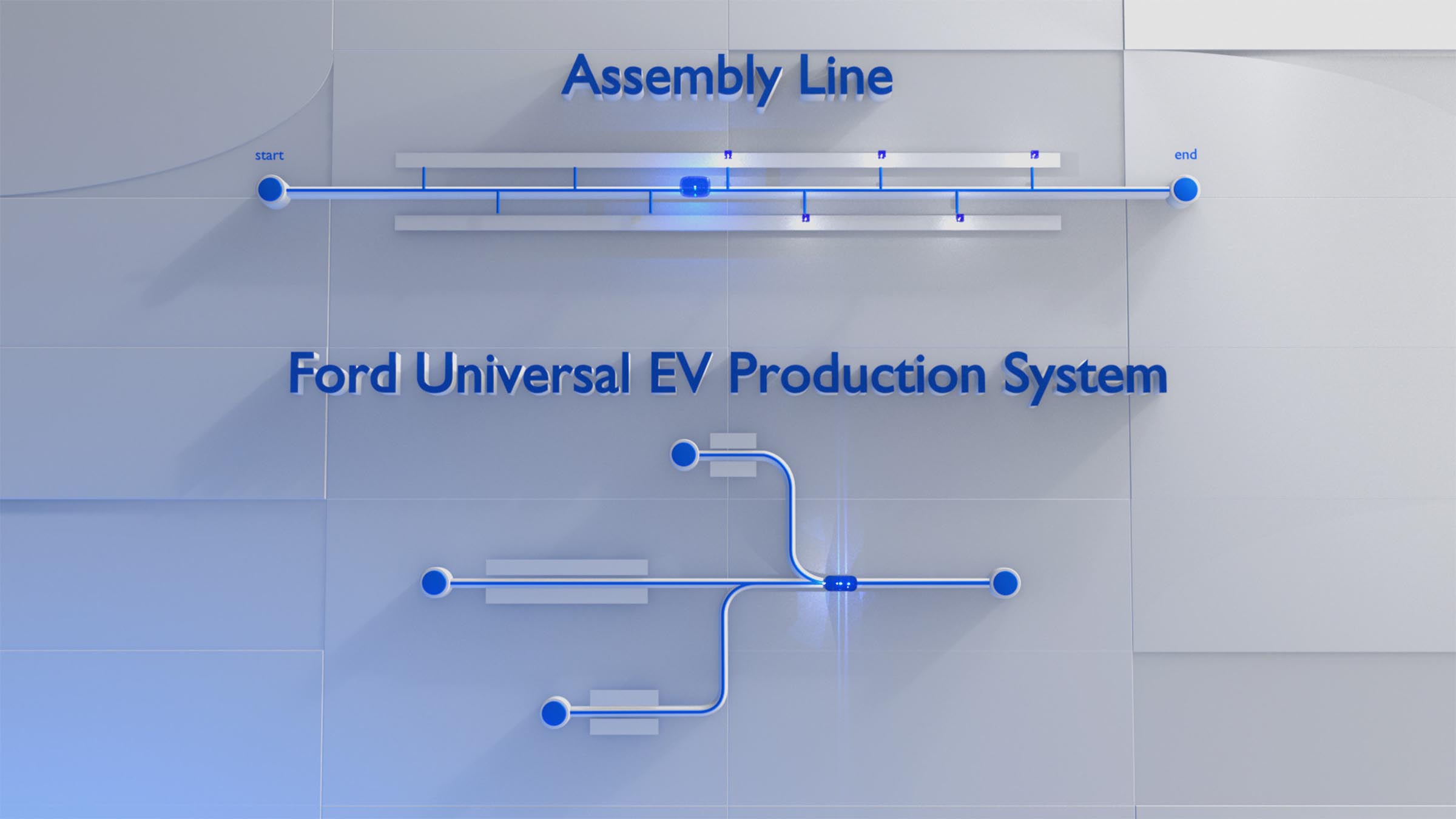
Three sub-assemblies, rather than a single assembly line.
There’ve certainly been plenty of updates to the assembly line since Henry Ford threw the switch at Ford’s old plant in Highland Park, Michigan on October 7, 1913. Among the most significant is the Toyota Manufacturing System which helped slash costs while yielding significant improvement in quality and reliability. Yet, the Ford founder would likely not be shocked were he to visit pretty much any of today’s plants but for the number of robots in use.
That all changes, Clarke promises, when the first UEV pickups begin rolling down the line at the Louisville Assembly Plant. The factory – which previously built models including the Ford Escape – is expected to begin prototype production later this year, “saleable” models to be launched sometime in 2027.
Here’s where the real revolution is set to take place. On a traditional line, cars are built up, almost like Lego models, individual parts added atop one another as the vehicles rolls forward. The Universal EV manufacturing process, on the other hand, will start out with three parallel lines, one working on the back end, another on the front end, the third putting together the cabin and floor, including the integral battery pack. Much like making a sandwich, those three pieces will be married together near the end of the line.
The process, according to the UEV playbook, slashes production time – meaning fewer hours of costly union labor. It also is more ergonomic, Ford claims, designed to reduce operator stress.
Is there a better way?
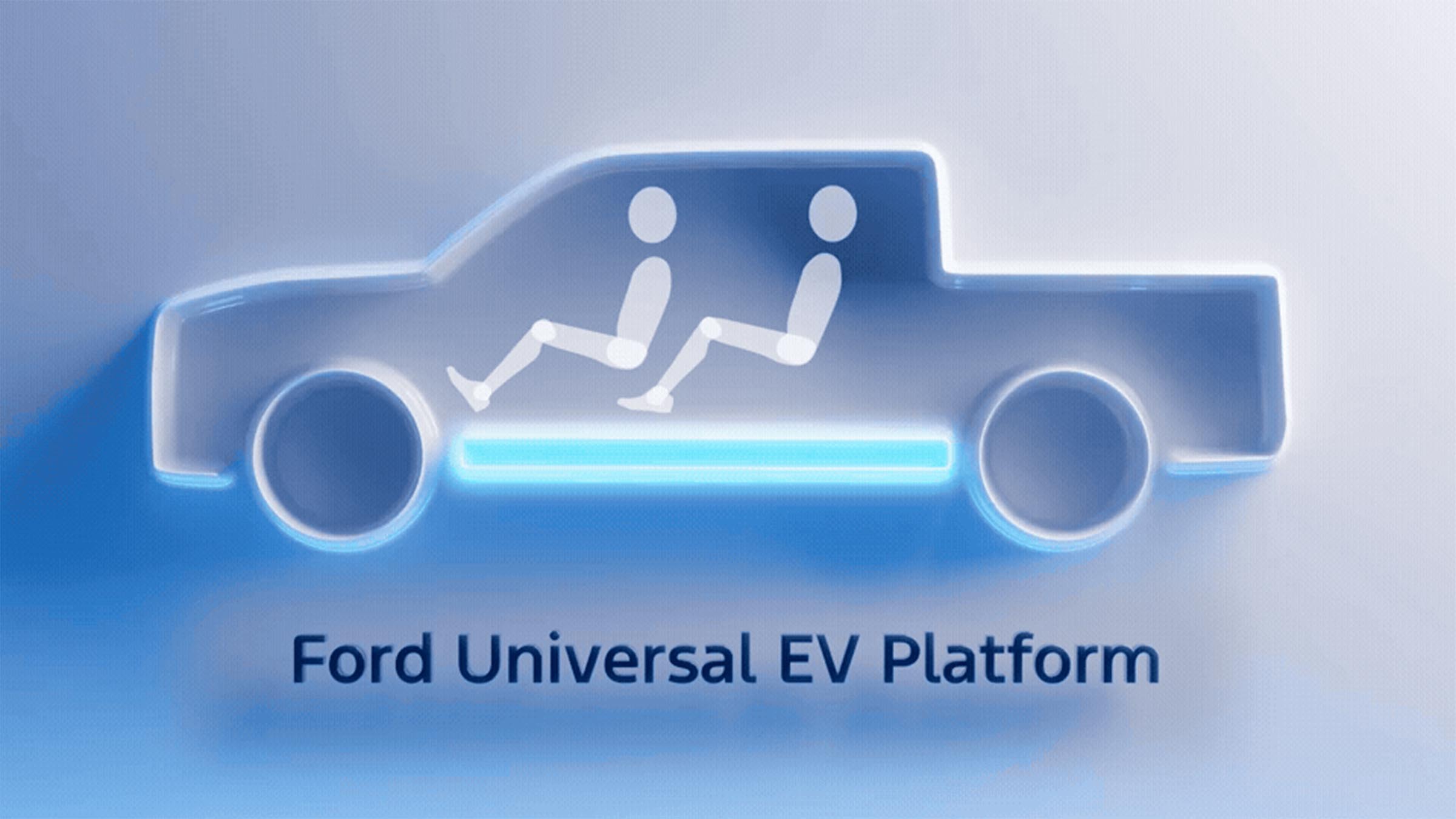
Ford Universal EV Platform will debut in the form of a compact pickup.
Ford has created what it calls a “bounty program” designed to encourage to get UEV members to think different, in the words of the grammatically flawed Apple ad campaign of some years back. Spend time roaming the campus and you get the feeling they’ve explored ways to redesign everything but the wheel. And I’m betting they’ve tried to find a way to do that, as well.
“We have to ask ourselves is this the way we do things because it’s always been done that way, or is there a better way to do that?” suggested Anderson.
For his part, project chief Clarke admitted he’s feeling “tons of pressure” – not only to deliver the sort of revolutionary new product Ford CEO Farley is promising, but also to avoid the sort of endemic problems that have caused the automaker so much trouble in recent years.
“Fail fast”
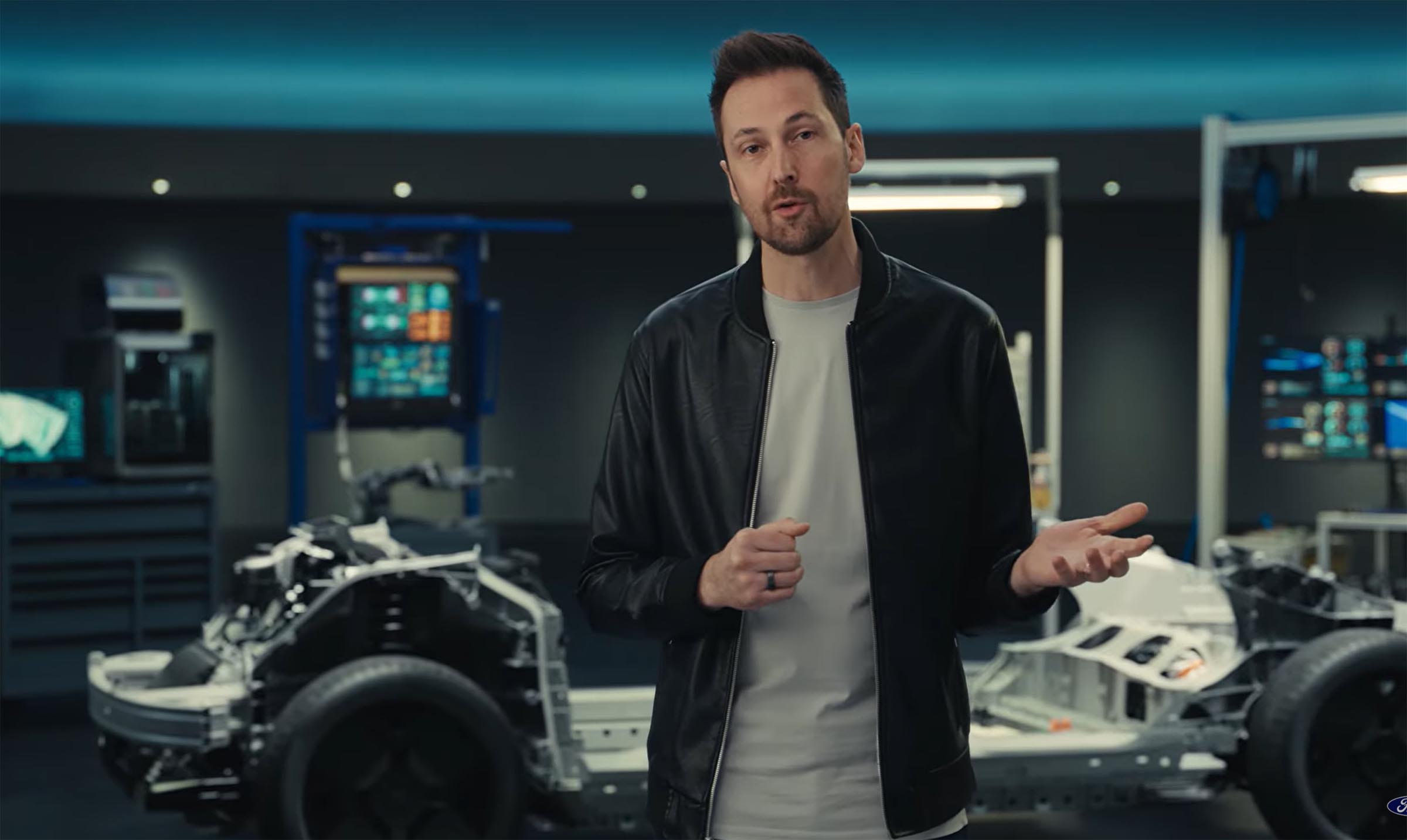
Clarke admits he’s under “tons of pressure” as the date approaches for the first Universal EV to go into production.
Ford faced an industry-record 153 separate recalls in 2025 affecting nearly 13 million vehicles in the U.S. Beyond that, it’s been spending billions fixing all manner of quality problems.
As part of the bounty system, UEV team members are encouraged not just to come up with new ideas but to accept – even embrace — the reality that many of them won’t work. The key is to “find failures fast,” said Kevin Lundbert, a hardware engineering manager, and then come up with something better,
That said, the clock is ticking for the Universal EV team. There “tens of prototypes” now running around the Long Beach campus and some other Ford locations. I was treated to a quick view of one, heavily camouflaged, driving by as I wrapped up my tour.
“Our ability for change, right now, is quite limited,” Clarke acknowledged. But the team will continue to look for potential failures. They’ll make millimeter revision to the body if it yields aerodynamic improvements delivering better range. And they’ll put a premium on tweaks that can save a few pennies here, a dollar there, as long as it doesn’t sacrifice quality and reliability.
At least, that’s the goal of the new culture Ford has set out to create. Sometime, roughly a year from now, we’ll see if it’s really come together as the first UEV rolls out of the Louisville plant.
(This story initially appeared as part of the new “The Car Collective” substack. Author Paul A. Eisenstein is one of five members of the Collective, his own stories, features, columns and reviews appearing once each week. You can subscribe to it at TheCarCollective.substack.com.)



Paul, you should have taken an engineer with you. I’d love to know the details of the Ford architecture vs Tesla’s.
I wish Ford’s goal was a 20K car that only gets to 25. Remember Henry.
I wish I could have.