
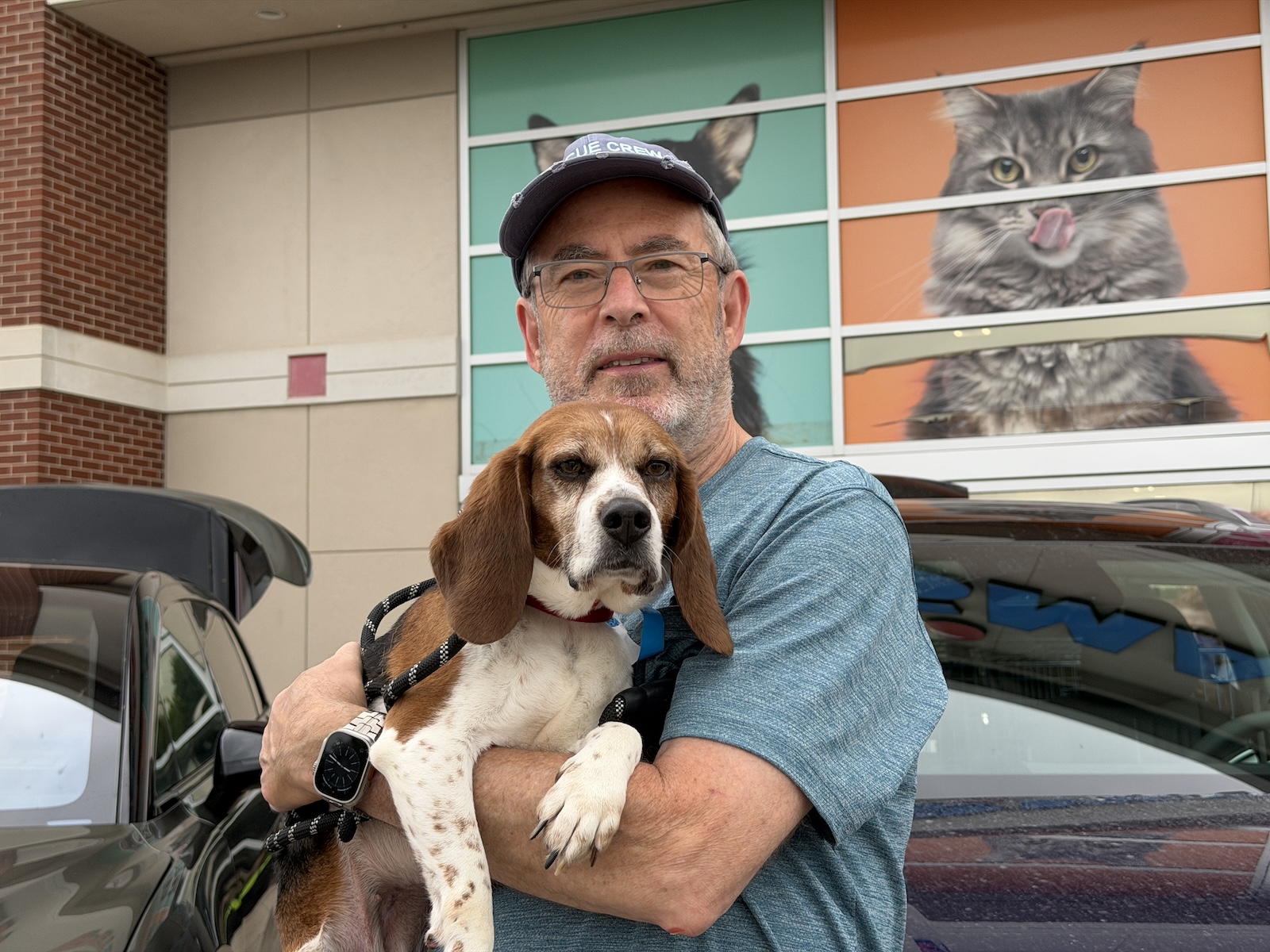
By the time you read this I’ll be somewhere West of Salt Lake City, manning a Kia EV9 on the third day of Operation Frodo.
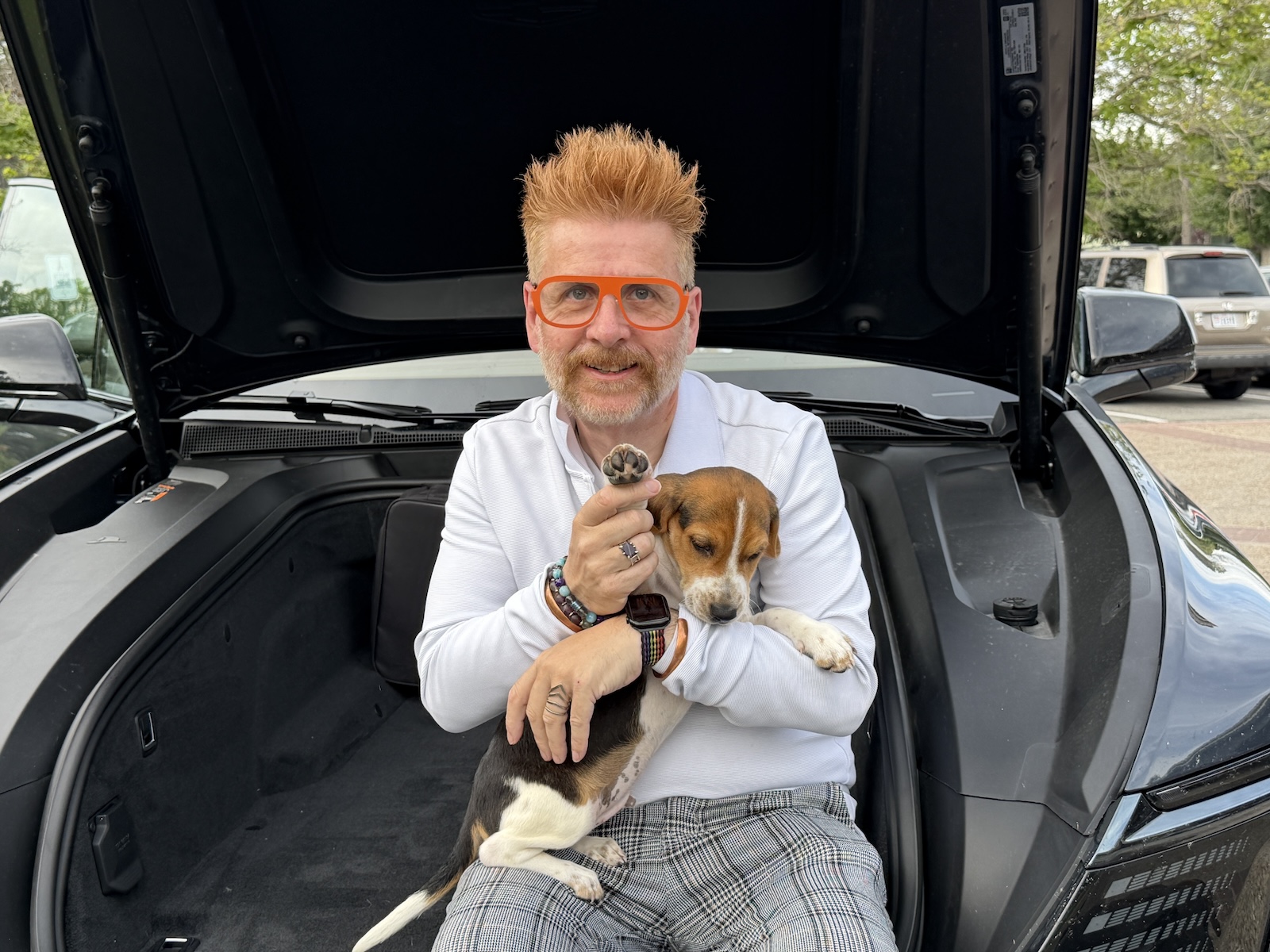
Operation Frodo was created by Nik Miles to help transport rescued beagles and hounds to their forever homes.
If you follow me on social media you know I’m a regular volunteer for this cross-country dog rescue which runs from Omaha, Nebraska to Portland, Oregon.
Now in its fifth year, this mission is designed to help lost, abused and injured beagles and bassets find new, loving homes.
All told, Operation Frodo will pass a milestone this 1,811-mile trip, the 16 dogs in our charge bringing the total to more than 100 rescued so far.
But it also marks a different sort of milestone, the first time we’ve made the cross-country run using battery-electric vehicles. The nine volunteers on this second half of the run will be driving not only the EV9 but a Cadillac Escalade EV, a Hyundai Ioniq 9 and a Lucid Gravity.
Credit goes to analyst — and dog lover — Sam Abuelsamid, of Telemetry Research, who has been taking part in Operation Frodo since 2024. “Part of the reason I wanted to use EVs was to prove you could drive long distances,” he told me on the prior day’s drive from Cheyenne, Wyoming to Salt Lake. “And we’re driving across the American West, 2,000 miles, almost, from Omaha to Portland. I wanted to prove EVs could handle that.”
Charging in to Help

Analyst and dog lover Sam Abuelsamid, of Telemetry Research, who has been taking part in Operation Frodo since 2024 pushed for the use of EVs this year.
Indeed, they’ve made the first half of our run in admirable form. We had essentially no problems finding chargers, even out in parts of the country often referred to as “charging deserts.”
At the worst, Sam noted, there’ve been charging stations at least every 80 miles, and usually within 40. If anything, we saw new ones popping up in surprising places, like the middle of Wyoming.
So far, we’ve found but one out-of-service charger and another running slower than promised. The Ioniq 9 had a brief digital hiccup but then returned to normal after a few minutes.
Sure, it takes a little more planning to be sure of where to stop and charge, but we normally have needed barely 20-30 minutes, enough to make restroom breaks for both humans and dogs, grab some snacks and get back on the road.
Along the way, we’ve seen a few more EVs than I had expected. And as one owner told me during a charge stop, she was particularly glad to be going electric, pointing to the $4.39 price per gallon at the service station next door.
Choosing EVs
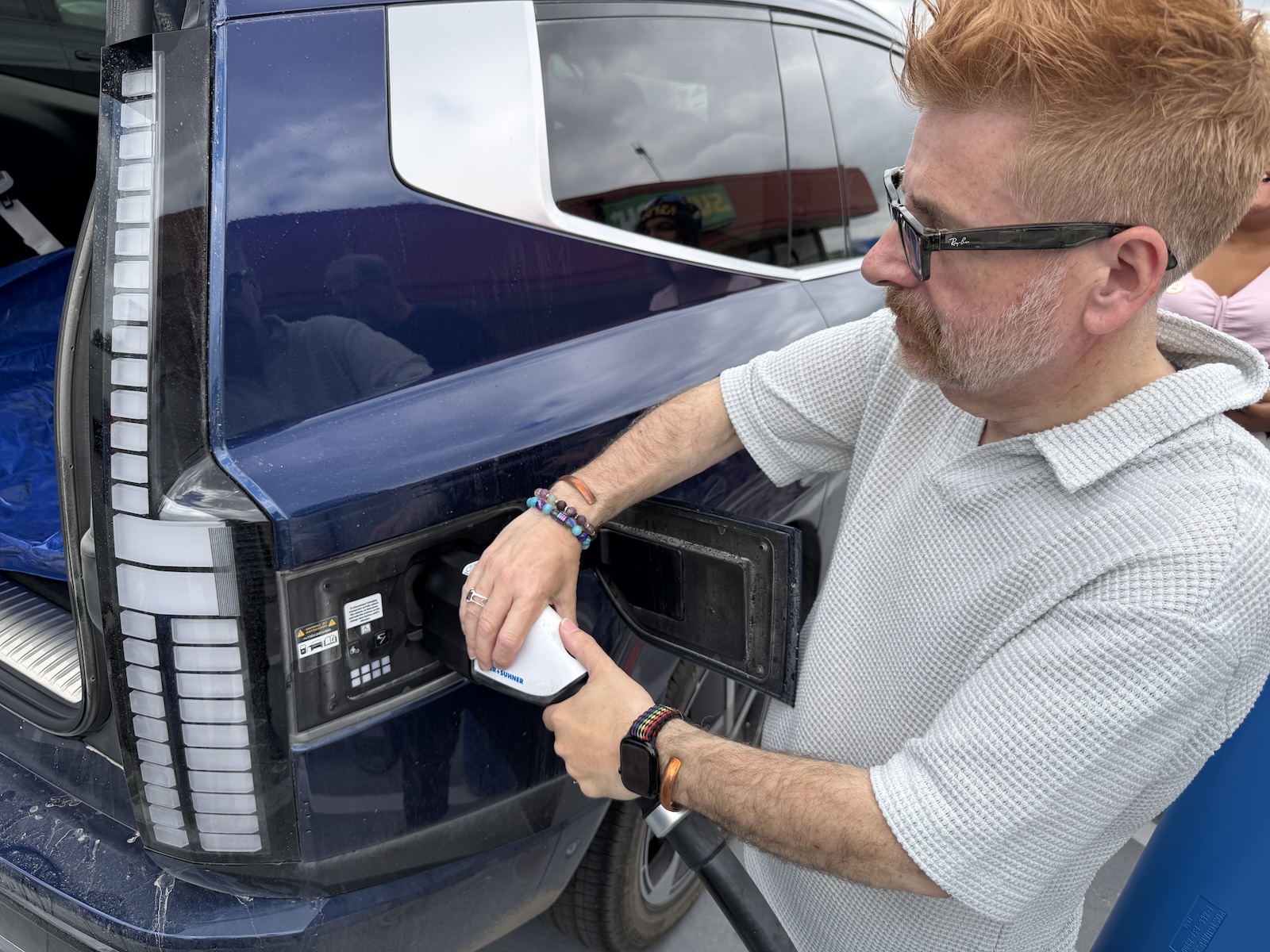
Miles charges up the 2026 Hyundai Ioniq 9 during the trip.
It’s become conventional wisdom, it seems, that EVs are coming unplugged. And, certainly, sales took a sharp tumble after federal tax credits were phased out last September. Battery-electric models made up barely 6% of the U.S. auto market during Q4 2025. (Though that figure is misleading. The segment hit almost 14% during Q3 as buyers raced to take delivery before the credits went away.)
Demand remained weak during the first two months of this year. But something happened in March. A war and a sudden surge in gas prices to near-record levels.
First quarter sales showed a bit of an uptick, and several manufacturers, including Hyundai, Kia and, surprisingly, Subaru, actually reported year-over-year EV sales increases. If anything, the upturn appears to be accelerating, Abuelsamid told me during our Cheyenne to SLC run, though we’ll have to wait until early next month for all automakers to report in; some, like General Motors and Nissan, only report on a quarterly basis.
How much of a rebound we’ll see is uncertain, but electrified vehicles, in general, appear to be gaining traction fast. Hybrids, in particular, are on track to top 15% of the U.S. new vehicle market for all of 2026 — and Abuelsamid wouldn’t be surprised if they hit 20%. Production snags are likely the only barrier. As for EVs? If the war drags on, as it appears likely to do, with gas prices remaining high, we could see the numbers come close to the 8% level they were tracking during the first half of last year.
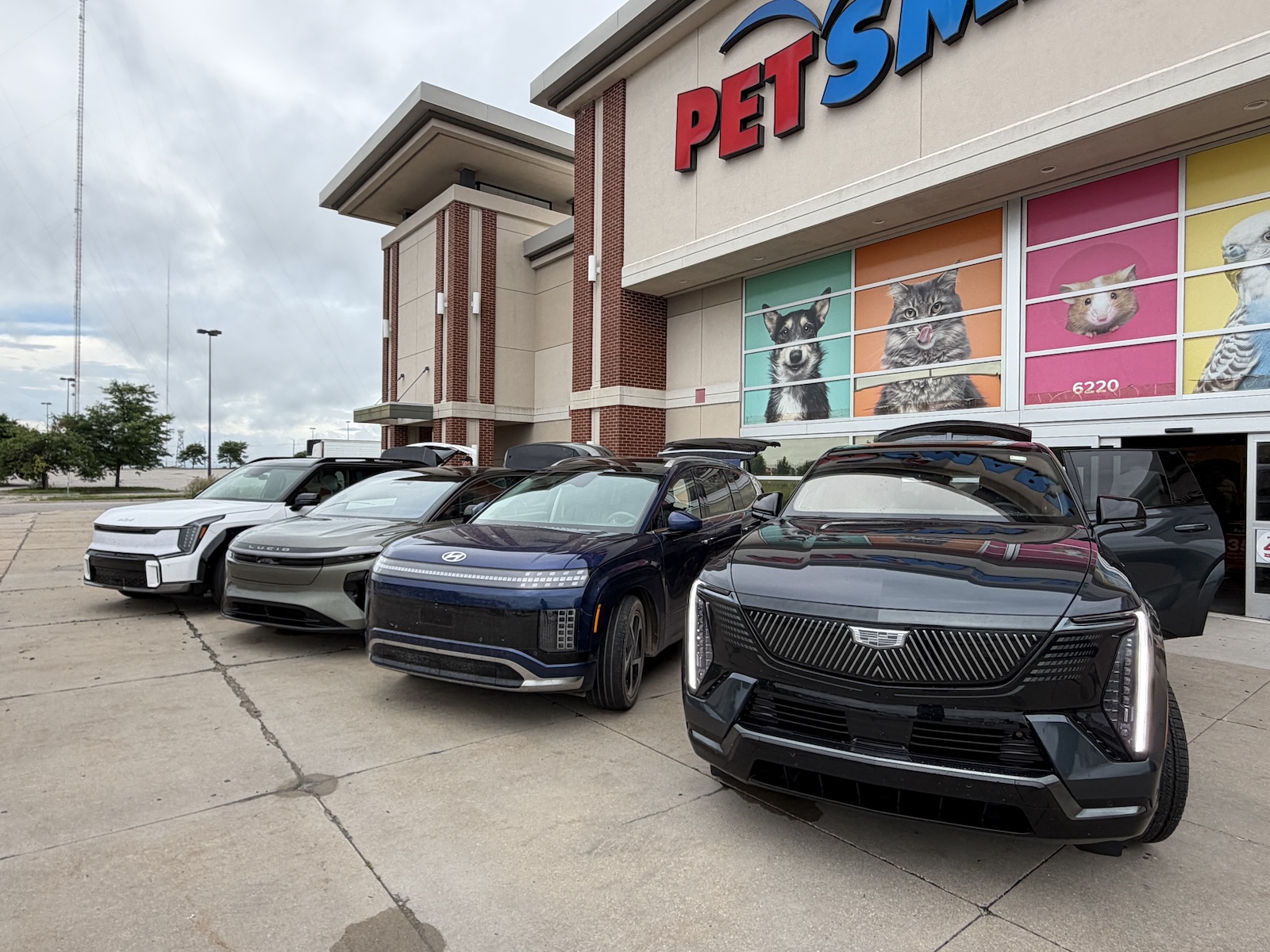
The 2026 Operation Frodo fleet of electric vehicles stand ready.
There’s been a lot of reporting about how automakers have pulled back from the EV market. And that’s true. Honda, for one, cancelled the planned launch of the 0 Series lineup, also scrapping the EV production “hub” it was developing in mid-Ohio.
But that doesn’t mean you can’t find plenty of battery-electric models, Abuelsamid stressed. Yes, Toyota scrapped the Lexus LF-ZC that was supposed to become the brand’s flagship. But the flip side of the story is that it is still expanding the line-up and will have seven models, including the new Toyota Highlander EV and Lexus ES, in showrooms by year end.
“The general trend is a positive one,” stressed Abuelsamid. “And the thing is we’re going to see more and more affordable models come to market through the remainder of this year and into 2027.” That includes the new Slate pickup and the first of a whole family of “Universal EVs” from Ford.
If anything, we could see some manufacturers lament their pullback from the EV market, he suggested.
What we’re likely to see is more manufacturers follow the strategies laid out by Toyota and Stellantis, opting for flexible platforms that can be offered with a variety of different powertrains, whether gas, hybrid, or all-electric. That will allow them to quickly shift production to reflect changes in consumer demand.
Trump-induced comeback
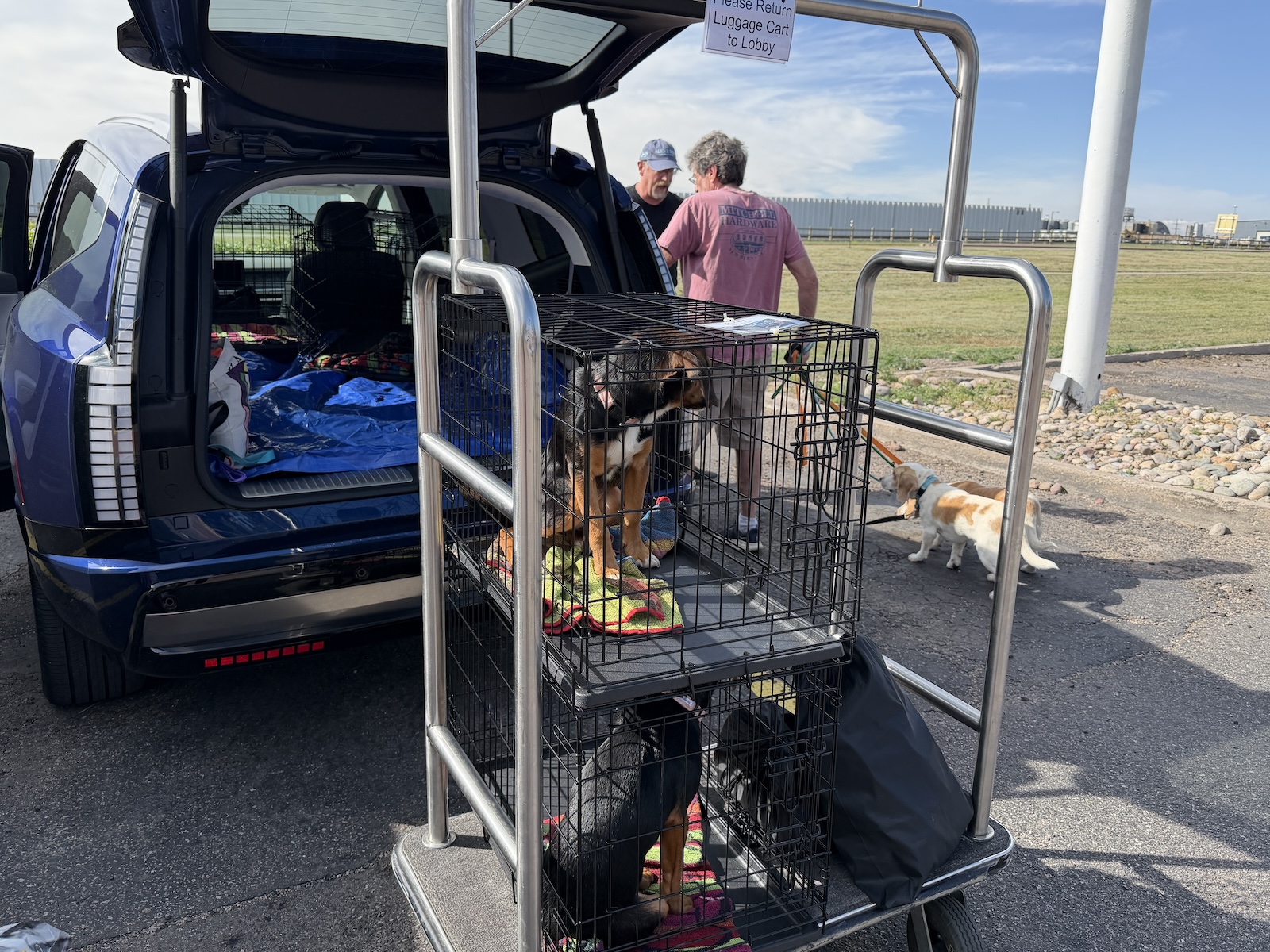
Some of the dogs wait to be loaded into the vehicles to head to their forever homes.
There’s an irony to what could be a nascent EV rebound. At least some of the credit would have to go to Pres. Donald Trump.
The Iran War has not just driven fuel prices up to near-record levels, but it has underscored the vulnerability the entire world faces when 20% of global petroleum supplies can be cut off through the closure of a waterway like the Strait of Hormuz.
While the president may rail against EVs and windmills, that’s not a view shared by much of the world. As Sam and I recorded the accompanying podcast we headed west on I-80 through Wyoming, a state best known for its abundant supplies of coal and petroleum. But the rolling landscape was also covered, mile after mile, by an expanding network of wind turbines generating enough current to help power the state’s growing network of EV chargers.
Our 16 beagles likely don’t really care what sort of vehicles they’re being transported in. They’re just excited to be heading to new homes. But it’s great to know we’ve been able to demonstrate the capabilities EVs offer.





Headline should be “Eisenstein goes to the dogs.”
Love it!