
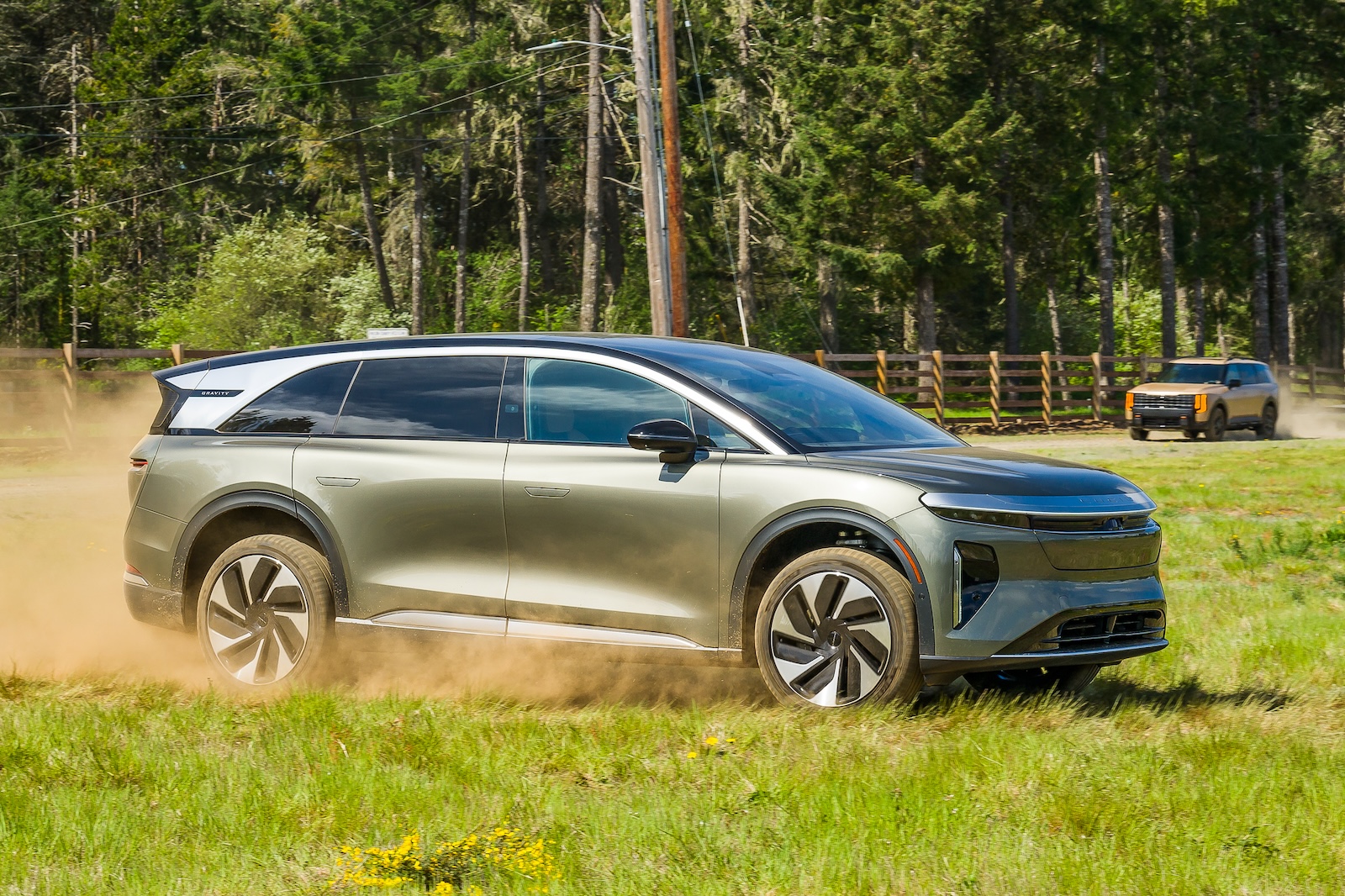
Lucid denies it is preparing to file bankruptcy but the company is clearly in trouble. And that raises new concerns about a handful of other battery-electric brands, like Rivian and Slate still hoping to find their own niches. Only a few years ago a flood of EV start-ups seemed ready to kick the established automakers to the curb. What went wrong? Just about everything.
 Trading on Lucid Motors stock was repeatedly halted Tuesday following reports the company may be preparing to file for Chapter 11 protection. At one point, shares were down more than 40%, though they eventually rebounded, somewhat, closing off 16% for the day.
Insiders have told me Lucid has brought on AlixPartners, a consulting firm that has advised a number of other automotive players through the bankruptcy process – though it also has helped some of its clients avoid that maneuver. For its part, Lucid issued a statement declaring that “the rumors are completely false.”
What’s indisputable is that Lucid is in serious trouble. Despite solid reviews, its second product line, the Gravity SUV, has failed to generate much volume – or revenue – forcing the company to implement a cost-savings plan last month eliminating 18% of its workforce. Should Lucid somehow squeak through its latest crisis its fate will almost surely be determined by what happens with the Cosmos. That’s the more mainstream electric utility vehicle set to go into production late this year at a new plant in, of all places, Saudi Arabia.
While many of Lucid’s problem may be unique to the brand, its worsening situation is shining a spotlight on the challenges facing other EV start-ups, including Rivian and Slate. Not all that long ago, they seemed poised to shatter the established automotive order. Now, they’re all struggling to survive. What went wrong?
Weren’t They Going to Change the World?
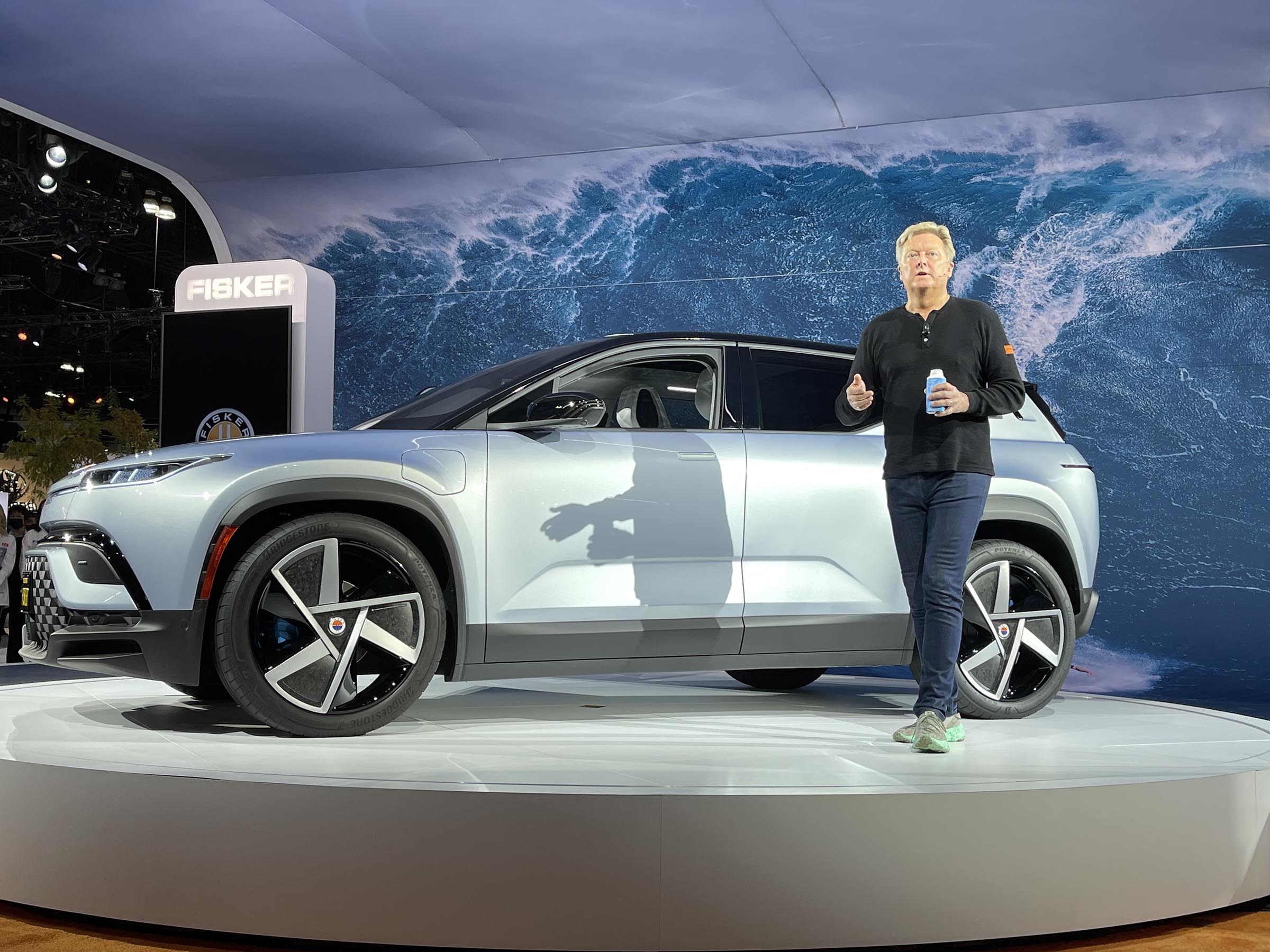
Henrik Fisker previews the Ocean EV at the 2023 LA Auto Show.
In a story I filed for NBCNews.com in February 2016 I wrote,
“Until recently, the auto industry was a tight-knit community made up of a relatively small number of well-funded and well-established manufacturers. In the U.S., it has been decades since any start-up made a serious push for a mainstream market. Yet, by the end of the decade, as many as a half-dozen new names could be competing for space in American driveways.”
Those start-ups went by names like Faraday Future, Lordstown Motors, Fisker and Canoo. And they initially generated plenty of headlines – and a fair bit of capital as most took the risky SPAC route, short for Special Purpose Acquisition Company, to get listed on the stock market. All four of those companies are gone now, though I still receive the occasional press release from folks who insist Faraday will yet rise from the dead.
At this point, just one EV start-up, Tesla, appears to have carved out a clear – and profitable – niche within the automotive market. Could there still be room for some others? While Lucid can’t yet be written off, there are a few other possibilities, most notably Rivian and Slate.
But first, let’s look at why the seemingly golden opportunities of 2016 have turned out, in so many cases, to be little more than fool’s gold.
What Went Wrong?
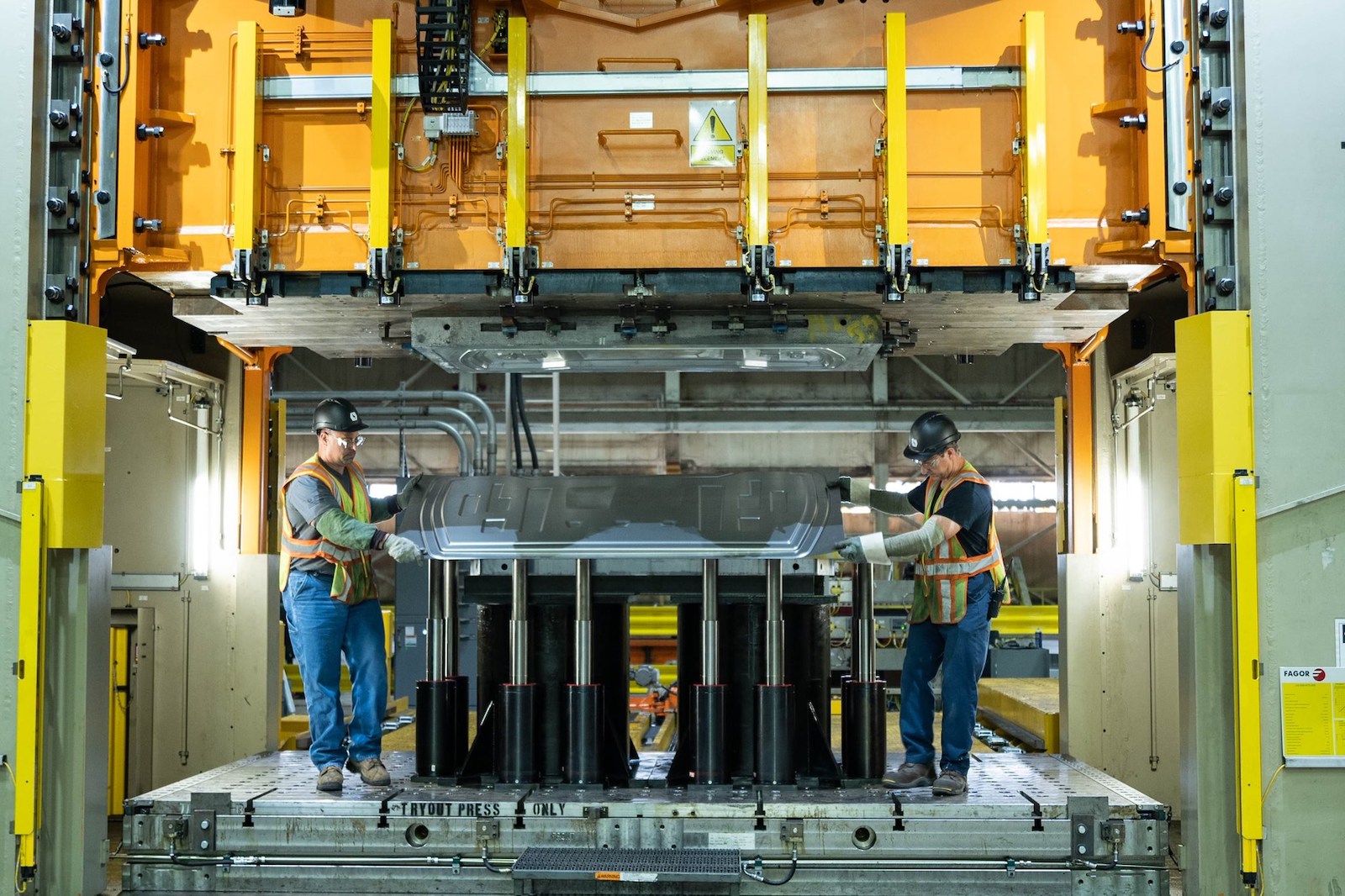
Workers at the now-shuttered Lordstown Motors assembly plant.
For a number of start-ups, things got off on the wrong foot, right from the start. Farraday Future, for one, promised to bring out an exotic and extremely expensive electric sports car with little real market opportunity. And the bottom fell out when its founder, Chinese billionaire Jia Yueting, ran into financial trouble and pulled out of the project.
Fisker was the second attempt by Danish designer Henrik Fisker to get into the green car business. But, as with his original Fisker Motors, he proved to be a terrible businessman and his product deeply flawed.
Lordstown, Canoo and others had equally questionable plans, weak management and products unlikely to generate serious volumes.
But there was also the problem of timing, said Sam Abuelsamid, lead auto analyst with Telemetry Research.
Bad Timing
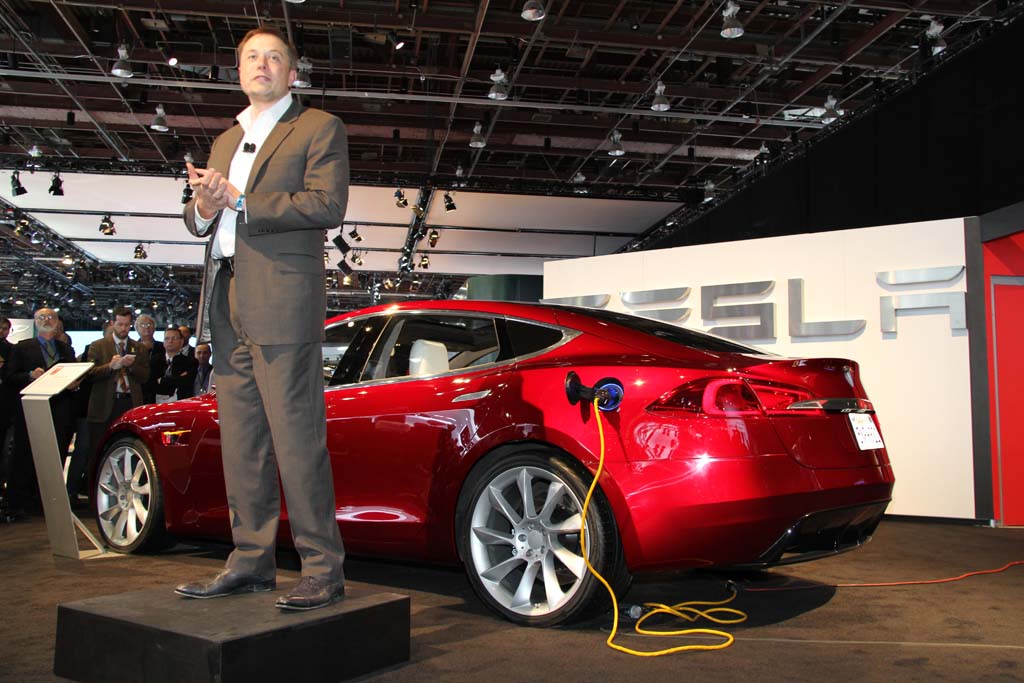
Elon Musk and Tesla Model S Prototype at the 2010 Detroit Auto Show.
In Tesla’s case, he noted, the company “was able to survive” years of deep losses because it was able to “throw shares out there,” rather than having to run up massive debt. A number of start-ups hoped to repeat that story, using SPAC deals to speed up the process of getting listed on the stock exchanges. Initially, the approach worked, early investors paying a premium – only to watch their shares soon tumble to a fraction of the original strike price.
Most also found it difficult to impossible to line up alternative funding, especially after COVID hit. And that was just part of the problem caused by the pandemic. Overall, U.S. new vehicle sales tumbled. And, with the global supply chain disrupted, even the biggest manufacturers faced shortages of key parts and components – especially the semiconductor chips especially critical for EVs. As start-ups, companies like Fisker, Lucid and Rivian had little leverage over suppliers who were having enough trouble meeting demands from industry giants such as General Motors, Toyota and Volkswagen.
While the EV industry, as a whole, got a boost with the election of Pres. Joe Biden in November 2020, his administration took its support for electrification way beyond what the market was ready to accept. And demand came crashing down when Donald Trump was voted back in four years later. Within months, the 47th president literally pulled the plug, ordering cuts to the federal program set to invest $5 billion in a nationwide charging network. Then, last September, Congress phased out federal tax credits. EV sales averaging more than an 8% market share during the first half of 2025 nosedived to barely 6% during the final three months of the year.
Industry-wide, automakers last year wrote off more than $50 billion as they raced to rewrite their electrification plans. As tough as that was for companies like Ford and Stellantis, it was a truly devastating blow for the remaining start-ups.
Management Mayhem
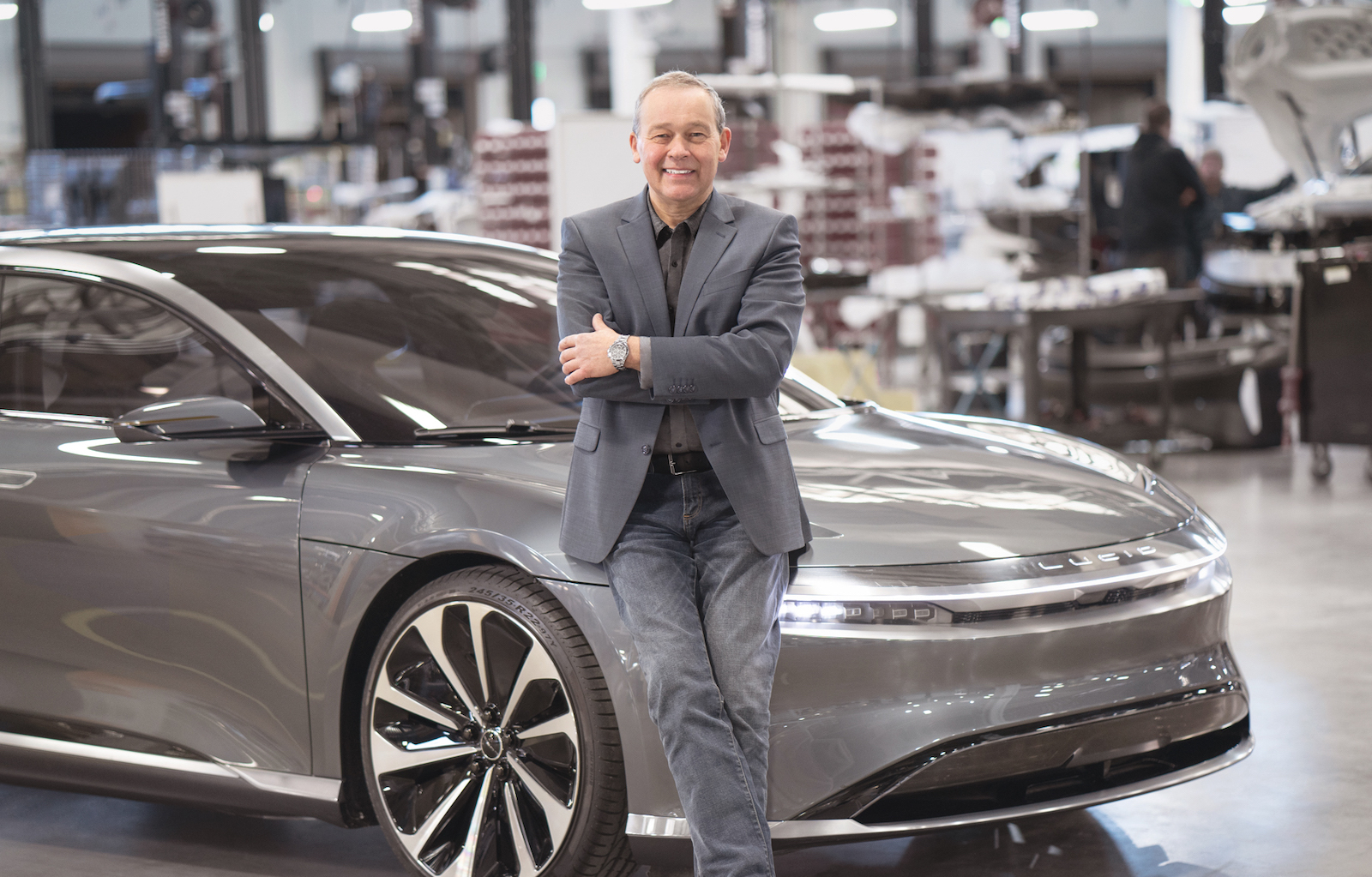
Lucid CEO and founder Peter Rawlinson resigned in February but will continue for a while as an advisor.
There’ll likely be some great case studies to be written in the years ahead about how management at so many of the start-ups got it wrong. In Lucid’s case, founder “Peter Rawlinson shouldn’t have been CEO so long,” contended analyst Abuelsamid.
A brilliant engineer, the British-born executive defied those on his team who wanted to launch the company with a small, affordable product line to undercut Tesla. Instead, Rawlinson insisted on a striking, albeit high-priced, sedan taking direct aim at the Model S. The Lucid Air, reviewers uniformly agree, is both beautifully designed and technically sophisticated. But it’s made virtually no dent on the market.
Just as Rawlinson was forced out last year it looked like the company might get another chance with the Gravity, its first utility vehicle. But the launch was flawed, the price too high. And now, as Lucid prepares its first mainstream model, the Cosmos, it may be too late.
Lucid’s Last Chance?
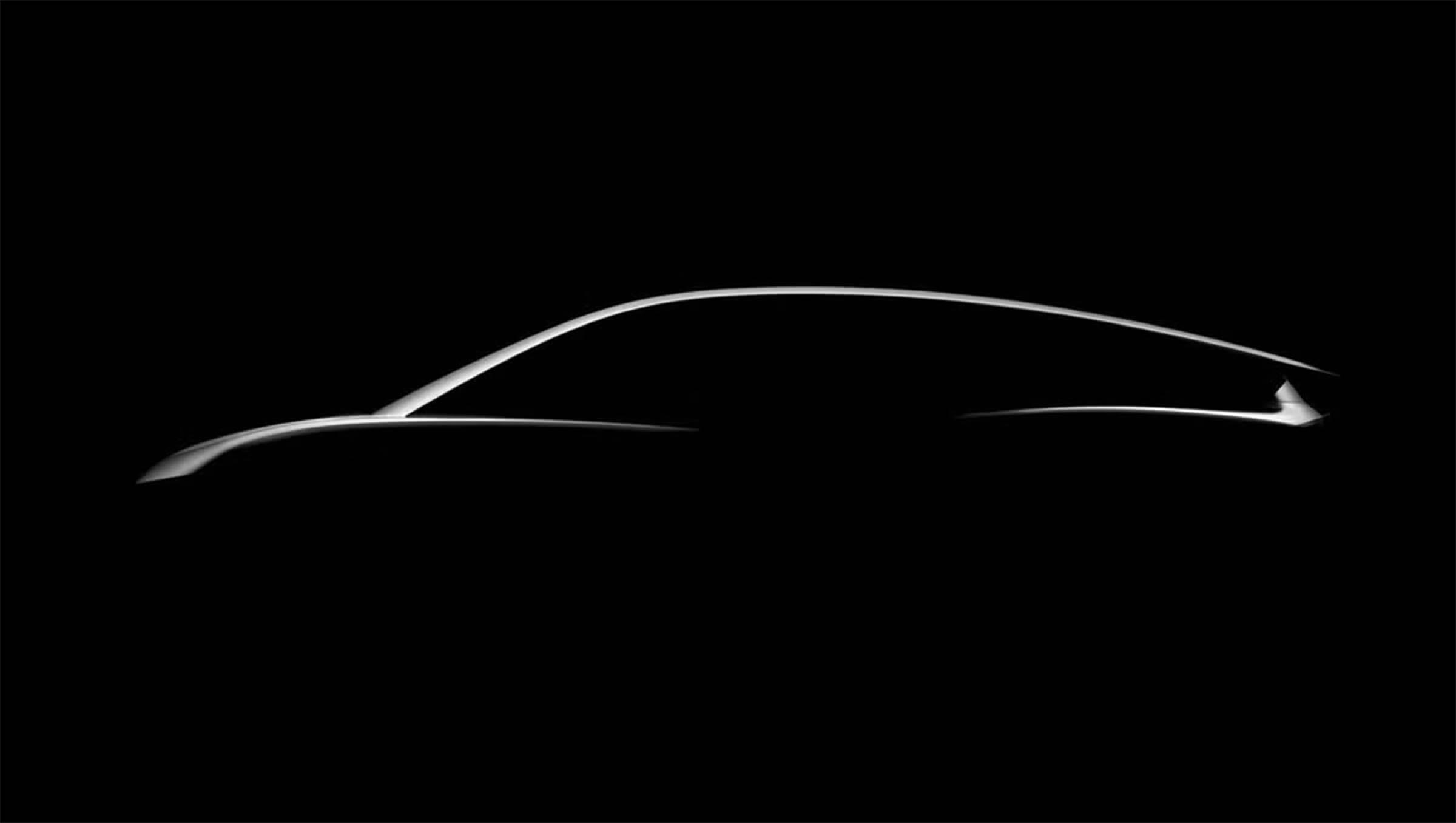
A teaser for the Lucid Cosmos.
Responding to the bankruptcy rumors, Lucid said in a statement, “The company has sufficient liquidity to carry its operations well into next year, as recently published in its last quarterly filings, and it has not formed any special Board committee to explore the scenarios reported today. Our focus is on improving execution, strengthening operations, and positioning Lucid to realize the full potential of its technology, products, and innovation. AlixPartners is assisting us in that and nothing else and has not recommended bankruptcy to management or the Board.”
Not everyone is ready to write Lucid off, the company’s shares actually rebounding by nearly 27% by mid-afternoon on Wednesday.
On the positive side, the automaker has some deep-pocketed backers, primarily Saudi Arabia’s Public Investment Fund which owns a majority stake – though Uber in April bumped its total investment in the automaker to $500 million. Lucid has become a central part of Uber’s plan to catch up with Alphabet/Google-backed Waymo, as well as Tesla, by providing robotaxis for the ride-share giant.
Should Cosmos prove a dud and bankruptcy become unavoidable, Abuelsamid thinks Uber could acquire its assets. The bigger question is whether the Saudis will walk away from the EV maker. The sovereign fund has so far invested $8 billion in Lucid for a 60% stake. It’s not just to become part of a greener future. The Mideast nation is looking for ways to broaden its economy. It will have its first true assembly line open later this year – the plant notably becoming the first to build Cosmos. That, several financial observers told me, would make it difficult for the sovereign fund to write its investment off.
Rivian Learns its Lesson
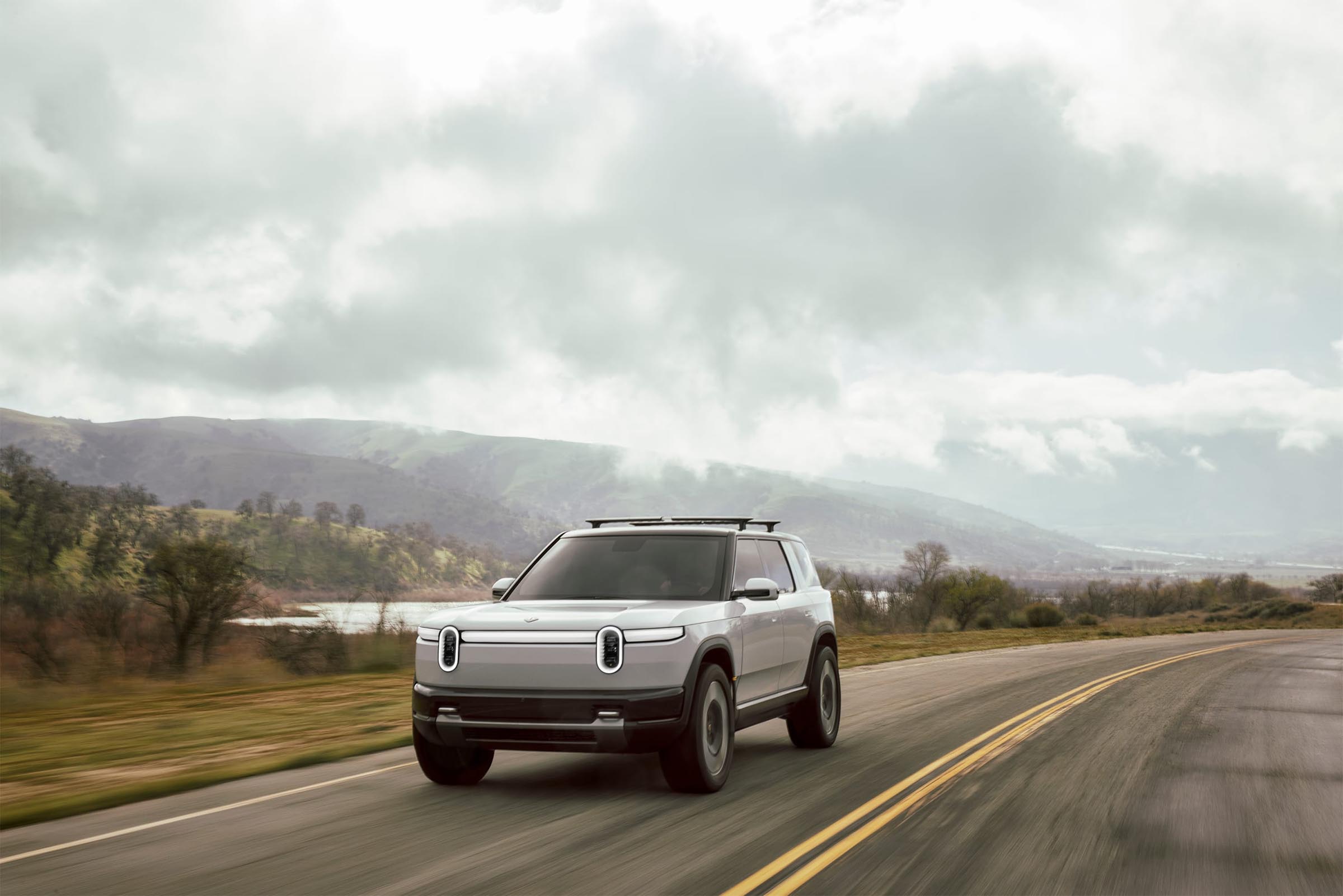
The Rivian R2.
Like Lucid, Rivian first came to market in 2021 with two expensive models: the R1T pickup and R1S sport-utility vehicle. It has likewise faced some serious financial pressure and its fate is clearly dependent upon its ability to go more mainstream. That transition is now underway, the new R2 model starting at around $45,000. It will be followed by the even more affordable R3. At a base $35,000, it will roll out of the plant Rivian is building in Georgia.
I spent a long morning this Wednesday with Rivian designers and engineers at the company’s tech center in Plymouth, Michigan, followed by a drive in the R2. The challenge with that new model was to “shrink it down without it becoming a smaller, cheaper Rivian,” explained design chief Jeff Hammoud. If anything, he and the rest of the development team insisted, buyers will get pretty much the same sort of performance, range and features – as well as better ride dynamics – than what the original R1S offered.
From the company’s perspective, it’s betting it can boost sales by an order of magnitude and, in the process, slash costs. Indeed, said Chief Engineer Greg Dachner, the “build of materials” – the parts list – has been drastically reduced compared to the original EV. In turn, overall material costs are expected to come down by about 50%, while production costs are down by roughly the same amount. If market demand comes anywhere near target it could suddenly find itself deeply in the black.
The question is whether there’s enough of an EV market left. The automaker’s originally factory will have about 150,000 units of capacity next year, the sales target around 97,000 R1s and R2s.
Slate is the Wild Card
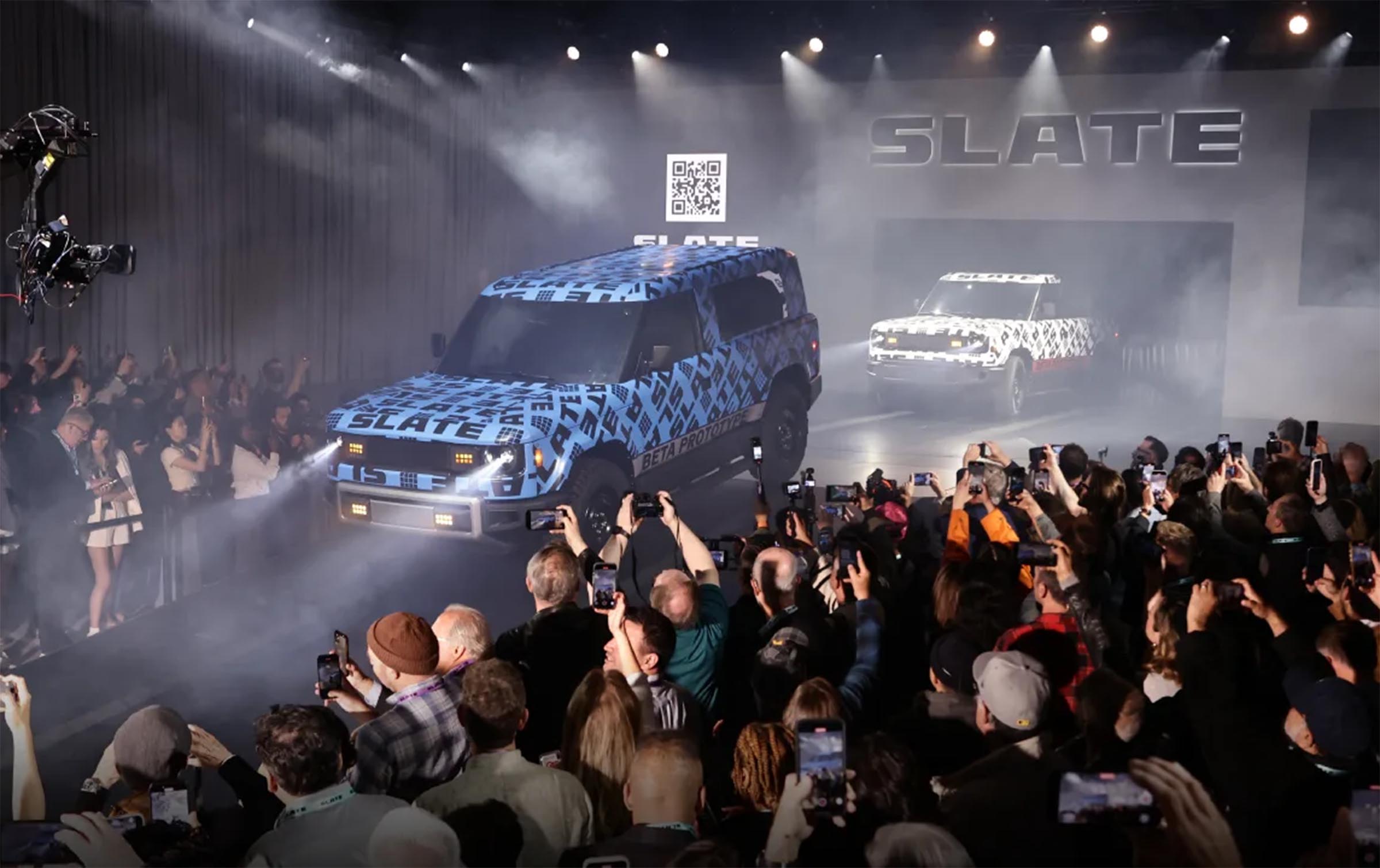
The Slate pickup at its April 2025 debut.
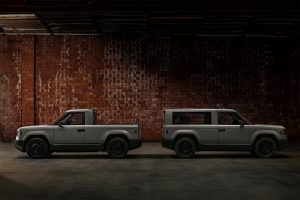
The real wild card is Slate, a suburban Detroit-based start-up looking to change the EV equation with a stripped-down pickup due out later this year at a mere $24,950 – plus $1,450 in delivery fees. That’s barely half the price of the typical new vehicle today sold in the U.S. – and even less when compared to the average EV.
For the money, buyers will get a single row of seats, hand-cranked windows and a slate-gray molded plastic body. The Slate pickup won’t even come with a radio. More like the bare-bones pickups popular in the 1970s, when Baby Boomers were first getting licenses, Slate will offer 175 accessories at its launch late this year, including a radio, an assortment of colorful wraps and even a cut to convert the pickup to an SUV. That will provide great “customizing” opportunities for owners who want their vehicles to “become an extension of their personality,” said Chris Barman, Slate’s product chief and a former Fiat Chrysler exec.
Whether that will work is far from certain. For one thing, Ford early next year will roll out its new “Universal EV.” The pickup will start around $30,000, according to Ford insiders, but it will offer two rows of seats and a lot more creature comforts, including power windows and a radio, as well as numerous paint colors. By the time a Slate buyer finishes customizing their vehicle, cautioned Abuelsamid, it may cost just as much – perhaps even more – than Ford’s upcoming EV truck.
The End of an Era That Never Arrived
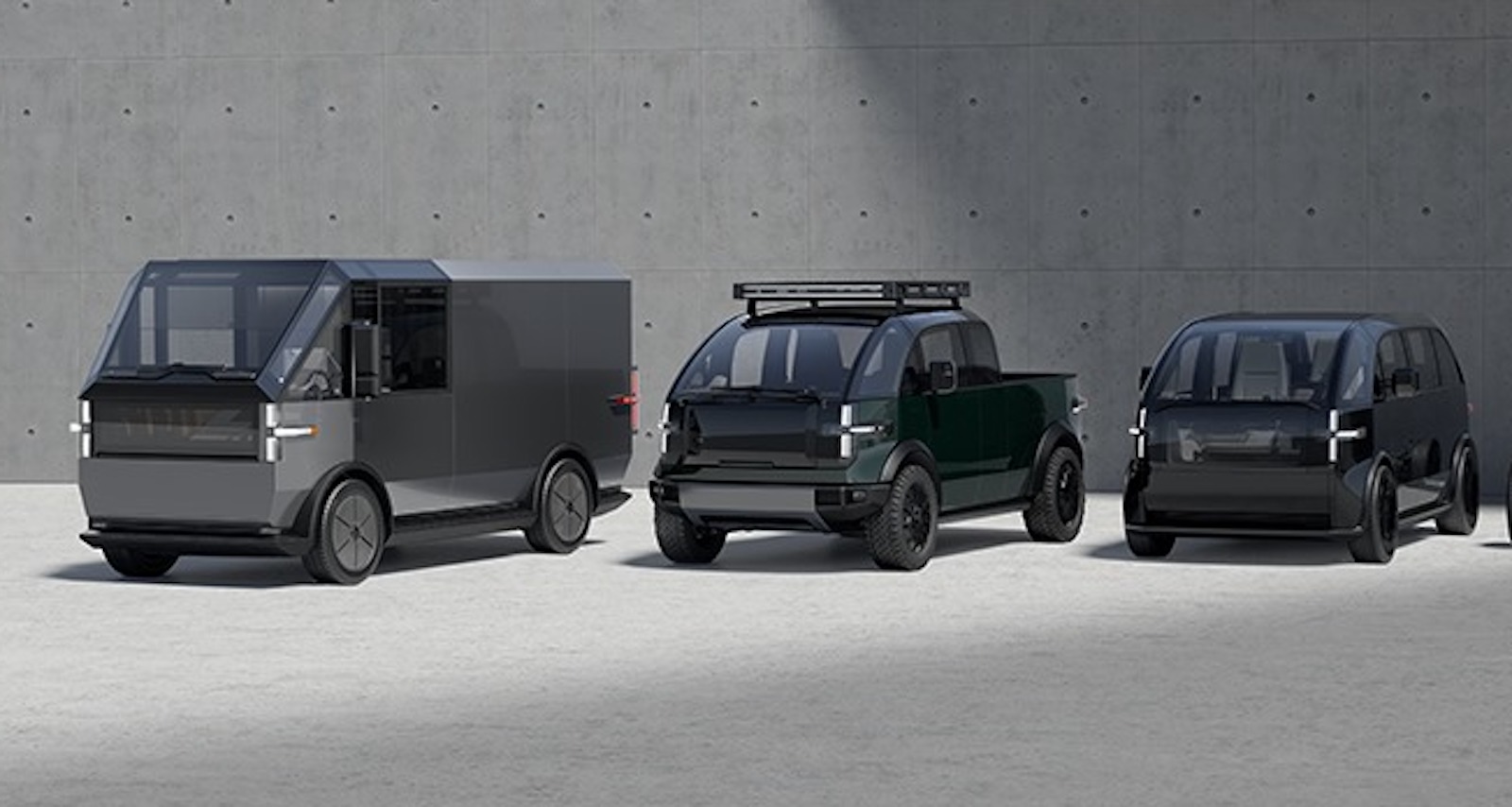
EV startup Canoo filed for Chapter 7 bankruptcy after it couldn’t secure additional funding.
Just a decade ago it seemed like the auto industry was in for a dramatic restructuring. Not only were EVs set to displace the time-tested internal combustion engine but those EVs were going to be built by an entirely new line-up of manufacturers.
The reality is far different as of mid-2026. No, I’m not writing off battery-electric vehicles. There are plenty of reasons to believe they’ll rebound and begin gaining traction before the end of the decade. But, with rare exception, it will be conventional manufacturers who build those EVs. Tesla is the clear exception that has found a profitable niche in the automotive world. But whether any of the other EV start-ups can survive, never mind thrive, remains far from certain.
This story first appeared on TheCarCollective.Substack.com. Subscribe for free!

0 Comments