
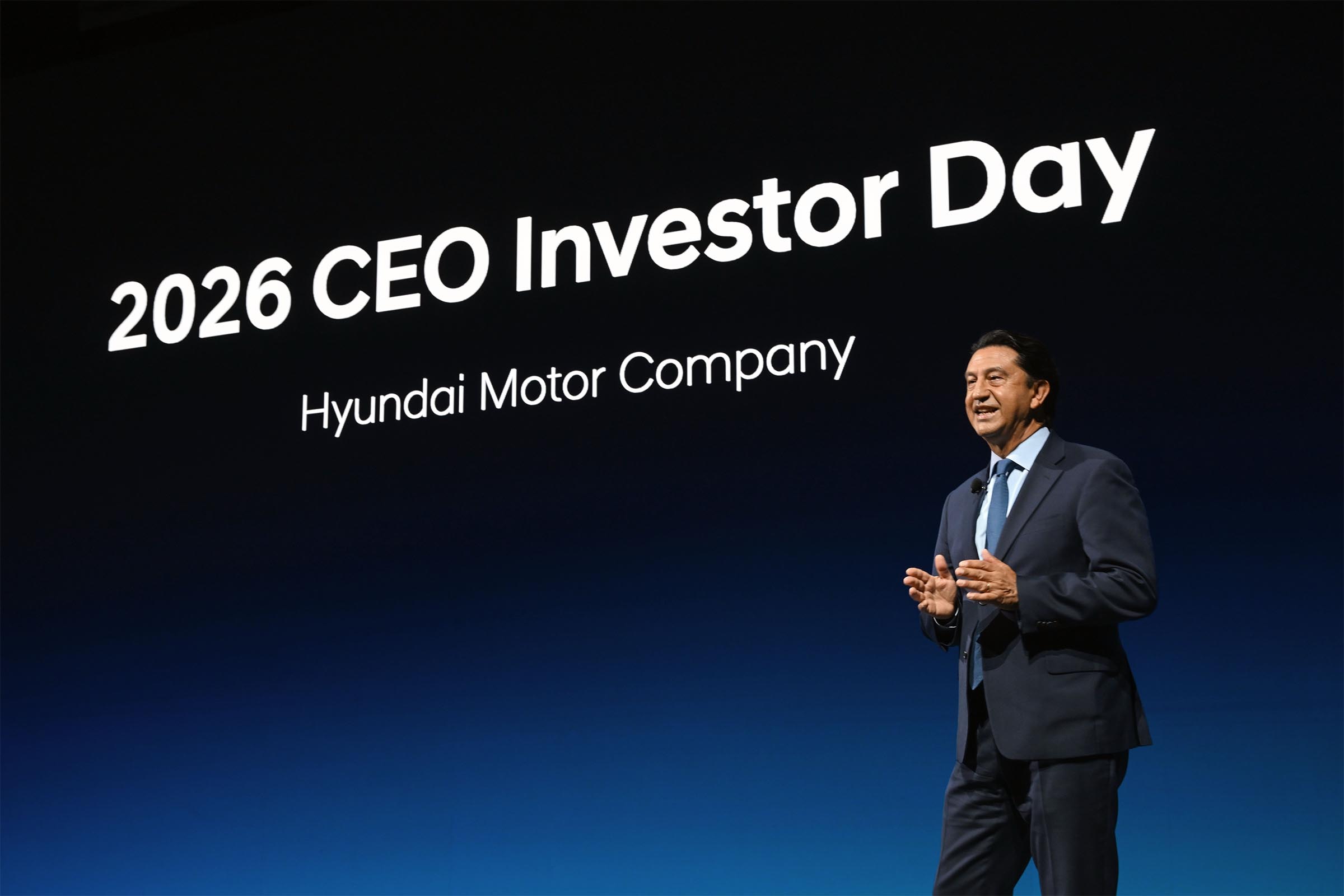
Hyundai Motor Co. will add or refresh more than 100 new products before the end of the decade in a bid to lock itself in as one of the world’s best-selling and most profitable automakers – a move that could threaten the industry’s two giants: Toyota and Volkswagen. To meet that target, Headlight.News reports, will require significant increases in global production capacity.
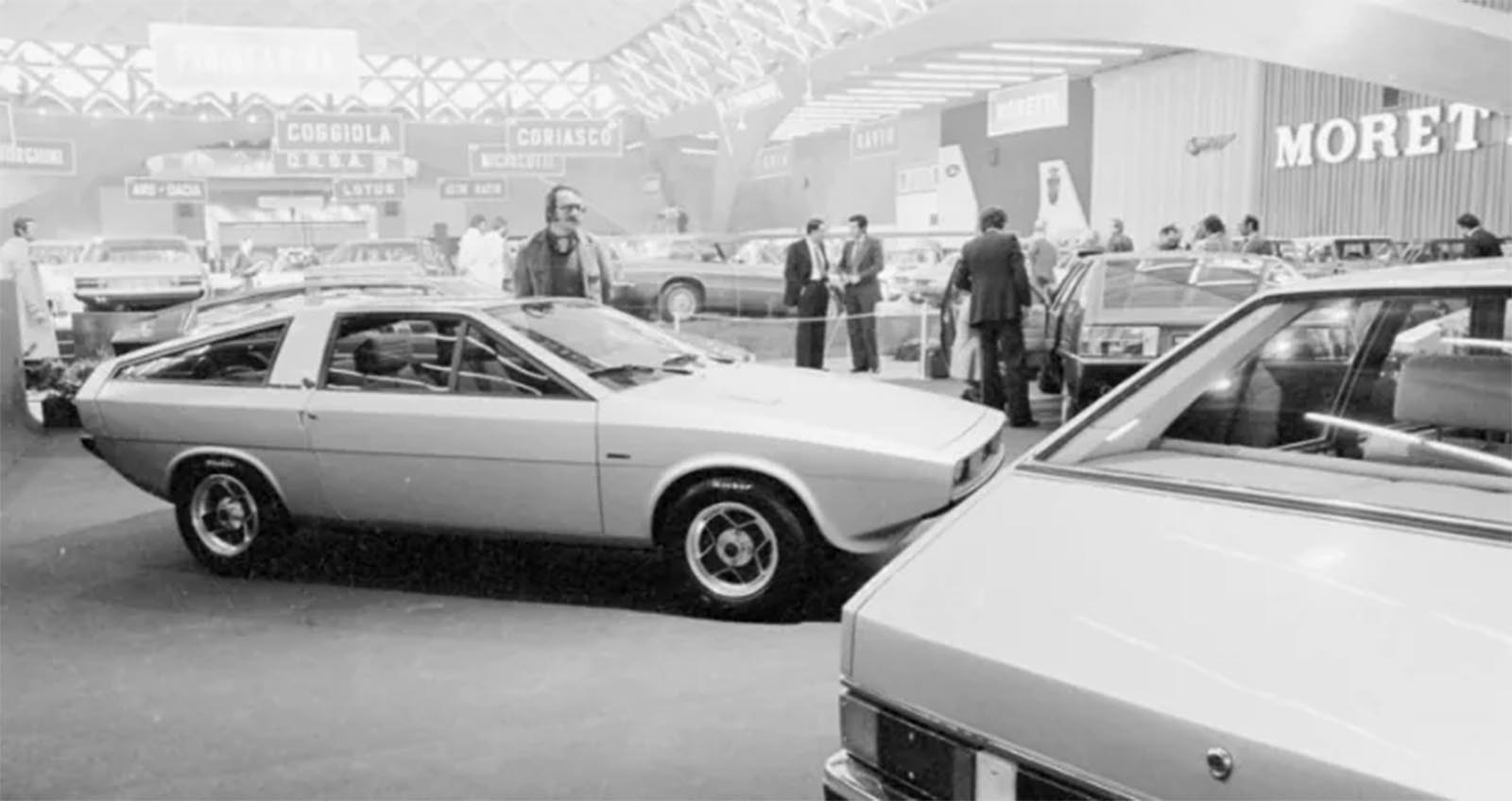
The original Hyundai Pony Coupe Concept made its debut at the Turin Motor Show in 1974.
Barely four decades after it tenuously stepped out on the world stage, Hyundai Motor Co. has already positioned itself as a member of the industry’s global Big Three. But as its president and COO Jose Munoz made clear this week, it’s not looking to stop there.
The same company that launched its ascendancy with the cheap and cheerful little Hyundai Pony today covers a broad range of products, from entry models like the Venus up to the new and luxurious Genesis GV90 Neolum. But it’s not about to stop there, Munoz revealed during an Investors Day briefing in Seoul.
By the end of this decade, he revealed, HMC will deliver a veritable product tsunami – its biggest ever – with a total of more than 100 new or refreshed models scheduled to reach market. And it will significantly increase production capacity to meet its aggressive global sales goals, a 35% jump by 2030..
What’s coming
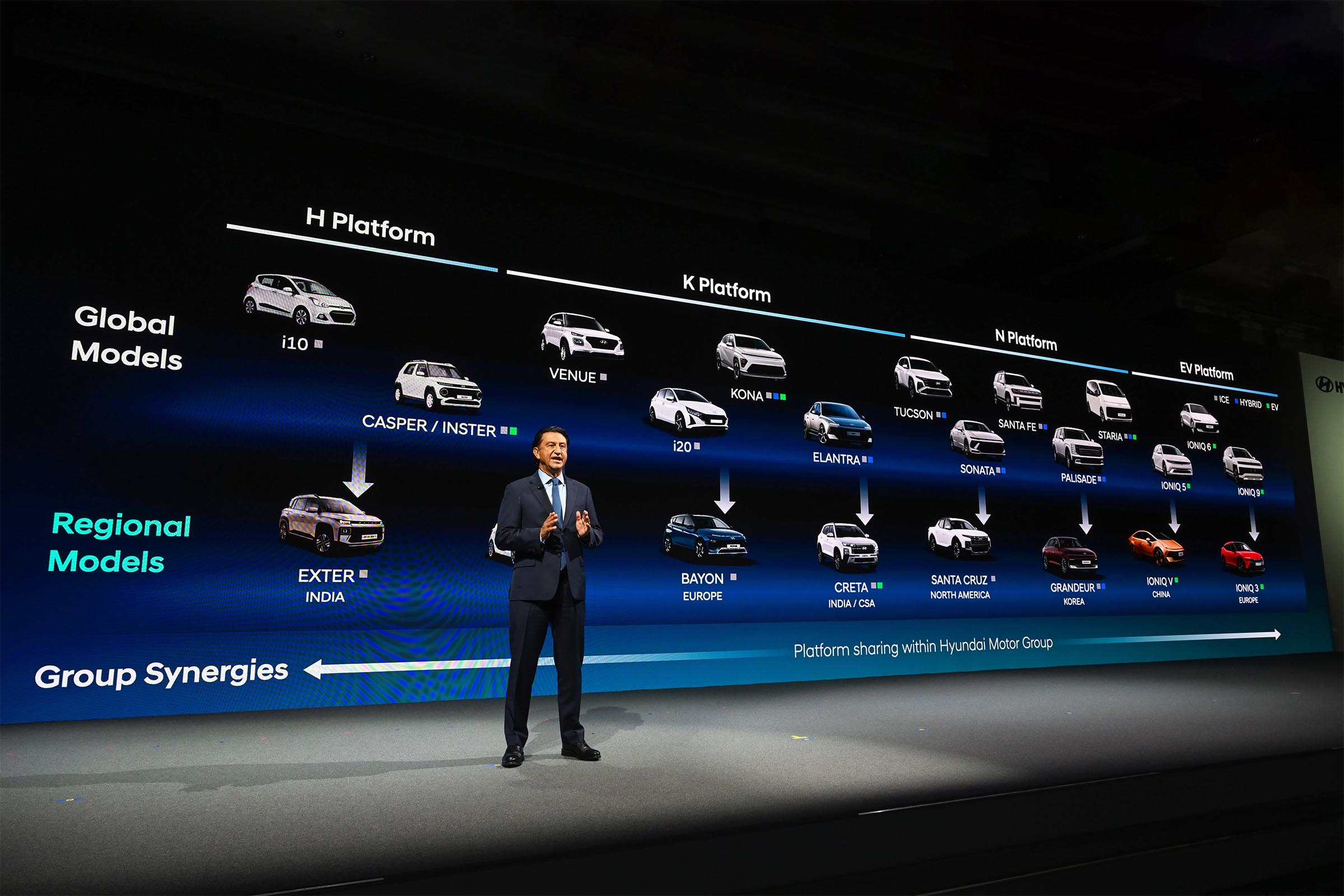
Hyundai COO Munoz shows off the company’s product plans.
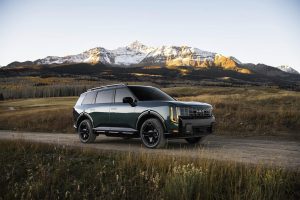
We’ve already seen some of these products, including the GV90 and the Genesis brand’s first high-performance Magma model. Hyundai has teased still others, with a production version of the rugged Boulder SUV in the works. A concept model based on a new body-on-frame platform debuted at the New York International Auto Show in March. Munoz, at the time, also said more variants, including a midsize pickup, will follow.
Of the more than 100 new or updated products, Hyundai plans to offer 58 in the North American market. That means some models, notably including a number of new battery-electric vehicles, will be reserved for markets in Europe, Latin America and Asia
Hyundai also plans to expand its role in the commercial vehicle market with, among other things, a new van. “There are 26 million units a year (sold worldwide) in segments where we have little or no coverage,” Munoz explained. “That is 29%of the total industry. Pickups, light commercial vehicles and large SUVs are the biggest gaps in the markets that pay the best.”
Plugging in
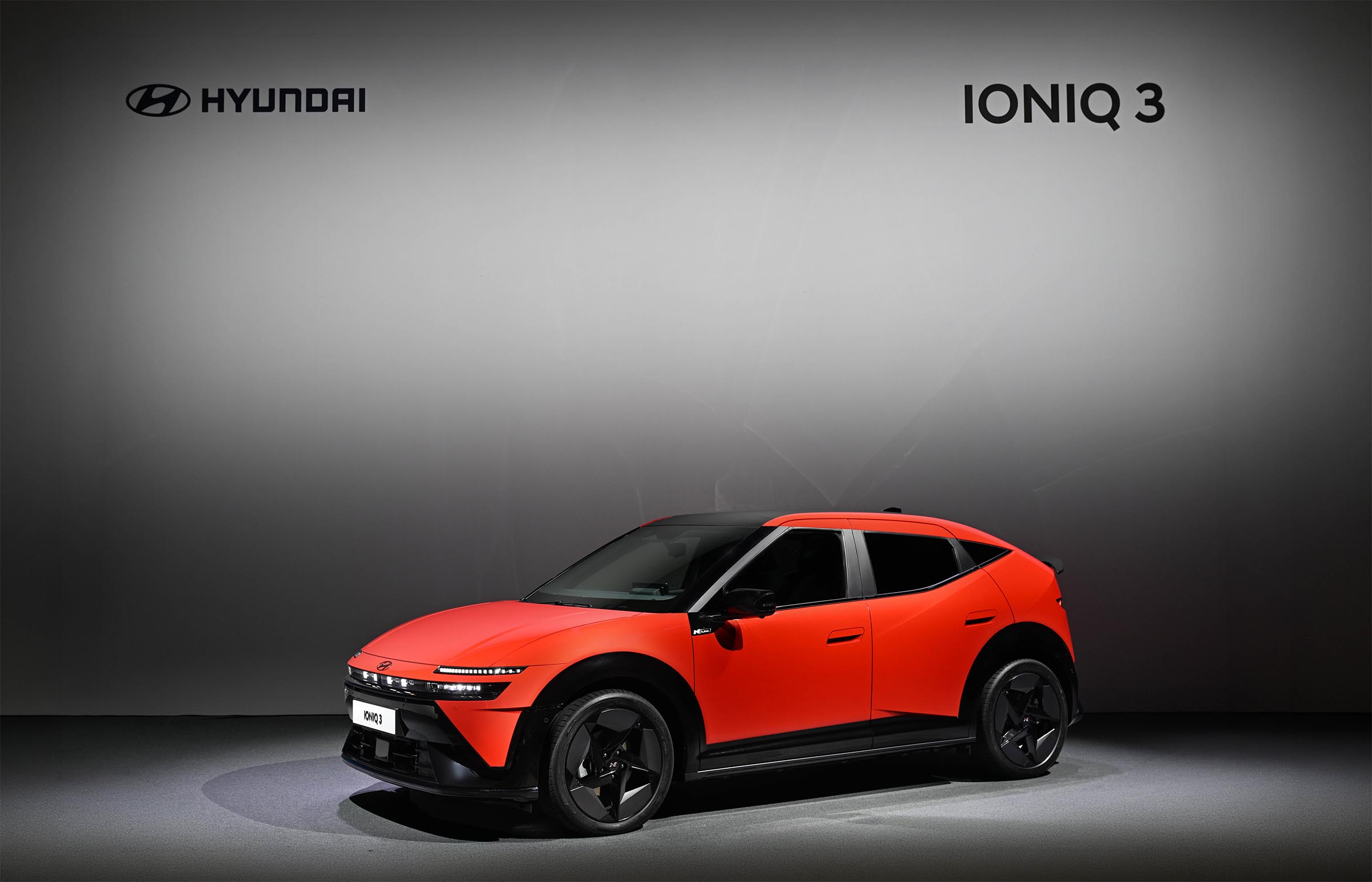
Some EV models, like the Hyundai Ioniq 3, won’t come to the U.S.
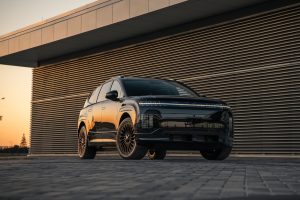
During his presentation, the Mexican-born Munoz made it clear that electrification, in all its forms, will play a vital role in Hyundai’s future. The GV90, for example, uses an all-electric drivetrain. And the Genesis GV80 now in the works will add a hybrid package. With the upcoming Santa Fe EREV, meanwhile, we’ll also see Hyundai’s first-ever extended-range electric vehicle – which uses its internal combustion engine solely to generate power to keep its batteries charged up. That is expected to yield a range of up to 600 miles for the Santa Fe variant, far more than any conventional EV currently delivers.
Moving forward, Hyundai will shift away from dedicated EV platforms to go with more flexible architectures capable of being fit with a wide variety of powertrain technologies – a strategy already in use by competitors such as Stellantis.
The company is expected to use that flexibility to target specific market needs. In Europe and China, for example, it will expand availability of EVs. In the U.S. it will upgrade its internal combustion engine line-up and add both E-REVs and conventional hybrids. The latter technology is enjoying booming demand in the States and accounted for 25.5% of Hyundai’s sales in the U.S. during the first half of 2026 – nearly twice the percentage for the overall American market.
More Auto News
- Hybrids Charged Up U.S. Auto Sales
- Has SRT Found the Answer to Turbo Lag?
- Dodge Debuts Charger Super Bee – But There’s More Coming
Performance models and robocabs
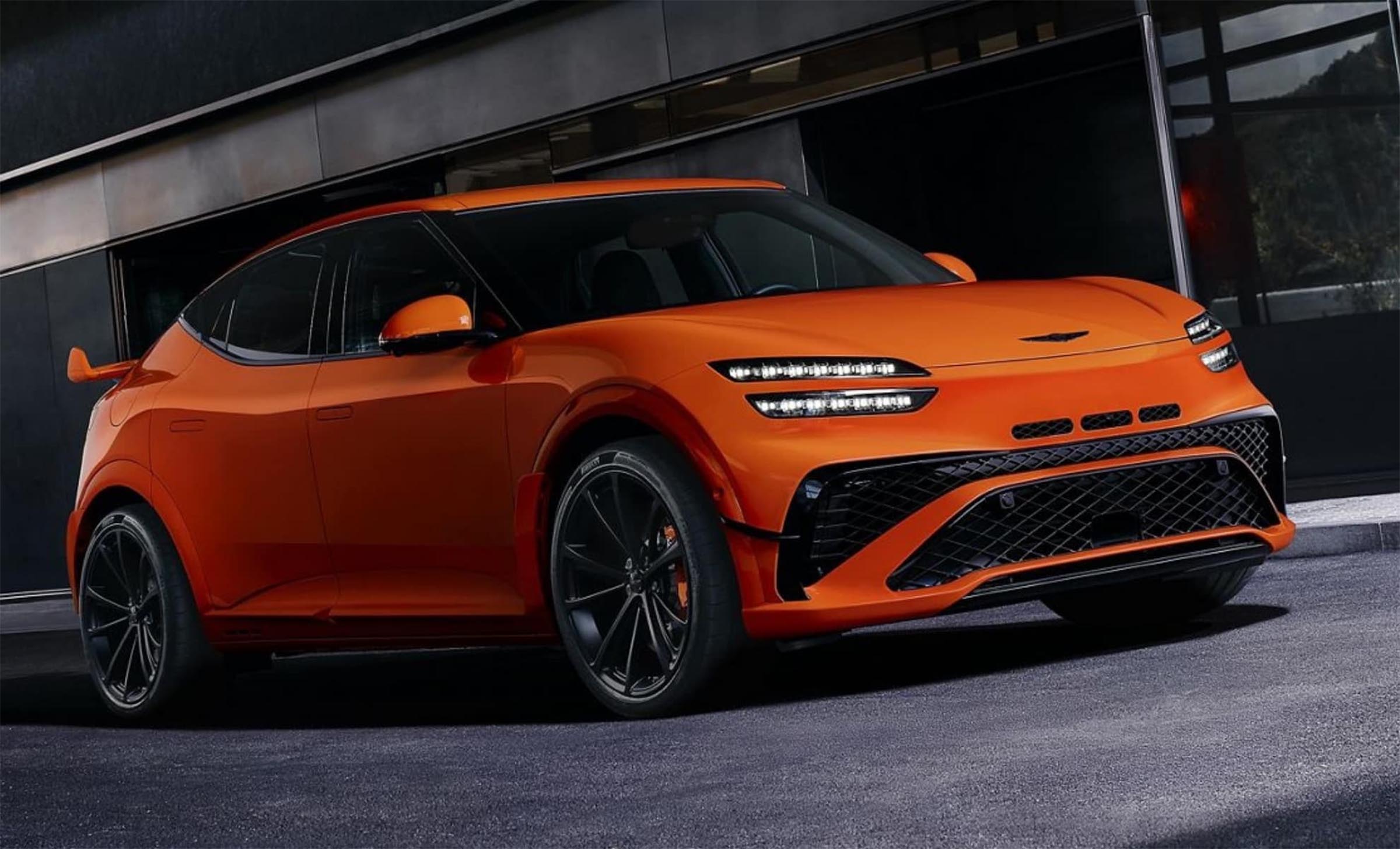
The Genesis GV60 Magma sits lower and wider than the mainstream GV60.
Hyundai’s push into next-generation technology will get a boost from the deal it’s inked with robotaxi leader Waymo. The service will take delivery late this year of the first driverless version of Hyundai’s all-electric Ioniq 5. Hyundai is set to launch its own service, Motional, later this year.
“Robotaxis are the new channel that is going to help a lot,” Munoz noted.
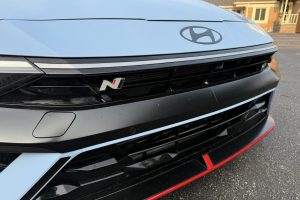
At the other extreme, the Korean automaker has big plans in store for those who get a thrill out of pushing their own vehicles to the limit. Hyundai is set to expand to seven the number of high-performance “N” models it offers. And, lifting a page from the BMW and Mercedes-Benz playbooks, it’s set to add a new line-up of sporty models just below the N family.
Big production increases in store.
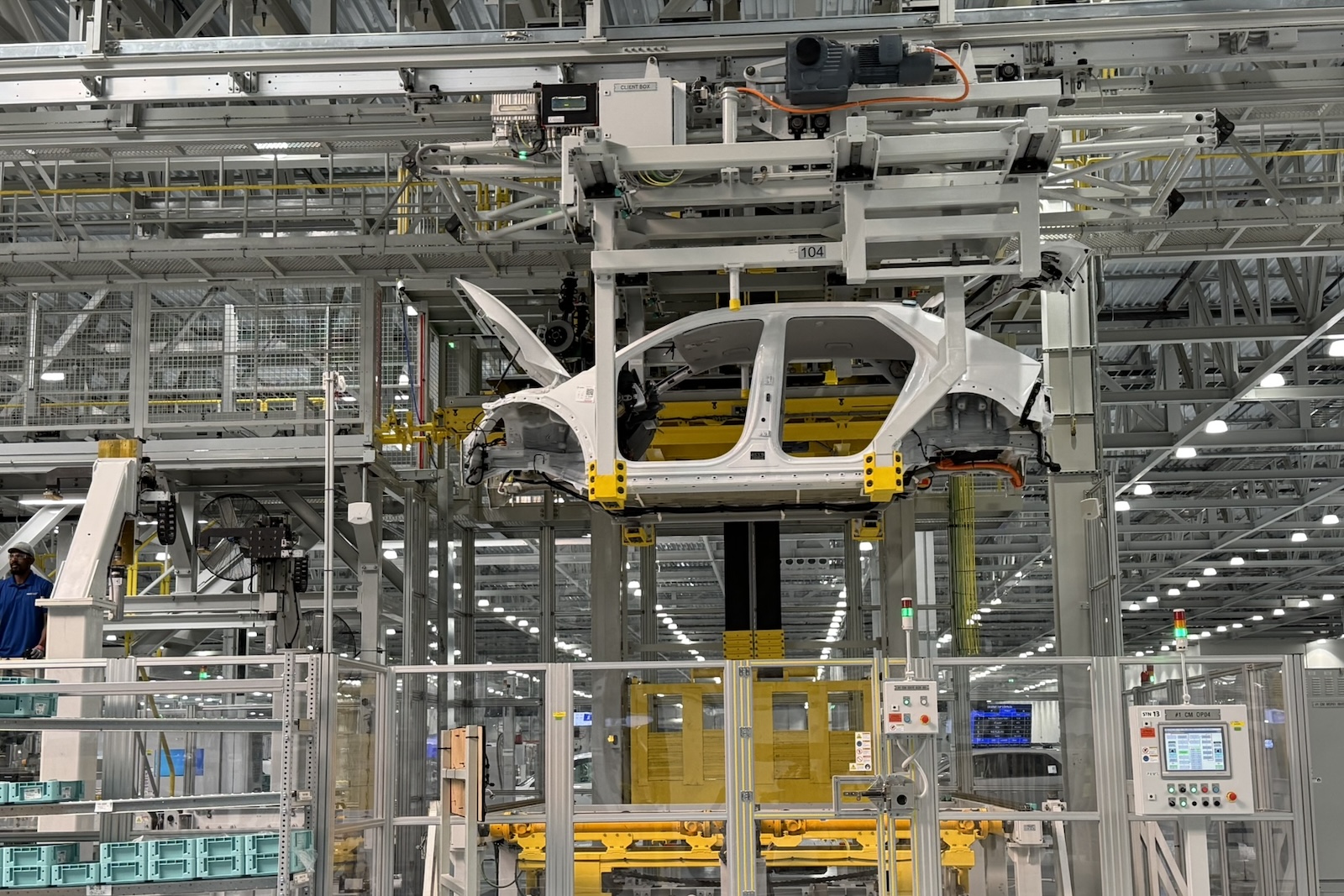
Hyundai’s Metaplant is highly automated, and is in for a further expansion of capacity,
All told, Hyundai is targeting global sales of 5.55 million vehicles by 2030, up 35% from last year’s total. The figure excludes the Kia brand which effectively functions independently, even though it shares many product platforms and some manufacturing operations with the bigger Korean carmaker.
Munoz said the company intends to add 1.27 million units of global capacity by 2030 – the equivalent of four to five traditional assembly plants, though some of that will come through boosting output at existing facilities. The plan includes 500,000 units of new capacity in the North American market as Hyundai focuses more on building product where it’s sold. It’s unclear how much of that will be earmarked specifically for the U.S., especially in light of Pres. Donald Trump’s latest trade war with Canada.
Last year the Hyundai Motor Group committed $26 billion in U.S. investments in auto manufacturing and other operations. That is to include higher auto output as well as a new steel plant in Louisiana and a factory to build the company’s anthropomorphic Atlas robot. Developed by its Boston Dynamics subsidiary, it’s set to go into production in 2028.
The leaders look over their shoulders
While the Chinese are getting the headlines, senior officials from several top-selling automotive manufacturers, speaking on background, told me that it’s Hyundai they’re most immediately worried about – all the more so in the big U.S. market where China is effectively locked out.
The Hyundai and Genesis brands sold 4.24 million vehicles last year worldwide, up 2%. Factoring in the Kia brand that jumped to 7.24 million – the combined enterprise coming in at number three among global manufacturers, behind king-of-the-hill Toyota and the Volkswagen Group. But Hyundai was second in terms of profitability.
While the company lags well behind Toyota, which hit a global total of 11.3 million vehicles in 2025, Hyundai officials privately hint that they’re determined to dethrone the giant eventually, even as Toyota pushes its own global growth plan.

0 Comments