
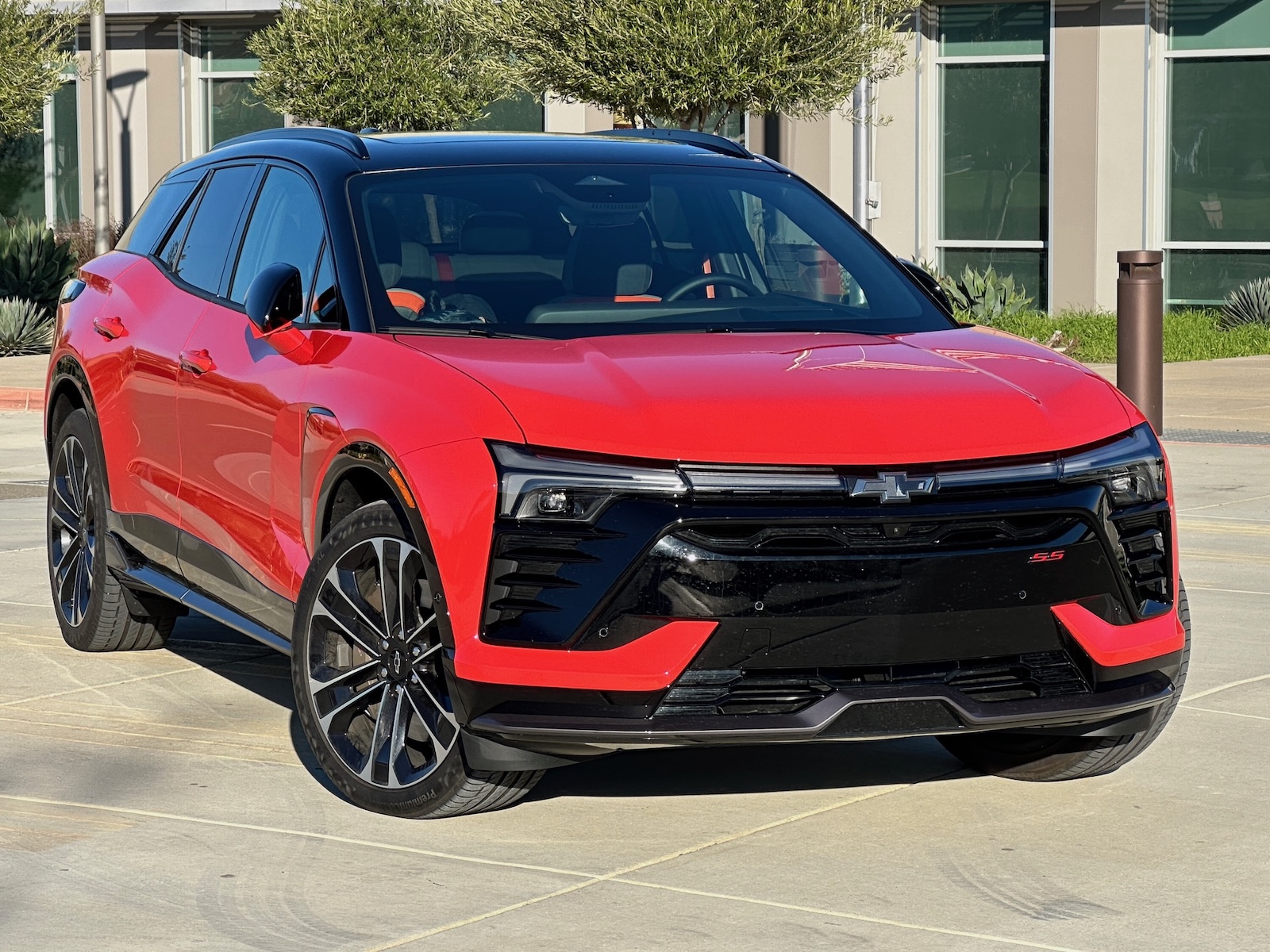
Experts have been positing on why electric vehicles aren’t more popular since they lost the first time — the early part of the 20thcentury. But it’s no secret why car, trucks and crossovers powered by internal combustion are going to remain on top for a lot longer: price and convenience.
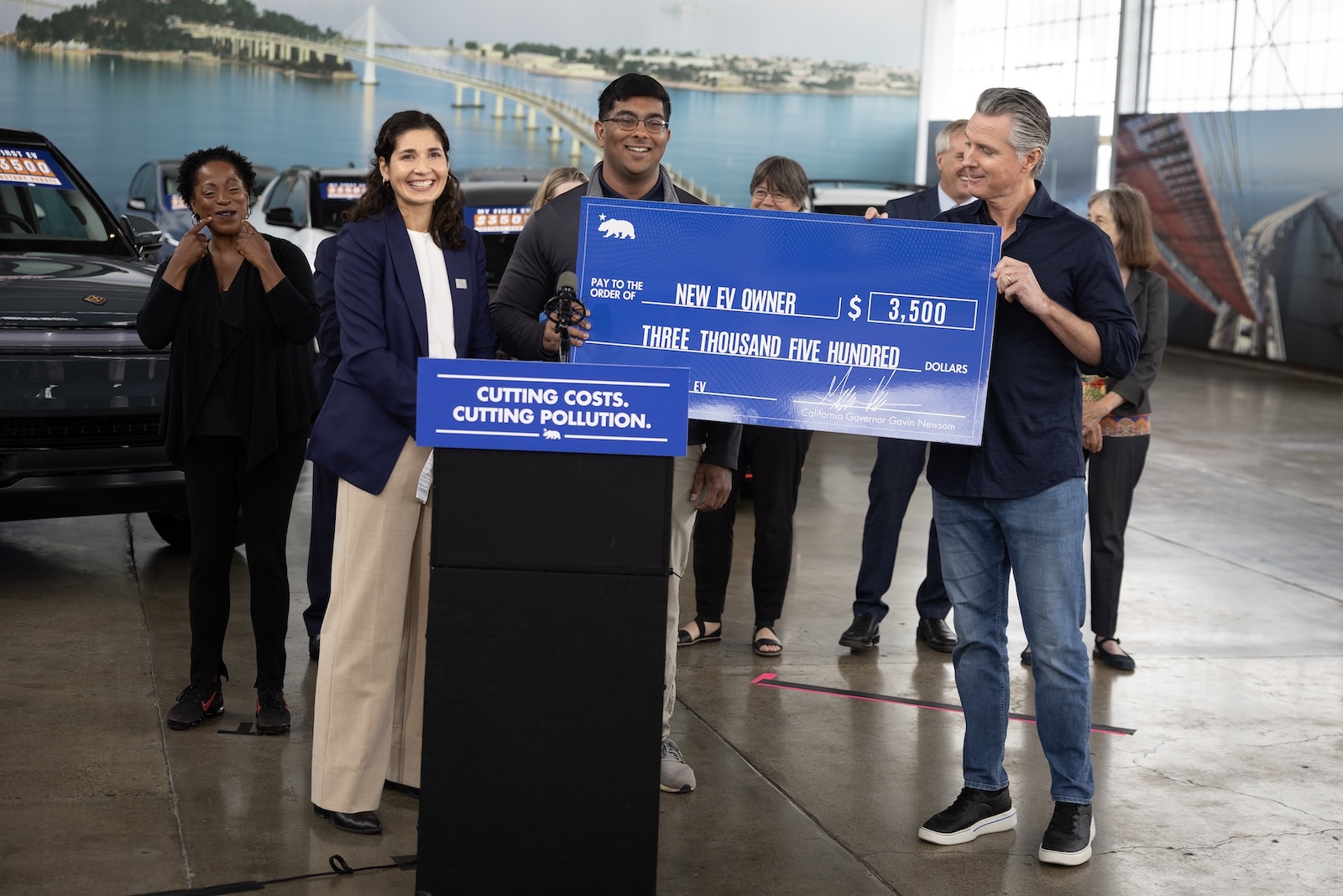
Governor Gavin Newsom joins CARB Chair Lauren Sanchez in presenting MyFirstEV recipient with a first time ZEV buyer rebate.
Are EVs better for the environment in the long run? Yes. And this is in spite of all the nastiness that goes into producing the batteries and building the vehicles. In fact, it used to be seven years until the race to parity was even, now its 18 months.
But the biggest reason EVs lag their fossil fuel-burning counterparts is can be shown in two numbers: 50,089 and 54,813. Many know what those numbers are, but for the uninitiated, if you place a dollar sign at the front of each, you get the average transaction price (ATP) for a new vehicle: $50,089. The second is, of course, the ATP for new electric vehicles: $54,813. The first number is near an all-time high, which was achieved last December when it was $50,612. The current ATP for EVs is $54,813. The $4,700-ish difference is about 9%.
So how do I get a cheaper EV?
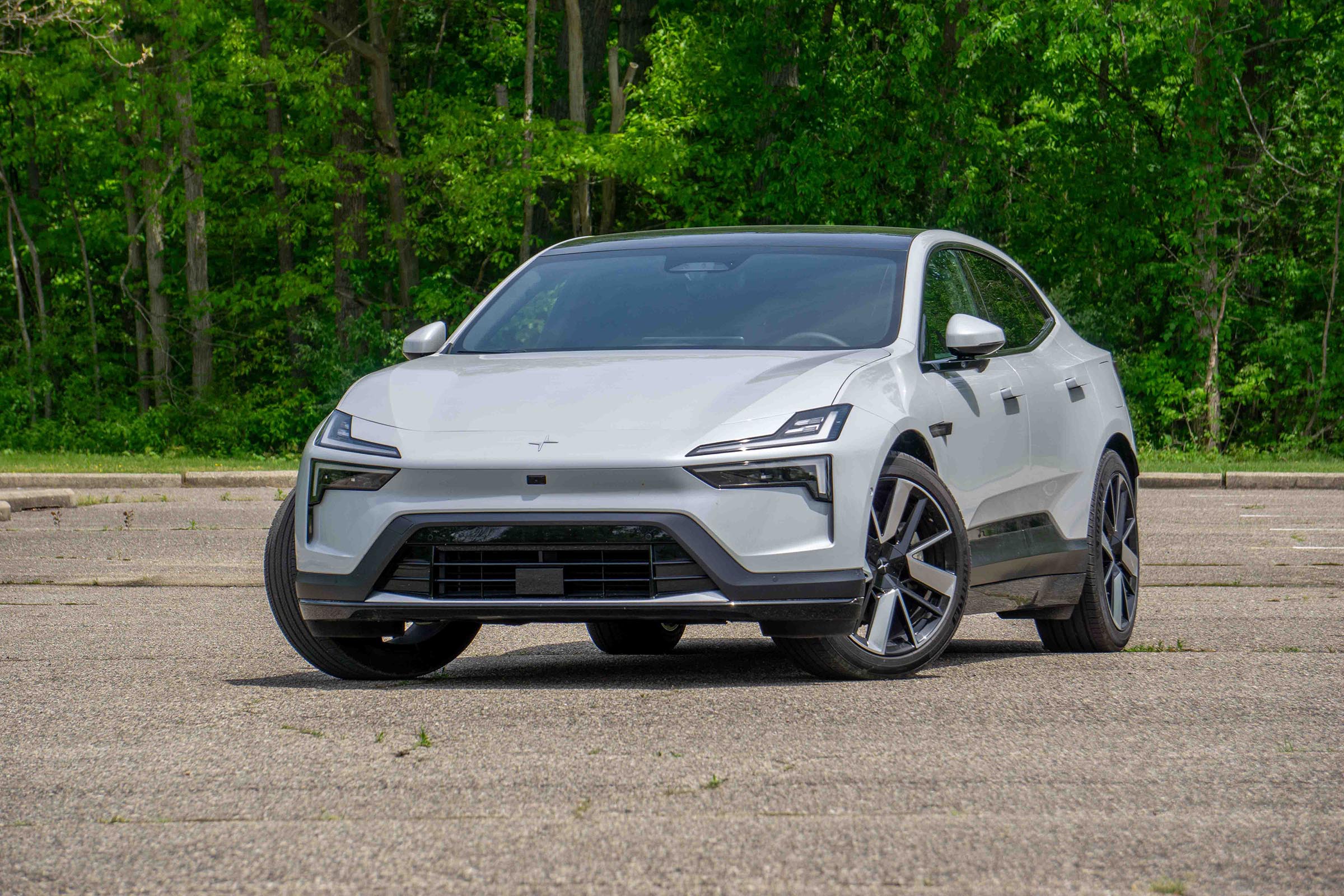
If you’re willing to take a risk, a $25,000 price drop is available — on a Polestar 4.
To their credit, automakers have been pretty disciplined when it comes to offering incentives on EVs — and all new cars and trucks — to lure buyers in. Oppressively high gas prices at the moment hasn’t hurt EV sales either. If you want instant torque, no more stops at the gas station, despite their higher prices, a battery electric looks pretty good right now.
But if you want a no-gas bill vehicle at a great price, patience is key … and you can’t be too hung up on exactly what kind of vehicle you want. But search for the right vehicle, and you can get as much as $30,000 off the price tag — or window sticker in this case.
Honestly, the $30,000 savings is on a car most of us would never buy: the 2026 Audi RS e-Tron GT Performance. With a zero-to-60 time of just 2.4 seconds, it’s certainly appealing. However, with a price tag starting at $170,500 using the $20,000 in discounts from Audi, and another $10K in state and dealer incentives, it may not be enough.
However, if you’re willing to take a risk, a $25,000 price drop is available — on a Polestar 4. Of course, the risk is that Polestar may not be available in the U.S. after the first of 2027. But if your willing, you can get a 4-door sedan with range up to 280 miles and a zero-to-60 sprint time of 3.7 seconds and 544 horsepower for just $53,100. And you’ve got to go to Los Angeles, or at least buy it from the dealer in L.A. That car’s normally $78,100.
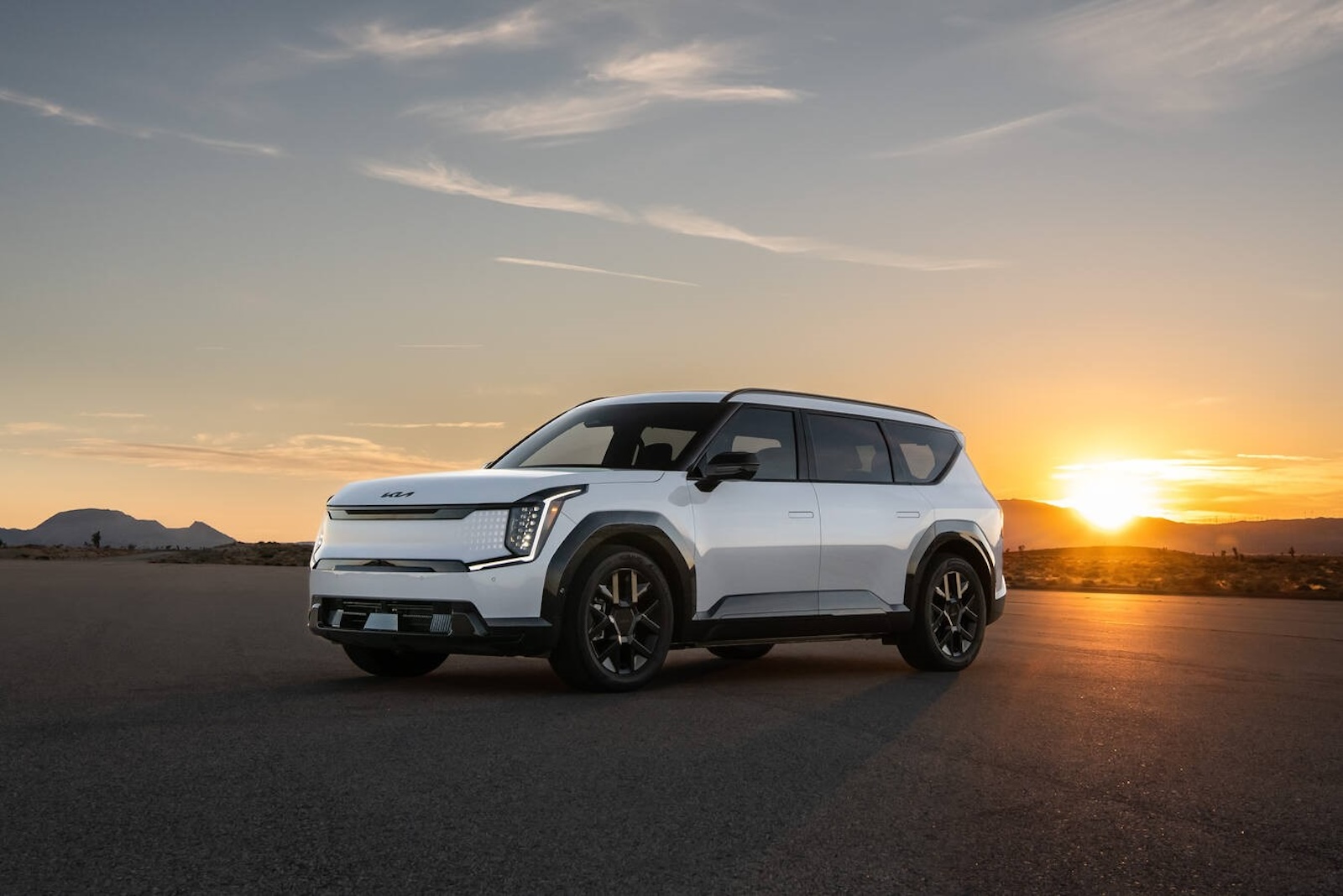
The Kia EV9 can be had for $10K less than its $55K-plus sticker price.
Let’s get silly
How about a deal on something that involves no risk of the company disappearing or a price tag that makes you catch your breath. Go to Kia.
The slow-selling Kia EV9 has $10,000 slapped on the hood to help you buy it. Don’t have the financing in place, but you’re in a hurry and have great credit, no problem! You can get 0% APR for five years and $5,000 in cash to act as a down payment. The EV9 has a starting price of $54,900. Getting an additional $5K to $10K off makes it a tough deal to beat.
But wait! Let’s check some more of Kia’s lineup, specifically the Niro EV. Kia’s about to phase the little EV out of its lineup so it’s got to get them off the lot. Not piloted by hamsters any longer, the company’s dumped the gas-powered Niro already. However, the electric version is still around, with a starting price of $39,900 — and a discount of $10,000 for the down payment.
Not just the automakers
Vehicle Exchange Colorado (VXC) offers up to $9,000 toward the purchase of a new EV or plug-in hybrid.
MyFirstEV is part of California Climate Investments, which uses billions of Cap-and-Invest dollars to fund projects that reduce harmful emissions, protect public health, strengthen local economies, and support natural environments.
In this case, there is a $135.5 million incentive pool to draw more buyers into the electric vehicle market. Incentives will be offered at the point of sale for first‑time buyers or lessees of new or used ZEVs, providing a combined $3,500 for new vehicles ($1,750 each from the state and participating OEMs) and $1,750 for used vehicles ($875 each).
In Colorado, if you’re eligible, you can get $9,000 toward the purchase of a new EV or plug-in hybrid from the Vehicle Exchange Colorado (VXC) Program. Used models can get up to $6,000, if all the requirements are met. Scores of other states and utilities offer additional discounts.
The fine print
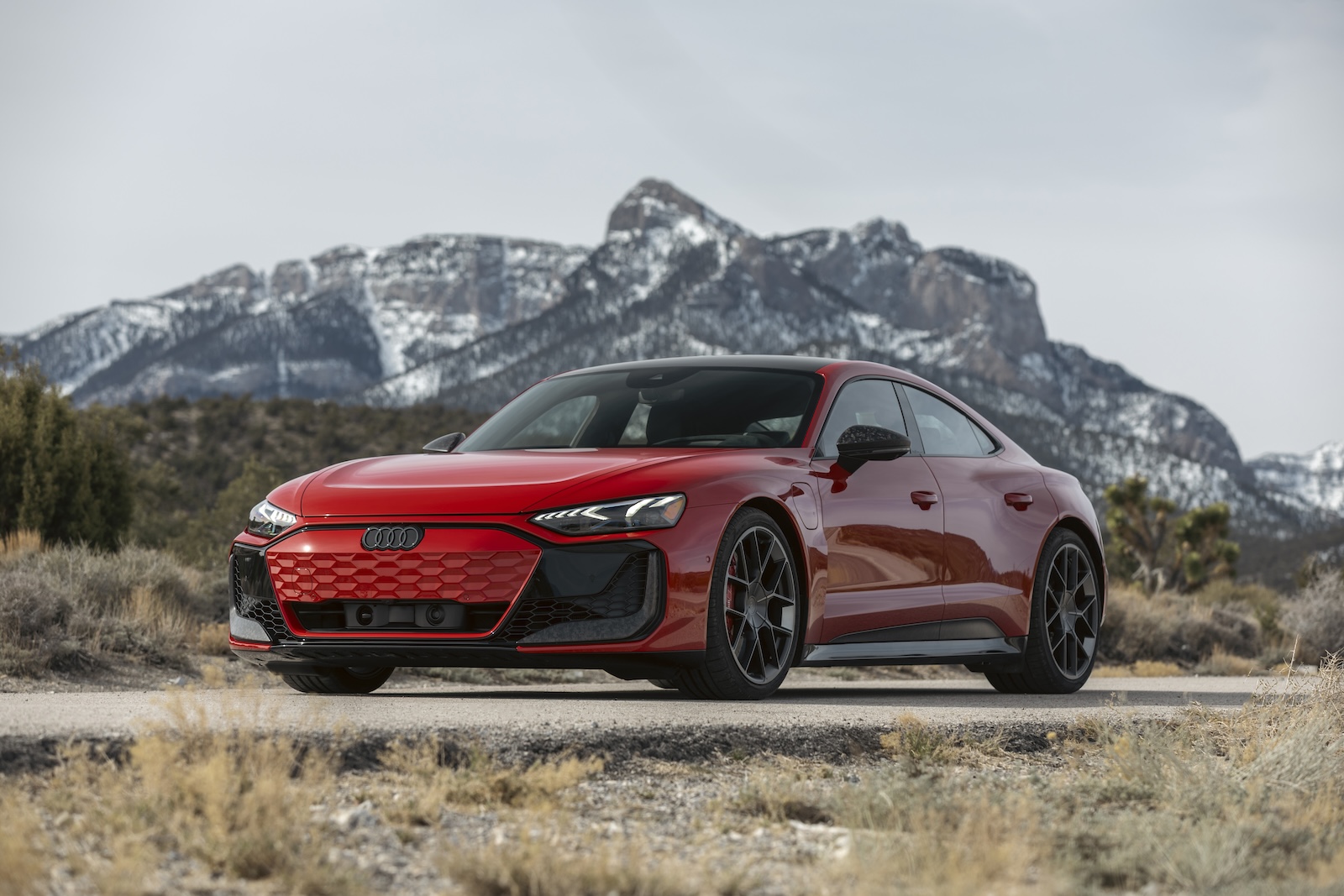
Buyers wanting an Audi RS e-Tron GT Performance can get as much as $30,000 toward the purchase, including $20,000 directly from Audi.
Yeah … nothing’s quite as simple as it appears. The deals aren’t available at every dealer, plus the vehicle’s got to be available in order to get the deal. But finding the deal isn’t as tough as it may seem.
Plenty of publications produce lists with these kinds of deals, think Kelley Blue Book, AutoTrader and Edmunds. Other websites do the same, such as CarsDirect.com, ElectricforAll.org, and more. Finally, go to the automaker’s website, find the section titled, “Shopping Assist” or “Current Offers,” they’re listed there at no cost.
The bottom line? EVs can be had for less than their ICE counterparts, you’ve just got to be willing to hunt and perhaps drive something you hadn’t previously considered. Now finding reliable charging away from home …

The problem, of course, is that the resale price of that EV is near zero. Conveniently unmentioned.
Give me a gas-powered small sedan for 20K or so and I’m happy. Better yet, a good used gas car for even less. The current OEMs need to re-learn how to make a car designed for transportation, not a pinball machine; no touchscreen, 2 speaker radio, no power (or automatic) anything. Take a design from the 50s and make it.
KISS.