
Five decades after the Iranian revolution led to a series of global energy shocks, Pres. Donald Trump’s attack on Iran is raising global concerns of a new petro-crisis, oil prices surging on Monday, with experts warning that a shutdown of the critical Strait of Hormuz could create widespread shortages. More from Headlight.News.
 The week began with a note of caution, if not outright panic, as energy traders struggled to read and react to the U.S. attack on Iran. An early surge in oil pricing settled back a bit as Monday trading came to a close.
What could happen in the coming days is far from certain – and will likely depend, experts say, on how things play out over the coming days. With reports Iran may seek a return to negotiations over its nuclear program, global energy supplies could see mere blips of disruption.
The worrisome alternative would be signs of a protracted war finding Iran not only attacking critical petro infrastructure around the Gulf region but taking steps to shut down the vial Strait of Hormuz through which about 20% of global petroleum supplies past through.
Oil prices bounce – then settle back a bit
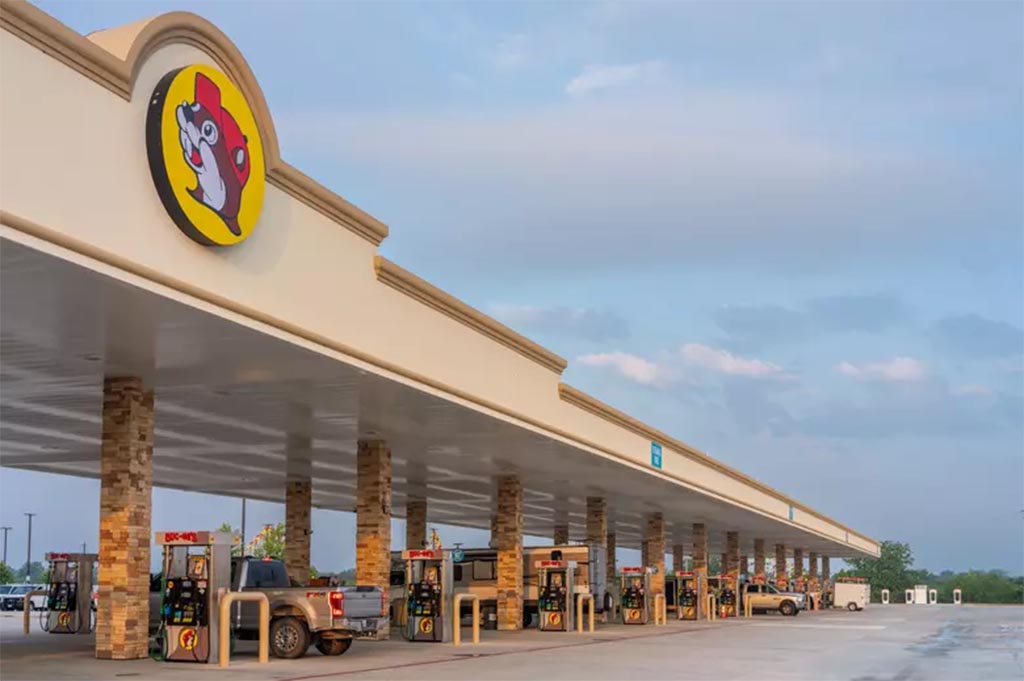
A Buc-ees service station with close to 100 pumps.
Everything appears to hang in balance at the moment, traders on Wall Street and global petroleum markets waiting to see if the attacks on Iran ordered by Pres. Donald Trump last week will be followed by a quick truce or trigger a long-term battle.
On Monday morning, prices for benchmark Brent Crude jumped by as much as 13%, briefly topping $80 a barrel, later settling back to $79.30. Crude prices, more broadly, were up more than 6%, reported the Associated Press.
Investors seemed to take the news in stride, perhaps buoyed by signals Iran may want to settle the conflict at the bargaining table. The NASDAQ was up 0.27%, gaining 62 points, though the S&P 500 was down 0.03, down 2 points, with the Dow Jones down 0.23%, losing 110 points. The big loser was the Stoxx Euro 600 index off 1.1% at Monday’s close.
There were some big losers, however, primarily in industries heavily dependent on oil prices. United Airlines shares closed off 2.9% at $103.21, on Monday afternoon, while Delta Airlines closed at $64.23, off 2.2%. Norwegian Cruise Line Holdings fell to $22.19, down 11%. Carnival Cruise Lines dropped to $31.55 down 7.7%.
Motorists likely to feel the pinch
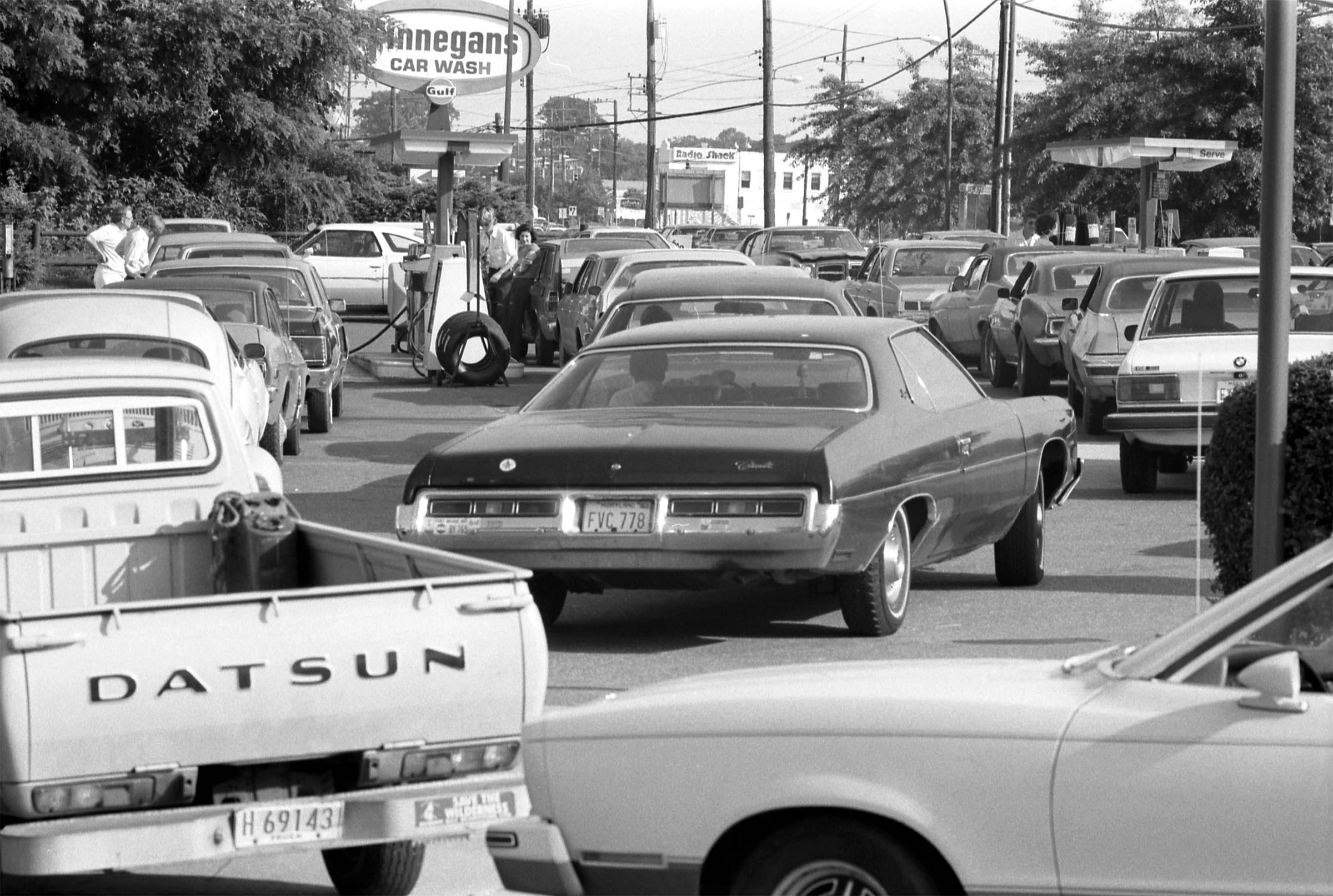
A gas line in the U.S. in 1979, the result of the second Mideast oil shock.
The Trump administration tried to downplay concerns about the war, even as critics cited the long and costly effect triggered by the 9/11 attacks on the U.S. and the “War on Terror” that was then initiated by the administration o George W. Bush.
“This is not Iraq,” U.S. Defense Secretary Pete Hegseth said on Monday. “This is not endless.”
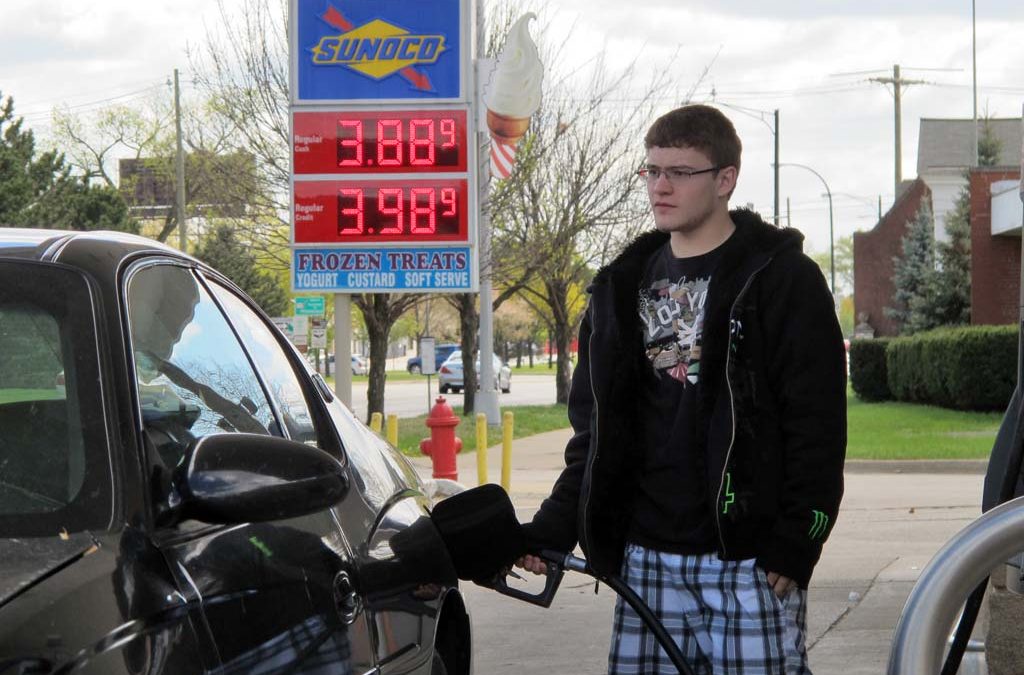
Perhaps not, but motorists already are feeling some impact. The average price of a gallon of regular self-serve unleaded was up to $2.99 as of Monday morning, reported the AAA. That was 5 cents higher than a week ago and an 11-cent jump from February 2, before Trump began warning on an imminent attack on Iran.
For the moment, few appear to foresee anything worse than additional increases at the pump. But there are some far more worrisome scenarios that could play out. In firing back, Iran has launched a wave of missiles and drones. Some have hit U.S. military installations across the Gulf region, as well as hotels and urban centers. Others have targeted the regional oil infrastructure. The big concern is the threat of action that would shut down the vital Strait of Hormuz – through which 20% of the world’s oil supply transits on any given day.
More Auto News
- Honda to Follow Toyota, Exporting U.S.-Made Vehicles to Japan
- Ford’s Recall of 4M Trucks Underscores Growing Issue with Onboard Software
- Stellantis Workers Left Out in the Cold: No Profit-Sharing This Year
Disrupting the global supply of oil
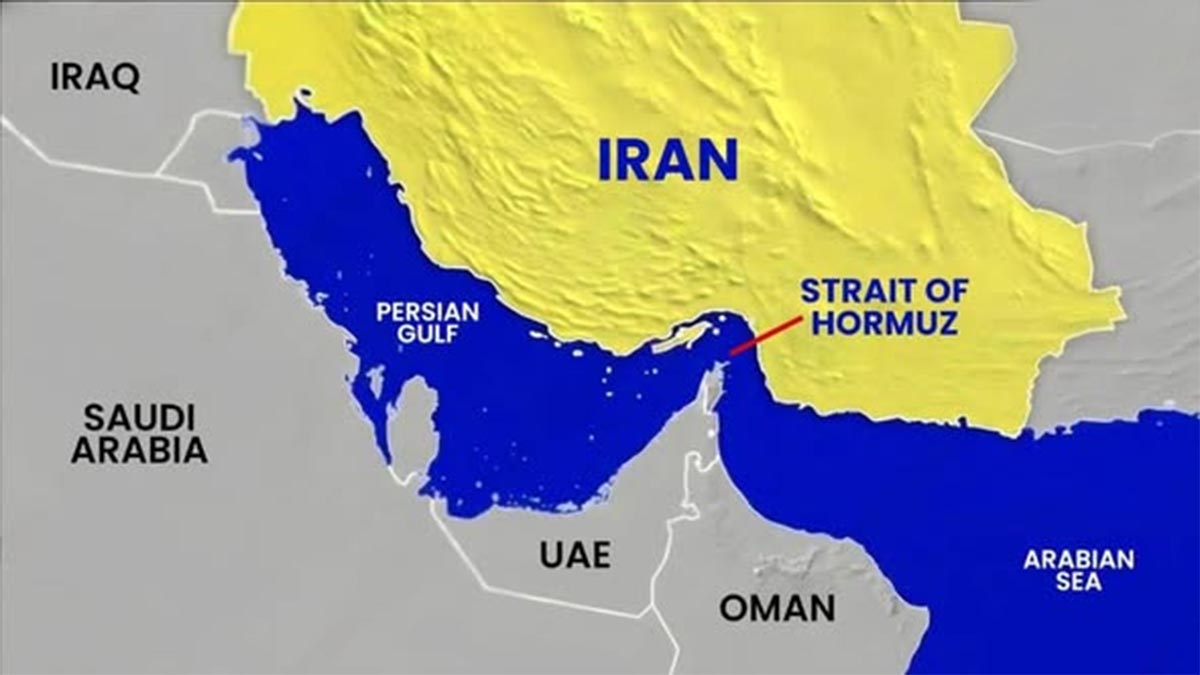
Strait of Hormuz – courtesy India Today.
The waterway ranges from 24 to 60 miles in width and defense analysts warn it could be difficult to completely defend from missile and drone strikes. Iran, in the weeks leading up to the U.S. attack, partially shut the Strait during live fire exercises.
Of the 15 million barrels that go through the waterway, from 5 million to 7 million barrels could be redirected through pipelines, many of which have been set up in recent years precisely to provide alternative delivery methods, reported Yahoo! Finance. But another 8 million to 10 million barrels could be stranded.
That would be unlikely to recreate the conditions that saw long lines and dry pumps at U.S. gas stations back in the 1970s, experts are suggesting. But it could lead to a substantial surge in the cost of petroleum at a time when the global economy isn’t well positioned to tolerate such a blow.
For his part, Morgan Stanley energy analyst Michael Wilson said it would likely take oil surging to at least $100 a barrel to have a major knock-on impact on the economy. The last time prices broke that psychological barrier occurred after Russia’s invasion of Ukraine four years ago this month. Oil prices topped out at $122 before settling back down.



0 Comments