
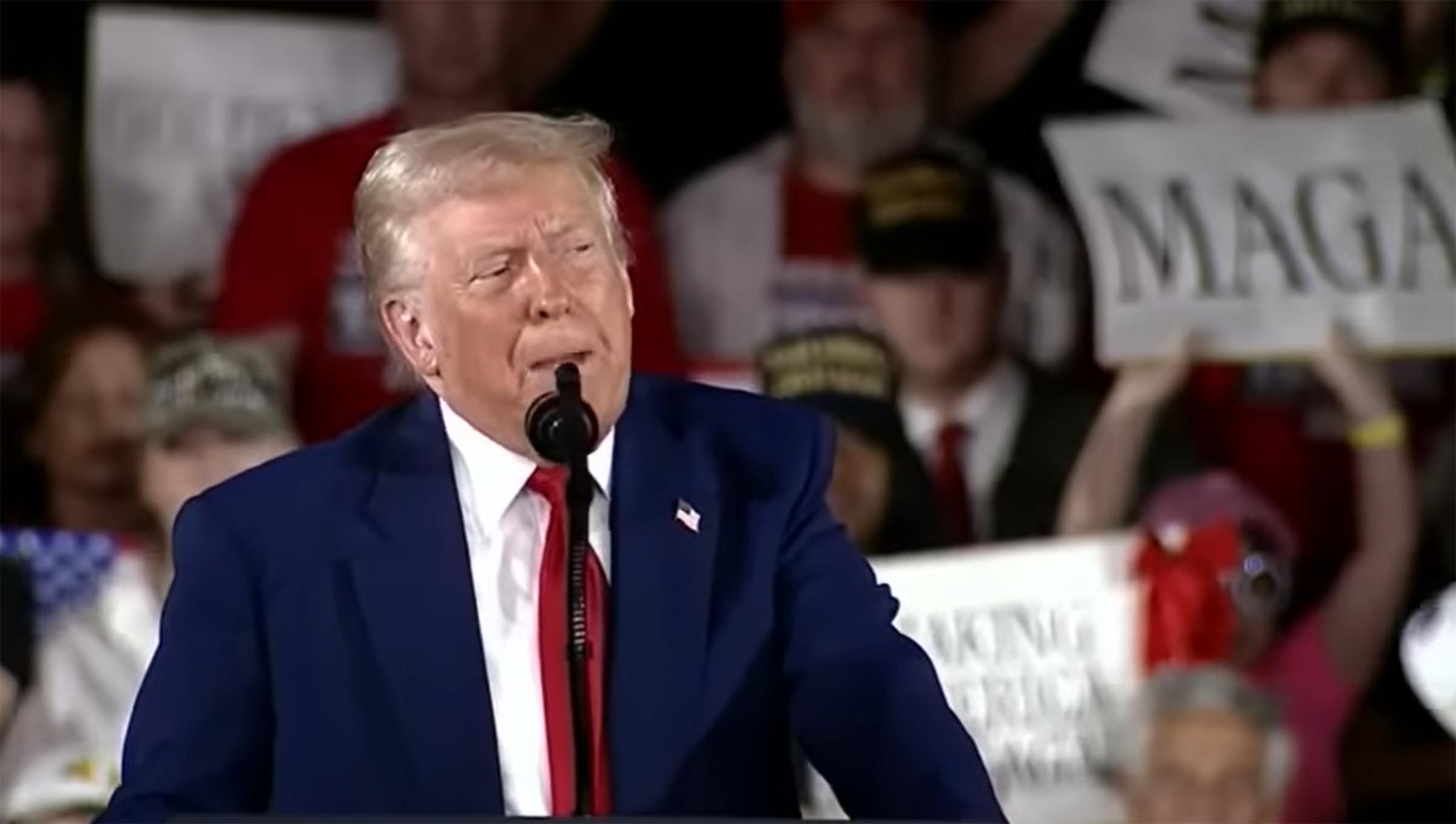
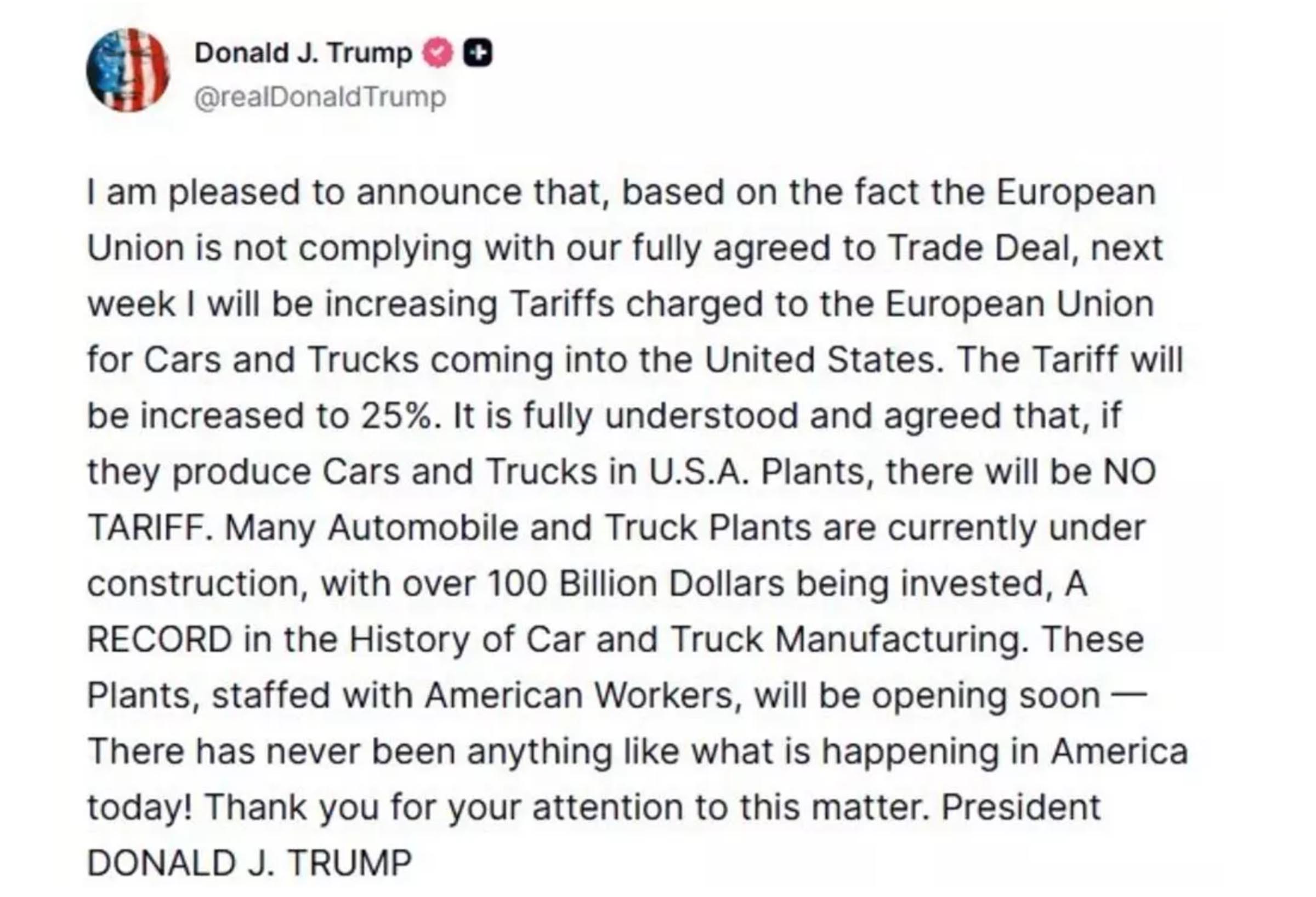
Buyers looking for a new European vehicle could soon see prices go up by thousands of dollars, Pres. Donald Trump hiking tariffs to 25% after accusing the EU of “not complying with our fully agreed to Trade Deal.” More from Headlight.News.
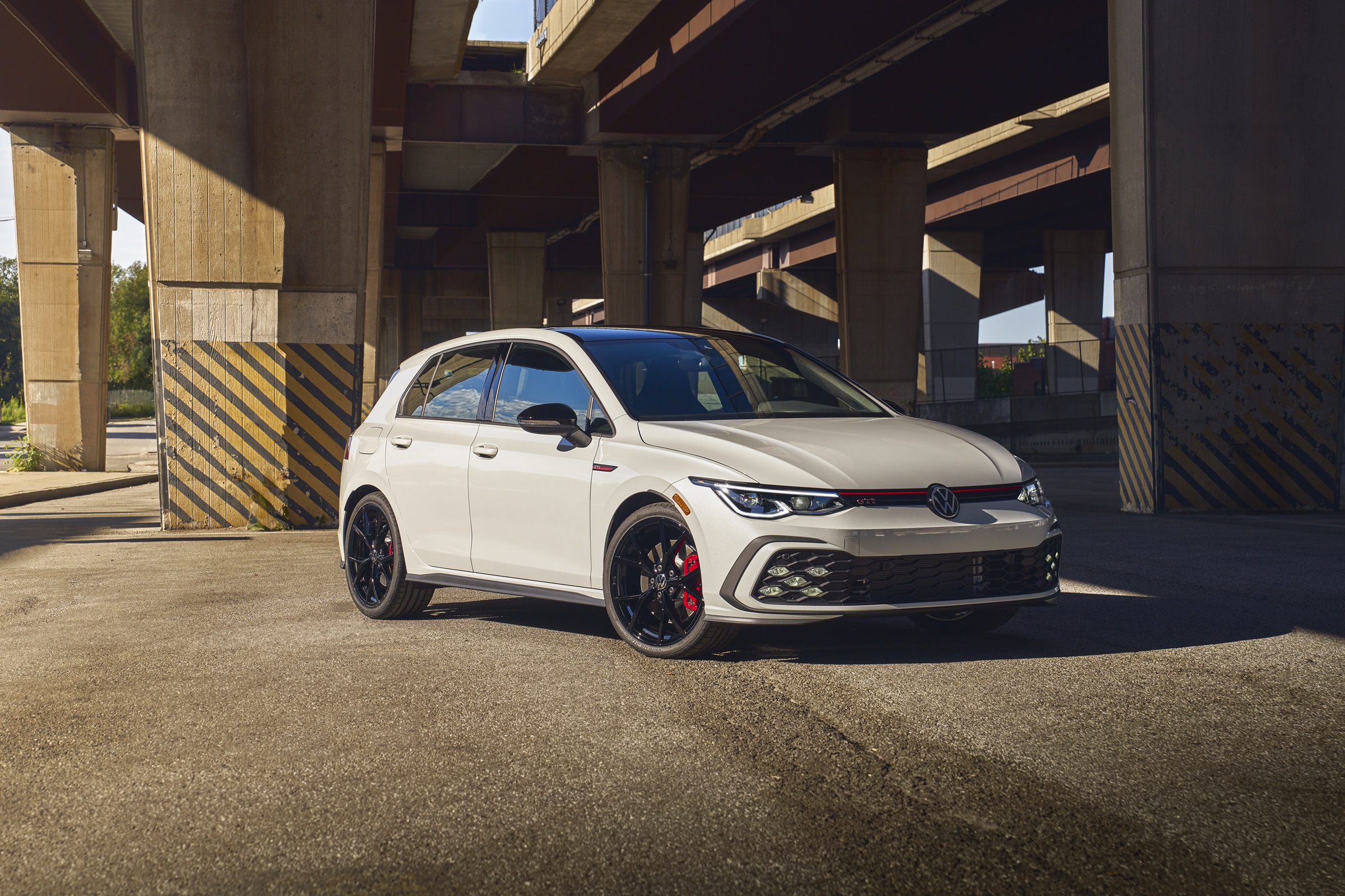
A Volkswagen GTI.
Pres. Donald Trump will raise tariffs on European auto imports to 25% next week, claiming the EU “is not complying with our fully agreed to Trade Deal.” Such a move could add thousands of dollars to the price of new vehicles, should manufacturers choose to pass the added costs onto consumers.
Trump has repeatedly shifted direction when it comes to his trade and tariff policies and could again reverse course, according to observers. The U.S. Supreme Court has also raised questions about the legal basis upon which the proposed hike is based, as well as about the trade deal the U.S. and European Union reached last July.
“Based on the fact the European Union is not complying with our fully agreed to Trade Deal, next week I will be increasing Tariffs charged to the European Union for Cars and Trucks coming into the United States,” Trump wrote in a Friday post on his social media site Truth Social. “The Tariff will be increased to 25%.”
A failure to comply?
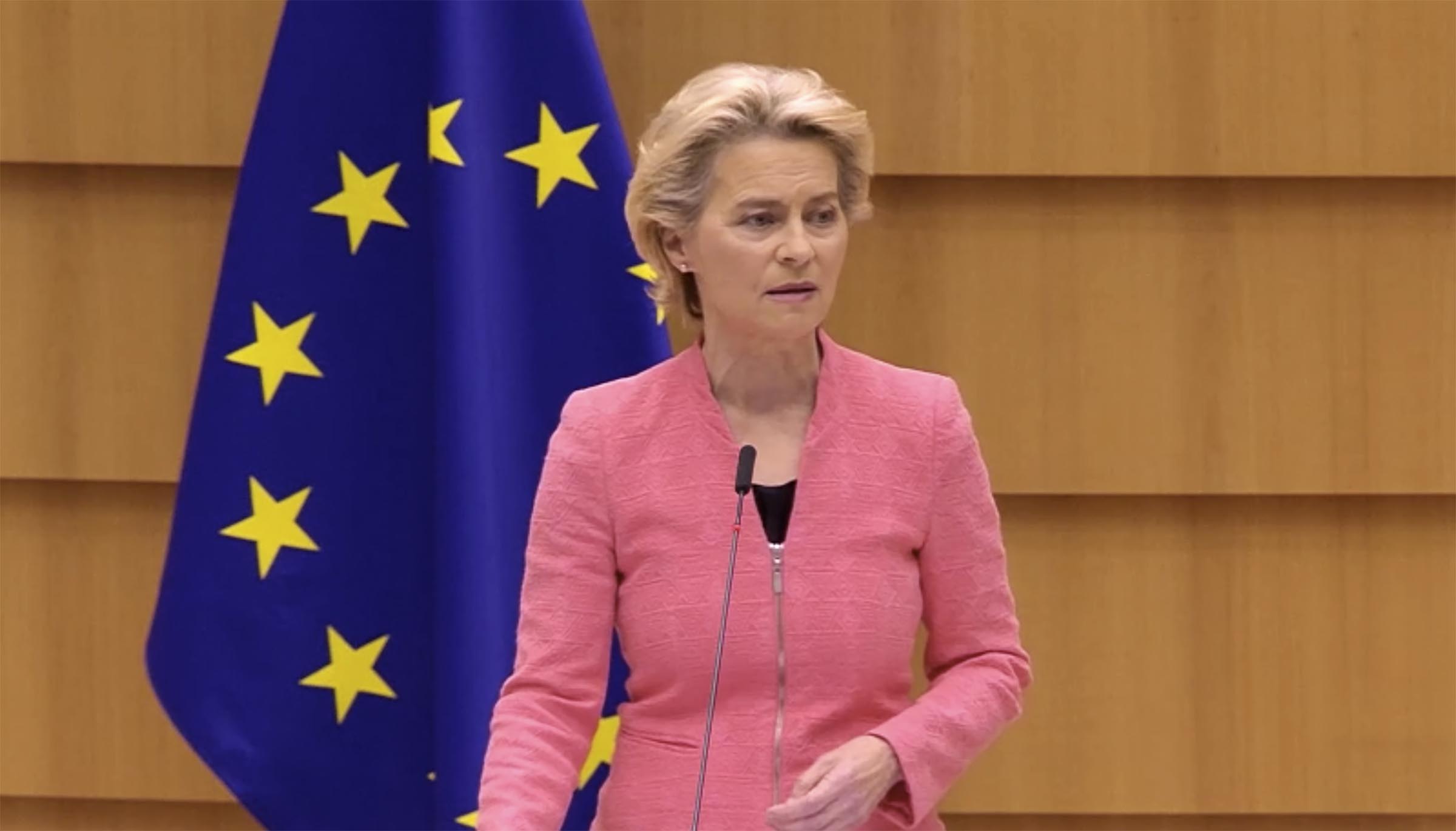
European Commission Pres. Ursula Von der Leyen.
Trump frequently threatened to levy hefty tariffs against European autos during his first term in office, but followed up with broader EU trade moves soon after returning to office in January 2025.
Initially, vehicles like the Volkswagen GTI and Mercedes-Benz S-Class were hit with 27.5% duties. That was reduced to 15% — along with tariffs on most other European imports – following completion of a new bilateral trade deal inked in July by Trump and European Commission President Ursula von der Leyen.
But the deal – dubbed the Turnberry Agreement for a Trump golf course in Scotland – has come under sharp scrutiny, among other things the U.S. Supreme Court subsequently ruling “the Republican president lacked the legal authority to declare an economic emergency and charge tariffs on EU goods,” noted the AP.
Major price hikes loom
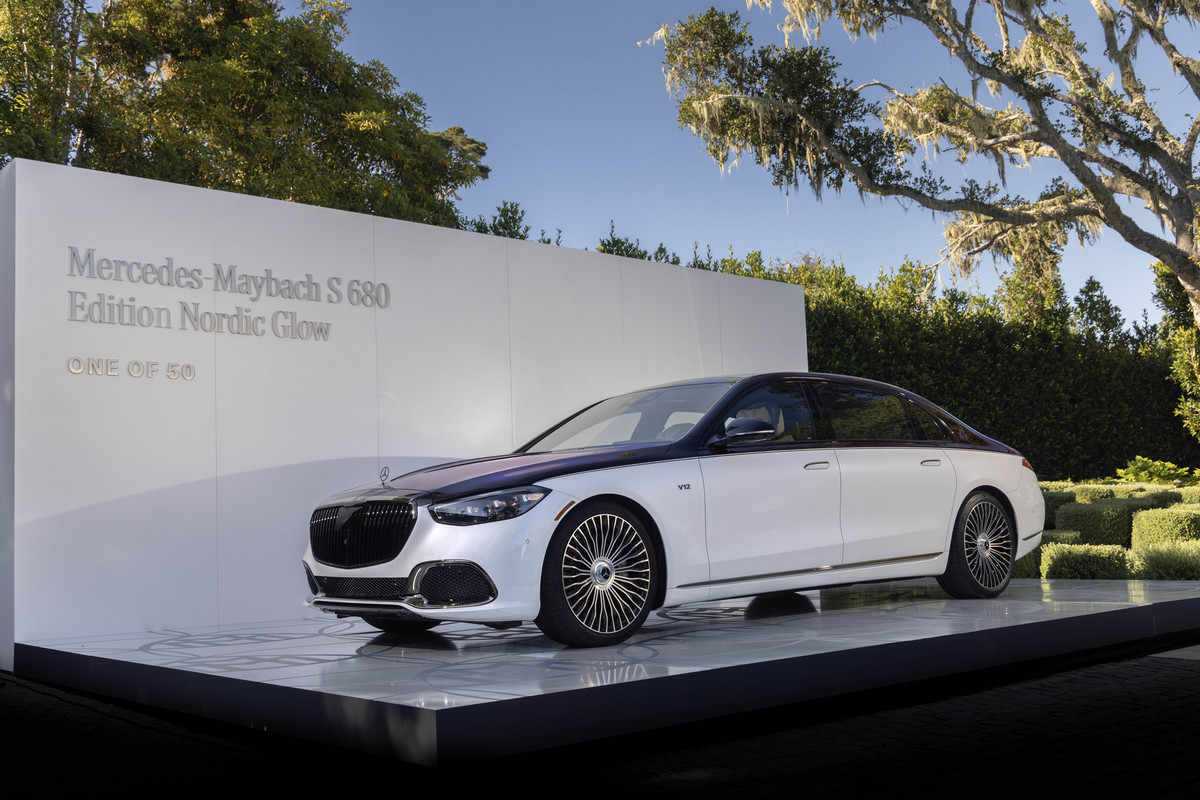
The new tariffs could add tens of $1,000s in costs to an ultra-lux model like this Mercedes-Maybach.
It’s unclear whether Trump’s planned tariff hike will stand up to any further legal challenge. If they do, the impact on European-made vehicles could be substantial, even on some of the lowest-cost European models.
Tariffs are based on what are, effectively, wholesale prices. Even so, that would mean several thousand dollars on a model like the Golf GTI, which starts at $34,590 before delivery fees. The increase could push into the tens of thousands of dollars on high-line models, like the Mercedes-Maybach S-Class which starts at $185,000, or a $242,700 Bentley Continental GT.
A key question is how automakers would respond. Some manufacturers have already pulled products from their U.S. showrooms where they felt tariff price hikes would reduce demand to an unsustainable level. Some brand have passed on tariff costs – Porsche recently upping prices a second time – while others have chosen to absorb some or all of the added costs.
One question left unanswered is whether the planned tariff hike will be focused solely on assembled vehicles or might also include vehicle components. While Mercedes, VW, BMW and Volvo do produce a number of vehicles in U.S. plants, most of the American-made models still use thousands of dollars of everything from anti-lock brake systems to powertrains supplied from the EU.
More Auto News
- Automakers Getting Billions in Tariff Refunds – But Will Buyers Benefit
- Tariff Refunds Help Buoy Ford, Stellantis Q1 Earnings
- Tariffs May Force Automakers to Abandon Entry Model
A deal is a deal
 The planned tariff hike comes at a risky moment considering the impact of the Iran War on an already strained global economy. The EU, in particular, has not only seen a surge in fuel prices but is facing potential oil and natural gas shortages.
But trade is vital to both the U.S. and EU, which is America’s largest trade partner, accounting for a bilateral 1.7 trillion euros, or $2 trillion, in goods and services in 2024, according to European statistics organization Eurostat.
EU Pres. von der Leyen welcomed the deal after it was approved last year, but the European Commission spoke out after the U.S. Supreme Court subsequently weighed in, ruling Trump “lacked the legal authority to declare an economic emergency and charge tariffs on EU goods,” according to the AP.
“A deal is a deal,” the European Commission responded in February 2026. In that statement, the commission said it “stands by its commitments (and) expects the U.S. to honor its commitments set out in the Joint Statement.
In his Truth Social post, Trump did not offer any specific examples of where he felt the EU was not complying with last year’s trade deal. He did however indicate that “ It is fully understood and agreed that, if they produce Cars and Trucks in U.S.A. Plants, there will be NO TARIFF.”

0 Comments