
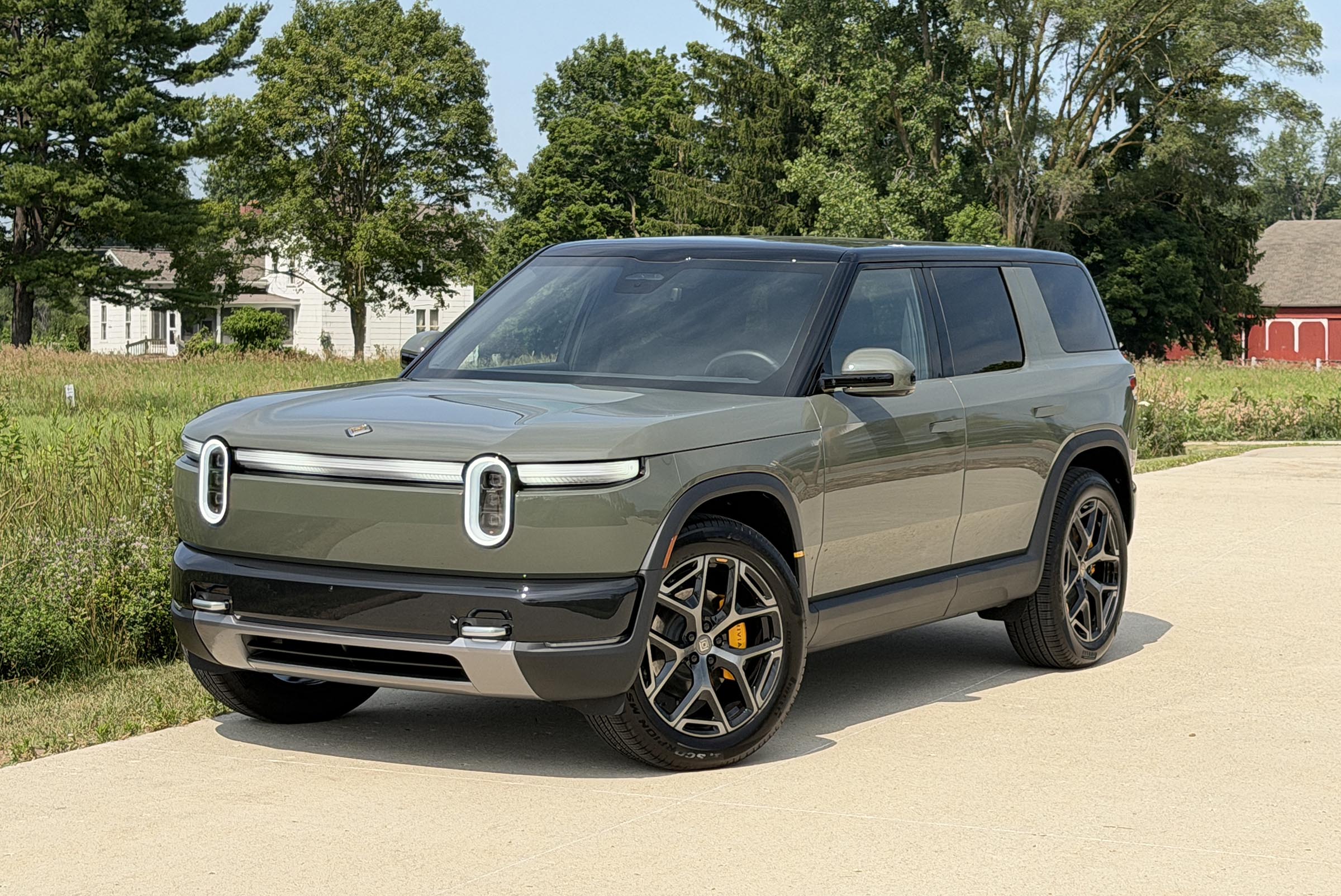
While Rivian showed it could deliver an impressive EV with its first-generation R1 series, it now has to take things into the mainstream. Headlight.News had a chance this week to check out the new R2 and discovered how “creative subtraction” added up to not just a solid, affordable product but one that can put the struggling EV start-up into the black.
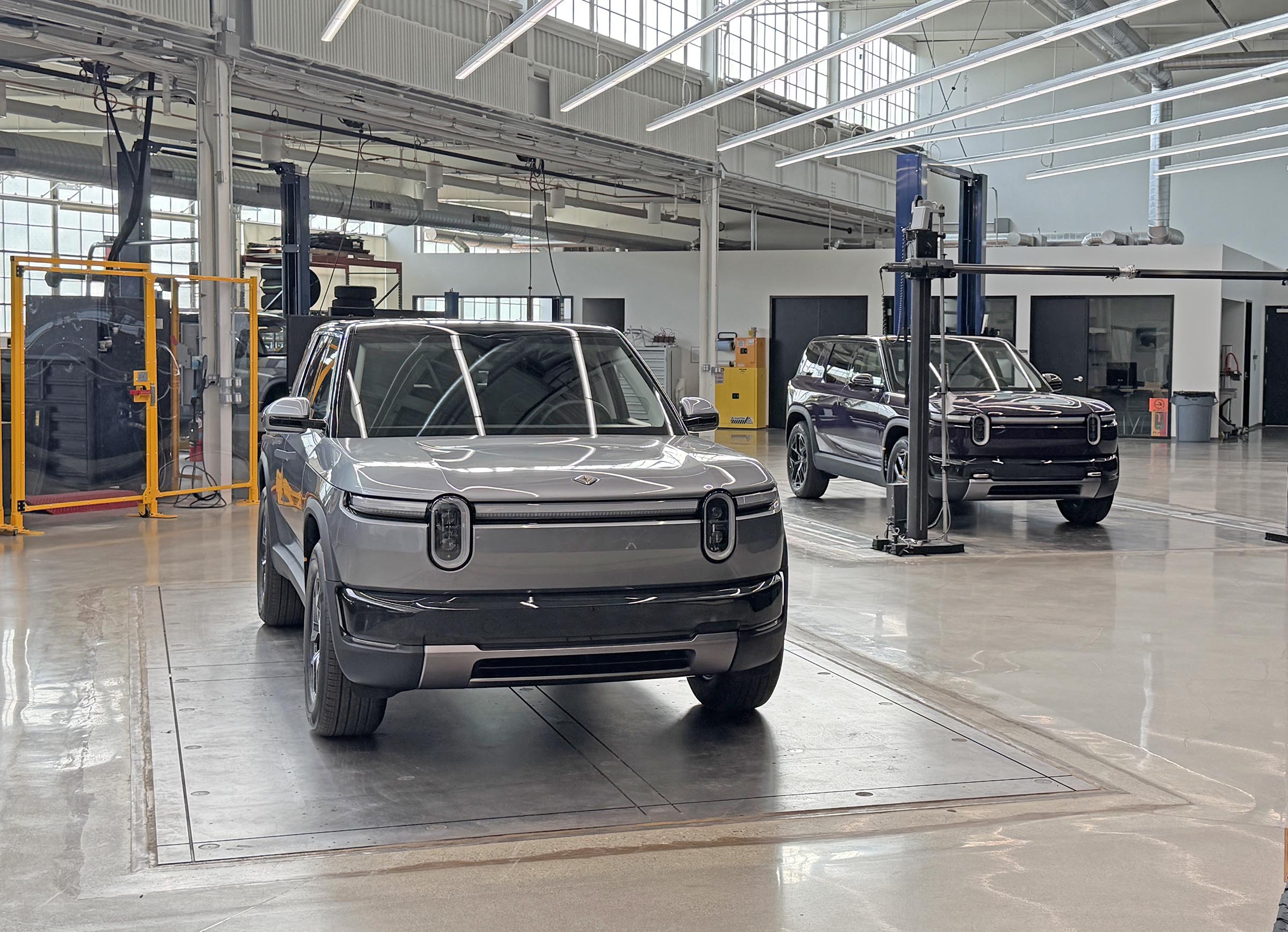
R2 prototypes at the Rivian engineering center in Plymouth, Michigan.
Times are tough for EV start-ups. A decade ago, there were more than a dozen determined to take on the established automotive establishment, brands like Fisker, Faraday Future, Canoo and Lordstown Motors. Today, all four of those – and a number of others — are gone, and the survivors, like Lucid, are struggling for survival. Their big challenge is to take things into the mainstream to boost both volumes and profits.
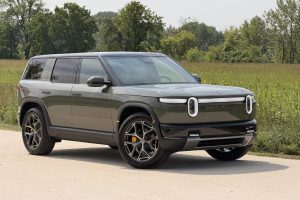
That’s precisely what Rivian set out to do with its second product line, the R2, which I finally had the chance to check out this week during a short drive near the company’s suburban Detroit technical center. At first glance one might confuse R2 with the original R1S sport-utility vehicle. And that is entirely intentional.
The goal was to “shrink it down” while using “creative subtraction” to make sure it didn’t simply feel like a “smaller, cheaper” version of Rivian’s original SUV, explained Jeff Hammoud, the automaker’s design chief.
The basics
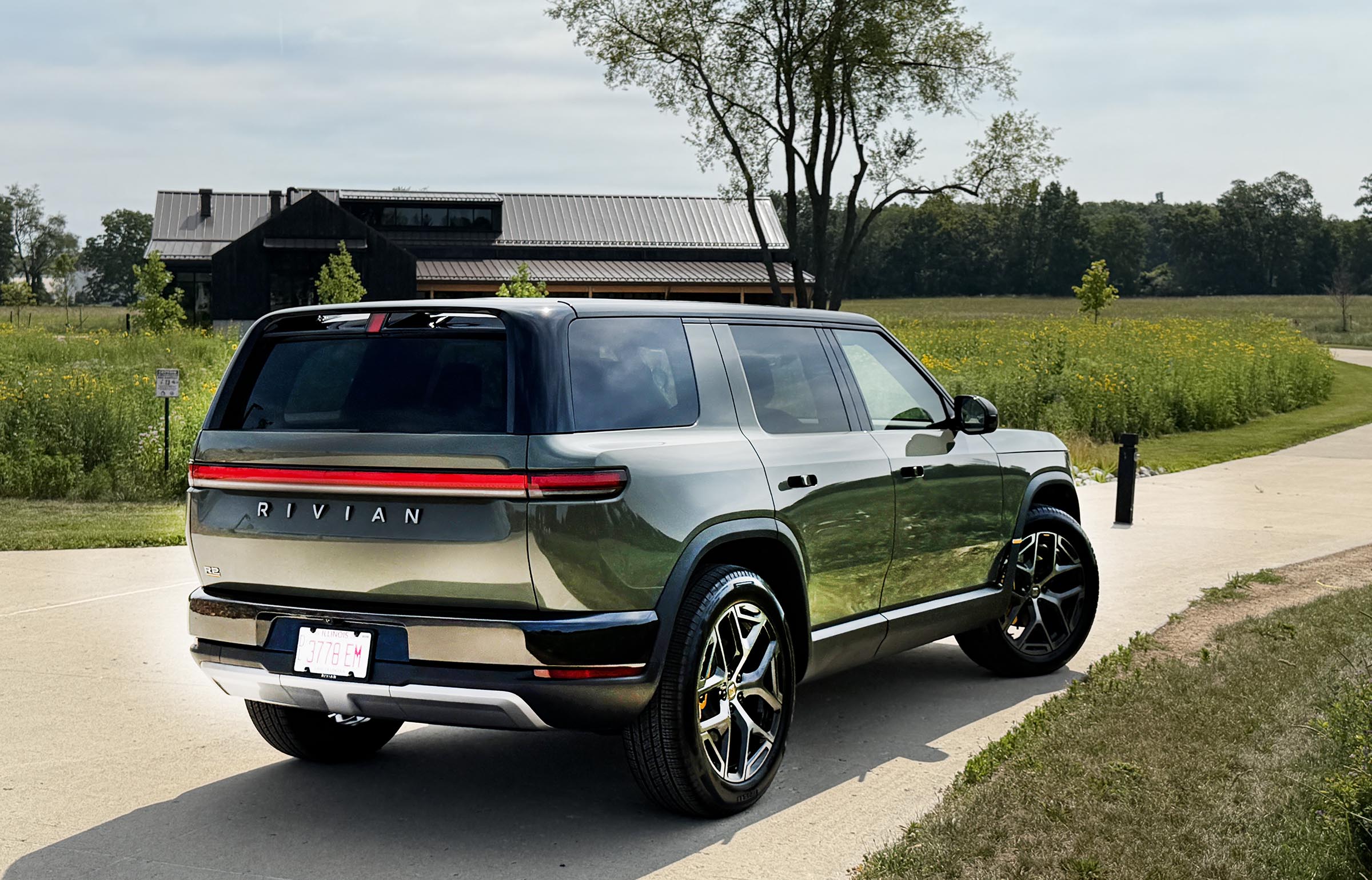
The twin-motor Rivian R2 Performance model.
With the outside temperature hovering well over 90, and the heat index at a sizzling 114, I was grateful that the air conditioning was already running as I hopped inside the new R2, my test vehicle loaded with all the bells and whistles Rivian has to offer, starting with a twin-motor all-wheel-drive powertrain.
There are a number of different trims available, starting with the “Standard” model, a rear-wheel-drive package delivering a nonetheless impressive 350 horsepower and an EPA-estimated 275 miles range. That’s with a smaller battery pack helping hold the entry price to just $44,990 before delivery fees. With a larger battery pack range jumps to 345 miles. My “Performance” edition musters 330 miles while boosting output to 656 hp, the rear-bias drivetrain able to launch the five-seat SUV from 0-60 in 3.6 seconds.
At a starting price of $57,990 it’s a full $26,000 less than the entry R1S package. Yet, after spending time in the new R2 I’m not sure there’s enough of a different to justify the original EV’s higher price. In some ways, you actually get more for less money.
When less is more
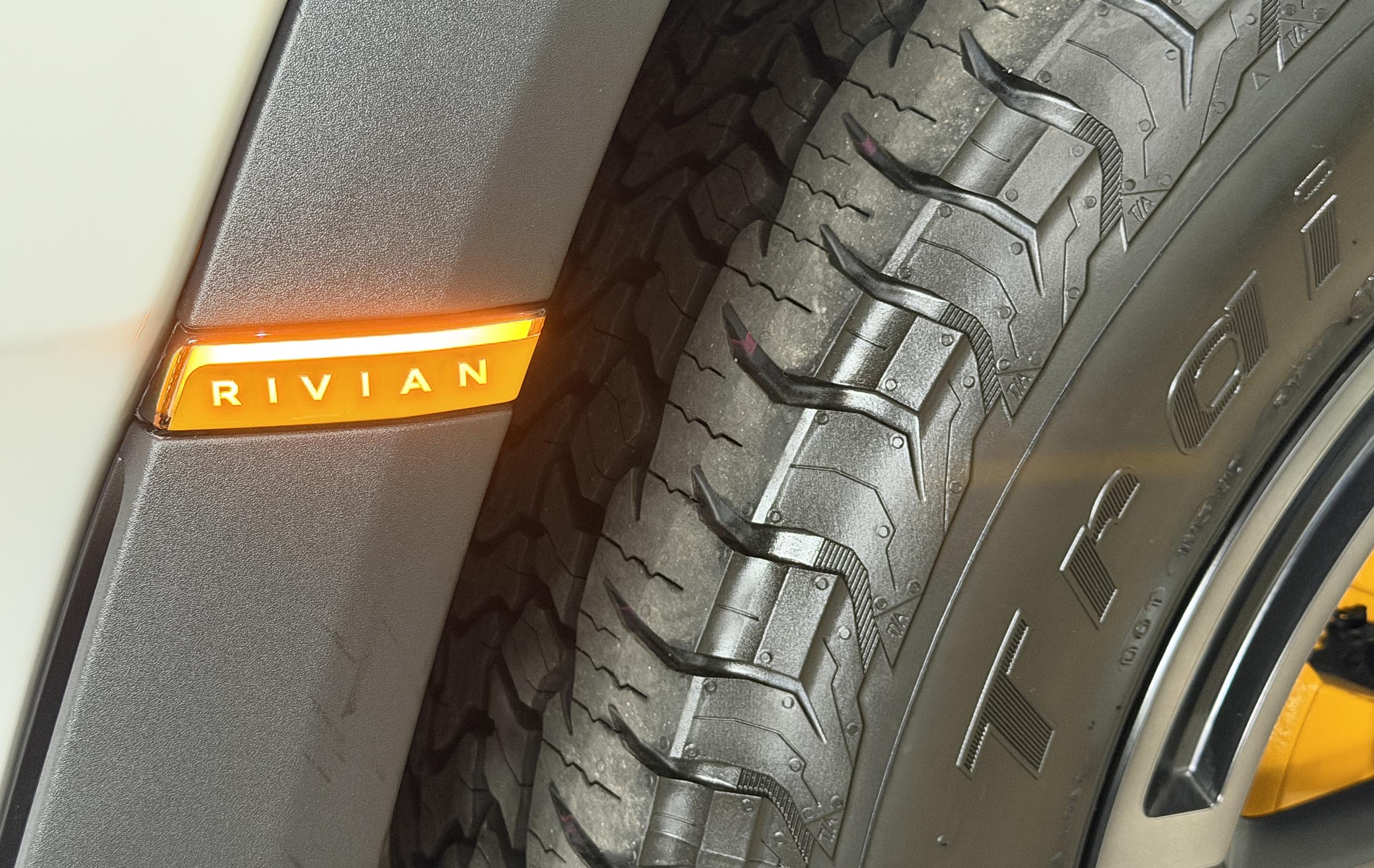
Little things matter: this side-marker light replaced three separate parts on the Rivian R1.
As we’ve seen with a number of EV start-ups, like the struggling Lucid, Rivian decided to show what it could do with its first entry. And there was a lot to like about the R1S – as well as the pickup version, dubbed R1T. Not the price tag, however. That meant marginal sales, at best, Rivian largely surviving through the production and sale of the all-electric vans it developed for the Amazon Prime delivery service.
Since R1 sales began in 2022 the automaker has made a number of updates, many of them aimed at bringing down production costs. But it’s with the all-new R2 line that Rivian has really been able to pull it all together. To start with, it’s migrated from the R1’s body-on-frame platform to a unibody architecture that will be shared with future models, starting with the R2 planned to go into production in 2028.
This move has made it possible to change just about everything, from the battery pack and control modules to the way the R2 is assembled. Indeed, said Chief Engineer Greg Dachner, the “build of materials” – the list of parts used in the new EV – has been slashed roughly in half compared to R1S. In turn, overall material costs are expected to come down by about 50%, while production costs are down by roughly the same amount.
More Auto News
- With Lucid Facing Potential Bankruptcy, Could This Mark the End of the EV Start-Up Era?
- Polestar, It Was Nice Knowing You
- VW Turnaround Plan Gets Thumbs-Down
Wired
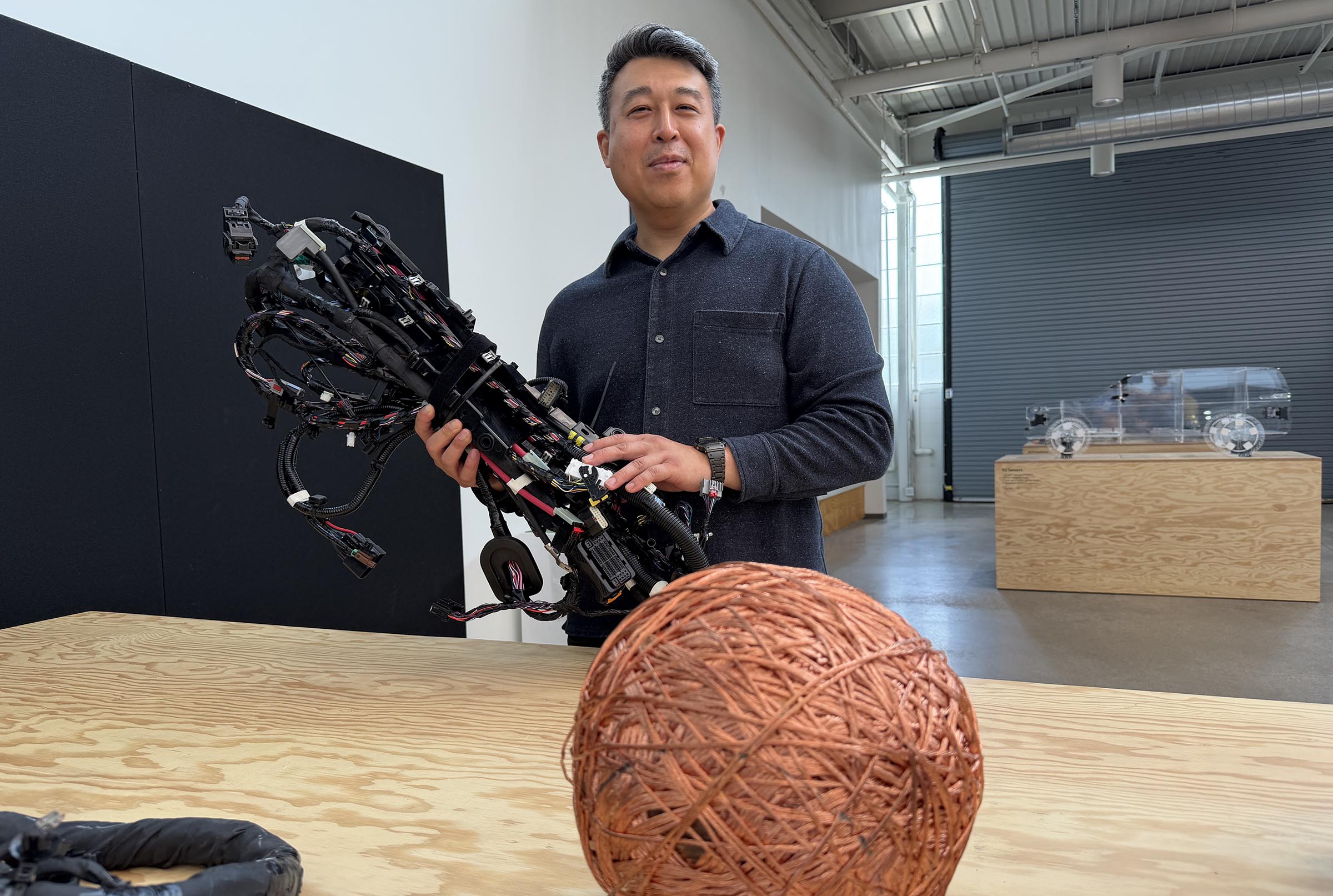
Rivian removed about 2.3 miles of copper wire with the R2 wiring harness.
When you’re talking about an EV you’re looking at a lot of copper. With R2, Rivian engineers were able to reduce the amount of wiring by about 2.3 miles. The difference became readily apparent during a quick tour of the engineering center. The new wiring harness, I discovered, was about 40 pounds lighter than the one in the old SUV. Switching to newer cells, meanwhile, helped reduce the parts in the 88-kWh lithium-ion battery pack by about 50%, added Dachner.
With R2, meanwhile, Rivian adopted a “zonal” approach to the EV’s onboard smarts. Today’s vehicles are computers on wheels, with all sorts of smart sensors and control systems, as well as power-operated seats, mirrors and other features. With a few exceptions – primarily Tesla – each device is fitted with its own microprocessor, often adding up to more than 100 on each vehicle.
On R2, virtually all remote microprocessors have been eliminated, with operations shifted to several centralized computers. Again, less wiring, lower weight – and the ability to integrate operations so all those devices talk to one another. Better yet, Rivian officials explained, they can quickly make updates in-house without waiting to coordinate changes between a variety of different outside suppliers.
The “mass” in “mass market”
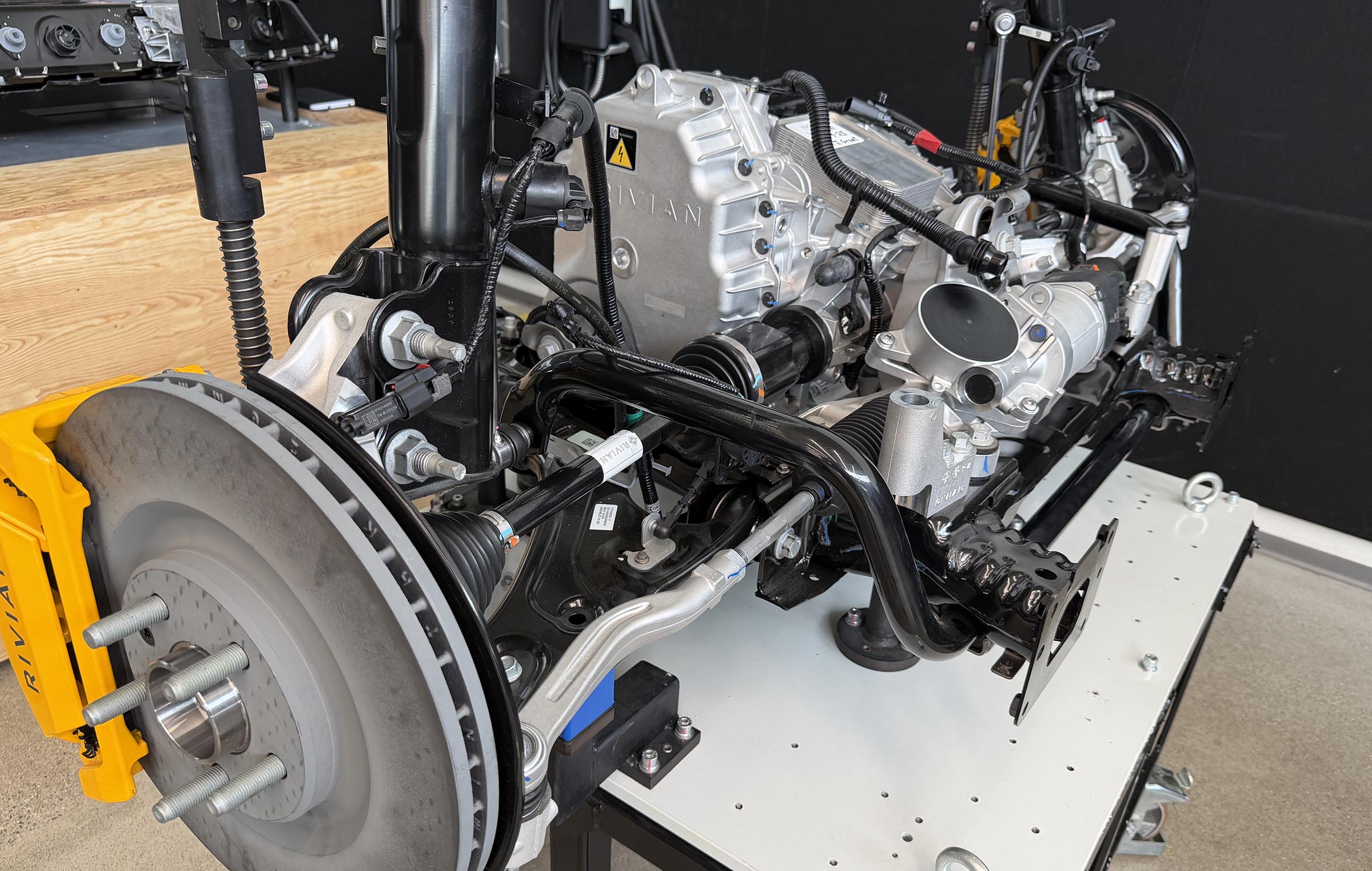
Simpler, lighter, the R2’s front suspension and drive unit.
“We pushed and pushed and pushed” to reduce mass and cost, Matt Wolfe, the vehicle hardware engineering chief told me. Among the many critical moves, Rivian shifted, where possible, from stamped steel parts to large-scale aluminum castings in the underbody. Three of these die castings eliminated four dozen traditional parts – and reduced the number of joints to be glued and welded from 600 to just 12. Overall, there are just 300 different parts used in the Rivian body shop, allowing a 20% reduction in the number of joints.
That translates into less labor, less room for error, lower investments and less mass. And by reducing mass Rivian can make a “cascade” of additional moves, each further reducing weight – and cost. A lighter vehicle can use smaller brakes, for example, and a simpler, lighter suspension system. The modified front suspension on R2 is 8% lighter and 49% cheaper than R1’s according to Wolfe.
Add it up and a lighter vehicle needs less energy to go each mile, meaning either a smaller battery pack or greater range.
It wasn’t all about subtraction
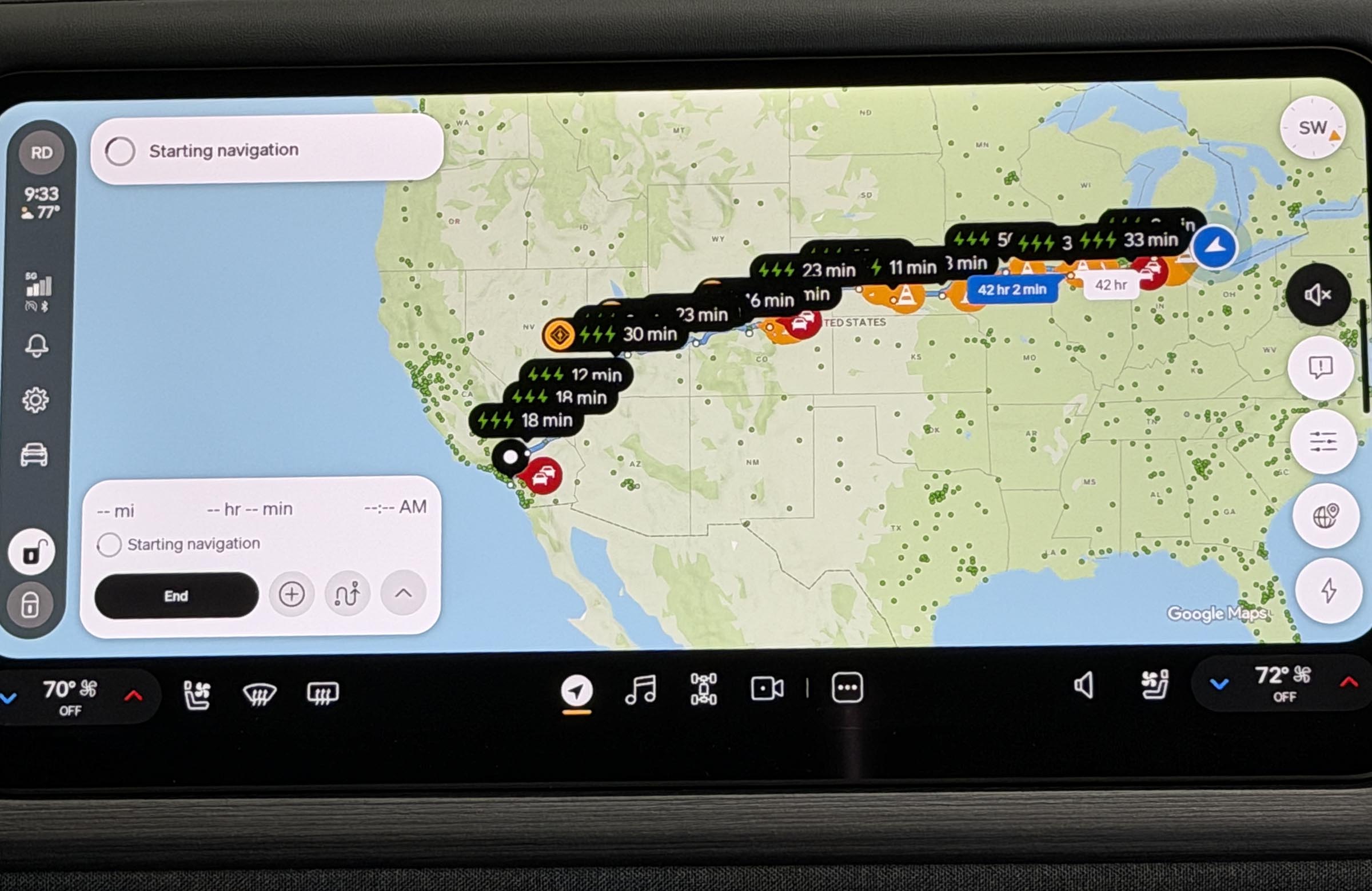
The Rivian R2 gets new Google Maps.
The cuts can be found virtually everywhere. Rivian found ways to cut 70% of the cost in high-voltage cabling, for example. And instead of a unique floor panel, the top of the battery pack serves that purpose.
While the Rivian product development team focused, wherever possible, on subtracting mass and cost, they also made some additions. For one thing, R2 gets two individual gloveboxes – R1S had none.
And the team agreed to spend some extra money to give the new SUV drop-down glass in the tailgate – a popular feature on R1S, while introducing a hidden wiper.
First take
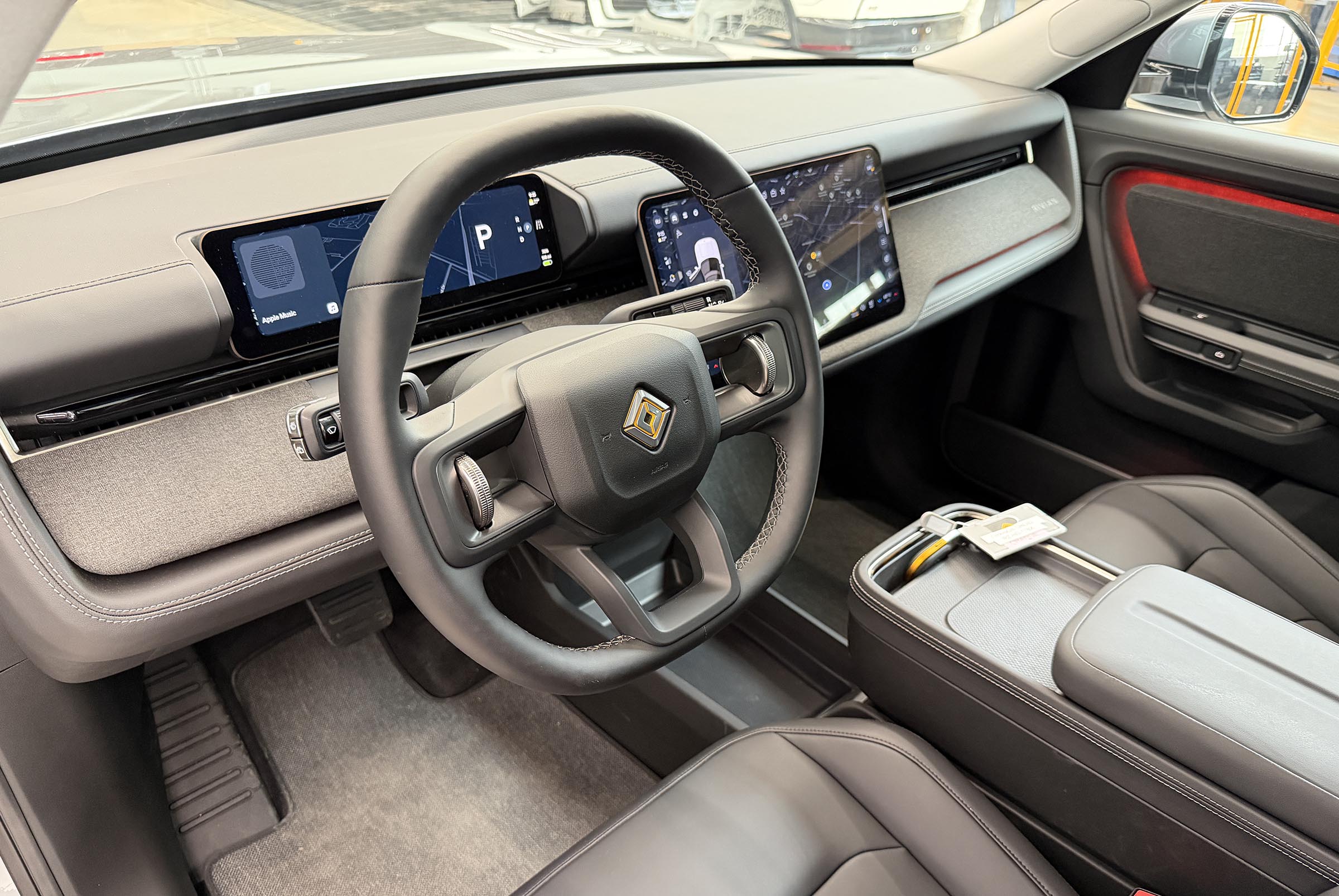
The Rivian R2 interior.
I’m reluctant to give a review of the new Rivian R2 after spending little more than an hour inside of it. It can take nearly that long just to work one’s way through the onboard infotainment system.
That said, my initial reaction is that I am quite impressed with what the automaker has accomplished. I’d still prefer to have more conventional controls for the sideview mirrors, steering wheel position and, in particular, for the climate control vents. But the new “halo” controls on the steering wheel make those functions a lot easier to operate. The infotainment system, more broadly, has been upgraded and, with the addition of Google Maps, is a lot more intuitive. Yes, some folks will still lament the lack of Apple CarPlay and Android Auto.
More broadly, the electric SUV is attractive, roomy and, depending upon trim, well-equipped. The Performance package I drove was a blast to drive, with great acceleration, a nice one-pedal system and reasonable handling. The new suspension system also appears to be better at absorbing the bumps we Michiganders deal with every day.
Now, add the substantially lower price tag and I can see a lot of folks looking for an electric SUV to give the Rivian R2 a closer look. EV sales may be down but the market is far from dead and Rivian has come up with an entry that, from initial inspection, stands up to pretty much any competitor out there.
Add the lower manufacturing costs and the company has a very good chance of positioning itself as one of the few start-ups to survive the EV market shake-out.

Ugliest wheels I’ve seen.
An initial thought: the R1’s rear styling could be improved upon by designing the inner rear valance to be recessed.