
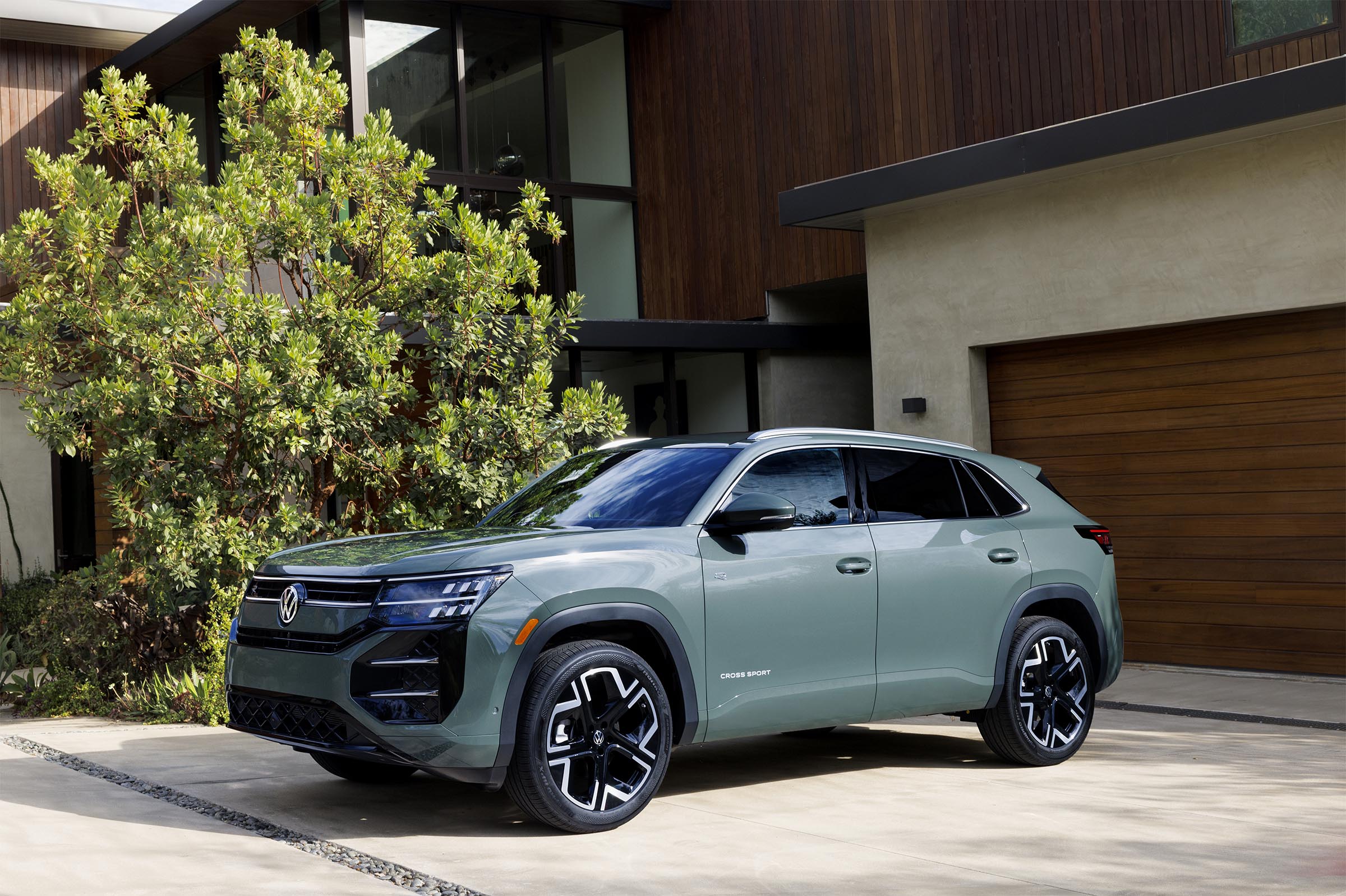
Forget the Beetle. Ignore the Golf. It’s the Atlas family keeping Volkswagen dealers busy these days. And they’re getting a boost as the automaker rolls out an updated Atlas Cross Sport. More from Headlight.News.
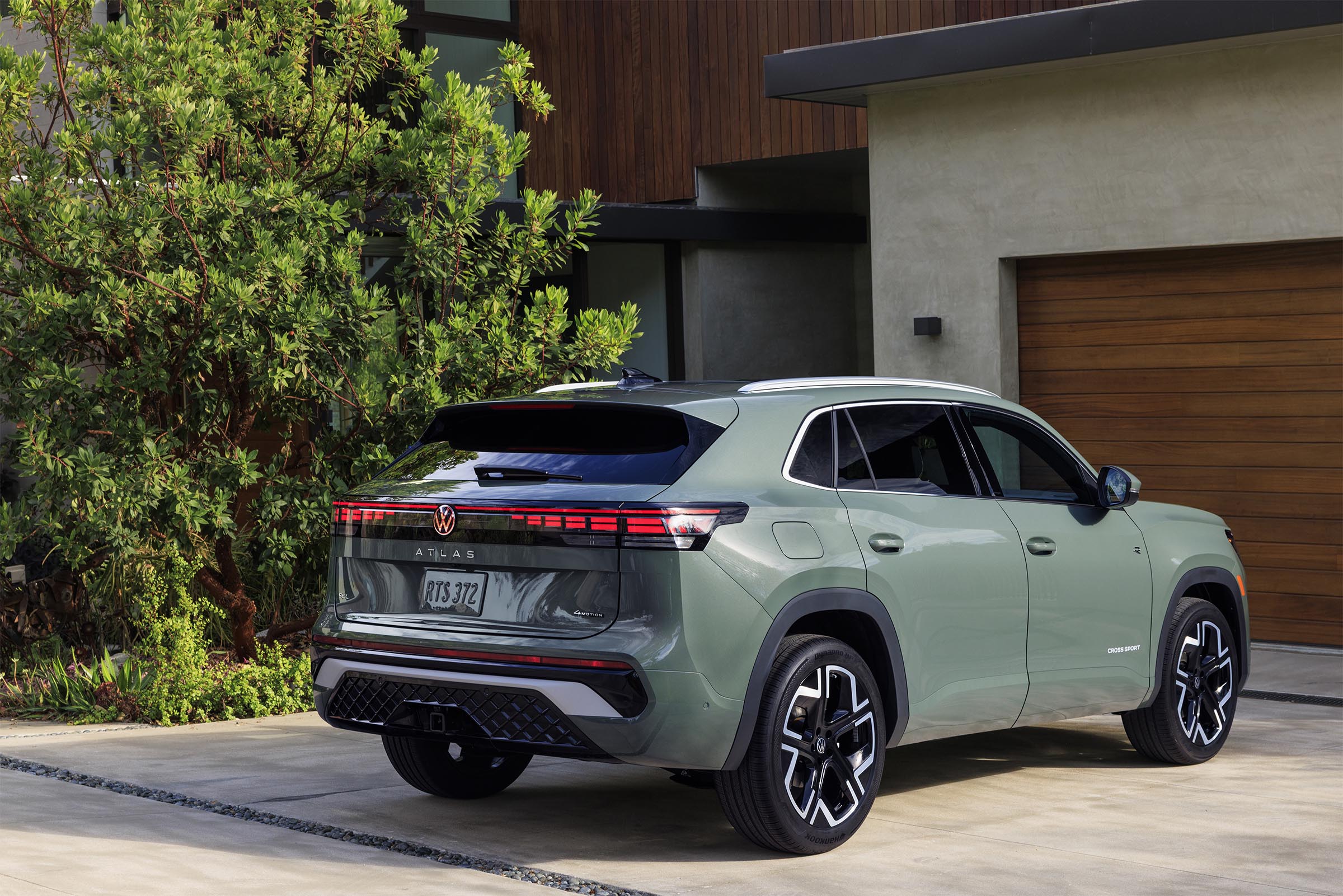
The 2027 VW Atlas Cross Sport is shorter and lower than the three-row Atlas and adopts a sportier design.
Mention the name, Volkswagen, and the first image you’re likely to come up with is the iconic Beetle. Or, perhaps, the classic Microbus. But when it comes to the German brand’s modern-day reality, it’s the Atlas crossover that dominates, at least from a sales standpoint.
First introduced in the 2018 model year, he three-row Atlas offered an attractive, roomy and functional package that the VW line-up lacked. It quickly became the brand’s best-selling nameplate. But the German marque wasn’t finished. For the 2020 model year it added a two-row alternative, the Atlas Cross Sport.
The bigger model went through a makeover earlier this year. Now it’s the two-row package’s turn. Here’s a look at what we’ve learned about the 2027 Volkswagen Atlas Cross Sport.
What’s new: design
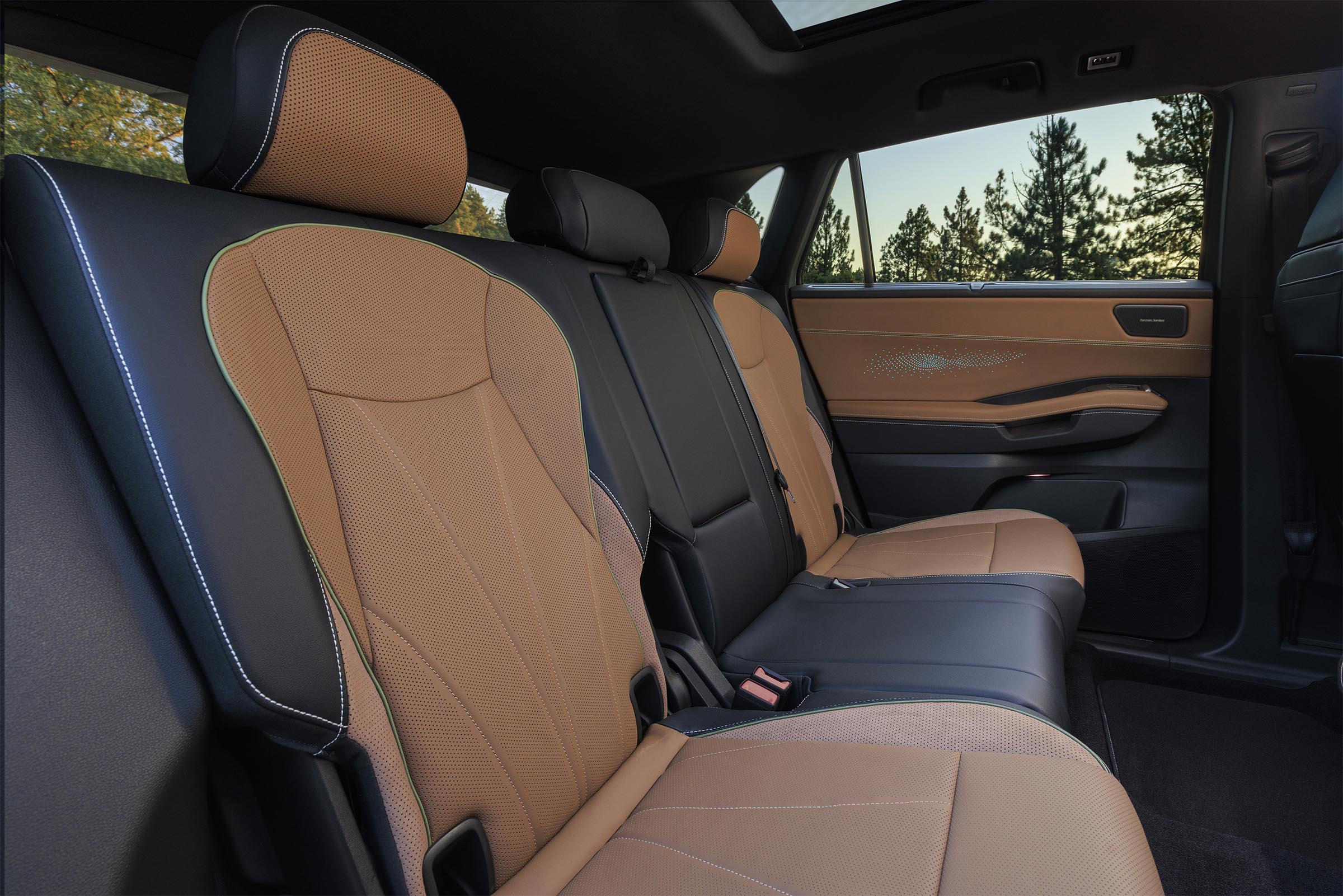
The interior of the 2027 Volkswagen Atlas Cross Sport offers more space for cargo and rear passengers than the three-row Atlas.
As we saw with the update to the three-row Atlas, VW decided to tread lightly with the 2027 Cross Sport, figuring it’s better not to tamper to much with one of the brand’s most successful models.
Cross Sport is about five inches shorter, at 195.6 inches, and also sis about two inches lower than its three-row sibling. The two-row model retains its lower, more aggressive silhouette, though the front end is essentially identical to the regular model, adopting the latest grille and headlight layout. The most distinctive design update: the “tuck under” its lower fenders and door panels get, curving more gracefully into the rocker panels.
With just two rows, Atlas Cross Sport is a case of less is more. Rear-seat occupants in this five-passenger package get substantially more leg room than in the three-row Atlas – at 40.4 inches. There’s also a good bit more cargo space, at 40.3 cubic feet with the rear seats folded down.
Powertrain
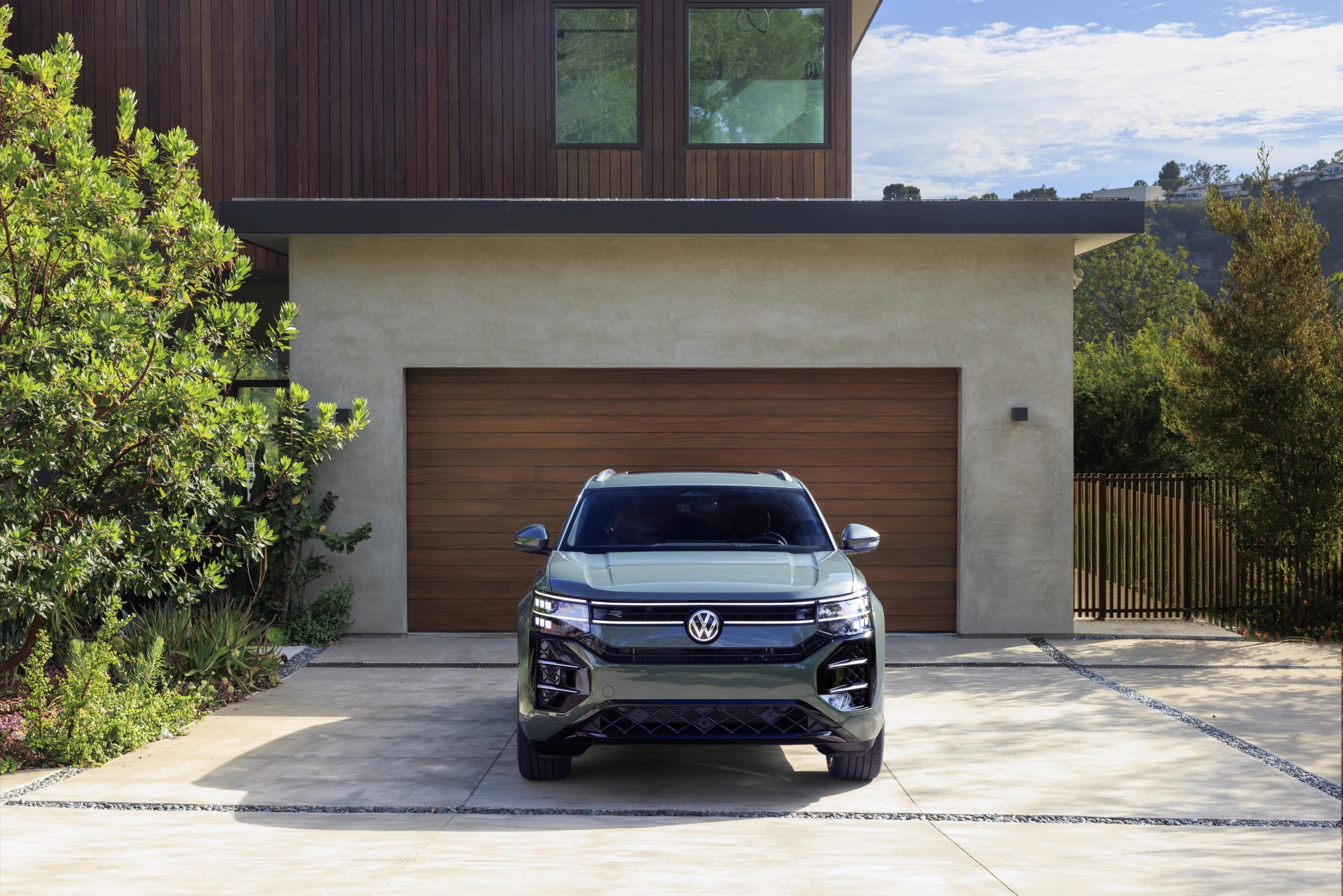
The 2027 Volkswagen Atlas Cross Sport offers only a single inline-four powertrain.
As with the three-row Atlas, Cross Sport may disappoint some potential buyers by failing to deliver a hybrid option. That wasn’t a problem with the original versions but gas-electric drivetrains are rapidly gaining traction as they approach 20% of the U.S. new vehicle market. Adding hybrid options has played out well for two key competitors: the Hyundai Palisade and Kia Telluride, especially at a time when regular gas is going for an average $4 a gallon across the country.
For now, at least, all Atlas packages share a 2.0-liter inline-four gas engine. It makes 282 horsepower and 258 pound-feet of torque. That’s 13 hp more than the outgoing 2026 models, but there’s a sacrifice in a 15 lb-ft reduction in torque.
Buyers will have a choice of front-wheel-drive – standard on all Atlas Cross Sport models – or the all-wheel-drive upgrade.
More Auto News
- Hybrids Charged Up July Auto Sales
- Has SRT Found the Answer to Turbo Lag?
- Dodge Debuts Charger Super Bee – But There’s More Coming
Features and technology
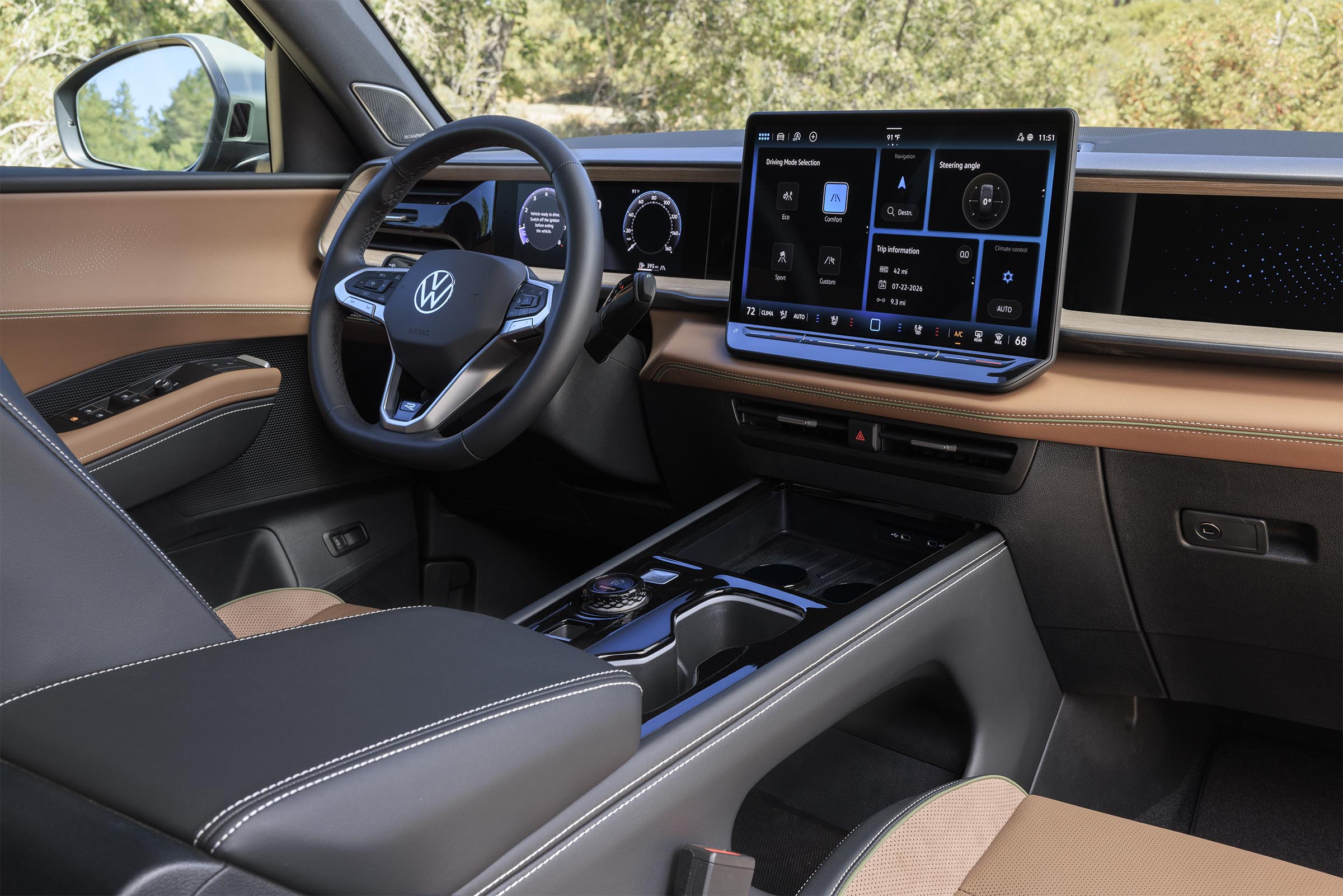
Most trims get a 15-inch infotainment screen.
Enhancing the utility the roomy Atlas models offer, they add plenty of features for the money. Cross Sport models feature a standard-12-way driver’s seat. Buyers can opt to add a massaging function for both front seats. A power liftgate is standard on all trims. And other standard features include auto-dimming mirrors and a park distance control system. The stock 9-speaker audio system, meanwhile, can be upgraded with a 14-speaker Harman Kardan package.
There are a number of other upgrades when it comes to digital technology. All models feature a 10.25-inch reconfigurable gauge cluster. Base trims add a 12.9-inch infotainment screen, with other packages swapping that out for a 15-inch display.
The technology running through the infotainment screen has been expanded, as well. It now includes, among other things, a gaming console mode – which can only be operated when parked. The new voice control system, VW explains, is now AI-powered. And the navigation function is reportedly faster – and better at finding points of interest. There’s satellite and Internet radio, as well as WiFi hotspot. But be advised that many of the functions and features require a subscription.
Pricing and Availability
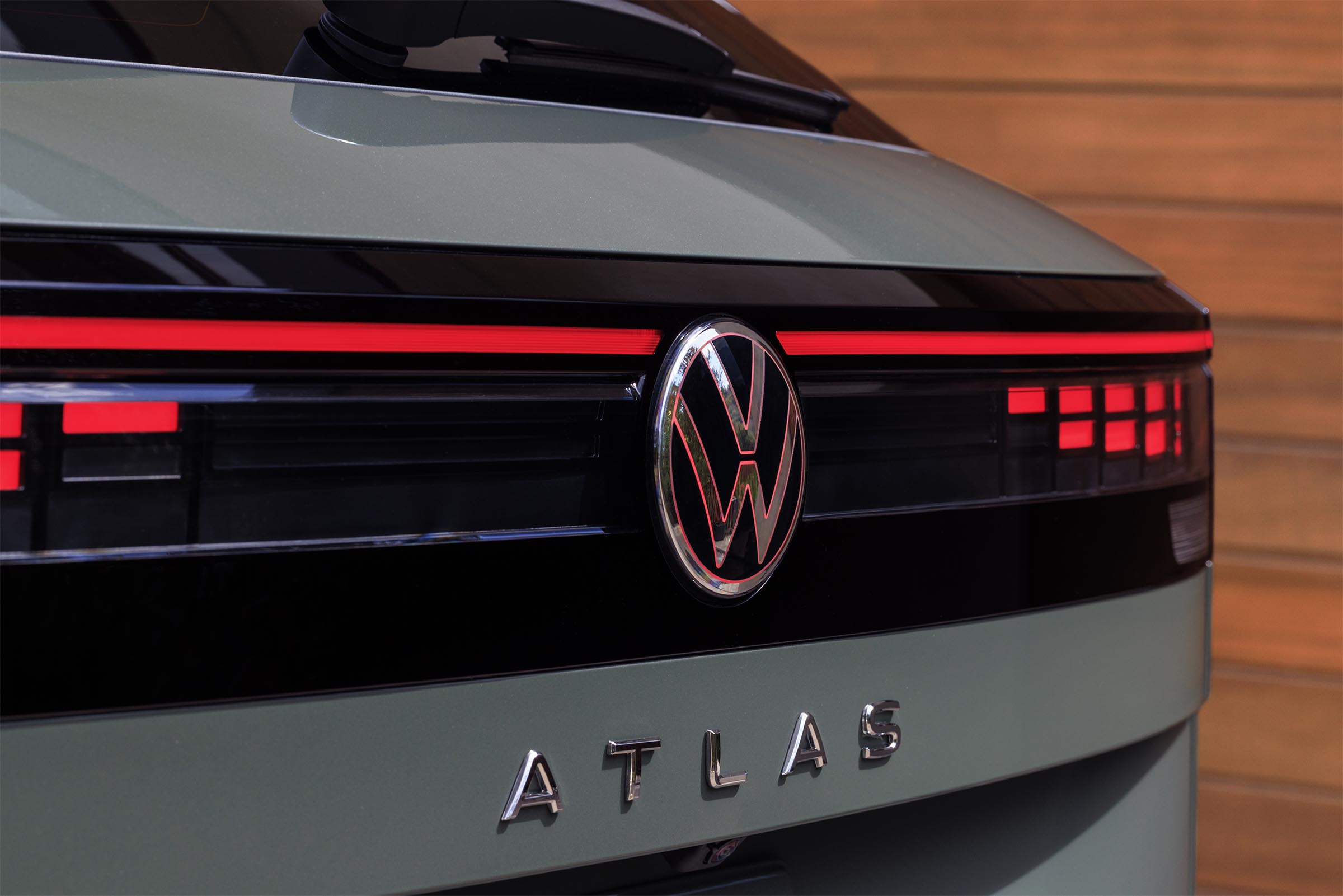
Like the bigger Atlas, the Cross Sport is expected to have a price increase for 2027.
You can already begin ordering the three-row Atlas, though it won’t officially become available for deliveries until fall, with a starting price of $43,145, including destination. On average, it’s about $2,300 more than the outgoing model.
The Atlas Cross Sport will follow some months behind and that means we won’t get final pricing until later in 2026. But it’s likely to see a similar jump in price compared to the $39,775 for today’s model, meaning something around $42,000.
Atlas Cross Sport doesn’t quite match the sales volume of the three-row Atlas but has done reasonably well in today’s market, appealing to those who want more interior space rather than a third row. The new 2027 model will go into an increasingly crowded market, including two-row crossovers like the Honda Passport, Nissan Murano, Subaru Outback and Mazda CX-70. The new design an features should help draw in potential buyers – though the lack of a turbo could prove a drawback in today’s market.




0 Comments