
This story first appeared on TheCarCollective.substack.com.
Here’s how an upstart Korean automaker, once seemingly destined to fail, has even Toyota and Volkswagen worried.
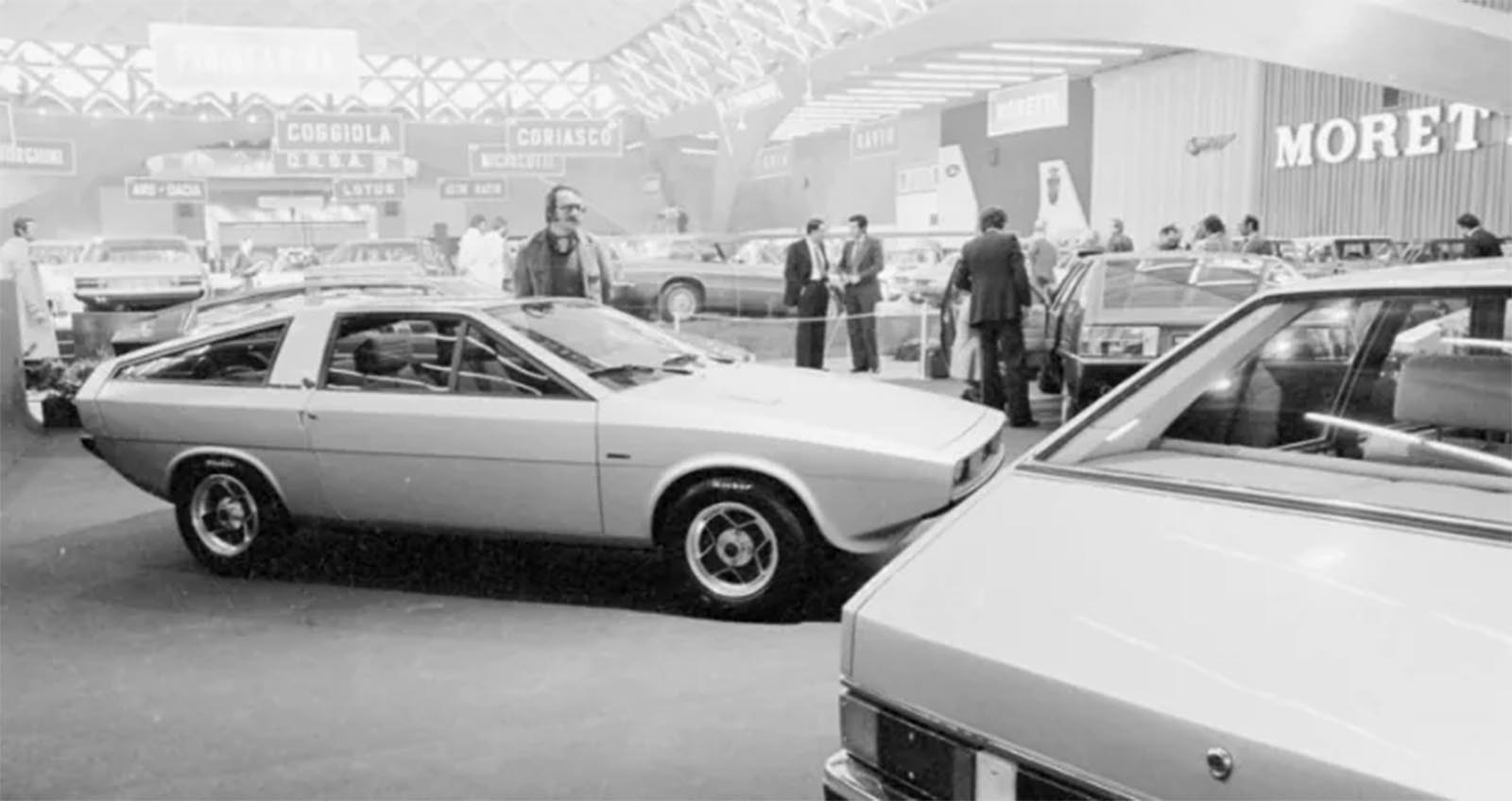
The original Hyundai Pony Coupe Concept made its debut at the Turin Motor Show in 1974.
It started out as the butt of late-night jokes. Today, even its biggest competitors have to take Hyundai deadly seriously.
When the first Korean cars landed in the U.S. 40 years ago they had little more than a ridiculously low price tag going for them. They were awkward, ungainly and slow. So slow, in fact, that the little Hyundai Excel became the frequent target of late night comedians like Jay Leno. And, after an initial burst of demand, sales all but dried up, to the point that, in 1994, the automaker gave serious thought to leaving the North American market.
Hyundai wound up sticking it out, launching a turnaround effort that has proved phenomenally successful. Today, the Hyundai Motor Group, which includes not only the namesake brand, but luxury marque Genesis and mid-market Kia, is one of America’s fastest-growing car companies. On a global scale, meanwhile, it has gone from little more than an asterisk on the sales charts to become the world’s third-largest automotive manufacturers – behind only Toyota and Volkswagen – and number two from a profit standpoint.
How did Hyundai turn things around? And how far can it go? I’ll get to that shortly. But let’s first look at what Hyundai has coming.
Big Aspirations
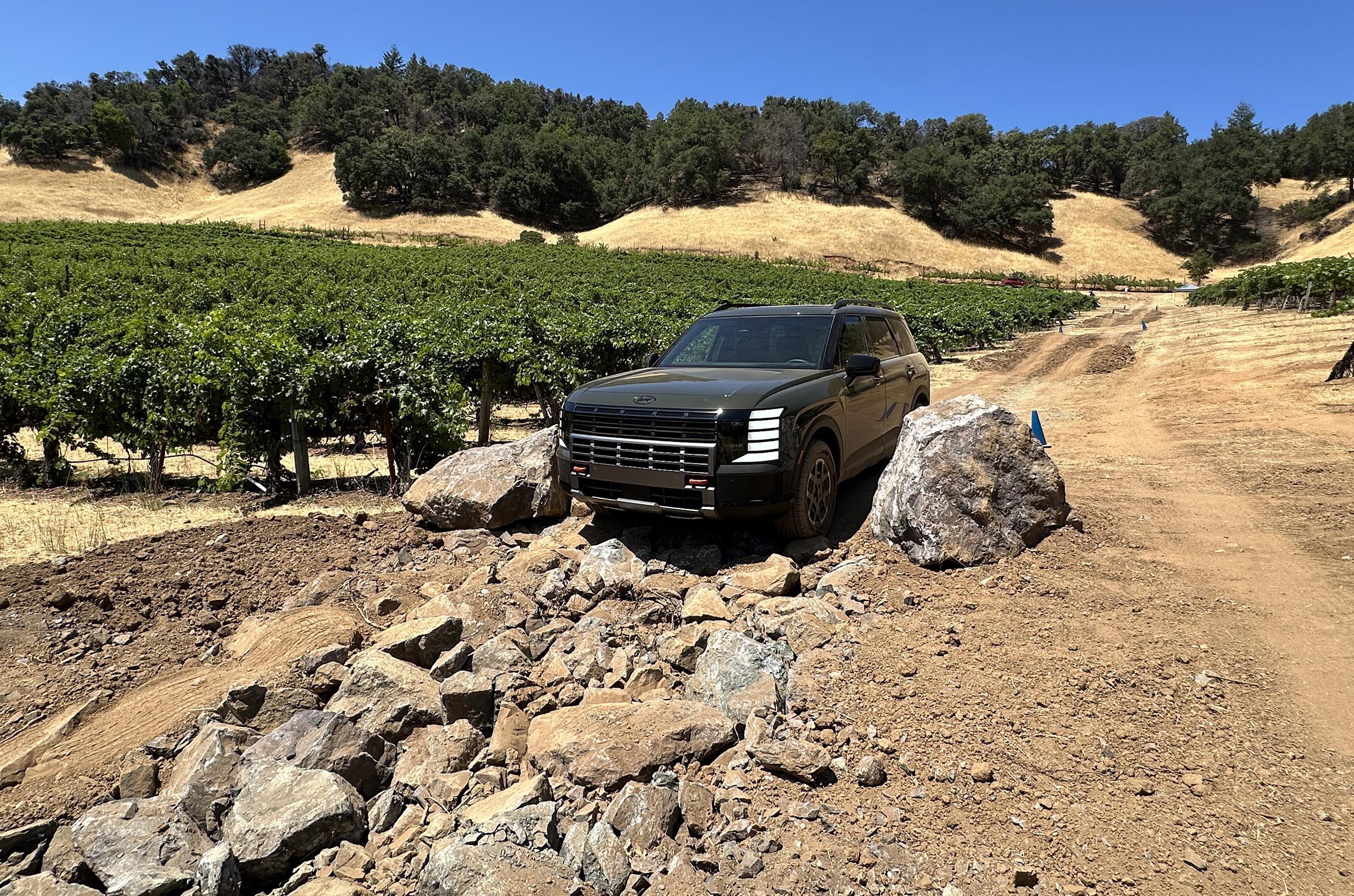
The 2026 Hyundai Palisade was named North American Utility Vehicle of the Year in January.
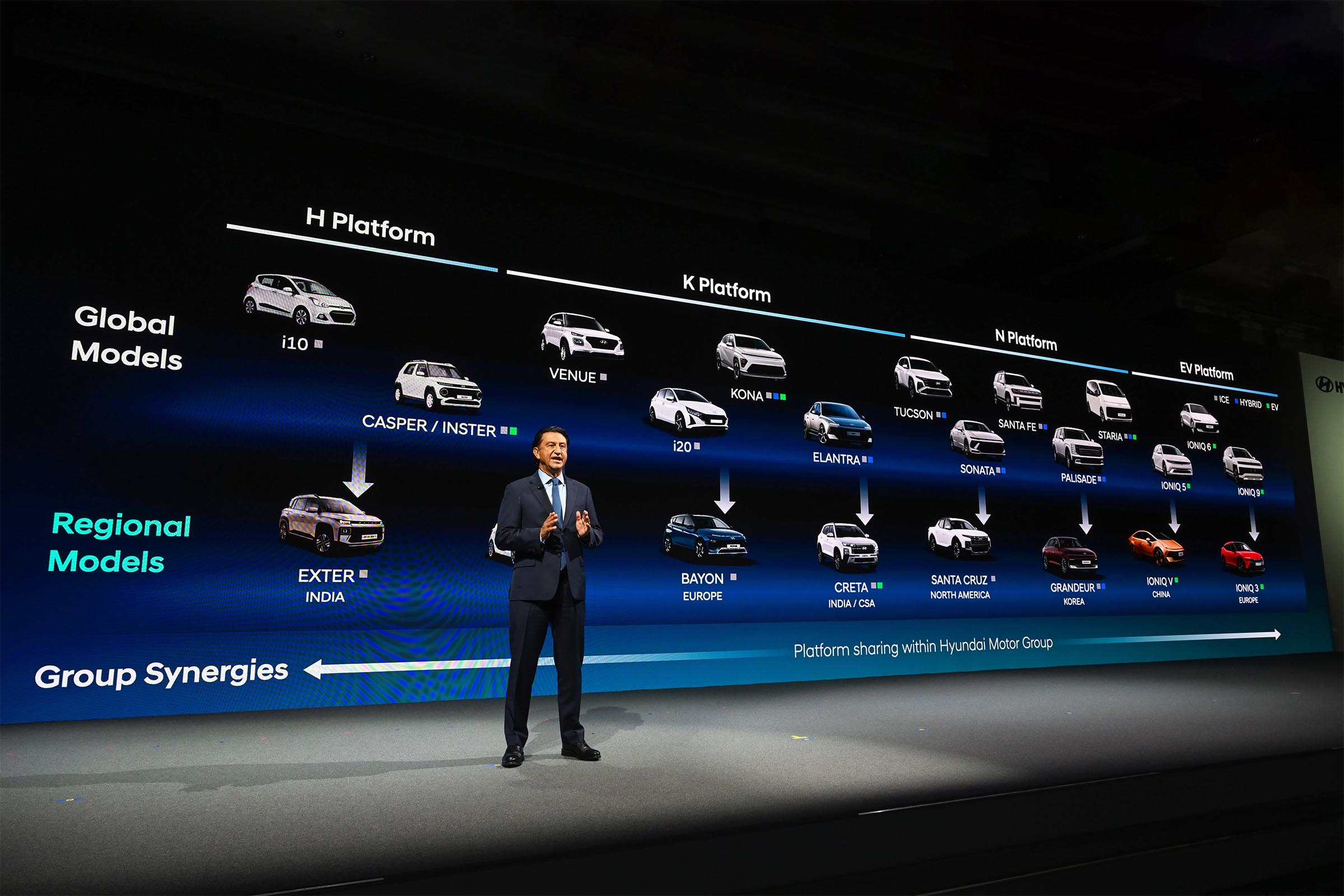
“Their rise has been meteoric,” said Paul Waatti, director of industry analysis for research firm AutoPacifc, Inc. But, based on the plans announced by CEO Carlos Munoz during Hyundai’s Investors Day meeting in Seoul this past week, the company has even bigger aspirations. Few would be surprised to see it nudge past the struggling German automaker. But could the Seoul-based Hyundai topple even king-of-the-hill Toyota?
What’s clear is that Munoz, who became Hyundai’s global CEO in January 2025, intends to move fast. Last year, the Hyundai and Genesis brands sold 4.24 million vehicles worldwide, up 2%. (Factoring in the Kia brand brought the total to 7.24 million.) The new plan calls for boosting Hyundai and Genesis capacity alone by 1.27 million vehicles annually by 2030.
That’s the equivalent of four to five traditional assembly plants, though some of that will come through boosting output at existing facilities. The expansion program will include the home market of Korea but, under Munoz, Hyundai is putting an emphasis on localization, designing products for, and then building them in, specific markets. In India, for example, capacity is set to rise by over 300,000 – to about 1.4 million vehicles a year. North America, however, will be at the heart of the plan, no surprise considering the automaker’s seemingly endless streak of month-over-month sales records pushing factories like the Metaplant in Ellabell, Georgia, to their limits. U.S. capacity is set to rise by about 500,000 over the next four years.
A Massive Product Blitz
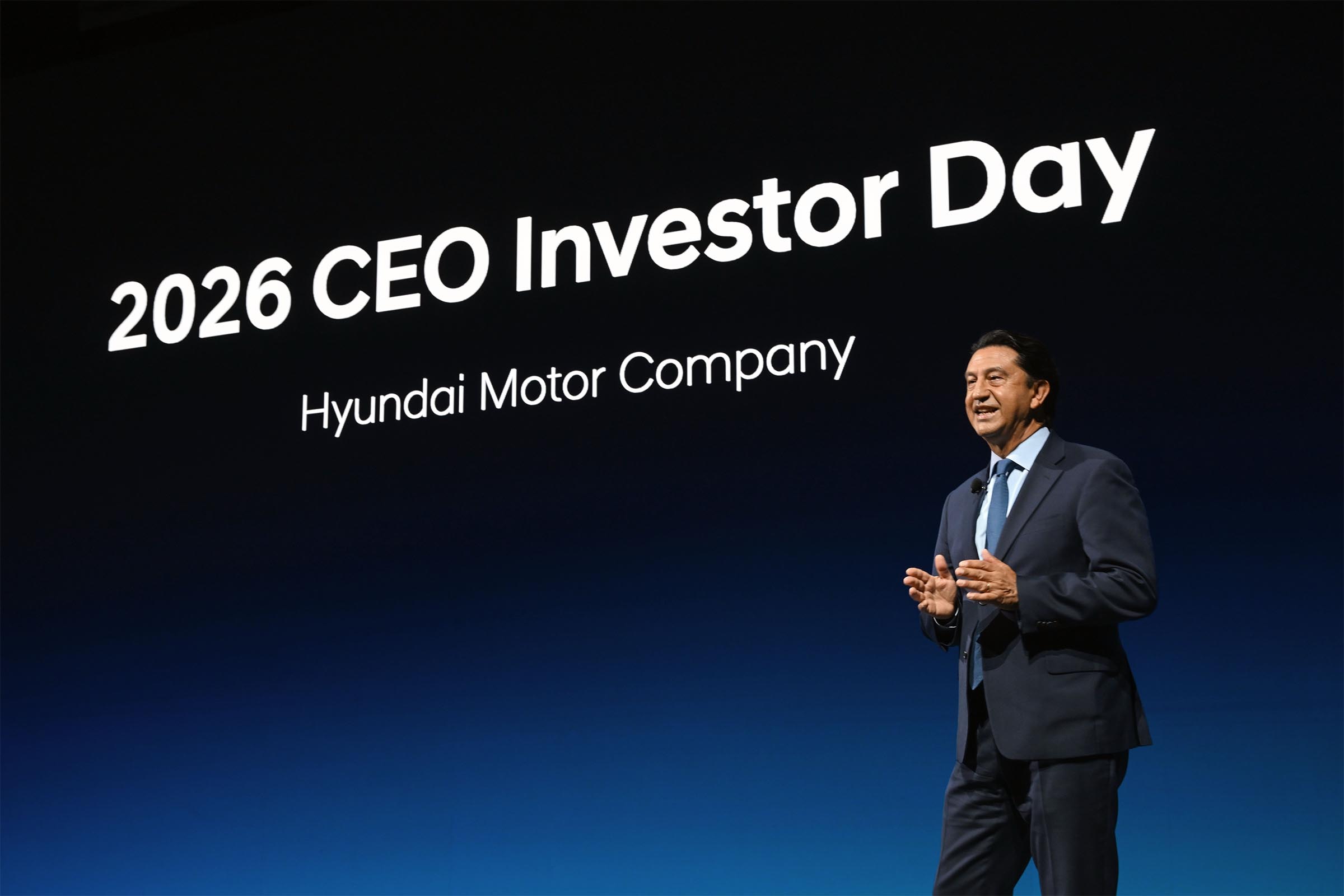
Hyundai CEO Carlos Munoz at last week’s Investors Day event.
Boosting production capacity like that requires having the right products to win over new customers – and in today’s hotly competitive market, it’s that’s not easy, cautioned Waatti. But Hyundai intends to launch a virtually unheard-of product blitz – 100 completely new and updated models by 2030. Of those, 58 well come to the North American market. Others, including some battery-electric vehicles, will be reserved for markets in Europe, Latin America and Asia.
We’ve already gotten a look at some of what’s coming. That includes the Genesis GV90 and the luxury brand’s first high-performance Magma model. Significantly, the Neolum version of the all-electric GV90 will take Genesis to new heights from a price and image standpoint. Expected to come in around $150,000, the lavish four-seat SUV will directly target the best from Mercedes’ Maybach sub-brand.
Hyundai has teased still others, with a production version of the rugged Boulder SUV that debuted at the 2026 New York International Auto Show officially being “investigated” – though two senior company officials assured me it’s all but gotten the green light to move ahead. Munoz, at the time, also said more variants, including a midsize pickup, will follow. And we’ll see variants come from Genesis and Kia, as well.
Power to the People
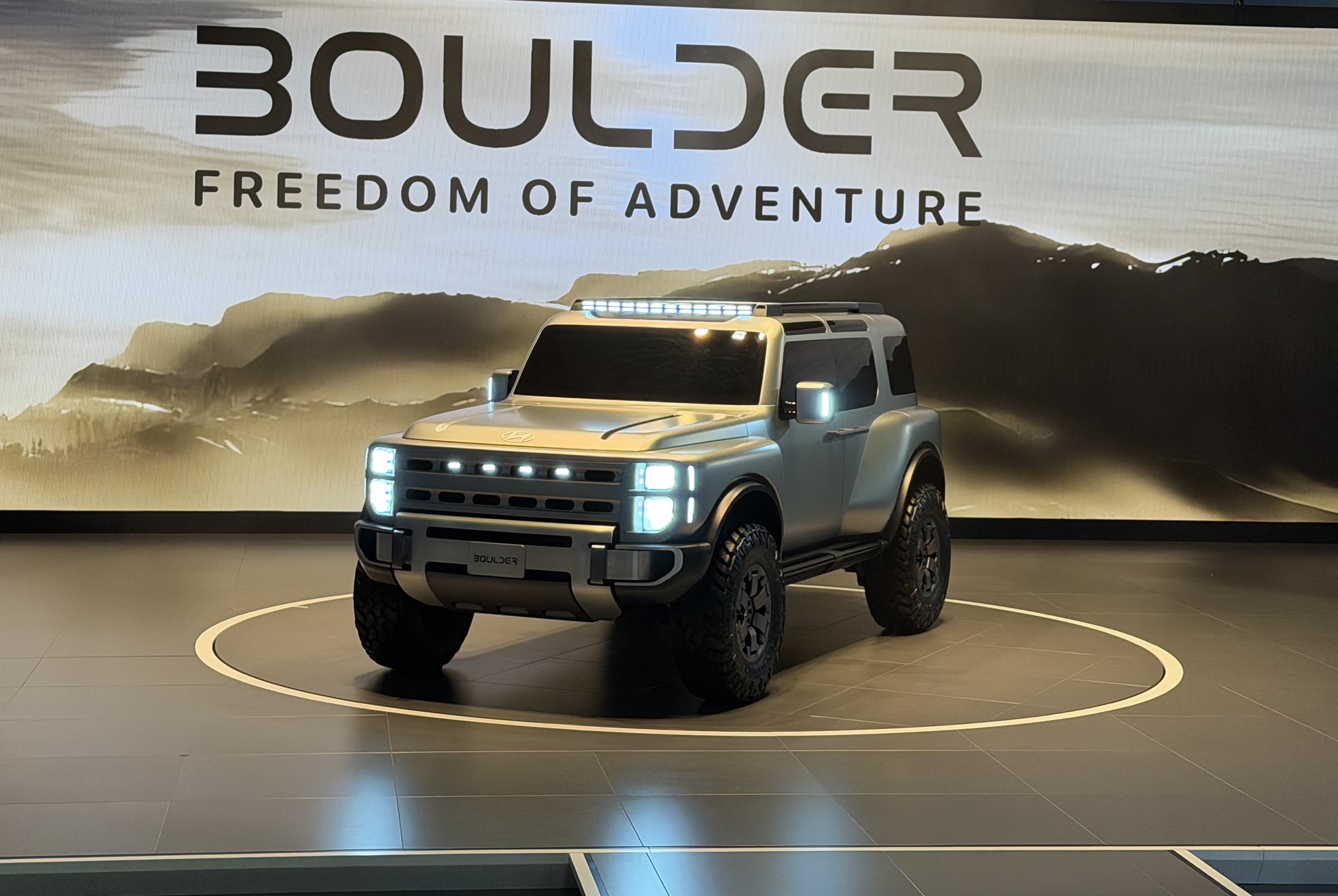
Likely to go into production, Hyundai’s Boulder would share its body-on-frame platform with Hyundai and Kia pickups.
As the GV90 demonstrates, Hyundai isn’t walking away from battery-electric vehicles. It’s just adapting its plans to reflect market realities in each specific region where it competes, Randy Parker, CEO of Hyundai Motor America, told me following the Boulder concept’s debut in New York.
One of Hyundai’s critical strengths is having a full shelf of powertrain technologies to draw from, said Sam Fiorani, chief analyst with AutoForecast Solutions, as well as the flexibility to pick and choose which will work best on any specific model. Early next year, the Hyundai plant in Alabama will begin rolling out a new version of the popular Santa Fe SUV. It will become Hyundai’s first EREV, or extended-range electric vehicle, using an internal combustion engine solely to generate power to keep its batteries charged up. That’s expected to yield a range of up to 600 miles for the Santa Fe variant, far more than any conventional EV currently delivers.
A new version of the big GV80, meanwhile, will become the first Genesis offering a hybrid option. Conventional hybrids are in the midst of explosive demand growth in the U.S. and, so far this year have accounted for 25.5% of Hyundai’s sales here. That’s nearly twice the overall industry number but only about half of Toyota’s hybrid share – and the Koreans are intent on closing the gap.
The Butt of the Joke
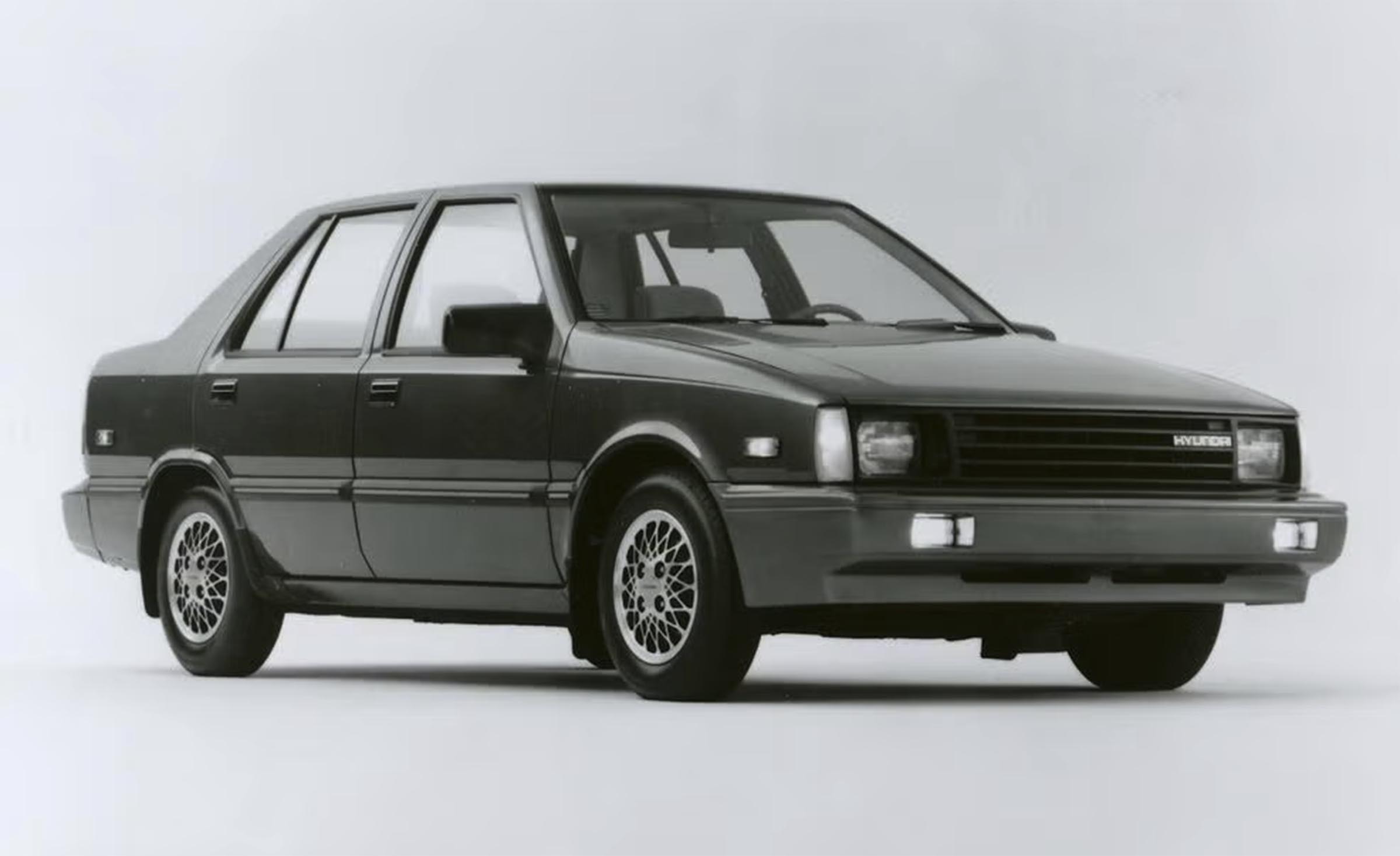
There was really just one good reason to buy the original 1986 Hyundai Excel: it’s $4,995 price tag.
It’s hard to find anyone laughing at Hyundai anymore. Toyota takes the Koreans “very seriously,” David Christ, the group vice president and general manager of the Toyota division in North America told me earlier this year.
But that wasn’t always the case. I found myself in a very different Seoul during my first visit there back in October 1985. One could still find rubble left from the Korean War after three decades. The economic miracle that has transformed the country’s economy was barely beginning. The country’s automakers were determined to lead the charge. Hyundai’s first foray into North America was the 1984 Pony, a pint-sized econocar priced at just $5,795. It followed up with the Excel, its first U.S. model, in February 1986. At $4,995, it undercut everything on the market and sales went stratospheric – initially. But it had little else to offer. At one point, Tonight Show host Jay Leno compared the Excel to the Olympic luge. He described it as a “three-foot vehicle that has to be pushed to get started and only goes downhill.”
After its meteoric start, Hyundai set up a factory in Bromont, Quebec. But, as sales collapsed, the plant was shuttered in 1994 and Hyundai gave serious thought to abandoning the North American market.
Back From the Brink
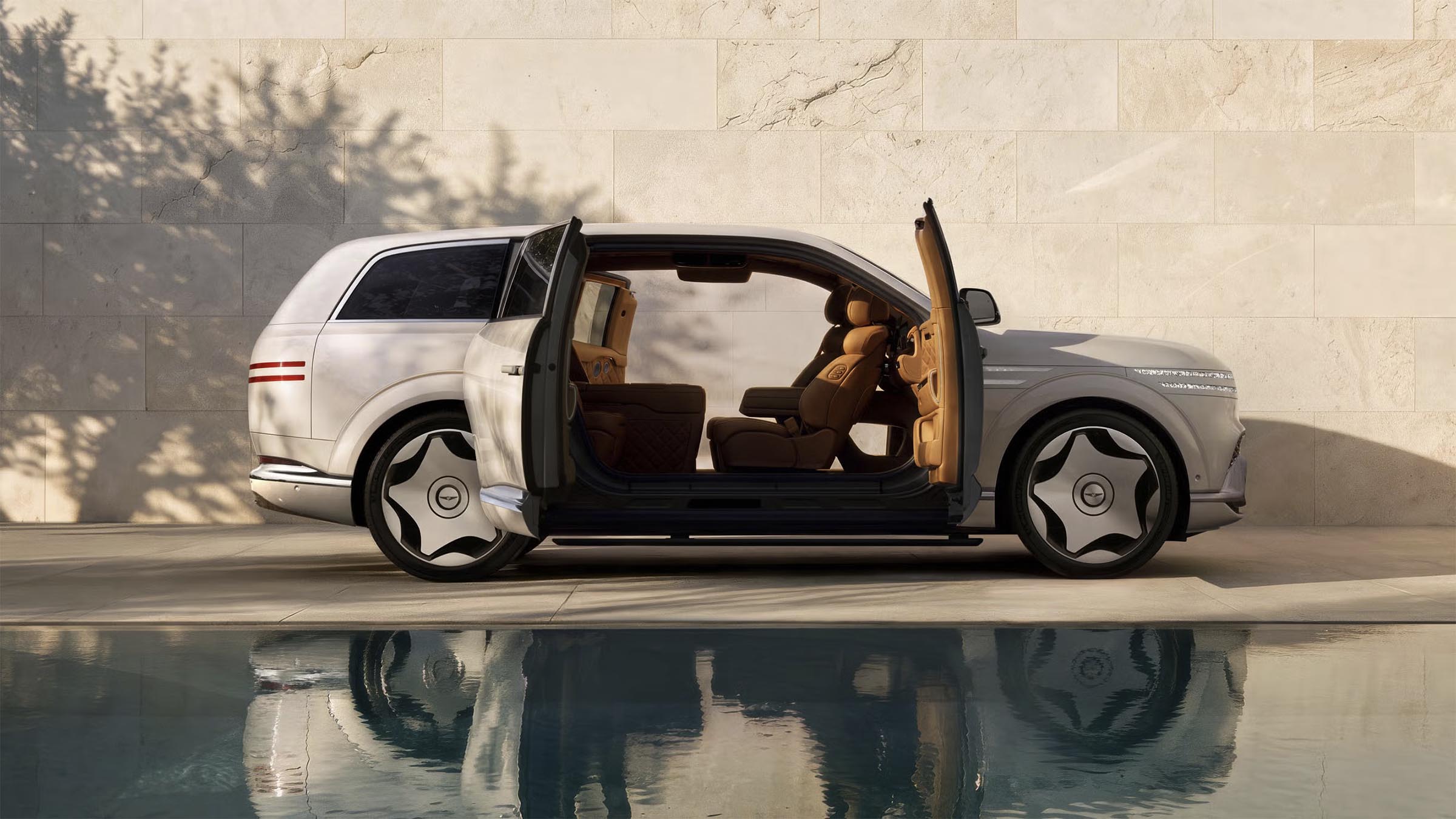
The Genesis GV90 Neolum seen with its doors open,
Cautiously, it stuck things out and, barely three decades later, both the Hyundai and Kia brands have set a string of year-over-year sales records. Genesis is rapidly climbing out of the luxury market cellar, topping Ford’s Lincoln brand and coming within striking distance of Cadillac, moving 82,331 vehicles in the U.S. during the first half of 2025 compared to 86,104 for General Motors’ flagship brand. “I wouldn’t be surprised if Genesis started outselling Cadillac,” Waatti told me.
What’s happened?
“Hyundai’s success is due to our relentless customer focus and our ability to deliver compelling products that delight buyers and exceed their expectations,” Munoz told me in an email following his Investors Day appearance. “We constantly striver to improve our resilience and flexibility and are always assessing marketing opportunities to deliver the right product at the right price at the right time.”
That’s a reasonable summary. But it helps to dive into specifics.
 From Lemons to Lemonade
In its early years, it certainly didn’t help that the automaker’s quality routinely anchored it to the bottom of the closely followed J.D. Power Initial Quality and Vehicle Dependability owner surveys.
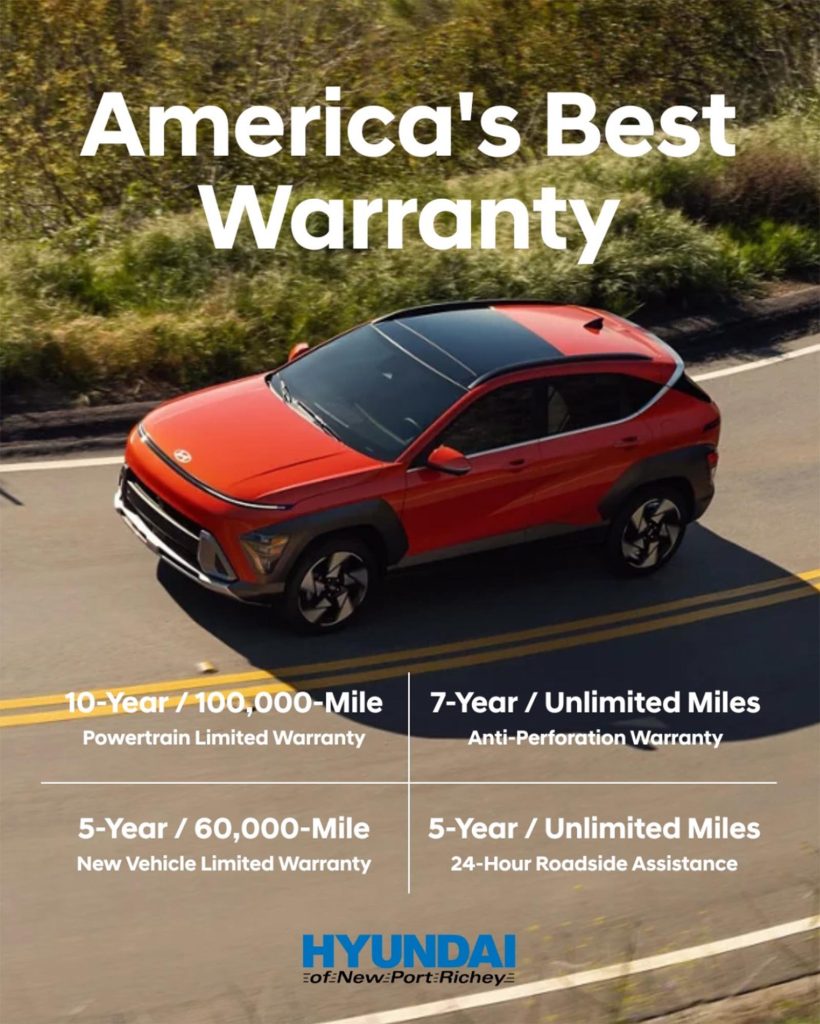
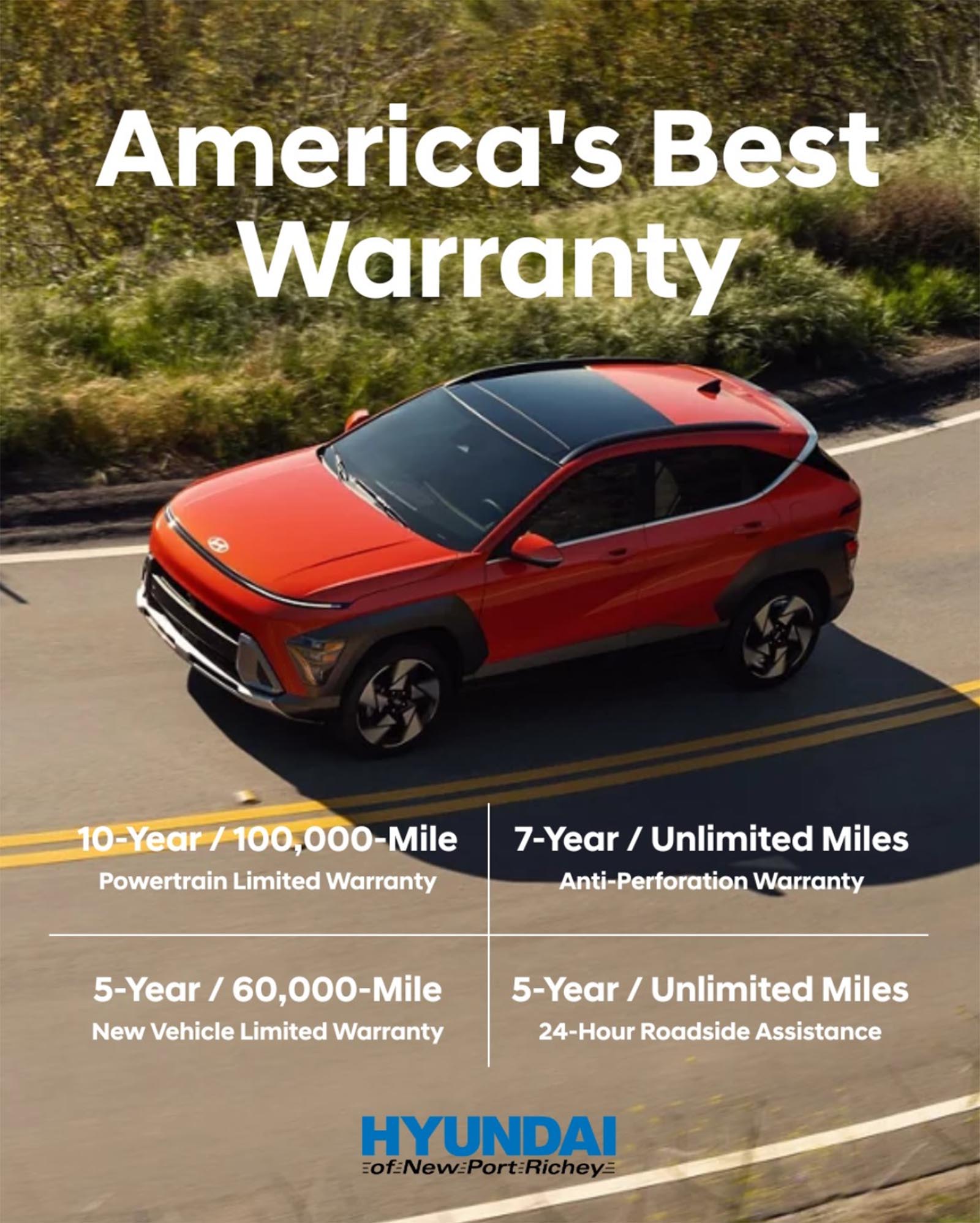
To turn things around, Hyundai had to address a variety of challenges. It had to prove its products were more than just bargain-basement offerings. They had to deliver value for the money. And they had to stand up under day-to-day use. In 1999 the company launched an industry-leading 10-year/100,000 mile warranty. More importantly, it began a serious internal assault on its quality problems. That’s readily apparent today, the automaker routinely landing among the top tier brands in the Power studies – often with one of its brands capturing the top spot.
But turning lemons into lemonade was only part of the process.
Hanging Out the “Help Wanted” Sign
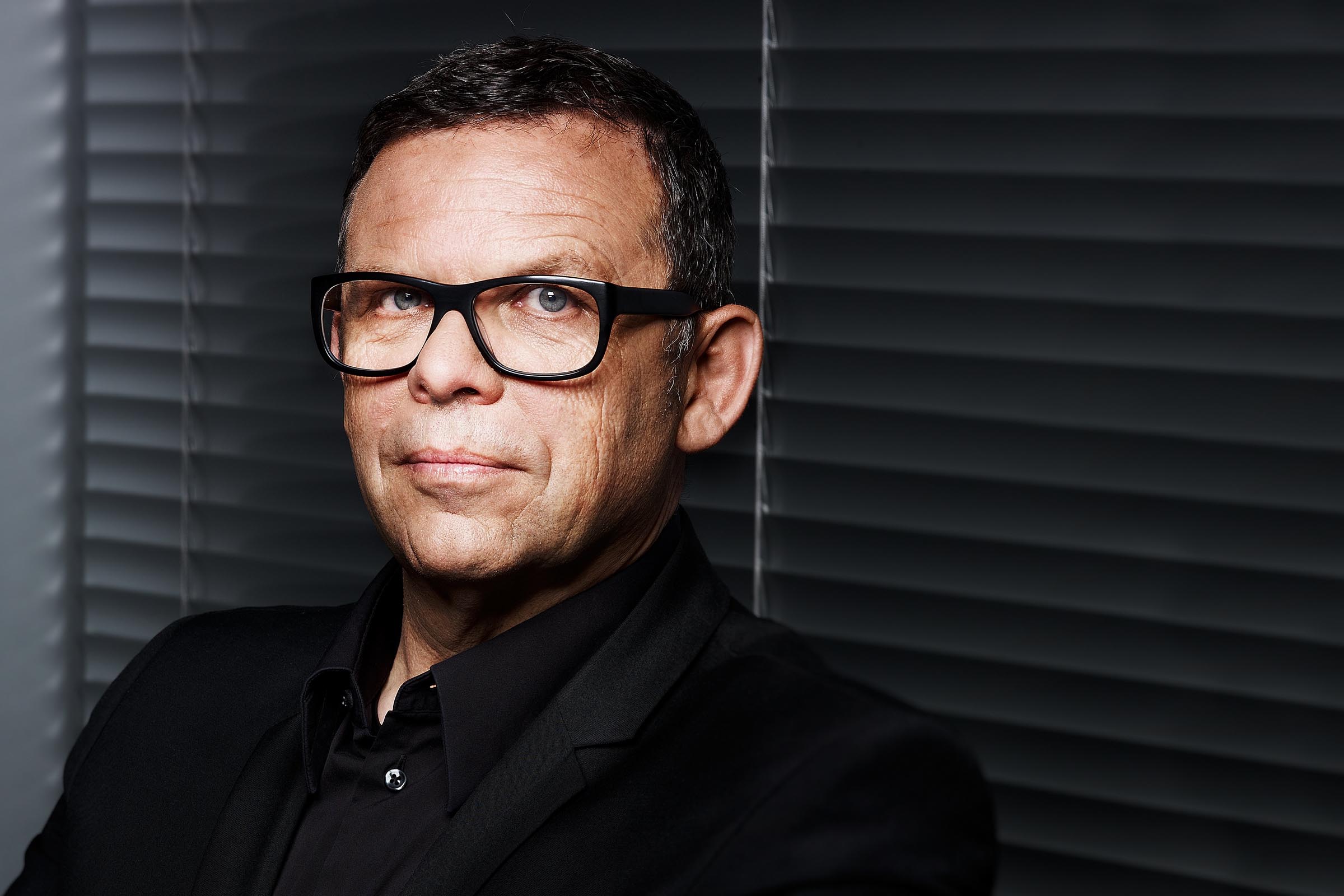
Former Audi and VW designer Peter Schreyer was brought in to transform Kia design.
Clearly, Americans value quality and reliability – but that alone wouldn’t have been enough to spark the turnaround we’ve seen at Hyundai, cautioned Fiorani. It required some other critical moves:
- A shift from slow-selling sedans and coupes to increasingly popular SUVs and CUVs;
- A design revolution;
- Significant improvements in performance and ride dynamics.
Hyundai had long used Westerners in its U.S. and European operations, but it took the once-radical step of bringing in foreign talent to help spearhead its transformation – starting with the 2006 hiring of Audi’s legendary design boss Peter Schreyer. He went on to become head of design – and president of Hyundai Motor Group. “I want to make the brands strong, while keeping them fresh,” Schreyer told me before his 2023 retirement. That’s clearly worked, “Hyundai design is different,” in a market filled with too many look-alike models, said analyst Waatti. “People notice and you can see that in Hyundai’s market share.”
Another European, Luc Donckerwolke, picked up the reins, now serving as the automaker’s global chief design and creative officer. Meanwhile, Albert Bierman was brought in back in 2015 to address Hyundai’s engineering challenges. His six years with the company – from 2015 through 2021 – can be measured in the significant improvements in the ride, handling and performance of Hyundai products. It’s unlikely we’d see the Hyundai “N” and new Genesis Magma models without him.
Looking Ahead
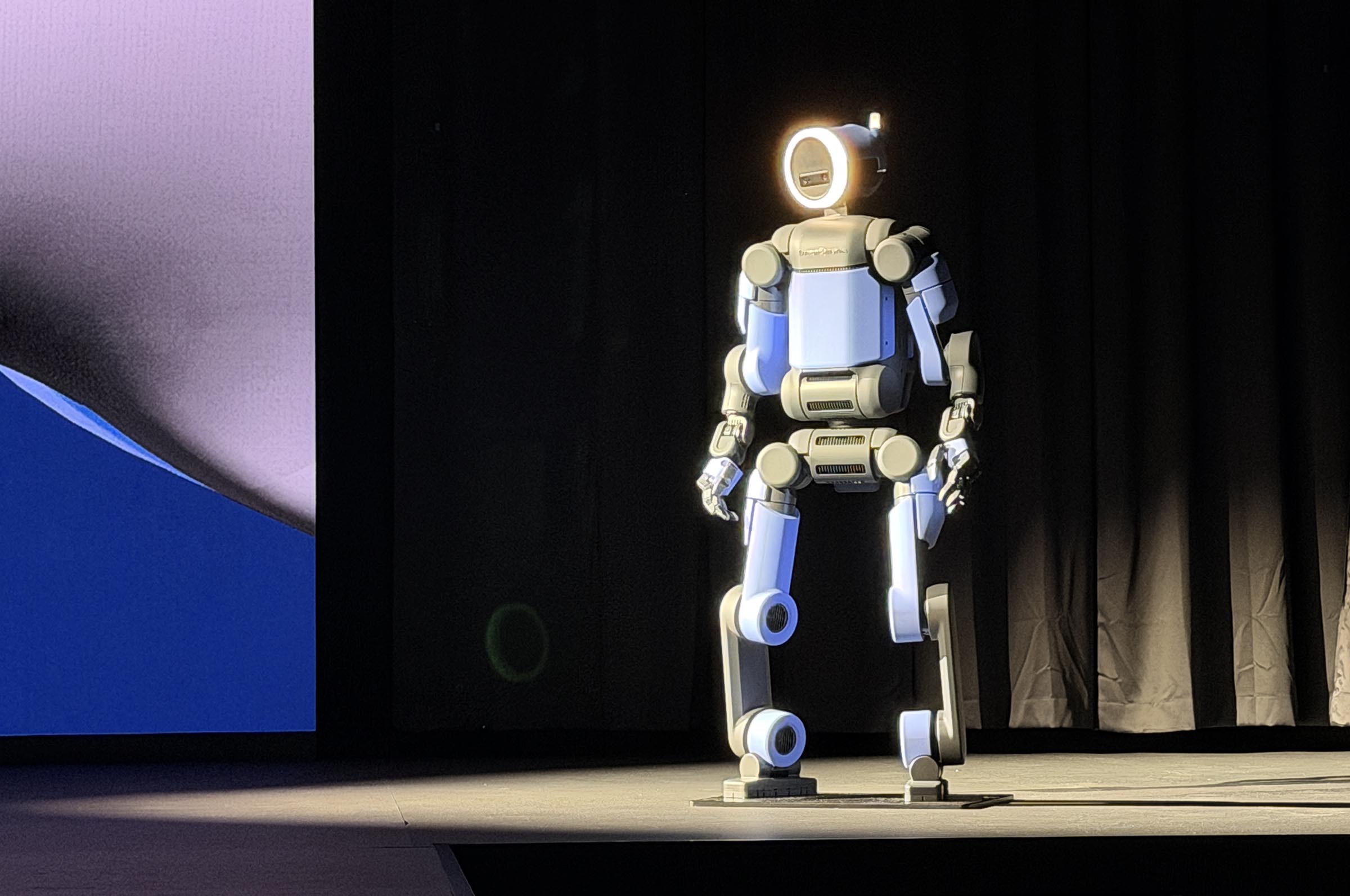
A prototype of the production version of Hyundai’s humanoid Atlas robot.
Last year the Hyundai Motor Group committed $26 billion in U.S. investments in auto manufacturing and other operations. We got a sense of what that will yield during this past week’s Investors Day event. But that spending goes well beyond new vehicles and the assembly plants to build them. For one thing, the company is setting up a new steel plant in Louisiana. It also plans to use an expanded Metaplant in Georgia to build the company’s anthropomorphic Atlas robot. Developed by its Boston Dynamics subsidiary, it’s set to go into production in 2028.
Hyundai also plans to expand its efforts in software and artificial intelligence – technologies that will play a role in autonomous driving and robotaxis. That effort will get a boost from the deal it’s inked with Waymo. The robotaxi leader will take delivery late this year of the first driverless version of Hyundai’s all-electric Ioniq 5. Hyundai is set to launch its own service, Motional, later this year. “Robotaxis are the new channel that is going to help a lot,” Munoz noted during his Seoul presentation.
Adding all these new lines of business could provide some real opportunities, said Fiorani. But this could also pose a big risk. “Executives at Hyundai need to keep their eye on the ball. This is an extremely competitive industry and it’s easy to overlook something that costs you your lead.”
Aiming for Dominance
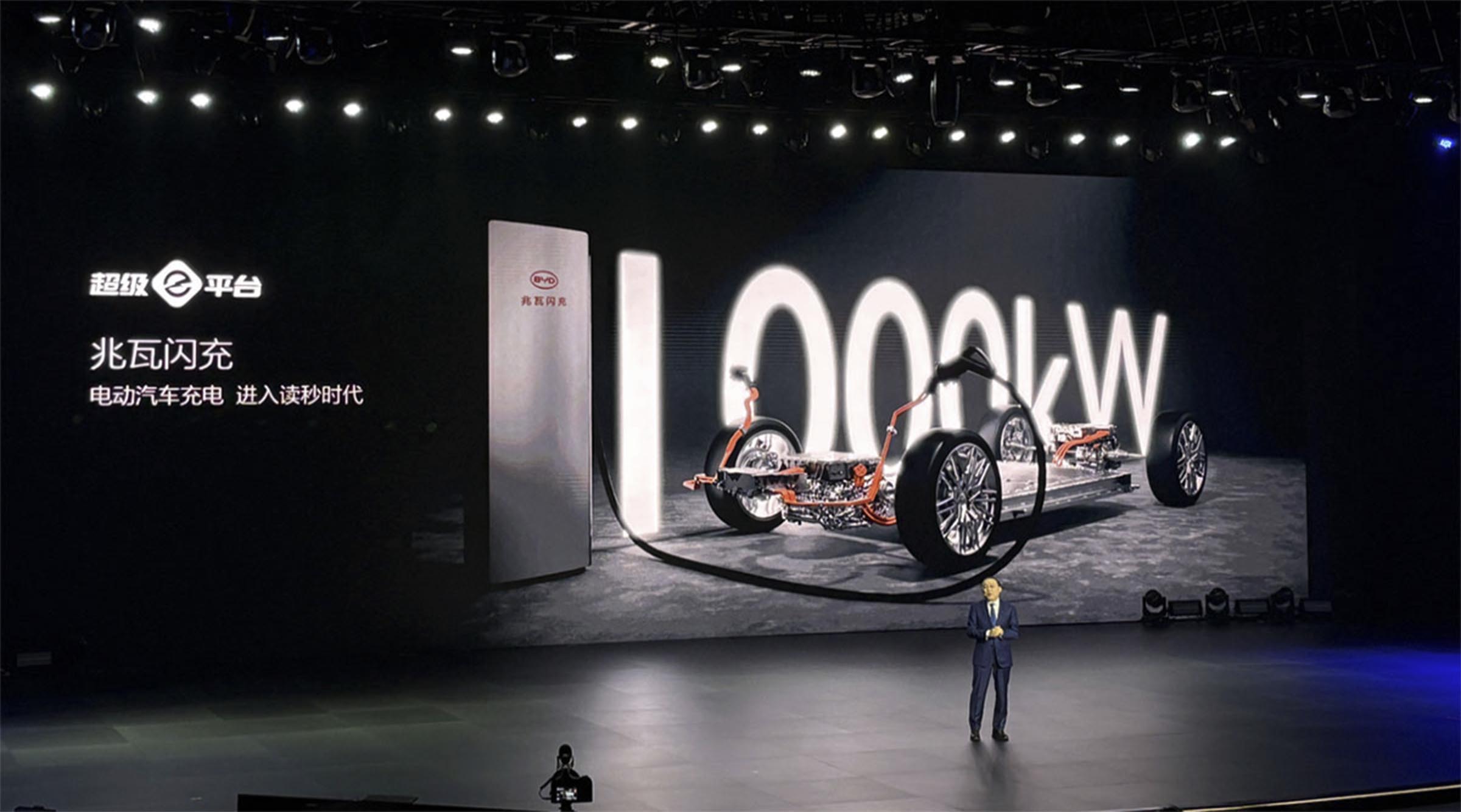
BYD officials reveal the new Megawatt charging system rolling out in China.
There are, indeed, plenty of potential obstacles ahead, stressed Erin Keating, executive analyst at Cox Automotive. There are the exogenous ones threatening every other automaker. Economic headwinds could shift market demand or result in an overall industry downturn. There are tariffs and other trade barriers, made all the more uncertain by the seemingly capricious shifts of U.S. President Donald Trump.
Hyundai needs to make sure it doesn’t experience a brand-tarnishing nightmare said Keating, referring to the disastrous tire defect that Ford’s Explorer SUV still hasn’t recovered from, or the GM ignition switch debacle blamed for 124 deaths. “Once that happens,” she added, “it can be difficult to regain the image a brand has built.
Then there are the Chinese who, if anything, are just as determined as the Koreans to gain global automotive dominance. Ford CEO Jim Farley has referred to the Chinese as an “existential threat” to the rest of the industry. Hyundai does have one critical advantage. At least for now. Brands like Geely and BYD remain locked out of the American market. But observers caution this may be just a matter of time. The Chinese have so far this year captured a 26% share of the Mexican light vehicle market. And Canada recently inked a trade agreement that will let in about 70,000 Chinese vehicles annually in the coming years.
Taking Down the King-of-the-Hill?
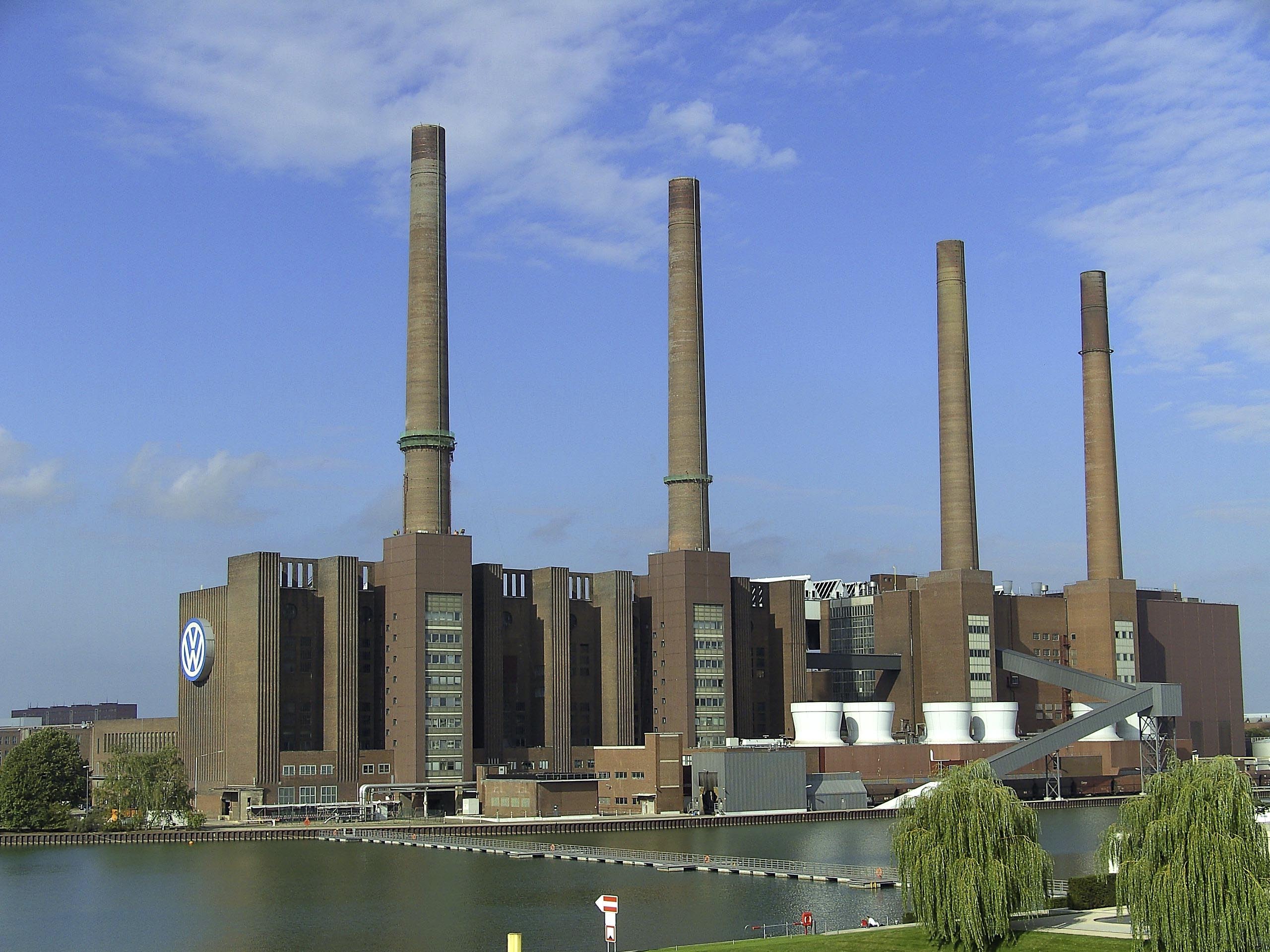
VW will halt two of four assembly lines in Wolfsburg.
Automotive history is littered with examples of how leaders can be toppled unexpectedly. Ford once was the world’s biggest automotive manufacturer – only to be taken down by General Motors. GM, in turn, is only sixth among global manufacturers today, after topping the sales charts for the better part of a century.
If anything, Hyundai hopes it can take down today’s industry leaders. And it’s certainly making a good run at it. As recently as 2019 it was the globe’s seventh-ranked manufacturer. Today it’s number three “with a bullet,” as is often said about fast-rising songs on music industry sales charts.
If anything, Keating believes “they have a shot” at moving up to number two, considering all the challenges facing VW. The German giant’s CEO has already made it clear the company needs to pare back, though his proposed plan to close up to five plants has so far been rejected by the Volkswagen Supervisory Board. As for Toyota, that’s another matter entirely. “I don’t know if I could see Hyundai unseating Toyota,” said Keating. True, Toyota has had its share of troubles lately – including an embarrassing quality issue involving the i-Force Max engine used in the Tundra pickup and other products. But “Toyota has a lot of staying power,” she stressed.
“It won’t be for a lack of trying,” she concluded. Over the past four decades, Hyundai has shown itself to be driven like few other manufacturers in the auto industry. It’s also proved its ability to overcome whatever obstacle lands in its way. It’s now laid out one of the most aggressive growth plans we’ve seen in decades in an industry struggling in the face of overcapacity and other headwinds. Munoz and his team will have to prove they have the skill – and the products – to pull it off.
0 Comments