
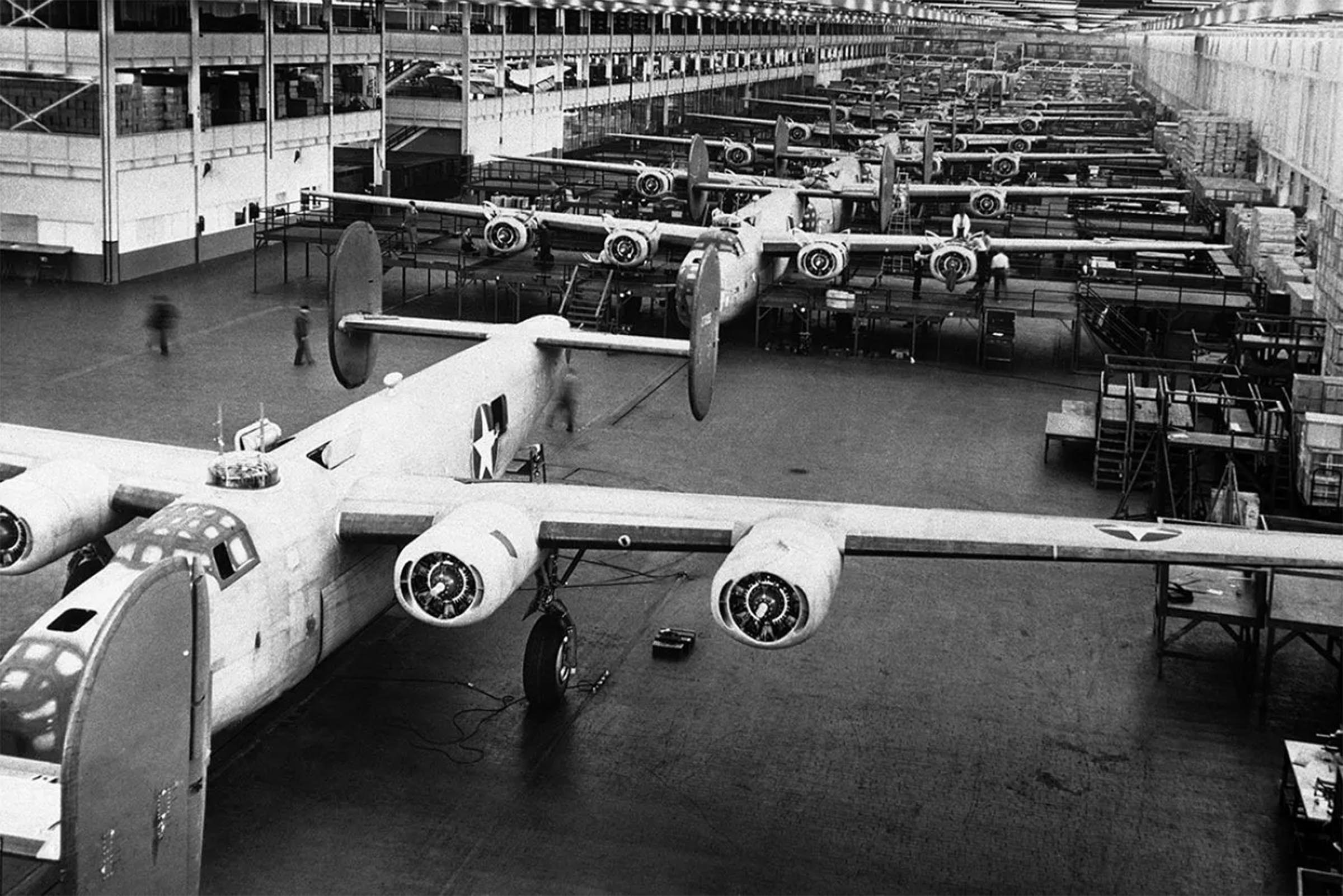
The Iran War has left the U.S. military with a depleted stockpile of weapons – even while revealing there’s an entirely new form of warfare. Yet that has the Pentagon reaching into its past and could see Detroit’s automakers emerge as a modern version of the “Arsenal of Democracy” that played a critical role in winning World War II. Headlight.News has more.
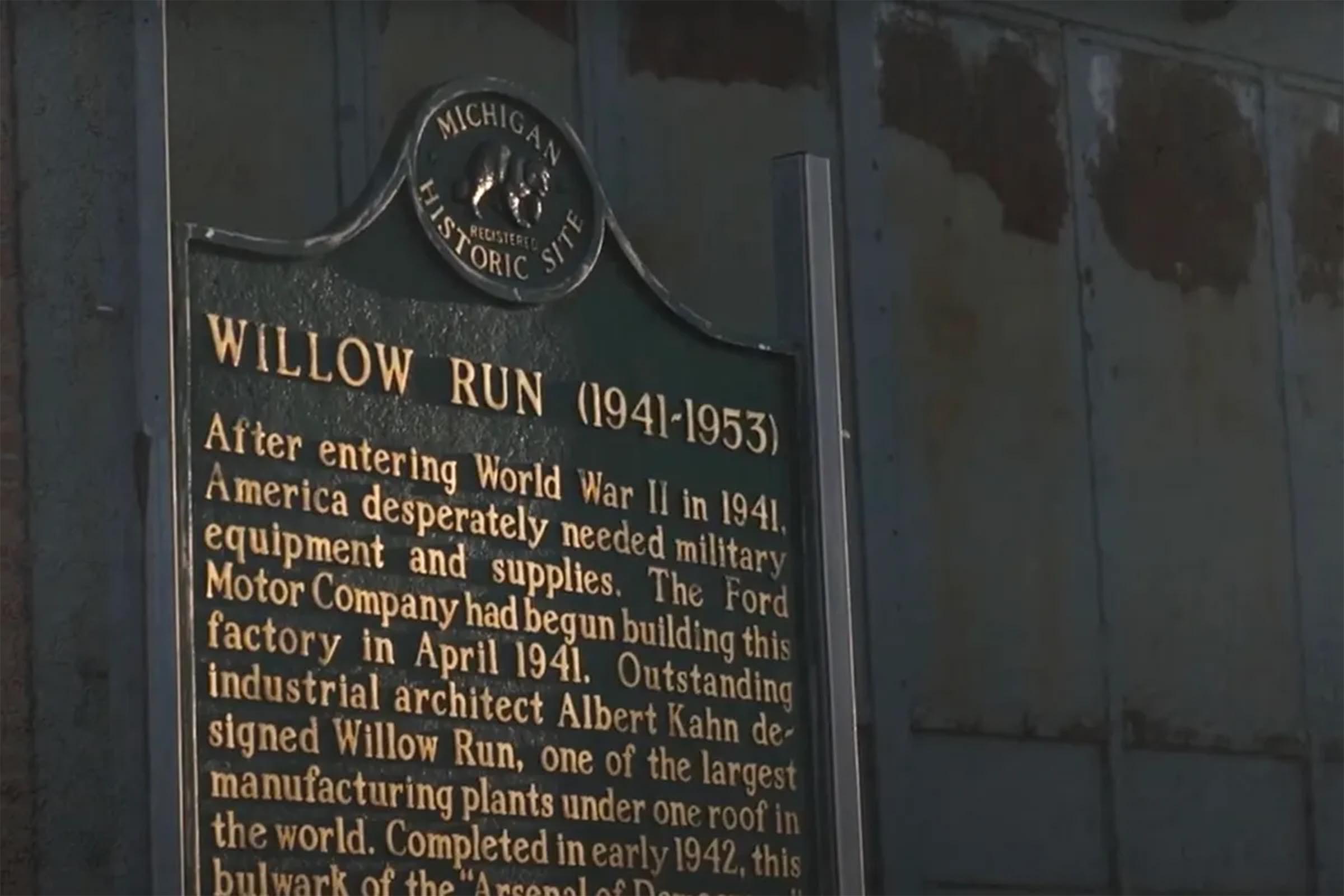 In the weeks and months after the bombing of Pearl Harbor on December 7, 1941 the Roosevelt administration desperately needed weapons to fight both Japan and Germany. For much of their needs they turned to Detroit which quickly ramped up production of everything from bombs to tanks and B-24 bombers, The Motor City became, in the words of the day, America’s “Arsenal of Democracy.”
Eighty-five years later, the Trump administration is struggling to deal with another war. But while the battle with Iran may be far more limited, the country has rapidly blown through its stash of high-tech weapons. It’s also learned that today’s battles are being fought in a decidedly different way, with drones potentially playing a bigger role thank tanks and other traditionally armaments.
And that’s opening up a new opportunity for Detroit’s two largest automakers, General Motors and Ford which see potential gold in what could position the city, once again, as part of a new Arsenal of Democracy.
Potential gold

GM CEO Mary Barra set up the new GM Defense unit in 2017.
President Donald Trump is seeking a record $1.5 trillion budget for the Department of Defense, up from an original $1 trillion proposal for 2027. The roughly 44% increase includes funding to replenish weapons stocks, as well as for military modernization, a term expected to take into account the changing nature of warfare. The fight with Iran, as well as the ongoing stalemate between Ukraine and Russia shows how a smaller country can use weapons like drones to stymie substantially bigger opponents.
“There’s hundreds of billions of dollars that’s up in the air for contracts with the U.S. government,” Wedbush Securities analyst Daniel Ives told the Detroit News, “and the Big Three want a piece of that.”
Detroit’s automakers – including many manufacturers today gone and forgotten, such as Willys and Packard — long counted on military procurement for sizable sources of revenue. Over the decades, however, they’ve pulled back, focusing on core automotive businesses. The old Chrysler, for example, sold off its old tank-making unit, Chrysler Defense, to General Dynamics in February 1982.
Getting back in the game
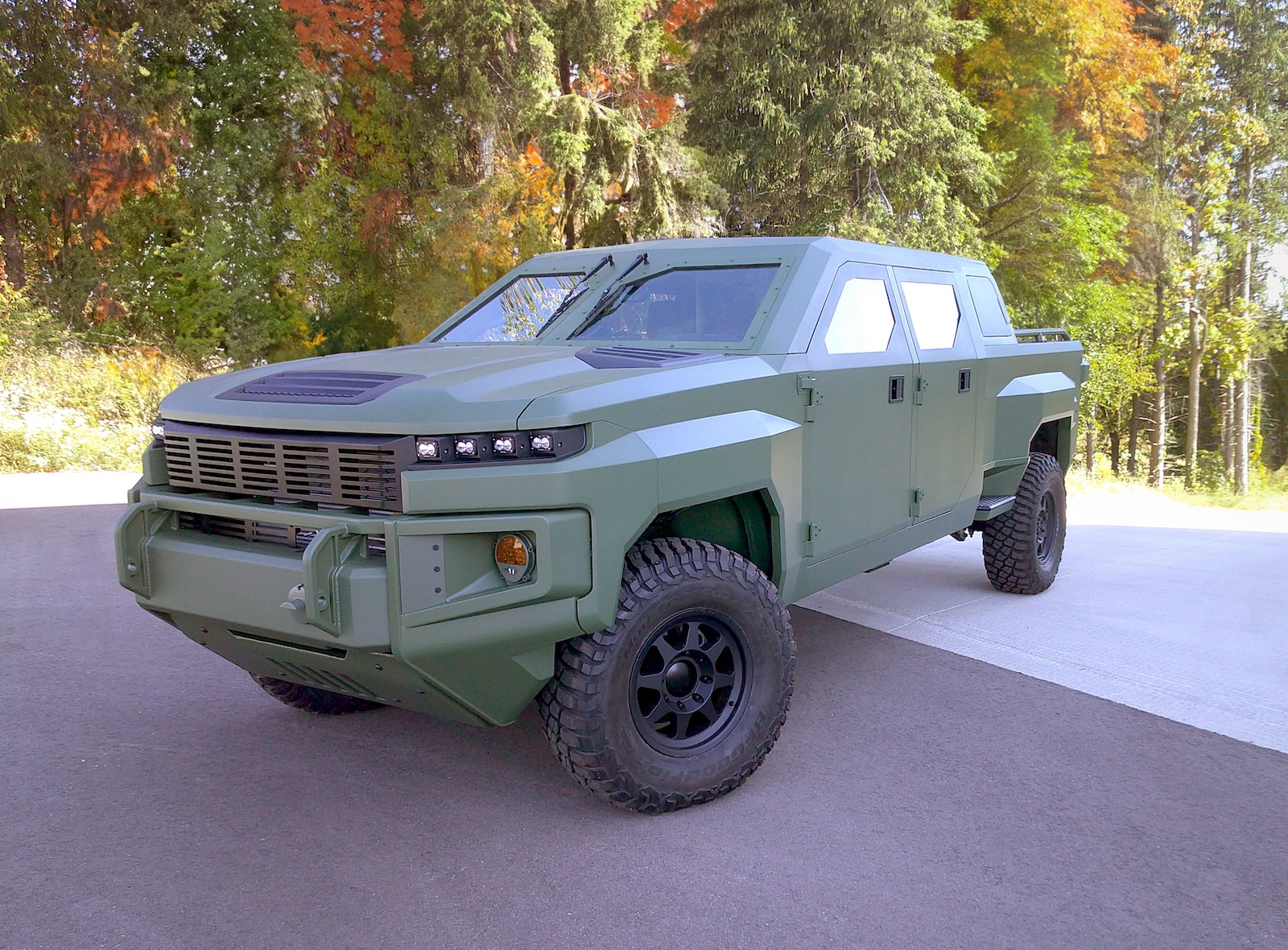
A front view of GM Defense’s Next Gen tactical vehicle
That tank-making operation subsequently moved to Lima, Ohio. And most other military operations have left Southeast Michigan, as well – though the Army does operate TACOM, its research and development center, in the suburb of Warren. It overseas tank, automotive and other ground weapons and armor systems, including robots.
Chrysler’s successor, the Euro-American Stellantis has all but ignored military work, though it has the potential for future business through its Ram and Jeep brands – indeed, perhaps no vehicle developed such brand identity during World War II as did Jeep.
The big push, however, is expected to come from GM and Ford. Both have taken steps in recent months to position themselves as potentially serious military vendors.
More Auto News
- UAW Ends Strike at Major GM Supplier
- Doggone: on EVs and Dog Rescues
- BMW M Concept is the Electric M3 in Disguise
Mass manufacturing
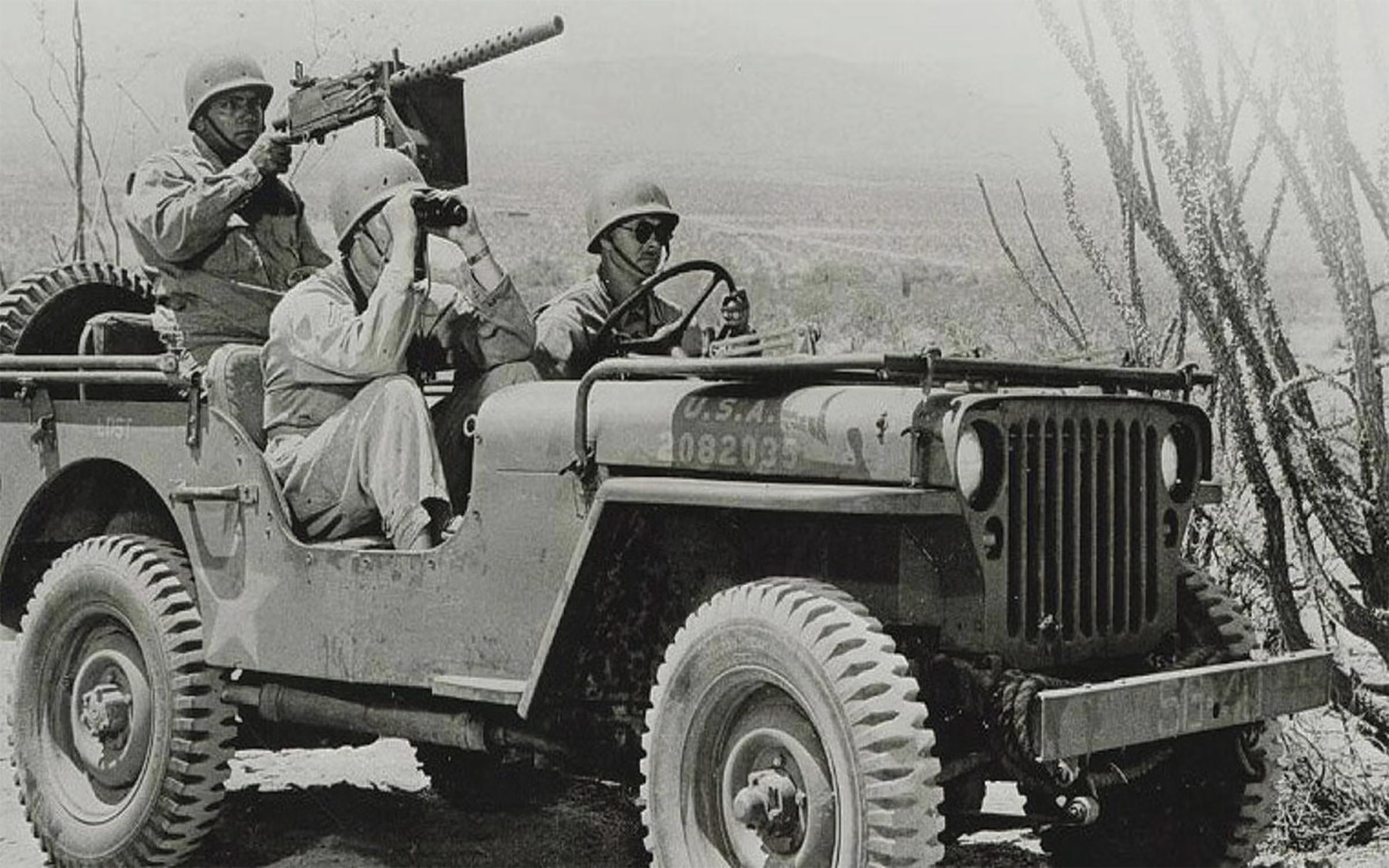
A Jeep from World War II.
The Roosevelt administration relied heavily on the mass manufacturing capabilities of the auto industry during the Second World War. Ford, for one, churned out a new B-24 bomber roughly every hour from its Willow Run plant. The automaker Is looking to sell itself as a high-volume manufacturer once again.
Ford began promoting its capabilities recently in Paris at Eurosatory 2026, billed as the world’s largest exhibition for the land, air-land defense and security industries. It focused on tactical and utility vehicles.
For its part, GM staged a high-profile presence at another conference, Reindustrialize, held in the new Hudson’s skyscraper in downtown Detroit last week Among other things, noted the News, the automaker “parked a military green-colored Infantry Squad Vehicle Troop Carrier outside for investors and entrepreneurs to climb in.”
Partnering up
In today’s defense world, manufacturers often partner up hoping to leverage their R&D and manufacturing skills – and to spread out what can be spectacular high development and production costs. That’s the route GM Defense is taking. It’s teaming up with Lockheed Martin to help the huge Bethesda, Maryland-based defense contractor triple, even quadruple its weapons production.
“What this is about is not trying to blend products, if you will, but to take the best of the infrastructure expertise and how we manage our businesses and learn from each other to raise the tide for defense industrial base across the nation,” said Bruce Brown, GM Defense’s vice president of strategy, at Reindustrialize.
The potential payoff could be huge. After setting up GM Defense in 2017, the automaker has already lined up $1 billion in annual revenues. If Trump’s record budget request for the DoD goes through, that could grow substantially.




0 Comments