
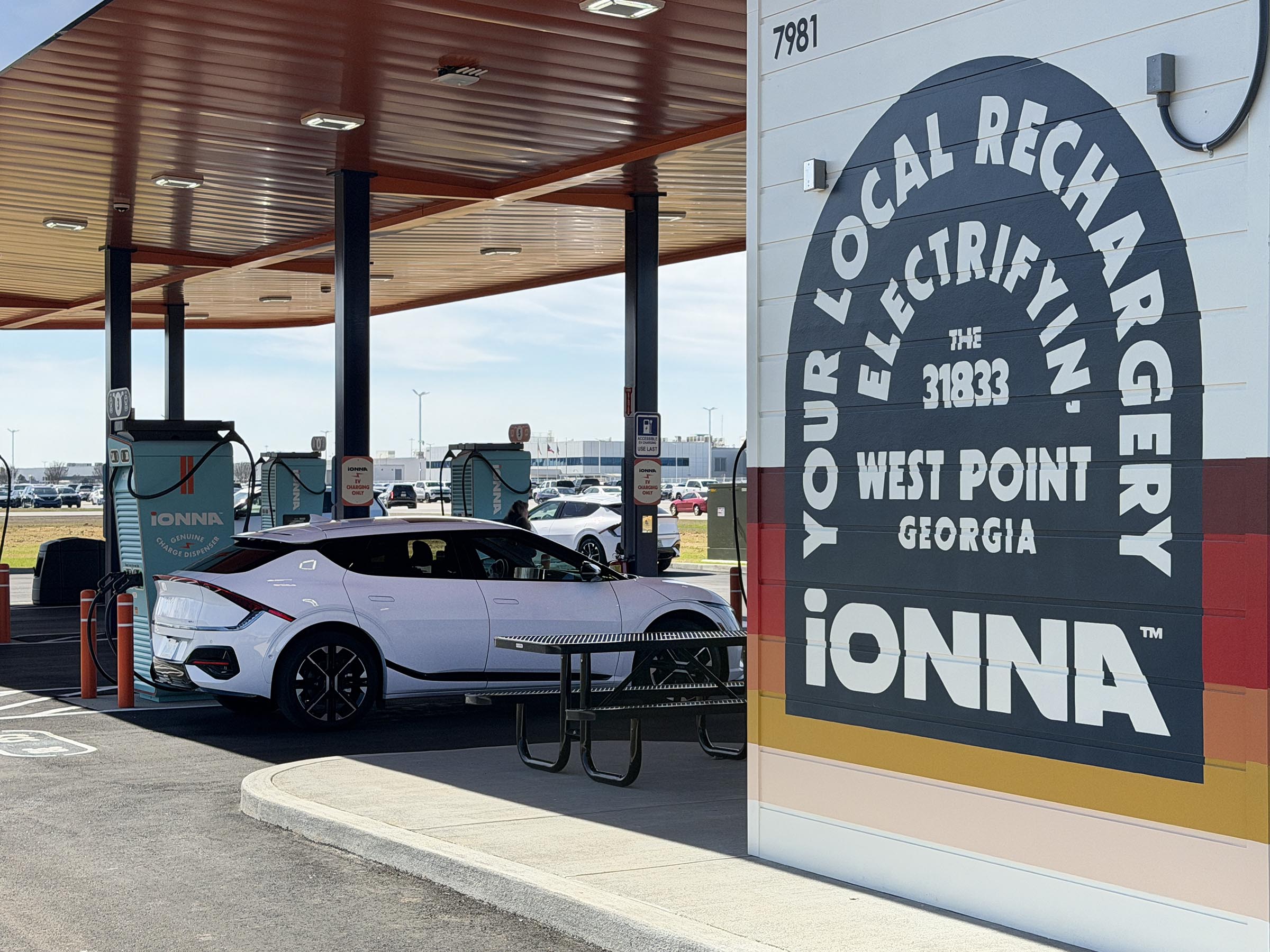
If the name isn’t familiar, no surprise. The company has just turned two years old and only just opened its 100th location. But with the backing of eight major automotive manufacturers – including General Motors, Toyota, Hyundai and Mercedes-Benz – Ionna aims to transform the process of charging up battery-electric vehicles. That’s a critical step, its CEO told Headlight.News, in increasing consumer acceptance of EVs.

Ionna CEO Seth Cutler previously worked with EV Connect and Electrify America.
Sales of battery-electric vehicles have taken a tumble since federal tax credits were phased out last September. But research shows another big reason why consumers have been reluctant to embrace EVs is the challenge of public charging.
It’s not just a lack of chargers, thousands of new ones going into service last year. It’s the fact that they’re often hard to find and, all too frequently, they’re located in dimly lit, out of the way locations with a complete lack of amenities.
That’s where Ionna comes in. No, it’s not a common name – not yet – acknowledges CEO Seth Cutler. It’s marking its second anniversary with the opening of just its 100th location. But the company, created by an unusual alliance between eight automakers, intends to become the role model for what public EV charging should be. It’s setting up stations in easy-to-find locations, with good lightning and other security measures. And most locations will match or exceed the level of amenities motorists have come to expect from gasoline stations in the U.S.
Plugging in
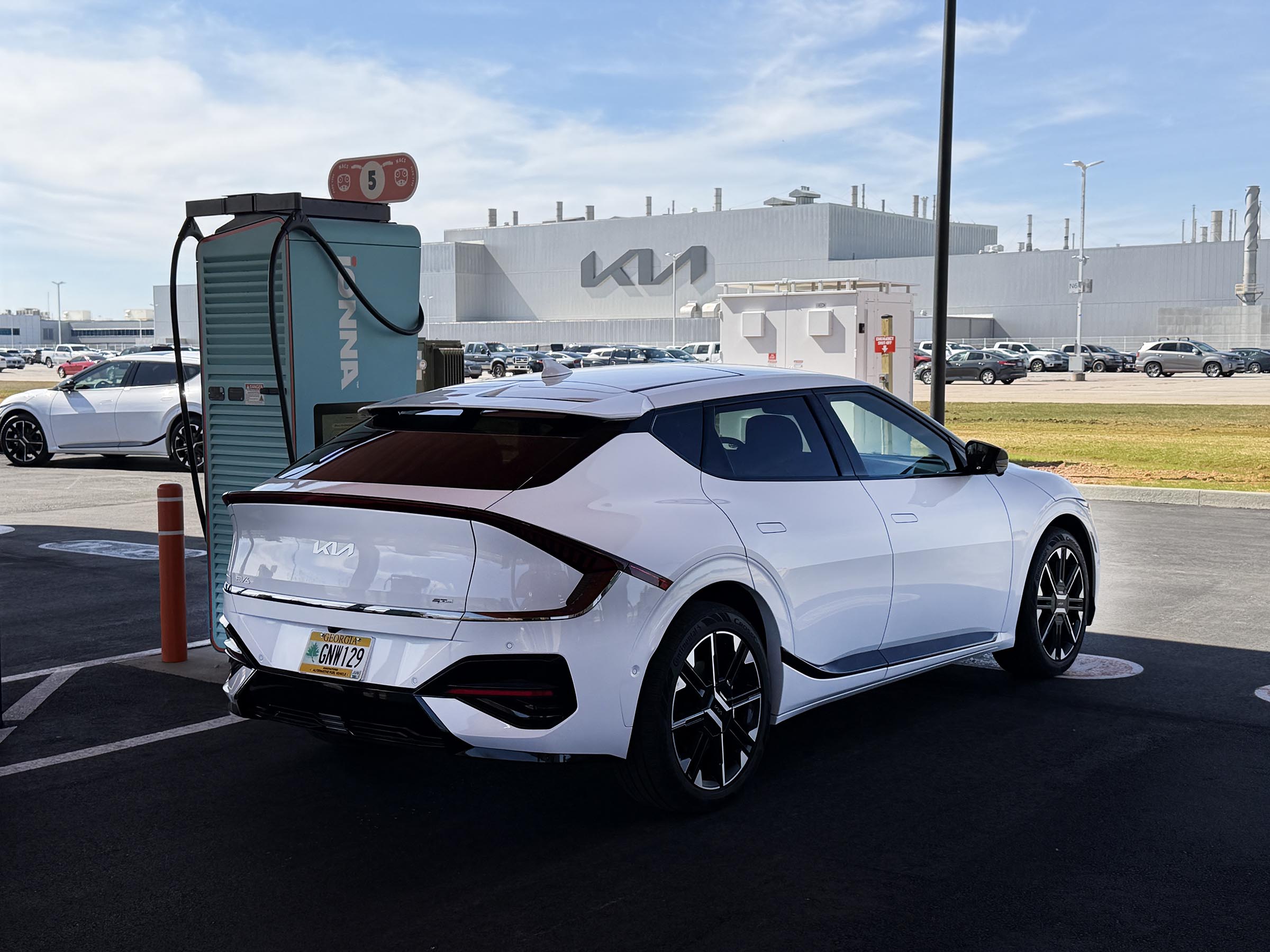
An EV9 charges at an Ionna station alongside the Kia plant in West Point, Georgia.
The name, Ionna, is the sort of shorthand tech geeks will appreciate, Headlight.News learned it’s just the abbreviation for ION North America. That was the working title used for the project as it came together during the waning days of the COVID pandemic. In an industry that’s typically highly competitive, a group of automakers realized they were better off pooling resources to address the problem of public charging. Studies showed this to be as much a roadblock to widespread EV adoption as was range, cost – or the phase-out of federal tax credits last September.
“The problem of the charging infrastructure is large, not just in terms of the scale of how (many stations) need to be built, but also in terms of how achieve real reliability – and then differentiate the customer experience,” said Cutler, who has been working in the EV charging sector since 2012. “Partnering with the (automakers) is something that can really differentiate how we do this.
Initially, Ionna was pulled together by seven automakers: BMW, General Motors, Honda, Hyundai, Kia, Mercedes-Benz and Stellantis. Toyota has since signed on, as well. At launch, the new company laid out plans to set up “at least” 30,000 DC fast chargers by 2030, with anywhere from six to as many as 20 individual chargers at each station. But simply having lots of places to plug in was only part of the strategy.
Reliability matters
The number of places to plug in has begun to rapidly expand over the past several years. At the end of 2025 there were almost 68,000 fast charger ports in operation at 14,600 separate stations across the U.S., according to Paren, a San Francisco-based EV charging analytics company.
But, as anyone with an EV has experienced at least once, the problem is that a sizable number of those chargers aren’t working at any given moment. At least one in six is typically out of service, reports the National Renewable Energy Laboratory, though other research shows the figure might be more than one in four.
The possibility that they might not be able to get a charge, even if they can find a place to plug in, “creates angst from a consumer standpoint,” said Cutler. Consumers don’t want to be thinking “Am I going to get stranded?” They also want to be sure that the charger provides the promised amount of current. All too often, stations claim they can provide 350 kW but, once plugged in, that falls down to 150, 100, even 50 kW – which means substantially longer charging sessions.
Making sure its chargers operate as reliably as the pump at a typical gas station was one of Ionna’s first priorities, the CEO said. And it’s so far living up to expectations, “Our uptime is 99.5%” at the first 97 sites that went live,” he reported. Just as importantly, added Cutler, when there is an issue, the company has set up methods to make sure it’s immediately identified, with technicians quickly dispatched to get the problem resolved.
More EV News
Improving the charging experience
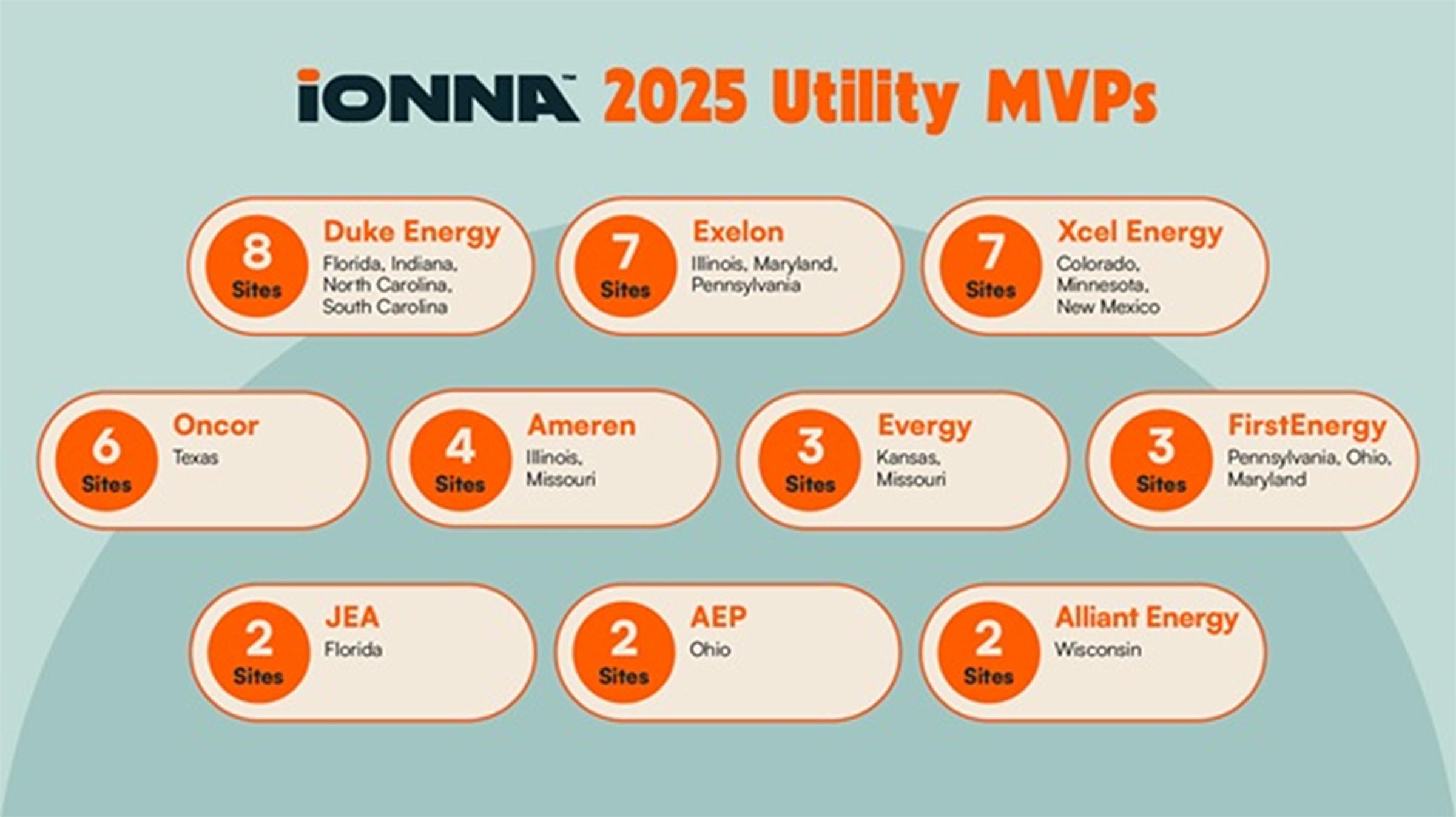
Ionna is partnering with some major energy companies, too.
As an owner I can personally report on the charging experience. While I love the ability to keep my EV fully charged at home, things haven’t always been as pleasant when it’s come to plugging in while traveling. It’s not just the occasional out-of-order charger. It’s also where so many chargers have, until now, been located. That’s included dimly lit, out-of-the-way locations on the back side of a strip mall and little plots of land in sketchy neighborhoods. Only rarely do they offer overhead protection from the elements, unlike most gas stations.
I sat down to talk with Cutler during a trip to the Kia plant in West Point, Georgia, where we both attended the production launch of the automaker’s new Telluride Hybrid. One of Ionna’s first stations, it was set up on an outlot, by an I-85 interchange.
The station is one of Ionna’s mid-range facilities with six chargers, well lit and with a canopy protecting chargers and customers. There are two restrooms – accessed by using a QR code, and several vending machines. There are even markers on the pavement so motorists know which chargers have CCS-style plugs and which use the Tesla-style NACS plugs.
Shining a “Beacon”
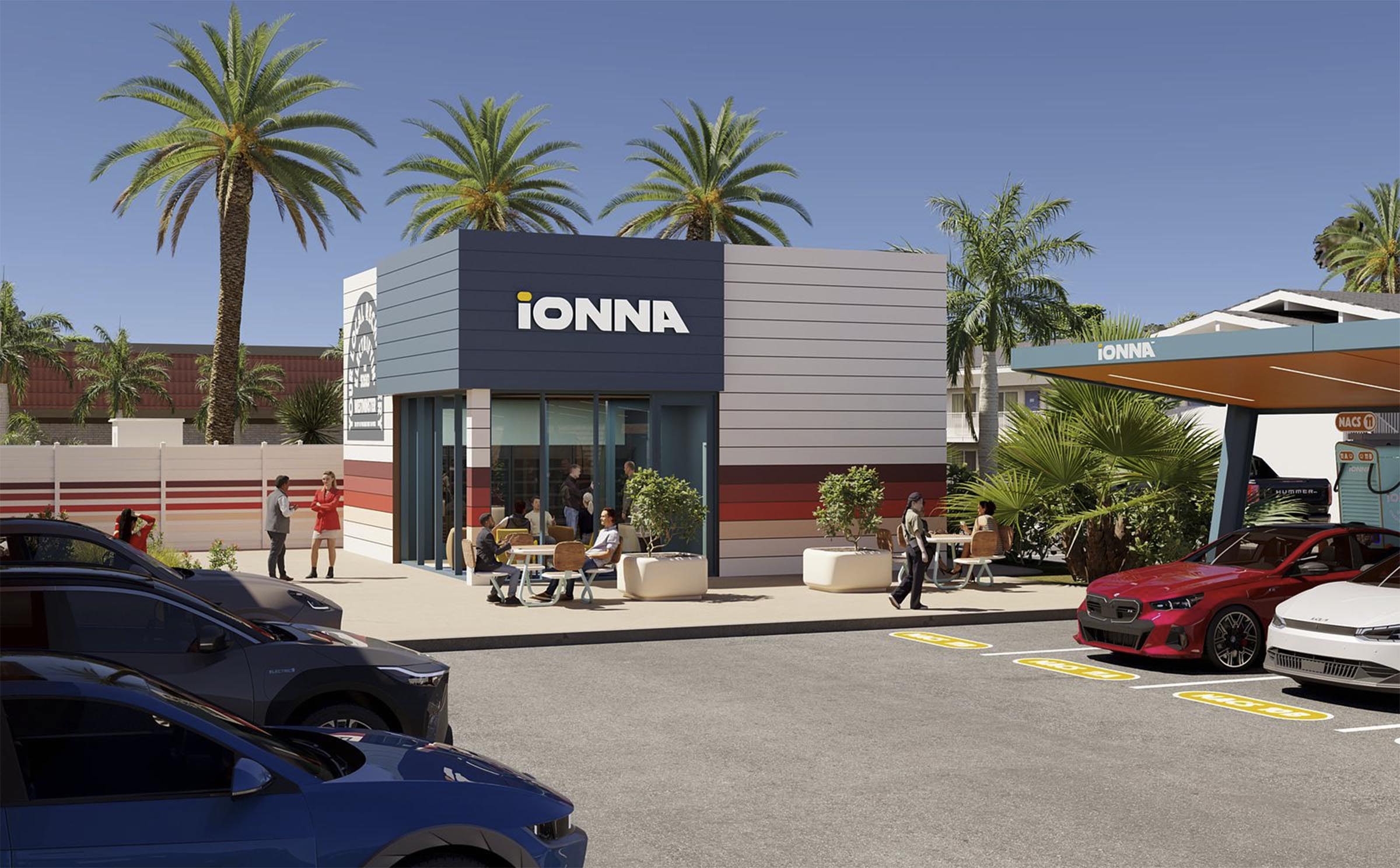
A rendering of a planned Ionna Beacon location.
Moving forward, Ionna is starting to roll out what it calls its “Beacon” stations, flagship facilities taking things to the next level. The first is currently under construction near Disneyland, in Westminster, California.
The station will feature 22 separate charging bays – not quite a Bucky’s, but larger than almost any existing public EV charging facility. It will not only offer the sort of convenience store amenities common at today’s gas stations, but the 1,000-square-foot facility will also feature a driver’s lounge, as well as outdoor seating.
“It’s really meant to be kind of this flagship brand ambassador location to bring people in (and) demonstrate the full power of what Ionna can be,” explained Cutler, noting, “It’s under construction now. It’ll be live this year.”
The facility in West Point, Georgia is part of Ionna’s largest group, it’s “Recharge” stations. A third group will be part of partnerships the company is setting up with the likes of WaWa and Sheetz, existing service station operators who already have amenities in place.
Defying the EV slump
At the moment, Ionna has about 1,500 charger bays under construction, another 3,200 contracted out. Its still aiming to reach 30,000 bays by decade’s end, with facilities targeted for all but a handful of states, such as North Dakota, where there simply aren’t enough EVs to make the business case for now.
But is there a business case for rapidly expanding an EV charging network anywhere in the U.S., considering how sales have plummeted since federal tax credits were phased out?
“We know sales for EVs are not going to go to zero in 2026 or ’27,” said Cutler. “In fact, costs are coming down, performance going up. You probably (will) see a dip this year. But I think there will be a second wave” to follow later in the decade where EVs regain momentum, he added. And Ionna wants to not just be in place when that happens, but he believes that, by having plenty of locations and enhancing the charging experience, it will help encourage more U.S. motorists to purchase EVs.
0 Comments