

(This story first appeared in TheCarCollective Substack. You can subscribe by clicking here.)
Being bigger isn’t always better, as the folks at Stellantis were reminded last year. Formed by the merger of Fiat Chrysler Automobiles and France’s PSA Group in 2021, It instantly became the world’s fourth largest automaker. But that didn’t prevent it from reporting a $26.3 billion loss for 2025.
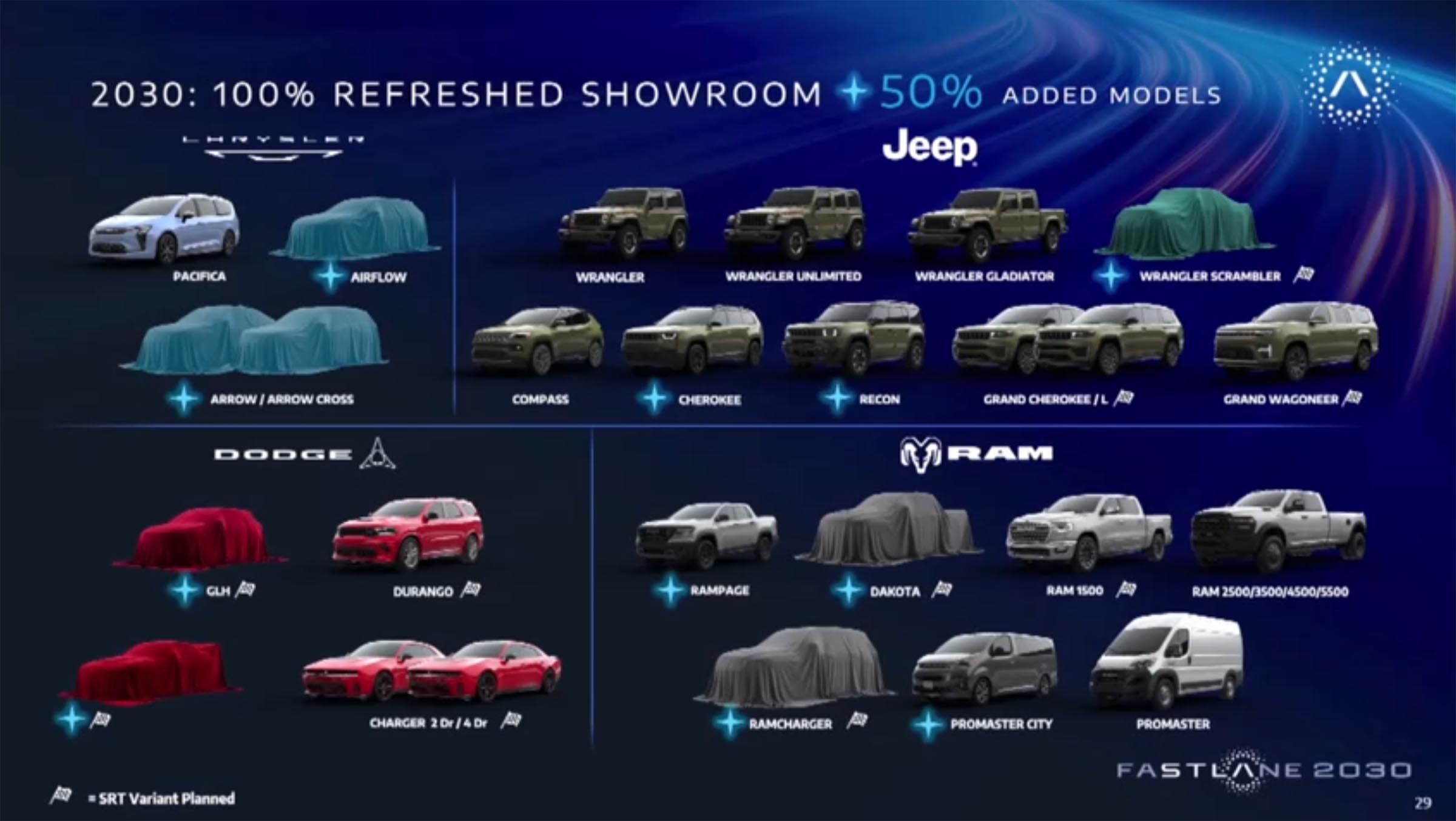 On Thursday, the automaker revealed a long-awaited turnaround plan. Dubbed Fastlane 2030, it will touch seemingly every corner of the vast global automaker – which is repositioning itself as more of a network of regional brands and operations.
There has long been the expectation that Stellantis would eventually have to trim back its vast portfolio. And, indeed, it will reduce its European manufacturing base. But Chief Executive Antonio Filosa’s new strategy notably maintains all 14 of the company’s automotive brands, several of which were widely expected to be phased out.
“Our brands are our strongest assets.,” the CEO declared during a day-long briefing for investors, analysts and the media.
Winners and losers
That said, some brands will fare better under Fastlane than others. Ram and Jeep, the company’s cash cows, become two of the four lead brands under Fastlane, along with Europe’s Fiat and Peugeot. Five others, Chrysler, Dodge, Alfa Romeo, Citroen and Opel, will make up a second tier of “regional” marques. But even the near-forgotten Lancia, which sold barely 11,000 vehicles last year, will stick around and might even have an opportunity to grow.
Here’s a look at how things could shake out for the 14 Stellantis brands under Fastlane 2030:
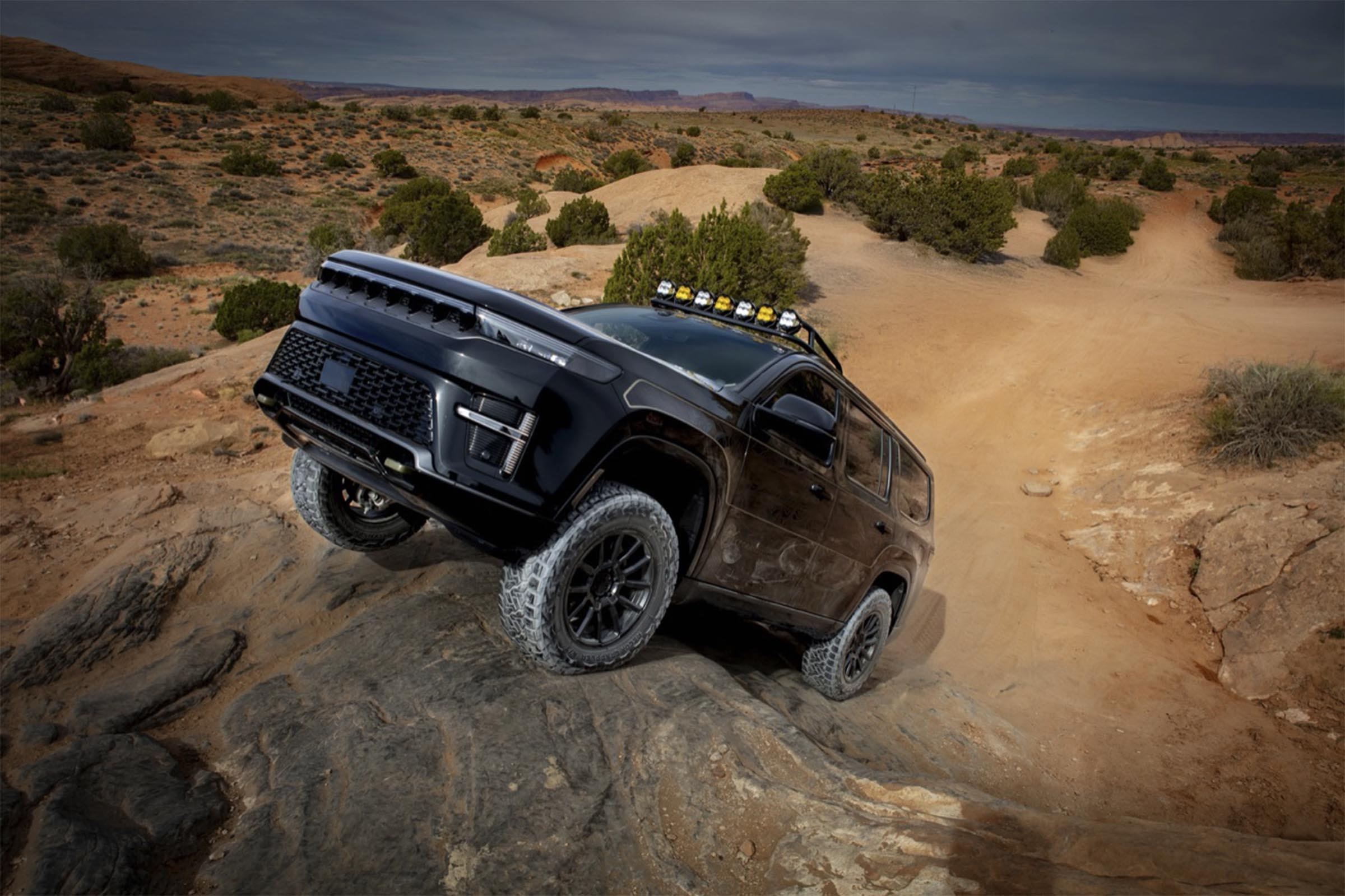 Jeep: At first glance, it would seem to be one of the biggest winners under the new strategy. It’s not only positioned as one of the four primary Stellantis marques but will benefit from the fact that 60% of the billions to be spent on products and brands will be spent in the U.S. Jeep is set to get four new models, including the delayed Recon EV – which will get a boost by now adding a gas version, as well. But what’s missing, cautioned analyst Sam Abuelsamid, of Telemetry Research, is a much-needed makeover of the iconic Wrangler. There’ll be another variant, the Scrambler, but no replacement until after 2030.
Ram: As with Jeep, the pickup maker clearly comes out on top. It’s also in the new global brand group and will have access to plenty of cash under the plan. Significantly, Ram will finally get the midsize pickup its long needed, a version of the Rampage that’s already proven a big hit in Latin America. The question is where it will be built, the U.S. or Mexico. That could depend upon upcoming negotiations to replace the USMCA trade deal. Ram also will get a new compact truck to challenge the likes of Ford’s popular Maverick. And we’ll finally get the Ram REV, the range-extended version of the full-size 1500.
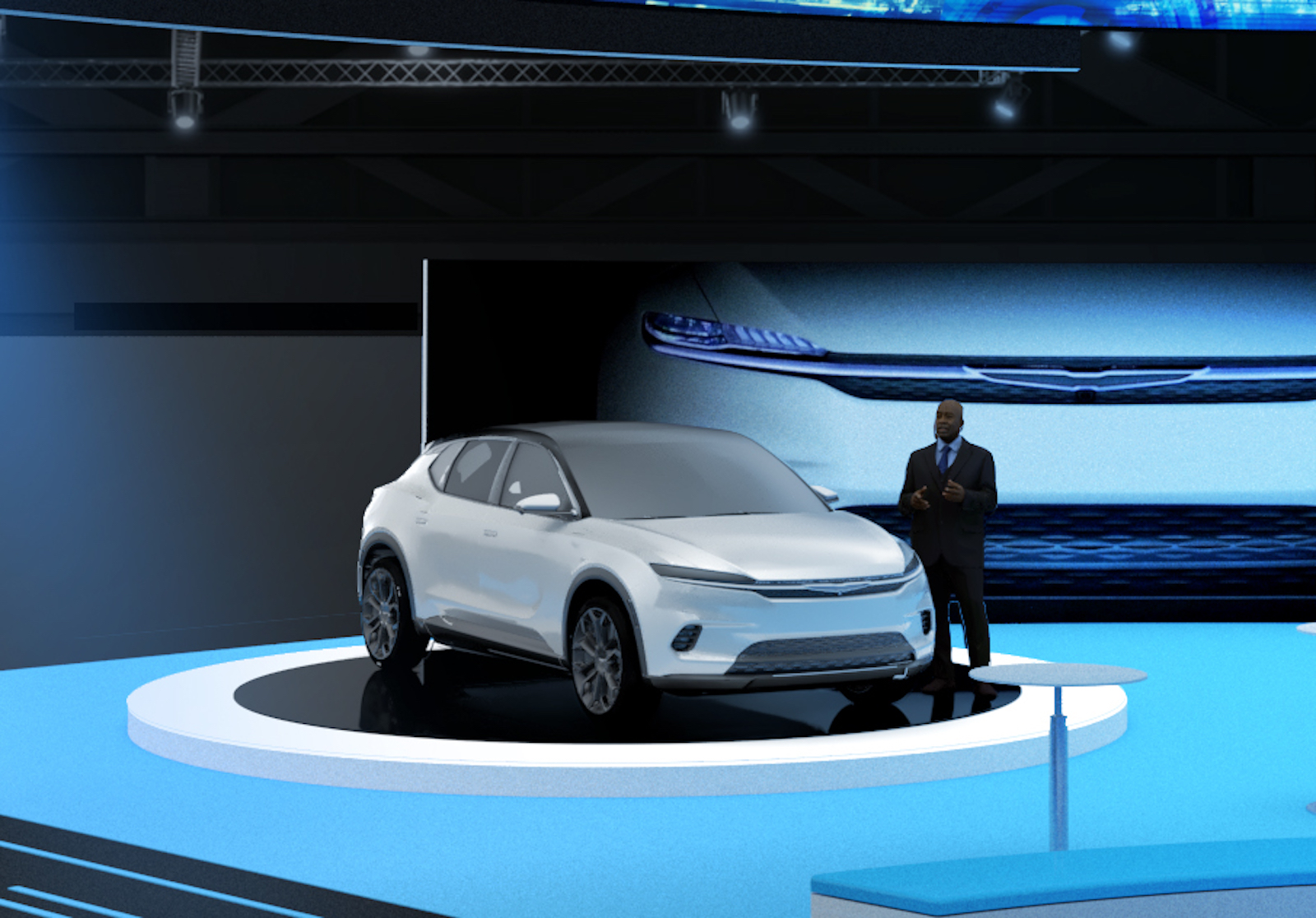
Chrysler Airflow concept.
Chrysler: At its peak, back in the late 1950s, finned Chryslers held a 20% share of the U.S. market. Today, the brand is an after-thought for most Americans and many analysts saw it likely to fade away entirely. After all, it only has one product, the Pacifica, and the plug-in hybrid version of the minivan was dropped for 2026. But Chrysler is about to quadruple its line-up with the addition of two small crossovers, the Arrow and Arrow Cross, starting under $30,000, as well as the larger Airflow CUV which will come in under $40,000.
Dodge: The American muscle car brand wisely abandoned its plan to go all-electric, adding a gas-powered version of the Charger using the Hurricane inline-six. Soon, it will get a Hellcat option, as well. A makeover of the Durango is in the works, as well. But attention right now is focused on two all-new products now in the works, starting with the GLH. The name evokes the high-performance version of the ‘80s-era Omni and was short for “Goes Like Hell.” We don’t know much yet but it could offer several powertrain options. So might another new offering, the striking Copperhead which is under joint development by Dodge and SRT, the in-house Stellantis tuner division.
Fiat: Not that long ago, the Italian marque seemed to have an uncertain future. It’s return to North America in 2011 after a two-decade absence has fallen flat. It’s an entirely different story in South America, where it is the region’s best-selling brand. And it retains decent volumes in Europe. It’s now one of Stellantis’s five second-tier marques and will continue rolling out a broad range of small, smaller and microcars, with five upcoming new models set to broaden its market reach. Ironically, Stellantis now sees Fiat in the U.S. more as a supplier to other brands – such as the two Chrysler Arrow models.
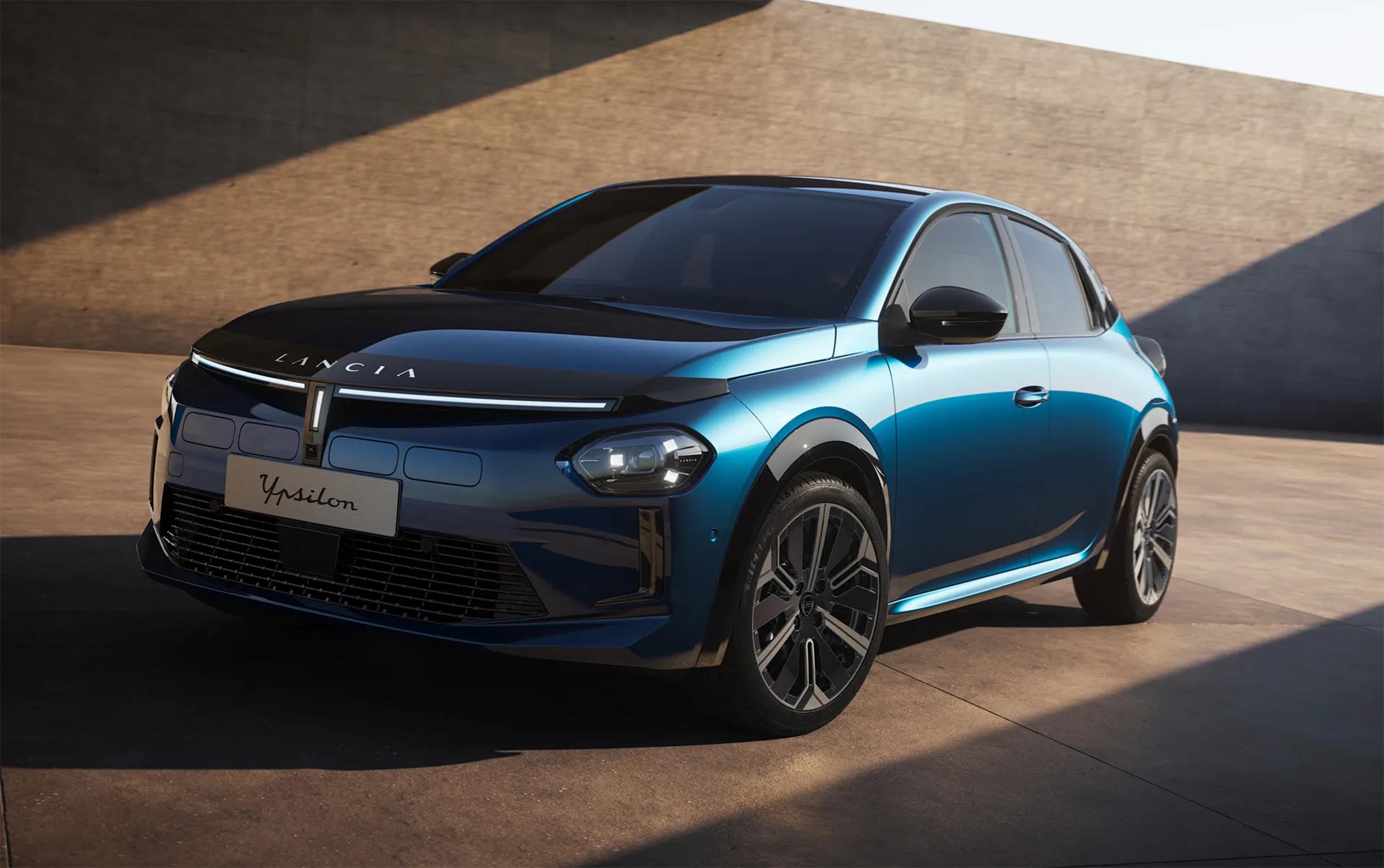
The Lancia Ypsilon.
Lancia: If there’s any brand Stellantis could readily justify abandoning it’s this other Italian entry. Founded in 1909, Lancia was once positioned as a design and technology innovator. But demand has all but dried up. From 300,000 sales as recently as 1990, Lancia dealers delivered just 11,754 vehicles in 2025 – all in Italy. Today, the brand offers just one model, the Ypsilon, though more may be in the works, even as Lancia gets rolled in as a sub-brand of Citroen. It may even expand outside Italy for the first time in years.
DS: Never heard of it? You’re not alone. It’s a premium brand spun off by Citroen back in 2009. It was intended to reach buyers looking for something sportier and more up-market than what the mainstream French marque offered. And former Stellantis CEO Carlos Tavares even toyed with bringing DS to the U.S. But that plan appears dead. DS will now be rolled back into Citroen as a sub-brand alongside Lancia.
Citroen: one of the two main brands of the old PSA Group, it becomes one of the second-tier Stellantis marques. While long gone from the U.S., it remains a strong seller in Europe and some other regions, global sales posting double-digit growth this year thanks to a makeover of most of its core products. It’s about to get several products entering new segments. But the big news is the return of the legendary 2CV – or Deux Chevaux after a 36-year absence. A completely new, all-electric version, will make its debut at the Paris Motor Show next autumn.
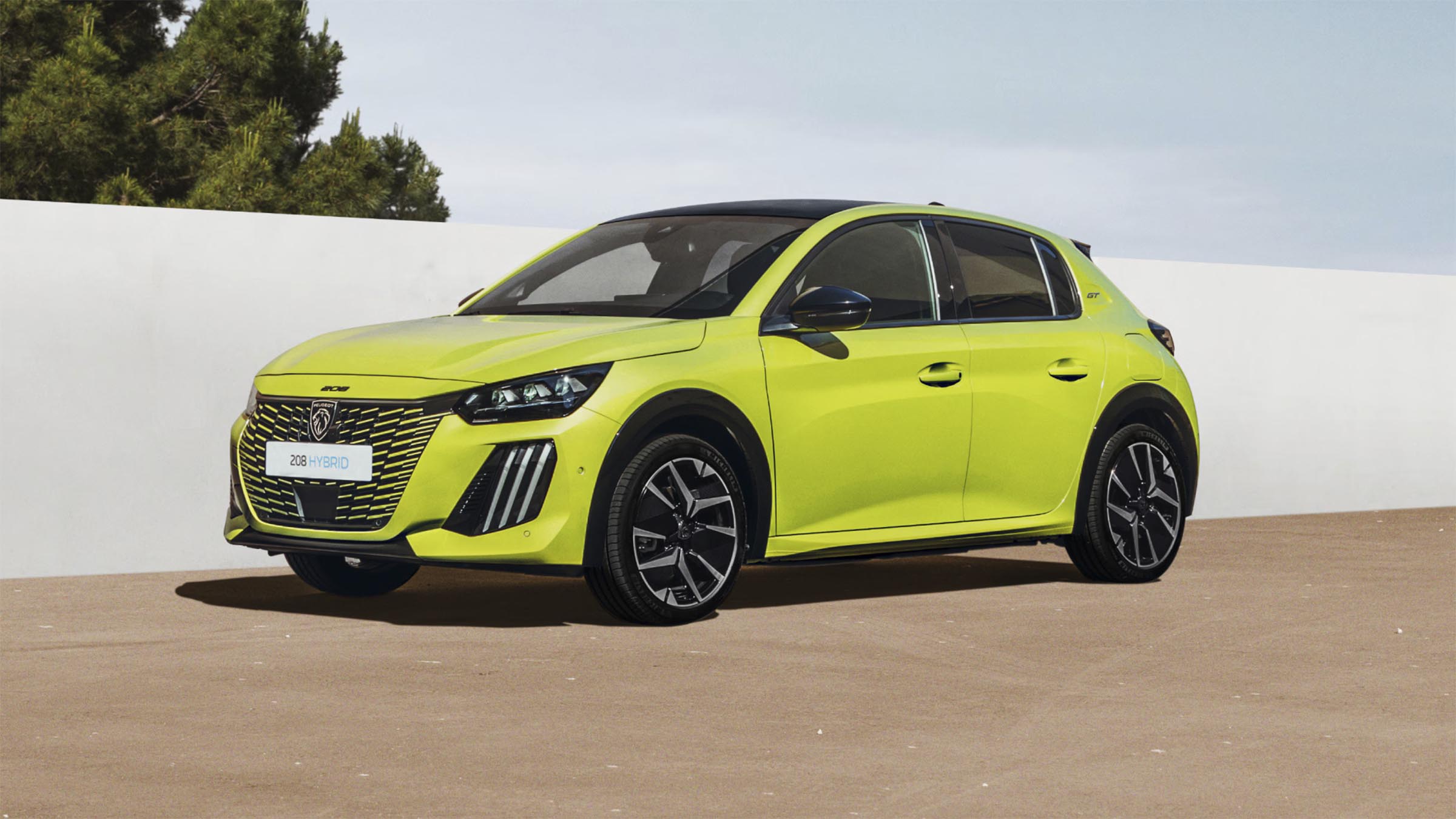
The Peugeot 208.
Peugeot: The French brand, the “P” in PSA, is solidly positioned, going forward, as the mainstream heart of Stellantis in Europe, with a presence in a number of other key markets. It currently has seven models in its line-up, but will be getting seven new products by 2030, said Emanuele Capellano, the automaker’s European chief operating officer. That, notably, includes a D-segment model that will be sourced from one of Stellantis’s two Chinese partners, Dongfeng.
Opel/Vauxhall: The one-time European arm of General Motors was purchased by PSA Group in 2017 – the French automaker quickly reversing decades of losses at the German operation. (British Vauxhall basically does little more than rebadge right-hand-drive versions of Opel products.) Think of Opel as “the German-engineered vehicle for everyone,” slotted below Peugeot. It’s set to get four new products by 2030, including a replacement for its popular Corsa based on a platform supplied by the other Chinese Stellantis partner, Leapmotor.
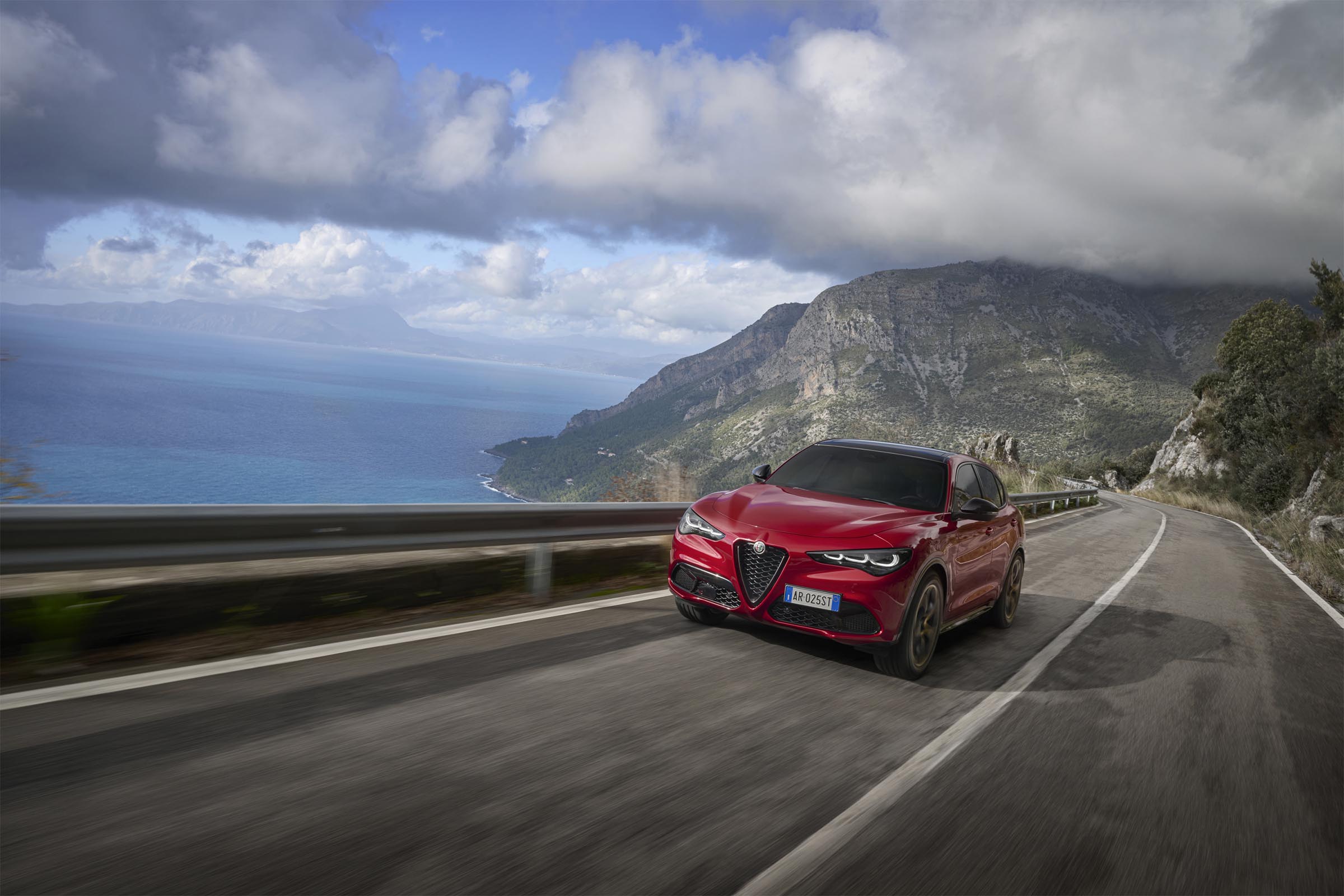
Alfa Romeo was once seen as a core brand but will now be part of the Stellantis second string.
Alfa Romeo: This sporty Italian manufacturer has been, to put it bluntly, a big disappointment for Stellantis – and for Fiat Chrysler before it. From almost the moment FCA was formed, Alfa was expected to become a significant global brand, especially strong in both Europe and the U.S. State-side demand, in particular, hasn’t come close to plans. Going forward, it’s being repositioned as a niche regional brand, primarily in Europe, though Alfa will remain available in the U.S. At least one new model is planned, but it’s big foray into EVs is effectively dead.
Maserati: Future plans for the upscale Italian brand are TBD. There are at least two new E-segment entries in Maserati’s future, said Filosa. But the rest of the plan is still being worked out and, he said, “We will come back to Maserati by December.”




0 Comments