
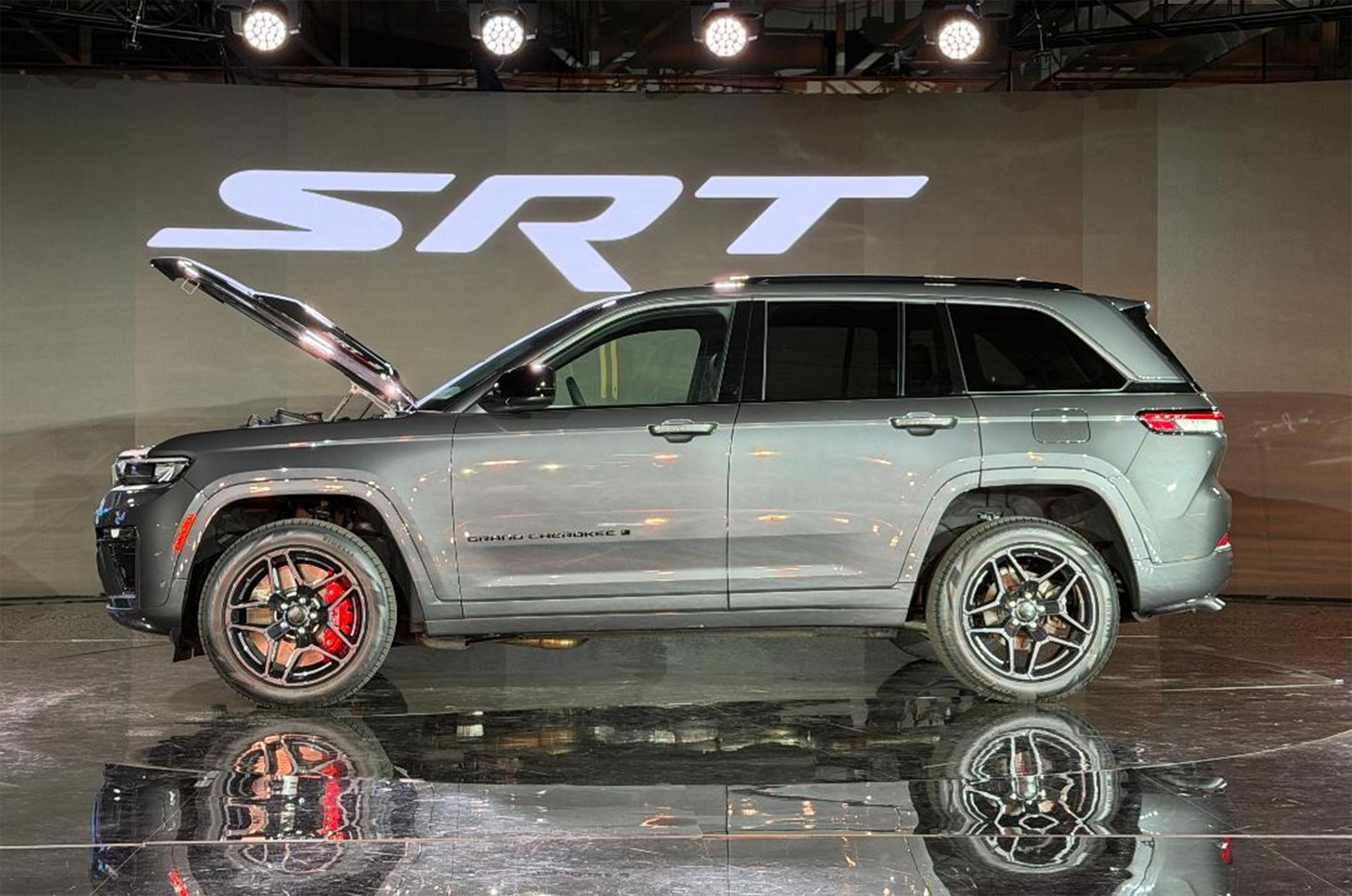
More than 7 million vehicles sold in the U.S. last year were turbocharged. The technology has plenty of advantages but can also leave a driver twiddling their thumbs waiting for power to come on at low speeds. Now, SRT, the performance arm of Stellantis may have come up with a creative way to eliminate dreaded turbo lag. Headlight.News explains.
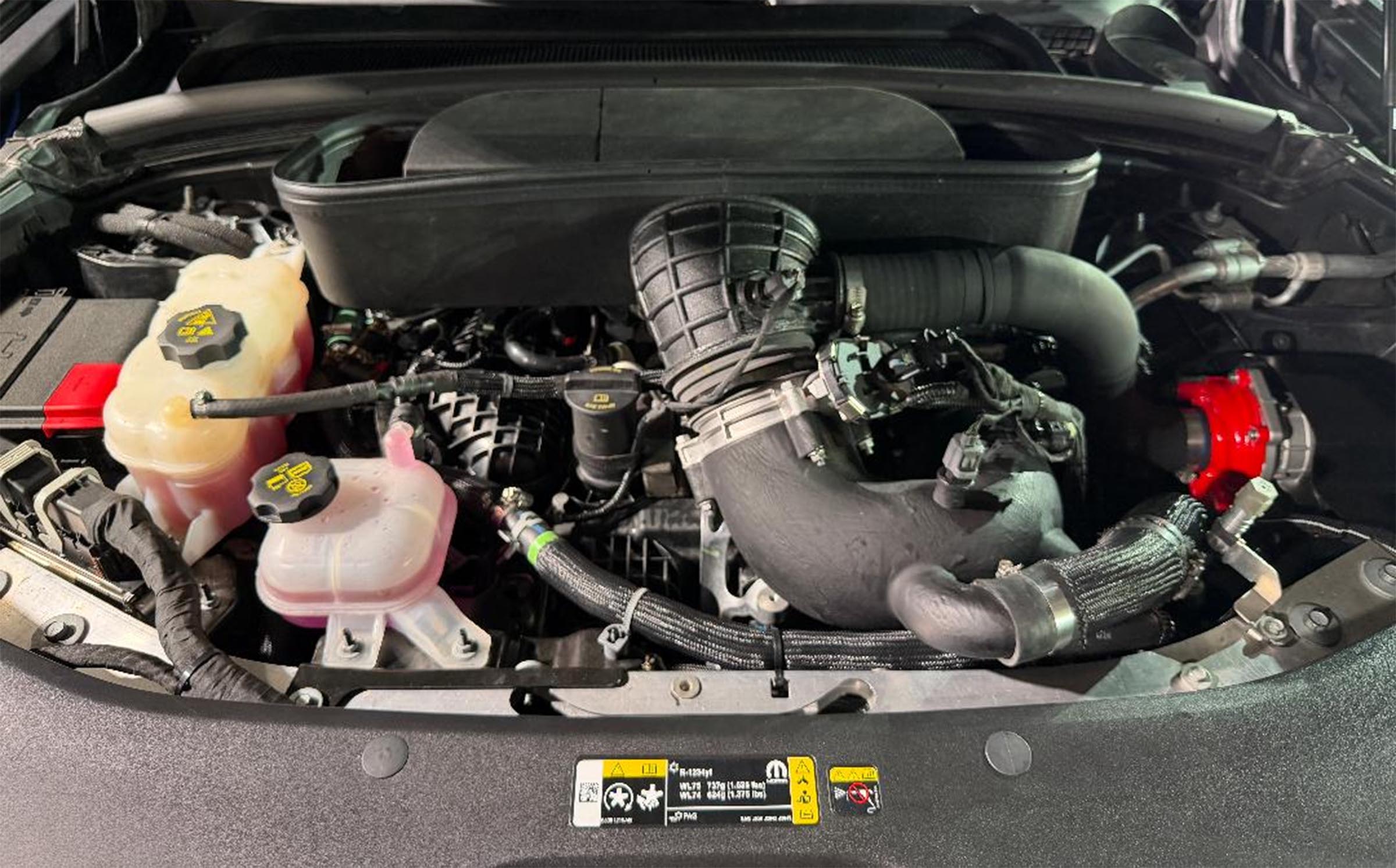
The Hurricane engine in the Jeep Grand Cherokee fitted with the eBoost Air prototype.
Millions of motorists know the feeling. They stomp the throttle when the light turns green but have to wait agonizing seconds before they feel full power kick in. That, at least, is what you’re likely to experience with most vehicles using turbocharged powertrains.
The problem has to do with the way turbochargers work. They depend on a build-up of exhaust gases to spin their turbines. In turn, that compresses the air going into the engine. But, when starting up from a stop, it takes time to “spool up” those turbos.
Automakers have tried a variety of different approaches, and achieved varying – if not entirely satisfactory – results. But SRT, the performance arm of Stellantis, thinks it may have a perfect solution. Its prototype eBoost Air system adds an electrically driven compressor that all but instantly delivers a powerful boost to the automaker’s six-cylinder Hurricane engine even as the powertrain’s twin turbos begin spooling up.
From concept to prototype
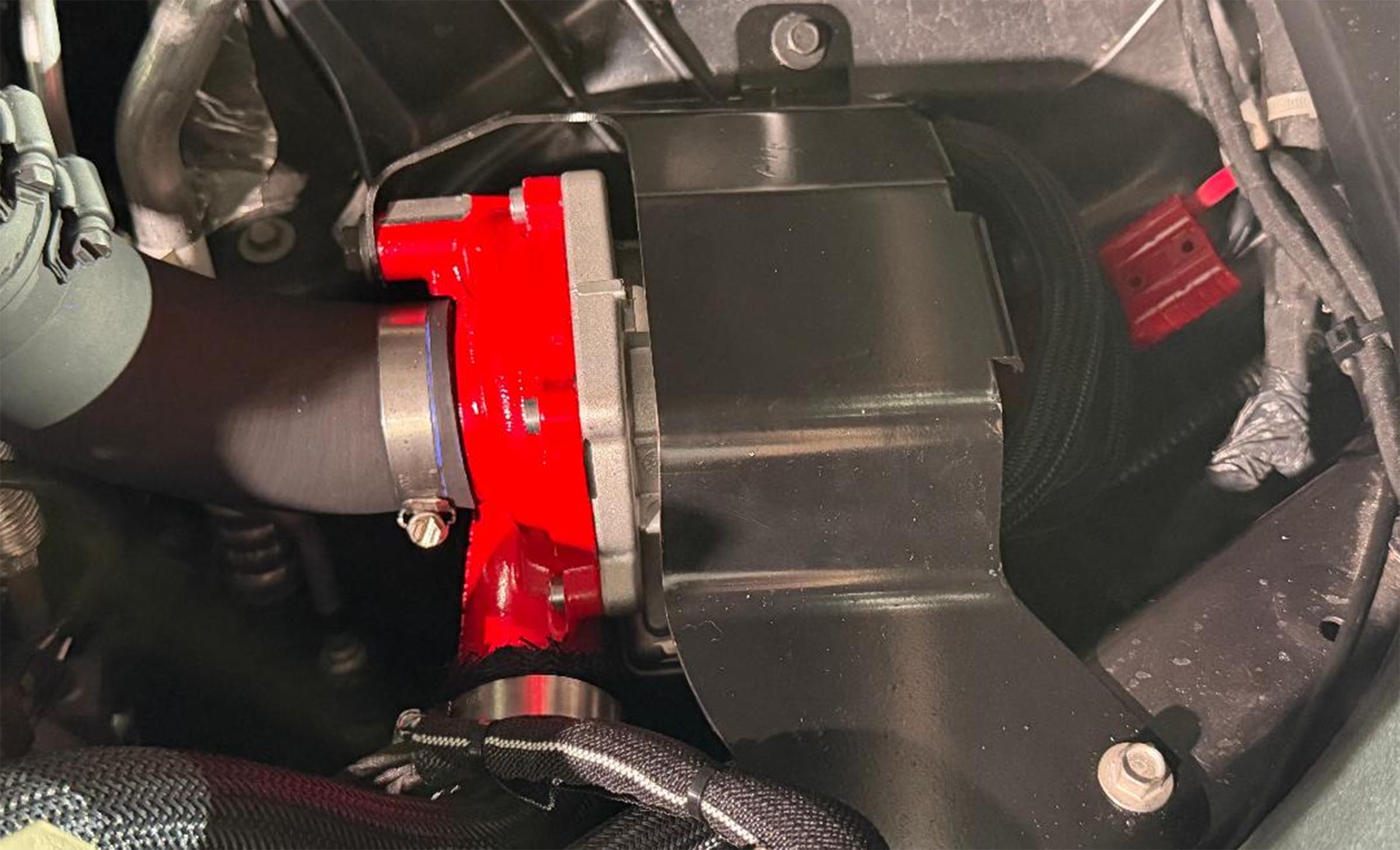
A closer look at the eBoost Air prototype.
Short for Street and Racing Technology, SRT is the division designed to help boost performance for the North American Stellantis brands, notably Dodge, Jeep and Ram. It last year got its own team of engineers who broke off from the rest of the Euro-American automaker’s product development operations.
The eBoost Air system is one of their newest projects – and it reveals just how quickly this skunkworks team can operate. The technology was little more than a vague idea seven weeks ago, said Joel Baker, SRT’s vice president of product engineering. This week, the technology is being demonstrated in a running Jeep Grand Cherokee prototype.
What happens next depends upon how well the eBoost system works in real-world testing. But, considering that, of the 16.2 million vehicles sold in the U.S. last year, 45% were turbocharged, a solution to turbo lag could prove to be a popular feature – especially among performance drivers.
“Enthusiasts aren’t interested in technology for the sake of technology,” said Tim Kuniskis, head of Stellantis’s American brands. “But when technology improves performance with no downside, they’re all in.”
How does eBoost Air work
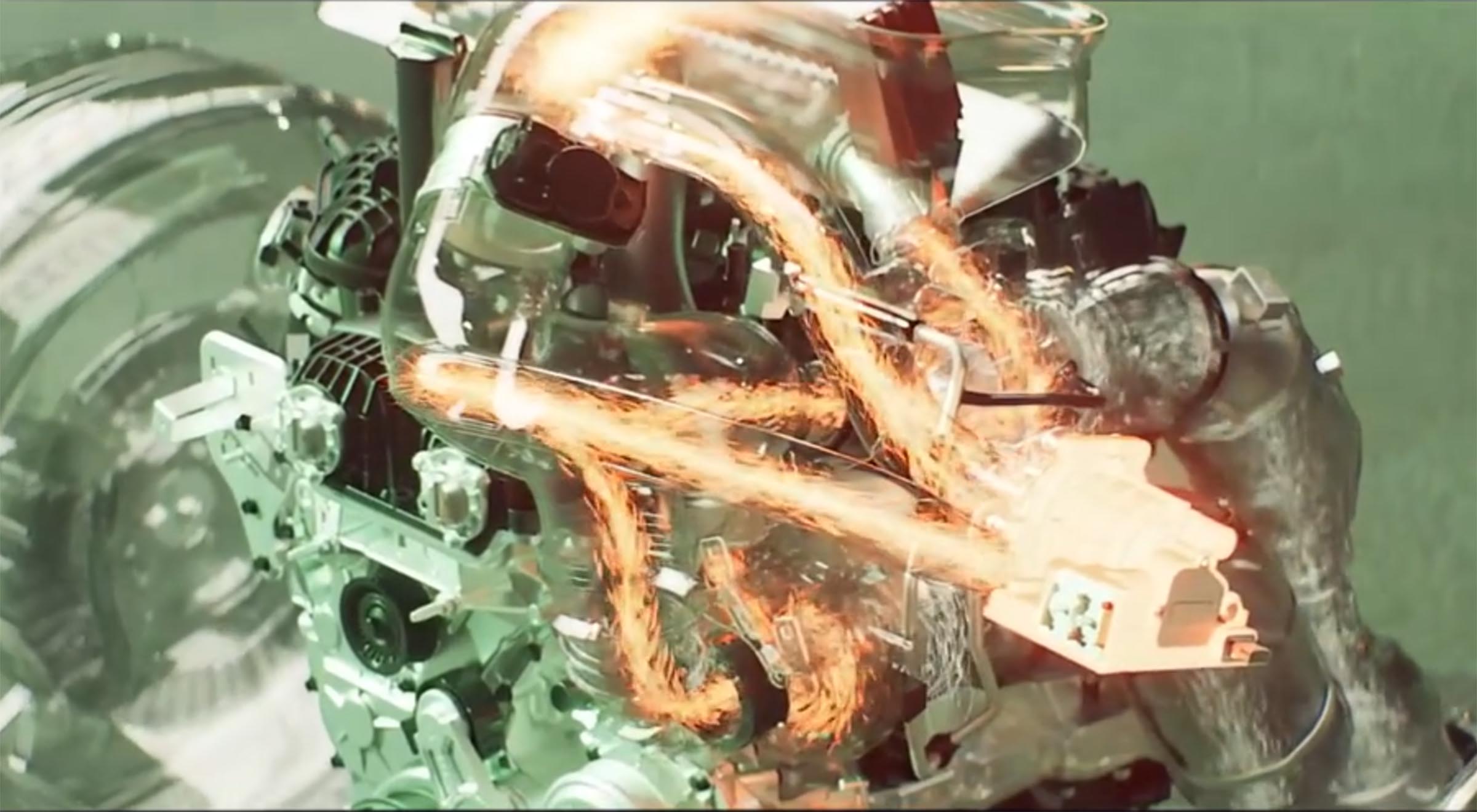
An illustration showing the eBoost system in operation.
With a conventional turbocharged engine, air is sucked into the powertrain and then directed into turbos – of which there can be one or more. Turbochargers are, at their most basic, compressors that spin up to increase the amount of air going into an engine’s cylinders. The problem is that they’re normally powered by the gases coming out of the engine’s exhaust. And, at low speeds, like when the vehicle is starting out from a stoplight, there’s not much flowing out of the exhaust. So the turbos need time to build up speed and increase compression.
With eBoost a butterfly valve redirects the flow of intake air to a newly installed compressor positioned upstream of the turbos. Since it’s electrically powered it doesn’t depend upon exhaust gases and can add as much as 10 psi of boost in as little as 650 milliseconds. That’s enough to deliver 90% of a Hurricane engine’s torque, said Baker, calling it “a very simple, elegant solution.”
Once the engine’s turbos are spooled up and delivering full boost, the butterfly valve closes and the eBoost compressor goes into idle mode. But it can fire up again, all but instantly, whenever another quick shot of air is needed. That can happen whenever a driver slams the throttle, whether at a stoplight or when cruising down a highway.
More Auto News
- New Rivian R2 is the Result of “Creative Subtraction”
- With Lucid Facing Potential Bankruptcy, Could This Mark the End of the EV Start-Up Era?
- Hybrids Charged Up July Auto Sales
What now?
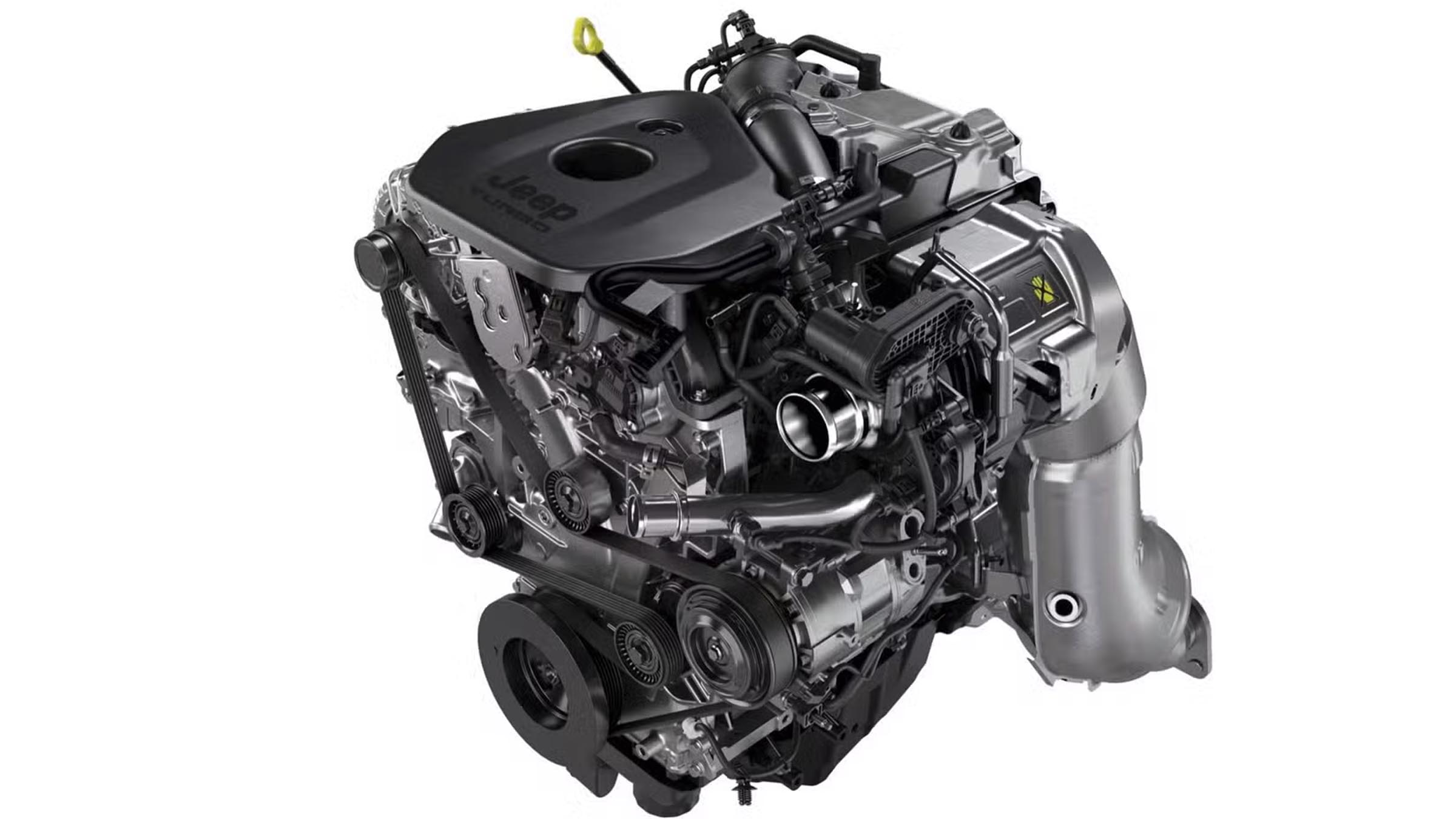
The eBoost could work on both the six-cylinder version of the Hurricane, as well as the four.
SRT engineers were able to take the eBoost Air system from concept to prototype by using the latest in manufacturing technology, primarily 3D, or additive, prototyping. This allowed them to rapidly transform digital renderings of key parts – such as the exterior box and the compressor fan blades – into hard parts. Rapid prototyping can work with a variety of composites and metals.
The question is what happens next? In the coming months, Baker explained, SRT will test out the eBoost Air system both in the lab and on street and track courses to see not only how well it performs but whether it can hold up in aggressive driving conditions.
Another challenge: determining how to provide power to the electric boost system. The initial prototype draws current from its own small battery connected to the Jeep’s alternator.
“We’re (also) studying the customer,” he added, to see if the benefits would justify the potential cost were it to go into production.
Production plans
“There’s no plans…for production,” he added. “Not yet.” But Baker’s boss, SRT chief Tom Sacoman, said there are clear opportunities for a solution like eBoost Air in the automotive performance market.
The good news, he said, is that the technology could be used on essentially any turbocharged powertrain, including the six-cylinder Hurricane engine used in a variety of Stellantis products, as well as the smaller Hurricane four-cylinder package.
Among the approaches SRT and the Stellantis brands will consider is the possibility of offering eBoost Air as a production option or as an aftermarket feature that could be sold through the automaker’s Direct Connect arm. Any final production decision would depend not only on whether the technology proves as effective as imagined but whether it is durable enough to last the life of an engine. There are also questions about the system’s impact on emissions and fuel economy to be considered.
As for cost? No one at SRT is ready to discuss that topic but Sam Abuelsamid, lead analyst with Telemetry Research and a former auto engineer, said it won’t come cheap. That could mean as much as $10,000 in a package that would include even larger and more powerful turbochargers.


On a scale of 1 – 10 on the seriousness of turbo lag, I give it a -122, maybe even lower.