
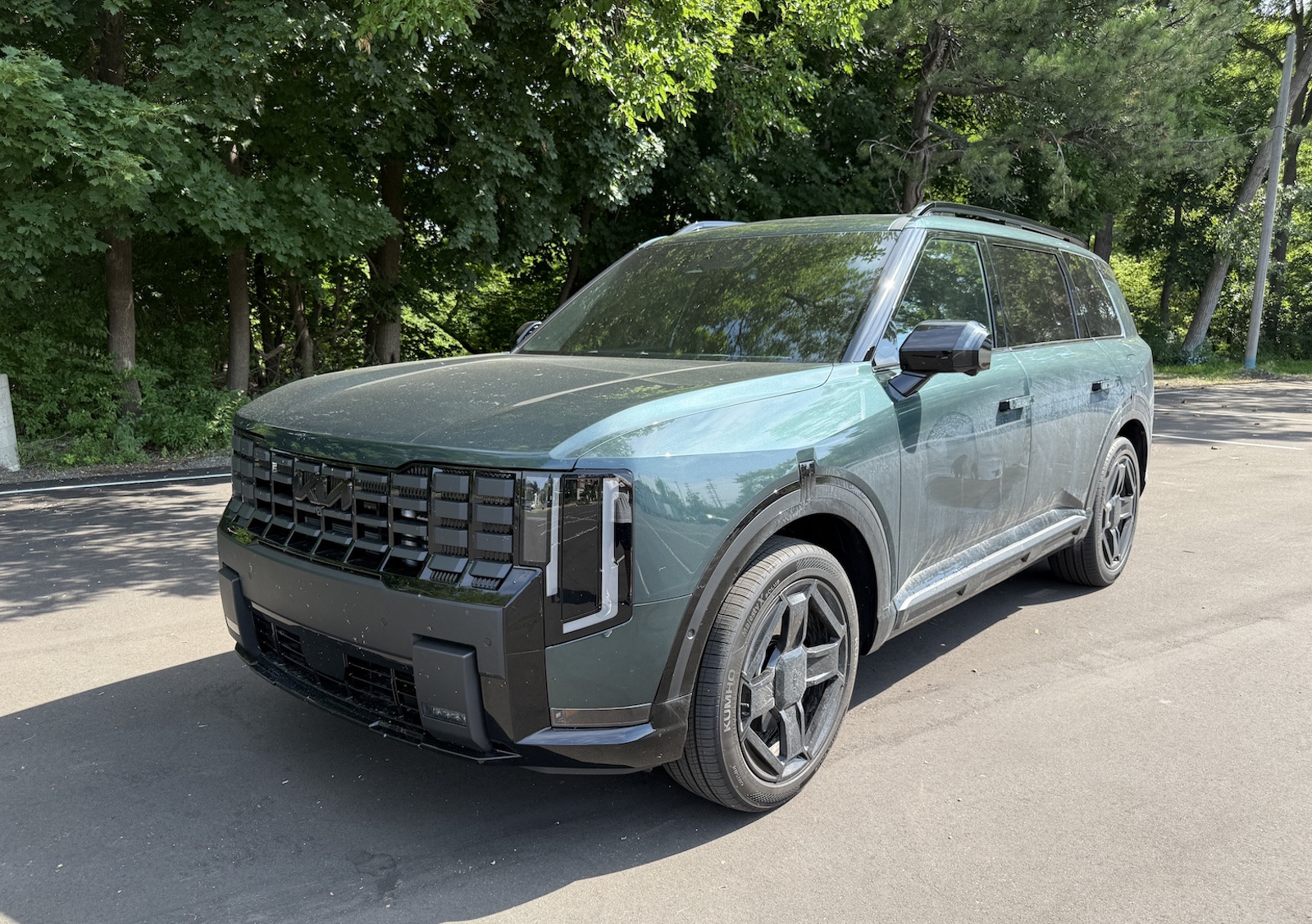
When Kia introduced the Telluride for 2020, it didn’t take long for the three-row SUV to become one of the company’s most important vehicles. Now, six years later, it’s become a true flagship vehicle for the brand with the second-gen version.
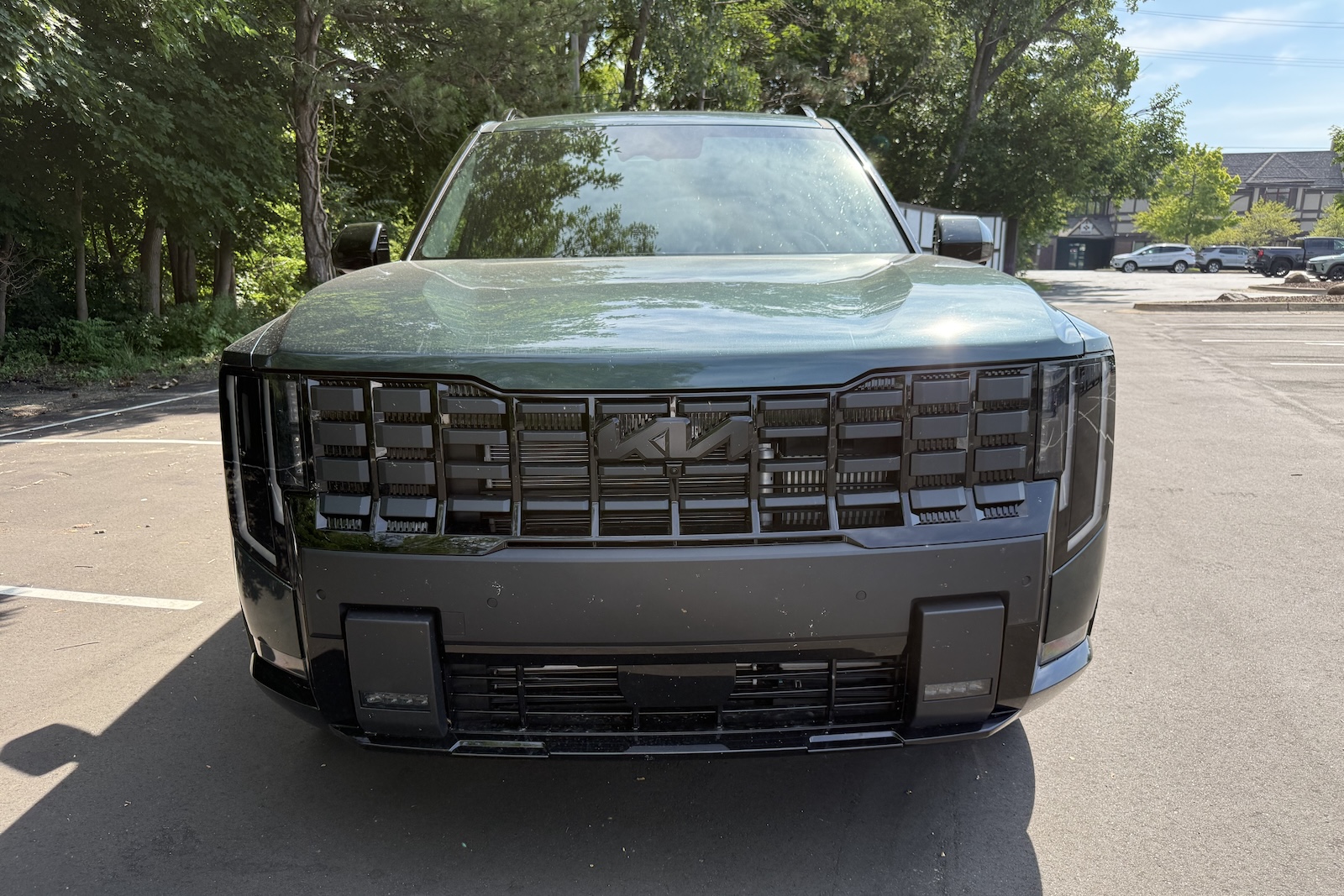
The 2027 Kia Telluride HEV showcases a combination of bold styling, a comfortable interior and generous passenger space.
The 2027 Telluride showcases a combination of bold styling, a comfortable interior, generous passenger space and a price that undercut much of the competition — especially some premium models.
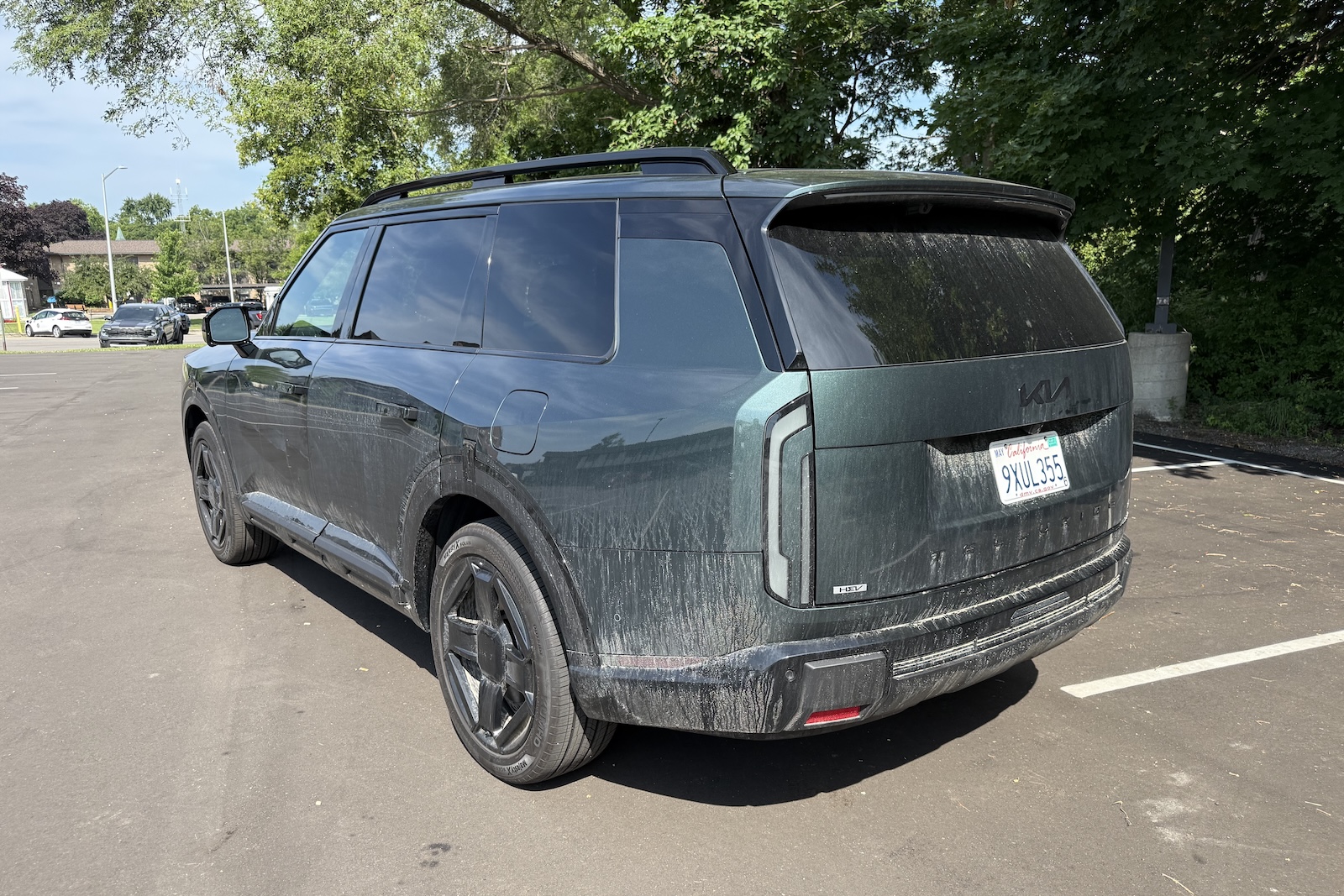
More importantly, the next-gen Telluride gave the South Korean brand a chance to fill a gap in its lineup: a hybrid powertrain. Not only does it get the usual X-Pro treatment to look like a rough-and-tumble mild off-roader, but the hybrid model also arrives with more power than the gas-only model and better fuel economy.
The 2027 Kia Telluride HEV is more powerful than the V6-powered model it replaces, producing 329 horsepower and 339 lb-ft of torque from a turbocharged 2.5-liter 4-cylinder, plus two electric motors. It’s also substantially more than the 274 hp than the gas-only X-Pro model.
In other words, Kia didn’t just make the Telluride greener. It made it better.
More Power, Less Fuel
The 2027 Kia Telluride HEV is more powerful than the V6-powered model it replaces, producing 329 horsepower and 339 lb-ft of torque.
The old Telluride’s naturally aspirated 3.8-liter V6 produced 291 hp, so the additional 38 ponies that come with the new hybrid represent a substantial increase in both power and pulling power. The electric motors also help eliminate the hesitation you might expect from a turbocharged 4-cylinder hauling around a vehicle this large.
The Telluride HEV is plenty quick for a three-row family SUV with the electric motors filling in the gaps you might encounter as the turbo 4-cylinder gets up to speed. The result? Strong, smooth acceleration.
The 6-speed automatic transmission that Kia offers is so much better than the continuously variable transmissions (CVT) offered by competitors. It behaves like a conventional automatic with shifts coming smoothly and cleanly.
Fuel economy is where the hybrid really earns its keep. The front-wheel-drive EX is EPA-rated at 34 mpg city, 36 mpg highway and 35 mpg combined. Kia estimates a driving range of as much as 637 miles. All-wheel-drive models still manage 30 mpg city, 32 mpg highway and 31 mpg combined.
That’s impressive for a vehicle this big.
The 6-speed automatic transmission that Kia offers is so much better than the continuously variable transmissions (CVT) offered by competitors.
The tradeoff is towing capacity. The Telluride HEV is rated to tow 4,500 pounds, compared with 5,000 pounds for certain gas-powered Tellurides and some competitors — a difference that’s negligible for most buyers.
Bigger, Bolder and More Upscale
Kia didn’t need to completely reinvent the Telluride’s styling. The first generation already had one of the strongest visual identities in the segment. Instead, the designers evolved the formula while giving the new SUV a more sophisticated appearance.
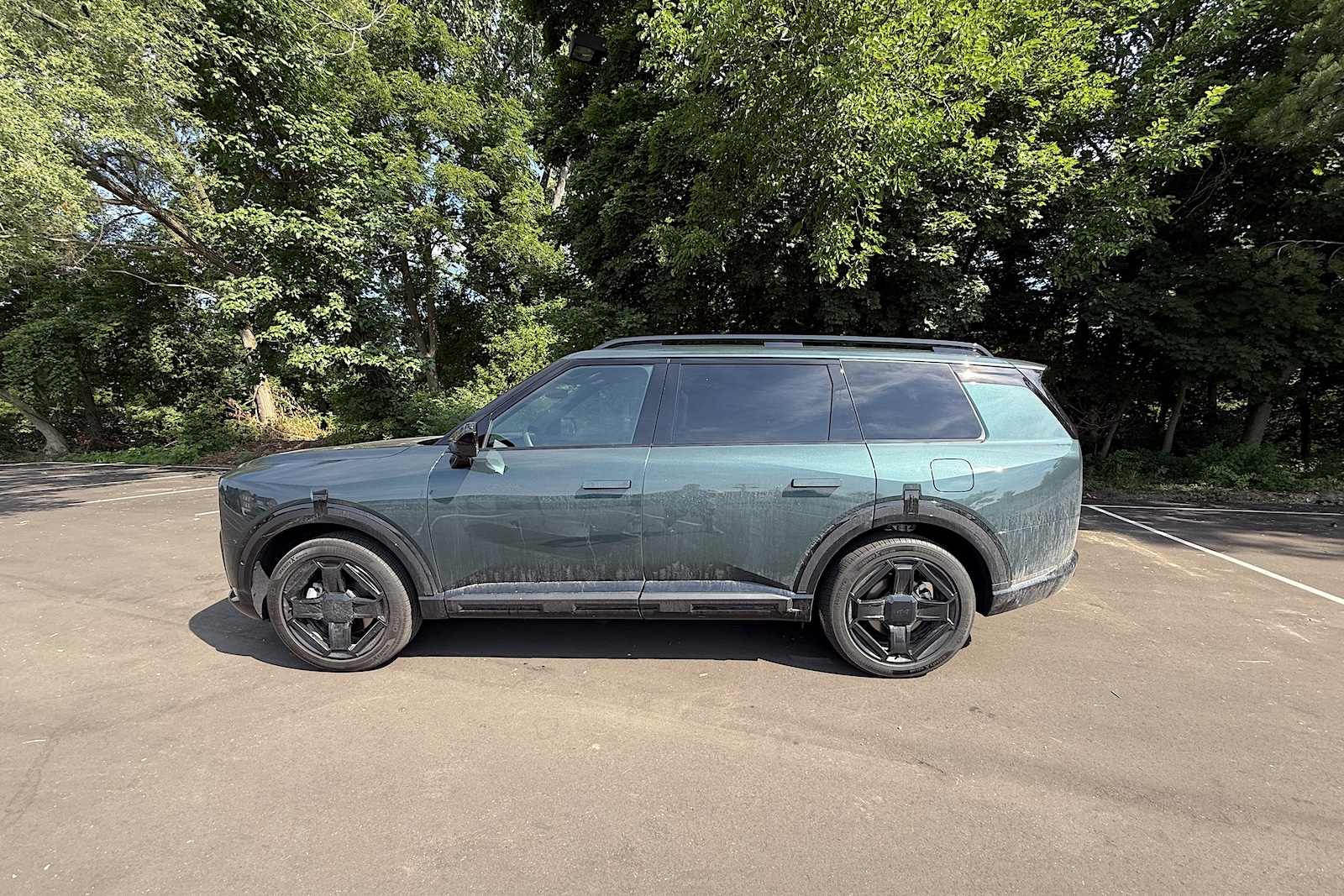
The 2027 Telluride has a boxier, more upright stance, a broad hood and vertically oriented headlights that give it a substantial presence. Kia says the design was inspired in part by the Rocky Mountains and the Colorado town from which the vehicle gets its name.
The result looks expensive.
That’s particularly true of the X-Line versions. A matte-black grille, unique front and rear fascias, raised roof rails and available 21-inch wheels give the X-Line SX a more rugged personality without turning the Telluride into an off-road caricature.
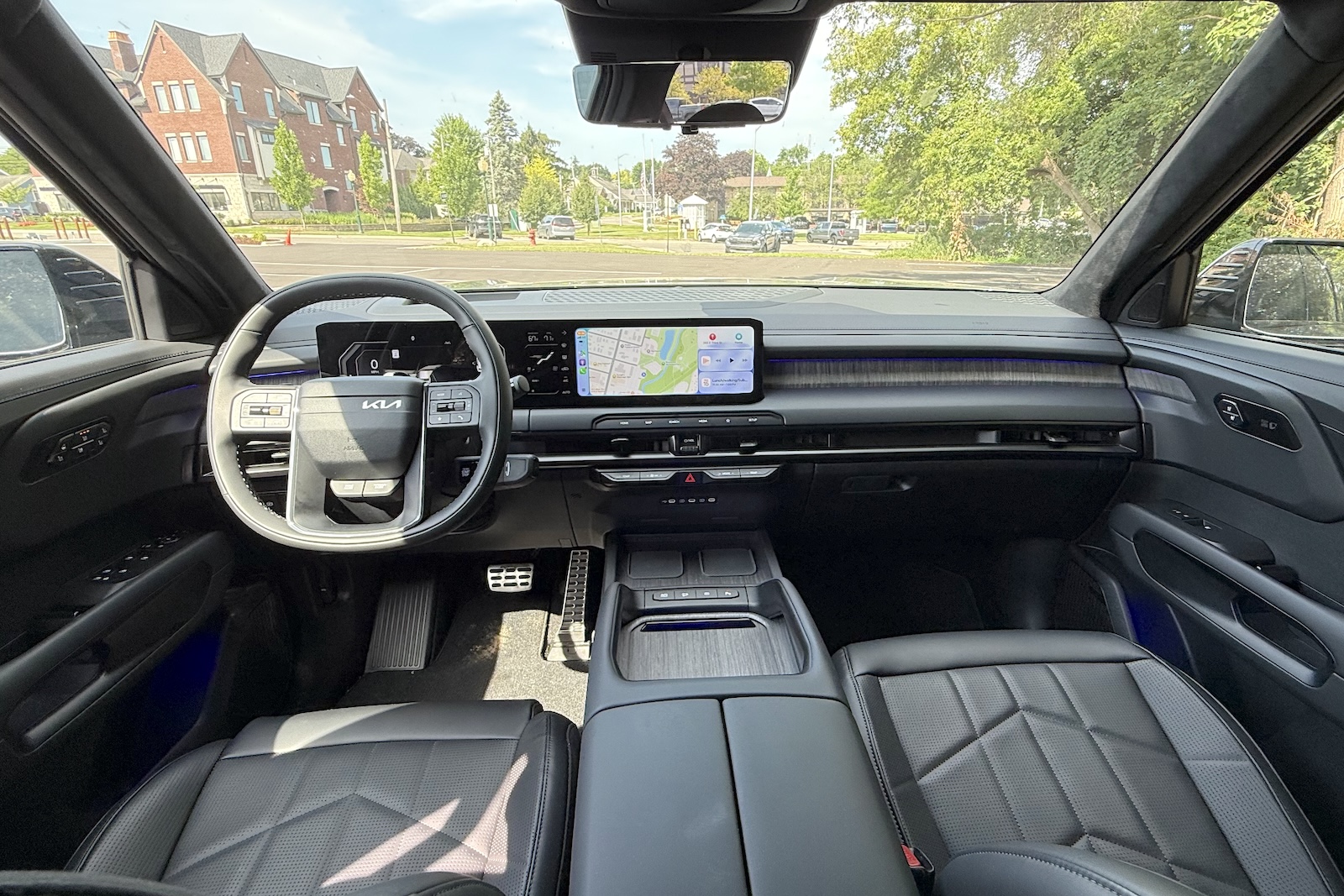
The Telluride’s interior has always been one of its biggest selling points, but the 2027 model takes a major leap forward technologically.
The new Telluride is also larger than its predecessor. At 199.2 inches long with a 116.9-inch wheelbase, it has the physical proportions you’d expect from a serious family hauler.
And unlike some SUVs that use aggressive styling to disguise cramped interiors, the Telluride’s additional size serves a purpose.
Digital playground
The Telluride’s interior has always been one of its biggest selling points, but the 2027 model takes a major leap forward technologically.
The dashboard is dominated by a wide digital display setup, with as much as 29.6 inches of combined screen space. Wireless Apple CarPlay and Android Auto are available, and higher trims bring features such as a head-up display, 360-degree Surround View Monitor and Full Display Mirror.
Kia has also remembered that a three-row SUV is supposed to serve passengers, not just the person sitting behind the wheel. USB-C ports are spread throughout the cabin, and the second-row seats can be tilted and moved forward to make third-row access easier — even with a child seat installed.
That is the kind of technology that matters to families.
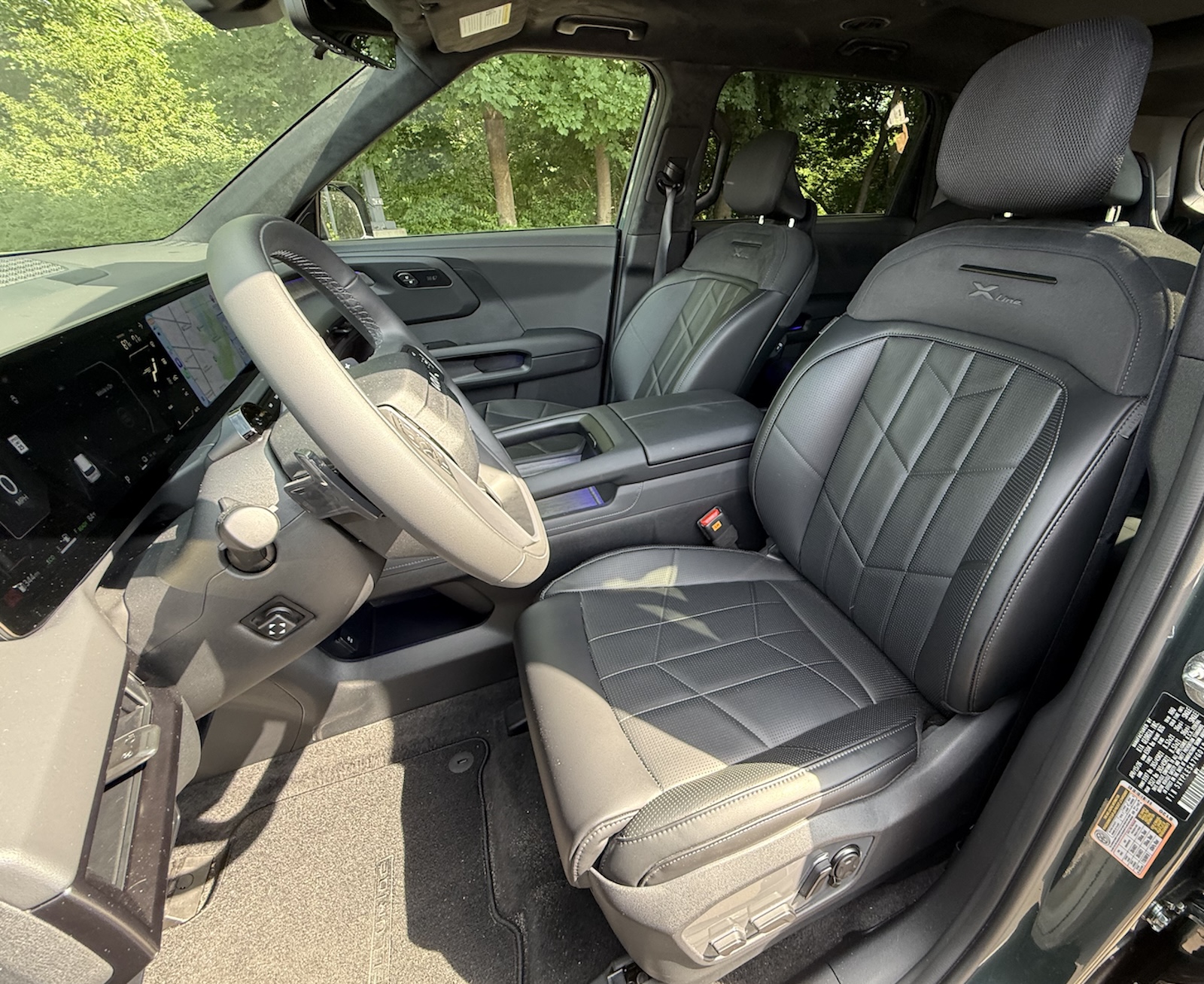
Technology and styling might attract buyers to the Telluride, but comfort and space will seal the deal.
Not every interface decision is perfect. The climate controls can be somewhat difficult to use at a glance, particularly compared with traditional knobs and switches. Edmunds specifically calls out the climate-control interface as a drawback.
Still, the overall technology package is impressive, particularly considering the Telluride isn’t marketed as a luxury vehicle.
Comfort cabin
Technology and styling might attract buyers to the Telluride, but comfort and space will seal the deal.
The new Telluride has more interior room than its predecessor, including improvements to first- and second-row headroom and third-row access. There is also 21.3 cubic feet of cargo space behind the third row.
That makes the Telluride a legitimate three-row vehicle rather than a five-passenger SUV with two occasional-use seats in the back.
The cabin boasts an appropriately upscale character. Depending on trim, buyers can get heated and ventilated seats, premium upholstery, power-adjustable seating and other features that would not look out of place in a considerably more expensive SUV.
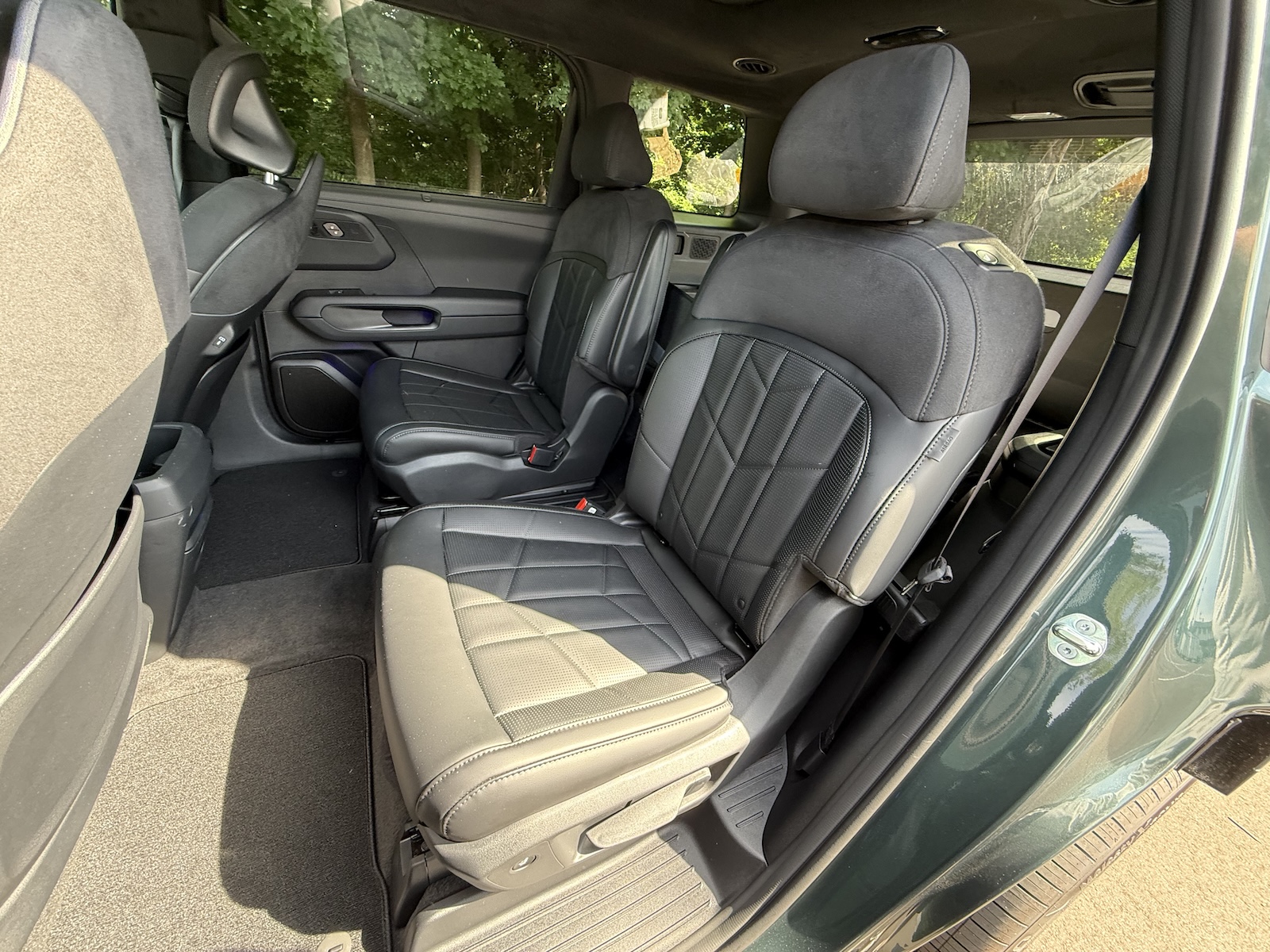
The new Telluride has more interior room than its predecessor, including improvements to first- and second-row headroom and third-row access.
Perhaps most importantly, the Telluride HEV is quiet.
The electric motors allow the vehicle to operate with minimal engine noise in many situations, while the suspension does an excellent job of absorbing bumps and rough pavement — a plus here in Michigan. That’s exactly what you want from a vehicle that can carry a family across town — or across the country.
Would I?
It always comes down to this question: Would I? First, let’s talk numbers. The 2027 Telluride HEV starts at $46,490 for the EX with front-wheel drive. Adding AWD brings the starting price to $48,490.
From there, pricing climbs to $51,490 for the SX FWD, $54,490 for the X-Line SX AWD, $56,590 for the SX Prestige AWD and $57,590 for the range-topping X-Line SX Prestige AWD. A $1,545 destination charge applies. In short, about $60,000 for what I’d consider a premium large midsize SUV.
That’s not cheap, but the hybrid premium is relatively modest considering what buyers get in return. The HEV combines more horsepower than the conventional engine with substantially better fuel economy and the same spacious, upscale cabin that made the Telluride popular in the first place.
Yes. Yes, I would — and will when I buy my next vehicle.



0 Comments