
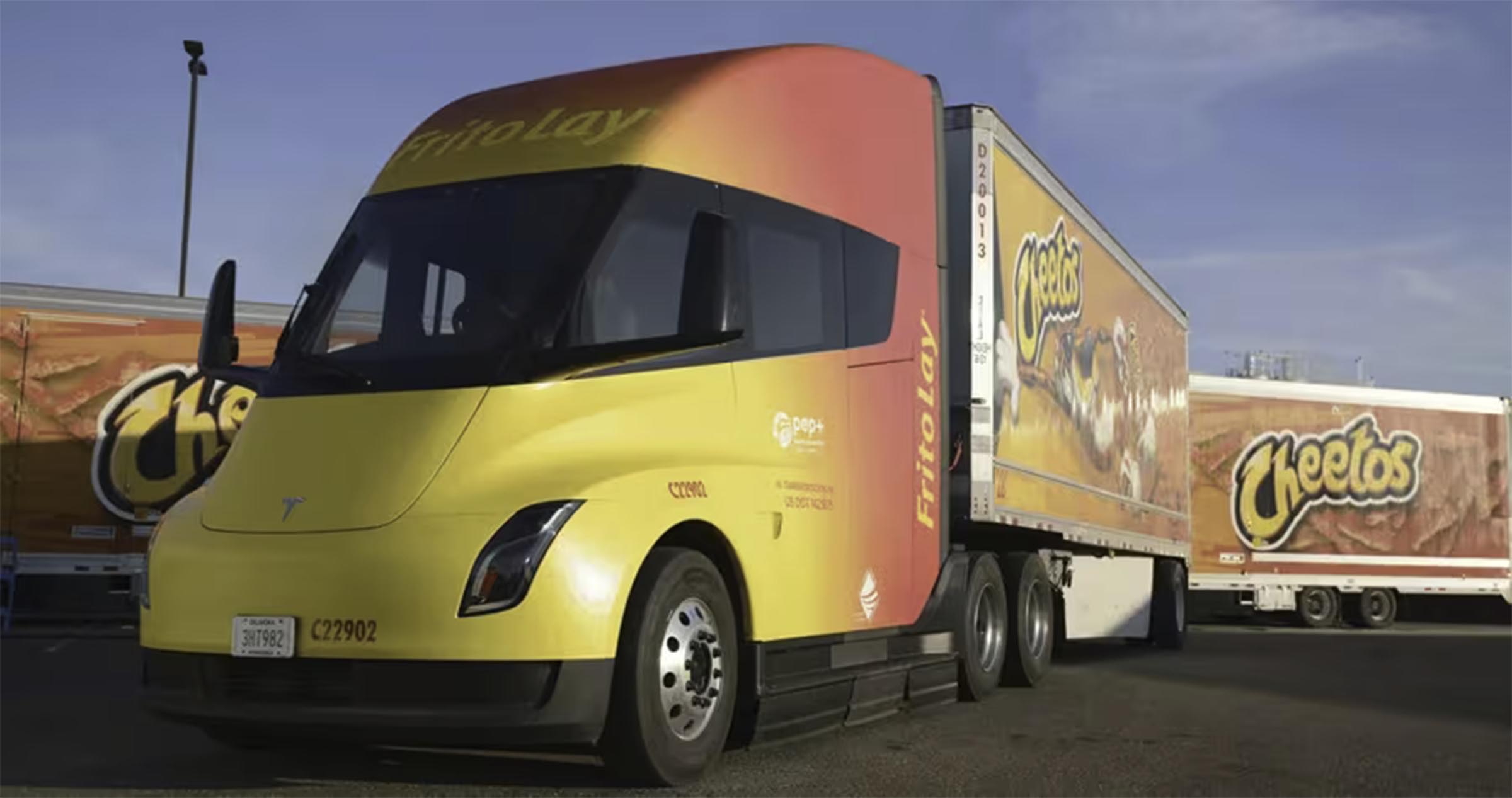
After a long delay, Tesla is finally rolling out its all-electric Semi and you can order versions offering as much as 500 miles range per charge. But that’s the problem. There’s only a handful of places in the entire country currently equipped to charge up the truck’s massive battery pack. More from Headlight.News.
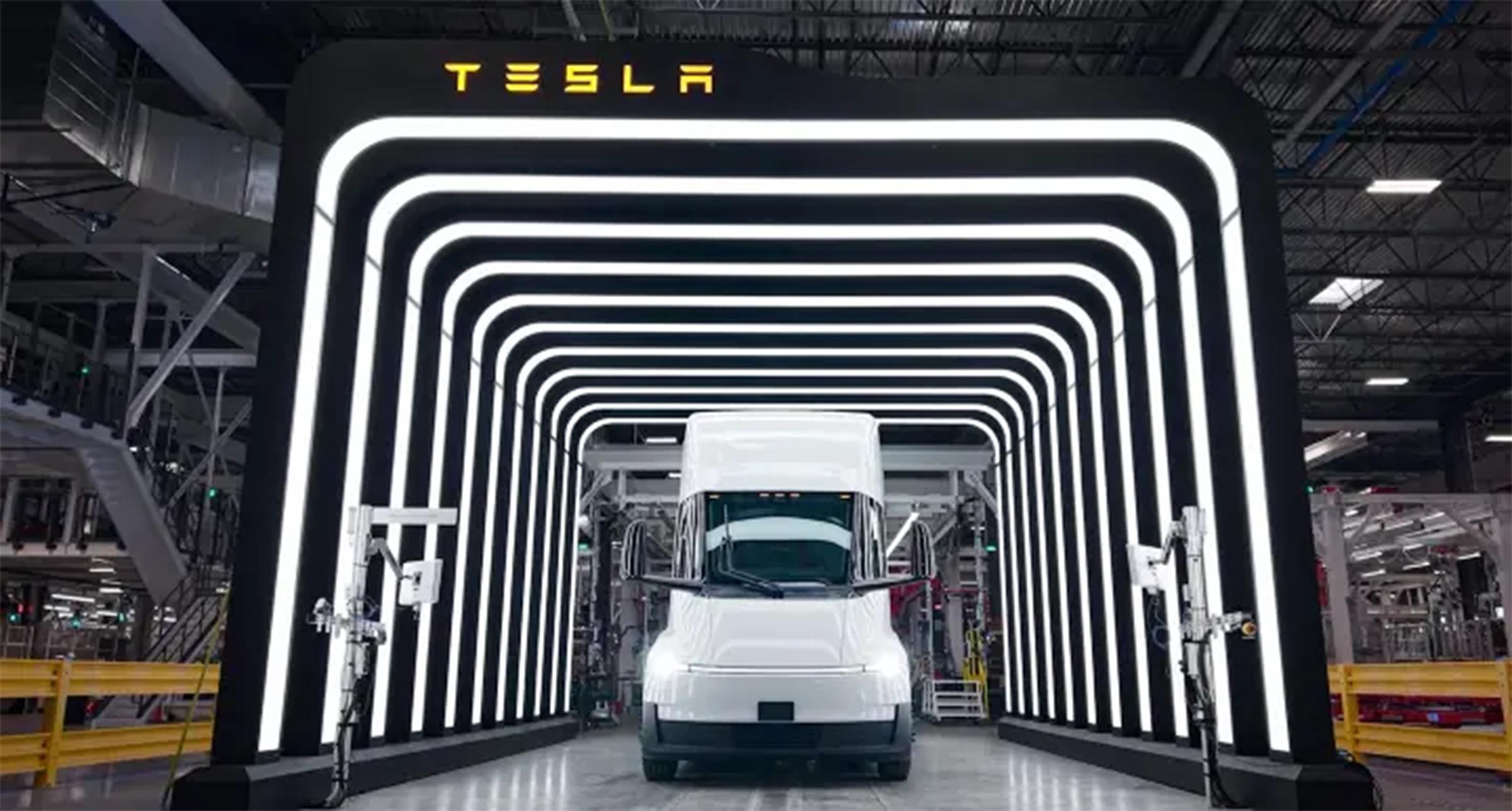
A Tesla Semi goes through final inspection at the Reno, NV assembly plant.
Though Tesla has officially been producing its Class 8 Semi since 2022 it’s really only now beginning to roll out the rig in anything close to real volume.
For those interested in the Semi Tesla is offering them a choice of two different battery pack options: one rated at 325 miles per charge, the other a more useful 500 miles – which is about what the typical Class 8 truck logs depending on whether they’re handling local or long-distance runs, according to the U.S. Department of Transportation (USDOT).
Tesla’s timing might seem perfect considering the rapid run-up in the price of diesel – now about $6.50 a gallon, well above the old record. The company claims operators could save substantially on energy costs. But they’ll pay plenty up front, the Semi going for about 65% more than what Tesla originally planned. The bigger problem? Finding a place to plug in, with the company’s own website showing there are currently only two public charging stations capable of delivering the megawatt of power the Semi requires.
What’s new
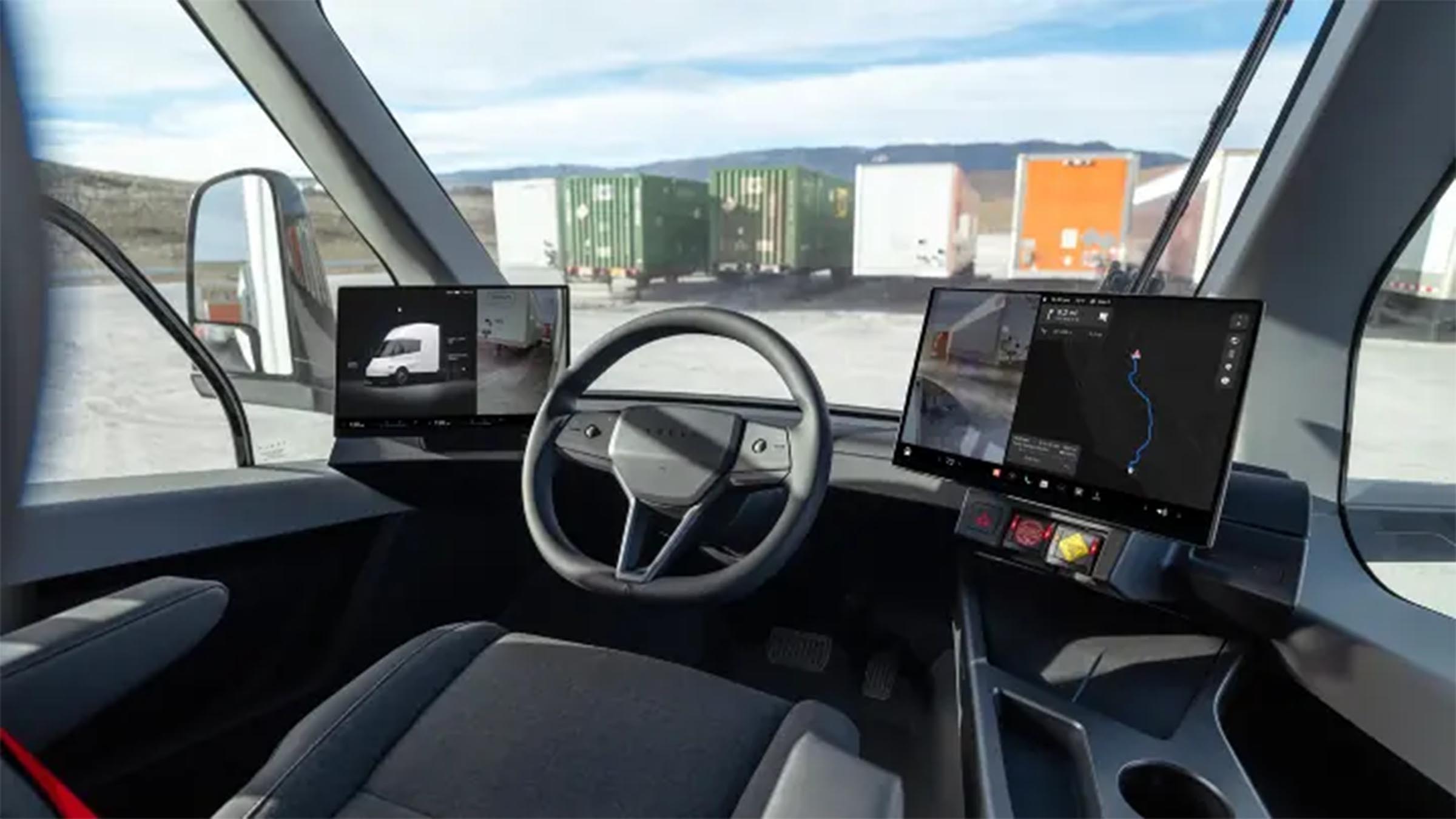
Tesla Semi drivers sit in the center of the cabin and a pair of digital screens allow them to see traffic on either side.
Tesla first announced plans to introduce the Semi in its 2016 master plan. As has been more the norm than the exception, however, it took until 2022 before it began producing a small batch of the Class 8 rigs. And it’s only now that the company is getting set to roll them out in volume.
A driver might feel a big of déjà vu behind the wheel, the interior lifting some familiar features from the Tesla Model 3 and Y, including the touchscreens, steering wheel and other controls. But there’s a single seat up front and it’s positioned in the center of the cab, Tesla addressing visibility issues with two 16-inch interior displays feeding images from four cameras on the truck’s mirror arms.
There are two primary versions of the truck, one using a 548-kilowatt-hour battery offering 325 miles of rane. That, according to the USDOT is about what local truckers typically log in a day. For long-range use there’s an 822-kwh, 500-mile option, in line with the 500-600-mile daily use estimate from the Transportation Department. To put things into perspective, the 500-mile model’s pack is over 10 times larger than the 820kWh pack in the longest-range Tesla Model Y.
The good, the bad and the ugly
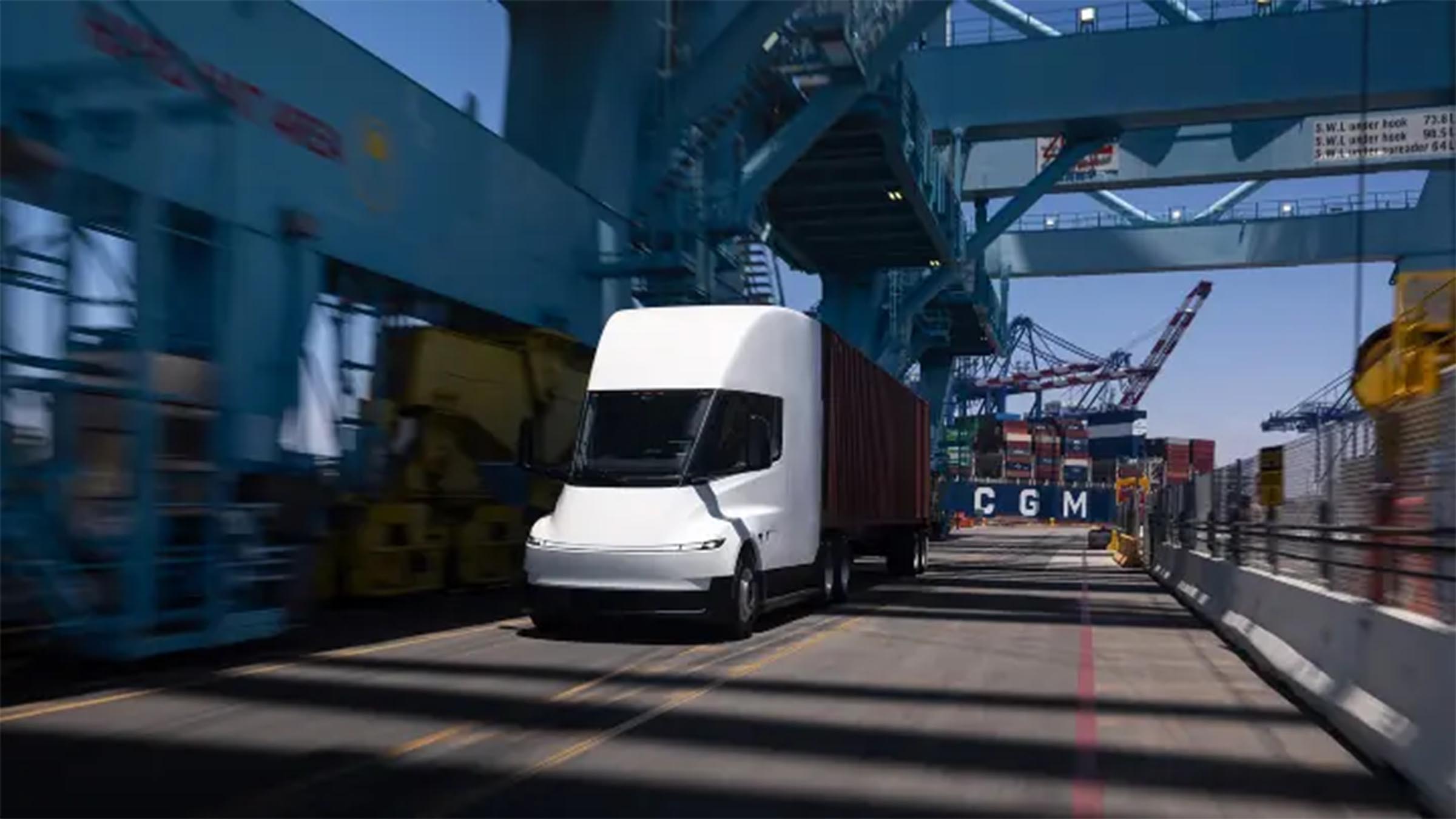
California regulators have been pressing to get diesel rigs replaced by EVs at high-volume ports where they may sit idling for hours at a time.
Considering what’s happening in the market right now, Tesla might catch the attention of truckers and fleet operators shaken to the core by the rapid run-up of fuel prices since Pres. Donald Trump launched his war against Iran. As of Monday morning, September 28, diesel was averaging $6.5276 across the U.S., just short of last week’s record and about $2.84 a gallon more than a year ago. Considering Class 8 rigs running on that fuel typically get a fleet average 7.5 mpg, according to industry reports and the EPA. Musk has estimated operators could save as much as 20 cents per mile on energy costs.
That is when plugged into a Megawatt charger, a system capable of delivering at least 1 million watts of current, or about three times faster than the largest chargers currently used in the U.S. for charging passenger vehicles. Unfortunately, Tesla’s website currently shows only two such megawatt chargers currently available for public use, both around Los Angeles. That said, operators may sidestep that problem by setting up their own megawatt systems at their depots. Operators like Amazon Prime have already been doing so for their fleets of smaller battery-electric trucks.
The other issue? A hefty price tag. When Tesla original announced the Semi it indicated plans to launch the shorter-range Semi at a $150,000 base price, the long-range option at $180,000. As has been the case with other Tesla products, such as the ill-fated Cybertruck, the final figures come in substantially higher, at $260,000 and $300,000 respectively. While prices can vary by brand and equipment, a typical diesel Class 8 tractor costs about $172,000, according to the International Council on Clean Transportation.
More Auto News
- White House Takes Aim at Ford Over China Ties
- Has SRT Found the Answer to Turbo Lag?
- Dodge Debuts Charger Super Bee – But There’s More Coming
Who’s buying the Semi?
California trucking start-up WattEV has ordered 370 Tesla Semis.
Energy costs could help considering the typical Class 8 tractor clocks 80,000 to 120,000 miles a year –though team-driven rigs can climb as high as 200,000 miles. And California – where demand is expected to be highest – is offering vouchers of up to $120,000. The state has been pushing trucking companies to replace diesel rigs, especially at ports such as those in Long Beach and Los Angeles, where tractors often spend hours idling while waiting for ships to unload.
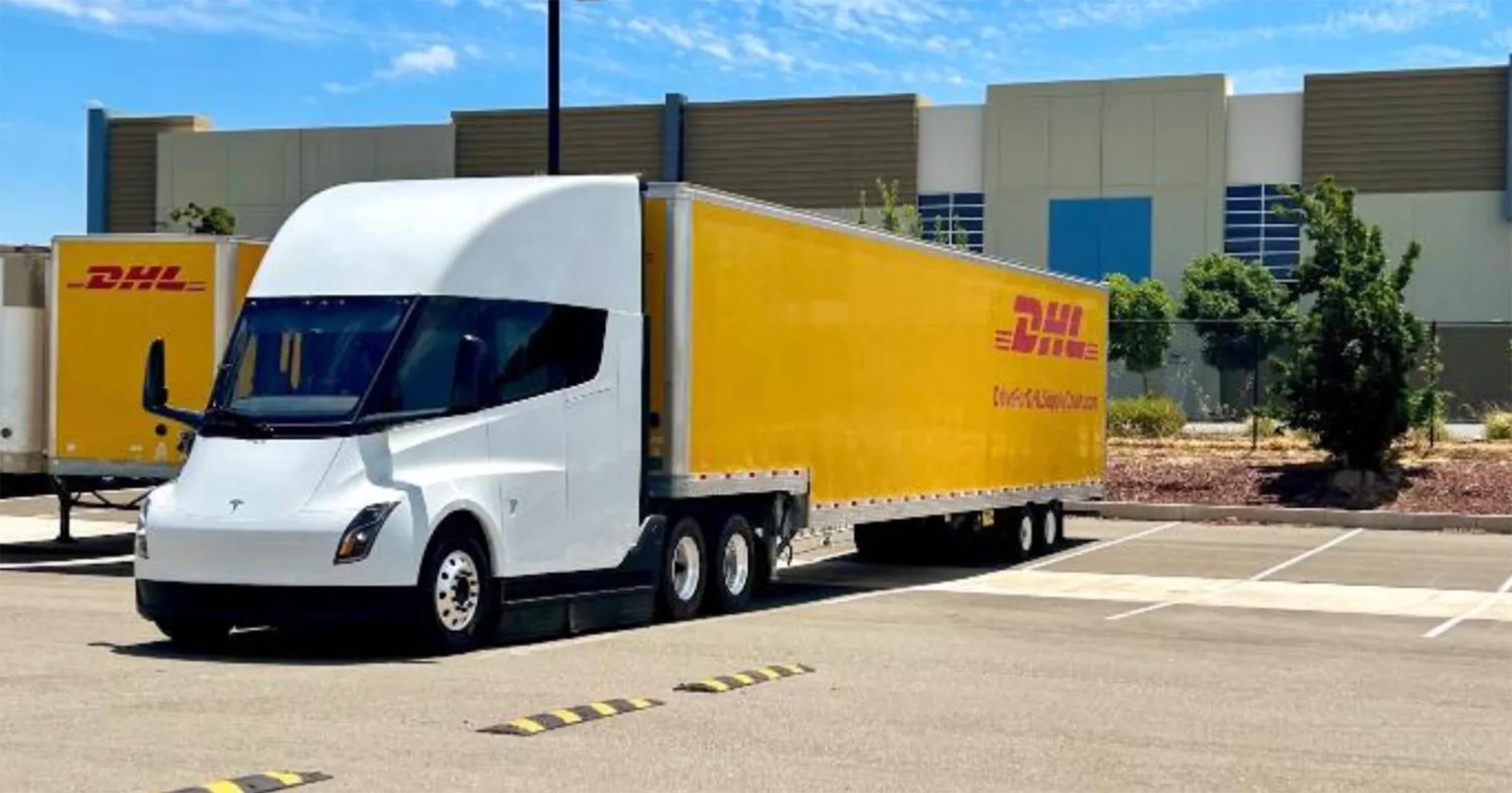
Tesla has already delivered a small number of Semis to customers in order to test the rigs out in real-world applications. That includes PepsiCo which took a first delivery from the automaker in December 2022 at its factory in Reno, Nevada. California-based WattEV has ordered 370 of the Semis, the first 60 to be delivered this year, the rest by the end of 2027. The company plans to lease the tractors out to those who don’t want – or can’t afford – to buy the EVs on their own. It plans to set up its own megachargers in various parts of the state, much as PepsiCo has done at its own depots.
Tesla, meanwhile, intends to set up at least 30 of the million-watt systems across the country. That might not sound like much considering Pilot/Flying J, the largest over-the-road provider of diesel, currently has 821 stations in 44 states across the U.S. Tesla is counting on Semi buyers to set up their own depot charging operations since Class 8 trucks are far more likely to operate on fixed routes than passenger vehicles.




I’m sure those buying one have a planned path that includes chargers, but of course Paul is much smarter than Elon. Right.
I must be…I find your comments to be a sign of incipient dementia.