

The Trump administration has slashed federal fuel economy targets for 2031 by more than 30%. The White House says the move could save over $60 billion. But the move comes at a time when fuel prices are approaching all-time highs and are already threatening to boost the average motorist’s fuel bills by $1,000 or so annually. More from Headlight.News.

The move will allow automakers to continue building more low-mileage trucks and SUVs.
In its latest move aimed at reversing Biden-era policies impacting the auto industry the Trump administration has rolled back federal fuel economy targets by more than 30% starting in 2030.
Under the revised guidelines, the average new vehicle sold in the U.S. will have to achieve 34.9 miles per gallon by model year 2031, down from the former target of 50 mpg. The move follows a series of other rule changes enacted under Pres. Donald Trump which, among other things, eliminated penalties for manufacturers that miss Corporate Average Fuel Economy, or CAFE, standards.
“Thanks to president Trump’s leadership, we have finally ended the illegal mandate that forced automakers to produce more expensive electric vehicles that American families didn’t want,” transportation secretary Sean Duffy said in a statement Monday.
What’s new
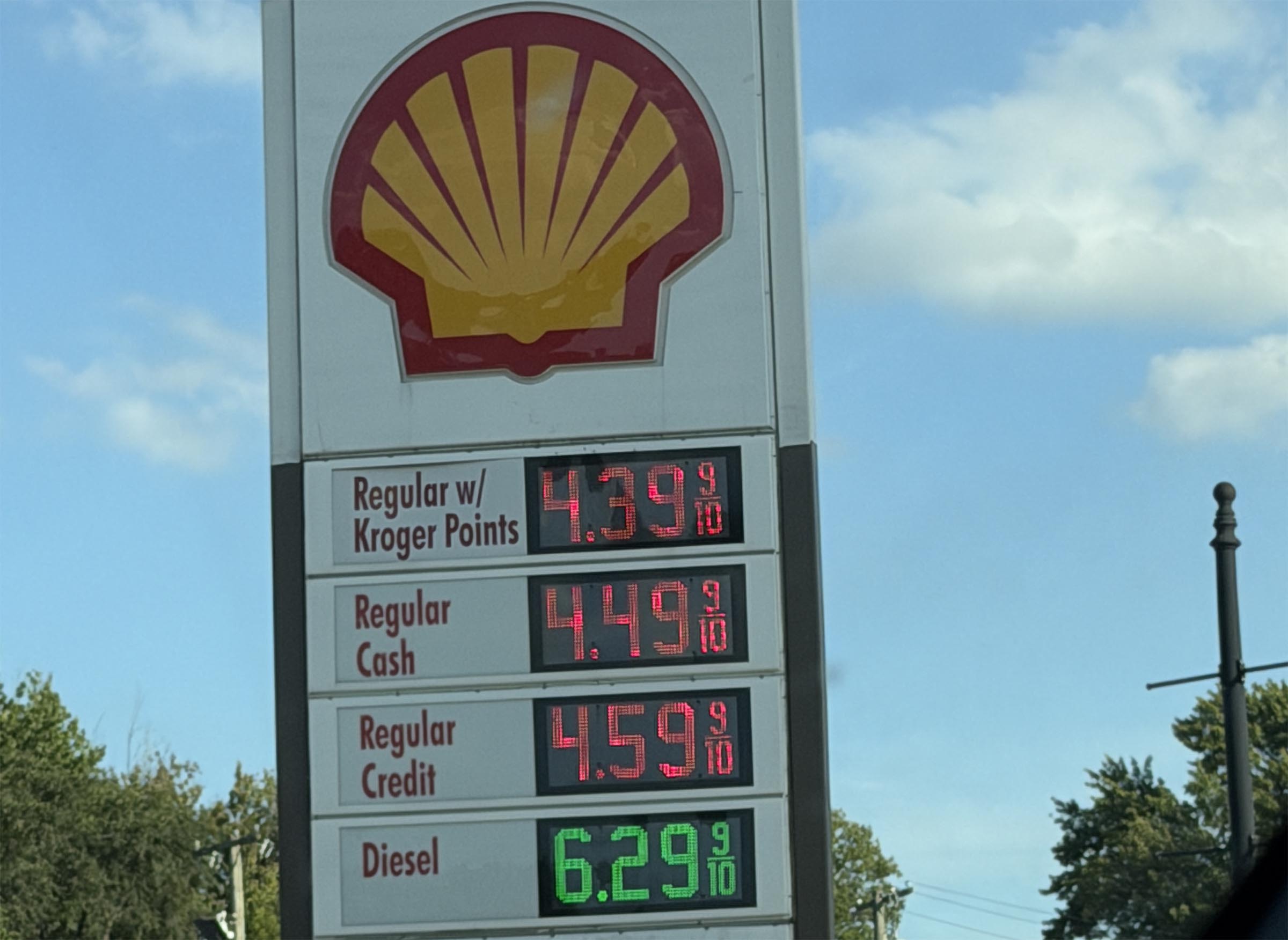
The rollback comes at a time of near-record fuel prices.
Trump has moved to roll back or eliminate a variety of Biden-era automotive regulations, especially those related to EVs, calling them “ridiculously burdensome.” The latest action formalizes a proposal to ease increases to CAFÉ guidelines that had set regular annual increases culminating in a target of roughly 50 mpg by 2031.
The White House asserts the move could save the auto industry more than $60 billion – or $1,280 per vehicle. Critics, however, question those numbers and whether such savings would be passed onto consumers. They also note the rollback coincides with the rapid run-up in fuel prices that could add as much as $1,000 or more to the annual motorist’s energy bill with existing vehicles.
Automakers and oil industry representatives had called for a rollback in the mileage standards and the industry will now have to hit a target of 34.9 mpg. For those who supported tougher mandates there is a small silver lining. The new rules will actually revise the way fuel economy is measured for compact crossovers and some other vehicles. Until now, they were subject to less stringent regulations covering trucks, such as full-size pickups. They will now have to meet the same guidelines as sedans and other passenger vehicles.
The administration estimates automakers will collectively see costs decline by $60.6 billion through 2031, a figure it says will come out at $1,289 for the average vehicle. That number could prove attractive to motorists struggling to afford today’s new products which average more than $50,000.
Questionable numbers

Critics are questioning the promised savings announced by Transportation Sec Duffy.
Though it original agreed to a compromise with the Biden administration, industry officials have since been calling for a rollback and have said that could ease further inflationary pressures by allowing them to avoid introducing the costly technologies needed to boost fuel economy from today’s target.
Critics question that assertion and suggest new vehicles prices will continue rising anyway, as they have at a sharp pace for more than a decade. “The idea is this will make vehicles less expensive,” said Sam Fiorani, lead analyst with AutoForecast Solutions, but that is not how it works.”
If anything, he added, “This will allow (the industry to keep building) less fuel-efficient vehicles” such as full-size pickups and large SUVs using big V-8s.
More Auto News
- White House Takes Aim at Ford Over China Ties
- Has SRT Found the Answer to Turbo Lag?
- Dodge Debuts Charger Super Bee – But There’s More Coming
Bad timing?
The Trump administration originally announced plans to roll back fuel economy standards last December, at a time when fuel prices were averaging around $2.89 a gallon, according to the Bureau of Transportation Statistics. The benefit of going to a 50-mpg standard was far less than it is today.
On Monday, fuel prices had risen to $4.48 a gallon, according to GasBuddy.com which aggregates data from service stations across the U.S. If that figure held, the cost of the Trump CAFE rollback would be substantial and largely offset any savings from avoiding the use of higher-mileage technologies.
The typical American motorist clocks 37 miles per day, or 13,700 miles annually, according to the Federal Highway Administration. At 50 mpg a typical driver would burn 274 gallons of gas. At 34.9 mpg that would jump to 393 gallons.
The rollback will actually raise costs substantially
If gas prices held at today’s number it would mean an average motorist paying $1,761 annually for fuel, compared to $1,228 under the Biden era rules. Original owners now keep their vehicles for 12.5 years, according to a AAA owner survey. That would mean an additional $6,662 in higher fuel costs during that ownership cycle.
Trump recently acknowledged that fuel prices are likely to remain high for some time – some experts questioning whether they will ever come back down to the levels seen in 2025 considering how the Iran War might be settled.
Even at an average of just $2.89 a gallon, however, the administration’s promised savings would be completely offset by higher fuel bills. At 50 mpg a typical driver would spend $792 annually for gas. At 34.9 that would jump to $1,136. Over the 12.5-year ownership that would come to a cumulative $4,300 in higher fuel bills, or about 3.3 times the promised savings.




We can credit Israel for the situation we’re in, but the history books will never walk us through it.