
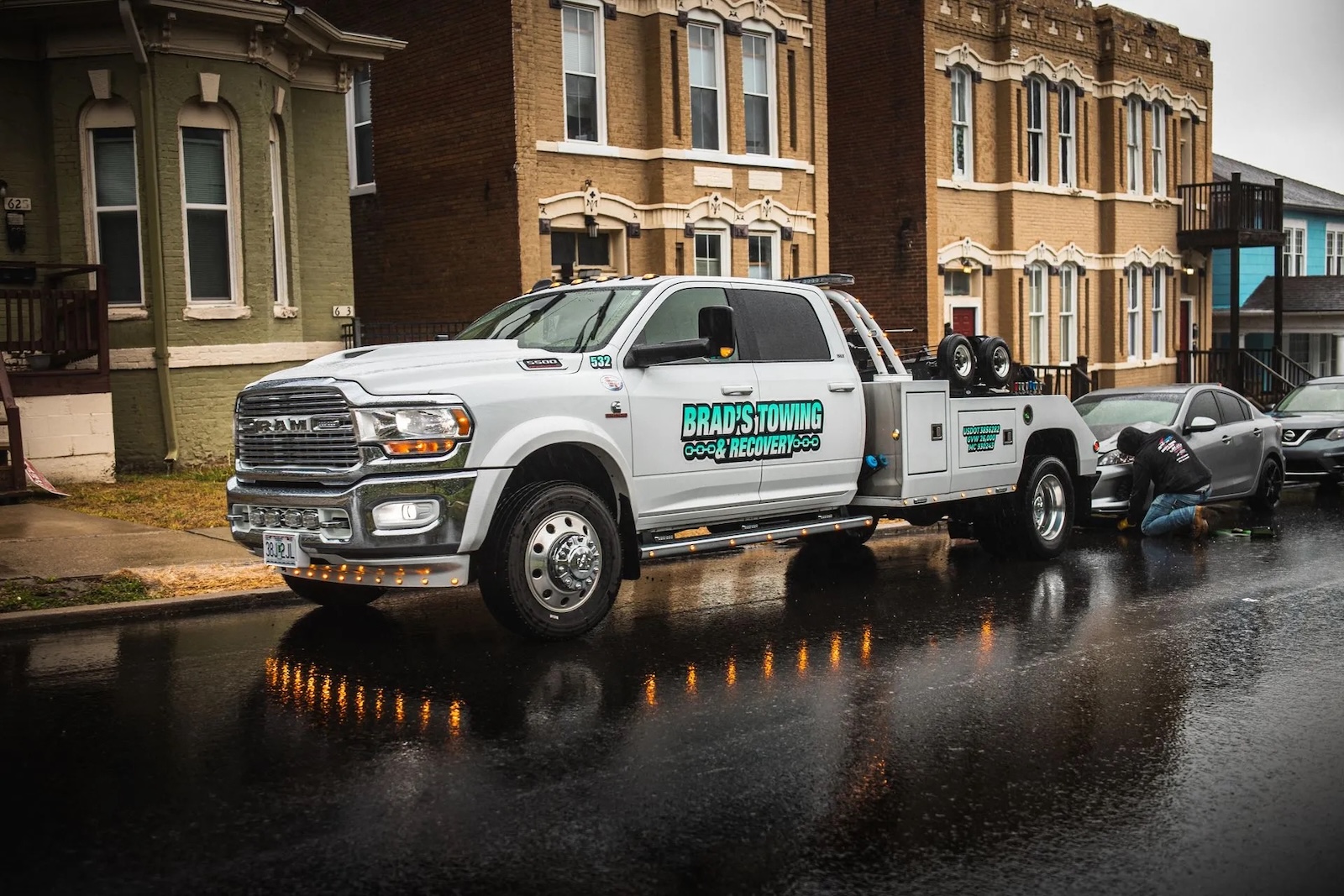
If you’re into dark comedy, check out any of the automotive repossession reality shows, and all of your inner demons satisfied. At the rate things are going with automotive financing in 2026, those guys are going to need a 24-hour channel.

Repossessions are up 43% in the last three years as buyers struggle with rising costs.
According to new data from Yahoo Finance, vehicle repossessions are going to hit 3 million units this year, continuing the trend of substantial increases during the past three years. Over 2.2 million vehicles were repossessed in 2025, which was up from 1.74 million in 2024.
With the average monthly payment for new cars hovering near $770 and used vehicles at $540 a month, depending upon which set of experts you ask, and the fastest growing segment of car loans being 84 and 92 months — or longer — is it any surprise that that repossessions are on the rise.
Looking at the numbers
Economic conditions are driving the problem, underscored by sustained inflation and record-breaking automotive debt. Collectively, outstanding United States auto loan debt is now estimated to be around $1.71 trillion, according to the Federal Reserve.
The problem with car ownership isn’t just the rising sticker price or rising loan interest rates, it’s also all of the related costs, such as car insurance, although largely flat this year, has risen 32% compared to three years ago.
Of course, you cannot miss what’s happened at the pump with gas prices averaging over $4.33 on Thursday, reports AAA. That’s compared to the average of $3.07 at this time last year. Diesel prices are even worse with a $3 per gallon difference on a year-over-year basis and the current average over $6 per gallon.
The rise in diesel prices is especially problematic because it trickles down to other areas of Americans’ lives, such as food prices, clothing prices, electronics prices, etc. The result is an inflation rate last month of 3.7%, which is up from 3.4% in August. Inflation’s been over 3% for most of 2026, and more importantly, inflation is outpacing average hourly wages, which are down 0.3% this year and they hit a five-year low in September.
This toxic combination is largely responsible for pushing repossession rates to a 43% increase over the last two years — the biggest numbers coming this year — surpassing numbers last seen during Great Recession in the late 2000s and early 2010s.
What’s the cause?
What’s driving these price increases? The U.S.’s ongoing conflict with Iran has played a massive role in pushing gas and diesel prices higher as the tankers carrying much needed oil cannot travel the quickest/shortest route without fear of being shot at or being held in the Bay of Hormuz for months at a time.
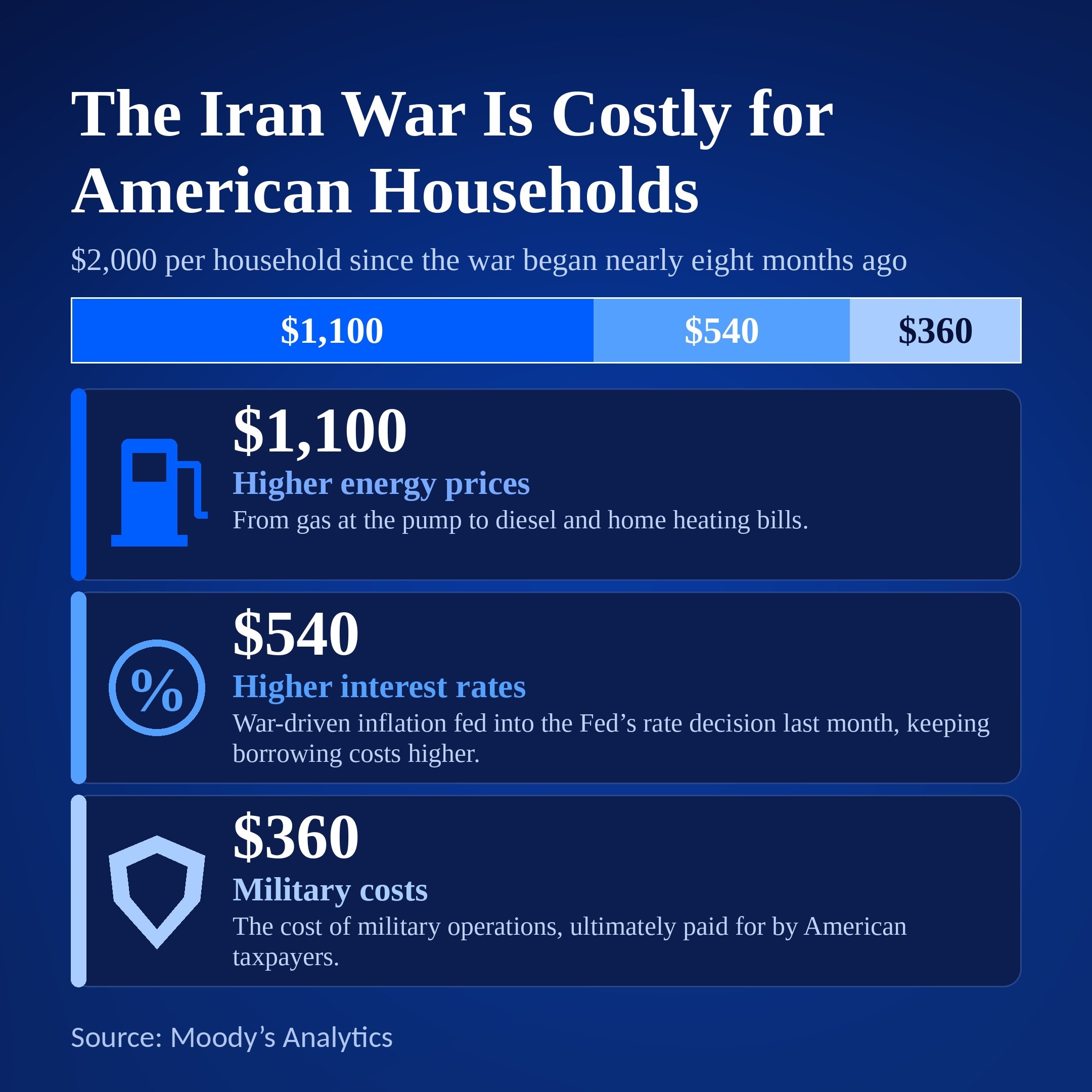
Gas prices up are more than 40% since the conflict began in February, rising from $2.98 per gallon to the $4.33 mentioned earlier. Economic estimates show the energy surge has added roughly $1,100 to $2,000 in total household costs (including heating and indirect goods) since the war started.
The conflict has cost U.S. consumers about $265 billion since it started in late February, Mark Zandi, chief economist at Moody’s Analytics, noted in a series of posts on X, formerly Twitter, Oct. 12. That equates to about $2,000 in higher costs for the average American household, he wrote.
These costs don’t include other actions from the Trump administration, such as the tariffs enacted by the president, which have equated to an extra $1,000 to $2,500 in costs annually to the average American household, again, depending upon which sources you believe.

Trump has promised gas prices will drop after the midterm election.
What’s going to happen?
As banks and other lenders scramble to liquidate an unprecedented volume of seized collateral, wholesale auto auctions and dealership backlots are getting flooded with inventory.
What does this mean? Well, Aristotle may have said it best: “Patience is bitter, but its fruit is sweet.” More simply, “What goes up, must come down.”
Those have kept their money in their pocket waiting for prices to fall may be on the cusp of seeing it happen. The historic wave of defaults might actually provide the vehicle surplus needed to permanently cool the market and its record prices on used cars.
As for new vehicles, we’re already seeing a focus on “affordable vehicles” by consumers as small car sales have been on the rise for much of the year. Chevy’s Trax sales have been flat through the first three quarters, but Trailblazer is up 21.1% year-to-date. However, during the third quarter, Trax jumped 16.3% and Trailblazer 51.1%. Some folks might look at that and suggest a trend is forming.
One need only look at their competition — strong competitors — to confirm that subcompacts and compacts are roaring back. The Hyundai Venue was up 12% for Q3 and its sibling Kona rose 12% also. Honda’s HR-V is up 14.5% during the same period.

Collectively, outstanding United States auto loan debt is now estimated to be around $1.71 trillion, according to the Federal Reserve.
Other names jumping during the third quarter, include the Toyota Corolla (4.9%) and Corolla Cross (53.1%), Lexus UX (24.6%), Mazda3 (146.9%) and CX30 (8.8%), and the Buick Encore GX (5.4%) and Envista (18.4%).
Stellantis CEO Antonio Filosa said told World Congress attendees that Chrysler will begin selling more than just the Pacifica minivan. It’s going expand its line up with small, affordable cars.
“We have a huge opportunity below $40,000,” he said. “We know that we can get there.”
About 3 million cars will be repossessed in 2026, which is much more than the 2.2 million last year. What’s causing people to default? Rising costs due to high gas prices, higher food prices etc as wages remain stagnant. Inflation was 3.7% last month with no end in sight. The war with Iran is driving much of the problem. Find out what the silver lining might be in Michael Strong’s report at The Car Collective.



0 Comments