
This story first appeared on TheCarCollective.substack.com. You can read it and subscribe by Clicking Here.
U.S. automakers and suppliers are expected to experience a second year of job cuts as sales slow and the industry fails to reap the benefits President Donald Trump had promised to deliver, especially from tariffs on imported autos and auto parts.
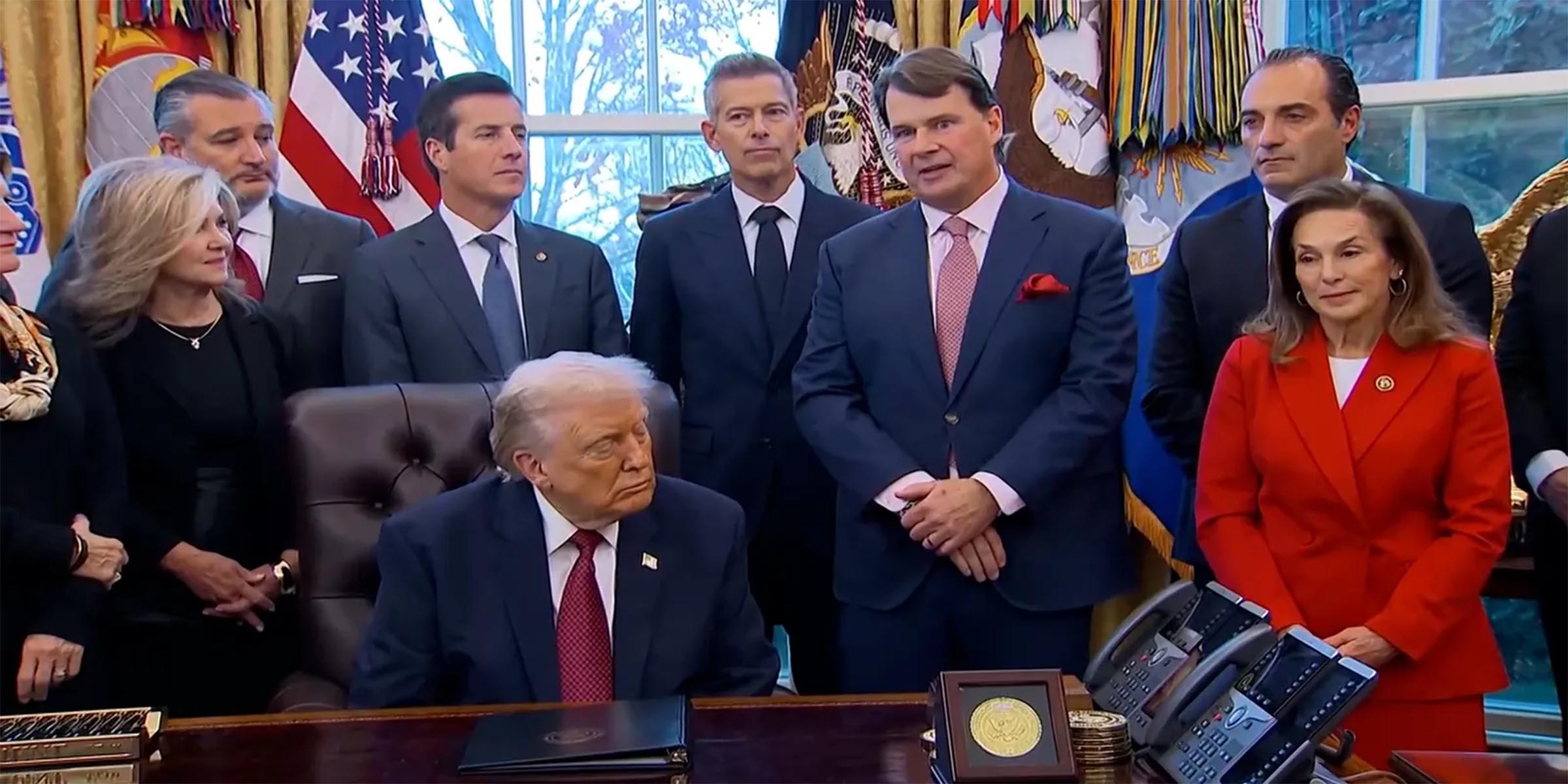
Trump met with auto execs at the White House last December to lay out plans for a cutback in fuel economy standards.
Michigan-based auto supplier JG Kern Enterprises will lay off 156 employees and is likely to shut down after Ford Motor Co. completely cut its ties to the family-owned business.
It’s one of several cutbacks announced by automotive suppliers this past week reflecting the increased headwinds automotive manufacturers face. Sources within the industry point to a variety of challenges, including slowing sales and rising costs, with many putting blame on Trump administration policies — notably the tariffs on autos, auto parts and critical metals which, ironically, were promoted as a way to boost U.S. manufacturing and jobs.
There are some hopes that the coming year could see an improvement in the jobs situation as some work returns to the U.S. and new factories begin to open. But fears are growing as inflation accelerates and polls show growing concerns on the part of American consumers. Rising costs for fuel and groceries, in particular, could cause some potential buyers to delay or cancel new vehicle purchases, experts warn.
Mounting job cuts
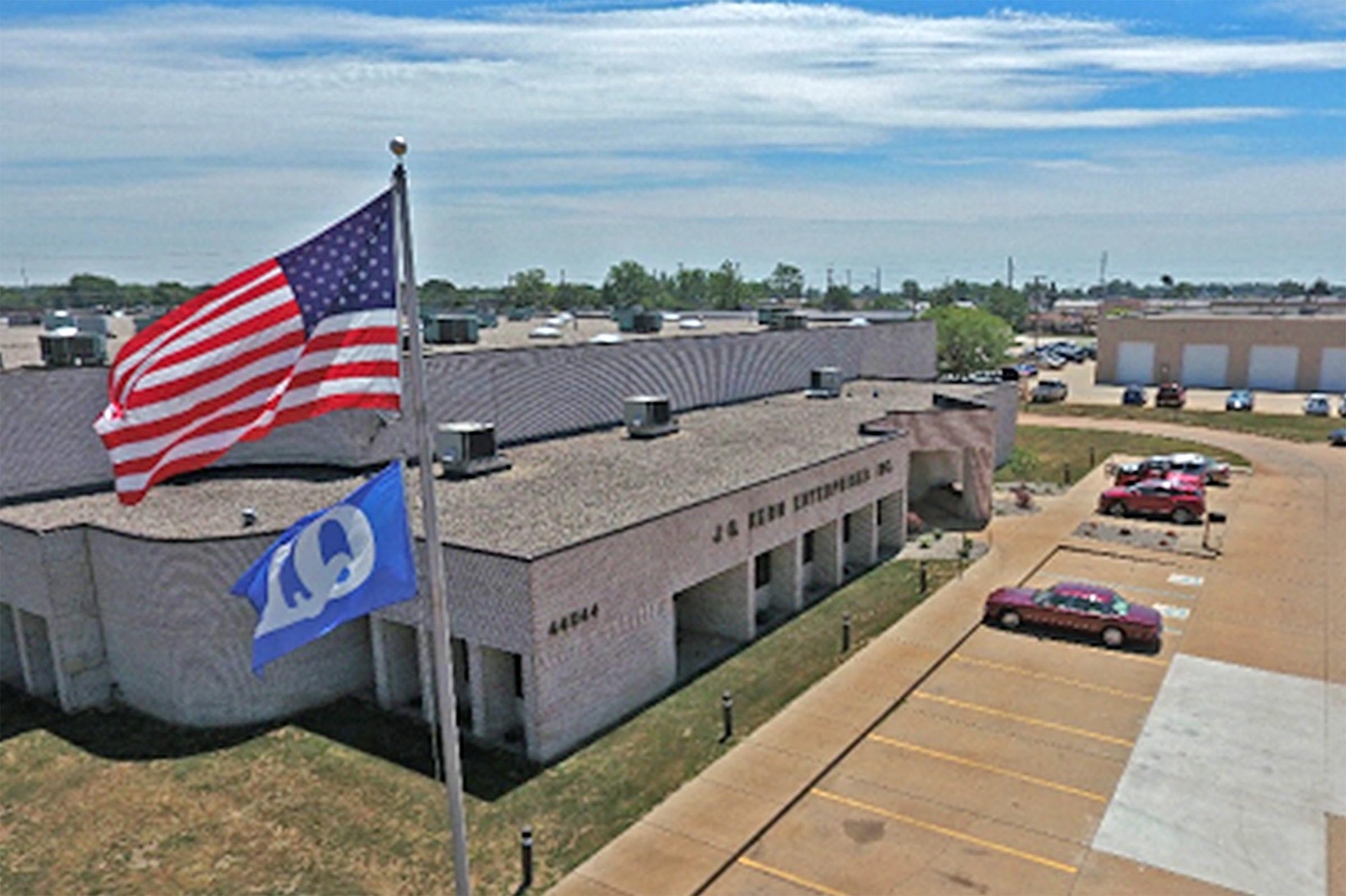
The JG Kern plant.
Kern, based in the Detroit suburb of Sterling Heights, blamed “unforeseeable business circumstances,” in a Worker Adjustment and Retraining Notification (WARN) filed with the state of Michigan. Ford is moving the production of powertrain parts it previously purchased from the company to India, said a person “familiar with the situation,” according to the Detroit Free Press.
Such a move directly counters the promises made by Trump, who has repeatedly insisted tariffs will help bring manufacturing and jobs — particularly in the auto industry — back to the U.S.
The supplier wasn’t the only one to submit a WARN filing in metro Detroit, which is required in the event of mass layoffs or plant closings. Lear Corp., a global supplier of automotive seating and electrical systems, said it’s closing another Sterling Heights facility, costing 67 jobs. And Dakkota Integrated Systems, which produces interior and exterior vehicle systems, will cut the same number of jobs, its WARN filing said, in December at a plant in Michigan’s capital of Lansing.
“It’s not good”
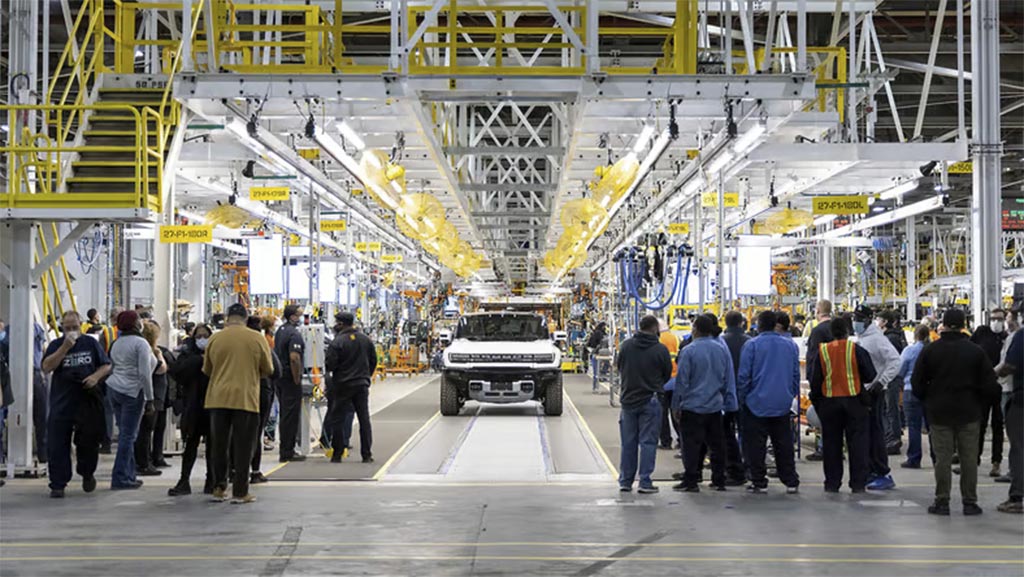
GM’s Factory Zero in Detroit has faced repeated short-term closures this past year.
Cutbacks are coming across the industry, and are impacting both salaried and hourly employees. Detroit’s Big Three — General Motors, Ford and Stellantis — have trimmed about 20,000 salaried jobs through midyear, according to company statements. They’ve eliminated or temporarily idled thousands of union jobs, as well.
There have been substantial cuts on the retail side of the business, too. Group 1 Automotive, a major dealer network, eliminated nearly 700 full-time positions, both in its showrooms and at the corporate level. In September, CarMax, another major retailer, trimmed 145 white-collar jobs as part of its third round of cuts in under a year.
Last year U.S. automakers eliminated about 29,000 manufacturing jobs — not including various temporary layoffs due to factors such as weak sales. Industry data show an additional 13,000 jobs lost in the auto parts sector, a reduction of approximately 2.5%.
Whether this year will see as large a decline is unclear. Either way, “It’s not good,” said Stephanie Brinley, associate director with research consultancy Mobility Global.
More Auto News
- These 29 Models Are Going Away in 2027
- First Drive: Kia EV3 is the Affordable EV We’ve Been Waiting For
- All-Electric Jaguar Type 01 Debuts in NYC
Costs and chaos
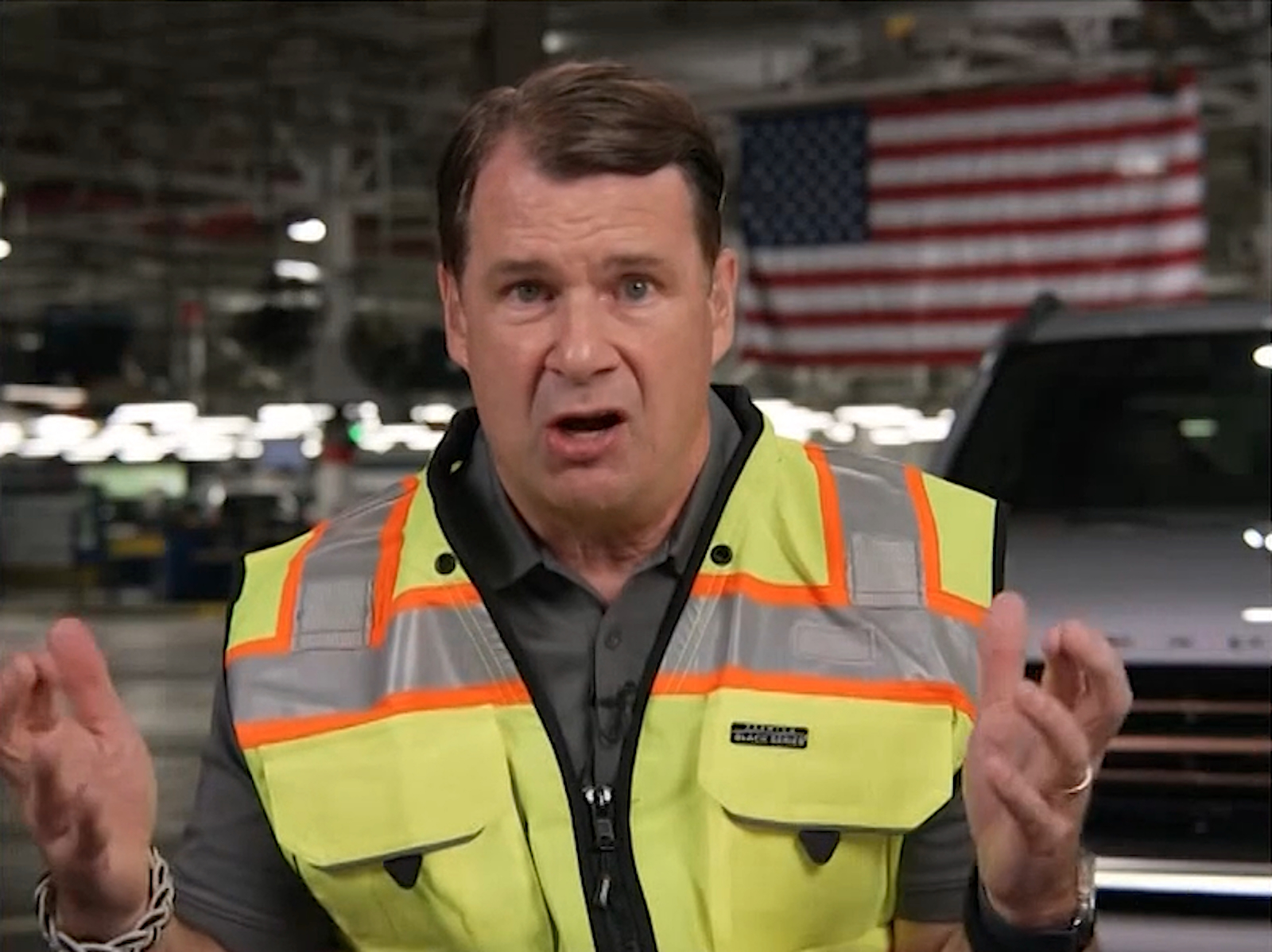
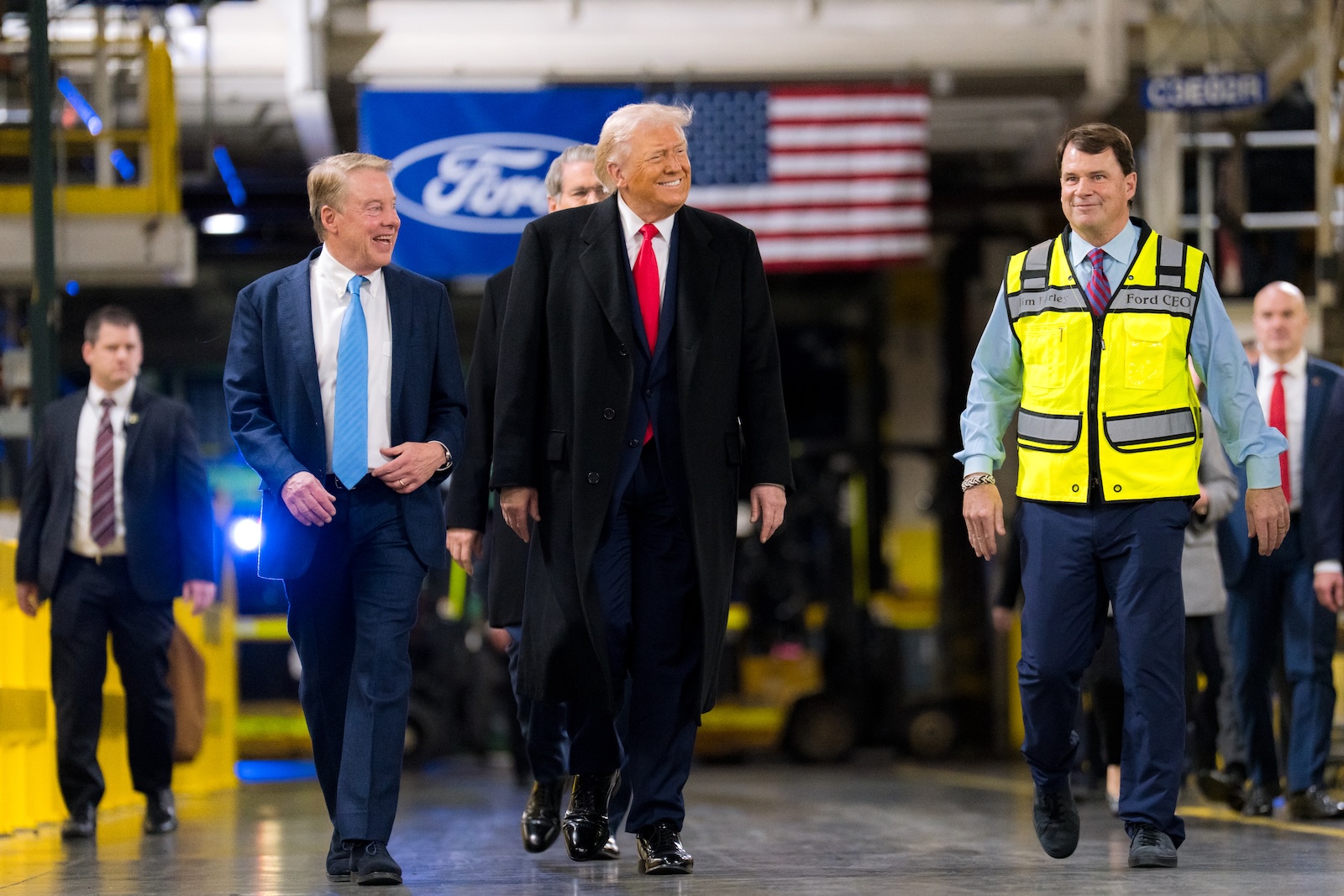
Ford CEO Jim Farley has openly expressed concerns about Trump trade and tariff policies.
Whether you call them “unforeseeable business circumstances,” or simply “unforeseen headwinds,” the auto industry is struggling. And much of that is due to Trump administration policies, according to a variety of industry insiders and analysts.
Since returning to office in January 2025, the president, his administration and a Republican-controlled Congress have reversed prior policies on EVs — among other things phasing out tax credits in September 2025, resulting in a sales crash and industry-wide restructuring costs of more than $70 billion industry-wide. GM has repeatedly idled its Factory Zero EV plant in Detroit. Honda abandoned a multibillion-dollar project to create an “EV Hub” across its Ohio manufacturing network.
Then there are the regularly revised tariffs. These impact not only foreign-made autos and auto parts but the imported aluminum and steel that make up a substantial portion of the metals the industry uses. Ford CEO Jim Farley said last year these create “a lot of cost and a lot of chaos” for the industry. The biggest problem is that changing policies make it extremely difficult to plan, Farley has added on a number of occasions. His worsening battle with Canada is an example. Of direct concern: the threat to increase tariffs on Canadian autos and auto parts to 50% come Jan. 1.
Rising prices, weakening consumer confidence

Consumers are growing increasingly stressed about vehicle prices.
By some estimates, tariffs have added as much as $2,000 to the price of the average new vehicle — and that includes those assembled Stateside since virtually all products rely on imported components. The figure might not be quite so high, suggested Sam Abuelsamid, chief analyst with Telemetry Research, because automakers have tried to absorb some of the impact — for now.
But recent price hikes have suggested more costs are being passed on, evidenced by the fact that the Average Transaction Price, or ATP, for a new vehicle stands at $50,562, according to Cox Automotive, a 0.9% month-over-month increase — and just shy of the all-time high of $50,612 from December 2025.
The latest Consumer Price Index, released this past week, showed a 3.7% year-over-year increase, far behind the under 2% target of the administration. Everything from rent to groceries was up, but motorists were particularly hard hit due to the surge in fuel prices following Trump’s war on Iran and the subsequent closure of the Strait of Hormuz, through which 20% of world oil supplies normally flow.
Economic issues are now seen as the single most significant issue heading into the midterm election. And the public mood is sour. A new Fox News poll found only 18% of those surveyed feel like they are economically better off than they were two years ago.
When the economy catches cold …
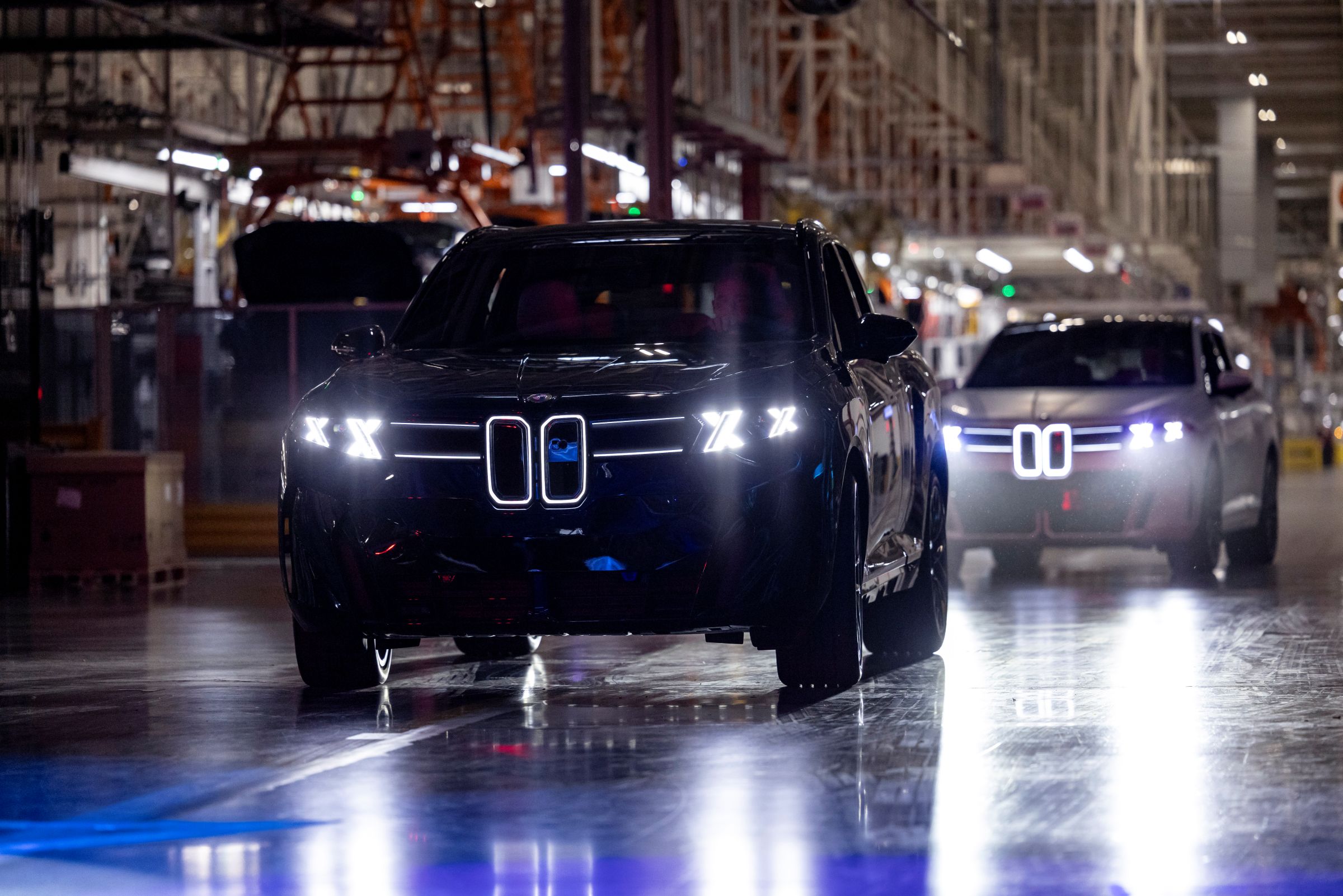
Its not just Detroit automakers who are growing worried. This 2027 X5 is rolling down the BMW line in Spartanburg, South Carolina.
What that means for the auto industry is far from certain. There is no chance that sales will reach the more than 17 million mark seen before COVID anytime soon, analysts agree.
For now, Mobility Global is forecasting demand will hold relatively stable, even factoring in tariffs, rising interest rates, inflation and other concerns said analyst Brinley. But forecasting sales is “a bit of art and science,” she cautioned, adding that while “American consumers have been resilient,” the question is “for how long.”
Abuelsamid is a bit more skeptical, forecasting we will see, at the least, “a slight decline” in sales.
The old automotive mantra could prove true once again. It’s long been said that “When the economy catches cold, the auto industry gets pneumonia.”
“It’s going to be kind of ugly”
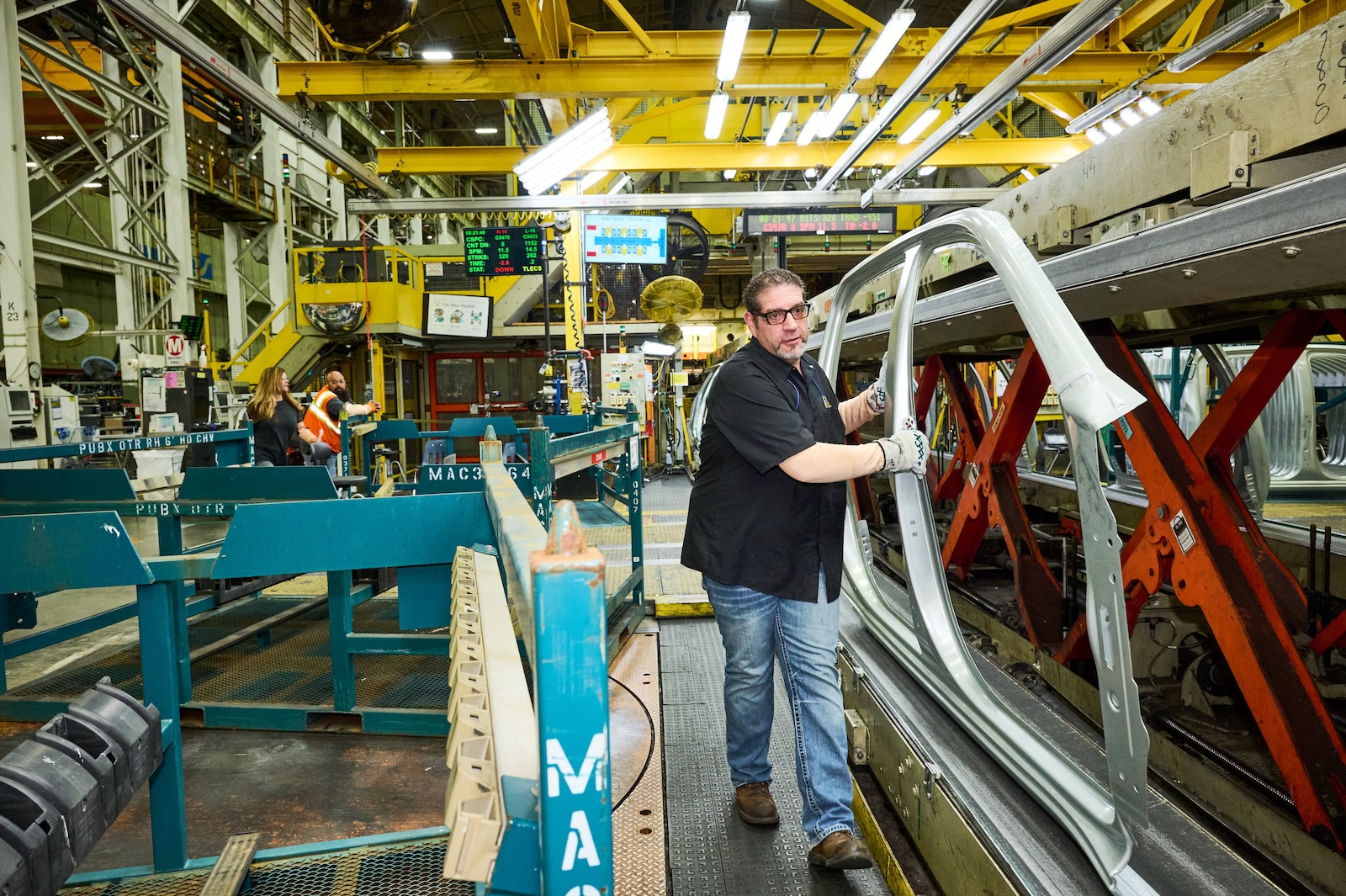
GM workers in Flint, Michigan.
Even if there’s no repeat of the sort of slumps seen during the Great Recession, or the COVID downturn of 2020, “It’s going to be kind of ugly for a while,” warned Abuelsamid, especially from a jobs standpoint.
Tariffs and other factors are only accelerating the industry’s ever-present efficiency drive. AI could lead to further job cuts. Meanwhile, all the automakers have signaled they’re considering opportunities to move engineering work out of the U.S. and over to lower-cost countries, such as India or the Philippines.
Cost pressures will fall even harder on automotive suppliers, a number of experts who I spoke to agreed. They’re always up against the wall when automakers need to prop up their own bottom lines. But “We’ve reached the point we really don’t have any more to give,” a C-level official with one supplier who asked not to be named told me.
A silver lining?

A Buy Canadian poster.
There is the longer-term possibility that Trump’s tariff program could pay off long-term. Hyundai last year announced a $26 billion U.S. investment program — though it was largely planned before the current president returned to the White House. It will include a new assembly plant and expansion of other, existing facilities, as well as a new steel mill. Toyota, meanwhile, said it will invest $10 billion, much of that to expand existing U.S. manufacturing operations.
The Detroit Three have each announced plans to bring some production back to the States, and we’re seeing similar projects under study by foreign-owned manufacturers with U.S. factories.
On the flip side, analysts warn, not all these projects ultimately may materialize. And they could translate into higher production costs that could raise costs and consumer prices, reduce sales and weaken earnings.
There’s also the backlash factor that could hurt a number of U.S. plants that exported a combined $57.4 billion worth vehicles like Ford’s F-150 and Mustang, the Chevrolet Silverado and the Ram 1500. BMW was the largest single exporter from the U.S. last year, its Spartanburg, South Carolina plant shipping 257,876 of its various SUVs, worth $10.1 billion, to 120 countries. Canada, for one, has seen its consumers turn on U.S.-made products, including automobiles. And that appears to be playing out in other markets, as well.
So, whether due to rising vehicle prices, a weakening economy and plunging consumer confidence — or global pushback to Trump tariffs — there’s a growing sense of concern that we could see a slowdown in the U.S. automotive market matched with a sharp rise in job cuts. In turn, that could push still more suppliers over the brink, like JG Kern, and force them to close down shop.



0 Comments