

General Motors saw its third-quarter net income more than double, largely due to strong demand for pickups despite high gas prices. But why did the numbers trigger a Wall Street sell-off? More from Headlight.News.

GM CFO Paul Jacobson said the company’s earnings will be hit by tariffs.consumers have “held up remarkably well.”
One might wonder what happened to the fuel cost crisis based on General Motors’ third-quarter financial report. The automaker’s quarterly earnings before interest and taxes were up 22% year-over-year, while net income more than doubled. And pickups, appropriately enough, carried the load.
Strong demand for the automaker’s Chevrolet and GMC truck lines played a major role in propping up GM’s bottom line. But it also scored big with its software and subscription services, the automaker said Tuesday morning.
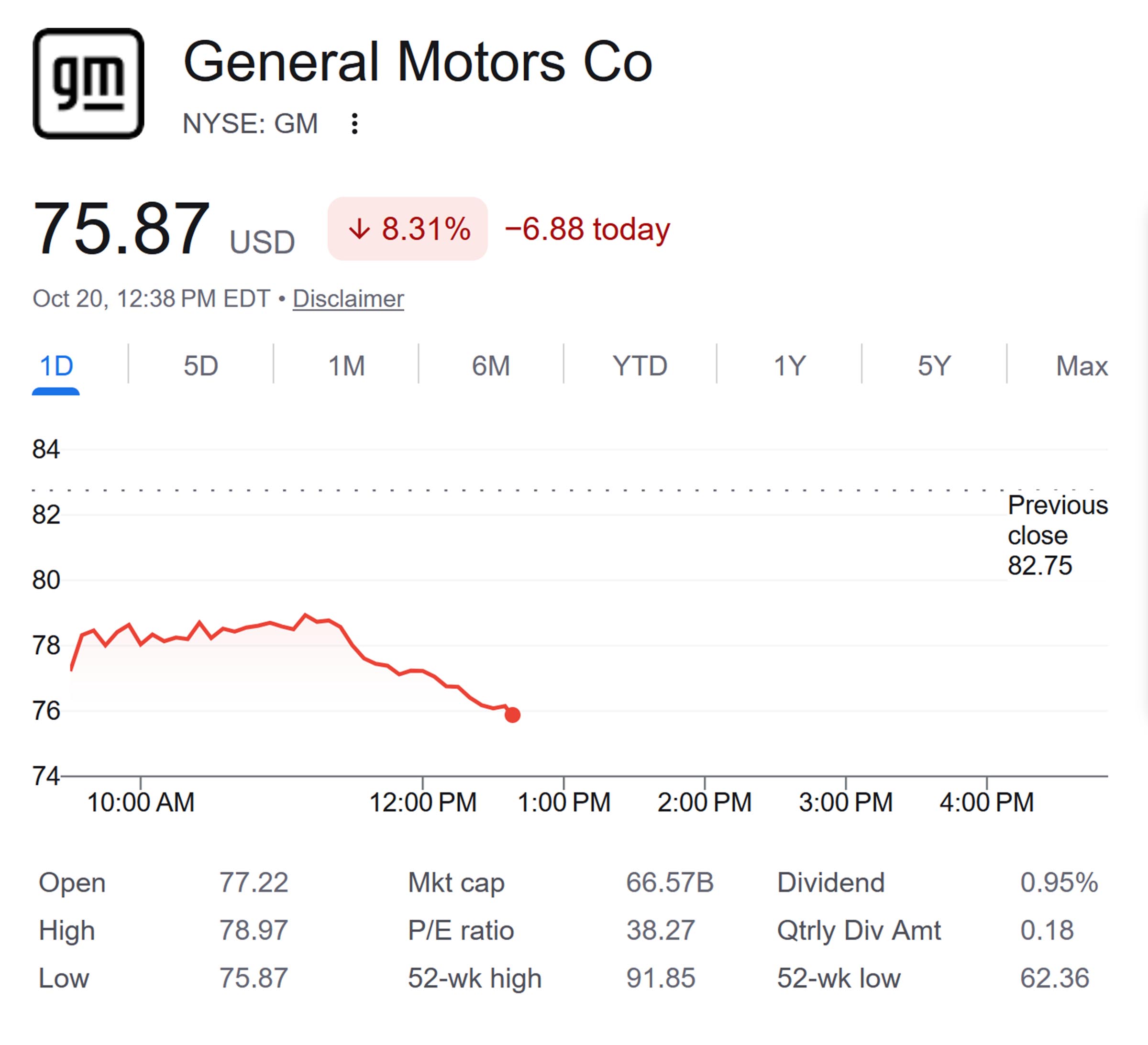
Despite the quarterly performance, however, investors appeared to focus on a less upbeat number. GM adjusted its annual EPS forecast downward, triggering a sharp downturn in its share price. As of noon EDT, the stock stood at $77.02 a share, off 6.92% or $5.73.
By the numbers

GM’s new headquarters in downtown Detroit.
The largest of the Detroit automakers reported quarterly earnings before interest and tax, excluding one-time items, came in at $4.1 billion, a 22% year-over-year gain. At $3.70 a share that topped industry forecasts of $3.63, according to LSEG.
Net income totaled $3.34 billion for the quarter ending September 30, a 151% increase. Meanwhile, revenue hit $50 billion, a 2.9% improvement.
GM forecast full-year earnings would come in at somewhere between $8.9 billion and $9.5 billion, more than triple the $2.7 billion earned a year ago. The 2025 numbers were hammered by both Trump tariffs and write-offs as the automaker – along with the rest of the industry – adjusted its EV plans.
Nervous investors
 So far this year, the company has shelled out $4.6 billion in EV-related charges. But it said Tuesday that the write-downs are “substantially completed,” and included a relatively modest $100 million during the July-September period.
The strong third-quarter performance wasn’t enough to assuage increasingly jittery Wall Street looking at where the auto industry is going at a time when the economy is weakening under the pressure of inflation, especially rises in fuel costs.
It didn’t help that the automaker lowered its per share forecast for the full year from $13.75 to $12.75. That sent investors scurrying for the exits. By noon, GM shares were down $5.73, or 6.92%, to $77.02. The stock closed as high as $85.51 earlier in the month.
“We think the selloff primarily reflects disappointment with the fact that the midpoint of its updated guidance is below” Wall Street’s consensus, CFRA analyst Garrett Nelson said in an investor note.
More Auto News
- These 29 Models Are Going Away in 2027
- First Drive: Kia EV3 is the Affordable EV We’ve Been Waiting For
- All-Electric Jaguar Type 01 Debuts in NYC
Keep on truckin’
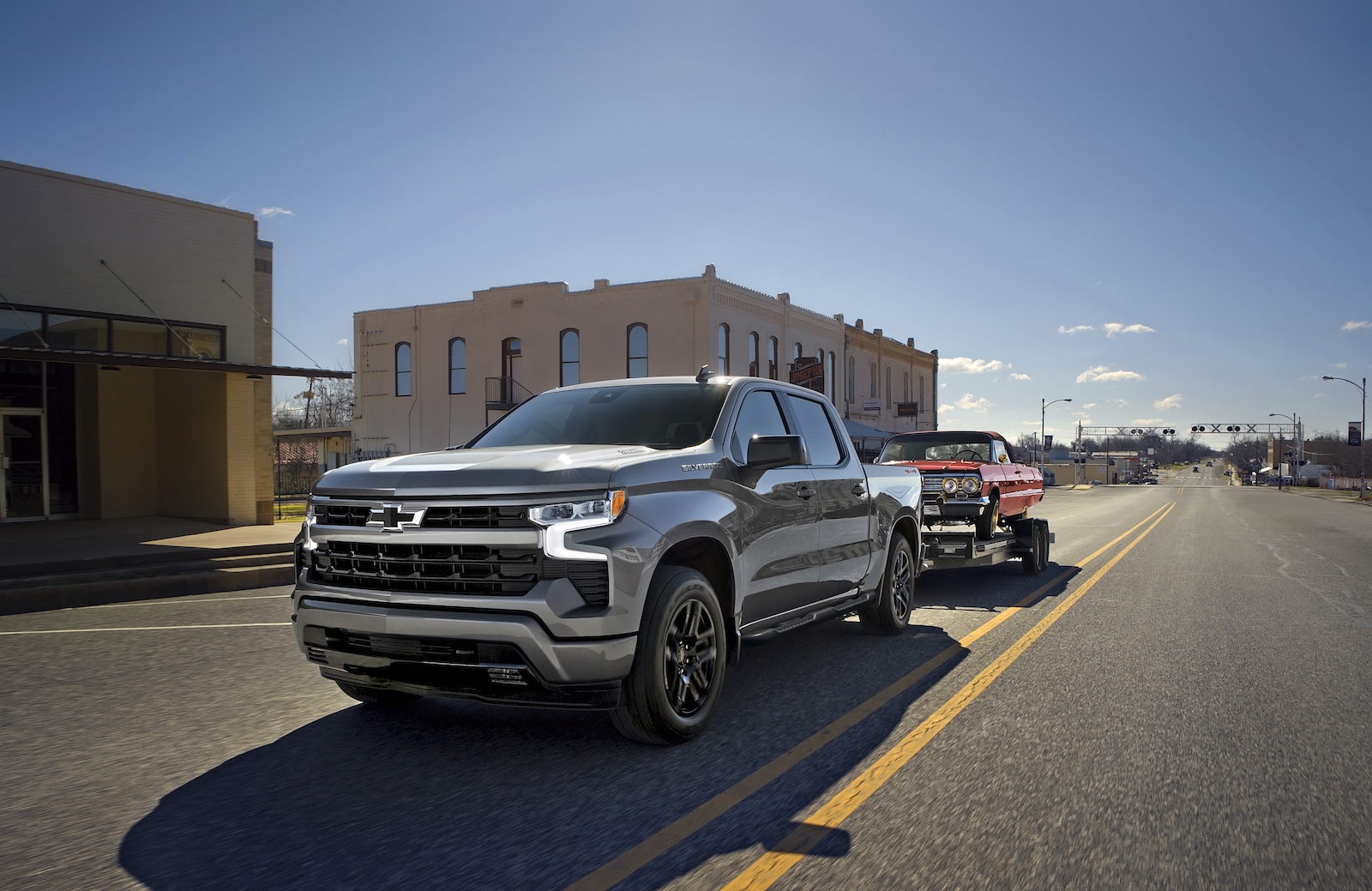
A Chevrolet Silverado towing.
The quarter brought mixed results, depending upon the market. Profits were down overseas, GM International delivering earnings of just $28 million for the quarter, down from $226 million. And overall U.S. sales were off 6.3% for the quarter.
But that was offset by growing demand in its most profitable product sector. Sales of full-size pickups, such as the Chevrolet Silverado and GMC Sierra, rose 9%. That was particularly noteworthy considering current fuel prices which currently stands at $4.214 per gallon of self-service regular, according to GasBuddy.com. That’s up from less than $3 per gallon at the start of the Iran War.
Separately, GM delivered strong numbers in its software and subscription services operations, OnStar reporting a 15% revenue jump and the operation expecting 1 million more subscribers this year. It saw particularly strong demand for its hand-free Super Cruise system ahead of a more advanced version’s debut in 2028.
Looking ahead
GM faces a number of challenges, including concerns about the economy and, more specific to the auto industr. “The path forward is more challenging,” it said in a statement.
There could be issued ensuring supplies of critical materials such as semiconductors, for one thing. It is also finding the gap shrinking between its position as the number one manufacturer in the U.S. market and Toyota.
“The consumer has held up remarkably well. We should continue to watch it,” GM CFO Paul Jacobson told analysts during a Tuesday morning conference call. “We haven’t seen anything that indicates any weakness.”


0 Comments