
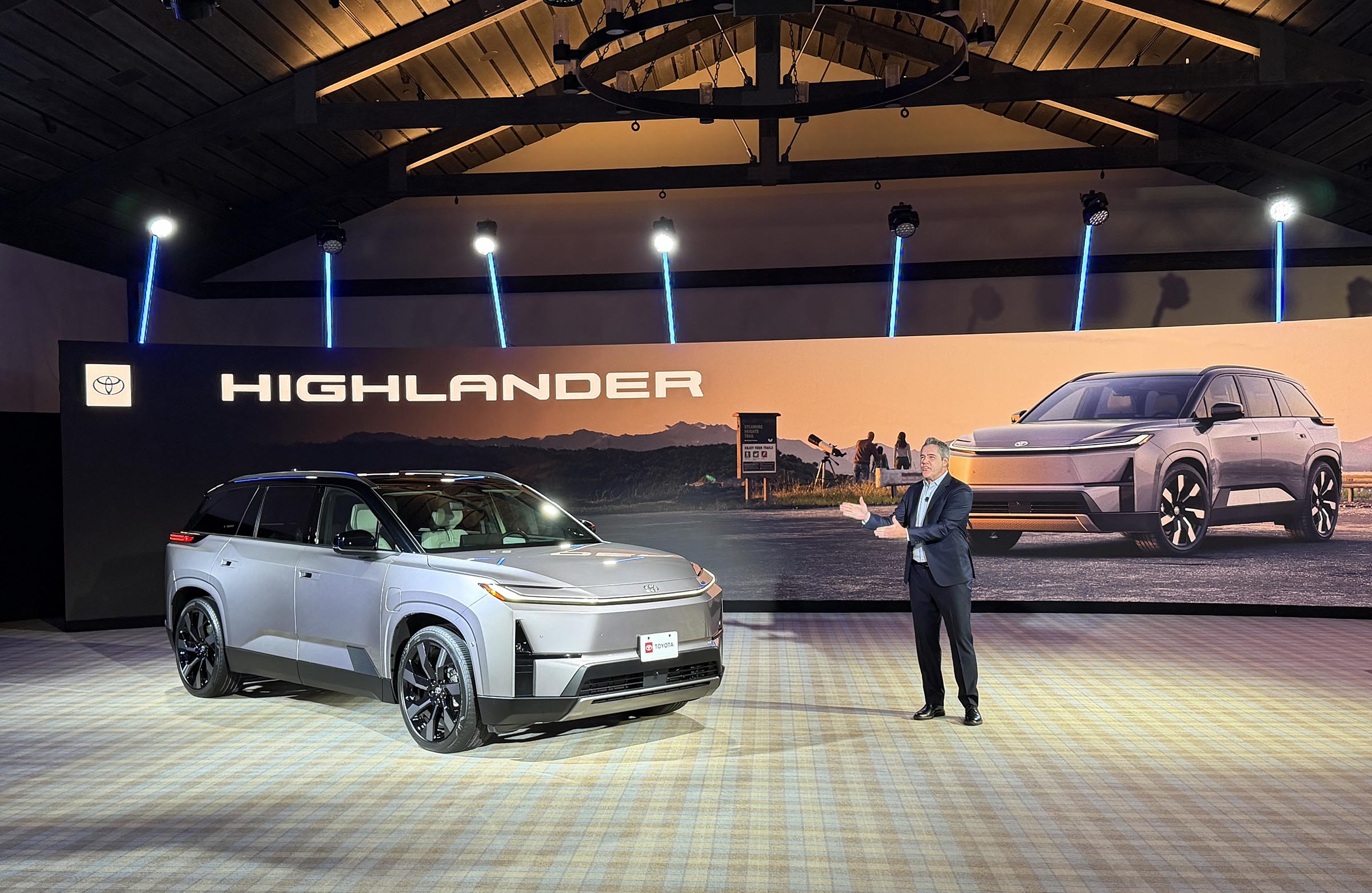
Toyota has ordered a two-month delay in the launch of its next battery-electric vehicle, the Highlander EV, the 3-row model now pushed back until early next year. Headlight.News has the exclusive reason for the delay.
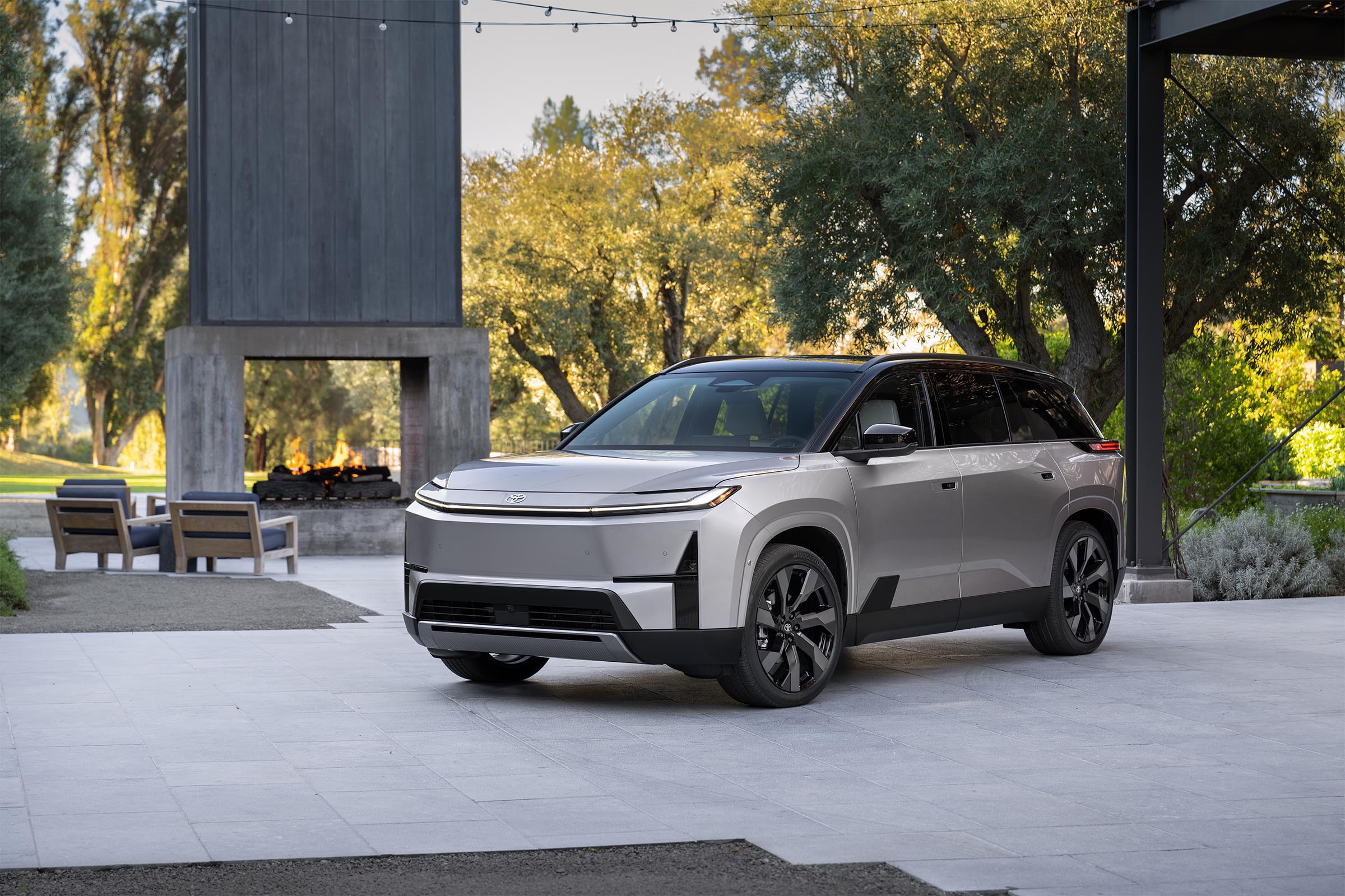
The 2027 Toyota Highlander EV.
Despite rising demand for its current fleet of battery-electric vehicles, Toyota has confirmed it is pushing back the launch of its next all-electric model, the Highlander EV, by two months. It also will continue offering the current version of the big SUV until early in 2027.
Highlander EV was set to join the three other battery-electric models being offered under the Toyota brand in the U.S. – the mid-range bZ, the compact C-HR and the bigger bZ Woodland. Toyota offered only a terse statement explaining the delay was the result of “adjustments prior to launch,” but Headlight.com has learned there are several other issues being addressed.
But most automakers have been making adjustments to their EV plans in the wake of a sharp slump in sales triggered by the phase-out of federal tax credits last September. Toyota’s upscale sibling, the Lexus brand, recently scrapped plans for what was to be a flagship EV, the LF-ZC.
What’s new
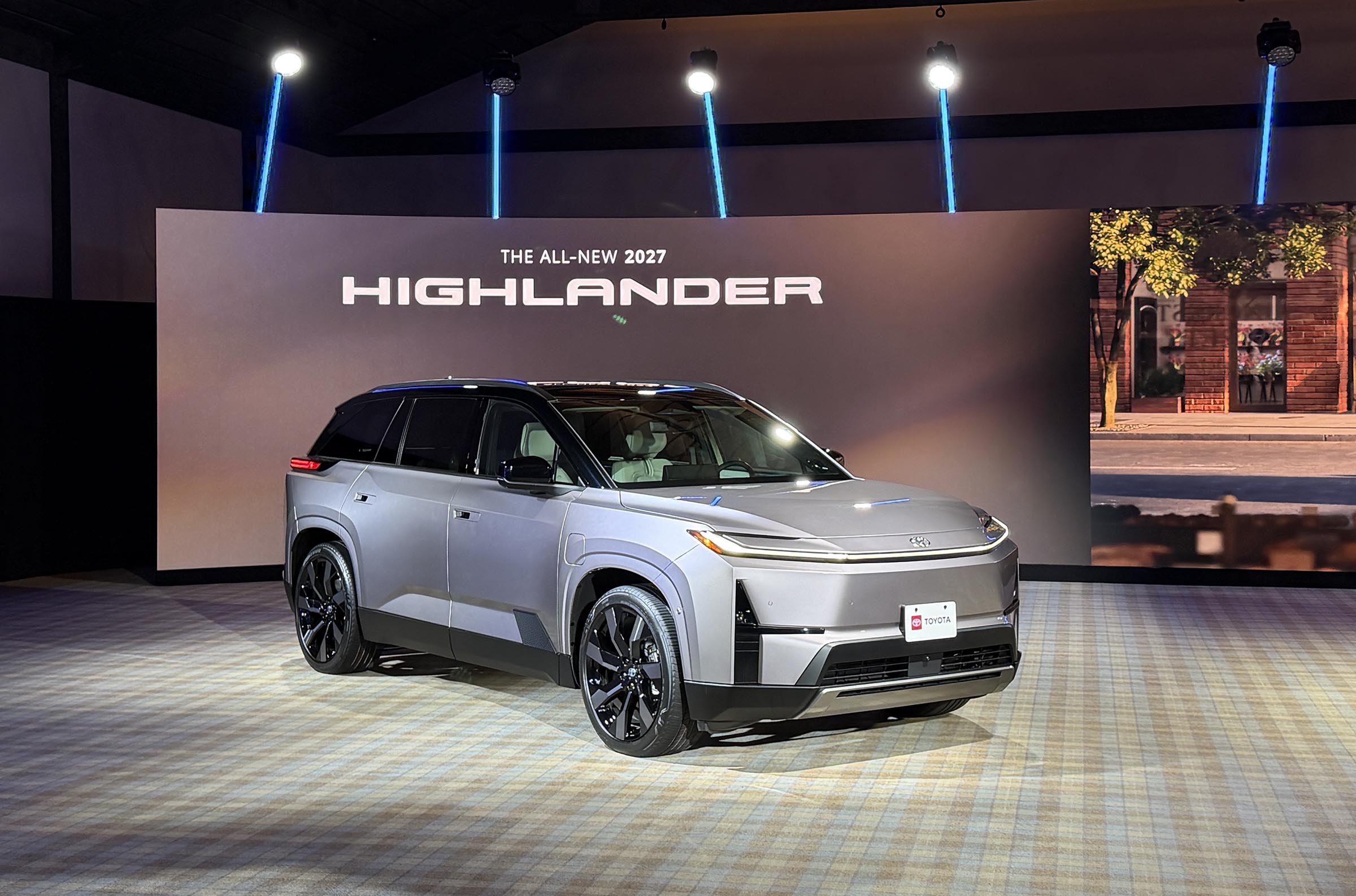
Toyota was set to add three new EVs this year, including Highlander EV.
Despite the sharp drop in EV sales late last year, Toyota officials remained bullish – at least publicly – when they rolled out a prototype of the Highlander EV last February. “We see it as a market opportunity,” David Christ, head of the Toyota brand, told Headlight.News. “We feel we need multiple products in the EV space…to get more share as the EV market grows.”
At the time, Christ and other officials indicated the new SUV would arrive late this year as a 2027 model. But, even then, they did leave open the possibility the Highlander EV launch could be pushed back.
Headlight.News has reached out for details on the delay and Toyota’s U.S. communications chief Scott Vazin sent a statement noting, “There will be a delay in the start of production of the 2027 Highlander to allow timing for final adjustments prior to launch.” Company sources offered a bit more detail, however. For one thing, Toyota is shifting production plans at the Toyota Motor Manufacturing Kentucky plant that will produce Highlander EV. It is expanding capacity for the time-tested Camry sedan, a move that impacts production of the battery model, as well.
Meanwhile, Toyota is making other tweaks to the EV’s design to improve such things as safety, Headlight.News learned.
A first
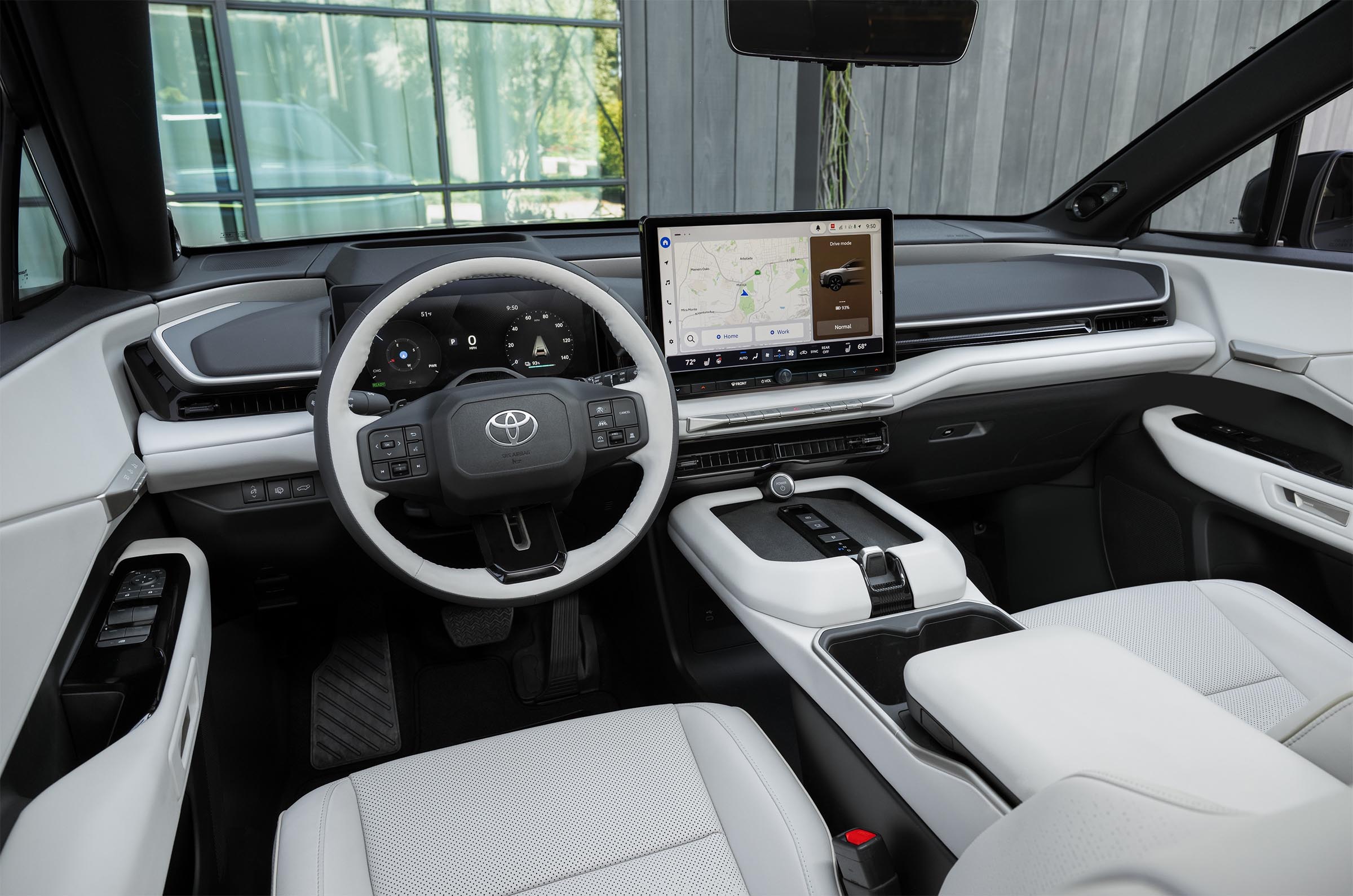
Inside the 2027 Toyota Highlander EV.
That shouldn’t come as a surprise as other automakers have been adjusting product details hoping to overcome the current market skepticism about EVs. Indeed, Toyota made a number of changes to the bZ for the 2026 model year. It not only shortened its original name, bZ4X, but gave it a boost in range and performance.
That has paid off with a sharp improvement in sales, the bZ now the U.S. market’s fourth best-selling EV, behind the Tesla Models Y and 3 and the Hyundai Ioniq 5 – moving ahead of the similarly sized Chevrolet Equinox. Overall, Toyota sold 17,553 battery-electric vehicles in the U.S. during the first half of 2026, a 90% increase from the prior year. The updated bZ was the primary driver, but the C-HR and Woodland are also beginning to gain momentum.
The Japanese giant clearly wants to make sure that Highlander meets expectations, especially as it will go up against two other strong electric models: the Hyundai Ioniq 9 and Kia EV9.
More Auto News
- This Electric Hypercar Can Deliver Almost 2,000 HP – But You Can’t Buy One in the U.S.
- Fiat Topolino EV is Barely as Big as a Ping-Pong Table
- Honda CR-V Topples U.S. Sales King, the Ford F-150
Move could trigger other delays
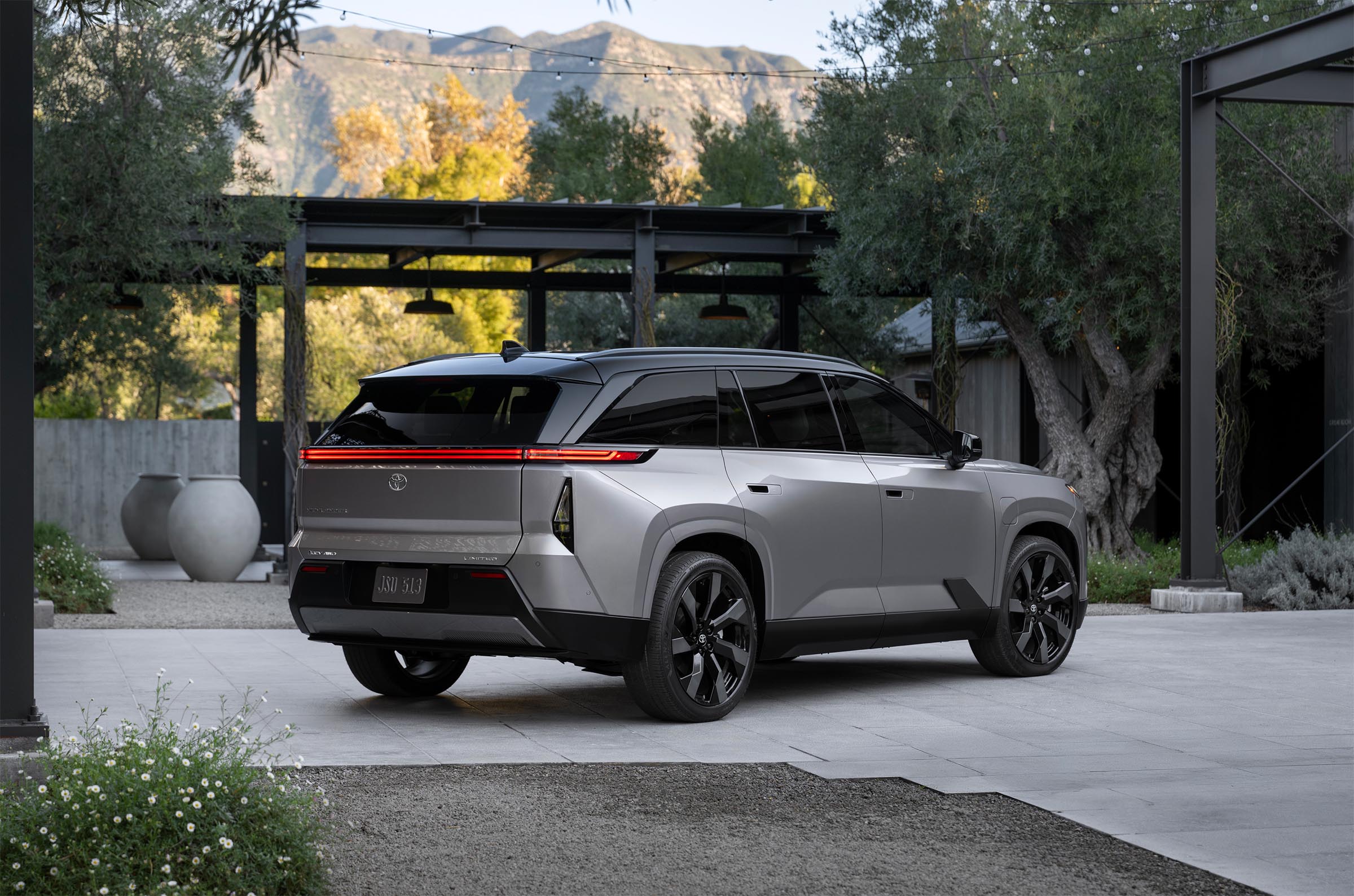
The 2027 Toyota Highlander EV will be offered with a choice of powertrain options, including both front- and all-wheel-drive.
As is the norm in the auto industry, the Highlander EV shares platforms – the TNGA-K architecture – and key componentry with other products sold by Toyota – and its partner, Subaru.
That raises the question: will we see delays with two other 3-row models, the new Lexus TZ and the Subaru Getaway, bother also currently scheduled to go on sale in the U.S. late this year? It’s possible they could stay the course if the delay to Highlander EV was something modest and model-specific.
In the meantime, Toyota also plans to continue producing the current Highlander model longer than expected, at least until the end of 2026 and possibly into the 2027 calendar year. The SUV has been an important product for the brand, sales last year topping 100,000 units for both Highlander and the bigger Grand Highlander.
Highlander EV basics
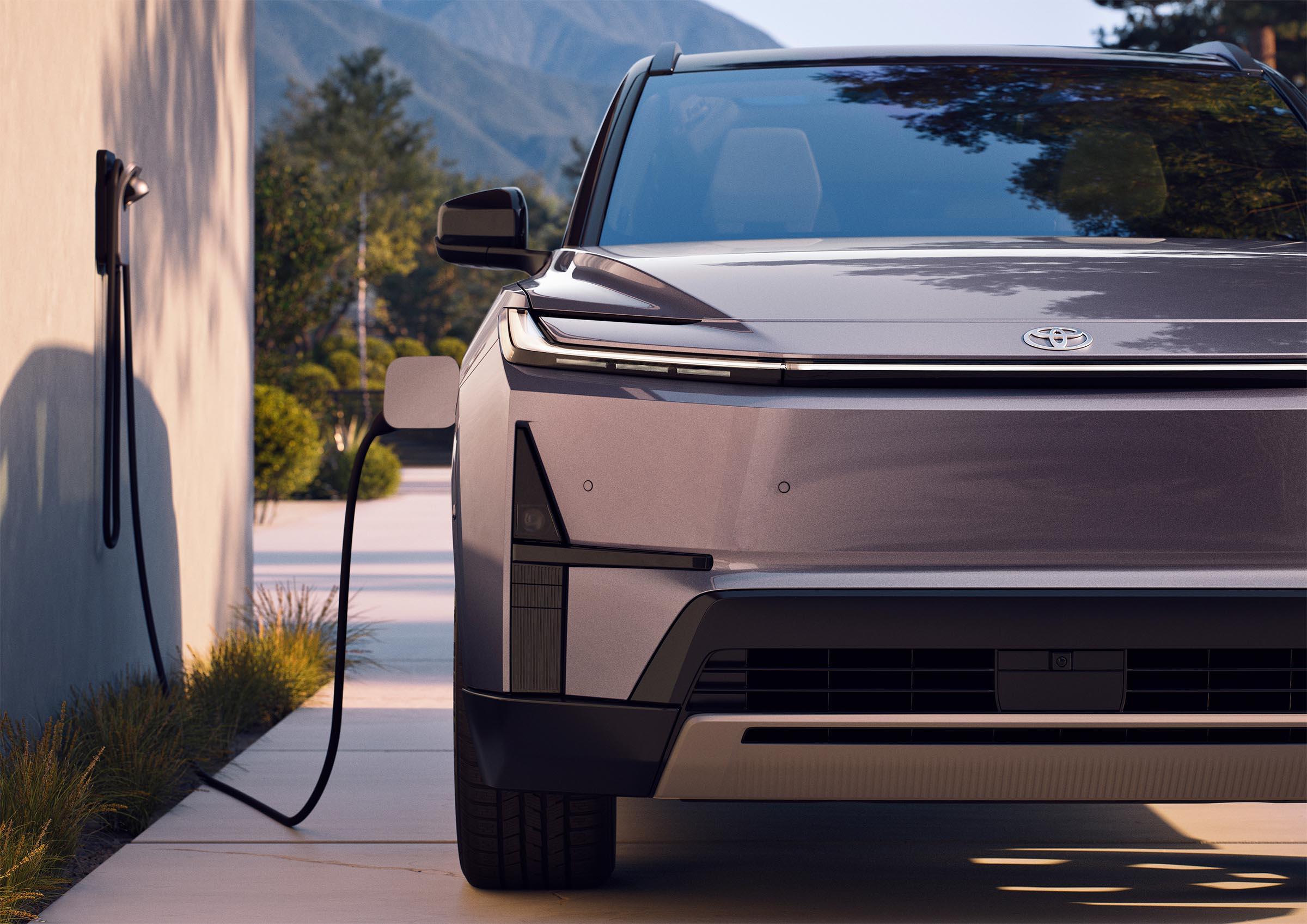
As with its other U.S. EVs, Toyota migrates to the Tesla-style NACS charger part on Highlander EV.
Highlander EV has a familiar feel to the current SUV, picking up on the gently sloping roof and solid stance. The all-electric package adopts more aerodynamic details – such as a sealed upper grille and flush door handles – to help improve range and performance. A small lower grille does direct cooling airflow to the battery pack and motors. A full-width lightbar is separate from Highlander EV’s LED headlamps.
The EV measures 198.8 inches in total length, has a width of 78.3 inches and stands 67.3 inches tall. It makes good use of the 120.1-inch wheelbase, about 8 inches longer than the conventional Highlander, to provide substantial interior space for passengers and cargo – the cabin enhanced by the fact that batteries and key drivetrain components are located underneath the load floor. With the rear bench folded down Highlander EV offers up to 45 cubic feet of cargo space.
Critically, the TNGA-K platform allows for a variety of different powertrain options. Highlander EV will be offered with two different battery packs, a 77.0-kWh option expected to yield as much as 287 miles range, and a 95.8-kWh pack running up to 320 miles per charge. There will be front- and all-wheel-drive packages. And, depending upon the configuration, power will run from 221 horsepower and 198 pound-feet of torque to 338 hp and 323 lb-ft.
Those stats, of course, could change as part of the “adjustments” Toyota is making to the Highlander EV ahead of launch.

0 Comments